
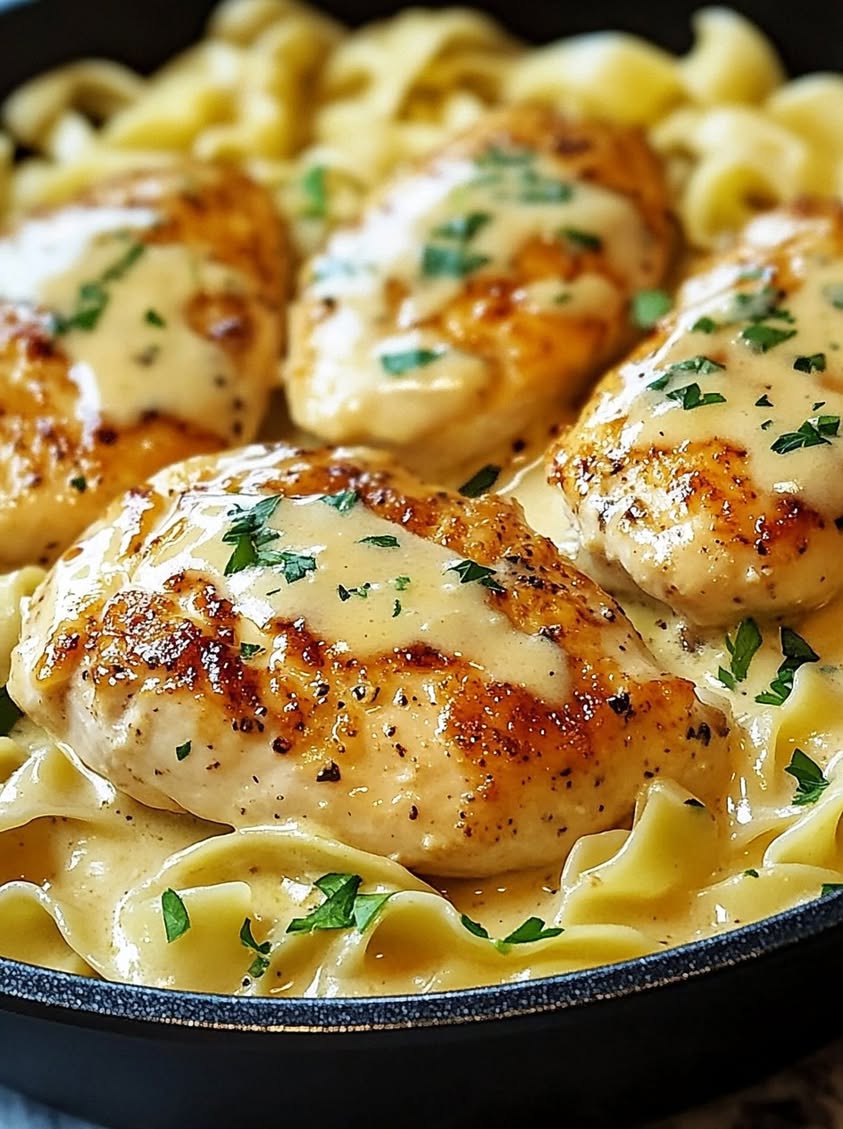
Golden Skillet Chicken Draped in Creamy Parmesan Butter Sauce: Your New Weeknight Favorite
Imagine a dish that delivers the comfort of a restaurant-quality meal directly from your own kitchen in under 35 minutes. This Golden Skillet Chicken in Creamy Parmesan Butter Sauce is precisely that kind of magic. It transforms simple chicken breasts into a stunning, flavor-packed main course. The chicken emerges with a beautifully seared, golden crust, while the sauce is a luxurious blend of rich butter, nutty Parmesan, and smooth cream. Ultimately, this recipe is a testament to how a few quality ingredients can create something extraordinary.
Furthermore, the aroma that fills your kitchen as this dish cooks is absolutely intoxicating. You will smell the savory garlic, the toasty Parmesan, and the fragrant herbs long before the first bite. This Golden Skillet Chicken in Creamy Parmesan Butter Sauce is not just food; it is a full sensory experience. It looks impressive on the plate with its glossy, creamy sauce draping over the perfectly cooked chicken. Consequently, it is perfect for a quiet date night at home or for impressing weekend guests without any stress.
Additionally, this recipe is incredibly forgiving and adaptable. Whether you are a seasoned cook or just starting out, the steps are straightforward and the results are consistently delicious. The key lies in the technique of creating a perfect sear and then building a simple yet decadent pan sauce. In essence, mastering this one-skillet wonder will give you a go-to recipe for countless occasions. Therefore, grab your favorite skillet and get ready to make a meal that everyone will request again and again.
Quick Recipe Highlights
- Flavor Profile: This dish offers a masterful balance of savory, creamy, and umami notes. The golden, seared chicken provides a deep, meaty foundation. Meanwhile, the sauce combines the salty tang of Parmesan with the richness of butter and a subtle garlicky warmth.
- Texture: Expect a wonderful contrast in every mouthful. The chicken breast stays remarkably juicy and tender inside, while the exterior boasts a slight crispness from the sear. Subsequently, the sauce is velvety and clings to each piece, creating a luxurious coating.
- Aroma: As it cooks, the kitchen fills with an irresistible fragrance. Key aromatic notes include the nutty, toasty scent of browning Parmesan, the sweet pungency of sautéed garlic, and the earthy freshness of Italian herbs.
- Visual Appeal: The presentation is stunningly simple. The chicken cutlets have an appealing golden-brown crust. Finally, the pale, creamy sauce speckled with herbs and cheese drapes elegantly over the top, making it look professionally plated.
- Skill Level Needed: This is an accessible recipe for most home cooks. It requires basic skills like pan-searing and making a simple pan sauce. However, attention to temperature control is the main technique to master for perfect results.
- Special Equipment: You only need one essential tool: a large, heavy-bottomed skillet. Preferably, use cast iron or stainless steel for the best, even sear. A meat thermometer is also highly recommended to ensure perfectly cooked chicken.
Recipe Overview
- Difficulty Level: We rate this Golden Skillet Chicken in Creamy Parmesan Butter Sauce as “Easy.” The process involves sequential steps that are easy to follow. Primarily, it requires managing heat for the sear and then gently simmering the sauce. There are no complex techniques like braising or baking involved, making it very approachable.
- Category: This dish fits beautifully into multiple meal categories. It is a fantastic main course for dinner, a hearty protein option for a special lunch, and elegant enough for entertaining. Moreover, it pairs wonderfully with a wide variety of sides, from pasta to vegetables.
- Cuisine: The recipe draws strong inspiration from Italian-American cuisine, celebrated for its rich, comforting sauces and emphasis on cheese and herbs. While not a traditional regional dish, it uses classic flavors like garlic, Parmesan, and cream in a familiar, beloved way.
- Cost: This is a moderately priced meal that feels luxurious. Chicken breasts are an affordable protein, and the sauce ingredients are pantry staples for many. Overall, you can create a restaurant-worthy dish for a fraction of the cost of dining out.
- Season: This creamy skillet chicken recipe is truly a year-round favorite. It provides comforting warmth in the fall and winter. Conversely, its light preparation (no heavy oven use) makes it suitable for spring and summer evenings, especially when served with a fresh salad.
- Occasion: Its versatility shines for any event. It is a quick and satisfying weeknight dinner solution. Simultaneously, it is special enough for anniversary dinners, hosting friends, or celebrating a small personal victory with a delicious homemade meal.
Why You’ll Love This Golden Skillet Chicken Recipe
First and foremost, the taste and texture of this Golden Skillet Chicken in Creamy Parmesan Butter Sauce are utterly irresistible. Each bite delivers a symphony of flavors: the savory, well-seasoned chicken, the deep umami from the Parmesan, and the subtle sharpness of the garlic. The texture contrast between the seared exterior and the tender, moist interior of the chicken is perfection. Meanwhile, the sauce is luxuriously smooth and coats every piece without being overly heavy or greasy. It is the kind of dish that makes you slow down and savor every single forkful.
From a practical standpoint, the convenience of this recipe is a major win. Everything comes together in one single skillet, meaning minimal cleanup. The total active cooking time is around 25 minutes, and most of the ingredients are simple pantry items. You likely have butter, garlic, and cream on hand already. Consequently, this dish is a lifesaver on busy evenings when you want something impressive without spending hours in the kitchen. It is the perfect bridge between fast food speed and gourmet flavor.
Nutritionally, this creamy Parmesan chicken offers a good balance. Chicken breast is an excellent source of lean protein, which is essential for muscle repair and keeping you full. Using heavy cream and butter provides healthy fats that aid in nutrient absorption and add satiety. You can easily control the sodium by using low-sodium broth and adjusting the salt. For a lighter version, you can explore substitutions which we will detail later. Ultimately, it is a wholesome, satisfying meal made from recognizable ingredients.
Socially, this dish is a superstar. It is incredibly shareable and guaranteed to draw compliments from family and guests. The beautiful presentation makes it look like you fussed for hours, yet the process is straightforward. It pairs wonderfully with a variety of sides, allowing you to customize the meal for different tastes. Whether you are serving a picky eater or a foodie friend, this Golden Skillet Chicken in Creamy Parmesan Butter Sauce is a crowd-pleaser that fosters a warm, communal dining experience.
Finally, the cost-effectiveness and accessibility of this recipe cannot be overstated. Compared to ordering a similar dish at a restaurant, making it at home saves a significant amount of money. The ingredients are not exotic or hard to find; they are available at any standard grocery store. This accessibility means you can enjoy a luxurious-tasting meal any night of the week without breaking the bank. It is a fantastic way to elevate your home cooking repertoire with minimal investment.
Historical Background and Cultural Significance
The concept of cooking chicken in a creamy, cheesy sauce does not have a single, traceable origin story. Instead, it is a beautiful example of culinary evolution and fusion. The technique of pan-searing meat and then creating a sauce in the same vessel is a classic French method known as “deglazing.” This foundational technique traveled and merged with other culinary traditions. In Italy, the love for Parmigiano-Reggiano and simple, quality ingredients is paramount. The marriage of these European techniques with the American home cook’s desire for quick, comforting meals likely gave rise to recipes like this one.
Culturally, dishes featuring chicken in cream sauce hold a significant place as comfort food across many Western cultures. They represent nourishment, care, and the warmth of home cooking. The use of Parmesan, specifically, connects the dish to the Italian region of Emilia-Romagna, renowned for its rich dairy and aged cheeses. In America, “Chicken Parmesan” is a ubiquitous menu item, and this skillet version can be seen as a deconstructed, saucier cousin. It taps into the same craving for savory, cheesy, and satisfying flavors.
The evolution of this recipe is directly tied to the availability of ingredients and changes in home cooking trends. Historically, cream-based sauces were more labor-intensive. With the widespread availability of heavy cream and pre-grated Parmesan (though we recommend fresh!), these dishes became much more accessible to the everyday cook. The modern emphasis on one-pan meals for easier cleanup has further solidified the popularity of skillet recipes. Therefore, this Golden Skillet Chicken in Creamy Parmesan Butter Sauce is a modern classic born from tradition and convenience.
Regional variations of this concept are endless. In the American South, you might find a version with a splash of white wine and fresh herbs. In France, a “supreme de volaille” might use a velouté sauce and different cheeses. Some versions incorporate sun-dried tomatoes or spinach into the sauce for added color and flavor. The basic formula of protein + cream + cheese + aromatics is incredibly adaptable. This global journey highlights how a simple, delicious idea can be adopted and adapted to fit local tastes and ingredients.
Ingredient Deep Dive
Chicken Breasts: Chicken breast is a lean, versatile protein central to many global cuisines. Its mild flavor makes it a perfect canvas for robust sauces like our creamy Parmesan butter sauce. Nutritionally, it is high in protein and low in fat, providing essential amino acids. For the best results in this Golden Skillet Chicken recipe, select plump, evenly sized breasts. To ensure even cooking, pound them to an even ½-inch thickness. You can store raw chicken in the coldest part of your refrigerator for 1-2 days or freeze for longer storage. For substitution, boneless, skinless chicken thighs work wonderfully and offer a richer flavor.
Parmesan Cheese: Authentic Parmigiano-Reggiano, from Italy, is a hard, granular cheese aged for at least 12 months. It holds a Protected Designation of Origin (PDO) status. Its complex, nutty, and slightly salty flavor is irreplaceable in this sauce. It is a good source of calcium and protein. Always buy a block and grate it yourself; pre-grated cheese contains anti-caking agents that prevent it from melting smoothly. Store Parmesan wrapped in parchment paper in the refrigerator. For a different twist, you can substitute Pecorino Romano for a sharper, saltier flavor, or a high-quality aged Asiago.
Heavy Cream: Heavy cream, or heavy whipping cream, is the high-fat layer skimmed from the top of milk. Its high butterfat content (36-40%) is crucial for creating a stable, luxurious sauce that won’t curdle easily when heated. It adds richness and body that milk or half-and-half cannot replicate. For this creamy Parmesan butter sauce, it is essential for the correct texture. Purchase fresh cream and check the expiration date. Store it tightly sealed in the coldest part of your fridge. For a lighter version, half-and-half can be used, but the sauce will be thinner and more prone to breaking.
Garlic: Garlic has been used for both culinary and medicinal purposes for thousands of years. It adds a pungent, aromatic depth that forms the flavor foundation of countless savory dishes, including this one. It contains allicin, a compound with noted health benefits. Choose firm, plump heads with tight, papery skin. Store in a cool, dark, dry place. For this Golden Skillet Chicken, fresh minced garlic is ideal. If you must substitute, ¼ teaspoon of garlic powder can replace one fresh clove, but the flavor profile will be less complex and vibrant.
Common Mistakes to Avoid
- Using Cold Chicken: Adding cold chicken directly to the hot pan is a common error. Consequently, the outside will overcook before the inside reaches a safe temperature. Always pat the chicken dry and let it sit at room temperature for 15-20 minutes before cooking for even searing and cooking.
- Crowding the Skillet: Do not overcrowd the pan. If the pieces are too close, they will steam instead of sear. You will miss out on the beautiful golden crust and flavorful fond (browned bits) essential for the sauce. Cook in batches if necessary.
- Moving the Chicken Too Soon: After placing the chicken in the hot pan, resist the urge to move it around. Let it sear undisturbed for the recommended time to develop that crucial crust. If it sticks, it is not ready to release.
- Overcooking the Chicken: Chicken breast dries out quickly when overcooked. The safest method is to use an instant-read thermometer. Remove the chicken from the pan when it reaches 160-165°F; it will continue to cook slightly from residual heat.
- Using Pre-Grated Parmesan: Pre-grated cheese contains cellulose to prevent clumping. This additive prevents it from melting into a smooth sauce, often leaving it grainy. For a silky sauce, always grate a block of Parmesan cheese yourself just before using.
- Adding Cold Cream to a Scorching Pan: Pouring cold cream into an extremely hot pan can cause it to separate or curdle. After deglazing with broth, let the pan cool slightly off the heat for a moment before adding the cream.
- Boiling the Sauce: A gentle simmer is your friend. Bringing the creamy Parmesan butter sauce to a rolling boil can cause the fat to separate from the liquid, creating a broken, greasy sauce. Keep the heat at a low bubble.
- Seasoning at the End Only: Seasoning is a layering process. Season the chicken before searing, and then taste and adjust the sauce at the end. This builds depth of flavor throughout the entire dish.
Essential Techniques
Pan Searing: Pan searing is the high-heat cooking method that creates a flavorful, caramelized crust on the surface of the chicken. This technique, known as the Maillard reaction, is crucial for developing deep, complex flavors that plain boiled or baked chicken lacks. To master it, ensure your pan is properly preheated and your chicken is dry. The visual cue for success is a golden-brown, release crust that does not stick to the pan. A common pitfall is moving the chicken too early, which tears the sear and leads to sticking.
Deglazing: Deglazing is the process of adding liquid to a hot pan to dissolve the browned bits of food (fond) stuck to the bottom. This fond is packed with concentrated flavor. In this recipe, chicken broth is used to deglaze the pan after searing the chicken. The key is to use a wooden spoon or spatula to scrape vigorously as the liquid bubbles. This technique is important because it incorporates all those delicious seared flavors into your sauce. The pitfall to avoid is using too high a heat, which can cause the liquid to evaporate too quickly before the fond is dissolved.
Building a Pan Sauce: A pan sauce is built on the foundation of deglazing. After deglazing, you add your main liquid components—in this case, cream and Parmesan—and reduce them to a desired consistency. The technique involves gentle simmering and constant stirring or whisking to emulsify the fats (butter, cream) with the liquids. This is important for creating a cohesive, velvety sauce that clings to the chicken. The visual cue for success is a sauce that coats the back of a spoon. The common pitfall is rushing the reduction or applying too much heat, which can cause the sauce to break or become oily.
Pro Tips for Perfect Golden Skillet Chicken
First, for the juiciest results, brine your chicken breasts in a simple saltwater solution for 30 minutes before cooking. This step seasons the meat from the inside out and helps it retain moisture during the high-heat searing process.
Second, invest in an instant-read meat thermometer. This is the single most reliable tool to prevent overcooked, dry chicken. Pull the chicken from the pan when it registers 160°F, as it will carry over to 165°F while resting.
Third, let your cooked chicken rest for at least 5 minutes before slicing. This allows the juices to redistribute throughout the meat. If you cut it immediately, all those precious juices will run out onto the cutting board.
Fourth, if your sauce seems too thin after adding the Parmesan, let it simmer for another minute or two to reduce further. Conversely, if it becomes too thick, you can thin it with a small splash of additional chicken broth or cream.
Fifth, for an extra flavor boost, consider using homemade chicken broth or a high-quality, low-sodium store-bought version. The broth forms the base of your sauce, so its quality directly impacts the final taste.
Sixth, finish the dish with a final garnish. A sprinkle of fresh chopped parsley, a few extra twists of black pepper, or a light drizzle of high-quality olive oil just before serving adds a fresh, professional touch.
Variations and Adaptations
Regional Variations: To give this dish a Tuscan twist, stir in a handful of chopped sun-dried tomatoes and fresh spinach into the sauce just before adding the chicken back. For a French-inspired version, use a dry white wine like Sauvignon Blanc to deglaze the pan instead of broth, and finish with fresh tarragon.
Seasonal Adaptations: In the spring, add fresh peas and asparagus tips to the sauce. During summer, top the finished dish with a fresh tomato-basil salad. For fall, incorporate sautéed mushrooms and a pinch of thyme. In winter, it pairs perfectly with roasted root vegetables on the side.
Dietary Modifications: For a gluten-free version, ensure your chicken broth is certified gluten-free. To make it keto-friendly, the recipe is already low in carbs; just serve it over zucchini noodles or cauliflower mash instead of pasta.
Flavor Variations: Add a teaspoon of Dijon mustard or a dash of Worcestershire sauce to the cream for a tangy depth. For a spicy kick, include a pinch of red pepper flakes when sautéing the garlic. You can also swap the Italian seasoning for herbes de Provence.
Texture Modifications: For a thicker, richer sauce, create a simple roux by sprinkling a tablespoon of flour over the butter and garlic before deglazing. For a lighter texture, use half-and-half instead of heavy cream, but be vigilant about not letting it boil.
Presentation Alternatives: Instead of whole cutlets, slice the cooked chicken and fan it over a bed of fettuccine before spooning the sauce over the top. Alternatively, serve the chicken and sauce in a shallow bowl over a mound of creamy polenta or risotto for ultimate comfort food appeal.
Serving and Presentation Guide
Plating Techniques: For an elegant presentation, place a golden chicken cutlet slightly off-center on a warm plate. Spoon the creamy Parmesan butter sauce generously over the top, allowing some to pool around the sides. Angle a simple side dish, like roasted asparagus or a small mound of pasta, next to it. This creates visual height and interest on the plate.
Garnishing Ideas: A garnish adds color and a final flavor note. Fresh chopped flat-leaf parsley or chives are classic choices. A light sprinkle of extra grated Parmesan, a twist of freshly cracked black pepper, or a few delicate microgreens also work beautifully. For a touch of luxury, a very thin slice of truffle or a drizzle of white truffle oil is stunning.
Traditional Accompaniments: This dish pairs classically with long pasta like fettuccine, linguine, or tagliatelle to catch all the sauce. Other traditional sides include garlic bread for dipping, a simple arugula salad with lemon vinaigrette to cut the richness, or steamed green beans.
Modern Serving Suggestions: For a low-carb option, serve over cauliflower rice, zucchini noodles (zoodles), or mashed cauliflower. It also works wonderfully as a filling for a hearty sandwich on a crusty ciabatta roll. Consider deconstructing it into a bowl with quinoa, the creamy chicken, and roasted vegetables.
Temperature Considerations: Serve this dish immediately after preparing it. The sauce is at its best when hot and freshly emulsified. Ensure your plates are warmed to keep the food hot longer. If the sauce thickens too much upon standing, you can gently reheat it with a tiny splash of warm broth.
Portion Control Tips: One standard chicken breast half (about 6 oz raw) per person is a typical serving. The sauce is rich, so a moderate amount is satisfying. If serving with a starchy side like pasta, a smaller portion of chicken is sufficient. You can easily stretch the recipe to serve more by adding extra sides.
Wine and Beverage Pairing
Wine Pairings: The rich, creamy, and cheesy profile of this Golden Skillet Chicken calls for wines with good acidity to cut through the fat. A crisp, unoaked Chardonnay is a classic choice. Alternatively, a Pinot Grigio or Sauvignon Blanc provides a refreshing contrast. For red wine lovers, a light-bodied Pinot Noir with low tannins complements the dish without overpowering it.
Non-Alcoholic Alternatives: Sparkling water with a squeeze of lemon or lime cleanses the palate beautifully. For a more crafted option, a virgin basil lemonade or a chilled ginger beer offers a sweet and spicy counterpoint to the savory sauce. Iced herbal tea, like mint or chamomile, is also a soothing companion.
Coffee/Tea Pairings: While not a typical pairing for the meal itself, a post-dinner espresso or a cup of black tea can be a delightful finish. The bitterness of the coffee contrasts with the residual creaminess of the dish. A light, floral herbal tea like lemon verbena can also be a nice, digestif option.
Temperature Considerations: White wines should be served well-chilled, between 45-50°F. Red wines like Pinot Noir should be slightly cool, around 55°F. Non-alcoholic sparkling drinks are best served very cold. The goal is to have a beverage that refreshes the palate between bites of the rich, warm chicken and sauce.
Serving Suggestions: Always offer water alongside any other beverage. Pour wine into appropriate glassware to enhance the aroma and experience. For non-alcoholic options, consider a nice tumbler with ice and a garnish. Presentation of the drink adds to the overall enjoyment of the meal.
Storage and Shelf Life
Storage Methods: Store leftover Golden Skillet Chicken and sauce together in an airtight container. It is best to keep the chicken whole or in large pieces rather than pre-sliced to retain moisture. Ensure the sauce covers the chicken as much as possible to prevent drying out.
Temperature Requirements: Refrigerate leftovers promptly, within two hours of cooking. The safe storage temperature for your refrigerator should be 40°F or below. Do not leave the dish at room temperature for extended periods, as the dairy-based sauce is perishable.
Container Recommendations: Use glass containers with tight-sealing lids, as they are non-porous and won’t absorb odors or stains. Alternatively, BPA-free plastic containers designed for food storage work well. Ensure the container is the right size to minimize air space above the food.
Signs of Spoilage: Discard the leftovers if you notice an off or sour smell, significant separation of the sauce that cannot be remedied by stirring, or any signs of mold. If the chicken develops a slimy texture, it is no longer safe to eat.
Reheating Instructions: Reheat gently to prevent the sauce from breaking. Use a skillet over low heat, adding a splash of broth or cream to loosen the sauce. Alternatively, reheat in the microwave at 50% power in 30-second intervals, stirring between each interval.
Freezing Guidelines: Freezing is possible but not ideal for cream-based sauces, as they can separate and become grainy upon thawing. If you must freeze, do so for up to one month. Thaw overnight in the refrigerator and reheat very gently, whisking vigorously to re-emulsify the sauce.
Make Ahead Strategies
Prep Timeline: You can prep several components up to a day in advance. Pound the chicken breasts to an even thickness, season them, and store them covered in the refrigerator. Measure out your dry seasonings, grate the Parmesan cheese, and mince the garlic. Store each in separate small containers.
Storage Between Steps: Keep prepped raw chicken on a plate or tray on the bottom shelf of your fridge to prevent cross-contamination. Store grated Parmesan in an airtight container. Pre-minced garlic can be covered with a thin layer of oil and refrigerated.
Quality Impact Assessment: Prepping the chicken and dry ingredients ahead has minimal impact on final quality and can actually improve flavor as the seasoning penetrates the meat. However, avoid pre-mixing the sauce ingredients, as the fresh combination is best.
Assembly Tips: When ready to cook, take the prepped chicken out of the fridge 15-20 minutes before cooking to take the chill off. Have all your pre-measured ingredients (cream, broth, cheese) lined up next to the stove for seamless cooking.
Reheating Guidelines: This dish is best served fresh. If you must make it entirely ahead, gently reheat as described in the storage section. The chicken may be slightly less juicy, and the sauce may require vigorous whisking to bring back together.
Fresh Element Additions: If making ahead, always add fresh garnishes like chopped parsley or an extra sprinkle of cheese just before serving. This adds a burst of color and freshness that revives the dish’s appearance and flavor profile.
Scaling Instructions
Halving the Recipe: Halving this Golden Skillet Chicken recipe is straightforward. Use one large chicken breast, halved and pounded. Halve all other sauce ingredients precisely. Cooking times will remain similar, but keep a close eye as a smaller amount of sauce will reduce more quickly. Use a medium skillet instead of a large one.
Doubling or Tripling: For larger groups, double or triple the ingredients. The key adjustment is to sear the chicken in batches to avoid overcrowding; do not try to fit all pieces in one pan. Use a large Dutch oven or two skillets. You may need to slightly increase the sauce reduction time due to higher volume.
Equipment Adjustments: Scaling up requires a larger cooking surface. For a double batch, a 12-inch skillet may suffice if the chicken fits in a single layer. For tripling, use multiple skillets or a large, wide pot. Ensure you have a large enough whisk or spoon to stir the increased volume of sauce effectively.
Timing Modifications: The prep time will increase linearly with the amount of chicken you need to pound and season. The searing time will be longer as you cook in batches. However, the sauce-making time after deglazing will only increase slightly, by a few minutes.
Storage Considerations: When making a large batch, plan for leftovers. Have appropriate-sized storage containers ready. Remember that a large pot of hot food will take longer to cool down to a safe refrigeration temperature; consider dividing it into smaller, shallow containers for faster cooling.
Nutritional Deep Dive
Macro Breakdown: A typical serving of this Golden Skillet Chicken in Creamy Parmesan Butter Sauce is high in protein from the chicken breast, providing essential building blocks for the body. It contains a moderate to high amount of fat, primarily from the butter, cream, and Parmesan, which contribute to satiety and flavor. The carbohydrate content is very low, making it suitable for low-carb diets. The exact values depend on portion size and specific brands used.
Micronutrient Analysis: This dish provides several important micronutrients. Chicken is a good source of B vitamins, particularly B6 and niacin, which support energy metabolism. Parmesan cheese is an excellent source of calcium and phosphorus for bone health. Garlic contributes manganese and vitamin B6, along with beneficial sulfur compounds.
Health Benefits: The high protein content promotes muscle maintenance and keeps you feeling full. The fats, while saturated, are from natural sources and, in moderation, are part of a balanced diet. The use of garlic and herbs adds antioxidants. When paired with vegetable sides, it becomes a well-rounded meal.
Dietary Considerations: This recipe is naturally gluten-free if using certified gluten-free broth. It is high in dairy, so it is not suitable for lactose intolerance or casein allergies without modification. It is also not appropriate for a vegan diet. The sodium level can be controlled by using low-sodium broth and cheese.
Portion Analysis: One chicken breast half with a generous portion of sauce is a satisfying main course. Be mindful of sauce portion size, as it is the most calorie-dense component. Serving with a large portion of non-starchy vegetables (like broccoli or a salad) can help balance the plate and add fiber.
Weight Management Tips: To make this dish more weight-conscious, use a light cooking spray instead of some of the butter for searing. You can also use half-and-half instead of heavy cream, though the sauce will be thinner. Increasing the ratio of vegetables on the plate to chicken and sauce is an effective strategy for volume eating.
Dietary Adaptations
Gluten-free: This recipe is inherently gluten-free as written. The only potential source of gluten is in the chicken broth, so always select a brand that is certified gluten-free. All other ingredients—chicken, dairy, garlic, herbs—are naturally free of gluten.
Dairy-free: Creating a dairy-free version requires significant substitutions. For the butter, use a high-heat stable oil like avocado oil or a plant-based butter. Replace heavy cream with full-fat canned coconut milk for a similar richness. Instead of Parmesan, use a store-bought vegan Parmesan or a homemade blend of nutritional yeast, ground almonds, and salt.
Vegan: A vegan adaptation replaces the chicken with thick slices of pan-seared cauliflower steaks or breaded tofu cutlets. Use the dairy-free substitutions outlined above for the sauce. You will also need to use vegetable broth instead of chicken broth for deglazing. The cooking technique remains similar.
Low-carb/Keto: This recipe is already excellent for low-carb and keto diets. Ensure there is no added sugar in your chicken broth. Serve it over keto-friendly sides like cauliflower mash, zucchini noodles, or a bed of fresh spinach. The macros align well with high-fat, moderate-protein, very-low-carb requirements.
Paleo: For a Paleo version, omit the dairy. Use ghee instead of butter, and replace the cream and Parmesan with a sauce made from blended cashews (soaked) with nutritional yeast, lemon juice, and broth. This creates a “cheesy,” creamy sauce that is dairy-free and Paleo-compliant.
Low-FODMAP: Garlic is high in FODMAPs. Substitute it with garlic-infused oil, which captures the flavor without the fructans. Use lactose-free cream or a suitable alternative. Ensure the chicken broth does not contain onion or garlic. Parmesan cheese is low-FODMAP in servings of about 40g, so moderate your portion.
Troubleshooting Guide
Texture Issues (Tough Chicken): If your chicken is tough and dry, it was likely overcooked. Next time, use a thermometer and pull at 160°F. For the current batch, slice it thinly and smother it in the sauce to help mask the dryness. Consider serving it in a pasta bake where extra moisture is added.
Flavor Balance (Bland Sauce): A bland sauce lacks seasoning layers. Fix it by stirring in an extra pinch of salt, a squeeze of fresh lemon juice to brighten it, or a dash of Worcestershire sauce for umami depth. Always taste and adjust at the end of cooking.
Temperature Problems (Sauce Broke): A “broken” sauce looks oily and separated. This happens from too high heat or adding cold cream to a very hot pan. To fix it, remove from heat and vigorously whisk in a tablespoon of cold cream or broth. Sometimes blending it briefly with an immersion blender can re-emulsify it.
Equipment Challenges (Chicken Sticking): If your chicken sticks badly, the pan wasn’t hot enough, the chicken was wet, or you moved it too soon. For now, gently work a spatula underneath to release it—some fond will remain. To prevent it, ensure your pan is properly preheated and the chicken is patted very dry.
Ingredient Substitutions (No Heavy Cream): If you’re out of heavy cream, a mixture of half-and-half and a tablespoon of butter can work in a pinch, but do not let it boil. For a dairy-free fix, full-fat canned coconut milk is the best substitute for richness and stability.
Timing Concerns (Sauce Too Thin/Thick): If the sauce is too thin, let it simmer a few more minutes to reduce and thicken. If it’s too thick, whisk in additional warm chicken broth, one tablespoon at a time{“success”:true,”message”:”Recipe created successfully”,”post_id”:8489,”tasty_recipe_id”:8489,”shortcode”:” Print
Golden Skillet Chicken Draped in Creamy Parmesan Butter Sauce
Description
Juicy, pan-seared chicken breasts coated in a golden crust, smothered in a rich, velvety sauce made with butter, garlic, cream, and Parmesan cheese.
Ingredients
For the Crust:
- 4 boneless, skinless chicken breasts (about 6 oz each)
- 1/2 cup all-purpose flour
- 1 tsp garlic powder
- 1 tsp paprika
- 1/2 tsp salt
- 1/2 tsp black pepper
- 3 tbsp olive oil
- 4 tbsp unsalted butter, divided
- 4 cloves garlic, minced
- 1 cup heavy cream
- 1 cup freshly grated Parmesan cheese
- 1/4 cup chicken broth
- 1 tbsp fresh parsley, chopped
Instructions
1. Prepare the Crust:
- Pound chicken breasts to an even thickness (about 1/2 inch). In a shallow dish, mix flour, garlic powder, paprika, salt, and pepper. Dredge each chicken breast in the flour mixture, shaking off excess.
- Heat olive oil and 2 tbsp butter in a large skillet over medium-high heat. Add chicken and cook for 5-7 minutes per side until golden brown and cooked through (internal temperature 165°F). Remove chicken to a plate and cover to keep warm.
- Reduce heat to medium. Add remaining 2 tbsp butter to the skillet. Add minced garlic and sauté for 1 minute until fragrant. Pour in chicken broth to deglaze, scraping up browned bits.
- Stir in heavy cream and bring to a gentle simmer. Gradually whisk in Parmesan cheese until melted and smooth. Simmer for 3-4 minutes until sauce thickens slightly.
- Return chicken to the skillet, spooning sauce over each piece. Garnish with fresh parsley and serve immediately.
Notes
You can customize the seasonings to taste.

I’m Billy, a classically trained culinary school graduate from The Culinary Institute of America with over 12 years in the restaurant industry and over 19 years of cooking experience.