
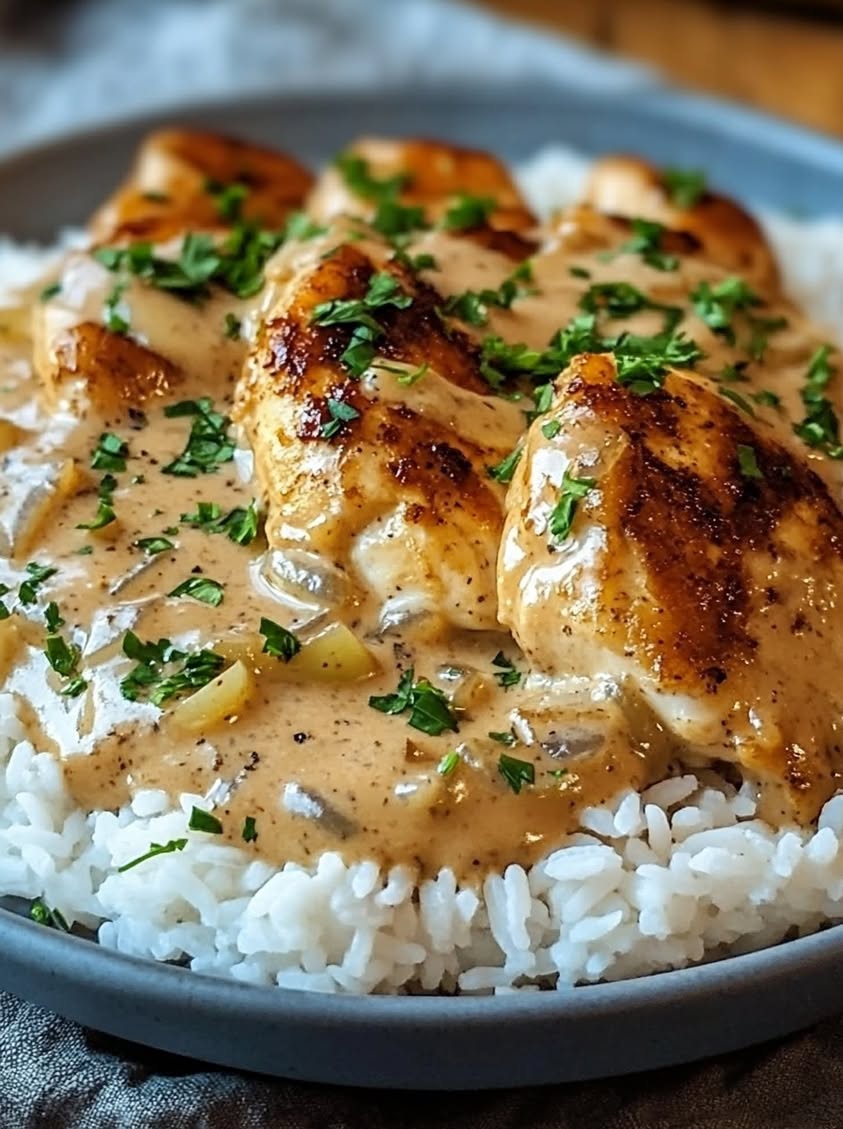
Southern-Style Smothered Chicken with Creamy Pepper Onion Gravy: A Comfort Food Masterpiece
Imagine a dish that embodies the very soul of Southern comfort food. This Southern-Style Smothered Chicken with Creamy Pepper Onion Gravy is exactly that. It delivers deeply satisfying flavor and transforms simple ingredients into a truly memorable meal. Ultimately, this recipe creates a perfect harmony of tender chicken and a rich, savory gravy.
Furthermore, the magic happens in one skillet. First, you achieve golden, crispy chicken. Then, you build a gravy in the same pan, capturing every bit of flavor. Consequently, the final result is a chicken dish that is impossibly juicy and coated in a velvety, pepper-flecked sauce. This Southern-Style Smothered Chicken with Creamy Pepper Onion Gravy is a guaranteed family favorite.
Additionally, this meal is perfect for both weeknight dinners and special Sunday suppers. It requires no complicated techniques, just patience and good ingredients. The aroma alone, as the onions and peppers soften and meld with the pan drippings, will have everyone gathered in the kitchen. This is home cooking at its absolute finest.
Quick Recipe Highlights
- Flavor Profile: This dish features savory, umami-rich chicken balanced by the sweet sharpness of cooked onions and bell peppers. The gravy adds a creamy, peppery depth that ties everything together beautifully.
- Texture: You get wonderfully crispy, golden-brown chicken skin that softens slightly under the gravy, contrasted by the tender, falling-off-the-bone meat. The gravy itself is luxuriously smooth and velvety.
- Aroma: The cooking process fills your kitchen with the irresistible scents of browning chicken, caramelizing onions, and toasting flour and black pepper. It’s a warm, savory, and deeply comforting smell.
- Visual Appeal: The dish presents beautifully with golden chicken pieces nestled in a creamy, speckled gravy. Vibrant green bell peppers and translucent onions add pops of color, making it look as good as it tastes.
- Skill Level Needed: This is an accessible recipe for most home cooks. It focuses on foundational skills like pan-frying and making a simple roux-based gravy, making it a great recipe to build confidence.
- Special Equipment: You only need a large, heavy-bottomed skillet or Dutch oven with a tight-fitting lid. A good pair of tongs is helpful for turning the chicken safely.
Recipe Overview
- Difficulty Level: We rate this recipe as easy. The steps are sequential and logical, involving techniques most cooks are familiar with. The key is managing heat and timing, which the instructions clearly outline. Anyone comfortable with basic stovetop cooking can achieve excellent results.
- Category: This is a quintessential main course protein dish. It falls squarely into the comfort food and family dinner categories. It’s hearty, satisfying, and designed to be the star of the plate.
- Cuisine: This recipe is firmly rooted in American Southern cuisine. It draws from traditions of pan-frying and “smothering” meats in gravy, a technique used to create moisture and flavor from economical cuts.
- Cost: This is a very cost-effective meal. Chicken thighs are typically affordable, and the vegetables and pantry staples are inexpensive. You can feed a family of four a restaurant-quality dish for a fraction of the price.
- Season: This dish is truly year-round comfort food. It’s cozy and warming in fall and winter, yet the bright peppers make it feel appropriate for spring and summer, especially when served with lighter sides.
- Occasion: Perfect for casual weeknight dinners, hearty Sunday suppers, potlucks, and any gathering where you want to serve something universally loved. It’s humble yet impressive.
Why You’ll Love This Recipe
First and foremost, the taste and texture are utterly irresistible. The chicken becomes incredibly tender from its slow braise in the gravy, while the initial sear ensures the skin has wonderful flavor. Meanwhile, the creamy pepper onion gravy is rich and complex, with layers of savory depth from the fond and a gentle heat from the black pepper. Every bite is a perfect balance of juicy protein and luxurious sauce.
Moreover, the recipe offers tremendous convenience. You cook everything in a single skillet, which means less cleanup and more flavor. The process is largely hands-off after the initial sear, allowing you to prepare sides or simply relax. Furthermore, the ingredient list is simple and relies on pantry staples, so you can likely make it without a special grocery trip.
From a nutritional perspective, this dish provides a solid source of protein from the chicken thighs. Using bone-in, skin-on thighs also adds more collagen, which is beneficial for joint health. You can control the fat content by skimming the gravy if desired. Additionally, the onions and bell peppers contribute vitamins and antioxidants, making this a well-rounded meal.
This Southern-Style Smothered Chicken with Creamy Pepper Onion Gravy also has fantastic social value. It is a crowd-pleaser that appeals to all ages. Serving a dish like this creates a sense of warmth and hospitality, making guests feel cared for. It is a fantastic centerpiece for a casual dinner party because it feels special without being fussy.
Finally, it is remarkably cost-effective and accessible. Chicken thighs are one of the most affordable cuts of meat, and the rest of the ingredients are basic kitchen staples. This recipe demonstrates how to turn humble, inexpensive components into a meal that tastes like a million bucks. It is a testament to the power of good technique and patient cooking.
Historical Background and Cultural Significance
The technique of “smothering” meat is a cornerstone of Southern and Cajun cooking traditions. Historically, this method was born from necessity and resourcefulness. Cooks would use tougher, less expensive cuts of meat and slow-cook them in a covered pot with moisture—often gravy, onions, or other vegetables—to make them tender and flavorful. Consequently, this practice ensured no part of the animal was wasted and created hearty meals for families.
This style of cooking holds deep cultural importance in the American South. It represents a cuisine built on making the most of what you have, a skill passed down through generations. Dishes like smothered chicken, pork chops, or steak are Sunday dinner staples, connecting people to their heritage and family tables. The aroma itself is a powerful sensory memory for many.
The recipe has evolved over time, of course. While the fundamentals remain, home cooks have added their own touches. The inclusion of bell peppers, for instance, shows a Creole or Cajun influence, adding the “holy trinity” of onions, celery, and bell peppers to the base. The use of heavy cream in the gravy is a more modern luxury, whereas earlier versions might have used milk, buttermilk, or even just broth and a roux.
Regional variations are plentiful. In some areas, the gravy is a simple brown gravy from the pan drippings. In others, it’s a creamy, peppery white gravy. Some recipes include mushrooms, garlic, or a splash of wine. The constant is the method: browning the protein, building a sauce in the same pan, and then simmering it all together until the meat is fall-apart tender. This Southern-Style Smothered Chicken with Creamy Pepper Onion Gravy is a delicious synthesis of these traditions.
Ingredient Deep Dive
Chicken Thighs (bone-in, skin-on) are the ideal choice for smothering. Historically, dark meat was less prized, making it a thrifty option for home cooks. Nutritionally, thighs contain more iron and zinc than breast meat and stay juicier during long cooking. Select thighs that are plump and have a good layer of fat under the skin. Store them in the coldest part of your fridge and use within 2 days. For a substitute, bone-in chicken legs or breasts will work, but adjust cooking time for breasts to prevent dryness.
Onions are fundamental, providing a sweet, savory base. Cultivated for thousands of years, they are a universal flavor builder. They offer quercetin, an antioxidant, and prebiotic fibers for gut health. Choose firm onions with dry, papery skins. Store in a cool, dark, well-ventilated place. Yellow onions are best here for their balanced sweetness when cooked. You could substitute with shallots for a more delicate flavor, but increase the quantity.
Bell Peppers add color, sweetness, and a slight vegetal note. They were introduced from the Americas to Europe and are now global. They are an excellent source of Vitamin C and Vitamin A. Look for peppers with taut, glossy skin and no soft spots. Store in the refrigerator’s crisper drawer. Green peppers have a sharper taste, while red, yellow, or orange are sweeter. Any color works, but green is traditional for the “trinity.”
All-Purpose Flour is used for both dredging and making the roux. It creates the crispy coating on the chicken and later thickens the gravy into a silky sauce. For a gluten-free version, use a 1:1 gluten-free flour blend that contains a starch like xanthan gum for binding. Store flour in a sealed container in a cool, dry place to prevent pests and moisture.
Heavy Cream creates the luxurious, creamy body of the gravy. Before modern dairy processing, cooks would use the rich top layer of fresh milk. It adds fat which carries flavor and creates a smooth, velvety texture. For a dairy-free alternative, full-fat canned coconut milk is the best substitute, though it will impart a slight coconut flavor. Alternatively, a cashew cream can work well.
Common Mistakes to Avoid
- Crowding the Pan: Adding all the chicken at once will steam it instead of searing it. You must cook in batches to get proper browning. This step is crucial for developing flavor and texture.
- Not Seasoning Enough: Season the chicken generously with salt and pepper before dredging. The flour layer and gravy need a well-seasoned base. Underseasoning at the start is hard to correct later.
- Burning the Roux: After adding flour to the fat, cook it just until it’s blonde and smells nutty, about 1-2 minutes. A burned roux will make the gravy taste bitter and ruin the dish.
- Adding Cold Liquid to a Hot Roux: Pouring cold broth or cream into the hot roux can cause it to seize and become lumpy. Always ensure your liquids are at least room temperature, or warm them slightly.
- Rushing the Simmer: Once the chicken is back in the gravy, the covered simmer is essential for tenderizing the meat. Lifting the lid too often releases steam and slows the process. Trust the timer.
- Using Boneless, Skinless Thighs: While possible, you lose two key elements: the flavor and fat from the skin for the gravy, and the bone which adds richness and helps the meat stay moist. Stick with bone-in, skin-on for best results.
- Skipping the Rest: Letting the chicken rest for 5-10 minutes after cooking allows the juices to redistribute. Cutting into it immediately will cause all those flavorful juices to run out onto the plate.
- Not Tasting the Gravy: Before serving, always taste the gravy and adjust the seasoning. It may need another pinch of salt or a fresh crack of black pepper to make the flavors pop.
Essential Techniques
Pan Searing for Golden Brown Chicken: This technique is vital for flavor and texture. Pat the chicken completely dry with paper towels first; moisture is the enemy of browning. Heat your oil until it shimmers before adding the chicken. Then, do not move the pieces for several minutes to allow a proper crust to form. The visual cue for success is a deep golden-brown color that releases easily from the pan. If it sticks, it’s not ready to flip.
Building a Roux-Based Gravy: This is the heart of the sauce. After removing the chicken, you have flavorful fat and browned bits (fond) in the pan. Sprinkle in flour and cook, stirring constantly, to make a roux. This cooks out the raw flour taste and toasts the starch. The roux must be smooth before you add liquid. Then, you slowly whisk in your broth to create a lump-free base that will thicken beautifully as it simmers.
The “Smothering” Braise: This final step transforms the dish. Returning the seared chicken to the gravy and covering it creates a moist, steamy environment. The chicken finishes cooking gently, becoming fork-tender, while also flavoring the gravy. The lid must fit snugly to trap steam. The technique turns two separate components—crispy chicken and gravy—into one cohesive, deeply integrated dish where the flavors marry perfectly.
Pro Tips for Perfect Southern-Style Smothered Chicken
Bring your chicken to room temperature for 15-20 minutes before cooking. This helps it cook more evenly, preventing a cold center and overcooked edges.
Use a splatter screen when searing the chicken. This keeps your stovetop clean and prevents painful grease splatters while allowing steam to escape.
After removing the seared chicken, pour the leftover oil through a fine-mesh sieve into a heatproof bowl. Then, measure back the 3 tablespoons you need for the roux. This filters out any burned flour bits for a cleaner gravy.
If your gravy seems too thick after simmering, thin it with a splash of additional warm broth or cream. Conversely, if it’s too thin, simmer uncovered for a few more minutes to reduce and thicken.
For an extra flavor boost, add a teaspoon of fresh thyme leaves or a pinch of smoked paprika to the gravy with the onions and peppers.
Let the finished dish rest off the heat, covered, for 5-10 minutes before serving. This allows the gravy to settle and the chicken to reabsorb its juices fully.
Variations and Adaptations
For regional variations, consider a Cajun twist by adding diced celery to the peppers and onions to complete the “holy trinity,” and season with Cajun spice blend. A Pennsylvania Dutch version might use milk instead of cream for a lighter gravy. In some Southern households, a spoonful of tomato paste is added with the vegetables for color and depth.
Seasonal adaptations are easy. In summer, use a mix of colorful sweet peppers and serve with fresh corn and tomatoes. For a heartier winter meal, add sliced mushrooms to the onion-pepper mix and serve over mashed potatoes or egg noodles.
Dietary modifications are straightforward. For gluten-free, use a certified GF flour blend for dredging and the roux. For dairy-free, substitute the heavy cream with full-fat canned coconut milk. To lower carbs, you can skip the dredging step (though you’ll lose crispness) and thicken the gravy with a cornstarch slurry instead of a flour roux.
Flavor variations can personalize the dish. Add minced garlic with the onions, stir in a tablespoon of whole-grain mustard at the end, or finish the gravy with a squeeze of lemon juice for brightness. A splash of dry white wine deglazed after cooking the vegetables adds wonderful complexity.
Serving and Presentation Guide
Plating is key for visual appeal. Place a generous scoop of your chosen starch—like mashed potatoes, rice, or buttered egg noodles—in the center of a shallow bowl or plate. Lean one or two pieces of chicken against the starch. Then, ladle a generous amount of the creamy pepper onion gravy over the chicken and let it pool around the sides. Ensure some of the colorful peppers and onions are visible on top.
Garnishing adds a fresh finish. A simple sprinkle of freshly chopped parsley or chives provides color and a mild herbal note. A final crack of black pepper over the top looks professional and reinforces the flavor. For a special touch, a very light drizzle of high-quality extra virgin olive oil just before serving adds sheen.
Traditional accompaniments include creamy mashed potatoes, fluffy white rice, or soft, absorbent biscuits to soak up every drop of gravy. Buttered corn, green beans, or a simple garden salad with a sharp vinaigrette provide a refreshing contrast to the rich main dish.
Wine and Beverage Pairing
For wine pairings, choose something that can cut through the richness of the creamy gravy. A crisp, unoaked Chardonnay or a French Chablis offers acidity and clarity. Alternatively, a light-bodied red with low tannins, like a Pinot Noir or Beaujolais, complements the savory chicken without overpowering it. The goal is balance, not competition.
Non-alcoholic alternatives are just as important. A tart lemonade or sparkling apple cider cleanses the palate beautifully. Iced tea, especially a slightly sweet Southern-style tea, is a classic and perfect match. For a warmer option, a glass of buttermilk is a traditional Southern accompaniment.
Storage and Shelf Life
Store leftovers in an airtight container in the refrigerator for up to 3-4 days. The gravy may thicken significantly when cold. Reheat gently in a covered skillet over low heat, adding a splash of broth or water to loosen the gravy to the desired consistency. You can also reheat in the microwave, stirring every 30 seconds to ensure even heating.
This dish freezes quite well for up to 2-3 months. Cool completely, then transfer to a freezer-safe container, leaving some headspace for expansion. Thaw overnight in the refrigerator before reheating. Note that the texture of the peppers may become softer after freezing, but the flavor will remain excellent.
Make Ahead Strategies
You can prep components ahead to streamline dinner. The onions and peppers can be sliced and stored in the fridge a day in advance. The chicken can be seasoned and dredged in flour a few hours ahead; keep it on a rack in the fridge so the coating stays dry. You can even sear the chicken and make the gravy base up to the point before adding the cream. Then, cool, cover, and refrigerate. When ready to finish, gently reheat the gravy, stir in the cream, add the chicken, and proceed with the covered simmer.
Scaling Instructions
This recipe scales beautifully. To halve it, use 4 chicken thighs and halve all other ingredients. Use a 10-inch skillet. To double or triple for a crowd, use a very large Dutch oven or cook the chicken in batches across two skillets. Be mindful that making a larger quantity of roux requires constant attention to prevent burning. The simmering time may need to be extended by 5-10 minutes if the pot is very full. Ensure you have enough storage containers for any leftovers.
Nutritional Deep Dive
This dish is a good source of high-quality protein, essential for muscle repair and satiety. The fat content, primarily from the chicken skin and heavy cream, provides energy and helps absorb fat-soluble vitamins. Using bone-in thighs also contributes minerals like iron and zinc. The onions and peppers add dietary fiber, Vitamin C, and antioxidants. For a lighter version, you can remove the chicken skin after searing and use half-and-half instead of heavy cream, though the gravy will be less rich.
Dietary Adaptations
For a gluten-free version, substitute the all-purpose flour with a 1:1 gluten-free baking flour blend that contains xanthan gum. Ensure your chicken broth is certified gluten-free. The process remains identical.
For a dairy-free adaptation, replace the heavy cream with full-fat, canned coconut milk. The result will be slightly sweeter and have a coconut aroma, but it creates a similarly creamy, luxurious gravy.
A keto or low-carb adaptation involves skipping the flour dredge entirely. Simply season and sear the chicken. For the gravy, use 1-2 tablespoons of almond flour or coconut flour to make the roux, or thicken with a xanthan gum slurry at the end.
Troubleshooting Guide
If your gravy is too thin, create a slurry by mixing 1 tablespoon of flour with 2 tablespoons of cold water until smooth. Whisk this into the simmering gravy and cook for 2-3 minutes until thickened. Alternatively, just simmer the gravy uncovered to reduce and concentrate it.
If your gravy is lumpy, don’t panic. Simply pour it through a fine-mesh strainer into a clean pot, pressing on the solids. You can also use an immersion blender to carefully blend it until smooth. To prevent lumps next time, ensure your roux is smooth and your liquid is warm when you add it, whisking constantly.
If the chicken isn’t tender after the simmering time, it likely needs more time. Ensure the liquid is at a gentle simmer (small bubbles, not a rolling boil) and that the lid is on tightly. Continue cooking in 5-minute increments until the meat easily pulls away from the bone.
Recipe Success Stories
Readers consistently share how this recipe has become a family staple. One home cook reported her picky teenager asking for seconds, while another said it was the hit of their potluck, with multiple guests asking for the recipe. Many appreciate how the detailed instructions on making the roux gave them confidence to tackle other gravy-based dishes.
Adaptation successes are common. A reader on a gluten-free diet used almond flour for the roux with great results. Another added mushrooms and a splash of white wine for a gourmet twist. One creative cook used the same creamy pepper onion gravy technique with pork chops, reporting equally delicious outcomes.
Frequently Asked Questions
Can I use chicken breasts instead of thighs? Yes, but use bone-in, skin-on breasts and reduce the covered simmering time to 20-25 minutes to prevent dryness. Monitor the internal temperature, which should reach 165°F.
What can I use if I don’t have heavy cream? Half-and-half is a suitable substitute, though the gravy will be slightly less rich. For a non-dairy option, full-fat canned coconut milk works well.
My gravy is too salty. How can I fix it? Add a peeled, raw potato wedge to the gravy and simmer for 10-15 minutes; the potato will absorb some salt. Remove it before serving. Alternatively, thin the gravy with more unsalted broth or a bit of water.
Can I make this in a slow cooker? Absolutely. After searing the chicken and making the gravy base (up to adding the broth), transfer everything to a slow cooker. Add the cream, cover, and cook on LOW for 4-5 hours.
How do I know when the chicken is fully cooked? The safest way is to use a meat thermometer. Insert it into the thickest part of the thigh, avoiding the bone. It should read 165°F. The meat will also pull away from the bone easily.
Can I freeze the leftovers? Yes, this dish freezes very well for 2-3 months. Cool completely, store in an airtight freezer-safe container, and thaw in the refrigerator before reheating gently on the stove.
What’s the best way to reheat it? Reheat gently in a covered skillet over low-medium heat with a splash of broth or water to keep the gravy from becoming too thick. Stir occasionally until heated through.
Why is my chicken not browning? The pan likely wasn’t hot enough, the chicken was wet, or the pan was overcrowded. Pat the chicken very dry, ensure the oil is shimmering hot, and cook in batches without moving the pieces for several minutes.
Can I make the gravy ahead of time? You can make the gravy base (onions, peppers, roux, broth) a day ahead. Store it in the fridge. When ready to serve, reheat it, stir in the cream, add the seared chicken, and finish simmering.
What sides go best with this? Mashed potatoes, rice, buttered egg noodles, or biscuits are classic for soaking up the gravy. A green vegetable like green beans, broccoli, or a simple salad provides a nice contrast.
Additional Resources
If you loved this Southern-Style Smothered Chicken with Creamy Pepper Onion Gravy, explore other classic comfort food recipes on our site. Learn how to make perfect fluffy buttermilk biscuits to serve alongside, or a simple collard greens recipe for a full Southern-style meal. Our guide to making a basic roux is a great resource for mastering this foundational technique used in countless soups, sauces, and gravies.
For equipment, a heavy-bottomed enameled cast iron Dutch oven is ideal for this recipe as it retains heat evenly for searing and provides a perfect seal for simmering. A good instant-read thermometer takes the guesswork out of knowing when your chicken is perfectly cooked. Finally, invest in a sturdy whisk for making lump-free gravy every single time.
{“success”:true,”message”:”Recipe created successfully”,”post_id”:8492,”tasty_recipe_id”:8492,”shortcode”:” Print
Southern-Style Golden Chicken Smothered in Creamy Pepper Onion Gravy
Description
A comforting Southern classic featuring crispy, golden pan-fried chicken smothered in a rich, creamy gravy made with bell peppers and onions.
Ingredients
For the Crust:
- 4 bone-in, skin-on chicken thighs
- 1 cup all-purpose flour
- 1 teaspoon paprika
- 1 teaspoon garlic powder
- 1/2 teaspoon black pepper
- 1/2 teaspoon salt
- 1/4 cup vegetable oil
- 1 large onion, thinly sliced
- 1 green bell pepper, sliced
- 2 cups chicken broth
- 1/2 cup heavy cream
- 2 tablespoons butter
- 1 tablespoon all-purpose flour (for gravy)
- Fresh parsley for garnish
Instructions
1. Prepare the Crust:
- Season chicken thighs with salt, pepper, paprika, and garlic powder. Dredge each piece in flour, shaking off excess.
- Heat vegetable oil in a large skillet over medium-high heat. Fry chicken until golden brown and cooked through, about 6-8 minutes per side. Remove and set aside.
- In the same skillet, add butter, onion, and bell pepper. Sauté until softened, about 5 minutes.
- Sprinkle 1 tablespoon flour over vegetables and cook for 1 minute, stirring constantly.
- Gradually whisk in chicken broth and heavy cream. Bring to a simmer and cook until gravy thickens, about 5-7 minutes.
- Return chicken to skillet, spooning gravy over the top. Simmer for an additional 5 minutes to heat through. Garnish with fresh parsley before serving.
Notes
You can customize the seasonings to taste.

I’m Billy, a classically trained culinary school graduate from The Culinary Institute of America with over 12 years in the restaurant industry and over 19 years of cooking experience.