
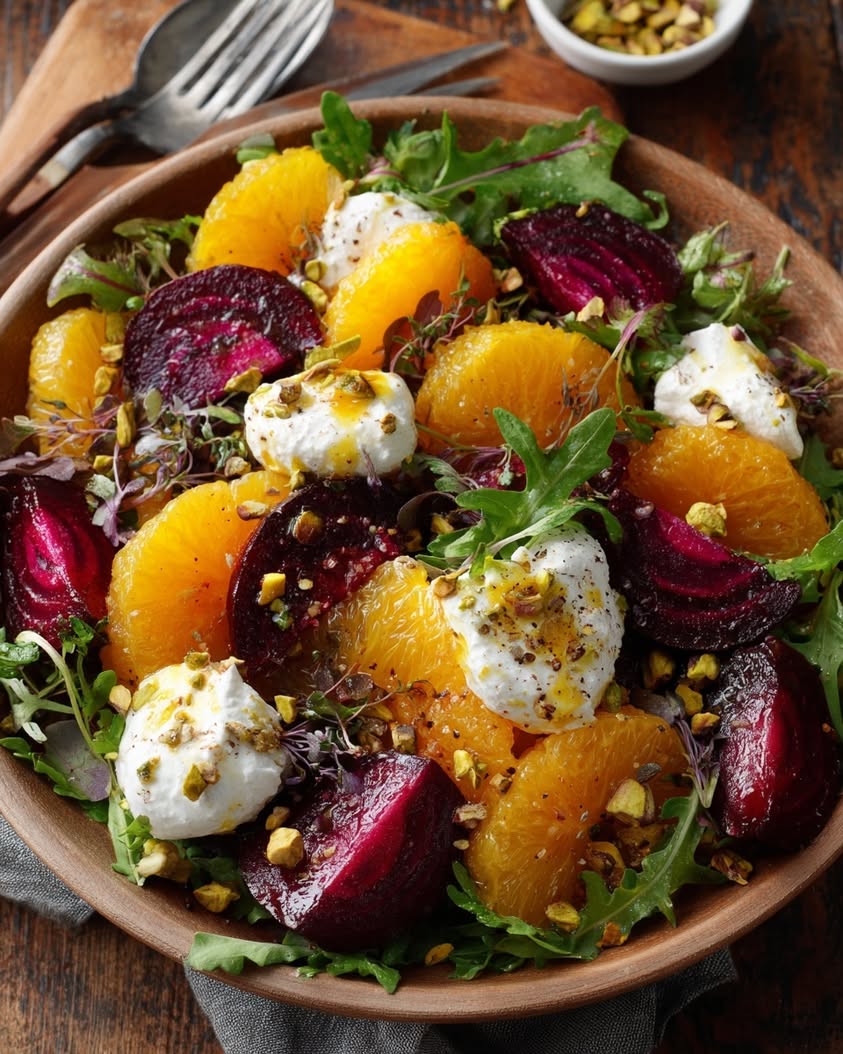
Winter Citrus & Burrata Salad with Roasted Beets, Pistachios & Orange-Honey Vinaigrette: A Vibrant Celebration of Seasonal Flavor
When the days are short and the weather is cold, our plates crave a burst of sunshine. This Winter Citrus Burrata Salad Recipe is exactly that. It is a stunning, restaurant-worthy dish that transforms simple seasonal ingredients into a masterpiece of color, texture, and taste. Moreover, it is a celebration of winter’s best produce, featuring jewel-toned roasted beets, a rainbow of citrus segments, and the luxurious creaminess of fresh burrata cheese.
Furthermore, this salad is a true sensory experience. Imagine the earthy sweetness of roasted beets mingling with the bright, juicy pop of oranges and grapefruit. Then, picture the moment your fork breaks into the delicate shell of a burrata ball, releasing its rich, creamy center. Finally, a vibrant orange-honey vinaigrette ties everything together with a perfect balance of sweet and tangy notes. Ultimately, this Winter Citrus Burrata Salad is not just a side dish. It is a vibrant centerpiece that will brighten any winter table.
Consequently, this recipe is perfect for anyone looking to elevate their seasonal cooking. It is surprisingly simple to prepare, yet the final result feels incredibly special and sophisticated. Whether you are hosting a holiday dinner, a cozy weekend brunch, or simply treating yourself to a beautiful meal, this Winter Citrus Burrata Salad Recipe delivers on every level. It is a guaranteed showstopper that will impress your guests and delight your palate.
Quick Recipe Highlights
- Flavor Profile: This Winter Citrus Burrata Salad Recipe masterfully balances earthy, sweet, tangy, and creamy elements. The roasted beets provide a deep, caramelized sweetness, while the citrus segments offer a refreshing burst of acidity. Meanwhile, the orange-honey vinaigrette adds a floral, tangy sweetness that enhances every component without overpowering them.
- Texture: The texture contrast in this salad is exceptional. You get the tender, substantial bite of the roasted beets, the juicy, firm segments of citrus, and the impossibly creamy, soft interior of the burrata. Additionally, the crunchy, salty pistachios scattered on top provide the perfect finishing contrast, creating a truly satisfying mouthfeel in every forkful.
- Aroma: The aroma is fresh and inviting. As you zest the citrus for the vinaigrette, the air fills with bright, zesty notes. Subsequently, the warm, earthy scent of the roasted beets mingles with the subtle, milky fragrance of the burrata. Finally, a hint of fresh thyme or mint adds an herby, aromatic top note that completes the sensory profile.
- Visual Appeal: This salad is a feast for the eyes. The deep ruby and golden hues of the beets create a stunning backdrop for the vibrant orange and pink citrus segments. Consequently, the snowy white burrata cheese becomes a beautiful focal point, while the green herbs and chopped pistachios add pops of contrasting color, making the entire plate look like a vibrant winter landscape.
- Skill Level Needed: This Winter Citrus Burrata Salad Recipe is accessible to cooks of all levels. The techniques involved are fundamental: roasting vegetables, segmenting citrus, and whisking a simple vinaigrette. Therefore, even a beginner can achieve fantastic results by following the clear steps. The real skill lies in the elegant assembly and presentation, which is straightforward but impactful.
- Special Equipment: You need very little special equipment. A baking sheet for roasting the beets is essential. Additionally, a sharp knife for segmenting the citrus and a small whisk or jar for emulsifying the vinaigrette are helpful. Otherwise, no fancy tools are required, making this an easy recipe to prepare in any kitchen.
Recipe Overview
- Difficulty Level: This Winter Citrus Burrata Salad Recipe is rated “Easy.” The steps are simple and sequential. First, you roast the beets, which is mostly hands-off time. Then, you prepare the vinaigrette and segment the citrus while the beets cook. Finally, assembly is just arranging the components artfully on a platter. There are no complex knife skills or tricky cooking methods involved, so it is perfect for a stress-free, impressive meal.
- Category: This dish falls squarely into the salad category, but it is substantial enough to be a light main course. It is also an exquisite appetizer or side dish for a larger feast. Furthermore, it fits beautifully into a brunch menu, offering a refreshing and elegant counterpoint to richer, egg-based dishes. Its versatility is one of its greatest strengths.
- Cuisine: While not tied to one specific tradition, this Winter Citrus Burrata Salad Recipe draws inspiration from modern Californian and Mediterranean cuisines. It emphasizes fresh, high-quality produce, simple preparations, and bold, clean flavors. The use of burrata cheese is distinctly Italian, while the focus on vibrant citrus and nuts is a hallmark of sunny, health-conscious cooking styles from coastal regions.
- Cost: The cost is moderate and depends on ingredient sourcing. Burrata cheese is typically the most expensive component. Seasonal citrus and beets are usually very affordable in winter. Pistachios can be pricey, but you only need a small amount for garnish. Overall, you are creating a restaurant-quality dish for a fraction of the price you would pay dining out.
- Season: This recipe is designed for peak winter, specifically when citrus varieties like blood oranges, cara cara oranges, and grapefruits are at their sweetest and most abundant. Beets are also a robust winter vegetable. Therefore, making this Winter Citrus Burrata Salad in season ensures the best flavor and value, truly capturing the essence of winter produce.
- Occasion: It is ideal for special occasions like holiday dinners, Valentine’s Day, or a fancy weekend gathering. Conversely, it is also wonderful for elevating a simple weeknight meal into something memorable. Its stunning presentation makes it perfect for entertaining, while its simple preparation makes it achievable for a quiet night in.
Why You’ll Love This Recipe
First and foremost, the taste and texture appeal of this Winter Citrus Burrata Salad Recipe is undeniable. Each bite is a harmonious symphony of flavors. The earthy sweetness of the beets is beautifully cut by the bright acidity of the citrus. Then, the rich, luscious burrata adds a decadent creaminess that feels indulgent. Finally, the crunchy, salty pistachios and the sweet-tangy vinaigrette bring all the elements together into a perfectly balanced dish. It is complex yet clean, satisfying yet refreshing.
Secondly, the convenience and preparation benefits are significant. Although the total time includes roasting beets, the active prep time is quite short. You can roast the beets up to two days in advance. Similarly, you can segment the citrus and make the vinaigrette ahead of time. Consequently, when you are ready to serve, assembly takes just minutes. This make-ahead flexibility makes it an entertainer’s dream, allowing you to spend time with guests instead of in the kitchen.
Thirdly, the nutritional advantages are impressive. This Winter Citrus Burrata Salad is packed with vitamins, fiber, and healthy fats. Beets are rich in folate and antioxidants. Citrus fruits provide a huge dose of immune-boosting vitamin C. Meanwhile, pistachios offer protein, fiber, and beneficial fats. Even the burrata provides calcium and protein. Therefore, you are enjoying a dish that is as nourishing as it is delicious, a true celebration of wholesome ingredients.
Furthermore, the social and entertaining value is exceptionally high. This salad is a guaranteed conversation starter. Its vibrant colors and elegant presentation immediately signal that a meal is special. Serving a beautiful platter of this Winter Citrus Burrata Salad makes guests feel cared for and impressed. It demonstrates thoughtfulness and culinary skill, setting a joyful and celebratory tone for any meal or gathering.
Finally, the cost-effectiveness and accessibility are key benefits. As mentioned, the most expensive item is often the burrata. However, you can often find good-quality burrata at warehouse clubs or well-priced at specialty grocers. All other ingredients are pantry staples or seasonal produce. By making this Winter Citrus Burrata Salad Recipe at home, you create a luxurious dining experience without the luxury price tag, proving that eating well doesn’t have to break the bank.
Historical Background and Cultural Significance
The concept of combining cheese with fruit and nuts is ancient, with roots stretching across Mediterranean and Middle Eastern cultures. For instance, Persian cuisine has long featured fresh herbs, nuts, and fruits alongside dairy. Similarly, Italian traditions celebrate the pairing of fresh, milky cheeses with preserved fruits and honey. This Winter Citrus Burrata Salad Recipe is a modern, seasonal interpretation of these timeless flavor marriages, focusing specifically on the bright produce available in colder months.
Burrata cheese itself has a more recent, but fascinating, history. It was invented in the Puglia region of Italy in the early 20th century as a way to use up the scraps of mozzarella production. Cheesemakers would create a pouch from stretched mozzarella curd and fill it with soft, creamy stracciatella and cream. This ingenious technique transformed leftovers into a luxurious delicacy. Today, burrata is celebrated worldwide for its unique texture and rich flavor, making it a star in dishes like this salad.
The evolution of the modern composed salad, where ingredients are arranged artfully rather than tossed, gained popularity in the late 20th century with the rise of California cuisine. Chefs like Alice Waters emphasized showcasing perfect, seasonal ingredients with minimal interference. This philosophy directly influences this Winter Citrus Burrata Salad Recipe. Each component is prepared to highlight its best qualities and then arranged thoughtfully on the plate, creating a dish that is as beautiful as it is tasty.
Regional variations of this concept abound. In Sicily, you might find a salad of blood oranges, fennel, and olives. In the American South, a salad of roasted beets, goat cheese, and pecans is a classic. This particular recipe brings together these inspirations, using winter citrus, roasted beets, and burrata. It is a testament to how global culinary ideas can merge to create something new and wonderful, perfectly suited for today’s seasonal cooking trends.
Ingredient Deep Dive
Beets: Beets have been cultivated since ancient times, originally for their leafy greens. The root itself gained popularity later. They are nutritional powerhouses, rich in fiber, folate, manganese, and betalains, which are antioxidants with anti-inflammatory properties. When selecting beets, look for firm, smooth roots with vibrant greens attached if possible. Store them unwashed in the refrigerator for up to two weeks. For a shortcut, you can use pre-cooked vacuum-packed beets, though roasting yourself yields superior sweetness. Golden beets make a beautiful, less-staining alternative to red.
Winter Citrus (Oranges & Grapefruit): Citrus fruits symbolize prosperity and happiness in many cultures, often featured in winter festivals. They are famously high in vitamin C, potassium, and flavonoids. Choose fruits that feel heavy for their size, indicating juiciness. The skin should be firm, not puffy. Store citrus at cool room temperature for short-term use or in the refrigerator for longer storage. For this Winter Citrus Burrata Salad Recipe, seek out varieties like cara cara oranges (pink and sweet), blood oranges (deep red and berry-like), or Meyer lemons for the vinaigrette for complex flavor.
Burrata Cheese: As noted, burrata originated in Puglia, Italy. It is essentially a mozzarella pouch filled with cream and soft cheese curds (stracciatella). Nutritionally, it provides protein, calcium, and fat. Always seek the freshest burrata possible, ideally from a cheese counter with a high turnover. It should be stored in its liquid in the refrigerator and used by the “use by” date. If burrata is unavailable, fresh mozzarella (mozzarella di bufala is excellent) or a creamy goat cheese can be substituted, though the textural experience will differ.
Pistachios: Pistachios are one of the oldest flowering nut trees and were a prized food in ancient Persia. They are a great source of protein, fiber, and healthy fats. Look for raw, unsalted pistachios for this recipe to control seasoning. Store them in an airtight container in a cool, dark place or the freezer to prevent rancidity. Toasted walnuts, hazelnuts, or almonds can be used as substitutes, but pistachios offer a unique green color and slightly sweet flavor that pairs perfectly with citrus.
Fresh Herbs (Mint or Thyme): Herbs have been used for millennia for both culinary and medicinal purposes. Mint adds a bright, cooling note, while thyme contributes a subtle, earthy warmth. Both are rich in antioxidants. Choose bunches with vibrant, perky leaves without wilting or dark spots. Store them like flowers: trim the stems and place in a glass of water in the fridge, loosely covered with a bag. Other herbs like basil, tarragon, or even a little rosemary can work, but use stronger herbs sparingly.
Common Mistakes to Avoid
- Over-roasting or under-roasting the beets: Over-roasted beets become dry and tough, while under-roasted beets are hard and difficult to peel. The key is roasting until a knife or skewer pierces the center with just a little resistance. Wrapping them in foil helps them steam-roast evenly, ensuring a tender, moist result.
- Not segmenting the citrus properly: Leaving the bitter white pith on the citrus segments can make your salad taste harsh. Take the time to cut between the membranes to release clean, pith-free “supremes.” This technique is simple and makes a dramatic difference in both texture and flavor, elevating the entire dish.
- Using cold burrata straight from the fridge: Burrata’s magical creamy texture is best appreciated at a cool room temperature. Taking it out of the refrigerator 20-30 minutes before serving allows the fats to soften slightly, making it lusciously creamy and spreadable when you cut into it on the plate.
- Drowning the salad in dressing: This is a composed salad, not a tossed green salad. The vinaigrette should be applied lightly and strategically. Drizzle it over the components, focusing on the beets and greens, rather than pouring it over the burrata, which can make it soggy and dilute its delicate flavor.
- Adding salt to the vinaigrette too early: If you are using kosher salt, it may not fully dissolve in a cold vinaigrette, leading to gritty bites. Whisk the salt into the citrus juice and honey first until dissolved, then slowly stream in the oil to create a perfectly smooth, emulsified dressing.
- Skipping the toasting step for the pistachios: Raw nuts can taste bland. Toasting pistachios in a dry skillet for a few minutes unlocks their essential oils, deepens their flavor, and enhances their crunch. This small, quick step adds a layer of nutty complexity that is well worth the extra three minutes.
- Cutting the beets while they are too hot: Attempting to peel and slice beets immediately after roasting will result in burned fingers and mashed, messy beets. Let them cool until they are comfortable to handle. The skins will also slip off much more easily after they have cooled slightly and steamed in their own foil packet.
- Using low-quality olive oil in the vinaigrette: Since the dressing is simple, every ingredient shines. A bland or rancid olive oil will make the entire vinaigrette taste off. Use a good-quality extra virgin olive oil with a fruity, peppery flavor that you enjoy tasting on its own.
Essential Techniques
Roasting Beets to Perfection: Roasting is crucial because it concentrates the beets’ natural sugars, creating a deep, caramelized sweetness that boiling cannot achieve. To master it, scrub beets clean, trim the tops, and wrap each individually in aluminum foil. This creates a mini steam oven that cooks them evenly and keeps them moist. Roast at 400°F (200°C) until tender. A common pitfall is undercooking; the knife should slide in easily. The visual cue for success is skin that wrinkles and pulls away slightly from the flesh, and a fragrant, earthy smell.
Segmenting Citrus (Making Supremes): This technique removes the bitter pith and membrane, leaving only the tender, juicy flesh. It is important for a refined texture and pure flavor. First, slice off the top and bottom of the fruit. Then, using a sharp knife, cut away the peel and pith in a downward motion, following the fruit’s curve. Finally, hold the fruit over a bowl and cut along the sides of each membrane to release the segments. The pitfall is cutting too much flesh away with the pith. Success is measured in clean, beautiful segments and minimal waste.
Emulsifying a Vinaigrette: Emulsification combines oil and acid into a stable, creamy mixture that coats ingredients evenly instead of separating. The key is to add the oil very slowly while whisking vigorously. This breaks the oil into tiny droplets suspended in the acid. Start with your acid (citrus juice), honey, and salt. Then, whisk constantly while streaming in a thin, steady thread of olive oil. The common pitfall is adding the oil too fast, which causes “breaking.” The visual cue for success is a thickened, slightly opaque dressing that holds together.
Handling Burrata Cheese: The goal is to preserve its delicate structure and present it beautifully. Always handle the ball gently. To serve, you can place the whole ball on the salad and let guests break into it, or you can carefully tear it into a few large, rustic pieces. Do not chop it with a knife, as this can crush it and release all the cream prematurely. The technique is about gentle tearing to maintain pockets of creamy interior. Success is a presentation where the creamy center is revealed enticingly at the table.
Pro Tips for Perfect Winter Citrus Burrata Salad
- Wear disposable gloves when peeling and cutting red beets to prevent stubborn stains on your hands. Alternatively, use golden beets which are just as sweet but won’t dye everything pink.
- Reserve a tablespoon of the citrus juice that collects while segmenting. You can add this to the vinaigrette for an extra burst of fresh flavor, ensuring no delicious juice goes to waste.
- Toast your pistachios in a dry pan until just fragrant. Let them cool completely before chopping. This prevents them from becoming oily and ensures they stay crunchy when scattered over the salad.
- Season each component lightly. Sprinkle the roasted beets with a tiny pinch of salt after slicing. Lightly salt the citrus segments. This builds layers of seasoning rather than relying solely on the dressing.
- If preparing ahead, store the dressed beets and the vinaigrette separately from the greens, citrus, and burrata. Assemble just before serving to keep the greens crisp, the citrus bright, and the burrata’s texture perfect.
- Use a mix of citrus varieties for a more complex flavor and stunning visual appeal. Combining blood orange, cara cara, and ruby red grapefruit creates a breathtaking color palette and a range of sweet-tart notes.
- Let the dressed salad sit for 5 minutes before serving. This allows the flavors to meld slightly—the beets will absorb some vinaigrette, and the citrus will mellow—creating a more harmonious first bite.
Variations and Adaptations
Regional Variations: For a Sicilian twist, add shaved fennel and black olives. A French-inspired version might include toasted hazelnuts and a tarragon-infused vinaigrette. To channel Middle Eastern flavors, sprinkle with sumac and za’atar, and use pomegranate seeds instead of some citrus. These adaptations show how the core structure of this Winter Citrus Burrata Salad Recipe can travel across culinary borders while maintaining its essence.
Seasonal Adaptations: In spring, substitute roasted asparagus or fresh peas for the beets. Summer calls for ripe stone fruits like peaches or nectarines alongside the burrata. In autumn, try roasted delicata squash or persimmons. The template of creamy cheese + sweet roasted or fresh element + crunchy nut + bright vinaigrette is endlessly adaptable to nature’s calendar.
Dietary Modifications: For a vegan version, replace burrata with a creamy vegan cheese alternative or a dollop of cashew cream. Make the vinaigrette with maple syrup instead of honey. For a nut-free salad, use toasted sunflower or pumpkin seeds. To reduce fat, use a smaller amount of burrata and increase the proportion of beets and citrus, or choose a lighter cheese like ricotta salata.
Flavor Variations: Infuse the olive oil for the vinaigrette with rosemary or chili flakes for a warm, spicy note. Add a teaspoon of whole grain mustard to the dressing for tangy complexity. Incorporate fresh pomegranate arils for bursts of tart-sweet juice. A drizzle of aged balsamic glaze over the assembled salad adds a rich, sweet-acidic finish that complements the beets beautifully.
Texture Modifications: For more crunch, add crispy fried shallots or capers. For a smoother element, include slices of ripe avocado. If you prefer a more integrated salad, you can tear the burrata and gently toss it with the beets and citrus, though this sacrifices the dramatic presentation. Adding cooked farro or quinoa turns it into a hearty grain bowl.
Presentation Alternatives: Serve individual portions on large, chilled plates for a formal dinner. For a family-style feast, use a large, rustic wooden board or platter. Layer the ingredients in a wide, shallow bowl instead of flat on a plate. You can also deconstruct the salad, serving the components in separate small bowls and letting guests build their own bites.
Serving and Presentation Guide
Plating Techniques: Start with a base of your greens or simply a clean, large platter. Scatter the roasted beet slices and wedges artfully, creating pockets of color. Tuck the citrus segments among the beets. Place the whole burrata ball prominently in the center, or tear it into a few pieces and distribute them. The goal is an arrangement that looks abundant and natural, not symmetrically perfect. Let the ingredients speak for themselves.
Garnishing Ideas: The chopped pistachios and fresh herbs are your primary garnishes. Sprinkle them generously over everything. Additionally, a few flakes of flaky sea salt (like Maldon) over the burrata just before serving adds texture and highlights its creaminess. A final twist of black pepper over the entire platter adds visual contrast and a hint of spice. Edible flowers like nasturtiums or pansies make a stunning, special-occasion garnish.
Traditional Accompaniments: As a starter, this salad needs little else. It pairs wonderfully with a crusty, warm baguette or focaccia to soak up the creamy burrata and leftover vinaigrette on the plate. For a larger meal, it beautifully precedes rich pasta dishes, roasted chicken, or grilled fish. Its bright acidity cuts through heavier flavors, making it an ideal palate cleanser within a multi-course menu.
Modern Serving Suggestions: For a chic appetizer, serve smaller portions on individual plates with a single, perfect citrus supreme and a small piece of burrata. At a brunch buffet, present it alongside quiche, smoked salmon, and pastries. You can also turn it into a canapé by placing small bites on crostini or endive leaves. Its versatility allows it to fit into any modern dining context.
Temperature Considerations: This salad is best served cool, not cold. The beets should be at room temperature. The citrus and burrata should be cool but not fridge-cold. Chilled plates can dull the flavors. If you’ve refrigerated components, let them sit out for 15-20 minutes to take the chill off. This ensures all the nuanced flavors are perceptible and the textures are at their best.
Portion Control Tips: This recipe serves four as a substantial starter or side. For a light main course, it serves two. When scaling for a crowd, plan for one medium beet and one piece of citrus per person, plus one burrata ball for every two to three people. You can stretch it by adding a bed of hearty greens like arugula or massaged kale, which will absorb the dressing and make the salad more filling.
Wine and Beverage Pairing
Wine Pairings: The bright acidity and creamy fat in this Winter Citrus Burrata Salad Recipe call for wines with good acidity and minimal oak. A crisp, dry Rosé from Provence is a flawless match—its red fruit notes complement the beets, and its acidity mirrors the citrus. A Sauvignon Blanc, especially from New Zealand, offers zesty grapefruit and herbal notes that echo the salad’s flavors. For a red option, choose a light, chilled Pinot Noir with low tannins; its earthy red fruit profile pairs beautifully with the roasted beets without overwhelming the dish.
Non-Alcoholic Alternatives: A sparkling water with a twist of orange or grapefruit peel is a simple, refreshing choice. For something more crafted, try a citrus-forward shrub (drinking vinegar) mixed with soda water; the tartness complements the vinaigrette. A lightly sweetened ginger beer provides a spicy kick that cuts through the burrata’s richness. Iced herbal tea, like mint or hibiscus, served unsweetened, also makes a lovely, flavorful pairing that won’t compete with the salad.
Coffee/Tea Pairings: While not a typical pairing for a salad, if serving this at a brunch, follow with a bright, citrusy coffee (like a Kenyan or Ethiopian blend) or a cup of Earl Grey tea. The bergamot in Earl Grey subtly echoes the citrus notes in the salad. Avoid heavy, dark roasts or overly tannic teas, as they can clash with the salad’s delicate and bright flavor profile.
Temperature Considerations: White and rosé wines should be well-chilled, around 45-50°F (7-10°C). If you choose a light red like Pinot Noir, serve it slightly cooler than room temperature, about 55°F (13°C). Non-alcoholic sparkling drinks should be very cold. The goal is for the beverage to refresh the palate between bites of the rich cheese and sweet beets, not to warm it.
Serving Suggestions: Always offer the wine or beverage in clear glassware to appreciate the color. For a festive touch, add a single edible flower or a thin citrus wheel to the glass of water or non-alcoholic drink. When serving wine, pour a taste for yourself first to ensure it is at the ideal temperature and condition before offering it to guests.
Storage and Shelf Life
Storage Methods: This salad is best enjoyed immediately. However, you can store components separately for up to two days. Place roasted, cooled beets in an airtight container. Keep citrus segments in a separate container. Store the vinaigrette in a jar in the fridge. Burrata must stay in its original liquid in the refrigerator. Do not assemble until ready to serve.
Temperature Requirements: All components except the burrata can be stored at a consistent refrigerator temperature of 40°F (4°C) or below. The burrata is the most delicate; ensure your fridge is cold enough to keep dairy safe. When storing dressed beets (if you must), keep them chilled, but note the vinaigrette may cause the beets to bleed color more.
Container Recommendations: Use glass containers for the beets and citrus to prevent staining and odor absorption. A mason jar is perfect for the vinaigrette. Keep the burrata in the tub it came in. If you need to transfer it, place it in a bowl and cover it with its liquid and then plastic wrap.
Signs of Spoilage: For beets and citrus, look for mold or an off, sour smell. Burrata is spoiled if it develops an ammonia-like odor, an overly sour taste, or if the outer shell becomes slimy or discolored. The vinaigrette is stable, but if fresh herbs were added to it, look for cloudiness or fermentation bubbles.
Reheating Instructions: There is no reheating for this salad. If beets have been refrigerated, let them come to room temperature for about 30 minutes before assembling. Cold beets will make the burrata seize up and become firm, ruining the creamy texture.
Freezing Guidelines: Freezing is not recommended for any component of this Winter Citrus Burrata Salad Recipe. Beets become mushy and watery. Citrus segments turn to pulp. Burrata separates and becomes grainy. The vinaigrette may separate irreparably. This is a fresh dish meant to be enjoyed in the moment.
Make Ahead Strategies
Prep Timeline: You can fully prepare this salad 1-2 days in advance with smart staging. Day 1: Roast the beets, let them cool, peel, and slice. Store them in a container. Segment the citrus and store it separately. Make the vinaigrette and store it in the fridge. Toast and chop the nuts. Day of Serving: Remove beets, citrus, and vinaigrette from the fridge 30 minutes ahead. Assemble the platter just before serving.
Storage Between Steps: Keep the sliced beets in their container; you can even toss them with a tablespoon of the vinaigrette to keep them moist and flavorful. This step allows them to marinate slightly. Store the citrus in a single layer if possible to prevent squishing. Keep the nuts at room temperature in a sealed bag to maintain crunch.
Quality Impact Assessment: Prepping ahead has minimal negative impact if done correctly. Beets may soften slightly but remain delicious. Citrus holds up very well for a day or two. The vinaigrette’s flavor often improves as it melds. The only element that must be last-minute is the burrata placement and the final garnish with nuts and herbs to preserve texture.
Assembly Tips: When ready to assemble, arrange the beets and citrus on the platter first. Take the burrata out of its liquid and pat the outside very gently with a paper towel to prevent a puddle of whey on your platter. Place it, then garnish. Dress the salad lightly, serve the extra vinaigrette on the side, and enjoy immediately.
Reheating Guidelines: Not applicable. The goal is to bring components to a cool room temperature, not to reheat them.
Fresh Element Additions: The fresh herbs and nuts should always be added at the last second. If you added herbs to the vinaigrette, that’s fine, but a final sprinkle of fresh herbs on top provides a vibrant aroma and visual pop that pre-mixed herbs lose. The nuts will lose their crunch if added too early, especially if they sit on moist ingredients.
Scaling Instructions
Halving the Recipe: Halving this Winter Citrus Burrata Salad Recipe is straightforward for a romantic dinner for two. Use 1-2 medium beets, 1 citrus fruit (or a mix of half a grapefruit and half an orange), one small burrata ball, and proportionally reduce the vinaigrette ingredients. The roasting time for fewer beets may be slightly less, so check for doneness 10 minutes earlier. All other techniques remain identical.
Doubling or Tripling: For a crowd, you can easily double or triple the ingredients. The key consideration is oven space for roasting beets; use multiple baking sheets and rotate them halfway through cooking. You may need to segment citrus in batches. For presentation, consider creating two separate platters instead of one enormous one to maintain visual appeal. Offer vinaigrette in a pitcher on the side for guests to add as desired.
Equipment Adjustments: When scaling up, ensure you have a large enough platter or multiple serving dishes. A large baking sheet (or two) is essential for roasting many beets at once without steaming them. Have a large enough bowl for whisking a bigger batch of vinaigrette, or make it in a blender for ease and perfect emulsification.
Timing Modifications: Roasting time for beets may increase slightly if the oven is very crowded, as steam circulation is reduced. Allow an extra 5-10 minutes and rely on the knife-tender test. The prep time for segmenting more citrus will increase linearly. Otherwise, the process timing remains consistent per batch.
Storage Considerations: When making a large batch, the need for proper component storage is even more critical. Have multiple airtight containers ready for the roasted beets and segmented citrus. Label them if making different varieties. Remember, a large quantity of dressed salad does not keep well, so only assemble what you plan to serve immediately.
Nutritional Deep Dive
Macro Breakdown: This Winter Citrus Burrata Salad Recipe provides a balanced mix of macronutrients. The healthy fats come primarily from the olive oil in the vinaigrette, the burrata, and the pistachios. These fats aid in the absorption of fat-soluble vitamins from the be{“success”:true,”message”:”Recipe created successfully”,”post_id”:8581,”tasty_recipe_id”:8581,”shortcode”:” Print
Winter Citrus & Burrata Salad with Roasted Beets, Pistachios & Orange-Honey Vinaigrette
Description
A vibrant winter salad featuring roasted beets, fresh citrus segments, creamy burrata, and crunchy pistachios, all tossed in a zesty orange-honey vinaigrette.
Ingredients
For the Crust:
- 3 medium beets, trimmed and scrubbed
- 2 large oranges (such as navel or blood oranges)
- 1 grapefruit
- 8 oz burrata cheese
- 1/2 cup shelled pistachios, roughly chopped
- 4 cups mixed winter greens (such as arugula or frisée)
- 1/4 cup extra-virgin olive oil
- 2 tbsp fresh orange juice
- 1 tbsp honey
- 1 tbsp white wine vinegar
- Salt and black pepper to taste
Instructions
1. Prepare the Crust:
- Preheat oven to 400°F. Wrap each beet in foil and roast for 45-60 minutes until tender. Let cool, then peel and slice into wedges.
- While beets roast, segment the oranges and grapefruit: cut off ends, remove peel and pith, then slice between membranes to release segments. Set aside.
- Make the vinaigrette: whisk together olive oil, orange juice, honey, white wine vinegar, salt, and pepper until emulsified.
- Arrange mixed greens on a platter. Top with beet wedges, citrus segments, and torn burrata. Drizzle with vinaigrette and sprinkle with pistachios. Serve immediately.
Notes
You can customize the seasonings to taste.

I’m Billy, a classically trained culinary school graduate from The Culinary Institute of America with over 12 years in the restaurant industry and over 19 years of cooking experience.