
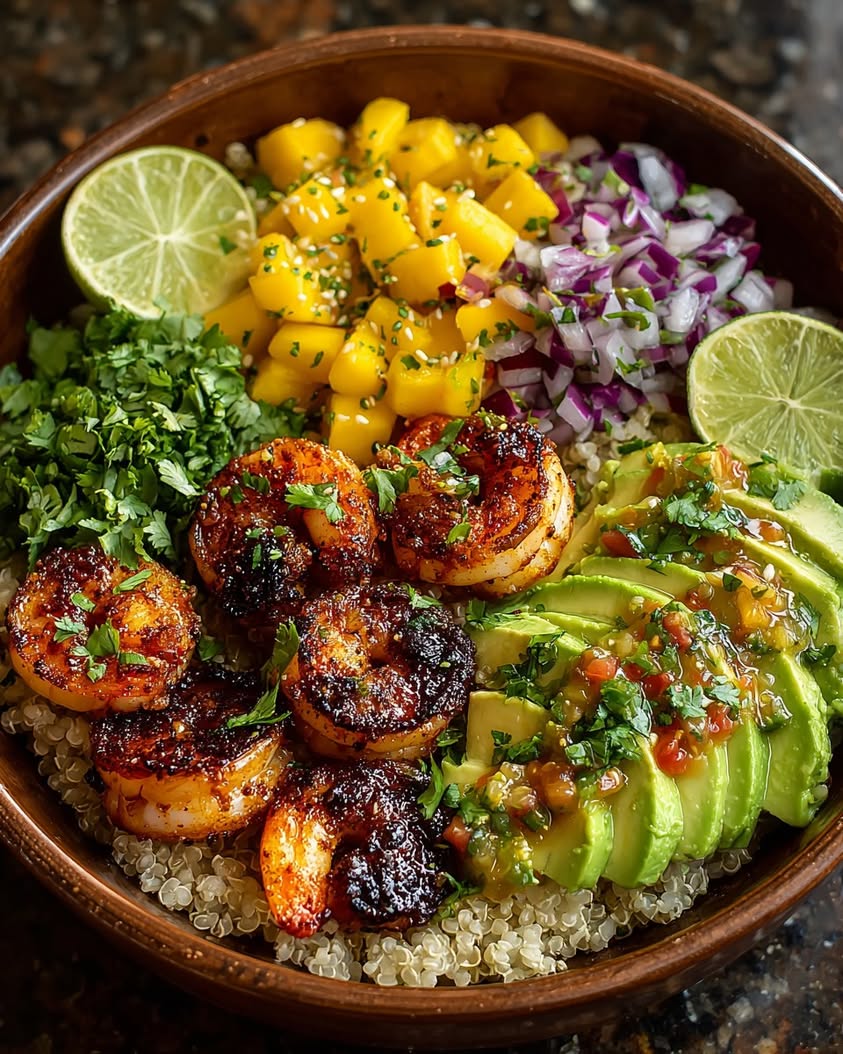
Zesty Shrimp Avocado Mango Bowls: A Tropical Weeknight Dinner
Imagine a dinner that tastes like a vacation. These Zesty Shrimp Avocado Mango Bowls deliver exactly that experience, combining succulent shrimp with creamy avocado and a vibrant mango salsa. Moreover, a tangy lime-chili sauce ties everything together for a flavor explosion. This dish is not just a meal; it is a celebration of fresh, bright ingredients that come together in under thirty minutes. Consequently, it is perfect for busy weeknights when you crave something special without spending hours in the kitchen.
The beauty of these Zesty Shrimp Avocado Mango Bowls lies in their perfect balance. You get the savory, garlicky shrimp paired with the sweet, juicy mango salsa. Meanwhile, the rich avocado adds a cooling, creamy texture that contrasts beautifully with the spicy kick from the sauce. Every single bite offers a different combination of flavors and textures. Ultimately, this recipe proves that healthy eating can be incredibly exciting and satisfying. It is a guaranteed crowd-pleaser that will have everyone asking for seconds.
Furthermore, this recipe is incredibly versatile. You can serve it over a bed of cilantro-lime rice, quinoa, or even a simple green salad. Additionally, the components can be prepared ahead of time, making assembly a breeze. Whether you are cooking for your family or impressing dinner guests, these bowls are a foolproof choice. They are light yet filling, packed with protein and healthy fats, and bursting with colors that make your dinner table look stunning. Let us dive into how to create this masterpiece.
Quick Recipe Highlights
- Flavor Profile: These Zesty Shrimp Avocado Mango Bowls offer a dynamic taste experience. The shrimp is seasoned with garlic and paprika, providing a savory base. Meanwhile, the mango salsa adds a tropical sweetness that is brightened by fresh lime juice and cilantro.
- Texture: You will enjoy a wonderful contrast in every mouthful. The shrimp are tender and slightly crisp from searing, while the avocado is luxuriously creamy. Furthermore, the diced mango and red onion in the salsa provide a delightful, juicy crunch.
- Aroma: As you cook, the kitchen fills with the irresistible scent of garlic and shrimp sizzling. The fresh herbs like cilantro and the zest from the lime-chili sauce create an incredibly inviting, fragrant atmosphere that promises a delicious meal.
- Visual Appeal: This dish is a feast for the eyes with its vibrant color palette. Think of the pink shrimp, green avocado, yellow mango, and red onion all arranged beautifully in a bowl. The presentation is restaurant-quality with minimal effort.
- Skill Level Needed: This is a beginner-friendly recipe that requires basic knife skills for chopping and simple stovetop cooking. Importantly, there is no complex technique involved, making it accessible for cooks of all levels looking for a healthy dinner idea.
- Special Equipment: You only need a good skillet for cooking the shrimp and a few mixing bowls. A sharp knife and cutting board are essential for prepping the fresh ingredients quickly and safely.
Recipe Overview
- Difficulty Level: We rate these Zesty Shrimp Avocado Mango Bowls as easy. The steps are straightforward: chop, mix, and sauté. There is no need for advanced culinary skills. Essentially, if you can handle a knife and a pan, you can master this recipe. The process is forgiving and quick.
- Category: This recipe falls perfectly into the categories of healthy dinners, quick meals, and high-protein bowls. It is ideal for lunch or dinner and can be customized to fit various dietary preferences. Additionally, it works great for meal prep.
- Cuisine: While not strictly authentic to one region, these bowls draw inspiration from coastal and tropical cuisines, particularly Latin American and Caribbean flavors. The use of lime, chili, cilantro, and mango is common in these vibrant culinary traditions. It is a fusion dish that celebrates fresh, zesty ingredients.
- Cost: This is a moderately priced meal that feels luxurious. Shrimp can be the most expensive component, but you can often find good deals on frozen, peeled shrimp. The other ingredients—avocado, mango, lime, onion, cilantro—are generally affordable, especially in season. Overall, it is cheaper than ordering takeout.
- Season: These Zesty Shrimp Avocado Mango Bowls are perfect for spring and summer when mangoes are at their peak and you crave lighter meals. However, they are truly a year-round recipe because mangoes and avocados are typically available in grocery stores every season. The bright flavors can lift your spirits even on a cold day.
- Occasion: This dish is versatile enough for a casual Tuesday night dinner yet impressive enough for a weekend gathering with friends. It is excellent for healthy meal prep, as the components store well separately. You can also easily double the recipe for a larger party.
Why You’ll Love This Recipe
First and foremost, the taste and texture appeal is off the charts. Each component in these Zesty Shrimp Avocado Mango Bowls serves a specific purpose. The shrimp brings a savory, umami depth, while the mango salsa delivers a sweet and acidic punch. Meanwhile, the creamy avocado mellows the heat from the chili sauce, creating a harmonious balance. Every single forkful is different, keeping your palate engaged and satisfied from start to finish. This is not a boring, one-note meal; it is a culinary adventure in a bowl.
Next, consider the sheer convenience and preparation benefits. From start to finish, you can have this stunning dish on the table in thirty minutes. The prep work is simple chopping and mixing, and the cooking time for the shrimp is just a few minutes. Furthermore, you can prepare the mango salsa and lime-chili sauce ahead of time. Consequently, on a busy evening, you only need to quickly cook the shrimp and assemble the bowls. It is the perfect solution for defeating the “what’s for dinner” dilemma without resorting to processed foods.
Nutritionally, these bowls are a powerhouse. Shrimp is an excellent source of lean protein and important nutrients like iodine and selenium. Avocado provides heart-healthy monounsaturated fats and fiber, which help keep you full. Mango is rich in vitamins A and C, boosting your immune system. Together, they create a meal that supports energy levels and overall wellness. This recipe proves that you do not have to choose between food that is good for you and food that tastes incredible.
For social and entertaining value, this recipe is a true winner. The vibrant, colorful presentation is guaranteed to impress your guests. Moreover, you can set up a “bowl bar” with all the components laid out, allowing everyone to build their own creation. This interactive element makes dinner fun and engaging. The flavors are universally appealing, yet feel special and gourmet. You will look like a kitchen pro with minimal stress, leaving you more time to enjoy your company.
Finally, these Zesty Shrimp Avocado Mango Bowls are cost-effective and accessible. While shrimp might seem like a splurge, buying frozen, peeled, and deveined shrimp is often very economical. The remaining ingredients are pantry staples or common fresh produce. Compared to ordering a similar dish at a restaurant, making it at home saves you significant money. Additionally, you control the quality of every ingredient, avoiding excess sodium or unhealthy oils. It is a smart, delicious investment in your home cooking repertoire.
Historical Background and Cultural Significance
The concept of the “bowl meal” has ancient roots, but its modern iteration is a global phenomenon. While these specific Zesty Shrimp Avocado Mango Bowls are a contemporary creation, they pull from rich culinary traditions. The practice of combining protein, fresh vegetables, and a flavorful sauce in one vessel is seen worldwide, from Hawaiian poke bowls to Korean bibimbap. This format emphasizes balance, nutrition, and convenience, principles that resonate across cultures. Our recipe is a direct descendant of this timeless, practical way of eating.
Specifically, the flavors are heavily influenced by the coastal cuisines of Latin America and the Caribbean. In these regions, the combination of seafood with tropical fruit like mango or pineapple is commonplace. Ceviche, for example, marries raw fish with citrus and chili. Similarly, the use of lime, cilantro, and onion forms a foundational flavor profile known as “sofrito” or “recaito” in many Latin dishes. Our bowls take these iconic elements and present them in a deconstructed, easy-to-eat format that fits modern lifestyles.
The evolution of this recipe mirrors broader food trends. Over the past decade, there has been a massive shift towards bowl-based meals in wellness and foodie circles. Consumers seek meals that are photogenic, customizable, and nutrient-dense. The rise of fast-casual restaurants built around grain and protein bowls cemented this trend. Consequently, home cooks began experimenting, creating fusion bowls that blend cultural flavors with personal taste preferences. Our Zesty Shrimp Avocado Mango Bowls are a perfect example of this delicious evolution.
Regional variations of this concept are endless. In the Yucatán Peninsula, you might find shrimp with a habanero and bitter orange sauce. In Thailand, a similar dish would include lemongrass, fish sauce, and Thai chili. Our version uses accessible ingredients to create a universally appealing profile. The beauty of the bowl format is its adaptability; you can tweak the sauce, swap the protein, or use different fruits based on what is local and seasonal. This flexibility ensures the recipe remains relevant and exciting for cooks everywhere.
Ingredient Deep Dive
Let us start with the shrimp. Shrimp have been a crucial food source for coastal communities for millennia. Nutritionally, they are low in calories but high in protein, selenium, and vitamin B12. When selecting shrimp, look for firm, translucent flesh with a mild sea smell. Avoid any with black spots or a strong ammonia odor. For sustainability, choose shrimp certified by organizations like the Marine Stewardship Council. You can use fresh or frozen; just ensure they are properly thawed and patted dry before cooking for the best sear.
Next, the avocado. This creamy fruit originated in south-central Mexico and has been cultivated for over 5,000 years. It is packed with healthy fats, fiber, and potassium. To pick a perfect avocado, gently press near the stem; it should yield slightly to pressure. If you only find rock-hard avocados, speed up ripening by placing them in a paper bag with a banana. To store a cut avocado, leave the pit in, sprinkle with lime juice, and wrap tightly in plastic wrap. For a substitute, try cooked, mashed chickpeas for a different texture.
The mango is the star of the salsa. Native to South Asia, mangoes are now grown in tropical regions worldwide. They are an excellent source of vitamins A and C. Choose a mango that is fragrant and slightly soft to the touch, like a ripe peach. The skin color is not always a reliable indicator of ripeness. To dice a mango, slice off the cheeks, score the flesh in a grid pattern, and push the skin to turn it inside out. In a pinch, peaches or pineapple make wonderful substitutes in the salsa.
Cilantro and lime form the aromatic backbone. Cilantro, also called coriander leaf, has a divisive flavor due to genetics; some people perceive it as soapy. If you are in that camp, flat-leaf parsley is a fine substitute. Limes bring essential acidity. Always roll your lime on the counter before juicing to maximize yield. For the chili element, sriracha or a minced fresh jalapeño works perfectly. The sauce balances heat, acidity, sweetness, and saltiness—adjust each element to your personal taste.
Common Mistakes to Avoid
- Overcooking the Shrimp: This is the most common error. Shrimp cook incredibly fast and become rubbery if left on the heat too long. Cook them just until they turn pink and opaque, which usually takes only 1-2 minutes per side. They will continue to cook slightly from residual heat after you remove them from the pan.
- Using Watery Mango: A ripe but still firm mango is ideal for salsa. An overripe, mushy mango will make the salsa watery and less appealing texturally. Additionally, be sure to drain any excess liquid from the diced tomatoes if you are using them, as this can also create a soggy bowl.
- Not Drying the Shrimp: If your shrimp are wet when they hit the hot pan, they will steam instead of sear. This results in a lack of flavorful browning. Always pat shrimp thoroughly dry with paper towels before seasoning and cooking. This step is crucial for achieving that perfect, slightly crisp exterior.
- Skipping the Acid Balance: The lime juice in both the salsa and the sauce is not optional. It cuts through the richness of the avocado and shrimp, brightening the entire dish. If you find your bowls tasting a bit flat, a squeeze of fresh lime is almost always the solution.
- Assembling Too Early: For the best texture, assemble the bowls just before serving. If you let the warm shrimp sit on the avocado and salsa for too long, the avocado can brown and the salsa can become warm and limp. Prepare all components, but keep them separate until you are ready to eat.
- Forgetting to Season in Layers: Season every component individually. Season the shrimp before cooking. Season the mango salsa. Season the lime-chili sauce. This builds depth of flavor throughout the dish, rather than relying on one element to carry all the seasoning.
- Using Pre-Minced Garlic: The flavor of fresh garlic is far superior to the jarred kind, which can have a bitter, harsh taste. Taking the minute to mince a fresh clove of garlic for the shrimp seasoning makes a noticeable difference in the final flavor profile.
- Neglecting the Rice Base: If you are serving with rice, do not forget to season it. Plain, bland rice will dull the exciting flavors of the toppings. Cook your rice in broth instead of water, or stir in some lime zest and chopped cilantro after cooking.
Essential Techniques
Perfectly Searing Shrimp: This technique is vital for flavor. First, ensure your shrimp are dry. Next, heat your pan over medium-high heat with a thin layer of oil until it shimmers. Do not overcrowd the pan; cook in a single layer with space between each piece. This allows steam to escape and promotes browning. Cook for 1-2 minutes until the bottoms are pink and slightly golden, then flip. The visual cue for success is shrimp that are pink and opaque with a slight curl, but still juicy. Overcooking leads to a tough, rubbery texture.
Dicing an Avocado: For neat cubes, first slice the avocado in half and remove the pit. Then, while the flesh is still in the skin, make lengthwise and crosswise cuts with a knife to create a grid. Finally, use a spoon to scoop out the perfectly diced pieces. This method is safer than trying to dice a slippery, peeled avocado on a cutting board. To prevent browning, immediately toss the diced avocado with a bit of the lime juice from your salsa or sauce.
Balancing a Sauce: The lime-chili sauce should hit all taste notes. Start with a base of Greek yogurt or mayo for creaminess. Add lime juice for acidity, honey or maple syrup for sweetness, and chili sauce for heat. Whisk thoroughly and taste. Is it too tangy? Add a touch more sweetener. Too bland? Add more salt or chili. The sauce should be pourable but not runny. Letting it sit for 10 minutes allows the flavors to meld beautifully.
Pro Tips for Perfect Zesty Shrimp Avocado Mango Bowls
Marinate your shrimp briefly. Toss them with the garlic, paprika, salt, and a splash of oil 10-15 minutes before cooking. This allows the seasoning to penetrate, resulting in more flavorful shrimp throughout, not just on the surface.
Make the salsa first. After you chop and mix the mango salsa, let it sit while you cook the shrimp and prepare the sauce. This resting time allows the flavors to marry and the juices to mingle, creating a more cohesive and delicious salsa.
Use an ice bath for extra-crisp veggies. If you want an extra crunch in your salsa, after dicing the red onion, soak the pieces in ice water for 10 minutes. This step tames the onion’s sharp bite and makes it delightfully crisp.
Warm your bowls. For a truly restaurant-style experience, warm your serving bowls. You can do this by placing them in a low oven for a few minutes or rinsing them with hot water and drying them just before assembly. A warm bowl keeps the food at an ideal temperature longer.
Garnish with texture. Right before serving, add a final garnish of toasted sesame seeds, crushed tortilla chips, or chopped roasted peanuts. This adds a final layer of texture and nutty flavor that elevates the entire dish.
Control the heat wisely. The spice level can be adjusted at multiple points. Add a pinch of chili powder to the shrimp seasoning, include minced jalapeño in the salsa, or adjust the amount of sriracha in the sauce. Cater to your audience’s preference.
Variations and Adaptations
For regional twists, consider a Thai-inspired version. Swap the seasoning for lemongrass and ginger, use a sauce with fish sauce and lime, and garnish with mint and chopped peanuts. Alternatively, for a Mexican flair, add black beans and corn to the salsa, use cotija cheese as a garnish, and serve with a chipotle crema instead of the lime-chili sauce.
Seasonal adaptations are simple. In winter, use roasted sweet potato cubes instead of mango for a warm, sweet element. In summer, add fresh corn off the cob or diced peaches. The bowl format is designed for flexibility, so use the freshest, most vibrant produce you can find at the market.
Dietary modifications are straightforward. For a vegan bowl, replace the shrimp with seasoned, baked tofu or chickpeas. Use a vegan yogurt or mayo for the sauce. To make it low-carb or keto, serve the toppings over a bed of cauliflower rice or mixed greens instead of regular rice or quinoa.
Experiment with flavor variations by changing the protein. Try scallops, chicken, or even salmon. Each will bring a different character to the bowl. You can also change the herb profile; basil or mint can be a refreshing alternative to cilantro for a different aromatic experience.
Serving and Presentation Guide
Start with your base. Fluff your rice or quinoa and place it slightly off-center in a wide, shallow bowl. This creates a visual foundation. Then, artfully arrange the other components in distinct sections around the bowl rather than piling everything on top. Place a generous scoop of mango salsa in one area, a pile of diced avocado in another, and the warm shrimp in a third.
Garnishing is key. A final sprinkle of chopped fresh cilantro, a lime wedge on the side, and a drizzle of the lime-chili sauce over everything ties it together. For a professional touch, use a spoon to drizzle the sauce in a zig-zag pattern. A few microgreens or edible flowers add a stunning, gourmet finish.
Consider traditional accompaniments. Warm corn tortillas or plantain chips on the side are perfect for scooping. A simple side of black beans or a light cabbage slaw complements the bowls without overpowering the main flavors. Keep accompaniments simple to let the stars of the bowl shine.
Wine and Beverage Pairing
A crisp, dry white wine is the classic pairing for these zesty bowls. A Sauvignon Blanc from New Zealand, with its notes of citrus and tropical fruit, mirrors the flavors in the dish beautifully. Alternatively, a Spanish Albariño or a Vinho Verde offers a bright acidity that cuts through the richness of the avocado and cleanses the palate between bites.
For non-alcoholic options, a sparkling limeade or ginger beer provides a refreshing, bubbly contrast. An iced hibiscus tea (agua de jamaica) offers a tart, floral note that pairs wonderfully. Simply squeeze a fresh lime wedge into sparkling water for a quick, customizable mocktail that complements the meal perfectly.
Storage and Shelf Life
Store all components separately in airtight containers in the refrigerator. The cooked shrimp will keep for 2-3 days. The mango salsa is best within 1-2 days, as the onion and cilantro will soften over time. The diced avocado should be eaten the same day, though tossing it with extra lime juice can slow browning. The lime-chili sauce can last up to 5 days. Assemble bowls just before eating for the best texture and flavor.
Reheating shrimp requires care. Gently warm them in a skillet over low heat for just a minute, or even eat them cold. Avoid the microwave, as it will make them rubbery. The other components are best served cold or at room temperature. These bowls are not ideal for freezing, as the fresh ingredients like avocado and mango do not freeze well.
Make Ahead Strategies
You can successfully prep this meal a day in advance. Cook the rice and store it. Prepare the mango salsa (drain any excess liquid before storing). Make the lime-chili sauce. Pat the shrimp dry, season them, and keep them covered on a plate in the fridge. When ready to eat, cook the shrimp for 2-3 minutes, dice the avocado fresh, and assemble. This strategy cuts active cooking time to under 10 minutes at dinner time.
Scaling Instructions
This recipe scales linearly and easily. To double or triple, simply multiply all ingredient quantities. The key is to cook the shrimp in batches to avoid overcrowding the pan, which leads to steaming. You may need to prepare the salsa in a larger bowl. For halving the recipe, use a smaller skillet for the shrimp. The timing for cooking the shrimp remains the same regardless of batch size, as long as they are in a single layer.
Nutritional Deep Dive
One serving of these Zesty Shrimp Avocado Mango Bowls (with a ½ cup rice base) is a balanced meal. It provides approximately 35-40 grams of high-quality protein from the shrimp and Greek yogurt. The healthy fats from the avocado support satiety and nutrient absorption. The mango and vegetables contribute fiber, vitamins A and C, and antioxidants. This macro profile supports muscle maintenance, sustained energy, and overall health. It is a meal that fuels your body without weighing you down.
Dietary Adaptations
For a gluten-free version, ensure your chili sauce (like sriracha) and any other condiments are certified gluten-free. This recipe is naturally dairy-free if you use a dairy-free yogurt or mayo for the sauce. For a vegan bowl, substitute the shrimp with a plant-based protein like marinated tempeh or hearts of palm, and use vegan alternatives for the sauce. To make it Whole30 or paleo, omit the honey in the sauce or use a compliant sweetener, and serve over greens instead of rice.
Troubleshooting Guide
If your shrimp are rubbery, you likely overcooked them. Unfortunately, you cannot reverse this, but for next time, set a timer and watch them closely. If your salsa is too watery, drain it in a fine-mesh strainer for a few minutes before serving. If the overall dish tastes bland, you probably underseasoned. Add more salt and a fresh squeeze of lime juice to brighten it up. Acid and salt are often the missing links in home cooking.
Recipe Success Stories
Readers love how customizable this recipe is. One home cook reported adding black beans and corn for her kids, who devoured it. Another used the leftover lime-chili sauce as a dip for sweet potato fries later in the week. Many appreciate that it is a “one-pan, one-bowl” meal with minimal cleanup. The most common feedback is surprise at how such a simple recipe yields results that feel so special and restaurant-worthy.
Frequently Asked Questions
Can I use frozen shrimp? Absolutely. Thaw them overnight in the refrigerator or under cold running water. Pat them extremely dry before cooking to ensure a good sear.
What can I use instead of mango? Diced peaches, nectarines, or pineapple all work wonderfully. In a pinch, even diced strawberries can add a sweet, juicy element.
How do I know when the shrimp are done? Shrimp cook quickly. They are done when they have turned pink and opaque throughout and have formed a loose “C” shape. An “O” shape means they are overcooked.
Can I make this spicy? Yes, easily. Add a pinch of cayenne to the shrimp seasoning, include minced jalapeño or serrano pepper in the salsa, or increase the sriracha in the sauce.
Is this good for meal prep? Yes, but store components separately. Assemble the bowls the morning you plan to eat them, or keep the cold components in one container and the shrimp/rice in another to combine at lunch.
What’s the best rice to use? Jasmine or basmati rice are excellent for their fragrance. Brown rice or quinoa are great whole-grain options. Cilantro-lime rice is a fantastic flavor booster.
My avocado is hard. Can I speed up ripening? Place it in a paper bag with a banana or apple. The ethylene gas they emit will speed up the process significantly, usually within 24 hours.
Can I grill the shrimp? Definitely. Skewer them or use a grill basket. Grill over medium-high heat for 1-2 minutes per side until pink and lightly charred.
What if I don’t have Greek yogurt for the sauce? Mayonnaise, sour cream, or even a dairy-free yogurt or vegan mayo will work as a base. The flavor will vary slightly but will still be delicious.
How can I make this more filling? Add a can of drained and rinsed black beans or a scoop of cooked quinoa to the bowl. The extra fiber and protein will increase satiety.
Additional Resources
If you loved the flavors in these Zesty Shrimp Avocado Mango Bowls, explore other recipes that use similar ingredients. A classic shrimp ceviche or fish tacos with mango slaw would be a great next adventure. To master your knife skills for dicing mango and avocado, look for quick tutorial videos online. Investing in a good, sharp chef’s knife and a sturdy cutting board will make prep for recipes like this faster and more enjoyable. Finally, experiment with different global bowl recipes to keep your weeknight dinners exciting and diverse.
{“success”:true,”message”:”Recipe created successfully”,”post_id”:8587,”tasty_recipe_id”:8587,”shortcode”:” Print
Shrimp and Avocado Bowls with Mango Salsa & Lime-Chili Sauce
Description
A vibrant and healthy bowl featuring juicy shrimp, creamy avocado, fresh mango salsa, and a zesty lime-chili sauce, perfect for a light and flavorful meal.
Ingredients
For the Crust:
- 1 lb large shrimp, peeled and deveined
- 2 ripe avocados, sliced
- 1 cup cooked quinoa or rice
- 1 mango, diced
- 1/2 red onion, finely chopped
- 1 jalapeño, seeded and minced
- 1/4 cup fresh cilantro, chopped
- Juice of 2 limes
- 2 tbsp olive oil
- 1 tsp chili powder
- Salt and pepper to taste
- 1/4 cup Greek yogurt or sour cream
- 1 tbsp honey
Instructions
1. Prepare the Crust:
- In a bowl, combine mango, red onion, jalapeño, cilantro, and half the lime juice to make the salsa. Set aside.
- Season shrimp with chili powder, salt, and pepper. Heat olive oil in a pan over medium heat and cook shrimp for 2-3 minutes per side until pink.
- In a small bowl, mix Greek yogurt, remaining lime juice, honey, and a pinch of chili powder to make the sauce.
- Assemble bowls with quinoa or rice as the base, top with shrimp, avocado slices, and mango salsa. Drizzle with lime-chili sauce.
Notes
You can customize the seasonings to taste.

I’m Billy, a classically trained culinary school graduate from The Culinary Institute of America with over 12 years in the restaurant industry and over 19 years of cooking experience.