
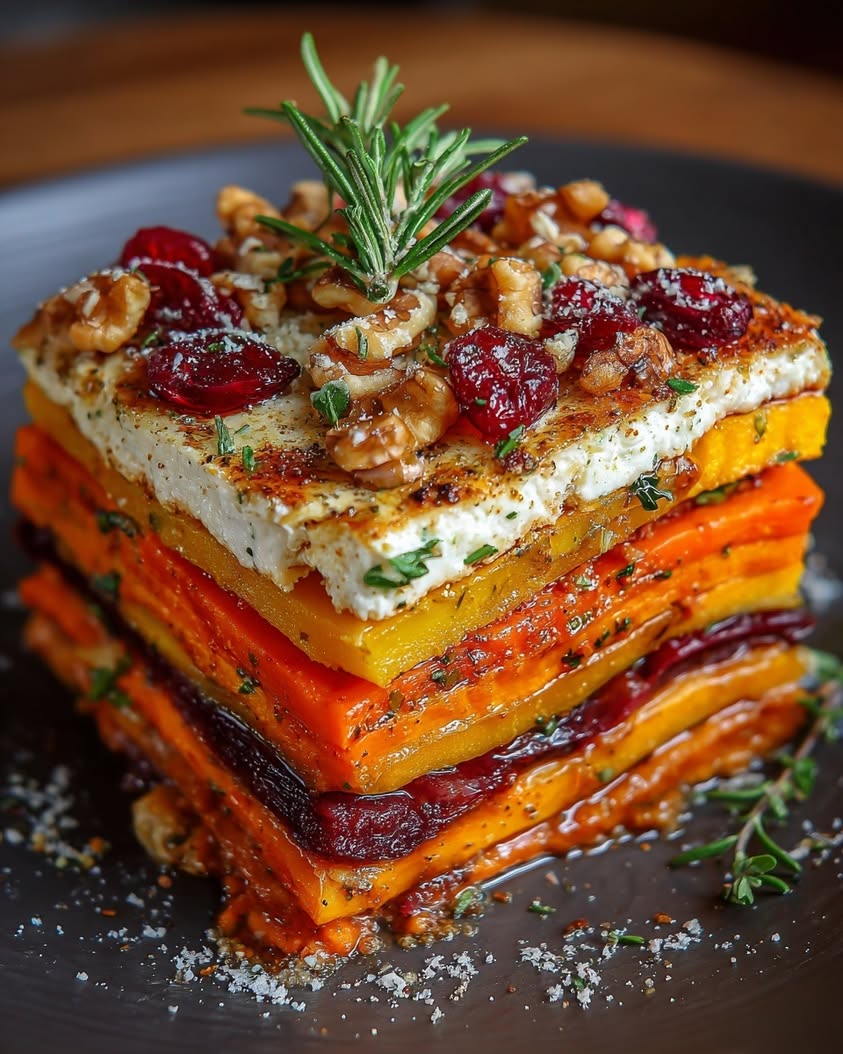
Layered Sweet Potato, Butternut Squash & Carrot Lasagna with Feta, Walnuts & Cranberry-Honey Glaze: A Festive Vegetarian Masterpiece
This Sweet Potato Squash Carrot Lasagna Recipe is a stunning celebration of autumn’s finest produce. Imagine thin, tender slices of sweet potato, butternut squash, and carrot layered like pasta with a creamy, herbed ricotta filling. Then, picture it all baked to golden perfection and finished with a crown of salty feta, crunchy walnuts, and a vibrant cranberry-honey glaze. This dish is not just a meal; it’s a centerpiece that will have everyone asking for the recipe.
Furthermore, this recipe transforms humble root vegetables into an extraordinary vegetarian main course. Each bite offers a beautiful harmony of sweet and savory, creamy and crunchy, earthy and tangy. The layers of roasted vegetables become meltingly tender, creating a lasagna that is both hearty and surprisingly light. Ultimately, this dish proves that comfort food can be elegant, nutritious, and bursting with complex flavors.
This Sweet Potato Squash Carrot Lasagna Recipe is perfect for holiday gatherings, Sunday suppers, or any occasion that calls for a show-stopping dish. It’s a fantastic way to enjoy seasonal vegetables in a new and exciting format. The aroma of roasting vegetables and fresh herbs that fills your kitchen is simply irresistible. Get ready to fall in love with this colorful, layered masterpiece.
Quick Recipe Highlights
- Flavor Profile: This Sweet Potato Squash Carrot Lasagna Recipe masterfully balances natural sweetness from the roasted vegetables with the tangy saltiness of feta and the rich, herbal notes of thyme and sage. The cranberry-honey glaze adds a final, bright note of tartness and floral sweetness that ties everything together.
- Texture: Expect a delightful contrast between the soft, almost silky layers of roasted sweet potato, squash, and carrot and the creamy ricotta filling. The toasted walnuts provide a crucial crunchy element, while the baked top offers a slightly chewy, caramelized finish.
- Aroma: As it bakes, the lasagna fills your kitchen with the warm, earthy scent of roasting root vegetables mingled with the savory fragrance of garlic, onion, and fresh herbs. The final drizzle of the warm cranberry-honey glaze releases a sweet and tangy perfume.
- Visual Appeal: The cross-section of this dish is a work of art with vibrant stripes of orange, deep yellow, and bright carrot. The white ricotta layers peek through, and the whole dish is beautifully speckled with green herbs, topped with golden-brown feta and walnuts, and finished with a glossy red glaze.
- Skill Level Needed: This recipe requires basic knife skills for slicing vegetables thinly and evenly. Additionally, you need patience for layering and an understanding of how to make a simple stovetop sauce. It’s an achievable project for a confident home cook.
- Special Equipment: A mandoline slicer is highly recommended for achieving uniformly thin vegetable “noodles.” You will also need a good baking dish, a medium saucepan for the glaze, and a skillet for toasting walnuts.
Recipe Overview
- Difficulty Level: We rate this Sweet Potato Squash Carrot Lasagna Recipe as intermediate. The process involves multiple components: prepping and thinly slicing the vegetables, making the ricotta filling, preparing the cranberry glaze, and carefully assembling the layers. However, each step is straightforward, and the result is well worth the effort.
- Category: This dish proudly sits as a spectacular vegetarian main course. It’s substantial enough to be the star of the table. Alternatively, it can be served as a luxurious side dish alongside a simple roast or grilled protein.
- Cuisine: While lasagna is famously Italian, this version is a modern, vegetable-forward fusion. It draws inspiration from Italian layering techniques but uses New World ingredients like sweet potatoes and butternut squash. The feta and walnut topping adds a Mediterranean flair.
- Cost: This is a very cost-effective recipe, especially in the fall and winter when root vegetables are plentiful and inexpensive. Ricotta and feta are affordable cheeses. The walnuts and cranberries might be the priciest items, but they are used as a garnish, so a little goes a long way.
- Season: This Sweet Potato Squash Carrot Lasagna Recipe is quintessential autumn and winter fare. It utilizes the best of the season’s harvest. The warm, comforting nature of the bake is perfect for cooler weather. You can find the ingredients at their peak flavor and price.
- Occasion: It’s an ideal centerpiece for Thanksgiving, Christmas, or a Friendsgiving feast. Moreover, it’s wonderful for a cozy family dinner or a special weekend project. The beautiful presentation makes it fit for any celebratory meal.
Why You’ll Love This Recipe
First and foremost, the taste and texture of this Sweet Potato Squash Carrot Lasagna Recipe are utterly captivating. The natural sugars in the vegetables caramelize slightly during roasting, intensifying their flavor. Meanwhile, the creamy ricotta mixture, infused with garlic and herbs, provides a savory counterpoint. The final additions of crunchy walnuts and the sweet-tart glaze create a symphony in every bite that is far more interesting than traditional pasta lasagna.
From a convenience standpoint, this recipe is a game-changer for entertaining. You can prepare almost every component ahead of time. For instance, slice the vegetables and store them in water, mix the ricotta filling, and make the glaze a day in advance. Consequently, on the day of your event, assembly and baking are a breeze, leaving you stress-free and able to enjoy your guests.
Nutritionally, this dish is a powerhouse. Sweet potatoes and carrots are loaded with beta-carotene. Butternut squash provides vitamins C and A. Using vegetables as the “noodles” significantly increases the fiber and nutrient density while reducing refined carbohydrates. The ricotta and walnuts add protein and healthy fats, making this a balanced and satisfying meal that fuels your body beautifully.
For social gatherings, this Sweet Potato Squash Carrot Lasagna Recipe is a guaranteed conversation starter. Its stunning appearance immediately impresses. It caters beautifully to vegetarian guests without feeling like an afterthought. Moreover, it’s a substantial dish that can feed a crowd, allowing you to spend less time in the kitchen and more time at the table with loved ones.
Finally, this recipe is remarkably cost-effective and accessible. The base ingredients are humble root vegetables and common dairy products. You likely have many of the herbs and spices in your pantry already. Therefore, creating a restaurant-worthy, elegant dish doesn’t require expensive or hard-to-find ingredients, making gourmet vegetarian cooking achievable for any budget.
Historical Background and Cultural Significance
The concept of layering ingredients is ancient and spans many cultures. Traditional Italian lasagna, of course, dates back to the Middle Ages, evolving from earlier Roman dishes. However, using vegetables as the layered element is a much more modern innovation, born from the rise of vegetarian and gluten-free cooking trends. This Sweet Potato Squash Carrot Lasagna Recipe is a brilliant example of how classic techniques can be adapted to contemporary dietary preferences and ingredient availability.
Culturally, this dish represents a fusion of traditions. It honors the Italian-American comfort food staple while celebrating the abundant harvest of the Americas. Ingredients like sweet potato and butternut squash are native to the New World. Incorporating them into an Old World format creates a delicious symbol of culinary globalization. The addition of feta nods to Greek and Eastern Mediterranean flavors, showcasing how versatile the layering concept can be.
The evolution of this specific recipe likely stems from home cooks and chefs looking for hearty, satisfying alternatives to pasta. As low-carb and vegetable-centric diets gained popularity, the idea of using thinly sliced vegetables as a pasta substitute became widespread. Zucchini lasagna was an early pioneer. This Sweet Potato Squash Carrot Lasagna Recipe is a natural, colorful progression, using sturdier root vegetables that hold their shape well and offer a sweeter, more robust flavor profile.
Regional variations of vegetable lasagna are endless. In the American South, you might find a version with layers of okra and tomatoes. In Mediterranean regions, eggplant and zucchini are common. This particular recipe, with its autumnal produce and cranberry glaze, feels distinctly rooted in North American seasonal cooking. It’s a celebration of the fall harvest, designed to be the star of holiday tables where traditional meat mains often dominate.
Ingredient Deep Dive
Sweet Potato: This vibrant tuber originated in Central or South America over 5,000 years ago. It’s a nutritional powerhouse, exceptionally high in beta-carotene (which converts to vitamin A), vitamin C, and fiber. When selecting sweet potatoes, choose firm ones with smooth, unbruised skin. Store them in a cool, dark, well-ventilated place—not the refrigerator. For a substitution in this Sweet Potato Squash Carrot Lasagna Recipe, you could use regular potatoes, though the flavor and color will be less sweet and vibrant.
Butternut Squash: A type of winter squash, butternut is known for its sweet, nutty flavor and creamy texture when cooked. It’s rich in vitamins A, C, and E, as well as potassium and magnesium. Pick a squash that feels heavy for its size with a firm, matte skin and a long, solid neck. Store whole squash in a cool, dark place for months. Peeled and cubed, it keeps in the fridge for a few days. As an alternative, acorn or kabocha squash would work well.
Carrots: Carrots have a long history, originally cultivated for their aromatic leaves and seeds rather than their roots. The orange carrot we know today was developed in the Netherlands. They are famously rich in beta-carotene and antioxidants. Look for firm, smooth carrots with bright color. Avoid limp or cracked ones. Store them in the crisper drawer in a plastic bag. There’s no perfect substitute for their color and sweetness, but parsnips could offer a different, earthier note.
Ricotta Cheese: Ricotta is a fresh Italian whey cheese with a mild, slightly sweet flavor and a grainy, creamy texture. It provides the essential creamy layer in this lasagna. For best results, use whole-milk ricotta for richness. Always drain any excess liquid from the container before using. If you need a substitute, cottage cheese (blended until smooth) or a soft goat cheese can work, though the flavor will change.
Feta Cheese: A brined curd cheese from Greece, feta is traditionally made from sheep’s milk or a sheep-goat blend. It adds a crucial salty, tangy punch that cuts through the sweetness of the vegetables. For authenticity, seek out Greek feta in brine. It crumbles beautifully. Store leftover feta in its brine in the refrigerator. If you don’t have feta, a crumbled goat cheese or a salty queso fresco would be good alternatives.
Common Mistakes to Avoid
- Slicing Vegetables Too Thick: This is the most common error. Thick slices won’t soften properly and will make the lasagna difficult to cut and eat. Always aim for 1/8-inch thick slices, using a mandoline for consistency. Otherwise, you risk a crunchy, undercooked texture in the center.
- Not Draining the Ricotta: Excess moisture in the ricotta filling can make your lasagna watery. Before mixing, place the ricotta in a fine-mesh strainer or cheesecloth and let any liquid drain for 15-20 minutes. This step ensures a thicker, creamier layer that holds its structure.
- Skipping the Vegetable Roasting Step: While you can layer raw slices, roasting them first concentrates their flavor, removes excess moisture, and guarantees they will be perfectly tender after the final bake. Skipping this can lead to a soggy dish with less developed taste.
- Overloading the Layers: It’s tempting to pile on the ricotta filling, but too much can overwhelm the delicate vegetable layers and make the dish overly dense. Use a moderate, even hand when spreading each layer. The vegetables should still be visible.
- Forgetting to Season Each Layer: Seasoning only the top is not enough. Lightly season the roasted vegetable slices and the ricotta mixture as you assemble. This builds flavor from the bottom up, ensuring every bite is perfectly seasoned.
- Using Burnt or Stale Walnuts: Walnuts can turn bitter if toasted for too long. Toast them in a dry skillet over medium-low heat just until fragrant, stirring constantly. Let them cool completely before using. Also, always taste your walnuts to ensure they are fresh, not rancid.
- Applying the Glaze Too Early: The cranberry-honey glaze should be drizzled over the baked lasagna just before serving. If added before baking, the sugars will burn. If added immediately after baking, it will soak in and lose its glossy appeal. Let the lasagna rest, then garnish.
- Not Letting it Rest Before Serving: Cutting into the lasagna straight from the oven will cause it to fall apart. Let it rest on a cooling rack for at least 15-20 minutes after baking. This allows the layers to set, making for clean, beautiful slices.
Essential Techniques
Using a Mandoline Slicer: This tool is non-negotiable for achieving the uniform, paper-thin slices required for this Sweet Potato Squash Carrot Lasagna Recipe. Uniformity ensures even cooking. Always use the hand guard to protect your fingers. Move the vegetable back and forth in a steady, controlled motion. If you don’t have a mandoline, a very sharp chef’s knife and patience are your best alternatives, though consistency will be harder to achieve.
Roasting Vegetable Slices: Roasting the slices before assembly is a critical step. It drives off moisture that would otherwise steam out during baking and make the lasagna soggy. It also caramelizes the natural sugars, deepening the flavor. Arrange the slices in a single layer on parchment-lined sheets. Do not overcrowd, as steaming will occur. Roast until just pliable and slightly dried at the edges, not until fully soft.
Building Stable Layers: Proper assembly is key to structural integrity. Start with a thin layer of your tomato or sauce base to prevent sticking. Then, create a shingled layer of vegetable slices, slightly overlapping them like roof tiles. Spread the ricotta mixture evenly but gently. Repeat, ensuring you press down lightly on each new vegetable layer to eliminate air pockets. Finish with a final layer of vegetables.
Creating the Cranberry-Honey Glaze: This is a simple reduction. Combine cranberries, honey, and a little water or orange juice in a saucepan. As it simmers, the cranberries will pop and release their pectin, naturally thickening the mixture. The honey sweetens and adds viscosity. Cook until it coats the back of a spoon. Strain if you want a smooth glaze, or leave the cranberry pieces for texture. Let it cool slightly before drizzling.
Pro Tips for Perfect Sweet Potato Squash Carrot Lasagna
- For the most vibrant colors, try to find an orange-fleshed sweet potato (often sold as a garnet yam) and deep orange carrots. The visual contrast in the layers will be stunning.
- Add a pinch of nutmeg or a teaspoon of fresh lemon zest to the ricotta mixture. This tiny addition brightens the entire dish and complements the sweet vegetables beautifully.
- If your vegetable slices seem dry after roasting, you can brush them very lightly with a bit of olive oil or a splash of vegetable broth before layering. This adds back just enough moisture without making things wet.
- For a golden, bubbly top, sprinkle a little extra grated Parmesan or mozzarella over the final vegetable layer before baking. The feta and walnuts will be added after.
- Use a glass or ceramic baking dish. These materials distribute heat evenly and prevent the edges from burning before the center is cooked. You can also see the beautiful layers through the sides.
- To check for doneness, insert a sharp knife into the center of the lasagna. It should slide through all the vegetable layers with little to no resistance. The top should be nicely browned.
- Toast the walnuts in a single layer in a 350°F oven for 8-10 minutes instead of on the stovetop. This method is more hands-off and results in even toasting without the risk of burning.
- Let the baked lasagna cool for at least 15 minutes before attempting to slice it. Use a very sharp chef’s knife and a gentle sawing motion to get clean cuts that showcase all the beautiful layers.
Variations and Adaptations
For regional variations, consider a Southwestern twist by adding roasted poblano peppers to the ricotta and using a chipotle-infused tomato sauce. A French-inspired version could use layers of potato, celery root, and leek with a béchamel sauce and Gruyère cheese. The basic framework of this Sweet Potato Squash Carrot Lasagna Recipe is wonderfully adaptable to local flavors and ingredients.
Seasonal adaptations are easy. In spring, use thin slices of zucchini, yellow squash, and asparagus with a lemon-herb ricotta. For summer, try layers of grilled eggplant, tomato, and bell pepper. This fall/winter version is perfect for its time of year, but don’t be afraid to swap in other hardy vegetables like parsnips, turnips, or beets for a different color and flavor profile.
Dietary modifications are straightforward. For a vegan version, use a cashew ricotta or tofu-based filling and omit the feta or use a vegan alternative. To make it gluten-free, ensure any added sauces or thickeners are certified GF—this recipe is naturally gluten-free as written. For a dairy-free option, use a plant-based ricotta and skip the feta or use a nut-based “cheese.”
Flavor variations can take this dish in new directions. Add cooked Italian sausage or ground turkey to the ricotta layer for a meaty version. Stir sun-dried tomatoes or pesto into the cheese mixture. Swap the thyme and sage for rosemary or oregano. Use a balsamic reduction instead of the cranberry glaze for a deeper, tangier finish.
Texture modifications can cater to personal preference. For a creamier interior, add an extra layer of béchamel or marinara sauce. For more crunch, sprinkle toasted pine nuts or breadcrumbs between the layers. If you prefer a smoother eating experience, you can puree the roasted vegetables and use them as a sauce between layers of actual lasagna noodles.
Presentation alternatives include making individual lasagnas in ramekins for a elegant plated dinner. You can also roll the vegetable slices and ricotta into “cannelloni” shapes. For a deconstructed version, serve a stack of the roasted vegetables with dollops of the herbed ricotta and a drizzle of glaze on the side.
Serving and Presentation Guide
Plating this Sweet Potato Squash Carrot Lasagna Recipe is part of the joy. Use a sharp, thin spatula to lift each portion from the dish. Wipe the spatula clean between cuts for neat edges. Place the slice slightly off-center on a warm plate to create visual interest. You can also use a ring mold to create a perfect round stack for a more modern presentation.
Garnishing is key to the final look. After drizzling the cranberry-honey glaze, sprinkle the toasted walnuts and crumbled feta generously over the top. Add a few fresh thyme leaves or microgreens for a pop of green color. A final crack of black pepper or a tiny flake of sea salt on the feta enhances both flavor and appearance.
Traditional accompaniments for a hearty vegetable bake include a simple green salad with a sharp vinaigrette to cut through the richness. Garlic bread or focaccia is always welcome for soaking up any delicious juices. For a heartier meal, serve with roasted chicken or pork chops, letting the lasagna shine as the vegetable side.
Modern serving suggestions might include a dollop of garlicky yogurt or tzatziki on the side. A spoonful of spicy chili crisp can add a thrilling kick. Consider serving it alongside other vegetable-centric small plates for a full vegetarian feast. A glass of robust red wine completes the picture perfectly.
Temperature considerations are important. This dish is best served warm, not piping hot. The resting time allows the flavors to meld and the structure to set. If it cools down too much, reheat individual slices gently in an oven or toaster oven to restore the perfect serving temperature without making it soggy.
Portion control is easy with this nutrient-dense dish. A single slice is very satisfying due to the fiber and protein content. For a lighter meal, serve a smaller slice with a large salad. For a crowd, you can cut the lasagna into smaller squares and serve them as part of a buffet spread, allowing guests to take as much as they like.
Wine and Beverage Pairing
Wine pairings for this Sweet Potato Squash Carrot Lasagna Recipe should balance the sweetness of the vegetables and the tanginess of the feta. A medium-bodied Pinot Noir with its red fruit notes and earthy undertones is an excellent choice. Alternatively, a dry Riesling or Gewürztraminer can handle the sweetness and complement the herbs. For a richer option, an oaked Chardonnay pairs well with the creamy ricotta and roasted flavors.
Non-alcoholic alternatives can be just as sophisticated. A sparkling apple cider mimics the effervescence of Champagne and complements the autumnal flavors. A tart cranberry spritzer (made with unsweetened cranberry juice and soda water) echoes the glaze. For a warmer option, a ginger-turmeric tea has earthy, spicy notes that stand up to the dish’s complexity.
Coffee and tea pairings work wonderfully after the meal. A medium-roast coffee with notes of caramel or nut will complement the roasted vegetable flavors. For tea, consider an Earl Grey with its bergamot citrus notes to cut through the richness, or a smoky Lapsang Souchong for a dramatic contrast that highlights the savory elements.
Temperature considerations for beverages are straightforward. Serve white wines and sparkling options well-chilled. Red wines should be served slightly below room temperature. Non-alcoholic spritzers should be icy cold. Coffee and tea, of course, should be served hot to provide a comforting finish to the meal.
Serving suggestions include offering a choice of both red and white wine if you’re hosting a dinner party. Place carafes of water on the table with citrus or herb infusions. For a casual gathering, a signature mocktail based on cranberry and honey can tie the whole meal together thematically and delight guests who aren’t drinking alcohol.
Storage and Shelf Life
Storage methods for this lasagna are simple. Once completely cooled to room temperature, cover the baking dish tightly with plastic wrap or aluminum foil. Alternatively, transfer individual portions to airtight containers. Proper storage is crucial to prevent the lasagna from drying out or absorbing odors from the refrigerator.
Temperature requirements are standard refrigerator temperatures, at or below 40°F. Do not leave the lasagna at room temperature for more than two hours after cooking, as the dairy and vegetable composition can promote bacterial growth. Always refrigerate leftovers promptly to ensure food safety and maintain quality.
Container recommendations include glass containers with tight-fitting lids, which are ideal because they don’t absorb odors and can go from fridge to oven for reheating. If storing in the original baking dish, ensure the covering is very secure. For portioned meals, divide the lasagna into single servings before storing to make reheating easier and avoid repeatedly warming the entire dish.
Signs of spoilage to watch for include an off or sour smell, visible mold (often starting as fuzzy spots on the cheese or surface), or an excessively slimy texture on the vegetables. If the lasagna has been stored for more than 4-5 days, it’s best to err on the side of caution and discard it, even if it looks okay.
Reheating instructions are best done in the oven to restore texture. Preheat your oven to 350°F. Place the portion in an oven-safe dish, cover loosely with foil to prevent over-browning, and heat for 15-20 minutes, or until warmed through. You can also use a toaster oven for single slices. The microwave is quick but will make the layers soft and potentially soggy.
Freezing guidelines are effective for longer storage. Wrap the entire cooled lasagna or individual portions tightly in plastic wrap, then in aluminum foil or place in a freezer-safe container. Label with the date. It will keep for up to 3 months. Thaw overnight in the refrigerator before reheating using the oven method described above. Note that the vegetable texture may become slightly softer after freezing.
Make Ahead Strategies
A prep timeline can turn this recipe into a stress-free entertaining option. Two days ahead, you can make the cranberry-honey glaze and store it in a jar in the fridge. One day ahead, slice all the vegetables, store them in water in the fridge, make the herbed ricotta filling, and toast the walnuts. On the day of, roast the vegetable slices, assemble the lasagna, and bake.
Storage between steps is easy. Keep the sliced raw vegetables submerged in cold water in the refrigerator to prevent oxidation and keep them crisp. Store the ricotta mixture in a sealed container. Keep the toasted walnuts at room temperature in an airtight container. The glaze can be gently reheated on the stovetop or in the microwave before using.
Quality impact assessment shows that making components ahead actually improves the dish. The flavors in the ricotta mixture have time to meld. The glaze’s flavors intensify. The only element that should be done day-of is roasting the vegetables and the final bake, to ensure the best texture and fresh-from-the-oven appeal.
Assembly tips for a make-ahead lasagna include building the entire dish in the baking dish, covering it tightly, and refrigerating it for up to 24 hours before baking. You may need to add 10-15 minutes to the baking time if it goes into the oven cold from the fridge. Let it sit on the counter for 30 minutes before baking to take the chill off.
Reheating guidelines for a fully baked and refrigerated lasagna are the same as for leftovers. Use the oven method for best results. If you’ve made individual portions ahead, they reheat even faster. The key is to reheat gently and thoroughly to an internal temperature of 165°F to ensure food safety and optimal taste.
Fresh element additions should always be done just before serving. Even if you assemble the lasagna ahead, wait to add the final garnishes. Crumble the feta, sprinkle the walnuts, and drizzle the cranberry-honey glaze after the lasagna has baked, rested, and is ready to be presented. This keeps the textures distinct and the presentation vibrant.
Scaling Instructions
Halving the recipe is simple for smaller households. Use an 8×8 inch baking dish. Halve all ingredient quantities precisely. The roasting time for the vegetable slices may be slightly less, so watch them closely. The baking time will also be reduced by about 10-15 minutes. Check for doneness with a knife a little earlier than the original recipe suggests.
Doubling or tripling the recipe is perfect for large gatherings. Use multiple baking dishes or a very large lasagna pan. Ensure you have enough oven space and racks to roast all the vegetable slices in batches—do not overcrowd the sheets. You may need to extend the final baking time by 20-30 minutes for a very deep, large pan. A probe thermometer can help; the center should reach at least 165°F.
Equipment adjustments are necessary when scaling. For a double batch, you’ll need more baking sheets for roasting. For a half batch, a smaller dish is crucial for proper layer depth. If making a very large batch, consider using a disposable aluminum pan for easy transport. Ensure your oven can accommodate the size and weight of the dish you choose.
Timing modifications are key. When doubling, the prep time will increase significantly due to the volume of vegetable slicing and roasting. Plan accordingly. The assembly time will also be longer. Stagger the roasting of vegetable sheets if you have a conventional oven. You might roast squash on one rack while sweet potatoes roast on another, then swap them.
Storage considerations change with scale. A single large lasagna is harder to store than multiple smaller ones. If making for a future event, consider assembling the lasagna in two 9×13 dishes instead of one giant pan. This makes refrigeration, freezing, and reheating much more manageable. It also allows you to serve one now and freeze one for later.
Nutritional Deep Dive
The macro breakdown of this Sweet Potato Squash Carrot Lasagna Recipe is favorable. It provides a good balance of complex carbohydrates from the vegetables, moderate protein from the ricotta and walnuts, and healthy fats from the olive oil, cheese, and nuts. It’s relatively high in fiber, which aids digestion and promotes satiety. The dish is naturally lower in saturated fat compared to meat-based lasagnas, especially if you use part-skim ricotta.
A micronutrient analysis reveals an abundance of vitamins A and C from the orange vegetables, crucial for immune function and vision. Butternut squash and walnuts provide magnesium and potassium, supporting heart health and muscle function. The herbs contribute antioxidants. The dairy offers calcium for bone health. Using whole, unprocessed ingredients maximizes the nutrient density of every bite.
Health benefits are numerous. The high fiber content supports gut health and helps regulate blood sugar. The antioxidants in the colorful vegetables combat inflammation. The monounsaturated fats in olive oil and walnuts are heart-healthy. This dish is a perfect example of how delicious food can also be medicinal, nourishing your body with every vitamin- and mineral-rich layer.
Dietary considerations are mostly positive. This recipe is vegetarian and can be adapted to be gluten-free and vegan. It is not suitable for a strict keto or very low-carb diet due to the starchy vegetables. For those watching sodium, you can reduce the salt in the ricotta and use a low-sodium feta. The natural sugars are from whole food sources, not added refined sugars.
Portion analysis shows that one serving (1/8th of the recipe) is substantial and satisfying. The combination of fiber, protein, and fat creates a lasting feeling of fullness, which can help with weight management by preventing overeating and snacking. It’s a calorically dense meal, so mindful portioning is wise if weight loss is a goal, but the nutrients are high-quality.
Weight management tips include serving this lasagna with a large, non-starchy side salad to increase volume without many calories. You can also use a lighter hand with the olive oil during roasting and the cheese in the filling. Remember, the focus is on nutrient-rich vegetables, making it a better choice than pasta-based alternatives for those looking to maintain a healthy weight while enjoying comfort food.
Dietary Adaptations
For a gluten-free version, this Sweet Potato Squash Carrot Lasagna Recipe is already perfect as written. Just ensure that any pre-made ingredients you use, like vegetable broth in the ricotta mixture, are certified gluten-free. There are no wheat-based components, making it a safe and delicious option for those with celiac disease or gluten sensitivity.
A dairy-free adaptation requires replacing the ricotta and feta. For the ricotta layer, use a blended tofu mixture (firm tofu, nutritional yeast, lemon juice, garlic) or a cashew ricotta made from soaked, blended cashews. For the topping, omit the feta or use a store-bought vegan feta alternative. The result will be different but still creamy and flavorful.
To make this recipe vegan, follow the dairy-free adaptations above. Also, ensure the cranberry-honey glaze uses maple syrup or agave nectar instead of honey. Check that any sugar used is vegan-certified. With these swaps, you create a completely plant-based centerpiece that retains all the beautiful layers and complex flavors of the original.
For a low-carb or keto adaptation, this recipe in its standard form is not suitable due to the high carb content of the root vegetables. A modification would involve using thinner layers of the vegetables and adding layers of low-carb options like spinach, mushrooms, and zucchini. Significantly reduce the amount of sweet potato and carrot, focusing more on squash and other low-starch veggies.
A Paleo adaptation would omit the dairy. Use the cashew-based ricotta substitute mentioned above. Ensure the cranberry glaze is sweetened with raw honey (acceptable for some Paleo followers) or dates. Omit any processed ingredients. The focus on whole vegetables, nuts, and natural sweeteners makes this a dish that can align with Paleo principles with careful substitution.
For a Low-FODMAP version, this recipe needs careful tweaking. Butternut squash and carrots are low-FODMAP in moderate servings, but sweet potato can be higher in mannitol. Use a smaller amount of sweet potato and increase the squash. Omit the garlic and onion from the ricotta, using garlic-infused oil instead for flavor. Ensure the honey in the glaze is within your personal tolerance limits.
Troubleshooting Guide
If your lasagna is watery, the most likely culprit is under-roasted vegetables that released too much liquid during baking. Next time, roast the slices until they are pliable and slightly dried at the edges. Also, ensure your ricotta is well-drained. For the current batch, you can carefully tilt the baking dish to pour off excess liquid after baking, or serve with a slotted spoon.
If the flavors seem flat, you probably underseasoned the layers. Remember to season the vegetables before roasting and the ricotta mixture generously. The feta and glaze add salt and acidity at the end, but the base layers need their own seasoning. To fix a baked lasagna that tastes bland, serve it with a flavorful side sauce, an extra sprinkle of flaky salt, or a drizzle of balsamic reduction.
If the top is burning before the center is cooked, your oven temperature may{“success”:true,”message”:”Recipe created successfully”,”post_id”:8593,”tasty_recipe_id”:8593,”shortcode”:” Print
Layered Sweet Potato, Butternut Squash & Carrot Lasagna with Feta, Walnuts & Cranberry-Honey Glaze
Description
A hearty, vegetarian lasagna featuring layers of roasted sweet potato, butternut squash, and carrot slices, topped with crumbled feta, toasted walnuts, and a sweet-tart cranberry-honey glaze.
Ingredients
For the Crust:
- 2 medium sweet potatoes, thinly sliced
- 1 small butternut squash, peeled and thinly sliced
- 3 large carrots, thinly sliced
- 1 cup crumbled feta cheese
- 1/2 cup chopped walnuts, toasted
- 1/2 cup fresh cranberries
- 1/4 cup honey
- 2 tablespoons olive oil
- 1 teaspoon dried thyme
- 1 teaspoon garlic powder
- Salt and black pepper to taste
- 1 cup ricotta cheese
- 1/2 cup grated Parmesan cheese
- 9 no-boil lasagna noodles
- 2 cups marinara sauce
Instructions
1. Prepare the Crust:
- Preheat oven to 375°F (190°C). Toss sweet potato, butternut squash, and carrot slices with olive oil, thyme, garlic powder, salt, and pepper. Roast on a baking sheet for 20 minutes until tender.
- In a small saucepan, combine cranberries and honey. Cook over medium heat until cranberries burst and sauce thickens, about 10 minutes. Set aside.
- Spread a thin layer of marinara sauce in a 9×13 inch baking dish. Layer 3 lasagna noodles, half the roasted vegetables, half the ricotta, and a third of the feta. Repeat layers.
- Top with remaining noodles, marinara sauce, Parmesan, and remaining feta. Cover with foil and bake for 25 minutes. Remove foil and bake 10 more minutes until bubbly.
- Let lasagna rest for 10 minutes. Drizzle with cranberry-honey glaze, sprinkle with toasted walnuts, and serve warm.
Notes
You can customize the seasonings to taste.

I’m Billy, a classically trained culinary school graduate from The Culinary Institute of America with over 12 years in the restaurant industry and over 19 years of cooking experience.