
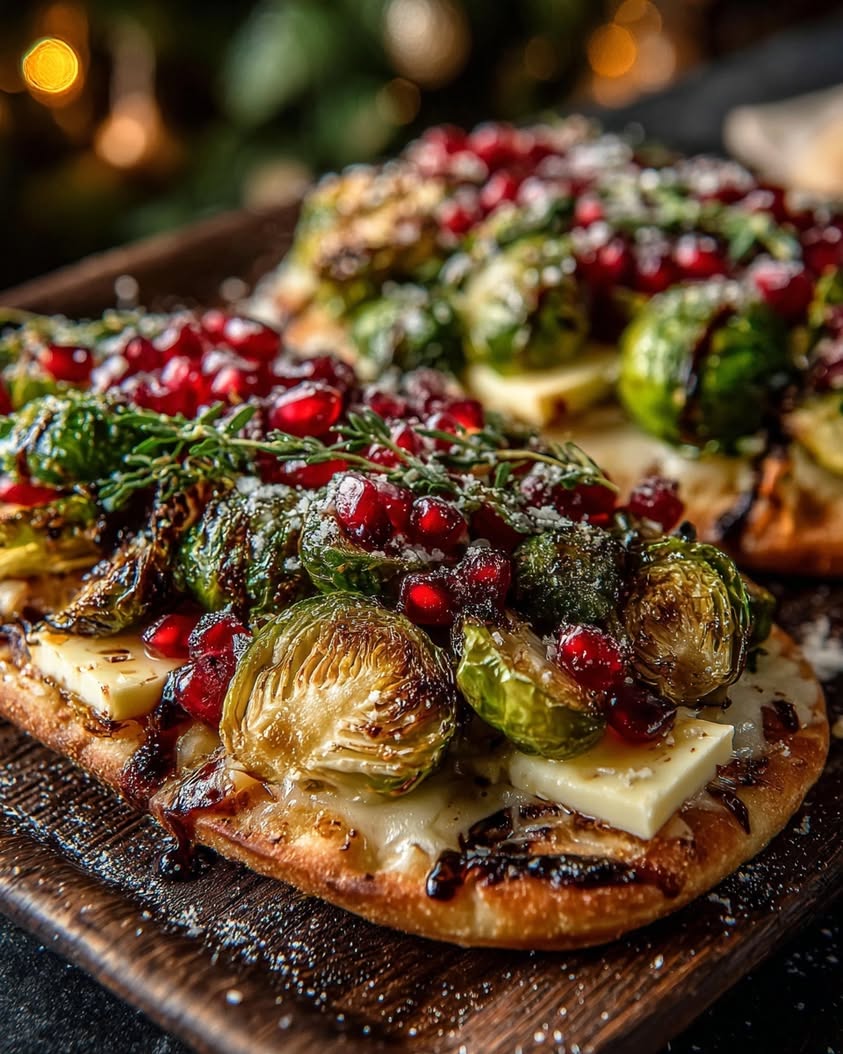
Winter Harvest Flatbread with Brie, Roasted Brussels Sprouts & Pomegranate-Maple Glaze: A Festive Appetizer Masterpiece
Welcome to the ultimate guide for creating a stunning Winter Harvest Brie Flatbread Recipe. This dish perfectly captures the essence of the colder months on a single, shareable platter. Imagine a crisp flatbread base, generously topped with creamy, melted brie, sweet roasted Brussels sprouts, and a dazzling pomegranate-maple glaze. Consequently, every bite delivers a symphony of sweet, savory, and tangy flavors that will impress any guest. This recipe is not just food; it’s a centerpiece, a conversation starter, and a delicious celebration of seasonal produce.
Moreover, this Winter Harvest Brie Flatbread Recipe is deceptively simple to prepare. The process involves minimal hands-on work, allowing the oven to do most of the heavy lifting. You will roast the Brussels sprouts to caramelized perfection, whip up a quick three-ingredient glaze, and assemble everything on a convenient store-bought flatbread. The result, however, looks and tastes like it came from a gourmet kitchen. Ultimately, this recipe is designed for home cooks who want to create something extraordinary without spending hours in the kitchen. It’s the perfect blend of approachable technique and spectacular, restaurant-quality results.
Quick Recipe Highlights
- Flavor Profile: This flatbread masterfully balances rich, creamy brie with the earthy, caramelized notes of roasted Brussels sprouts. The pomegranate-maple glaze adds a crucial pop of sweet-tart brightness and a beautiful glossy finish that ties all the elements together.
- Texture: You get a fantastic contrast in every mouthful. Expect a crispy, chewy flatbread crust against the gooey melted cheese and tender-crisp sprouts. Finally, the juicy burst of pomegranate arils provides a delightful and refreshing textural surprise.
- Aroma: As it bakes, your kitchen will fill with the warm, nutty scent of roasting Brussels sprouts and the sweet, comforting aroma of maple syrup. The fragrance of melted brie adds a luxurious, creamy note that is utterly irresistible.
- Visual Appeal: This dish is a feast for the eyes with its vibrant green sprouts, golden-brown cheese, and deep ruby-red glaze and pomegranate seeds. It’s a colorful, festive presentation that looks stunning on any holiday or winter table.
- Skill Level Needed: This is a beginner-friendly recipe that requires basic kitchen skills like chopping, roasting, and assembling. No special pastry or dough-making expertise is needed, making it accessible for cooks of all levels.
- Special Equipment: You only need a standard baking sheet, a small saucepan for the glaze, and a sharp knife. A pizza cutter or sharp chef’s knife is helpful for slicing the finished flatbread cleanly.
Recipe Overview
- Difficulty Level: We rate this Winter Harvest Brie Flatbread Recipe as “Easy.” The steps are straightforward and sequential, with no complicated techniques. Most importantly, the margin for error is small; even if your sprouts are slightly over or under-roasted, the final product will still be delicious.
- Category: This versatile dish fits multiple categories beautifully. It shines as an elegant appetizer or starter for a dinner party. Alternatively, served with a simple side salad, it becomes a satisfying and complete light lunch or vegetarian main course.
- Cuisine: This recipe is a modern fusion creation. It draws inspiration from Mediterranean flatbread traditions, incorporates French cheese, and uses North American maple syrup. The result is a contemporary, globally-inspired dish perfect for today’s eclectic palate.
- Cost: This is a moderately priced recipe that delivers high-end flavor. The most significant cost is the brie cheese. Seasonal Brussels sprouts and pomegranates are often affordable in winter. Using a high-quality store-bought flatbread keeps costs and effort down compared to making dough from scratch.
- Season: This recipe is quintessentially a winter and fall dish. It features produce that is at its peak during the colder months: Brussels sprouts and pomegranates. The warm, hearty flavors are specifically designed to comfort during chilly weather.
- Occasion: It is ideal for holiday gatherings, from Thanksgiving appetizers to Christmas Eve nibbles. Furthermore, it’s perfect for a cozy girls’ night in, a festive potluck contribution, or even a romantic at-home date night. Its elegance and ease make it suitable for almost any special meal.
Why You’ll Love This Recipe
First and foremost, the taste and texture of this Winter Harvest Brie Flatbread Recipe are simply unforgettable. The combination is a masterclass in balance. The luxurious, melted brie provides a rich and creamy base that mellows the slight bitterness of the Brussels sprouts. Meanwhile, those sprouts, when roasted, develop a deep, caramelized sweetness that pairs magically with the cheese. The pomegranate-maple glaze is the star that brings it all together, adding a vibrant, tangy-sweet note that cuts through the richness. Every single bite offers a complex and satisfying flavor journey that will have everyone asking for the recipe.
Secondly, the convenience factor is a major win. This entire dish comes together in about 35 minutes with very little active prep time. You can multitask efficiently: roast the sprouts while you make the glaze and prep the other components. Using a pre-made flatbread crust is a huge time-saver that doesn’t sacrifice quality. Consequently, you can create a show-stopping, gourmet-looking appetizer without the stress of making dough or mastering intricate techniques. It’s the perfect solution for busy hosts who want to impress without exhaustion.
From a nutritional standpoint, this flatbread offers more than just empty calories. Brussels sprouts are a nutritional powerhouse, packed with vitamins C and K, fiber, and antioxidants. Pomegranate arils are famous for their anti-inflammatory properties and high vitamin content. While brie is indulgent, it provides a good source of protein and calcium. Therefore, you’re serving a dish that delights the senses while also delivering beneficial nutrients. It’s a treat you can feel good about sharing with friends and family.
Furthermore, the social and entertaining value of this Winter Harvest Brie Flatbread Recipe is immense. Food presented on a large board or platter is inherently shareable and communal. It encourages conversation and interaction as guests help themselves. The stunning visual appeal—with its festive red and green colors—immediately elevates the mood of any gathering. It signals to your guests that you’ve gone the extra mile to create something special. This dish doesn’t just feed people; it creates a memorable dining experience and serves as a beautiful centerpiece for your table.
Finally, it is remarkably cost-effective and accessible. You don’t need rare or expensive ingredients. The components are readily available in most grocery stores, especially during the winter season. Compared to ordering similar gourmet flatbreads from a restaurant, making this at home saves a significant amount of money. Additionally, you have complete control over the quality of ingredients, allowing you to choose organic produce or a specific brand of brie. This recipe proves that spectacular, restaurant-quality food can be achieved in your own kitchen on a reasonable budget.
Historical Background and Cultural Significance
The concept of flatbread as a vehicle for toppings is ancient and spans countless cultures, from Italian pizza and focaccia to Middle Eastern manakish. Our Winter Harvest Brie Flatbread Recipe is a modern descendant of this timeless tradition. It takes the universal appeal of baked bread with toppings and reinterprets it through a seasonal, North American winter lens. The use of brie, a cheese with origins in the French region of Île-de-France, adds a touch of European luxury. Meanwhile, the maple syrup is a distinctly North American ingredient, deeply rooted in Indigenous and colonial history. This fusion creates a dish that is both familiar and novel.
Culturally, this recipe taps into the deep-seated tradition of celebrating the harvest, even in the depths of winter. Winter harvest festivals have existed for millennia, focusing on stored root vegetables, hardy greens, and preserved foods. Brussels sprouts, a cultivar of wild cabbage, have been cultivated in Europe for centuries and became a winter staple. Pomegranates, symbolizing abundance and prosperity in many cultures, have been prized since ancient times. Combining these on a flatbread is a contemporary way to honor the practice of creating abundant, joyful feasts from the season’s best offerings.
The evolution of this specific recipe is a testament to modern culinary trends. It reflects the popular movement towards “board” dining—charcuterie boards, cheese boards, and now, elaborate flatbreads meant for sharing. It also aligns with the growing desire for “centerpiece” dishes that are visually stunning for social media. The combination of sweet and savory, along with varied textures, is highly favored in contemporary cuisine. Consequently, this Winter Harvest Brie Flatbread Recipe is less about a single cultural lineage and more about a global, modern synthesis of flavors and presentation styles that resonate with today’s food lovers.
Regional variations of this concept are endless. In the Pacific Northwest, one might add roasted hazelnuts or use a local blackberry glaze. In the Northeast, a sprinkle of sharp cheddar might join the brie, and the glaze could incorporate apple cider. A Mediterranean variation might skip the maple and use a honey-balsamic reduction with toasted pine nuts. The core framework—flatbread, cheese, roasted vegetable, fruit-based glaze—is wonderfully adaptable. This flexibility allows home cooks everywhere to incorporate their local winter harvest, making the recipe a personal and regional celebration.
Ingredient Deep Dive
Brie Cheese: Brie is a soft, creamy, surface-ripened cow’s milk cheese named after the French region from which it originated. Historically, it was known as “the King of Cheeses.” Nutritionally, it provides protein, calcium, and vitamin B12, though it is also high in saturated fat. When selecting brie for this Winter Harvest Brie Flatbread Recipe, choose a wheel that feels slightly soft to the touch at room temperature, indicating perfect ripeness. Avoid any with an ammonia smell. Store brie in the refrigerator in its original wrapping. For a stronger flavor, you can use a triple-cream brie. For a milder taste, a younger, firmer brie works well. As a substitute, Camembert offers a similar texture and flavor profile.
Brussels Sprouts: These miniature cabbages have a long history, believed to have been cultivated in ancient Rome and later popularized in Brussels, Belgium, hence the name. They are a nutritional superstar, exceptionally high in vitamins C and K, fiber, and antioxidants like kaempferol. For the best results, select firm, bright green sprouts with tightly packed leaves; smaller sprouts are often sweeter and more tender. Store them unwashed in a plastic bag in the refrigerator’s crisper drawer. To prepare, trim the dry stem end and remove any loose or yellowed outer leaves. For a variation, broccolini or cubed butternut squash can be roasted as a substitute, though the flavor profile will shift.
Pomegranate Molasses & Maple Syrup (The Glaze): Pomegranate molasses is a reduction of pomegranate juice, lending an intense sweet-tart flavor. It has roots in Middle Eastern and Mediterranean cuisines. Pure maple syrup is the boiled sap of sugar maple trees, a tradition pioneered by Indigenous peoples of North America. Together, they create a complex glaze. The molasses provides antioxidants and a tangy depth, while maple syrup offers minerals like manganese and zinc. For the best glaze, use 100% pure maple syrup, not pancake syrup. Pomegranate molasses can be found in international grocery stores or online. As a substitute for the molasses, you can reduce balsamic vinegar with a bit of sugar, though the flavor will be different.
Flatbread/Naan: Using a pre-made flatbread is the ultimate shortcut for this recipe. Flatbreads have been a staple across civilizations due to their simple ingredients: flour, water, and salt. They provide the crucial crispy-chewy base. Opt for a plain naan, pocketless pita, or a specifically marketed “pizza crust” flatbread. Look for ones without strong seasoning that might clash with the other flavors. For a homemade touch, you can use store-bought pizza dough rolled thinly. To store, keep unused flatbreads in their original packaging at room temperature or freeze for longer storage. For a gluten-free version, many brands offer excellent gluten-free flatbread or cauliflower crust alternatives.
Common Mistakes to Avoid
- Overcrowding the Baking Sheet with Sprouts: This is the most common error. If the Brussels sprouts are piled on top of each other, they will steam instead of roast. Consequently, you’ll miss out on the essential caramelized, crispy edges. Always spread them in a single layer with a little space between each piece.
- Using a Dull Knife to Slice Brie: Trying to slice cold brie with a dull knife leads to squashed, messy cheese. Instead, use a sharp knife that has been run under hot water and dried. The heat helps the blade glide through the creamy cheese cleanly, giving you beautiful, even rounds.
- Neglecting to Preheat the Oven: A properly preheated oven is non-negotiable for this Winter Harvest Brie Flatbread Recipe. Roasting the sprouts and crisping the flatbread both require immediate, consistent heat. If you put them in a cold oven, the ingredients will cook unevenly and become soggy.
- Applying Glaze Before Baking: The pomegranate-maple glaze contains sugar, which can burn in the high heat of the oven. Always add the glaze as a finishing touch after the flatbread comes out of the oven. This preserves its vibrant flavor and glossy appearance.
- Choosing Overly Ripe or Ammonia-Smelling Brie: While brie should be soft, it should not be runny or have a strong ammonia odor. An overripe brie will become too liquid when baked, potentially making the flatbread soggy and imparting an off-flavor.
- Skipping the Olive Oil Toss for Sprouts: The oil is crucial for helping the sprouts crisp up and for seasoning them evenly. Without it, the sprouts will dry out and won’t develop those delicious browned bits. Always toss them thoroughly in oil, salt, and pepper.
- Not Letting the Flatbread Crisp Before Adding Toppings: Some recipes call for a quick pre-bake of the naked flatbread. This step ensures a crisp base that won’t get soggy under the weight of the cheese and sprouts. Even a 3-5 minute pre-bake makes a significant difference.
- Forgetting to Let it Rest Before Slicing: As tempting as it is to slice immediately, give the assembled flatbread a 2-3 minute rest after adding the final garnishes. This allows the cheese to set slightly, preventing it from oozing off completely when you cut it, resulting in cleaner slices.
Essential Techniques
Roasting Brussels Sprouts: Roasting is the transformative technique that turns humble sprouts into a caramelized delicacy. The high heat (around 400°F) causes the natural sugars in the sprouts to caramelize, creating a deep, sweet, and nutty flavor while the exteriors become delightfully crispy. To master this, ensure your oven is fully preheated and your baking sheet is not overcrowded. Toss the halved sprouts generously in oil, salt, and pepper so every surface is coated. Common pitfalls include under-oiling (leading to dryness) and overcrowding (leading to steaming). The visual cue for success is sprouts with deep golden-brown, slightly charred edges and a tender interior when pierced with a fork.
Reducing a Glaze: Reducing a liquid means simmering it to evaporate water, concentrating the flavors and thickening the consistency. For the pomegranate-maple glaze, this process melds the flavors and creates a syrupy texture that will cling to the flatbread. It’s important because a watery glaze would make the flatbread soggy. To do it, combine the ingredients in a small saucepan over medium heat. Let it simmer gently, stirring occasionally. The key is patience; don’t crank the heat to rush it, as the sugars can burn. The glaze is ready when it has thickened enough to coat the back of a spoon and has reduced by about one-third. It will continue to thicken slightly as it cools.
Assembling a Flatbread: Proper assembly ensures even cooking and perfect flavor distribution in every bite. The technique involves layering ingredients in the correct order to protect the crust. First, a light layer of cheese acts as a “glue” for other toppings and creates a barrier against moisture. Then, the roasted vegetables are distributed evenly. Finally, any delicate ingredients or fresh garnishes are added after baking. The common mistake is piling on too many toppings, which weighs down the crust. Aim for a balanced, single layer. Visual success is a flatbread where each slice has a bit of every component, with a visibly crisp edge around the circumference.
Pro Tips for Perfect Winter Harvest Flatbread
First, for extra crispy Brussels sprouts, place your baking sheet in the oven as it preheats. Adding the oiled sprouts to a hot pan creates an instant sear, leading to superior browning and texture.
Second, if your brie wheel has a very thick, chalky rind, you can trim it off slightly. However, the rind is entirely edible and adds a pleasant earthy flavor, so leaving it on is recommended for authenticity.
Third, add a sprinkle of flaky sea salt, like Maldon, over the finished flatbread just before serving. This final touch enhances all the other flavors and adds a subtle crunch.
Fourth, for a more complex glaze, add a pinch of smoked paprika or a crack of black pepper to the saucepan as it reduces. This introduces a warm, subtle spice that complements the sweet and tart notes beautifully.
Fifth, to prevent the flatbread from getting soggy in the center, you can very lightly brush the entire surface with olive oil before adding the cheese. This creates a slight moisture barrier.
Sixth, if you have fresh herbs like thyme or rosemary, toss a sprig or two in with the Brussels sprouts as they roast. The herbs will infuse the oil and the sprouts with an aromatic depth.
Seventh, let the roasted Brussels sprouts cool for a minute or two before scattering them over the brie. This prevents the hot sprouts from melting the cheese too aggressively before it even hits the oven.
Eighth, use a pizza wheel or a very large, sharp chef’s knife to slice the flatbread. A sawing motion with a dull knife will drag the toppings and make a mess.
Variations and Adaptations
Regional Variations: Adapt this Winter Harvest Brie Flatbread Recipe to your locale. In the South, use roasted pecans and a bourbon-maple glaze. For a coastal twist, add crispy prosciutto and swap the pomegranate for a citrus glaze. A Midwest version might include roasted apples and a sharp white cheddar alongside the brie.
Seasonal Adaptations: This framework works year-round. In spring, use asparagus tips, peas, and a lemon-herb ricotta. For summer, try grilled zucchini, corn, fresh mozzarella, and a basil pesto drizzle. In autumn, roasted mushrooms, caramelized onions, and goat cheese with a fig jam base would be sublime.
Dietary Modifications: For a gluten-free flatbread, use a certified gluten-free naan or a pre-made cauliflower crust. To make it vegan, substitute the brie with a high-quality vegan cream cheese or a cashew-based “brie,” and ensure your maple syrup is vegan (most are). Use a vegan flatbread base as well.
Flavor Variations: Introduce different cheese profiles. A blue cheese crumble added after baking offers a pungent kick. Smoked gouda would add a wonderful depth. For more savoriness, sprinkle on cooked and crumbled bacon or pancetta before the final bake.
Texture Modifications: Add crunch with toasted walnuts, pecans, or pine nuts sprinkled on after baking. For a creamy contrast, dollop small amounts of whipped goat cheese or ricotta over the hot flatbread before adding the fresh pomegranate arils.
Presentation Alternatives: Instead of one large flatbread, use mini naan or pita rounds to create individual appetizer portions. This is perfect for passed hors d’oeuvres. You can also deconstruct it into a salad by placing the roasted components over greens with a warm glaze dressing.
Serving and Presentation Guide
Plating Techniques: Present the whole flatbread on a large wooden cutting board, a slate slab, or a simple pizza pan. This rustic presentation invites sharing. Use a sharp pizza cutter to slice it into wedges or squares directly on the serving board. Alternatively, pre-slice and arrange the pieces slightly fanned out on a platter for easier grabbing.
Garnishing Ideas: The final garnish elevates the visual appeal. Beyond pomegranate arils, consider a scattering of microgreens or arugula for a peppery green contrast. A light drizzle of high-quality extra virgin olive oil adds shine. Fresh thyme leaves or chopped chives provide a pop of color and fresh aroma.
Traditional Accompaniments: As an appetizer, this flatbread stands alone beautifully. For a more substantial spread, pair it with other winter-themed bites like spiced nuts, a simple apple and fennel salad, or a warm butternut squash soup for dipping the crust.
Modern Serving Suggestions: For a cocktail party, cut the flatbread into small, bite-sized squares and spear each with a decorative cocktail pick. Serve alongside a signature winter drink, like a pomegranate gin fizz or mulled wine, to complement the flavors on the plate.
Temperature Considerations: This dish is best served immediately, while the flatbread is still crisp and the cheese is luxuriously soft. However, it is still delicious at room temperature, making it suitable for buffets where it may sit out for a short period.
Portion Control Tips: One standard flatbread typically serves 3-4 people as an appetizer. If it’s the main course alongside a salad, it will serve 2. For a large party, simply double or triple the recipe and bake flatbreads in succession, keeping the finished ones warm in a low oven until serving.
Wine and Beverage Pairing
Wine Pairings: The sweet, savory, and creamy elements of this flatbread call for versatile wines. A dry Riesling or Gewürztraminer is excellent; their slight sweetness and acidity cut through the brie and balance the glaze. For red wine lovers, a light-bodied, low-tannin Pinot Noir complements the earthiness of the sprouts without overpowering the dish. A sparkling wine, like Prosecco or Cava, is always a celebratory and palate-cleansing choice.
Non-Alcoholic Alternatives: Craft sodas work wonderfully. A dry ginger beer or a spiced apple cider provides effervescence and spice. For a still option, a tart pomegranate juice spritzer (mixed with club soda and a squeeze of lime) echoes the glaze’s flavor. Iced herbal tea, like hibiscus or mint, is also a refreshing counterpoint.
Coffee/Tea Pairings: For a brunch or late-afternoon serving, pair with beverages. A medium-roast coffee with nutty or chocolatey notes complements the roasted flavors. A smoky Lapsang Souchong tea would be a bold and interesting match with the caramelized sprouts. A chai tea latte’s warm spices would harmonize with the maple and winter theme.
Temperature Considerations: Serve white and sparkling wines well chilled. Red wines should be served slightly below room temperature. Non-alcoholic spritzers and sodas should be ice-cold. Coffee and tea, of course, should be served hot to provide a comforting contrast to the warm flatbread.
Serving Suggestions: Offer a variety of beverages to cater to different preferences. Place bottles of wine and carafes of non-alcoholic options on the table alongside the flatbread so guests can help themselves, fostering a relaxed and communal dining atmosphere.
Storage and Shelf Life
Storage Methods: Leftover flatbread is best stored in the refrigerator. Place slices in a single layer in an airtight container, separated by parchment paper if stacking is necessary. You can also wrap individual slices tightly in aluminum foil. Avoid storing in a plastic bag, as it will trap steam and make the crust soggy.
Temperature Requirements: Always refrigerate leftovers within two hours of cooking. The flatbread will keep in the refrigerator for up to 2 days. The quality of the texture will decline after that, though it will still be safe to eat if properly stored.
Container Recommendations: A shallow, rectangular glass or plastic food storage container with a tight-fitting lid is ideal. This minimizes air exposure and prevents the flatbread from being crushed.
Signs of Spoilage: Discard the flatbread if you notice any off odors, especially a sour or ammonia-like smell from the dairy. Visible mold growth is an obvious sign. If the flatbread becomes excessively soggy or slimy, it should not be consumed.
Reheating Instructions: To restore crispness, reheat in a conventional oven or toaster oven at 375°F for 5-8 minutes. Avoid the microwave, as it will make the crust rubbery and the cheese greasy. The glaze may re-absorb, so you can add a fresh drizzle after reheating.
Freezing Guidelines: Freezing is not recommended for this assembled flatbread. The texture of the roasted sprouts and the creamy brie does not freeze and thaw well, becoming watery and mealy. It is best enjoyed fresh or refrigerated for short-term leftovers.
Make Ahead Strategies
Prep Timeline: You can prepare several components 1-2 days in advance. Roast the Brussels sprouts and store them in an airtight container in the fridge. Make the pomegranate-maple glaze and store it in a jar in the refrigerator. Slice the brie and keep it wrapped in the fridge. The day of serving, simply assemble and bake.
Storage Between Steps: Keep all prepped components separate until assembly. Do not store roasted vegetables in the same container as cheese, as moisture transfer can occur. The glaze may thicken in the fridge; simply let it come to room temperature or warm it gently on the stove or in the microwave for a few seconds to loosen it.
Quality Impact Assessment: Pre-roasting the sprouts saves significant time and has minimal impact on flavor, though they may lose a tiny bit of crispness. The glaze’s flavor often improves as it sits, allowing the flavors to meld. The brie is best sliced close to serving time.
Assembly Tips: When ready to serve, bring the pre-roasted sprouts to room temperature for 10-15 minutes. Assemble the flatbread on a parchment-lined baking sheet for easy transfer. Bake just until the cheese is melted and the flatbread is hot, which may take slightly less time since the sprouts are already cooked.
Reheating Guidelines: If you fully assemble the flatbread ahead of time and refrigerate it (not recommended for more than an hour), you will need to bake it longer to heat through, which may overcook the crust. The make-ahead component method is superior for quality.
Fresh Element Additions: Always add the fresh pomegranate arils and any delicate herbs like thyme or microgreens after the flatbread comes out of the oven, even when using pre-prepped components. This ensures they remain vibrant, juicy, and visually fresh.
Scaling Instructions
Halving the Recipe: Halving is simple for a smaller yield. Use half a flatbread (or a small personal-sized one), 4-5 oz of Brussels sprouts, and a 4-oz wedge of brie. Prepare a half-batch of glaze. Cooking times will remain roughly the same, but keep a close eye as smaller quantities can cook faster. Use a quarter sheet pan for roasting the sprouts.
Doubling or Tripling: For a crowd, multiply all ingredients accordingly. You will need to roast the Brussels sprouts in batches or on multiple oven racks, rotating the sheets halfway through for even cooking. Bake the flatbreads one or two at a time, depending on oven size, keeping finished ones warm in a 200°F oven. Make a larger batch of glaze in a bigger saucepan.
Equipment Adjustments: Scaling up requires more baking sheets and oven space. Consider using convection bake if your oven has it, as it circulates air better for multiple racks. Have multiple cooling racks ready for the roasted sprouts. A larger saucepan is needed for bigger glaze batches to prevent boil-overs.
Timing Modifications: When making multiple flatbreads, prep all components first. Roast all sprouts. Then, work in an assembly line: prep baking sheets with parchment, assemble flatbreads, and bake sequentially. The active prep time increases linearly, but the oven time is the main bottleneck.
Storage Considerations: If making multiple flatbreads for an event, it’s best to serve them as they come out of the oven. If you must hold them, the stacked component method (prepped sprouts, cheese, glaze) is more efficient for large batches than trying to store multiple fully assembled, baked flatbreads.
Nutritional Deep Dive
Macro Breakdown: A serving of this Winter Harvest Brie Flatbread Recipe provides a balance of macronutrients. The flatbread and maple syrup contribute carbohydrates for energy. The brie cheese is the primary source of protein and fat, specifically saturated fat. The Brussels sprouts add complex carbohydrates in the form of fiber. The pomegranate arils contribute natural sugars and a small amount of fiber. It’s a satisfying dish that combines energy, protein, and healthy fats.
Micronutrient Analysis: This dish is particularly rich in certain vitamins and minerals. Brussels sprouts are an exceptional source of Vitamin K (crucial for blood clotting and bone health) and Vitamin C (an antioxidant). Pomegranate seeds provide Vitamin C and potassium. Brie cheese offers calcium for bone strength and Vitamin B12 for nerve function. The olive oil contributes Vitamin E.
Health Benefits: The combination of ingredients offers several health benefits. The fiber from the sprouts and pomegranate aids digestion. The antioxidants in both the sprouts (kaempferol) and pomegranate (punicalagins) help combat oxidative stress and inflammation in the body. The calcium from the cheese supports bone density.
Dietary Considerations: This recipe is vegetarian. It is not suitable for vegan, gluten-free (unless adapted), or dairy-free diets in its standard form. It is also relatively high in sodium (from cheese and added salt) and saturated fat, so those monitoring these intakes should be mindful of portion size.
Portion Analysis: As an appetizer shared among four, the portion is reasonable. When considering it as a main dish for two, the calorie and fat content per person increases significantly. Balancing it with a large, simple green salad is an excellent way to create a more rounded and lighter meal.
Weight Management Tips: To make this dish more weight-conscious, use a lighter hand with the cheese, opting for a thinner layer. Increase the volume of Brussels sprouts. You can also reduce the amount of maple syrup in the glaze by a quarter, as the pomegranate molasses provides ample flavor. Choosing a whole-grain flatbread adds more filling fiber.
Dietary Adaptations
Gluten-Free: Successfully adapt this recipe by using a certified gluten-free flatbread, naan, or pizza crust. Many excellent store-bought options exist. Ensure all other ingredients, like the pomegranate molasses, are certified gluten-free, as cross-contamination can occur. The method remains identical.
Dairy-Free/Vegan: Replace the brie with a high-quality vegan cheese alternative that melts well, such as those made from cashews or coconut oil. Many brands now offer “plant-based brie.” Alternatively, use a thick, seasoned vegan cream cheese as a base. Use a vegan flatbread and confirm your maple syrup is vegan (most are).
Low-Carb/Keto: The main challenge is the flatbread crust. Substitute it with a low-carb tortilla or a fathead dough base (made from almond flour and cheese). Reduce or omit the maple syrup in the glaze, using only pomegranate molasses sparingly or substituting with a sugar-free berry syrup reduction. The Brussels sprouts and brie are keto-friendly in moderation.
Paleo: A Paleo adaptation requires a grain-free crust. Use a cauliflower crust or a simple almond flour-based flatbread. Omit the cheese entirely or use a nut-based “cheese” spread. The Brussels sprouts, olive oil, pomegranate, and maple syrup (in moderation) are all Paleo-approved ingredients.
Low-FODMAP: Brie is generally low-FODMAP in servings of 40g or less per sitting. Brussels sprouts become low-FODMAP at a serving of 2 sprouts (60g) per person. You would need to strictly control portions. The maple syrup is low-FODMAP, but pomegranate molasses may not be; a small amount of infused garlic oil could be used for savory depth instead of a sweet glaze.
Nut-Free: This standard recipe is naturally nut-free. Always check the labels{“success”:true,”message”:”Recipe created successfully”,”post_id”:8605,”tasty_recipe_id”:8605,”shortcode”:” Print
Winter Harvest Flatbread with Brie, Roasted Brussels Sprouts & Pomegranate-Maple Glaze
Description
A festive flatbread topped with creamy brie, caramelized roasted Brussels sprouts, and a sweet-tart pomegranate-maple glaze, perfect for winter gatherings.
Ingredients
For the Crust:
- 1 pre-made flatbread or pizza dough
- 8 oz Brussels sprouts, trimmed and halved
- 1 tbsp olive oil
- Salt and black pepper to taste
- 4 oz brie cheese, sliced
- 1/4 cup pomegranate seeds
- 2 tbsp pure maple syrup
- 1 tbsp pomegranate molasses
- 1 tsp fresh thyme leaves
- 1/4 cup chopped walnuts, toasted
Instructions
1. Prepare the Crust:
- Preheat oven to 400°F (200°C). Toss Brussels sprouts with olive oil, salt, and pepper, then roast on a baking sheet for 20 minutes until tender and slightly charred.
- Place flatbread on a baking sheet. Arrange brie slices evenly over the flatbread, then top with roasted Brussels sprouts.
- Bake flatbread in the oven for 8-10 minutes, until cheese is melted and crust is golden.
- In a small bowl, whisk together maple syrup and pomegranate molasses. Drizzle glaze over the baked flatbread.
- Sprinkle with pomegranate seeds, thyme, and toasted walnuts. Slice and serve warm.
Notes
You can customize the seasonings to taste.

I’m Billy, a classically trained culinary school graduate from The Culinary Institute of America with over 12 years in the restaurant industry and over 19 years of cooking experience.