
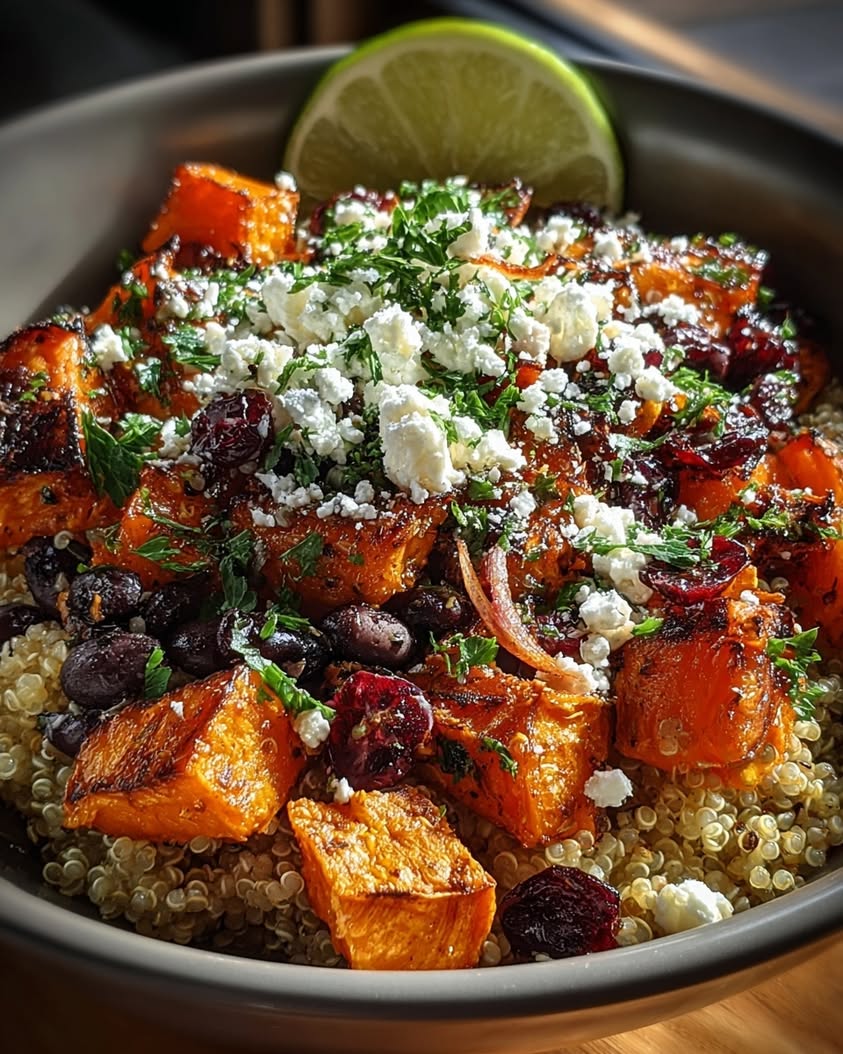
Roasted Sweet Potato Black Bean Quinoa Salad with Feta and Cranberries: A Vibrant Power Bowl
This Roasted Sweet Potato Quinoa Salad Recipe is a celebration of color, texture, and wholesome flavor. It masterfully combines hearty roasted sweet potatoes with fluffy quinoa and protein-rich black beans. Moreover, it’s finished with creamy feta and sweet-tart dried cranberries for a truly satisfying meal. Ultimately, this dish is a perfect example of how healthy eating can be incredibly delicious and visually stunning.
Imagine a bowl filled with the warm, caramelized notes of roasted sweet potatoes mingling with the earthy base of quinoa. Next, consider the creamy, salty pop of feta cheese against the juicy burst of sweet cranberries. This Roasted Sweet Potato Quinoa Salad Recipe delivers a symphony of flavors in every single bite. Consequently, it has become a staple for meal prep, potlucks, and easy weeknight dinners in countless kitchens.
Furthermore, this salad is a nutritional powerhouse packed with fiber, plant-based protein, and essential vitamins. It’s naturally gluten-free and easily adaptable for various dietary needs. Whether you serve it warm, at room temperature, or chilled, this versatile dish promises to be a crowd-pleaser. Let’s dive into how to create this beautiful and balanced Roasted Sweet Potato Black Bean Quinoa Salad.
Quick Recipe Highlights
- Flavor Profile: This salad offers a perfect sweet and savory balance. The natural sweetness of the roasted potatoes and cranberries contrasts beautifully with the salty feta and zesty lime dressing. Additionally, the cumin in the dressing adds a warm, earthy depth that ties all the elements together.
- Texture: You get a wonderful mix of textures in every forkful. The sweet potatoes are tender with crispy edges, while the quinoa is light and fluffy. Meanwhile, the black beans are creamy, the red onion provides a crisp bite, and the cranberries add a delightful chew.
- Aroma: While roasting, the sweet potatoes and red onion fill your kitchen with a warm, caramelized scent. Then, the fresh lime juice and cilantro add a bright, citrusy fragrance that makes the salad incredibly inviting.
- Visual Appeal: This dish is a feast for the eyes with its vibrant color palette. You see deep orange sweet potatoes, white feta, red onion, black beans, and green herbs all against the pale quinoa. Consequently, it looks as impressive as it tastes.
- Skill Level Needed: This is a beginner-friendly recipe. The techniques are straightforward: chopping, roasting, and simmering. Basically, if you can use a knife and an oven, you can absolutely master this Roasted Sweet Potato Quinoa Salad Recipe.
- Special Equipment: You only need basic kitchen tools. A baking sheet, a medium saucepan, a mixing bowl, and a whisk for the dressing are essential. A good chef’s knife will make prep work quicker and safer.
Recipe Overview
- Difficulty Level: We rate this recipe as easy because it involves fundamental cooking techniques without any complicated steps. You simply roast vegetables, cook quinoa, and whisk a dressing. There is no intricate timing or advanced skills required, making it perfect for novice cooks.
- Category: This dish fits multiple categories beautifully. It is a hearty main course salad, a fantastic side dish for grilled meats, and an excellent meal prep option. Furthermore, it works for lunch, dinner, or even a substantial picnic offering.
- Cuisine: This recipe draws inspiration from modern American and Mediterranean cuisines. It uses quinoa, a staple from South America, and combines it with ingredients like feta and lime common in Mediterranean and Tex-Mex cooking. The result is a globally-inspired, fusion-style power bowl.
- Cost: This is a very budget-friendly recipe. Sweet potatoes, quinoa, black beans, and red onion are all inexpensive pantry staples. Feta and dried cranberries might be the pricier items, but a little goes a long way. Overall, you can make a large, satisfying batch for just a few dollars per serving.
- Season: This salad is fantastic year-round but feels especially comforting in fall and winter. The warm, roasted components are perfect for cooler weather. However, served chilled, it also makes a refreshing summer meal. It truly is a versatile, all-season dish.
- Occasion: It’s ideal for casual weeknight dinners, healthy meal prep, and taking to potlucks or picnics. Because it’s so colorful and flavorful, it also makes a wonderful dish for casual entertaining or holiday side tables, especially for Thanksgiving or Christmas.
Why You’ll Love This Recipe
First and foremost, the taste and texture combination is utterly addictive. The sweet, caramelized roasted sweet potatoes provide a hearty base that pairs magically with the fluffy, nutty quinoa. Then, you get a creamy contrast from the black beans and a salty punch from the feta. Finally, the sweet-tart cranberries and bright lime dressing cut through the richness, creating a perfectly balanced flavor profile in every single bite. This Roasted Sweet Potato Quinoa Salad Recipe is anything but boring.
From a convenience standpoint, this recipe is a true winner. You can roast the sweet potatoes and cook the quinoa simultaneously, which maximizes your time in the kitchen. Additionally, the components hold up beautifully for days, making it a top-tier meal prep champion. You can assemble a big batch on Sunday and enjoy effortless, nutritious lunches all week long. The simplicity of the steps means you can prepare it even on your busiest evenings without stress.
Nutritionally, this salad is a powerhouse. Sweet potatoes are loaded with beta-carotene and fiber, while quinoa provides complete plant-based protein. Black beans add even more protein and fiber, promoting long-lasting satiety. The feta offers calcium and healthy fats, and the cranberries contribute antioxidants. Together, they create a meal that fuels your body, supports digestion, and keeps you energized for hours. It’s healthy eating that feels indulgent and satisfying.
For social gatherings, this dish is a guaranteed hit. Its vibrant colors make it the star of any potluck table or picnic spread. It is a crowd-pleaser that caters to various diets, as it’s naturally gluten-free and vegetarian. You can easily double or triple the recipe to feed a large group. People will constantly ask you for the recipe, and you’ll be proud to share this delicious and wholesome creation.
Finally, it is incredibly cost-effective and accessible. The ingredients are common, affordable, and available at any standard grocery store. You likely have many of the spices and staples already in your pantry. This Roasted Sweet Potato Quinoa Salad Recipe proves that eating well does not require expensive or hard-to-find ingredients. It’s a smart, delicious, and economical choice for any home cook.
Historical Background and Cultural Significance
The individual components of this salad have rich and diverse histories. Quinoa, hailed as the “mother grain” by the ancient Incas, was a sacred staple in the Andes for thousands of years. Sweet potatoes have a long culinary history in Central and South America, dating back over 5,000 years. Black beans are a cornerstone of Latin American cuisine, while feta cheese has been produced in Greece for centuries. This recipe is a beautiful fusion of these ancient, nourishing foods from across the globe.
In terms of cultural importance, each ingredient tells a story of sustenance and tradition. Quinoa sustained entire civilizations in the high altitudes of the Andes. Similarly, sweet potatoes were a vital crop for pre-Columbian societies. Black beans remain a daily protein source throughout Latin America and the Caribbean. Feta is deeply woven into the fabric of Greek culinary identity. Combining them reflects modern, globalized eating habits that celebrate and integrate these diverse food traditions.
The evolution of this specific recipe is a product of contemporary wellness and fusion food trends. The concept of a “power bowl” or “Buddha bowl” gained massive popularity in the 2010s, emphasizing balanced, plant-forward meals in a single dish. This Roasted Sweet Potato Quinoa Salad Recipe is a direct descendant of that trend. It takes timeless, wholesome ingredients and assembles them in a new, visually appealing, and nutritionally complete way that fits modern lifestyles.
Regional variations of this concept are endless. In the Southwest U.S., you might find it with a chipotle lime dressing and avocado. A Mediterranean version could swap the sweet potatoes for roasted eggplant and the black beans for chickpeas. In Australia, they might add roasted pumpkin and beetroot. The basic formula of grain + roasted veg + bean + cheese + crunch is incredibly adaptable. This versatility is a key reason for the recipe’s widespread and enduring appeal.
Ingredient Deep Dive
Let’s start with sweet potatoes. These vibrant tubers are native to the tropical Americas and were domesticated over 5,000 years ago. They are an excellent source of beta-carotene, which your body converts to vitamin A, crucial for vision and immunity. They also provide vitamin C, potassium, and fiber. When selecting sweet potatoes, look for firm ones with smooth, unbruised skin. Store them in a cool, dark, well-ventilated place—not the refrigerator. For a different twist, you can substitute with cubed butternut squash or even carrots.
Next, consider quinoa. This ancient pseudo-grain from the Andes was so valuable to the Inca civilization it was called the “gold of the Incas.” Nutritionally, it’s a complete protein, containing all nine essential amino acids. It’s also high in fiber, magnesium, and iron. Always rinse quinoa thoroughly under cold water before cooking to remove its natural bitter coating called saponin. Store uncooked quinoa in an airtight container in a cool, dry pantry. For a grain-free option, you can use cauliflower rice or cooked millet.
Now, examine black beans. A staple in Latin American cuisine for millennia, they are a fantastic source of plant-based protein and fiber, which aid in digestion and heart health. They also provide folate and iron. For this recipe, canned beans are perfectly convenient; just be sure to rinse and drain them well to reduce sodium. Dried beans cooked from scratch are a great, cost-effective alternative. Store canned beans in the pantry and cooked beans in the fridge for up to five days. Pinto or kidney beans make suitable substitutes.
Finally, focus on feta cheese. This brined curd cheese has a history dating back to ancient Greece and is a protected designation of origin (PDO) product. It offers a good amount of calcium and protein along with its signature tangy, salty flavor. For a creamier texture, use block feta packed in brine and crumble it yourself. Store feta in its brine in the refrigerator. For a dairy-free or vegan version of this Roasted Sweet Potato Quinoa Salad Recipe, substitute with dairy-free feta or creamy avocado for richness.
Common Mistakes to Avoid
- Overcrowding the Baking Sheet: If you pile the sweet potatoes and onion too close together, they will steam instead of roast. Consequently, you’ll miss out on those delicious caramelized edges. Always use a large enough sheet and spread the veggies in a single layer.
- Not Rinsing the Quinoa: Skipping the rinse leaves a bitter, soapy taste from the saponin coating. Always place quinoa in a fine-mesh strainer and rinse under cold water for a full minute before cooking.
- Using Watery Feta: Pre-crumbled feta in a bag is often drier and less flavorful than a block stored in brine. For the best taste and creamy texture, buy a block of feta and crumble it yourself just before adding to the salad.
- Adding Dressing While Everything is Hot: Pouring the lime dressing over piping hot ingredients can cause the feta to melt and the herbs to wilt unattractively. Let the roasted veggies and quinoa cool slightly to warm or room temperature before combining.
- Neglecting to Season the Sweet Potatoes: Salt is crucial for drawing out moisture and enhancing the natural sweetness during roasting. Don’t just toss them in oil; always season generously with salt and pepper before they go in the oven.
- Overcooking the Quinoa: This makes it mushy and gummy. Follow the package instructions precisely, usually a 1:2 quinoa-to-water ratio, and fluff it with a fork as soon as it’s done cooking.
- Using Stale Spices: Ground cumin loses its potency over time. If your spices are more than a year old, their flavor will be dull. For the brightest dressing, ensure your cumin is fresh.
- Chopping the Cilantro Too Early: Fresh herbs can wilt and turn dark if chopped long before serving. Chop your cilantro just before you’re ready to mix the final salad for maximum freshness and color.
Essential Techniques
Roasting vegetables is a foundational technique for building deep flavor. The high, dry heat of the oven caramelizes the natural sugars in the sweet potatoes and onions, creating complex, sweet, and savory notes. To master it, ensure your oven is fully preheated and your vegetables are cut into uniform sizes for even cooking. A common pitfall is using too much oil, which leads to steaming. Toss them lightly so they are just glistening. You’ll know they’re perfect when they are tender inside and have golden-brown, slightly crispy edges.
Cooking quinoa perfectly is another key skill. Rinsing removes bitterness, and using the correct water ratio prevents sogginess. The standard method is to combine one part rinsed quinoa with two parts water or broth in a saucepan. Bring it to a boil, then reduce to a simmer, cover, and cook for about 15 minutes. The most common pitfall is peeking and stirring, which releases steam and disrupts the cooking process. Visual cues for success are that the grains become translucent, and a little white tail (the germ) spirals out. All the water should be absorbed.
Emulsifying a simple vinaigrette is the final crucial technique. This means thoroughly combining oil and acid so they temporarily stay blended, coating the salad evenly. For this lime-cumin dressing, whisk the lime juice, cumin, salt, and pepper vigorously in a bowl. Then, while continuing to whisk, slowly drizzle in the olive oil. This gradual incorporation helps create a stable emulsion. A common mistake is adding all the oil at once, which will cause it to separate quickly. The dressing should look slightly thickened and unified when done correctly.
Pro Tips for Perfect Roasted Sweet Potato Quinoa Salad
For extra crispy sweet potatoes, preheat your baking sheet in the oven for 5-10 minutes before adding the oiled vegetables. The hot pan gives them an instant sear, promoting better browning from the very start of the cooking time.
Toast your quinoa in a dry saucepan for a few minutes after rinsing and before adding water. This simple step enhances its natural nutty flavor and can make the final dish even more aromatic and delicious.
If you have time, let the diced sweet potatoes sit in a colander for 10-15 minutes after cutting. This allows some surface moisture to evaporate, which also helps them achieve a crispier texture in the oven rather than steaming.
Massage your kale or spinach (if using) with a tiny bit of the lime dressing before adding the other ingredients. This technique, called “massaging,” breaks down tough fibers, making the greens more tender and palatable in the finished salad.
For a more substantial meal, add a protein boost. Grilled chicken, shrimp, or flaked salmon pair wonderfully. For a plant-based boost, a handful of toasted pepitas or sliced almonds adds crunch and healthy fats.
Make the dressing in a jar with a tight-fitting lid. Simply add all ingredients and shake vigorously until emulsified. This is not only easy but also provides a convenient container for storing any leftover dressing.
Allow the finished salad to rest for 15-20 minutes before serving. This gives the flavors time to meld together beautifully, as the grains absorb the dressing and the ingredients warm to the same temperature.
Garnish with fresh elements just before serving. A final sprinkle of extra cilantro, a few extra cranberries, or a wedge of lime on the side elevates the presentation and adds a burst of fresh flavor.
Variations and Adaptations
For regional twists, consider a Southwest version. Add a diced jalapeño to the roasting pan, use a dressing with lime juice and adobo sauce, and garnish with avocado and toasted corn. A Mediterranean adaptation could feature roasted chickpeas instead of black beans, Kalamata olives instead of cranberries, and a lemon-oregano vinaigrette.
Seasonal adaptations are simple and fun. In spring, use asparagus tips and fresh peas. For summer, add fresh corn kernels and cherry tomatoes. In the heart of winter, roasted Brussels sprouts or cubed parsnips make excellent alternatives to sweet potatoes, keeping the cozy, roasted vibe intact.
Dietary modifications are straightforward. For a vegan Roasted Sweet Potato Quinoa Salad, omit the feta or use a vegan alternative, and ensure your sweetener in the dressing is agave or maple syrup. To make it nut-free, simply avoid nut-based garnishes. For a lower-carb option, increase the volume of roasted vegetables and slightly reduce the quinoa portion.
Flavor variations can keep this recipe exciting. Try different spices on the sweet potatoes, like smoked paprika or curry powder. Swap the lime in the dressing for lemon or orange juice. Use goat cheese instead of feta for a tangier profile, or swap dried cherries or apricots for the cranberries.
Texture modifications can cater to personal preference. For more crunch, add toasted walnuts or pecans. For extra creaminess, mix in diced avocado just before serving. If you prefer a softer overall texture, you can slightly overcook the quinoa and sweet potatoes, though we recommend the standard method for balance.
Presentation alternatives include serving the salad in individual mason jars for a portable lunch, stuffing it into halved bell peppers or avocado halves, or using it as a hearty filling for warm tortillas or lettuce wraps. Get creative with how you plate it to make every meal feel special.
Serving and Presentation Guide
Plating techniques matter for visual appeal. For a family-style presentation, use a large, wide, shallow bowl or platter. Mound the salad in the center, allowing the colorful ingredients to spill out naturally. For individual servings, pack the salad into a small bowl or ring mold, then invert it onto the center of a plate for a neat, restaurant-style presentation.
Garnishing is the final touch that elevates the dish. Beyond extra cilantro, consider a sprinkle of microgreens, a few thin slices of fresh radish, or a drizzle of high-quality extra virgin olive oil. A final crack of black pepper or flaky sea salt over the top adds a professional finish and enhances flavor.
Traditional accompaniments for a dish like this are simple. It pairs wonderfully with a slice of crusty bread or warm cornbread to soak up any extra dressing. For a larger spread, serve it alongside grilled chicken, fish, or a simple lentil soup.
Modern serving suggestions include deconstructing the salad. Arrange each component (the quinoa, the roasted veggies, the beans, the feta) in separate sections on a large board or in individual small bowls. Let guests build their own power bowls, which is especially fun for gatherings.
Temperature considerations are flexible. This salad is fantastic served warm, at room temperature, or chilled. If serving warm, assemble just before eating. For room temperature, let it sit out for about 30 minutes after mixing. If serving chilled, refrigerate for at least an hour to allow the flavors to fully develop and meld.
Portion control is easy with this nutrient-dense meal. A standard serving is about 1.5 to 2 cups per person for a main course. As a side dish, ¾ to 1 cup is sufficient. Because it is so filling, a little goes a long way, making it an economical choice for feeding a group.
Wine and Beverage Pairing
Wine pairings should complement the sweet, earthy, and tangy notes of the salad. A crisp, dry Rosé with its berry notes and acidity works beautifully. Alternatively, a Sauvignon Blanc with its citrusy and herbal character mirrors the lime and cilantro perfectly. For a red wine option, choose a light-bodied, low-tannin Pinot Noir that won’t overpower the sweet potatoes and feta.
Non-alcoholic alternatives are just as important. Sparkling water with a wedge of lime or a few muddled cranberries is a refreshing choice. Iced herbal tea, like hibiscus or mint, complements the flavors wonderfully. A ginger beer or a tart lemonade also pairs nicely, cutting through the richness of the dish.
While not a traditional coffee dish, if serving this salad for brunch or lunch, a medium-roast coffee can be a nice accompaniment. The nutty notes in the coffee can echo the nuttiness of the quinoa. A lightly sweetened iced tea is always a classic and crowd-pleasing partner for this kind of meal.
Temperature considerations for beverages are straightforward. Serve white wines, Rosés, and non-alcoholic sparklers well chilled. Red wines should be served slightly below room temperature. Iced teas and lemonades should be very cold to provide a refreshing contrast to the hearty, warm salad.
Serving suggestions include offering a variety of drinks to cater to all guests. Set out a pitcher of infused water, a bottle of chilled Sauvignon Blanc, and some sparkling water. This allows everyone to choose their perfect pairing and enjoy the Roasted Sweet Potato Quinoa Salad Recipe to the fullest.
Storage and Shelf Life
Storage methods are simple but important for maintaining quality. Store the completely assembled salad in an airtight container in the refrigerator. If possible, keep a little extra dressing on the side to add just before serving leftovers, as the quinoa will continue to absorb moisture.
Temperature requirements are non-negotiable. This salad must be refrigerated at or below 40°F (4°C). Do not leave it at room temperature for more than two hours, as the dairy and moist environment can promote bacterial growth. Always err on the side of caution and refrigerate promptly.
Container recommendations include glass containers with tight-sealing lids, which are ideal because they don’t absorb odors and allow you to see the contents. If using plastic, ensure it is BPA-free and designed for food storage. Dividing the salad into single-serving containers is a fantastic meal prep strategy.
Signs of spoilage include an off or sour smell, visible mold (especially on the feta or vegetables), or a slimy texture on any of the components. If the salad develops an unpleasant fermented odor, it is time to discard it. When in doubt, throw it out.
Reheating instructions are optional. You can enjoy it cold straight from the fridge. If you prefer it warm, gently reheat individual portions in the microwave for 60-90 seconds, stirring halfway. Be aware that reheating may cause the feta to melt and the greens to wilt further.
Freezing guidelines are not generally recommended for the fully assembled salad. The texture of the quinoa, sweet potatoes, and beans can become mushy and watery upon thawing. However, you can successfully freeze cooked quinoa and roasted sweet potatoes separately in freezer bags for up to 3 months, then thaw and assemble fresh.
Make Ahead Strategies
Your prep timeline can be spread over two days for ultimate convenience. On day one, roast the sweet potatoes and onions, cook the quinoa, and rinse the black beans. Store each component separately in the fridge. On day two, simply make the dressing, chop the fresh herbs, and combine everything. This makes weeknight assembly a 10-minute task.
Storage between steps is key. Let the roasted vegetables and cooked quinoa cool completely to room temperature before covering and refrigerating. This prevents condensation, which can make the quinoa soggy. Store the dressing in its own small jar or container to keep the salad components from getting soggy prematurely.
The quality impact of making ahead is minimal if you store components separately. The roasted veggies may lose a little crispness but retain their flavor. The quinoa holds up very well. The biggest impact is on fresh herbs, which is why you should always add those just before final assembly and serving.
Assembly tips for make-ahead success: When ready to serve, combine the cold quinoa, roasted veggies, and beans in a large bowl. Whisk or shake the dressing again to re-emulsify, then pour it over and toss. Finally, fold in the crumbled feta, cranberries, and fresh cilantro. This order ensures everything is evenly coated and the delicate ingredients stay fresh.
Reheating guidelines for make-ahead components: If you prefer a warm salad, you can gently reheat the quinoa and roasted vegetable mixture in the microwave or a skillet over low heat before adding the cold ingredients like feta, cranberries, and herbs. This preserves the textures of the fresh add-ins.
Fresh element additions are the secret to a make-ahead salad that tastes just-made. No matter how far in advance you prep the base, always add the crumbled feta, dried cranberries, and chopped cilantro right before serving. This maintains their distinct textures and vibrant flavors.
Scaling Instructions
Halving the recipe is simple for smaller households. Use half of every ingredient. The roasting and cooking times will remain roughly the same, though you may want to use a smaller baking sheet and saucepan. Keep an eye on the sweet potatoes a few minutes early, as a smaller batch on the same sheet might cook slightly faster.
Doubling or tripling the recipe is perfect for meal prep or parties. Simply multiply all ingredients accordingly. You will need to roast the sweet potatoes in multiple batches or on multiple oven racks to avoid steaming. Cook the quinoa in batches or use a larger pot to prevent overflow. Mix everything in an extra-large bowl or even a clean, food-safe storage bin.
Equipment adjustments are necessary when scaling up. For a double batch, ensure you have two baking sheets or a very large roasting pan. You may need a Dutch oven or stockpot to cook a large quantity of quinoa. For a large gathering, consider using disposable aluminum pans for roasting to save on cleanup.
Timing modifications are minimal when scaling. The active prep time will increase as you chop more vegetables. However, the oven roasting time for the sweet potatoes should stay consistent if they are spread in a single layer. The quinoa may take a minute or two longer to come to a boil if you’re cooking a very large batch.
Storage considerations change with scale. A single batch fits in a standard container, but a double or triple batch will require multiple containers. Consider dividing the salad into meal-prep portions immediately after mixing for grab-and-go convenience. Remember, a larger volume of food in the fridge will take longer to cool, so spread it into shallow containers to cool quickly and safely.
Nutritional Deep Dive
The macro breakdown of this salad is exceptionally balanced. A serving provides complex carbohydrates from the sweet potatoes and quinoa for sustained energy. It offers a significant amount of plant-based protein from the quinoa and black beans, supporting muscle repair. The healthy fats from the olive oil and feta aid in nutrient absorption and promote satiety. This combination makes it a complete and satisfying meal.
Micronutrient analysis reveals a wealth of vitamins and minerals. Sweet potatoes are famously rich in vitamin A (as beta-carotene), vital for eye health. Quinoa and black beans contribute iron and magnesium, important for energy production and muscle function. The lime juice provides vitamin C, which boosts immunity and helps with iron absorption. Feta adds calcium for bone health.
Specific health benefits are numerous. The high fiber content from all the whole food ingredients supports digestive health and helps regulate blood sugar levels. The antioxidants in the sweet potatoes, cranberries, and lime combat oxidative stress. The combination of protein and fiber promotes a feeling of fullness, which can aid in weight management by preventing overeating.
Dietary considerations are mostly positive. This Roasted Sweet Potato Quinoa Salad Recipe is naturally gluten-free. It is vegetarian and can easily be made vegan. It is relatively low in saturated fat, especially if you moderate the amount of feta. Those monitoring sodium can use low-sodium black beans and reduce added salt in the dressing.
Portion analysis shows that a standard serving is volumetrically large but calorically moderate due to the high water and fiber content of the vegetables and beans. You get a big, satisfying plate of food that is nutrient-dense rather than calorie-dense. This is a key principle of healthy, sustainable eating patterns.
Weight management tips include using this salad as a core component of your diet. Its balance keeps you full for hours, reducing the urge to snack. You can further adjust the calorie content by slightly reducing the olive oil in the dressing or increasing the proportion of non-starchy vegetables like adding spinach or kale.
Dietary Adaptations
Gluten-free: This recipe is naturally gluten-free as written. Always double-check that your quinoa is processed in a certified gluten-free facility if you have celiac disease or a severe sensitivity, as cross-contamination can occur during packaging.
Dairy-free: To make this dairy-free, simply omit the feta cheese. For a creamy, tangy element, add a diced avocado just before serving or use a store-bought dairy-free feta alternative made from almonds or tofu.
Vegan: For a fully vegan version, omit the feta and ensure the sweetener in your dressing is agave nectar or maple syrup instead of honey. You can add nutritional yeast (1-2 tablespoons) to the salad for a cheesy, umami flavor boost.
Low-carb/Keto: This salad, as is, is not low-carb due to the sweet potatoes and quinoa. For a keto adaptation, replace the sweet potatoes with roasted cauliflower and the quinoa with chopped walnuts or pecans. Increase the black beans slightly for protein, but be mindful of their carb count.
Paleo: The quinoa, black beans, and dairy are not Paleo-compliant. Adapt by using roasted sweet potatoes and substituting the quinoa with roasted broccoli florets. Replace the black beans with grilled chicken or shrimp, and use an avocado-based dressing instead of the feta.
Low-FODMAP: Sweet potatoes are low-FODMAP in ½ cup servings. Use that measured amount per serving. Omit the red onion or use only the green tops. Ensure the black beans are well-rinned canned beans, and limit to ¼ cup per serving, or omit and use extra quinoa and protein like chicken.
Nut-free: This recipe is naturally nut-free. Just be cautious if using a store-bought dairy-free feta alternative, as many are made from nuts like almonds. Choose a nut-free option like one based on tofu or coconut oil if needed.
Troubleshooting Guide
If your salad is too dry, the quinoa likely absorbed all the dressing. Simply whisk together another half-batch of the lime-cumin dressing and gently fold it into the salad. For future attempts, you can reserve a portion of the dressing to add just before serving, especially if meal prepping.
If the flavors taste flat or bland, you probably underseasoned. Season in layers: salt the sweet potatoes before roasting, season the quinoa water, and ensure your dressing is adequately salted. Taste and adjust the final salad with more salt, a squeeze of fresh lime juice, or a pinch of cumin to brighten it up.
If the sweet potatoes are mushy instead of roasty, the oven temperature may be too low, or the pan was overcrowded. Next time, ensure your oven is fully preheated, use a large enough pan for a single layer, and consider roasting at a slightly higher temperature (425°F) for better caramelization.
If the quinoa is gummy or mushy, it was likely overcooked or stirred during cooking. Unfortunately, you can’t fix overcooked quinoa. For the next batch, use a timer, don’t peek, and fluff it immediately with a fork when done. For the current batch, you can try spreading it on a baking sheet to cool and dry out slightly.
If you’re out of an ingredient, don’t worry. No lime? Use lemon juice or even orange juice. No fresh cilantro? Use parsley or a teaspoon of dried oregano in the dressing. No feta? Try goat cheese, cotija, or even a sprinkle of nutritional yeast for a dairy-free option. The recipe is very forgiving.
If you’re short on time, use pre-cooked quinoa from the freezer section or a pouch. You can also buy pre-diced sweet potatoes from the produce section to save on chopping time. While homemade is ideal, these shortcuts can help you get a healthy meal on the table in a pinch.
Recipe Success Stories
Community feedback on this Roasted Sweet Potato Quinoa Salad Recipe has been overwhelmingly positive. Many readers report it becoming a weekly staple in their homes. One common theme is how it successfully wins over family members who are skeptical of “healthy” food, thanks to its irresistible combination of sweet, savory, and tangy flavors. Parents love that it’s a veggie-packed dish their kids will actually eat.
Variation successes are frequently shared. A reader from Texas added grilled corn and a chipotle pepper to the dressing for a smoky kick. Another from Minnesota used roasted butternut squash and dried cherries during the fall, creating a perfect seasonal twist. These adaptations show the recipe’s fantastic flexibility and how it inspires creativity in the kitchen.
Adaptation stories for dietary needs are particularly heartening. Several readers with gluten intolerance have expressed gratitude for such a flavorful, satisfying main dish that’s naturally safe for them. Vegans share their versions using chickpeas and avocado, proving the recipe’s core structure is perfect for customization without compromising on taste or satisfaction.
Reader suggestions have also improved the recipe over time. One great tip was to add a pinch of cinnamon to the sweet potatoes before roasting for an extra warm note. Another suggested toasting the cumin seeds in a dry pan before grinding them for the dressing, which intensifies the flavor dramatically. The community around this dish continues to make it better.
Photography tips from successful makers include using natural light and a simple white bowl to make the colors pop. Many find that shooting the salad from directly above (an overhead shot) best captures all the beautiful, colorful components. Garnishing with a few strategically placed extra cranberries and a cilantro sprig right before taking the photo makes it look restaurant-ready.

I’m Billy, a classically trained culinary school graduate from The Culinary Institute of America with over 12 years in the restaurant industry and over 19 years of cooking experience.