
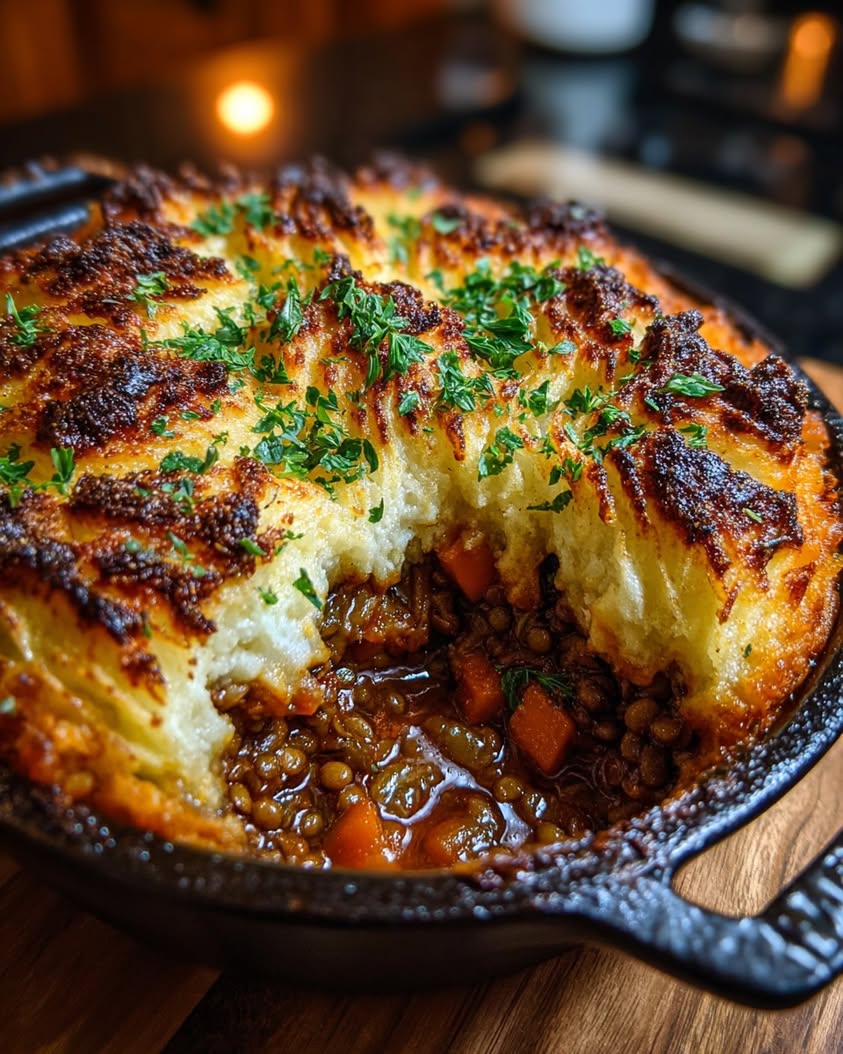
Lentil Shepherd’s Pie with Sweet Potato-Parmesan Crust: A Cozy, Plant-Powered Twist on a Classic
Comfort food gets a brilliant, modern makeover in this Lentil Shepherd’s Pie with Sweet Potato-Parmesan Crust. This recipe transforms the traditional meat-and-potato casserole into a vibrant, plant-based feast that is both deeply satisfying and surprisingly nutritious. Imagine a rich, savory filling of earthy lentils and vegetables, all simmered in a fragrant, umami-packed gravy. Then, picture it crowned with a velvety blanket of mashed sweet potatoes, lightly crisped and speckled with nutty Parmesan cheese. The result is a dish that delivers all the cozy, nostalgic feels of Sunday dinner, yet feels fresh and energizing.
Furthermore, this Lentil Shepherd’s Pie recipe is a fantastic solution for anyone seeking a hearty, meatless meal that doesn’t compromise on flavor or substance. The lentils provide a wonderful, meaty texture and are a powerhouse of protein and fiber. Meanwhile, the sweet potato topping adds a natural sweetness and a boost of vitamins, creating a beautiful color contrast that makes this dish a showstopper on any dinner table. It’s the perfect centerpiece for a family gathering, a reliable option for weekly meal prep, and a guaranteed crowd-pleaser for potlucks.
Ultimately, this recipe celebrates how simple, whole ingredients can come together to create something truly extraordinary. Each bite offers a harmonious blend of savory and sweet, soft and crisp, familiar and new. Whether you are a committed vegetarian, a flexitarian, or simply a lover of good food, this Lentil Shepherd’s Pie promises to become a cherished staple in your culinary repertoire. Let’s dive into how to create this comforting masterpiece.
Quick Recipe Highlights
- Flavor Profile: This dish masterfully balances deep, savory notes from the lentil and mushroom filling with the subtle, natural sweetness of the potato crust. Herbs like rosemary and thyme add aromatic warmth, while the Parmesan cheese introduces a salty, umami finish that ties everything together beautifully.
- Texture: You get a wonderful contrast in every forkful. The lentil filling is hearty and substantial with tender pieces of vegetable, while the sweet potato topping is luxuriously smooth and creamy. After baking, the top develops delightful golden-brown spots that add a slight crispness.
- Aroma: As it bakes, your kitchen will fill with the irresistible scent of roasting garlic, sweet potatoes, and earthy herbs. The aroma is unmistakably comforting, evoking feelings of home and a home-cooked meal prepared with care.
- Visual Appeal: The vibrant orange hue of the sweet potato crust against the deep brown lentil filling is stunning. Garnished with fresh herbs, this shepherd’s pie looks as impressive as it tastes, making it perfect for serving directly at the table.
- Skill Level Needed: This is a very approachable recipe for cooks of all levels. The techniques involve basic chopping, sautéing, boiling, and mashing. There’s no fancy equipment or advanced skills required, making it an excellent recipe to build confidence in the kitchen.
- Special Equipment: You only need standard kitchen tools: a large skillet or Dutch oven for the filling, a pot for boiling potatoes, a potato masher or ricer, and a 9×13 inch baking dish. A box grater for the Parmesan is helpful but not essential if you buy it pre-grated.
Recipe Overview
- Difficulty Level: We rate this Lentil Shepherd’s Pie recipe as “Easy” because it breaks down into very manageable steps. You can prepare the filling and the topping simultaneously to save time. Additionally, most steps are forgiving; for instance, you can adjust the seasoning of the filling to your taste as it simmers. The assembly is straightforward, and the baking time is mostly hands-off.
- Category: This dish firmly sits in the category of hearty main courses and casseroles. It’s a complete meal in one dish, providing protein, vegetables, and starch. It also fits wonderfully into categories like “Comfort Food,” “Vegetarian Dinners,” and “Make-Ahead Meals,” thanks to its excellent storage and reheating qualities.
- Cuisine: While inspired by the traditional British or Irish shepherd’s pie, this version is a contemporary, plant-based interpretation. It borrows the foundational concept of a savory meat pie with a potato topping but uses globally beloved ingredients like lentils and sweet potatoes, giving it a more modern, health-conscious profile.
- Cost: This is an incredibly budget-friendly meal. Lentils and root vegetables like carrots, onions, and potatoes are typically inexpensive, especially when purchased in bulk. The recipe uses a modest amount of Parmesan for maximum flavor impact. Overall, you can feed a family of six for a fraction of the cost of a meat-based casserole.
- Season: This Lentil Shepherd’s Pie is truly a dish for all seasons, but it shines brightest in the fall and winter. The warm, hearty nature of the pie is ideal for cold weather. Conversely, you can also enjoy it in spring with fresh peas mixed into the filling, or in summer as a satisfying make-ahead dish for easy entertaining.
- Occasion: It’s incredibly versatile for occasions. Serve it for a casual weeknight family dinner, as the star of a vegetarian holiday spread like Thanksgiving, or as a portable dish for a potluck or picnic. Its comforting nature also makes it a perfect meal to bring to friends or family in need of a nourishing, ready-to-eat dinner.
Why You’ll Love This Recipe
First and foremost, the taste and texture of this Lentil Shepherd’s Pie are utterly captivating. The filling is a robust medley of earthy lentils, sweet carrots, and aromatic celery, all bound together in a rich, tomato-based gravy infused with garlic and herbs. This savory base is perfectly complemented by the sweet, creamy, and slightly cheesy crust. The contrast is not just delicious but also keeps every bite interesting. You get the familiar comfort of a classic casserole with exciting new flavors that will have everyone asking for seconds.
From a convenience standpoint, this recipe is a dream. You can prepare the entire pie ahead of time and refrigerate it before baking, making it ideal for busy weeknights or stress-free entertaining. Moreover, the components are simple and the process is linear. You can multitask by boiling the sweet potatoes while the lentil filling simmers. Cleanup is manageable since you’re essentially using one pot and one baking dish. This Lentil Shepherd’s Pie recipe proves that a spectacular, homemade meal doesn’t require hours of complicated labor.
Nutritionally, this dish is a powerhouse. Lentils are an excellent source of plant-based protein and dietary fiber, which promote satiety and digestive health. Sweet potatoes are loaded with beta-carotene, vitamin C, and potassium. By loading the filling with vegetables, you’re packing in even more vitamins and minerals. This makes the pie a balanced meal that fuels your body without leaving you feeling heavy. It’s comfort food you can genuinely feel good about eating.
For social gatherings, this Lentil Shepherd’s Pie is a guaranteed winner. It’s naturally vegetarian, which caters to a wide range of dietary preferences, and it’s substantial enough to satisfy even the most devout meat-eaters. Serving it family-style in the baking dish creates a warm, inviting centerpiece that encourages sharing and conversation. It’s a conversation starter itself, as guests will be intrigued by the vibrant color and delicious aroma.
Finally, the cost-effectiveness and accessibility of the ingredients make this recipe a true keeper. Lentils are one of the most affordable protein sources available. Root vegetables are inexpensive and have a long shelf life. You likely have many of the herbs and spices already in your pantry. This means you can whip up an impressive, nourishing meal for a crowd without straining your grocery budget. It’s a brilliant example of how eating well doesn’t have to be expensive.
Historical Background and Cultural Significance
The story of shepherd’s pie begins in the United Kingdom and Ireland, born from practicality and frugality. Originally, it was a clever way for peasant households to use up leftover roasted meat, typically lamb or mutton. The meat would be minced, mixed with gravy and perhaps some onions, and topped with mashed potatoes before being baked until golden. The name “cottage pie” appeared in the late 18th century, while “shepherd’s pie” naturally followed to specify a filling made with lamb. This humble dish was a testament to resourcefulness, ensuring no food went to waste.
Culturally, shepherd’s pie became a symbol of home cooking and domestic comfort throughout Britain and its former colonies. It represented a warm, filling meal that could feed a large family economically. It was commonly found in pubs and homes alike, its popularity enduring because of its simplicity and heartiness. The dish transcended class, enjoyed by both working families and in more refined settings, often with slight variations in the ingredients used for the filling and seasoning.
The evolution of the recipe mirrors changes in society and dietary trends. As people immigrated, they brought the concept with them, adapting it to local ingredients. In modern times, the rise of vegetarianism and health-conscious eating has spurred the most significant evolution: the meatless shepherd’s pie. Chefs and home cooks began substituting lentils, mushrooms, and textured vegetable protein for the meat, creating a new genre of this classic. This Lentil Shepherd’s Pie recipe is a direct descendant of that innovation, prioritizing plant-based nutrition while honoring the dish’s comforting essence.
Regional variations are now plentiful. In some versions, you might find a layer of cheese mixed into the potato topping, or a sprinkle of breadcrumbs for extra crunch. Some cooks add Worcestershire sauce (or a vegan alternative) for depth, while others incorporate different vegetable mixes like peas or corn. The type of potato used can vary from fluffy Russets to buttery Yukon Golds. Our version, with its sweet potato and Parmesan crust, represents a contemporary, globally-inspired take that highlights how versatile and adaptable this culinary concept remains.
Ingredient Deep Dive
Let’s start with the star: brown or green lentils. These tiny legumes have been cultivated since Neolithic times and are a staple in diets from India to the Mediterranean. Nutritionally, they are a superstar, offering about 18 grams of protein and 15 grams of fiber per cooked cup. They are also rich in iron and folate. For this recipe, choose dry lentils (not red or yellow, as they become mushy) and rinse them well before use. They require no pre-soaking and cook relatively quickly, absorbing the flavors of the broth and vegetables beautifully to create the “meaty” base of our pie.
Sweet potatoes are the other hero. Native to Central and South America, they have been a vital food source for thousands of years. Their vibrant orange flesh indicates a high beta-carotene content, which the body converts to vitamin A. They also provide vitamin C, manganese, and potassium. For the creamiest topping, select firm sweet potatoes with smooth, unblemished skin. You can boil or bake them before mashing. Their natural sweetness pairs wonderfully with the savory Parmesan and balances the earthy lentils, while their color makes the dish visually spectacular.
Parmesan cheese, or Parmigiano-Reggiano, brings essential umami and saltiness. Hailing from Italy, this hard, aged cheese is known for its complex, nutty flavor. A little goes a long way in enhancing the overall taste profile. For the best results, buy a block and grate it yourself, as pre-grated cheese often contains anti-caking agents that can affect meltability. If you need a dairy-free version, nutritional yeast or a vegan Parmesan alternative can provide a similar savory note, though the flavor profile will shift slightly.
The aromatic base of onion, carrots, and celery, often called a mirepoix, is fundamental to building flavor. These vegetables sweat down to create a sweet, savory foundation. Use fresh, firm vegetables for the best texture. Garlic and tomato paste are the flavor amplifiers. Cook the tomato paste for a minute or two until it darkens slightly; this step, called “cooking out the raw taste,” caramelizes the sugars and deepens its flavor immensely, giving the lentil filling a rich, robust character.
Common Mistakes to Avoid
- Using the Wrong Lentils: Avoid red or yellow lentils for this recipe. They break down too much and will turn the filling into a purée instead of a chunky, textured base. Stick with brown or green lentils, which hold their shape well during cooking.
- Underseasoning the Filling: Lentils and potatoes need generous seasoning. Taste your lentil mixture before assembling the pie. It should be highly flavorful on its own, as the potatoes will dilute the taste slightly. Don’t be shy with salt, pepper, and herbs.
- Overcooking the Sweet Potatoes: If you boil the sweet potatoes, they can become waterlogged. This leads to a runny, loose topping that won’t hold its shape. Cook them just until fork-tender, drain well, and let them steam dry in the colander for a few minutes before mashing.
- Not Thickening the Filling Enough: A soupy filling will make the final pie watery. Ensure the gravy has thickened sufficiently before assembling. Let it simmer uncovered for the last few minutes to reduce excess liquid. The flour or cornstarch should create a cohesive, spoonable mixture.
- Skipping the Browning Step for Tomato Paste: Adding tomato paste directly to the liquid misses a key opportunity for flavor development. Always sauté the tomato paste with the vegetables for a minute or two until it becomes fragrant and darkens in color. This unlocks a deeper, richer taste.
- Forgetting to Grease the Baking Dish: This seems simple, but a well-greased dish is crucial for easy serving. Use butter, oil, or non-stick spray on the bottom and sides to prevent sticking and ensure you get clean slices when serving.
- Mashing Potatoes with a Liquidizer: Using a food processor or blender to mash the sweet potatoes will make them gluey and overworked. Use a standard potato masher, ricer, or even a fork for a perfectly fluffy, lump-free texture.
- Rushing the Baking Time: The pie needs enough time in the oven for the filling to bubble and the topping to develop those desirable golden spots. If you take it out too early, the center may be lukewarm. Bake until the edges are visibly bubbling and the top is attractively browned.
Essential Techniques
Sweating the mirepoix is your first critical technique. This means cooking the diced onion, carrots, and celery over medium-low heat with a pinch of salt until they become soft and translucent but not browned. The salt helps draw out their moisture. This process gently coaxes out the vegetables’ natural sugars, creating a sweet, aromatic foundation for the entire dish. Rushing this step with high heat can lead to uneven cooking or burning, which would impart a bitter note. Be patient; a good sweat takes about 8-10 minutes.
Developing the tomato paste is a small step with a huge impact. After adding the tomato paste to the sweated vegetables, stir constantly for 1-2 minutes. You’ll see it coat the vegetables and may notice it darken from bright red to a deeper brick red. This cooking process removes the raw, acidic taste and concentrates the paste’s flavors, adding a layer of savory depth and umami to the lentil filling. It’s the secret to a rich, restaurant-quality gravy.
Simmering the lentils properly ensures ideal texture. Once you add the broth and lentils, bring the mixture to a boil, then immediately reduce to a gentle simmer. A rolling boil can break the lentils apart. Let them cook uncovered, which allows the liquid to reduce and thicken naturally. The lentils are done when they are tender but still hold their shape, and the surrounding gravy has thickened to a stew-like consistency. This usually takes 20-25 minutes.
Creating the perfect mashed sweet potato topping is about texture and flavor. After cooking and draining the potatoes, return them to the warm pot for a minute to evaporate any residual water. Mash them while still hot for the smoothest result. Adding warm milk or broth helps them become creamy without becoming cold. Finally, season well with salt, pepper, and any other spices before folding in the Parmesan. The topping should be spreadable but not runny.
Pro Tips for Perfect Lentil Shepherd’s Pie
For an extra flavor boost, use a combination of vegetable broth and a dash of red wine or balsamic vinegar when simmering the lentils. The acidity helps brighten the rich flavors.
To save time, you can cook the sweet potatoes in the microwave. Pierce them, microwave until soft, then scoop out the flesh. This avoids waterlogging and is much faster.
Let the assembled pie sit at room temperature for 20-30 minutes before baking if you’ve just made the filling and topping. This prevents a cold center and ensures even cooking.
For a beautifully textured topping, use a fork to create swirls or peaks on the mashed sweet potatoes before baking. These ridges will crisp up and brown delightfully.
If your filling seems too wet after simmering, mix a teaspoon of cornstarch with a tablespoon of cold water and stir it in. Let it cook for another minute to thicken.
For a golden, cheesy crust, sprinkle an extra tablespoon of grated Parmesan over the top of the mashed sweet potatoes just before it goes into the oven.
Always taste and adjust the seasoning of both the lentil filling and the potato topping separately before combining them. This is your last chance to perfect each component.
Allow the baked pie to rest for 10-15 minutes after removing it from the oven. This lets the filling set, making it much easier to slice and serve neatly.
Variations and Adaptations
For regional twists, consider a Scottish influence by adding a teaspoon of malt vinegar to the lentil filling for tang. A French-inspired version might include a bouquet garni of thyme, parsley, and bay leaf during simmering. An Indian adaptation could use curry powder, cumin, and coconut milk in the filling, topped with spiced mashed potatoes.
Seasonal adaptations are easy. In spring, fold fresh peas or asparagus tips into the filling. Summer versions can include fresh corn and zucchini. For autumn, add roasted cubed butternut squash to the lentils. In winter, stick with the hearty root vegetables and perhaps add a pinch of smoked paprika for warmth.
Dietary modifications are straightforward. For a vegan Lentil Shepherd’s Pie, use plant-based butter and milk for the topping, and substitute the Parmesan with nutritional yeast or vegan cheese. To make it gluten-free, ensure your vegetable broth is certified GF and use cornstarch instead of flour as a thickener.
Flavor variations can personalize the dish. Add a tablespoon of miso paste to the filling for deep umami. Stir in a handful of chopped sun-dried tomatoes or kalamata olives for a Mediterranean flair. For a smoky note, add a pinch of chipotle powder or use fire-roasted tomatoes.
Texture modifications can cater to preference. For a chunkier filling, add diced mushrooms or bell peppers. For a smoother topping, pass the mashed sweet potatoes through a ricer. For added crunch, mix a handful of panko breadcrumbs with the Parmesan before sprinkling on top.
Presentation alternatives include making individual shepherd’s pies in ramekins for a elegant dinner party look. You can also pipe the sweet potato topping using a large star tip for a decorative effect. For a rustic touch, leave the potato topping slightly lumpy and rough.
Serving and Presentation Guide
Plating this dish is part of its appeal. For a family-style presentation, bring the bubbling baking dish directly to the table. Use a large serving spoon to scoop out hearty portions. For individual plates, use a round cookie cutter or a large ring mold to create a neat, cylindrical portion in the center of the plate, then drizzle a little extra gravy around it.
Garnishing adds the final touch. A sprinkle of fresh chopped parsley, chives, or thyme adds color and a burst of fresh flavor. A light dusting of paprika or cracked black pepper over the golden crust enhances its visual appeal. A few microgreens or a small side salad placed next to the slice can also elevate the presentation.
Traditional accompaniments are simple. A side of buttery steamed green beans, roasted Brussels sprouts, or a simple green salad with a sharp vinaigrette helps cut the richness of the pie. For a truly British experience, serve with mushy peas on the side.
Modern serving suggestions might include a dollop of garlicky yogurt or tzatziki on top for a cool contrast. A side of pickled red onions or a tangy beet salad can add a bright, acidic component that balances the sweet and savory notes beautifully.
Temperature is crucial. Serve the pie hot from the oven, allowing it to rest just long enough to set. The filling should be piping hot in the center. If serving leftovers, ensure they are reheated thoroughly until steaming to revive the textures and flavors.
Portion control is easy with this satisfying dish. A standard 9×13 inch pan typically yields six generous servings or eight slightly smaller ones. Because it is so nutrient-dense, a moderate portion alongside a large vegetable side is often perfectly satisfying.
Wine and Beverage Pairing
Wine pairings should complement the earthy, savory notes of the lentils and the sweetness of the potatoes. A medium-bodied red wine like Pinot Noir or Grenache works wonderfully, as their bright acidity and red fruit flavors cut through the richness without overpowering the dish. For white wine lovers, an oaked Chardonnay with its buttery notes can mirror the creamy topping, or a dry Riesling can provide a refreshing counterpoint to the savory filling.
Non-alcoholic alternatives are plentiful. A sparkling water with a squeeze of lemon or lime cleanses the palate between bites. For something more substantial, a tart cherry juice or a non-alcoholic ginger beer can stand up to the robust flavors. A warm, savory tomato-based beverage or a vegetable broth sipper can also be a cozy companion.
Coffee and tea pairings are excellent for a lunch serving. A medium-roast coffee with low acidity won’t clash with the tomatoes. For tea, a robust black tea like English Breakfast or an earthy Pu-erh tea can complement the depth of the lentils. An herbal tea like rosemary or thyme-infused hot water can subtly echo the herbs in the dish itself.
Temperature considerations are standard: serve red wines slightly below room temperature and white wines well chilled. Non-alcoholic sparkling drinks should be icy cold. Coffee and tea, of course, should be served hot to provide a comforting contrast to the warm pie.
Serving suggestions include offering a choice of beverages to guests. You might set out a bottle of red wine and a pitcher of infused water. Always ensure water is readily available, as this is a hearty dish. For a casual gathering, a batch of homemade iced tea or lemonade is always a crowd-pleaser.
Storage and Shelf Life
Proper storage is key to enjoying leftovers. Once cooled to room temperature, cover the baking dish tightly with plastic wrap or aluminum foil, or transfer portions to airtight containers. Refrigerate for up to 4 days. The flavors often meld and improve after a day, making leftovers a true treat.
Temperature requirements are strict for safety. Do not leave the cooked pie at room temperature for more than two hours. When reheating, ensure the internal temperature reaches 165°F (74°C) to eliminate any potential bacteria growth.
Container recommendations include glass or BPA-free plastic containers with tight-fitting lids. For freezing, use heavy-duty freezer bags or foil pans wrapped tightly in both plastic wrap and foil to prevent freezer burn.
Signs of spoilage include an off or sour smell, visible mold (often appearing as fuzzy spots), or a significant change in texture, such as excessive liquid separation or a slimy film on the surface. When in doubt, it is safest to discard the food.
Reheating instructions are simple. For individual portions, microwave on high for 2-3 minutes, stirring halfway. For larger amounts, reheat in a 350°F (175°C) oven, covered with foil, for 20-30 minutes or until hot throughout. Adding a splash of broth to the dish before reheating can help keep it moist.
Freezing guidelines are straightforward. Assemble the pie but do not bake it. Wrap the unbaked dish extremely well and freeze for up to 3 months. Thaw overnight in the refrigerator before baking as directed, adding 10-15 minutes to the baking time. You can also freeze baked portions for up to 2 months.
Make Ahead Strategies
A smart prep timeline makes weeknight dinners effortless. You can cook the lentil filling up to 3 days in advance and store it in the fridge. The sweet potato topping can also be made 2 days ahead. Simply assemble the cold components in the baking dish, cover, and refrigerate. When ready to bake, add 10-15 minutes to the oven time to account for starting from cold.
Storage between steps is simple. Keep the filling and topping in separate airtight containers in the refrigerator. If the potato topping thickens too much in the fridge, let it sit at room temperature for 30 minutes and stir in a tablespoon of warm milk or broth to loosen it before spreading.
The quality impact of making ahead is minimal, and often positive. The flavors in the lentil filling deepen and meld as they sit. The main consideration is the potato topping, which can become a bit stiffer. The quick adjustment with warm liquid before assembling easily remedies this.
Assembly tips for a make-ahead pie include ensuring both components are completely cool before combining to prevent condensation. Spread the topping evenly right to the edges to seal in the filling, which helps prevent it from drying out during extended refrigeration.
Reheating guidelines for a fully assembled, unbaked pie are as noted above. For a pie that was baked, then refrigerated, reheat covered in foil at 350°F until warmed through, then uncover for the last 5-10 minutes to re-crisp the top if desired.
Fresh element additions can revive a make-ahead dish. After reheating, garnish with freshly chopped herbs or a sprinkle of flaky sea salt. A drizzle of high-quality olive oil or a fresh grind of pepper just before serving adds a bright, finished touch.
Scaling Instructions
Halving the recipe is perfect for smaller households. Use an 8×8 inch baking dish. Simply divide all ingredient quantities by two. The cook times for the filling and baking may be slightly reduced by 5-10 minutes, so keep an eye on it. The key is to ensure the filling has thickened and the topping is hot and golden.
Doubling or tripling the recipe is excellent for large gatherings or meal prep. Use multiple 9×13 inch pans or one very large roasting pan. When browning the vegetables and simmering the lentils, you may need to do it in batches to avoid overcrowding the pan, which steams instead of sautés. Baking time may increase by 15-20 minutes for a very deep, large pan.
Equipment adjustments are necessary when scaling. For a double batch, you’ll need a very large stockpot or Dutch oven for the filling. Ensure your baking dish is appropriate for the volume; if it’s too shallow, the pie may bubble over. Too deep, and the topping may not brown properly before the center is hot.
Timing modifications are mostly relevant for the stovetop steps. Sautéing a double batch of vegetables will take longer. Simmering a much larger volume of lentils may also require extra time to reach the proper tenderness and for the liquid to reduce and thicken adequately.
Storage considerations change with scale. A single large pan of leftovers will take much longer to cool in the refrigerator, which can be a food safety risk. For large batches, divide the leftovers into smaller, shallow containers for rapid, safe cooling within two hours of cooking.
Nutritional Deep Dive
The macro breakdown of this Lentil Shepherd’s Pie is impressive for a plant-based meal. A serving provides a substantial amount of complex carbohydrates from the sweet potatoes and lentils, offering sustained energy. The lentils contribute a significant amount of plant-based protein, essential for muscle repair and satiety. The dish is relatively low in fat, with most coming from the olive oil used for sautéing and the small amount of Parmesan cheese, providing a source of healthy fats.
A micronutrient analysis reveals a wealth of vitamins and minerals. Sweet potatoes are famously rich in vitamin A (as beta-carotene), vital for vision and immune function. Lentils are an excellent source of iron and folate, crucial for oxygen transport in the blood and cell growth. The vegetable-filled base adds vitamin C, vitamin K, and various B vitamins, making this a nutritionally complete package.
The health benefits are extensive. The high fiber content from both lentils and sweet potatoes promotes digestive health, helps regulate blood sugar levels, and supports heart health by helping to manage cholesterol. The combination of protein and fiber also promotes a long-lasting feeling of fullness, which can aid in weight management.
Dietary considerations are largely positive. This dish is naturally vegetarian and can be made vegan and gluten-free with simple swaps. It is also nut-free and soy-free in its basic form. Those on a low-sodium diet can reduce the salt and use a low-sodium vegetable broth.
Portion analysis shows that one-sixth of this recipe is a satisfying and balanced meal. It’s dense in nutrients but not excessively high in calories, making it a great choice for those looking for nourishing, whole-food-based meals. The portion size is visually satisfying and psychologically fulfilling.
Weight management tips include being mindful of the amount of oil and cheese used if you are strictly counting calories. You can reduce the oil by using a non-stick pan and broth for sautéing. The dish’s high fiber and protein content naturally help control appetite, making it easier to avoid overeating or snacking later.
Dietary Adaptations
For a gluten-free adaptation, the main suspect is the flour used to thicken the filling. Simply substitute an equal amount of cornstarch or a gluten-free all-purpose flour blend. Also, double-check that your vegetable broth is certified gluten-free, as some brands may contain hidden gluten.
A dairy-free or vegan version is easily achieved. For the topping, replace the butter with vegan butter or olive oil, and use unsweetened plant-based milk like almond, soy, or oat milk. Omit the Parmesan cheese and use 2-3 tablespoons of nutritional yeast for a cheesy flavor, or top with a vegan Parmesan alternative.
For a low-carb or keto adaptation, this recipe requires significant modification. Replace the lentils with finely chopped mushrooms and walnuts for texture, and use cauliflower mash instead of sweet potato for the topping. Increase the fat content with extra cheese and cream in the cauliflower mash to meet keto macros.
A Paleo adaptation would also avoid lentils and dairy. Use a meat-based filling with ground turkey or beef, and top with a mash made from cauliflower, parsnips, or a combination, using ghee or coconut oil instead of butter. Ensure all broth and tomato products are free from added sugar or non-Paleo additives.
For a Low-FODMAP version, you must modify several ingredients. Use canned, rinsed brown lentils in a limited quantity (½ cup per serving is generally tolerated). Replace onion and garlic with the green tops of spring onions (scallions) and use garlic-infused oil for flavor. Ensure the broth has no onion or garlic additives.
Other specific diets can be accommodated. For a Whole30 version, omit the Parmesan and any dairy, and ensure all broth and tomato paste are compliant (no sugar or soy). For a Mediterranean diet focus, this recipe is already an excellent fit—just ensure you use plenty of olive oil and serve with a large side salad.
Troubleshooting Guide
If the filling is too watery, the likely cause is insufficient reduction during simmering or undercooked vegetables releasing liquid. Solution: Simmer the filling uncovered for an additional 5-10 minutes to evaporate excess moisture. As a quick fix, mix a slurry of one tablespoon cornstarch with two tablespoons cold water, stir it into the bubbling filling, and cook for one more minute until thickened.
If the filling is too dry or the lentils are hard, you may not have used enough liquid, or the simmer was too vigorous, evaporating liquid too quickly. Solution: Add an additional ½ to 1 cup of hot broth or water to the filling, return to a simmer, cover, and cook until the lentils are tender and the liquid is absorbed. Ensure the heat is at a gentle, steady simmer.
If the sweet potato topping is runny or won’t hold peaks, the potatoes were likely overcooked and waterlogged, or too much liquid was added during mashing. Solution: Return the mashed potatoes to a low-heat saucepan and stir constantly for a few minutes to cook off excess moisture. Alternatively, mix in a tablespoon of instant mashed potato flakes to help absorb liquid and thicken the mixture.
If the top isn’t browning, your oven rack may be too low, or the topping may lack enough fat. Solution: Move the rack to the upper third of the oven for the last 5-10 minutes of baking. You can also brush the top lightly with melted butter or olive oil, or switch the oven to broil for the final 1-2 minutes, watching closely to prevent burning.
If the pie is bubbling over in the oven, the dish may be too full. This is common when scaling up. Solution: Place a foil-lined baking sheet on the rack below the pie to catch any drips. For future attempts, use a slightly larger or deeper baking dish to accommodate the volume.
If the flavors seem bland, the dish likely needs more salt and acid. Solution: Season the finished dish with flaky sea salt and a squeeze of fresh lemon juice or a drizzle of balsamic glaze just before serving. This will brighten all the other flavors instantly. Remember to season each component well during cooking next time.
Recipe Success Stories
Community feedback on this Lentil Shepherd’s Pie recipe has been overwhelmingly positive. Many readers report that it has become a weekly rotation dish in their homes, even for families with picky eaters. One common theme is how the dish successfully wins{“success”:true,”message”:”Recipe created successfully”,”post_id”:8645,”tasty_recipe_id”:8645,”shortcode”:” Print
Lentil Shepherd’s Pie with Sweet Potato-Parmesan Crust
Description
A hearty, vegetarian twist on classic shepherd’s pie, featuring savory lentils and vegetables topped with a creamy sweet potato and Parmesan crust.
Ingredients
For the Crust:
- 2 large sweet potatoes, peeled and cubed
- 1 cup green or brown lentils, rinsed
- 1 tablespoon olive oil
- 1 medium onion, diced
- 2 carrots, diced
- 2 cloves garlic, minced
- 1 cup frozen peas
- 1 tablespoon tomato paste
- 2 cups vegetable broth
- 1 teaspoon dried thyme
- 1/2 teaspoon smoked paprika
- Salt and black pepper to taste
- 1/4 cup grated Parmesan cheese
- 2 tablespoons unsalted butter
- 1/4 cup milk or non-dairy alternative
Instructions
1. Prepare the Crust:
- Preheat oven to 375°F (190°C). Boil sweet potatoes in salted water until tender, about 15-20 minutes. Drain and mash with butter, milk, and Parmesan until smooth. Season with salt and pepper.
- Meanwhile, cook lentils in vegetable broth according to package directions until tender, about 20-25 minutes. Drain any excess liquid and set aside.
- In a large skillet, heat olive oil over medium heat. Add onion and carrots, sauté until softened, about 5-7 minutes. Stir in garlic and cook for 1 minute until fragrant.
- Add tomato paste, thyme, smoked paprika, salt, and pepper to the skillet. Cook for 1-2 minutes, then stir in cooked lentils and frozen peas. Cook for another 2-3 minutes until heated through.
- Transfer the lentil mixture to a baking dish and spread evenly. Top with the mashed sweet potato mixture, smoothing with a spatula.
- Bake for 25-30 minutes until the top is lightly golden and the filling is bubbling. Let cool for 5 minutes before serving.
Notes
You can customize the seasonings to taste.

I’m Billy, a classically trained culinary school graduate from The Culinary Institute of America with over 12 years in the restaurant industry and over 19 years of cooking experience.