
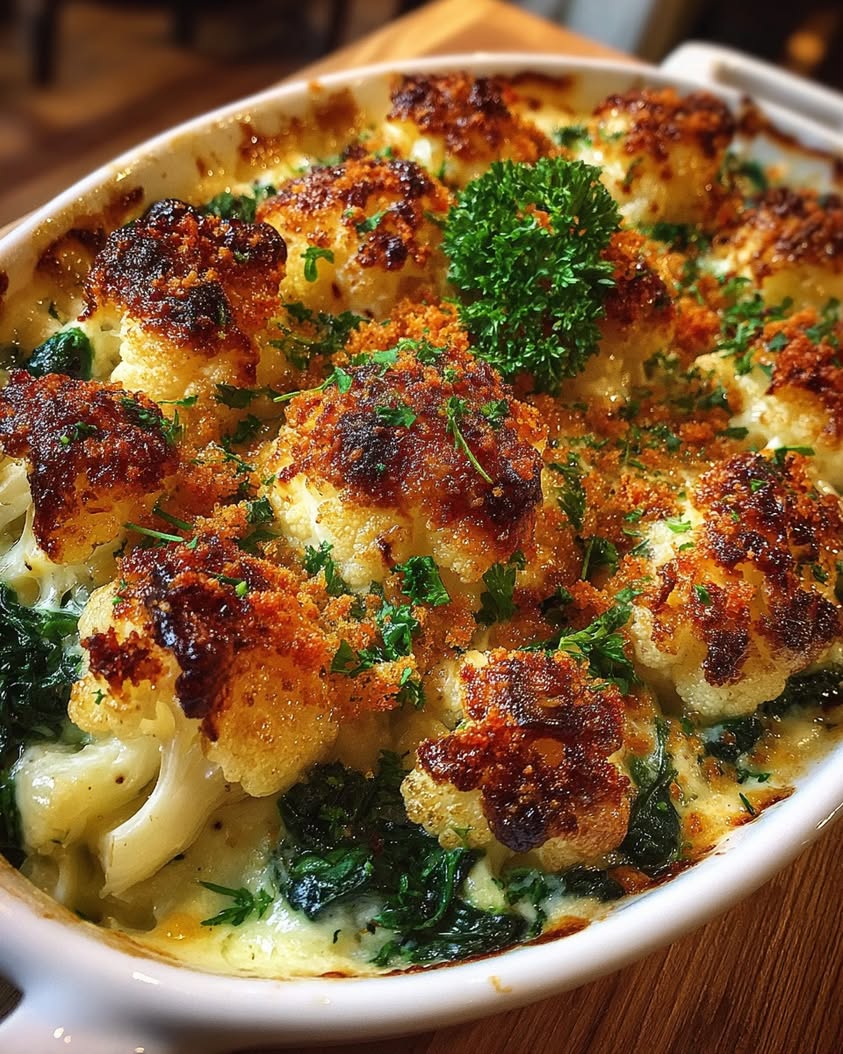
Creamy Cauliflower Spinach Burrata Gratin: A Decadent Vegetarian Main Course
Imagine a dish that transforms humble vegetables into a show-stopping centerpiece. This Creamy Cauliflower Spinach Burrata Gratin does exactly that. It combines roasted cauliflower and tender spinach in a luscious, creamy sauce, then crowns it with a molten ball of burrata and a crisp, citrusy breadcrumb topping. Ultimately, it is a vegetarian masterpiece that feels both comforting and incredibly elegant.
The magic of this recipe lies in its beautiful contrasts. You get the soft, yielding texture of the vegetables against the crisp, golden breadcrumb crunch. Meanwhile, the rich, savory sauce perfectly balances the bright, zesty notes from the lemon and orange zest. When you break into the burrata, its creamy center spills out, creating a luxurious sauce that ties the whole dish together. This Creamy Cauliflower Spinach Burrata Gratin is guaranteed to impress at any dinner table.
Furthermore, this dish is surprisingly versatile. It works wonderfully as a hearty vegetarian main course for a special occasion. Alternatively, it can serve as a spectacular side dish alongside a roast chicken or grilled fish. Regardless of how you serve it, the combination of flavors and textures will have everyone asking for seconds. Let’s explore how to create this unforgettable meal.
Quick Recipe Highlights
- Flavor Profile: This gratin delivers a sophisticated balance. Savory, nutty notes from the roasted cauliflower and Parmesan cheese meet the fresh, mild flavor of spinach. The burrata adds a decadent, milky richness, while the citrus breadcrumbs provide a essential bright, aromatic finish that cuts through the creaminess.
- Texture: The experience is all about delightful contrast. Expect tender-crisp cauliflower and silky spinach beneath a crisp, golden-brown breadcrumb crust. The piece de resistance is the burrata, which offers an incredible textural surprise with its firm outer shell and lusciously soft, creamy interior that oozes over the hot vegetables.
- Aroma: As this bakes, your kitchen will fill with an irresistible fragrance. First, you will smell the nutty aroma of roasting cauliflower and toasting breadcrumbs. Then, the herbal scent of thyme and the bright, uplifting citrus zest will mingle with the savory, cheesy notes, creating a mouthwatering preview of the meal to come.
- Visual Appeal: This dish is a feast for the eyes. The golden-brown, textured breadcrumb topping creates a beautiful crust. When served, the pristine white burrata ball sits proudly on top, ready to be broken open. Underneath, glimpses of green spinach and pale cauliflower promise a colorful and inviting interior.
- Skill Level Needed: This is an intermediate recipe ideal for confident home cooks. It involves several techniques executed in sequence: roasting vegetables, wilting greens, making a simple béchamel sauce, and preparing a flavored topping. However, each step is straightforward and well-explained, making it an excellent recipe for expanding your culinary skills.
- Special Equipment: You will need a few key tools. A large baking sheet for roasting the cauliflower, a large oven-safe skillet or braiser (like a 10-12 inch cast iron or ceramic dish), and a box grater for the citrus zest are essential. A whisk for the sauce and a small bowl for mixing the breadcrumb topping will also be helpful.
Recipe Overview
- Difficulty Level: We classify this Creamy Cauliflower Spinach Burrata Gratin as intermediate. The reason is the multi-step process that requires coordination. You must manage roasting, sauce-making, and assembly without any one component becoming cold or overcooked. However, each individual step is simple. With careful reading and mise en place (prepping all ingredients beforehand), a motivated cook can absolutely achieve fantastic results.
- Category: This versatile dish straddles multiple categories beautifully. Primarily, it is a stunning vegetarian main course that is substantial enough to stand alone. Simultaneously, it makes an exceptional side dish for holiday meals or dinner parties. You could even consider it a luxurious baked pasta alternative or a sophisticated vegetable casserole with a gourmet twist.
- Cuisine: The dish draws inspiration from Italian and French culinary traditions. The technique of making a gratin is classically French, involving a creamy sauce and a browned topping. The ingredients—burrata, Parmesan, and the focus on high-quality vegetables—are quintessentially Italian. The result is a modern, fusion-style dish that celebrates the best of both European cooking styles.
- Cost: This is a moderately priced recipe that delivers restaurant-quality appeal. The main costs come from the fresh burrata cheese and the block of Parmesan for grating. Cauliflower and spinach are typically affordable, especially in season. Overall, you can create this impressive dish for a fraction of the cost of ordering it at a restaurant, making it a fantastic value for entertaining.
- Season: This Creamy Cauliflower Spinach Burrata Gratin is perfect for fall and winter. During these seasons, cauliflower is at its peak, offering the best flavor and texture. The rich, warming nature of the baked dish is ideal for cooler weather. That said, with year-round availability of ingredients, you can certainly enjoy this comforting gratin any time you crave something special.
- Occasion: This recipe is tailor-made for occasions where you want to impress. It is perfect for a festive holiday dinner like Thanksgiving or Christmas as a show-stopping vegetarian centerpiece. It also excels at dinner parties, date nights at home, or any family gathering where you want to serve something memorable that feels both homemade and gourmet.
Why You’ll Love This Recipe
First and foremost, the taste and texture of this Creamy Cauliflower Spinach Burrata Gratin are utterly captivating. Every bite offers a symphony of contrasts. You experience the earthy sweetness of roasted cauliflower, the subtle mineral note of spinach, and the deep umami of Parmesan cheese sauce. Then, the crispy, lemony breadcrumbs add a necessary crunch and brightness. Finally, the burrata provides a luxurious, creamy surprise that elevates the entire dish from excellent to extraordinary. This combination ensures that your palate never gets bored.
Next, consider the convenience and preparation benefits. While the recipe has several steps, they are all logical and can be paced. You can roast the cauliflower and prepare the breadcrumb topping in advance. The sauce comes together quickly in the same pan you will bake everything in, minimizing cleanup. Ultimately, the active cooking time is manageable, and the final bake is mostly hands-off, allowing you to finish setting the table or preparing a simple salad to accompany this stunning main course.
Moreover, this dish boasts significant nutritional advantages. Cauliflower is a nutritional powerhouse, packed with vitamins C and K, fiber, and antioxidants. Spinach adds iron, folate, and more vitamins. By using a moderate amount of a rich cheese like burrata and Parmesan, you get incredible flavor and satisfaction without needing to overload the dish with heavy cream. This Creamy Cauliflower Spinach Burrata Gratin is a delicious way to enjoy a generous serving of vegetables in a form that feels indulgent.
Additionally, the social and entertaining value of this gratin is incredibly high. Presenting a bubbling, golden-brown dish with a whole ball of burrata on top creates instant drama and excitement at the table. It is a conversation starter and signals to your guests that you have prepared something special. Serving it family-style encourages sharing and interaction, making the meal more engaging and memorable than individual plated courses.
Finally, the cost-effectiveness and accessibility are major wins. Gourmet vegetarian dishes at restaurants often carry a premium price tag. By making this Creamy Cauliflower Spinach Burrata Gratin at home, you control the quality of ingredients and save money. Most components are readily available at standard grocery stores. Investing in a good piece of Parmesan and fresh burrata is still far more economical than dining out, allowing you to create a luxurious dining experience in your own kitchen.
Historical Background and Cultural Significance
The concept of a gratin has deep roots in French cuisine. The term “gratin” derives from the French verb “gratter,” meaning “to scrape” or “to grate,” originally referring to the scrapings of bread and cheese left in the pan. Traditionally, a gratin involves a creamy sauce, vegetables or potatoes, and a topping of breadcrumbs and/or cheese that browns under a broiler. This technique was a practical way to create a flavorful, crusty topping that made simple ingredients more appealing and reduced waste. Our Creamy Cauliflower Spinach Burrata Gratin is a modern interpretation of this classic method.
Italian cuisine contributes the star ingredient: burrata. This cheese originated in the Apulia region of Italy in the early 20th century as a way to use up the scraps of mozzarella production. Cheesemakers would create a pouch from fresh mozzarella and fill it with stracciatella, a creamy mixture of shredded mozzarella and cream. The name “burrata” means “buttered” in Italian, a nod to its rich, soft interior. Incorporating burrata into a baked gratin is a contemporary twist, marrying Italian cheesemaking artistry with French cooking technique.
The evolution of this specific recipe reflects broader food trends. Firstly, the rise of vegetable-forward cooking has moved cauliflower from a simple side to a centerpiece. Secondly, the popularity of burrata in modern restaurants has made it a sought-after ingredient for home cooks. Combining these elements with the timeless gratin format creates a dish that feels both classic and of-the-moment. This Creamy Cauliflower Spinach Burrata Gratin represents a fusion where tradition meets innovation on the plate.
Regional variations of vegetable gratins exist across Europe. In Provence, you might find a gratin of seasonal vegetables with herbs de Provence. In northern Italy, a cauliflower gratin might include béchamel and Parmigiano-Reggiano. Our version is a deliberate blend, using French technique, Italian cheeses, and a bright citrus breadcrumb topping that adds a New World or California-inspired flair. This global influence makes the dish a beautiful example of how culinary borders continue to blur, resulting in creative and delicious hybrids.
Ingredient Deep Dive
Cauliflower: This versatile cruciferous vegetable forms the hearty base of our gratin. Cultivated for centuries, cauliflower is believed to have originated in Asia Minor. It gained popularity in Europe and eventually became a global staple. Nutritionally, it is low in calories but high in fiber, vitamins C and K, and contains beneficial antioxidants like sulforaphane. When selecting a head, look for tight, compact florets with crisp, green leaves attached—avoid any with brown spots or a loose appearance. Store it unwashed in a perforated bag in the refrigerator’s crisper drawer for up to a week. For a variation, you could substitute broccoli or Romanesco cauliflower for a different color and slight flavor twist.
Fresh Spinach: We use fresh spinach for its vibrant color and tender texture when wilted. Spinach has a long history, with its cultivation tracing back to ancient Persia. It is famously rich in iron, calcium, magnesium, and vitamins A and K. For this recipe, choose bags of pre-washed baby spinach for convenience, or bunches of flat-leaf spinach. Ensure the leaves are vibrant green and not wilted or slimy. Store spinach loosely in its original bag in the fridge and use it quickly. If you must substitute, Swiss chard or kale (stems removed and finely chopped) will work, though they have a stronger, more robust flavor.
Burrata Cheese: Burrata is the show-stopping ingredient. This fresh Italian cheese consists of a mozzarella shell filled with stracciatella, a creamy mixture of shredded mozzarella and cream. Always seek out the freshest burrata possible, often found in specialty cheese sections or Italian markets. Check the “packed on” date, as it is highly perishable. It should feel soft and supple in its packaging. Store it in its liquid in the refrigerator and use it within a day or two of purchase for peak quality. For a substitute in a pinch, a large ball of fresh mozzarella could be used, though you will miss the luxurious creamy center.
Parmesan Cheese: We use Parmesan (Parmigiano-Reggiano is ideal) for its powerful umami punch in the sauce and breadcrumbs. This hard, aged cheese from Italy is renowned for its complex, nutty flavor and granular texture. It is a good source of protein and calcium. Crucially, always buy a block and grate it yourself. Pre-grated cheese contains anti-caking agents that prevent it from melting smoothly. Store the block tightly wrapped in the refrigerator. As a substitute, another hard, aged cheese like Pecorino Romano (which is saltier and sharper) or Grana Padano could be used.
Panko Breadcrumbs: Panko, Japanese-style breadcrumbs, are essential for the perfect crunch. They are made from bread without crusts, resulting in larger, flakier, and crispier crumbs than traditional breadcrumbs. They absorb less oil and stay remarkably crisp. Look for plain, unseasoned panko. For a gluten-free version of this Creamy Cauliflower Spinach Burrata Gratin, use certified gluten-free panko. Store an opened package in an airtight container. As a substitute, you could use regular breadcrumbs, but the texture will be denser and less airy. For a keto option, crushed pork rinds or almond flour mixed with Parmesan can work.
Common Mistakes to Avoid
- Overcrowding the Pan When Roasting Cauliflower: Spreading the cauliflower in a single layer with space between florets is non-negotiable. If you crowd the pan, the cauliflower will steam instead of roast. Consequently, you will miss out on the crucial caramelized, nutty flavor and tender-crisp texture that forms the foundation of the gratin.
- Using Pre-Grated Parmesan Cheese: This is a critical error. Pre-grated cheese contains cellulose or other anti-caking agents. These additives prevent the cheese from melting into a smooth, creamy sauce. Your sauce may become grainy or separate. Always take the extra minute to grate a block of high-quality Parmesan for the best flavor and texture.
- Not Wringing Out the Spinach: After wilting the spinach, you must squeeze out as much liquid as possible. Spinach holds a surprising amount of water. If you skip this step, that water will leach into your creamy sauce during baking. The result can be a watery, diluted gratin that lacks the rich, cohesive body you desire.
- Adding Burrata Too Early: The burrata ball should be placed on the assembled gratin just before the final bake. If you add it at the beginning, it will overheat, potentially causing the delicate outer shell to burst prematurely and the creamy interior to completely melt away. You want it warm, soft, and intact for that dramatic tableside moment.
- Burning the Citrus Zest in the Breadcrumbs: When toasting the panko with butter and zest, watch it carefully. The zest contains oils that can burn quickly over high heat. Use medium heat and stir constantly until just golden and fragrant. Burnt zest will impart a bitter flavor that can overshadow the bright, aromatic notes you worked to create.
- Underseasoning the Sauce: Cauliflower and spinach are mild canvases. Your béchamel sauce needs adequate seasoning to carry the dish. Taste the sauce vigorously after adding the Parmesan and before combining it with the vegetables. Remember that it will be diluted slightly by the veggies, so it should taste well-seasoned, even a touch bold, on its own.
- Using a Baking Dish That’s Too Deep: A wide, shallow oven-safe skillet or gratin dish is ideal. A deep casserole dish will result in a higher ratio of creamy interior to crispy topping. You want a good surface area for that golden breadcrumb crust to shine. A 10-12 inch cast iron or ceramic baking dish is perfect for this Creamy Cauliflower Spinach Burrata Gratin.
- Skipping the Rest Time After Baking: Allow the gratin to rest for 5-10 minutes after removing it from the oven. This rest period lets the sauce thicken slightly and settle, making it easier to serve neat portions. Cutting into it immediately can cause it to be overly runny on the plate.
Essential Techniques
Roasting Cauliflower: Roasting is the key to unlocking cauliflower’s full potential. High, dry heat caramelizes the natural sugars in the florets, creating a deep, nutty, and complex flavor that boiling or steaming cannot achieve. To master it, cut florets into even sizes, toss them thoroughly with oil, salt, and pepper, and spread them in a single layer on a preheated sheet pan. Do not overcrowd. The visual cue for success is golden-brown edges and tender stems when pierced with a fork. The common pitfall is steaming due to overcrowding, which leads to bland, soggy cauliflower.
Making a Béchamel Sauce: This classic French “white sauce” is the creamy binder for our gratin. The technique involves creating a roux (cooked butter and flour) to thicken milk. The importance lies in cooking the flour taste out of the roux (about 1-2 minutes) before slowly whisking in warm milk to prevent lumps. Mastery requires patience—add the milk gradually while whisking constantly until smooth and thickened. The sauce should coat the back of a spoon. A common pitfall is adding cold milk to a hot roux too quickly, which guarantees lumps. Another is undercooking the roux, leaving a raw flour taste.
Wilting and Wringing Spinach: This two-part technique ensures your gratin isn’t watery. Wilting simply involves cooking the spinach briefly in a pan until it collapses and turns bright green. The crucial second step is wringing out the excess moisture. Transfer the wilted spinach to a clean kitchen towel or several layers of paper towels. Once cool enough to handle, twist and squeeze the bundle firmly over the sink until no more liquid runs out. This step is non-negotiable for a perfectly textured Creamy Cauliflower Spinach Burrata Gratin.
Toasting Flavored Breadcrumbs: This technique transforms plain panko into an aromatic, crunchy topping. The goal is to toast the crumbs in butter until golden, infusing them with fat and flavor, and to gently warm the citrus zest to release its oils without burning it. Use medium heat and stir constantly for even toasting and color. The visual cue is a uniform light golden brown and a fragrant, buttery, citrusy smell. The pitfall is walking away, which can lead to burnt spots and bitter flavor in seconds.
Pro Tips for Perfect Creamy Cauliflower Spinach Burrata Gratin
First, preheat your baking sheet in the oven before adding the cauliflower. This trick gives the florets an immediate sear upon contact, promoting better caramelization and preventing sticking. Consequently, you get more flavorful roasted cauliflower with less effort.
Next, warm your milk slightly before adding it to the roux. You can do this in the microwave or a small saucepan. Using cold milk shocks the roux and dramatically increases the risk of a lumpy sauce. Warm milk incorporates smoothly, leading to a velvety béchamel.
Furthermore, use a microplane zester for the lemon and orange zest. This tool creates fine, fluffy zest with minimal bitter white pith. The increased surface area allows the citrus oils to permeate the breadcrumbs more effectively, giving you maximum aromatic impact.
Additionally, reserve a small handful of the grated Parmesan cheese to sprinkle over the breadcrumb topping just before baking. This extra layer of cheese will melt and create an even deeper, more complex savory crust on your finished gratin.
Also, let the burrata sit at room temperature for 15-20 minutes before baking. Taking the chill off allows it to warm more evenly in the oven. This prevents the center from being stone cold when you serve it, ensuring that perfect, oozy texture throughout.
Finally, for a professional finish, garnish the baked gratin with a final flourish. Just before serving, sprinkle a little extra fresh zest and a few leaves of fresh thyme or a drizzle of high-quality olive oil over the top. This adds a burst of fresh color and aroma that makes the dish look restaurant-ready.
Variations and Adaptations
Regional Variations: To lean into Italian roots, add a pinch of red pepper flakes to the béchamel and use a mix of mozzarella and Parmesan in the sauce. For a French twist, stir a tablespoon of Dijon mustard and a pinch of freshly grated nutmeg into the béchamel, and use Gruyère cheese instead of some of the Parmesan. A Mediterranean version could include sun-dried tomatoes and kalamata olives mixed with the vegetables.
Seasonal Adaptations: In spring, substitute asparagus tips and fresh peas for some of the cauliflower. During summer, incorporate roasted zucchini and yellow squash. For a heartier winter version, add roasted cubes of butternut squash or sweet potato to the mix. These changes keep the concept of the Creamy Cauliflower Spinach Burrata Gratin fresh and aligned with what is at its peak.
Dietary Modifications: For a gluten-free gratin, use certified gluten-free panko breadcrumbs and ensure your flour for the roux is a 1:1 gluten-free blend. To make it keto or low-carb, replace the panko with a mixture of crushed pork rinds, almond flour, and Parmesan for the topping, and use a xanthan gum-thickened cream sauce instead of a flour-based béchamel.
Flavor Variations: Introduce different herbs like chopped rosemary or sage in the breadcrumbs. For a smoky note, add a teaspoon of smoked paprika to the cauliflower before roasting. A truffle variation involves drizzling a small amount of truffle oil over the assembled gratin before adding the burrata, or using truffle-infused cheese.
Texture Modifications: For extra crunch, mix finely chopped toasted walnuts or almonds into the panko topping. For a more decadent, ultra-creamy interior, fold a 1/2 cup of ricotta cheese into the béchamel sauce along with the Parmesan. This creates an even richer, more layered cheese experience.
Presentation Alternatives: For individual servings, assemble the gratin in four small ramekins or cocottes. Adjust baking time accordingly. For a dramatic “deconstructed” style, serve the creamy vegetable mixture in a wide bowl, place the whole warm burrata on top, and sprinkle the citrus breadcrumbs around it, allowing guests to combine their own bites.
Serving and Presentation Guide
Plating Techniques: For family-style service, bring the entire skillet or baking dish to the table. Use a large, clean serving spoon to scoop down to the bottom, ensuring you get all the layers in each portion. For individual plating, use a wide, shallow bowl or rimmed plate. Place a generous scoop in the center, ensuring some crispy topping is visible. Gently break open the burrata on top of each serving at the table for a personalized touch.
Garnishing Ideas: Fresh herbs are your best friend. A scattering of fresh thyme leaves, chopped chives, or flat-leaf parsley adds color and a fresh aroma. A final grating of lemon zest just before serving brightens the dish immensely. A light drizzle of a flavored oil, such as basil oil or chili oil, can add a beautiful finish and an extra flavor dimension.
Traditional Accompaniments: As a main course, this rich gratin pairs beautifully with simple, acidic sides to cut through the creaminess. A crisp green salad with a lemony vinaigrette is classic. Alternatively, roasted cherry tomatoes or a tangy fennel and orange salad work wonderfully. A crusty baguette is essential for soaking up every last bit of the delicious sauce.
Modern Serving Suggestions: For a contemporary dinner party, serve smaller portions of the gratin as a luxurious first course. Pair it with a glass of crisp white wine. You could also deconstruct it into an appetizer by serving the creamy cauliflower-spinach mixture on crostini, topped with a small dollop of burrata and a sprinkle of the citrus crumbs.
Temperature Considerations: This dish is best served piping hot, straight from the oven, after its brief rest. The sauce should be bubbling, the topping crisp, and the burrata warm and soft. If it sits too long, the breadcrumbs may soften from the steam, and the sauce will thicken excessively. Reheat individual portions in a toaster oven or under the broiler to recrisp the top.
Portion Control Tips: This recipe generously serves four as a main course. If serving as a side dish alongside a protein like roast chicken or fish, it can easily serve six. To stretch it further for a buffet, consider baking it in a larger, shallower dish to increase the surface area of the coveted crispy topping, ensuring everyone gets a good portion of it.
Wine and Beverage Pairing
Wine Pairings: The rich, creamy, and cheesy profile of this gratin calls for wines with good acidity to cleanse the palate. A crisp, unoaked Chardonnay from Burgundy or California provides a perfect balance. Alternatively, a dry Italian white like Vermentino or a Greco di Tufo has the mineral backbone to stand up to the dish. For a red wine lover, a light-bodied, low-tannin red like a Pinot Noir or a Barbera can work if served slightly chilled.
Non-Alcoholic Alternatives: Sparkling water with a twist of lemon or lime is always a refreshing choice. For something more special, try a homemade lemon-thyme spritzer: muddle fresh thyme in a glass, add ice, top with lemonade and sparkling water. A tart cranberry juice spritzer (cranberry juice mixed with club soda) also provides the necessary acidity to cut through the richness of the Creamy Cauliflower Spinach Burrata Gratin.
Coffee/Tea Pairings: After the meal, a medium-roast coffee with low acidity would complement the savory notes without overpowering them. For tea, consider an herbal tisane like peppermint or chamomile to aid digestion after a rich meal. A black tea like Earl Grey, with its citrusy bergamot notes, can beautifully echo the citrus in the breadcrumb topping.
Temperature Considerations: White wines should be served well-chilled, between 45-50°F. If opting for a light red, serve it slightly cooler than room temperature, around 55-60°F, to emphasize its freshness and acidity. Non-alcoholic spritzers should be ice-cold to provide the most refreshing contrast to the warm, baked dish.
Serving Suggestions: Always offer water on the table alongside any other beverages. The saltiness of the cheese and the richness of the sauce will make guests thirsty. For a full pairing experience, consider starting with a glass of sparkling wine or prosecco as an aperitif, then moving to the chosen white wine with the main course.
Storage and Shelf Life
Storage Methods: Store any leftover Creamy Cauliflower Spinach Burrata Gratin in an airtight container in the refrigerator. It is best to portion it out rather than store the entire baking dish. If the burrata was already broken open, try to keep some of the creamy center with each portion. Properly stored, leftovers will keep for 3-4 days.
Temperature Requirements: Refrigeration below 40°F is essential for food safety due to the dairy content. Allow the gratin to cool to room temperature (no more than 2 hours) before covering and refrigerating. Do not leave it out on the counter overnight, as this can allow harmful bacteria to grow.
Container Recommendations: Glass containers with tight-fitting lids are ideal. They do not absorb odors and allow you to see the contents. If you must use plastic, ensure it is BPA-free and designed for food storage. You can also cover the baking dish tightly with plastic wrap and then foil if you plan to reheat the entire dish later.
Signs of Spoilage: Discard leftovers if you notice an off or sour smell, significant mold growth (often appearing as fuzzy spots), or if the texture becomes excessively watery or slimy. The sauce may separate upon reheating, which is a texture issue but not a safety concern if the food has been stored properly.
Reheating Instructions: The best way to reheat is in the oven or toaster oven to restore the crisp topping. Preheat to 350°F, place portions in an oven-safe dish, cover loosely with foil, and bake for 15-20 minutes until heated through. Remove the foil for the last 5 minutes to re-crisp the top. Microwave reheating is quick but will make the breadcrumbs soggy.
Freezing Guidelines: Freezing is not recommended for this particular dish. The béchamel sauce can separate and become grainy upon thawing and reheating. The vegetables, especially the spinach, will release more water and become mushy. The burrata’s texture will be completely destroyed. It is best enjoyed fresh or refrigerated for a few days.
Make Ahead Strategies
Prep Timeline: You can prepare nearly all components 1-2 days in advance. Roast the cauliflower and let it cool, then store it in a container in the fridge. Wilt, wring, and chop the spinach, storing it in a separate sealed container. Make the citrus breadcrumb topping and keep it in a bag or container at room temperature. Grate the Parmesan cheese and store it chilled.
Storage Between Steps: Keep all prepped ingredients in their own containers. Do not mix the cauliflower and spinach until you are ready to assemble and bake. The breadcrumbs should stay dry and separate. The burrata should remain in its original packaging in the fridge until the moment you are ready to use it.
Quality Impact Assessment: Prepping ahead has minimal negative impact and can even improve flavor as the roasted cauliflower’s taste deepens. The key is to bring the cold components (cauliflower, spinach mix) to near room temperature before assembling the sauce and baking. This prevents the center from being too cold and ensures even cooking.
Assembly Tips: When ready to cook, make your béchamel sauce fresh. It only takes 10 minutes and ensures a smooth, lump-free base. Combine the pre-roasted cauliflower and spinach with the hot sauce, transfer to your baking dish, top with the pre-made breadcrumbs and the room-temperature burrata, and bake as directed. The assembly itself is very quick.
Reheating Guidelines: If you fully assemble the gratin (minus the burrata) a day ahead, cover and refrigerate. Before baking, let it sit out for 30-60 minutes to take the chill off. You may need to add 5-10 minutes to the covered baking time. Add the burrata in the last 10 minutes of baking so it warms through without breaking.
Fresh Element Additions: The burrata and any fresh herb garnishes should always be added just before the final bake or just before serving. Their delicate textures and fresh flavors are diminished by prolonged storage or cooking. This final touch is what makes the prepped-ahead Creamy Cauliflower Spinach Burrata Gratin taste freshly made.
Scaling Instructions
Halving the Recipe: To serve two, simply divide all ingredient quantities by two. Use a smaller baking dish, such as an 8-inch skillet or a 1-quart gratin dish. The roasting time for the cauliflower may be slightly shorter—check for doneness at the 15-minute mark. The sauce will come together faster due to the smaller volume. Baking time may be reduced by 5-10 minutes; look for bubbling sauce and a golden top.
Doubling or Tripling: For a crowd, multiply all ingredients consistently. You will need to roast the cauliflower in batches on multiple sheet pans to avoid steaming. Use a very large baking dish or two standard-sized dishes. The sauce will take longer to thicken due to the larger volume; be patient and whisk constantly. Baking time will increase; start checking at 30 minutes, but it may take up to 45 minutes for the center to bubble and the top to brown deeply.
Equipment Adjustments: Scaling up requires planning. Ensure you have a pot large enough for the increased sauce volume. You will likely need multiple mixing bowls. For a doubled recipe, a standard half-sheet pan may still work for cauliflower if spread well, but two pans are safer. Have enough oven space to accommodate your larger or multiple baking dishes, potentially rotating them halfway through for even browning.
Timing Modifications: Prep time increases linearly when scaling up. Baking time does not double; it increases by about 50% when doubling. The key is to rely on visual and textural cues rather than the clock: a deeply golden-brown topping and bubbling sauce around the edges are your true indicators of doneness for a Creamy Cauliflower Spinach Burrata Gratin of any size.
Storage Considerations: A larger batch means more potential leftovers. Plan your storage containers in advance. If baking in multiple dishes, consider freezing one before baking (though note the texture warning). For a party, it is often better to have two smaller dishes that you can bake sequentially, ensuring the second one is fresh and hot when the first runs out.
Nutritional Deep Dive
Macro Breakdown: A serving of this gratin provides a balanced mix of macronutrients. The cauliflower and spinach contribute complex carbohydrates and fiber. The cheeses and milk provide high-quality protein and fats, with the burrata offering a significant portion of the fat content, primarily in the form of saturated fat. The breadcrumbs add additional carbohydrates. This combination makes for a satisfying meal that provides sustained energy.
Micronutrient{“success”:true,”message”:”Recipe created successfully”,”post_id”:8651,”tasty_recipe_id”:8651,”shortcode”:” Print A creamy, cheesy gratin featuring tender cauliflower and spinach, topped with melted burrata and a zesty, crunchy breadcrumb topping. You can customize the seasonings to taste.Cauliflower & Spinach Gratin with Burrata Melt & Citrus Breadcrumb Crunch
Description
Ingredients
For the Crust:
Instructions
1. Prepare the Crust:
Notes

I’m Billy, a classically trained culinary school graduate from The Culinary Institute of America with over 12 years in the restaurant industry and over 19 years of cooking experience.