
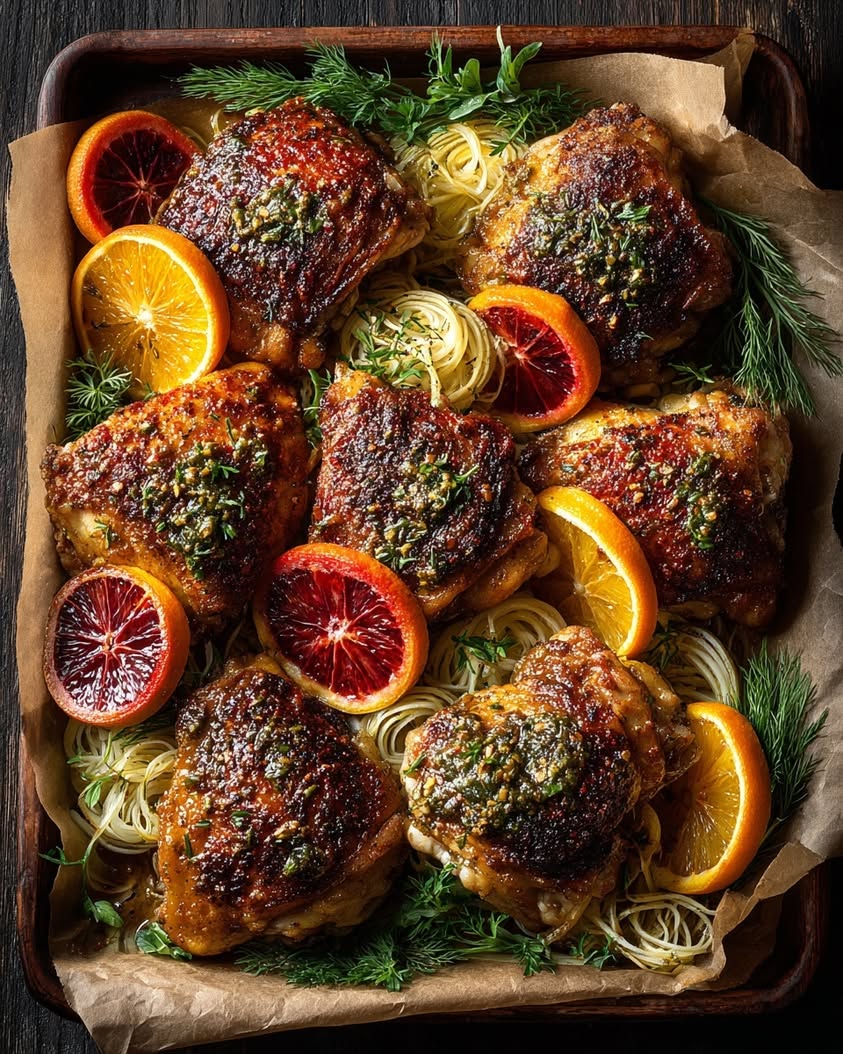
Spiced Chicken Thighs with Blood Orange & Fennel: A Vibrant Winter Feast
Imagine a dish that captures the essence of a cozy winter evening. This recipe for Spiced Chicken Thighs with Blood Orange & Fennel does exactly that. It transforms simple, affordable ingredients into a stunning, restaurant-quality meal. The magic happens in one pan, making cleanup a breeze. Consequently, you get more time to enjoy the incredible aromas filling your kitchen. This meal is perfect for a busy weeknight yet impressive enough for weekend guests. Ultimately, it brings warmth, color, and vibrant flavor to your table with minimal effort.
The star of this dish is undoubtedly the beautiful blood orange. Its deep crimson juice and slightly tart flavor create a spectacular pan sauce. Meanwhile, earthy fennel and warm spices like coriander and cumin build a complex flavor base. Chicken thighs, known for their juiciness, soak up all these wonderful tastes. As they roast, the skin becomes irresistibly crispy. The final result is a harmonious balance of sweet, savory, and aromatic notes. This Spiced Chicken with Blood Orange Fennel recipe is a true celebration of seasonal produce.
Furthermore, this recipe is incredibly adaptable. You can easily swap ingredients based on what you have. For instance, use regular oranges or grapefruit if blood oranges are out of season. Similarly, chicken breasts can work if you prefer white meat. The cooking method remains straightforward and reliable. Therefore, even novice cooks can achieve fantastic results. This guide will walk you through every step, from selecting the perfect fennel bulb to crafting the glossy sauce. Get ready to make a meal that will become a new family favorite.
Quick Recipe Highlights
- Flavor Profile: This Spiced Chicken with Blood Orange Fennel offers a bold symphony of tastes. Expect warm, earthy notes from toasted coriander and cumin seeds. Then, bright, citrusy acidity from the blood orange cuts through the richness. Finally, a subtle anise-like sweetness from the roasted fennel ties everything together beautifully.
- Texture: You will experience a wonderful contrast in every bite. The chicken thighs boast crispy, golden-brown skin giving way to tender, succulent meat. Meanwhile, the fennel and onion soften and caramelize, becoming meltingly sweet. The fresh blood orange segments add a juicy, refreshing pop that lightens the entire dish.
- Aroma: As this dish cooks, your kitchen will fill with an intoxicating fragrance. First, you will smell the warm, nutty scent of toasting spices. Then, the sweet, licorice-like aroma of roasting fennel emerges. Finally, the bright, floral notes of citrus and fresh herbs create a truly inviting atmosphere.
- Visual Appeal: This plate is a feast for the eyes with its stunning color palette. The deep golden-brown chicken contrasts with the creamy white and green of the fennel. Vibrant crimson blood orange segments and a glossy, reduced sauce create dramatic pops of color. A final sprinkle of green fresh herbs makes the presentation truly restaurant-worthy.
- Skill Level Needed: This is an accessible recipe for cooks of all levels. The techniques involved are fundamental: seasoning, searing, and roasting. You do not need any special knife skills or advanced equipment. Following the steps in order ensures a perfectly cooked, flavorful meal every single time.
- Special Equipment: A large, oven-safe skillet or braiser is the only essential tool. A cast-iron or stainless steel pan works perfectly for getting a good sear. You will also need a microplane or fine grater for zesting the orange. Otherwise, standard kitchen knives and a cutting board are all you require.
Recipe Overview
- Difficulty Level: We rate this Spiced Chicken with Blood Orange Fennel recipe as easy. The steps are sequential and logical, with no complicated techniques. Managing a one-pan meal is simpler than coordinating multiple pots. Additionally, chicken thighs are forgiving and hard to overcook. The most advanced step is making a simple pan sauce, which is clearly explained.
- Category: This dish fits perfectly into the category of a hearty main course. It is a complete protein and vegetable meal when served as-is. You can also classify it as a comforting winter dinner or a special occasion entrée. Its balance of elements makes it a centerpiece rather than a side dish.
- Cuisine: The flavor profile draws inspiration from Mediterranean and North African cuisines. The use of warm spices like cumin and coriander is common in Moroccan cooking. The combination of citrus and fennel feels distinctly Italian or Sicilian. Ultimately, it is a modern fusion dish that celebrates bright, bold flavors.
- Cost: This is a very cost-effective meal to prepare, especially for its impressive results. Chicken thighs are an affordable cut of protein. Fennel and onions are inexpensive winter vegetables. Blood oranges, while seasonal, are typically reasonably priced. The spices and herbs are pantry staples that add immense value for a small investment.
- Season: This recipe shines brightest in the winter and early spring. This is peak season for blood oranges and fennel, ensuring the best flavor and price. The warm, roasting spices and hearty chicken provide comfort during colder months. However, with simple substitutions, you can enjoy this flavor profile year-round.
- Occasion: It is versatile enough for both casual family dinners and elegant entertaining. On a weeknight, it is a satisfying one-pan wonder. For a dinner party, it looks stunning on a platter and can be mostly prepared ahead. The vibrant colors and sophisticated flavors make it feel special without excessive stress.
Why You’ll Love This Recipe
First and foremost, the taste and texture of this Spiced Chicken with Blood Orange Fennel are extraordinary. Each component brings something unique to your palate. You get the savory, umami-rich depth from the perfectly seared chicken skin. Then, the fennel caramelizes and becomes almost sweet, losing its sharp licorice bite. The blood orange sauce provides a tangy, bright counterpoint that prevents the dish from feeling heavy. Every forkful is a balanced mix of crispy, tender, sweet, and acidic elements that keeps you coming back for more.
From a practical standpoint, the convenience of this recipe is a major win. It is a true one-pan meal, meaning minimal cleanup after dinner. The prep work is straightforward: chop some vegetables, zest an orange, and season the chicken. After an initial sear on the stovetop, the oven does most of the work. This hands-off time allows you to set the table, make a side dish, or simply relax. Consequently, you can achieve a complex, layered dish without spending hours actively cooking.
Nutritionally, this meal offers a well-rounded profile. Chicken thighs provide high-quality protein and essential B vitamins, plus they are more flavorful and moist than breasts. Fennel is an excellent source of fiber, vitamin C, and potassium, supporting digestion and heart health. Blood oranges are packed with antioxidants, notably anthocyanins, which give them their red color and offer anti-inflammatory benefits. Cooking everything in one pan with minimal added fat makes this a wholesome, satisfying choice for any diet.
For social gatherings, this Spiced Chicken with Blood Orange Fennel is a guaranteed crowd-pleaser. Its dramatic presentation on a large platter makes a fantastic impression. The aroma that wafts from the kitchen builds anticipation among your guests. Moreover, the recipe scales up easily for a larger group without complicating the process. You can prepare elements in advance, so you are not stuck in the kitchen while everyone else socializes. It is a dish that encourages sharing and conversation around the table.
Finally, the cost-effectiveness and accessibility of the ingredients make this recipe a keeper. You do not need to hunt for rare or expensive items. Chicken thighs, onions, and basic spices are available at any grocery store. Fennel and blood oranges are common in winter produce sections. This accessibility means you can make this impressive meal on a regular grocery budget. It is a brilliant way to turn humble ingredients into something truly special and memorable for your family.
Historical Background and Cultural Significance
The story of combining poultry with citrus and aromatic vegetables spans centuries and continents. While this specific recipe for Spiced Chicken with Blood Orange Fennel is modern, its roots are ancient. Mediterranean cultures have long paired chicken with lemons and herbs, a tradition seen in classic dishes like Greek lemon chicken or Italian chicken cacciatore. The use of bitter oranges, ancestors to the sweet blood orange, dates back to ancient trade routes. These flavors naturally evolved together as people used what was local and seasonal to create nourishing, flavorful meals.
Culturally, the ingredients themselves carry significant weight. Fennel has been valued since ancient Greek and Roman times for its medicinal and culinary properties. It was believed to convey longevity, courage, and strength. Citrus fruits, especially rare varieties like the blood orange, were historically symbols of wealth and status in colder climates. The practice of using warm spices like cumin and coriander traveled along the Silk Road, embedding themselves in the culinary traditions of Southern Europe and North Africa. This dish is a delicious tapestry woven from these rich historical threads.
The evolution of this recipe mirrors broader culinary trends towards one-pan meals and global fusion. Home cooks and chefs alike seek methods that maximize flavor while minimizing effort and cleanup. The technique of searing protein and then roasting it with vegetables in the same pan is a timeless, efficient approach. The introduction of blood oranges, a relatively recent cultivar prized for its color and flavor, gives an old technique a vibrant new twist. This evolution shows how classic cooking methods continually adapt to incorporate new, exciting ingredients.
Regional variations of this concept abound, highlighting its adaptable nature. In Sicily, where blood oranges are famous, you might find chicken braised with orange juice and olives. Moroccan tagines often feature chicken with preserved lemons and olives, using similar spicing. French cuisine offers poulet à l’orange, though typically with a sweeter, grand Marnier-laced sauce. Our Spiced Chicken with Blood Orange Fennel recipe takes inspiration from these traditions but focuses on freshness, simplicity, and the beautiful caramelization achieved through roasting. It is a celebration of winter produce through a globally-inspired lens.
Ingredient Deep Dive
Let us start with the star: blood oranges. This stunning citrus fruit is believed to have originated in Sicily or Spain. The distinctive red flesh, called “blood,” comes from anthocyanins, antioxidants not typically present in common oranges. Nutritionally, they are an excellent source of vitamin C, fiber, and folate. When selecting, look for fruits that feel heavy for their size with smooth, brightly colored skin. Store them in the refrigerator for up to two weeks. If unavailable, substitute with Cara Cara oranges, navel oranges, or even grapefruit, adjusting sweetness to taste.
Next, consider the humble chicken thigh. This cut is prized across cultures for its richness and forgiving nature during cooking. Compared to breasts, thighs have more fat and connective tissue, which translates to juicier, more flavorful meat. They are a great source of protein, iron, and zinc. For the best results, choose bone-in, skin-on thighs; the bone adds flavor during cooking, and the skin becomes wonderfully crispy. Pat them thoroughly dry before seasoning. If you must substitute, bone-in chicken legs or even duck breasts would work well, though cooking times may vary.
Fennel is the vegetable backbone of this dish. Cultivated since ancient times, it was spread by Roman armies and used medicinally throughout the Middle Ages. Every part of the plant is edible, from the bulb to the fronds. It provides dietary fiber, vitamin C, potassium, and compounds with anti-inflammatory properties. Choose bulbs that are firm, white, and heavy with no browning or splitting. The fronds should look bright green and fresh. Store it in the crisper drawer of your refrigerator. If you dislike strong anise flavor, the roasting process mellows it significantly. Celery root or thick slices of celery can be a substitute in a pinch.
The spice blend is what gives this Spiced Chicken with Blood Orange Fennel its warm, complex depth. Coriander seed, the dried fruit of the cilantro plant, has a lemony, floral aroma. Cumin offers an earthy, smoky warmth. Toasting whole seeds in a dry pan before grinding unlocks their essential oils and maximizes flavor. This is a simple step with a huge payoff. If you only have pre-ground spices, use them, but know that toasting fresh whole spices elevates the dish. A pinch of red pepper flakes adds a subtle heat that balances the sweetness. Always store spices in a cool, dark place to maintain potency.
Common Mistakes to Avoid
- Not Drying the Chicken Skin: This is the top mistake. Moist skin steams instead of sears, resulting in pale, rubbery skin. Always pat chicken thighs thoroughly dry with paper towels before adding any oil or seasoning. This ensures maximum contact with the hot pan for that essential crispy texture.
- Crowding the Pan During Searing: If you put all the chicken in the pan at once, the temperature drops dramatically. The chicken then releases its juices and boils in them. Sear in batches if necessary to give each piece ample space. This guarantees a beautiful, golden-brown sear that locks in flavor.
- Using Pre-Ground Spices Exclusively: While convenient, pre-ground spices lose their potency quickly. The flavor of freshly toasted and ground coriander and cumin seeds is incomparably brighter and more aromatic. If you must use ground, add them to the pan for just 30 seconds to “wake them up” before adding liquid.
- Neglecting to Fond: Fond are the delicious browned bits stuck to the pan after searing. They are packed with flavor. When you add the wine or juice to deglaze, use a wooden spoon to scrape all these bits up. This incorporates that deep, savory flavor into your sauce.
- Overcooking the Fennel: While fennel should be tender, it should not turn to complete mush. Cutting it into wedges helps it hold its shape. Check it with a fork towards the end of cooking; it should be soft but still have a slight bite. Overcooked fennel becomes unpleasantly stringy.
- Skipping the Resting Time: Pulling the chicken from the oven and immediately cutting into it lets all the precious juices run out. Let the Spiced Chicken with Blood Orange Fennel rest for 5-10 minutes after cooking. This allows the muscle fibers to relax and reabsorb the juices, ensuring every bite is moist.
- Adding Fresh Herbs Too Early: Delicate herbs like parsley or fennel fronds wilt and lose their vibrant color and flavor if exposed to high heat for too long. Always add them as a fresh garnish just before serving. This provides a burst of freshness and a beautiful visual contrast.
- Forgetting to Season in Layers: Seasoning is not a one-time event. Season the chicken generously before searing. Season the vegetables as they go into the pan. Finally, taste and adjust the seasoning of the finished sauce. Building layers of salt and pepper at each stage creates a perfectly seasoned dish.
Essential Techniques
Pan Searing for Crispy Skin: This technique is crucial for developing flavor and texture. Start with a very hot, oven-safe pan and a high-smoke-point oil like avocado or grapeseed. Place the chicken skin-side down and do not move it. Let it sear undisturbed for several minutes until it releases easily and is deeply golden. This Maillard reaction creates hundreds of new flavor compounds. The common pitfall is impatience—moving the chicken too soon will tear the skin. Wait for the visual cue: the edges will look browned and crisp.
Deglazing to Build a Sauce: After removing the chicken, you will see browned bits (fond) stuck to the pan. Deglazing is the process of adding liquid—wine, juice, or broth—to loosen these bits. As the liquid simmers, use a wooden spoon to scrape the fond into the liquid. This simple step transforms what looks like a dirty pan into the foundation of a deeply flavorful, complex sauce. It is the secret to a restaurant-quality pan sauce with minimal effort.
Roasting to Concentrate Flavor: Transferring the pan to the oven allows for gentle, even cooking. The ambient heat surrounds the food, caramelizing the vegetables and finishing the chicken without burning. This method concentrates the natural sugars in the fennel and onions, making them sweet and tender. It also gently cooks the chicken through, rendering more fat from the skin. The key is using an oven-safe pan and not covering it, which ensures everything browns beautifully instead of steaming.
Reducing a Sauce: After roasting, you will have flavorful pan juices. Reducing means simmering this liquid to evaporate water, which thickens the sauce and intensifies its flavor. You know it is ready when it coats the back of a spoon—a stage called “nappé.” A common mistake is rushing this step over too high heat, which can burn the sauce. Instead, maintain a gentle simmer and be patient. The sauce will transform from watery to glossy and luxurious.
Pro Tips for Perfect Spiced Chicken Thighs with Blood Orange & Fennel
Toast and Grind Your Own Spices: This single step elevates the dish from good to exceptional. Toast whole coriander and cumin seeds in a dry pan until fragrant, then grind them in a spice grinder or mortar. The flavor is exponentially brighter and more complex than pre-ground spices that have been sitting on a shelf.
Use a Thermometer for Perfect Doneness: While chicken thighs are forgiving, a digital instant-read thermometer removes all guesswork. Insert it into the thickest part of a thigh, avoiding the bone. Pull the chicken from the oven when it reads 165°F (74°C). The carryover cooking will bring it to a safe and juicy 170°F (77°C).
Segment the Orange Like a Pro: For beautiful, membrane-free segments, cut off the top and bottom of the orange. Then, using a sharp knife, cut away the peel and pith in strips following the fruit’s curve. Hold the peeled orange over a bowl to catch juice, and slice between the membranes to release each segment.
Reserve Some Fresh Elements for Garnish: Set aside a few tablespoons of the chopped fennel fronds and some thin blood orange slices. Adding these fresh, raw elements at the very end provides a vibrant contrast in texture and temperature that makes the final presentation pop.
Let the Rendered Chicken Fat Work for You: After searing the chicken, you will have flavorful fat in the pan. Use this to sauté your fennel and onions instead of adding more oil. This infuses the vegetables with even more chicken flavor, creating a more cohesive dish.
Adjust Sauce Acidity at the End: Taste your reduced sauce just before serving. Blood orange acidity can vary. If it is too tart, a tiny drizzle of honey or maple syrup can balance it. If it is too sweet, a splash of red wine vinegar or lemon juice will brighten it up perfectly.
Variations and Adaptations
Regional Variations: To take this Spiced Chicken with Blood Orange Fennel in a Mediterranean direction, add Kalamata olives and capers to the pan before roasting. For a North African twist, incorporate a tablespoon of harissa paste into the spice rub and use preserved lemon instead of fresh. A Spanish-inspired version might include chorizo slices and smoked paprika, using Seville oranges for a more bitter note.
Seasonal Adaptations: In summer, replace the blood oranges with fresh peaches or nectarines and use summer squash alongside the fennel. For autumn, try using sweet potatoes or parsnips instead of some fennel, and use apple cider in the sauce. Spring adaptations could feature asparagus tips and green garlic, with lemon as the citrus component.
Dietary Modifications: For a gluten-free meal, ensure your wine for deglazing is certified gluten-free. To make it dairy-free, the recipe is already perfect as written—no modifications needed. For a lower-carb or keto version, simply reduce or omit the honey used to balance the sauce, as the vegetables themselves are low in carbs.
Flavor Variations: Experiment with different spice profiles. Swap the coriander and cumin for herbes de Provence for a French feel. Use Chinese five-spice powder and ginger for an Asian-inspired version, deglazing with rice wine. A smoky variation can include a bit of chipotle powder in the rub and a splash of mezcal for deglazing.
Texture Modifications: For extra crispy skin, after searing, place the chicken on a wire rack set over a baking sheet for the oven portion. This allows air to circulate all around the skin. For a more stew-like texture, add a cup of chicken broth before roasting and cover the pan for the first half of cooking, then uncover to reduce.
Presentation Alternatives: Instead of serving everything family-style from the pan, plate individually. Place a mound of creamy polenta or mashed potatoes on each plate, top with a chicken thigh and some vegetables, then spoon the sauce around. Alternatively, shred the cooked chicken off the bone and mix it with the vegetables for a beautiful, rustic pasta topping.
Serving and Presentation Guide
Plating Techniques: For a family-style presentation, return all the chicken and vegetables to the skillet or transfer to a large, warm platter. Drizzle the reduced sauce over everything, letting it pool enticingly. For individual plates, place a chicken thigh slightly off-center. Arrange the fennel and onion wedges leaning against it artistically. Spoon the sauce over the chicken and around the plate, not drowning the vegetables.
Garnishing Ideas: Freshness is key. Scatter the reserved chopped fennel fronds and parsley generously over the top. Add the reserved blood orange segments for bright pops of color. A final drizzle of high-quality extra virgin olive oil adds sheen. For a touch of texture, a sprinkle of toasted pine nuts or slivered almonds works beautifully.
Traditional Accompaniments: This dish pairs classically with simple, starchy sides that soak up the glorious sauce. Creamy polenta, mashed potatoes, or soft couscous are perfect choices. A crusty baguette is also non-negotiable for sopping up every last drop of the spiced, citrusy juices from the Spiced Chicken with Blood Orange Fennel.
Modern Serving Suggestions: For a lighter, modern take, serve it over a bed of farro, quinoa, or cauliflower rice. A simple arugula salad dressed with lemon juice and olive oil on the side provides a peppery contrast. You can also deconstruct it into a grain bowl with the shredded chicken, roasted vegetables, and sauce.
Temperature Considerations: Serve this dish warm, but not piping hot. Allowing it to rest and cool slightly lets the flavors settle and become more distinct. Ensure your serving platter or plates are warm to prevent the food from cooling too quickly. The sauce should be served immediately after its final reduction while it is still fluid and glossy.
Portion Control Tips: One bone-in chicken thigh per person is a standard serving. The vegetables are flexible; you can always add more fennel and onion to the pan to stretch the meal. If serving heartier sides like polenta, you might find that one thigh is plenty. For larger appetites, simply add more thighs to the pan, ensuring not to overcrowd during the searing step.
Wine and Beverage Pairing
Wine Pairings: The vibrant acidity and earthy spices in this dish call for wines with good structure. A Grenache or GSM blend from the Rhône Valley has the berry fruit and herbal notes to complement the fennel and orange. A dry Riesling, with its citrus and stone fruit flavors and crisp acidity, mirrors the blood orange beautifully. For red wine lovers, a lighter Pinot Noir with low tannins and red fruit notes won’t overpower the chicken.
Non-Alcoholic Alternatives: Craft a sophisticated mocktail to match the meal. Sparkling water with a splash of blood orange juice and a sprig of rosemary is refreshing and thematic. A chilled, lightly sweetened ginger beer provides a spicy kick that plays well with the warm spices. Iced hibiscus tea offers a tart, cranberry-like flavor that pairs wonderfully with the citrus notes.
Coffee and Tea Pairings: After the meal, consider a cup of lightly roasted coffee with citrusy notes, like an Ethiopian Yirgacheffe. For tea, an Earl Grey with its bergamot citrus oil is a natural companion to the orange in the dish. A digestive herbal tea with fennel, anise, or mint would elegantly echo the flavors on the plate and aid digestion.
Temperature Considerations: White and rosé wines should be served well-chilled, around 45-50°F. Light reds like Pinot Noir are best served slightly cooler than room temperature, around 55°F. Non-alcoholic sparkling drinks should be very cold. This contrast between the warm, savory food and cool, crisp beverages is part of the dining pleasure.
Serving Suggestions: Always pour wine into appropriate glassware to allow the aromas to develop. For non-alcoholic options, use a nice highball or rocks glass with ice. Consider having a carafe of water on the table as well, as the dish is flavorful and a palate cleanser is welcome. Pairing is about enhancing the experience, not complicating it.
Storage and Shelf Life
Storage Methods: Allow the Spiced Chicken with Blood Orange Fennel to cool completely before storing. Place the chicken, vegetables, and sauce together in an airtight container. Alternatively, you can store them separately if you prefer. Do not leave the dish at room temperature for more than two hours to prevent bacterial growth.
Temperature Requirements: Refrigerate leftovers promptly. The ideal refrigerator temperature is at or below 40°F (4°C). In these conditions, the cooked dish will keep safely for 3 to 4 days. For longer storage, freezing is the best option, though the texture of the fennel may soften slightly upon thawing.
Container Recommendations: Use shallow, airtight containers rather than deep ones. This allows the food to cool quickly and evenly in the refrigerator. Glass containers are excellent as they do not absorb odors and allow you to see the contents. If using plastic, ensure it is BPA-free and designated for food storage.
Signs of Spoilage: Before consuming leftovers, always check for signs of spoilage. Discard the food if you detect an off or sour smell. Visible mold, significant discoloration, or a slimy texture on the chicken or vegetables are clear indicators it is no longer safe to eat. When in doubt, throw it out.
Reheating Instructions: Reheat gently to preserve moisture. The best method is in a covered oven-safe dish at 325°F until warmed through. You can also reheat in a skillet on the stovetop over medium-low heat, adding a splash of water or broth to prevent drying out. Avoid microwaving if possible, as it can make the chicken rubbery and the vegetables mushy.
Freezing Guidelines: This dish freezes reasonably well for up to 2 months. Freeze in airtight, freezer-safe containers or heavy-duty freezer bags, removing as much air as possible. Thaw overnight in the refrigerator before reheating. Note that the texture of the fennel will be softer after freezing and thawing, but the flavors will remain excellent.
Make Ahead Strategies
Prep Timeline: You can prepare several components a day in advance. Toast and grind your spices, and mix the dry rub. Chop the fennel and onion, storing them in a sealed container in the fridge. Segment the blood oranges, keeping the segments and any collected juice separate. This advance work cuts your active cooking time on the day of serving by more than half.
Storage Between Steps: Keep prepped vegetables chilled. Store the spice rub at room temperature. Keep the chicken thighs, patted dry, on a plate covered loosely in the refrigerator until ready to use. Do not apply the rub to the chicken more than an hour before cooking, as the salt will begin to draw out moisture.
Quality Impact Assessment: Prepping the vegetables ahead has no negative impact. Pre-toasting spices actually improves flavor. The only element best done day-of is searing the chicken, as pre-seared and refrigerated skin will lose its crispness. The final sauce reduction should also be done just before serving for the best texture and gloss.
Assembly Tips: On cooking day, simply pull your prepped ingredients from the fridge. Let the vegetables come to room temperature for 15-20 minutes before cooking for more even roasting. Follow the recipe from the searing step forward. Having everything measured and ready makes the process smooth and enjoyable.
Reheating Guidelines: If you fully cook the dish a day ahead, reheat it covered in a 300°F oven until hot throughout, about 20-25 minutes. Then, transfer the chicken and vegetables to a serving platter, pour the juices back into the skillet, and quickly reduce them on the stovetop to refresh the sauce’s consistency.
Fresh Element Additions: No matter how much you prep ahead, always finish with fresh elements. Chop your herbs (parsley, fennel fronds) right before serving. If you pre-segment oranges, add a few fresh segments at the end for their bright, juicy texture. A final drizzle of fresh olive oil just before serving adds a layer of fresh flavor.
Scaling Instructions
Halving the Recipe: To serve two, simply halve all ingredients. Use a medium oven-safe skillet instead of a large one. Cooking times will be slightly shorter, so start checking for doneness about 5 minutes earlier. The sauce will also reduce more quickly due to the smaller volume, so watch it carefully on the stovetop to prevent burning.
Doubling or Tripling: For a crowd, double or triple the ingredients. The key is to use multiple large skillets or a very large roasting pan. You must sear the chicken in batches to avoid steaming; do not crowd the pan. Roasting in a preheated oven may take a few minutes longer. Use a wider pan for the sauce reduction to speed up evaporation.
Equipment Adjustments: Scaling up often requires equipment changes. If doubling, two large skillets may be better than one enormous one. For tripling, consider browning the chicken in batches, then combining everything in a large, deep roasting pan for the oven phase. Ensure your oven can accommodate the size and weight of the pan you choose.
Timing Modifications: When increasing the recipe, the oven time may increase by 5-10 minutes due to the greater mass of food. Always rely on a meat thermometer for doneness rather than a strict timer. The sauce reduction time will also increase linearly with volume; be patient and keep it at a steady simmer.
Storage Considerations: A larger batch means more potential leftovers. Plan your storage containers in advance. It is often helpful to divide leftovers into meal-sized portions before refrigerating or freezing. This makes reheating for future quick dinners much more convenient and prevents you from having to thaw more than you need.
Nutritional Deep Dive
Macro Breakdown: A serving of this Spiced Chicken with Blood Orange Fennel provides a balanced macronutrient profile. The chicken thighs are an excellent source of high-quality protein, essential for muscle repair and satiety. The healthy fats from the chicken skin and olive oil aid in the absorption of fat-soluble vitamins from the vegetables. The fennel and onions contribute complex carbohydrates and fiber, which support digestive health and provide sustained energy.
Micronutrient Analysis: This dish is rich in essential vitamins and minerals. Blood oranges are famously high in vitamin C and antioxidants. Fennel provides vitamin C, potassium, and manganese. Onions offer quercetin, a flavonoid with anti-inflammatory properties. The spices, particularly coriander and cumin, contain small amounts of iron, magnesium, and calcium. Together, they make this meal a nutrient-dense choice.
Health Benefits: The combination of ingredients supports overall wellness. The protein and fiber promote fullness, which can aid in weight management. The antioxidants from the blood oranges and spices combat oxidative stress. The anti-inflammatory compounds in fennel and onions may support heart health. Furthermore, cooking with herbs and spices allows you to create big flavor without relying on excessive salt.
Dietary Considerations: This recipe is naturally gluten-free and dairy-free. It is also suitable for paleo and Whole30 diets if you omit the honey or use an approved sweetener like date paste. For low-carb or keto diets, the primary carbs come from the vegetables, which are relatively low, especially if you moderate the portion of onions. It is a versatile template for many eating styles.
Portion Analysis: One chicken thigh with a generous serving of vegetables and sauce makes a satisfying meal. The portion size is visually appealing and satiating without being overly heavy. If you are watching calories, you can remove the chicken skin after cooking, though you will sacrifice flavor and texture. Pairing it with a large side salad can also help fill the plate with low-calorie volume.
Weight Management Tips: This dish is a friend to weight management goals. Its high protein and fiber content help control hunger. To reduce calories slightly, you can use a minimal amount of oil for searing, as the chicken skin will render its own fat. Be mindful of the sauce; while delicious, it contains the reduced pan juices and any added sweetener. Using it as a flavor accent rather than a pool can help manage intake.
Dietary Adaptations
Gluten-Free: This recipe is inherently gluten-free as written. The only potential hidden source is in the wine used for deglazing. Ensure you use a wine that is certified{“success”:true,”message”:”Recipe created successfully”,”post_id”:8657,”tasty_recipe_id”:8657,”shortcode”:” Print
Spiced Chicken Thighs with Blood Orange & Fennel
Description
A vibrant, aromatic dish featuring juicy chicken thighs seasoned with warm spices, roasted alongside sweet fennel and tangy blood oranges for a bright, flavorful meal.
Ingredients
For the Crust:
- 8 bone-in, skin-on chicken thighs
- 2 medium fennel bulbs, trimmed and sliced into wedges
- 2 blood oranges, sliced into rounds
- 3 tablespoons olive oil
- 1 teaspoon smoked paprika
- 1 teaspoon ground cumin
- 1/2 teaspoon ground coriander
- 1/2 teaspoon garlic powder
- Salt and black pepper to taste
- Fresh thyme sprigs for garnish
Instructions
1. Prepare the Crust:
- Preheat the oven to 400°F (200°C). Pat the chicken thighs dry with paper towels.
- In a small bowl, mix the smoked paprika, cumin, coriander, garlic powder, salt, and pepper. Rub the spice mixture evenly over the chicken thighs.
- Arrange the fennel wedges and blood orange slices in a single layer on a large baking sheet. Drizzle with 2 tablespoons of olive oil and season with salt and pepper.
- Place the seasoned chicken thighs on top of the fennel and oranges. Drizzle the remaining olive oil over the chicken.
- Roast in the preheated oven for 30-35 minutes, or until the chicken is cooked through and the skin is crispy.
- Garnish with fresh thyme sprigs before serving.
Notes
You can customize the seasonings to taste.

I’m Billy, a classically trained culinary school graduate from The Culinary Institute of America with over 12 years in the restaurant industry and over 19 years of cooking experience.