
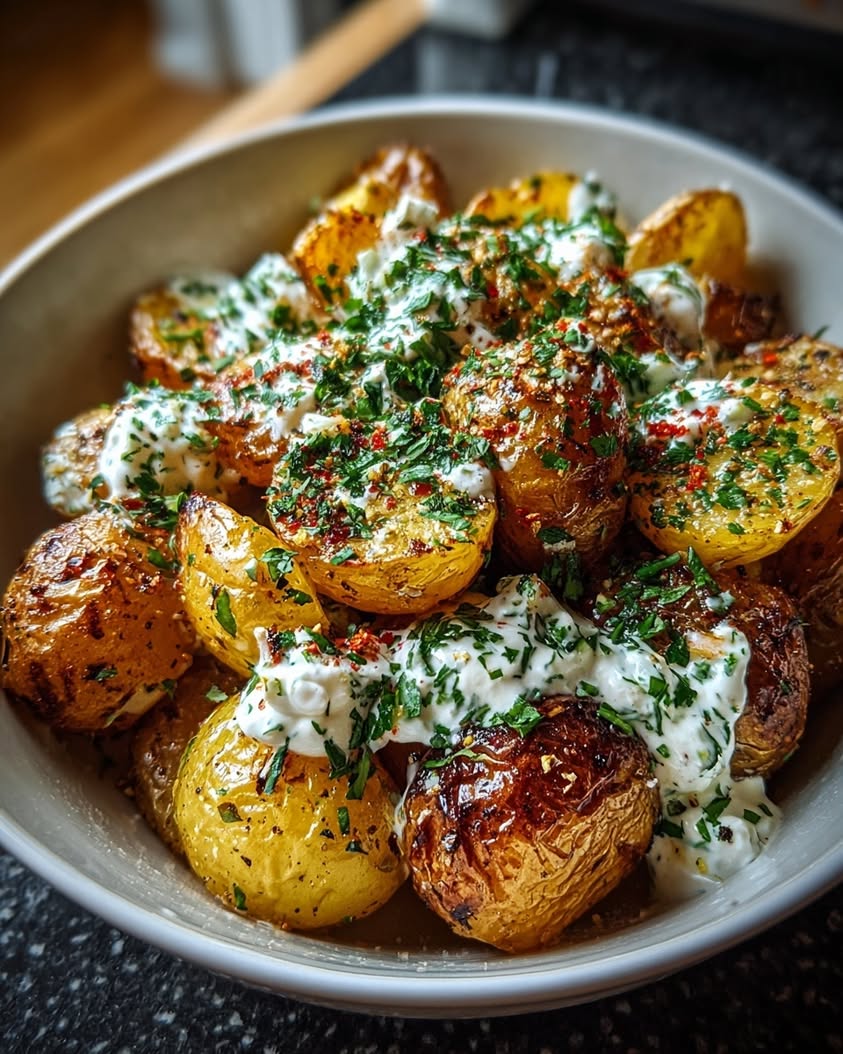
Mediterranean Roasted Potatoes with Garlic Yogurt & Herb Drizzle: Crispy, Creamy Perfection
Imagine pulling a sheet pan from your oven filled with golden, crispy potatoes that smell like sunshine and herbs. That is the magic of these Mediterranean roasted potatoes. This dish transforms the humble spud into a vibrant, unforgettable side. Moreover, it pairs those crispy potatoes with a cool, garlicky yogurt sauce and a bright, herbaceous drizzle. Consequently, every bite offers a perfect harmony of textures and flavors.
These Mediterranean roasted potatoes are your secret weapon for any meal. They are deceptively simple to make yet deliver restaurant-quality results. For instance, the key lies in a few smart techniques and bold, fresh ingredients. Ultimately, you get a side dish that can easily become the star of your dinner table. Whether you serve them with grilled chicken, fish, or as part of a vegetarian feast, they always impress.
This recipe captures the essence of coastal Mediterranean cooking. It focuses on fresh herbs, good olive oil, and simple, high-quality ingredients. The result is a dish that feels both rustic and elegant. Furthermore, it is naturally vegetarian and can be adapted for various diets with ease. In short, these crispy potatoes with their creamy and herby accompaniments are a celebration of flavor you will make again and again.
Quick Recipe Highlights
- Flavor Profile: These Mediterranean roasted potatoes deliver a powerful savory punch from garlic and oregano, balanced by the tangy yogurt sauce. The fresh herb drizzle adds a final burst of lemon and parsley that cuts through the richness perfectly.
- Texture: You achieve an incredible contrast between the shatteringly crispy exterior of the potatoes and their fluffy, tender interior. Meanwhile, the creamy yogurt sauce and the oil-based herb drizzle add luxurious, smooth elements to each forkful.
- Aroma: As the potatoes roast, your kitchen fills with the warm, earthy scent of roasting garlic and dried oregano. Then, the fresh aroma of chopped parsley and lemon zest from the drizzle adds a final, uplifting note just before serving.
- Visual Appeal: The dish is a feast for the eyes with golden-brown potato wedges, a stark white yogurt sauce swirled underneath, and a vibrant green herb drizzle artfully spooned over the top. It looks professional and inviting.
- Skill Level Needed: This is a beginner-friendly recipe that requires basic knife skills for cutting potatoes and mixing simple sauces. The most advanced technique is properly roasting the potatoes to crispy perfection, which is easily mastered.
- Special Equipment: You only need a sturdy baking sheet, a good chef’s knife, and a couple of mixing bowls. A microplane for zesting the lemon is helpful but not essential. No fancy gadgets are required.
Recipe Overview
- Difficulty Level: We rate this recipe as easy because it involves straightforward steps like chopping, mixing, and roasting. There are no complicated techniques or precise tempering of ingredients. The instructions are clear and forgiving, making it perfect for novice cooks and weeknight experts alike.
- Category: This dish fits beautifully into multiple categories. Primarily, it is a standout side dish for proteins like lamb, chicken, or fish. Additionally, it can be the centerpiece of a vegetarian meze platter or a hearty component of a grain bowl. It is versatile for any meal.
- Cuisine: The recipe draws direct inspiration from the sun-drenched coasts of Greece, Turkey, and the Levant. It uses classic flavor profiles of the region: olive oil, lemon, garlic, oregano, and fresh herbs like parsley. This combination is iconic in Mediterranean home cooking.
- Cost: This is an incredibly budget-friendly recipe. Potatoes and yogurt are inexpensive staples. The fresh herbs and lemon are low-cost, and a little olive oil and dried spices go a long way. You can create a stunning dish for a crowd without straining your grocery budget.
- Season: While fantastic year-round, these Mediterranean roasted potatoes truly shine in the spring and summer. They pair perfectly with grilled foods and taste like sunshine. However, their comforting warmth also makes them a wonderful addition to fall and winter roast dinners.
- Occasion: This dish is suitable for everything from a casual family Tuesday night to a festive holiday gathering or a dinner party with friends. It is impressive enough for guests yet simple enough for a relaxed meal. It elevates any occasion effortlessly.
Why You’ll Love This Recipe
First and foremost, the taste and texture are absolutely unbeatable. You get that satisfying crunch followed by a soft, fluffy potato center. Then, the cool, garlicky yogurt sauce provides a tangy contrast that cools the palate. Finally, the vibrant herb drizzle ties everything together with fresh, zesty notes. Every component complements the others, creating a symphony in your mouth that is both comforting and exciting. You will find yourself going back for just one more bite repeatedly.
Another major benefit is the sheer convenience and simplicity of preparation. You likely have most ingredients already in your pantry. The active prep time is minimal; essentially, you just chop potatoes and whisk sauces. Meanwhile, the oven does the heavy lifting, freeing you up to prepare the rest of your meal. Consequently, this recipe is a lifesaver on busy nights when you want something delicious without a huge time investment. It proves that incredible food does not have to be complicated.
From a nutritional standpoint, these Mediterranean roasted potatoes offer several advantages. Potatoes themselves are a great source of vitamin C, potassium, and fiber, especially with the skin on. Using olive oil, a cornerstone of the heart-healthy Mediterranean diet, adds beneficial monounsaturated fats. The Greek yogurt provides a protein and probiotic boost. Together, these elements create a side dish that is as wholesome as it is delicious, aligning with a balanced approach to eating.
This recipe also boasts tremendous social and entertaining value. It is a guaranteed crowd-pleaser that looks far more impressive than the effort required. You can easily double or triple the recipe to feed a party on a single sheet pan. Serving it on a large platter with the sauces swirled underneath makes for a beautiful, shareable centerpiece. It sparks conversation and has guests asking for the recipe every single time, making you feel like a culinary rockstar.
Finally, the cost-effectiveness and accessibility are huge wins. Potatoes are one of the most affordable vegetables globally. The other ingredients are common and inexpensive. You do not need any rare or specialty items. This makes the dish accessible to cooks on any budget. Furthermore, it demonstrates how to transform humble, everyday ingredients into something extraordinary, which is the true mark of a great home cook.
Historical Background and Cultural Significance
The story of the potato in the Mediterranean is a relatively recent chapter in the region’s long culinary history. Potatoes originated in the Andes and were introduced to Europe by Spanish explorers in the 16th century. Initially, they were slow to gain acceptance. However, over centuries, they became integrated into local foodways. In countries like Greece and Turkey, cooks began applying traditional flavor principles to the new tuber. They used abundant local olive oil, wild herbs like oregano, and garlic to create dishes that felt both new and familiar.
Roasting potatoes is a universal cooking technique, but the Mediterranean approach is distinct. It emphasizes the use of high-quality fat, typically olive oil, not just as a cooking medium but as a core flavor. The addition of aromatic herbs and citrus is also characteristic. This style of cooking reflects the region’s climate and resources. For example, fresh herbs grow easily in the sunny climate, and lemons are a staple. Dishes like these were born from a philosophy of making the most of simple, fresh, and flavorful ingredients.
The practice of serving roasted or grilled foods with yogurt-based sauces is deeply rooted in many Eastern Mediterranean and Middle Eastern cuisines. Yogurt, or “tzatziki” in Greece and “cacık” in Turkey, acts as a cooling counterpoint to spiced or charred meats and vegetables. The garlic yogurt sauce in this recipe is a simplified, elegant version of that tradition. Similarly, the herb drizzle, or “zhug” or “chimichurri”-style sauce, showcases the region’s love for fresh, uncooked herb condiments that brighten up richer dishes.
Today, variations of these Mediterranean roasted potatoes appear on tables from family homes to tavernas and upscale restaurants. Each country and even each family might have their own twist. Some add a sprinkle of sumac or smoked paprika. Others might include chopped mint or dill in the herb drizzle. This evolution shows the recipe’s adaptability and enduring appeal. It is a modern classic that honors tradition while allowing for personal expression, a true testament to the living nature of food culture.
Ingredient Deep Dive
Let us start with the star: Yukon Gold potatoes. These potatoes are the ideal choice for roasting because of their balanced starch and moisture content. They develop a gorgeous golden crust while maintaining a creamy, buttery interior that does not dry out. Nutritionally, they are a good source of vitamin C, potassium, and vitamin B6. When selecting them, look for firm potatoes with smooth, unblemished skin. Avoid any that are green or have sprouts. Store them in a cool, dark, well-ventilated place—not in the refrigerator. For a variation, you can use baby potatoes or russets, though russets will yield a fluffier interior.
Extra virgin olive oil is the soul of this dish. It is used both for roasting and in the herb drizzle, imparting its distinct fruity, peppery flavor. This oil is central to the Mediterranean diet and is rich in heart-healthy monounsaturated fats and antioxidants. Always choose a bottle labeled “extra virgin” for the best flavor and quality. Use a robust, flavorful oil for the drizzle and a standard one for roasting. Store it in a cool, dark cupboard away from heat to prevent rancidity. Do not substitute with neutral oils like canola, as you will lose the essential Mediterranean character.
The garlic yogurt sauce relies on thick, plain Greek yogurt. Greek yogurt is strained to remove whey, resulting in a protein-rich, tangy, and creamy product. It provides a cooling base that complements the warm potatoes perfectly. Nutritionally, it is an excellent source of protein, calcium, and probiotics for gut health. For the best texture and flavor, use full-fat yogurt. However, low-fat varieties will work in a pinch. To make it dairy-free, substitute with a thick, plain plant-based yogurt like coconut or almond. Always stir the sauce well before serving to ensure it is smooth.
Fresh parsley and lemon form the backbone of the vibrant herb drizzle. Flat-leaf (Italian) parsley is preferred for its more robust flavor compared to curly parsley. It adds a fresh, clean, slightly peppery note. Lemon juice and zest provide the essential acidity and bright aroma that lifts the entire dish. Parsley is rich in vitamins K, C, and A. For the best results, use parsley that is vividly green and crisp. Wash and dry it thoroughly before chopping. You can add other soft herbs like mint, dill, or cilantro for variation. Always add the drizzle just before serving to maintain its vibrant color and fresh flavor.
Common Mistakes to Avoid
- Overcrowding the Baking Sheet: This is the number one reason for soggy potatoes. If the potatoes are too close together, they steam instead of roast. Always spread them in a single layer with space between each piece to ensure proper air circulation and crisping.
- Using the Wrong Potato: Waxy potatoes like Red Bliss can become rubbery, while very starchy ones can fall apart. Yukon Golds are the perfect hybrid. Choosing the wrong type significantly affects the final texture, so select your potato variety carefully.
- Skipping the Drying Step: Failing to pat the cut potatoes completely dry means excess moisture will steam them initially. This prevents that crucial initial sear and crisp exterior. Take a minute to dry them thoroughly with a clean kitchen towel.
- Not Preheating the Baking Sheet: Placing potatoes on a cold pan slows down the cooking process. For extra crispiness, place your empty baking sheet in the oven as it preheats. Then, carefully add the oiled potatoes to the hot surface.
- Underseasoning: Potatoes need a generous amount of salt. Do not be shy. Season the potatoes well before roasting, and remember to season the yogurt sauce and herb drizzle lightly as well. Layered seasoning is key to a flavorful dish.
- Stirring the Potatoes Too Often: Let the potatoes develop a crust. Resist the urge to stir or flip them constantly. Typically, one careful flip halfway through the roasting time is sufficient to ensure even browning on both sides.
- Using Old Dried Herbs: Dried oregano loses its potency over time. If your jar is more than a year old, its flavor will be muted. For the best Mediterranean flavor, use fresh, fragrant dried oregano or rub dried leaves between your palms to awaken their oils.
- Adding the Herb Drizzle Too Early: The fresh herbs in the drizzle will wilt and lose their bright color if added to hot potatoes too soon. Always add the final drizzle just before serving to preserve its vibrant appearance and fresh taste.
Essential Techniques
Cutting uniform potato wedges is crucial for even cooking. First, slice your potato in half lengthwise. Then, place each half cut-side down and slice it lengthwise into even wedges, about ½ to ¾-inch thick at the widest point. Uniform size ensures all pieces finish roasting at the same time. If some are too thick and others too thin, you will end up with a mix of burnt and undercooked potatoes. Use a sharp chef’s knife for clean cuts and control.
Thoroughly drying the potatoes is a non-negotiable step for crispiness. After washing and cutting, spread the wedges on a clean kitchen towel or several layers of paper towels. Pat them firmly until the surfaces are completely dry. This removes the surface starch and water that would otherwise create steam. Steam is the enemy of crispness. Taking this extra minute makes a dramatic difference in the final texture, ensuring your potatoes roast rather than steam.
Properly coating the potatoes with oil and seasoning is another key technique. Place the dried potatoes in a large bowl. Drizzle with oil and use your hands to toss and massage until every surface is lightly and evenly coated. This thin layer of oil conducts heat and promotes browning. Then, sprinkle your salt, pepper, and dried herbs evenly over the potatoes and toss again. Hands are the best tool here to ensure an even distribution that a spoon often misses.
Roasting at a high, consistent temperature is the final master technique. A hot oven, around 425°F (220°C), is ideal. It quickly sears the exterior to create a crust while cooking the inside. Do not open the oven door frequently, as this causes temperature fluctuations. Let the heat work. You will know the potatoes are done when they are deeply golden brown, crispy on the edges, and a fork easily pierces the thickest part of a wedge.
Pro Tips for Perfect Mediterranean Roasted Potatoes
For maximum crispiness, toss your potato wedges with a tablespoon of cornstarch or semolina flour along with the oil and seasonings. This creates an extra-crunchy, almost fried-like exterior that is absolutely irresistible.
Infuse your olive oil for the herb drizzle. Gently warm the olive oil with a crushed garlic clove and a sprig of rosemary, then let it cool completely before mixing with the herbs. This adds a subtle, deep layer of flavor.
Use a microplane to zest the lemon directly over the finished potatoes after adding the herb drizzle. The fresh zest adds an intense burst of citrus aroma that bottled zest can never match.
Let the garlic yogurt sauce rest. After mixing the minced garlic into the yogurt, let it sit for at least 15 minutes before serving. This allows the garlic flavor to mellow and permeate the sauce beautifully.
If your potatoes are not browning to your liking, switch your oven to the high broil setting for the last 2-3 minutes of cooking. Watch them closely to prevent burning, as this can give them a perfect final crisp.
For easy cleanup, line your baking sheet with parchment paper or a silicone baking mat. This prevents sticking and makes washing the pan a breeze, especially with the high-heat roasting involved.
Season in layers. Salt the potatoes before roasting, add a pinch of salt to the yogurt sauce, and season the herb drizzle. This builds a more complex and balanced flavor profile than salting only at the end.
If serving for a party, keep components separate until the last moment. Serve the yogurt sauce spread on a platter, pile the hot potatoes on top, and then drizzle with the herbs. This keeps everything at its ideal texture.
Variations and Adaptations
Explore regional variations by incorporating different spice blends. For a Greek twist, add dried oregano and a sprinkle of crumbled feta cheese after roasting. For a Turkish influence, add a pinch of pul biber (Aleppo pepper) and serve with a dollop of minted yogurt. A Lebanese variation might include a dusting of sumac in the herb drizzle for its tangy, fruity note. These small changes can transport the dish across the Mediterranean with just a few tweaks to the seasoning palette.
Make seasonal adaptations by changing the herbs in your drizzle. In spring, use tender chives and tarragon. For summer, basil and mint are fantastic. In autumn, try sage and thyme for a earthier note. You can also add seasonal vegetables to the roasting pan. For instance, toss in cherry tomatoes, sliced bell peppers, or red onions during the last 15 minutes of cooking for a hearty roasted vegetable medley that complements the potatoes perfectly.
For dietary modifications, this recipe is wonderfully adaptable. To make it vegan, use a thick, plain plant-based yogurt and ensure your bread is vegan if serving. For a Whole30 or paleo version, omit the yogurt or use a compliant coconut yogurt. To reduce carbs slightly, you can use a mix of potatoes and cubed sweet potatoes, though the cooking time may need adjustment. The core concept of crispy roasted vegetables with a flavorful sauce remains intact across diets.
Experiment with flavor variations by changing the acid in the herb drizzle. Instead of lemon juice, try red wine vinegar for a sharper bite or orange juice for a sweeter, milder citrus note. You can also add capers, chopped olives, or a teaspoon of Dijon mustard to the drizzle for a more complex, briny flavor profile. For a creamier alternative to the yogurt sauce, blend the yogurt with a roasted red pepper or a handful of spinach for a colorful and flavorful twist.
Serving and Presentation Guide
Master simple plating techniques for maximum impact. Swipe a generous amount of the garlic yogurt sauce across the bottom of a wide, shallow platter or individual plates using the back of a spoon. This creates a beautiful white canvas. Then, artfully pile the hot Mediterranean roasted potatoes over the sauce. Finally, drizzle the vibrant green herb oil over and around the potatoes. The contrast of colors is stunning and appetizing.
Garnishing adds the final professional touch. Beyond the herb drizzle, consider a sprinkle of flaky sea salt, such as Maldon, over the hot potatoes for texture. A few whole parsley leaves, a twist of black pepper, or a light dusting of paprika or sumac adds visual interest. If using feta cheese, crumble it over the top just before serving so it stays distinct and doesn’t melt.
Traditional accompaniments include grilled meats like lamb chops, chicken souvlaki, or kofta kebabs. For a vegetarian feast, serve alongside falafel, hummus, baba ganoush, stuffed grape leaves, and a simple tomato-cucumber salad. Warm pita bread is essential for scooping up any leftover sauce and potatoes. This creates a complete, shareable Mediterranean meal experience.
For modern serving suggestions, use these potatoes as a base for a grain bowl. Add them to a bowl with quinoa, massaged kale, chickpeas, and the yogurt sauce. They also make an outstanding topping for a hearty salad. Alternatively, serve them as a sophisticated appetizer on a large board with the sauces in small bowls for dipping. They are even fantastic for breakfast with a fried egg on top.
Wine and Beverage Pairing
Choosing the right wine enhances the Mediterranean experience. A crisp, dry white wine like a Greek Assyrtiko or a Sauvignon Blanc works beautifully. Their high acidity cuts through the richness of the olive oil and yogurt. For red wine lovers, a light-bodied, low-tannin red like a Beaujolais or a Greek Xinomavro is excellent. It complements the earthy potatoes and herbs without overpowering the dish. Ultimately, avoid heavily oaked wines, as they can clash with the fresh, herbal notes.
For non-alcoholic alternatives, consider homemade sparkling lemonade or limeade. The citrus mirrors the lemon in the dish. Iced mint tea is another refreshing choice, as the mint harmonizes with the herbal elements. A simple cucumber-infused water provides a clean, palate-cleansing effect. For something more complex, a non-alcoholic aperitif like a Seedlip Garden 108, with its herbal notes, can be a sophisticated pairing.
If serving this dish as part of a brunch or lunch, coffee and tea pairings are relevant. A medium-roast coffee with low acidity complements the savory notes without bitterness. For tea, a green tea like Moroccan mint or a light herbal tea with lemon verbena would be delightful. These beverages should be served hot to contrast the temperature of the room-temperature components, creating a pleasant sensory experience.
Storage and Shelf Life
Store leftover components separately for the best quality. Place cooled roasted potatoes in an airtight container in the refrigerator for up to 3-4 days. The yogurt sauce should be stored in its own sealed container for up to 5 days. The herb drizzle is best used fresh but can be kept for 1-2 days; note that the herbs will darken. Never store the assembled dish, as the potatoes will become soggy from the sauces.
Reheating instructions are crucial for restoring texture. To reheat the potatoes, avoid the microwave, which will make them soft. Instead, spread them on a baking sheet and warm them in a 400°F (200°C) oven for 10-15 minutes until hot and re-crisped. You can also use an air fryer for 3-5 minutes. The yogurt sauce should be served cold or at room temperature. Stir it well before using, as it may separate slightly in the fridge.
Freezing is not recommended for the complete dish. The yogurt sauce will separate and become grainy upon thawing. The potatoes can be frozen after roasting but will lose their optimal crispy texture, becoming softer and best suited for soups or stews after thawing. For best results, this is a dish to enjoy fresh or refrigerated for short-term leftovers.
Make Ahead Strategies
You can prep almost every component ahead of time. Cut and dry the potato wedges, then store them submerged in cold water in the refrigerator for up to 24 hours. This prevents browning. Before roasting, drain and pat them completely dry. The garlic yogurt sauce can be made 2 days in advance; the flavor improves as the garlic infuses. The herb drizzle can be chopped and mixed 1 day ahead, though add the lemon juice just before serving to prevent the herbs from discoloring.
For a dinner party, follow this timeline: The day before, make the yogurt sauce and prep the herb drizzle ingredients (store herbs and lemon separately). In the morning, cut and soak the potatoes. Two hours before guests arrive, drain and dry the potatoes. One hour before serving, roast the potatoes. Just before serving, finish the herb drizzle with lemon juice, assemble the platter, and enjoy. This plan minimizes last-minute stress.
Scaling Instructions
Halving the recipe is straightforward for smaller households. Use half of all ingredients. A standard baking sheet will still work, but ensure the potatoes are spread in a single layer. The cooking time may be slightly reduced by 5-10 minutes, so start checking for doneness early. The sauces will be easier to mix in smaller quantities, so a small bowl and whisk are perfect.
Doubling or tripling for a crowd requires minor adjustments. Use multiple baking sheets and rotate them from top to bottom racks halfway through cooking to ensure even browning. You may need to roast in batches if oven space is limited. Keep the first batch warm in a 200°F (95°C) oven on a wire rack so they stay crispy. For the sauces, simply multiply the ingredients and mix in a large bowl. A food processor can help with large batches of the herb drizzle.
Nutritional Deep Dive
This dish offers a balanced macronutrient profile. The potatoes provide complex carbohydrates and fiber, especially with the skin on. The olive oil contributes healthy monounsaturated fats. The Greek yogurt adds a significant amount of protein, making this side dish more satiating. A single serving provides sustained energy from the carbs, supports cell function with good fats, and aids muscle maintenance with protein.
Micronutrient analysis reveals a wealth of vitamins and minerals. Potatoes are an excellent source of vitamin C and potassium, which support immune function and heart health. Olive oil contains vitamin E, a powerful antioxidant. Parsley is packed with vitamins K, A, and C. Garlic offers allicin, a compound with noted health benefits. Together, these ingredients create a nutrient-dense side that contributes positively to your overall dietary intake.
Dietary Adaptations
For a gluten-free diet, this recipe is naturally compliant. Simply ensure that any spices or dried herbs you use are certified gluten-free, as cross-contamination can sometimes occur in processing facilities. There is no wheat, barley, or rye in the standard ingredient list.
To make it dairy-free and vegan, substitute the Greek yogurt with an unsweetened, plain plant-based yogurt. Coconut yogurt provides a rich texture, while almond or soy varieties are lighter. Ensure the yogurt is thick; you may need to strain it through cheesecloth to remove excess liquid. All other ingredients are plant-based.
For a low-carb or keto adaptation, replace the potatoes with a low-starch vegetable like cauliflower or turnips. Cut them into florets or wedges and follow the same roasting method. Be aware that the cooking time may be shorter. The sauces remain perfectly suitable for a keto framework.
Troubleshooting Guide
If your potatoes are soggy, the cause is likely overcrowding or insufficient oven heat. Next time, ensure they are spread out with space and that your oven is fully preheated. For a quick fix, you can spread the cooked, soggy potatoes on a fresh pan and broil for a few minutes to crisp up the exteriors, watching closely to avoid burning.
If the potatoes are sticking to the pan, you may not have used enough oil or the pan surface was not hot enough. Using parchment paper or a silicone mat prevents this. For stuck potatoes, let the pan cool slightly, then use a thin metal spatula to gently scrape and lift them. A little sticking for crispy bits is normal.
If the yogurt sauce is too thin, your yogurt may have had a higher water content. To thicken it, place it in a fine-mesh strainer lined with cheesecloth or a coffee filter over a bowl in the refrigerator for 1-2 hours to drain excess liquid. You can also stir in a teaspoon of tahini for thickness and flavor.
If the herb drizzle is separating, it is natural for oil and water (lemon juice) to separate. Simply whisk or shake it vigorously before each use. To create a more stable emulsion, you can add a tiny amount of Dijon mustard or honey, which acts as an emulsifier to bind the oil and acid together.
Frequently Asked Questions
Can I use a different type of potato? Yes, but results vary. Yukon Golds are ideal for their creamy interior and golden crust. Russets will be fluffier inside but can fall apart more easily. Red or baby potatoes will hold their shape well but may not get as crispy. Adjust cooking times slightly based on density.
Can I make this recipe without yogurt? Absolutely. For a dairy-free version, use a thick plant-based yogurt. Alternatively, serve the potatoes with a tahini-lemon sauce or simply with the herb drizzle and a squeeze of fresh lemon. The crispy potatoes are delicious on their own.
How do I get my potatoes extra crispy? The secrets are dry potatoes, enough oil, high heat, and no overcrowding. For an extra crunch, toss the dried potatoes with a teaspoon of cornstarch or semolina flour along with the oil before roasting. This creates a fantastic crust.
Can I prepare the potatoes the night before? You can cut them the night before. To prevent browning, submerge the cut wedges in a bowl of cold water in the refrigerator. When ready to cook, drain and pat them completely, thoroughly dry—this step is crucial.
What can I use instead of parsley in the drizzle? Any soft, fresh herb works well. Cilantro, mint, dill, or basil are excellent choices. You can also use a combination. Just remember that stronger herbs like rosemary or thyme should be used sparingly as they can overpower.
Is it necessary to use fresh garlic? For the best flavor, yes. The pungent, aromatic quality of fresh minced garlic is integral to both the yogurt sauce and the overall dish. Garlic powder will not provide the same depth or authenticity of flavor in this particular recipe.
My herb drizzle turned brown. What happened? Fresh herbs oxidize and darken when exposed to air and acid (lemon juice) over time. To prevent this, make the drizzle close to serving time. You can also store it with a thin layer of olive oil on top to limit air exposure.
Can I roast other vegetables with the potatoes? Definitely. Vegetables like bell peppers, red onions, or cherry tomatoes roast well at a similar temperature. Add denser veggies at the same time as the potatoes. Add quicker-cooking ones, like tomatoes, in the last 10-15 minutes.
What’s the best way to reheat leftovers? Reheat potatoes in the oven or air fryer to restore crispiness. The microwave will make them soft. The yogurt sauce is best served cold. Reheat components separately and assemble just before eating for the best texture.
Can I freeze this dish? Freezing is not recommended. The yogurt sauce will separate and become watery upon thawing. The potatoes lose their desirable crispy texture and become mealy. This dish is best enjoyed fresh or stored in the fridge for a few days.
Additional Resources
If you loved these Mediterranean flavors, explore related recipes like classic Greek Lemon Potatoes, which are roasted in a lemony broth, or Patates Braves from Spain, served with a spicy bravas sauce. For more yogurt-based sauces, learn to make authentic Tzatziki with cucumber and dill. These dishes all celebrate the vibrant, fresh, and healthy principles of Mediterranean cooking that make meals so enjoyable.
To master the techniques used here, read our guide on “How to Roast Any Vegetable Perfectly,” which covers oil types, temperatures, and pan preparation. Also, check out “The Ultimate Guide to Fresh Herbs,” which details how to chop, store, and pair different herbs to elevate your cooking instantly. Building these foundational skills will make recipes like these even easier and more successful.
{“success”:true,”message”:”Recipe created successfully”,”post_id”:8678,”tasty_recipe_id”:8678,”shortcode”:” Print
Mediterranean Roasted Potatoes with Garlic Yogurt & Herb Drizzle
Description
Crispy, golden potatoes roasted with Mediterranean spices, served over a creamy garlic yogurt and topped with a vibrant herb drizzle.
Ingredients
For the Crust:
- 2 lbs baby potatoes, halved
- 3 tbsp olive oil
- 1 tsp dried oregano
- 1 tsp smoked paprika
- 1/2 tsp ground cumin
- Salt and black pepper to taste
- 1 cup plain Greek yogurt
- 2 cloves garlic, minced
- 1 tbsp lemon juice
- 1/4 cup fresh parsley, chopped
- 1/4 cup fresh dill, chopped
- 2 tbsp fresh mint, chopped
- 1/4 cup extra virgin olive oil
Instructions
1. Prepare the Crust:
- Preheat oven to 425°F (220°C). Toss potatoes with olive oil, oregano, paprika, cumin, salt, and pepper on a baking sheet.
- Roast potatoes for 25-30 minutes until crispy and golden, flipping halfway through.
- While potatoes roast, mix Greek yogurt, minced garlic, and lemon juice in a bowl. Season with salt and set aside.
- For the herb drizzle, blend parsley, dill, mint, and extra virgin olive oil until smooth. Season with salt and pepper.
- Spread garlic yogurt on a serving plate, top with roasted potatoes, and drizzle with herb sauce. Serve warm.
Notes
You can customize the seasonings to taste.

I’m Billy, a classically trained culinary school graduate from The Culinary Institute of America with over 12 years in the restaurant industry and over 19 years of cooking experience.