
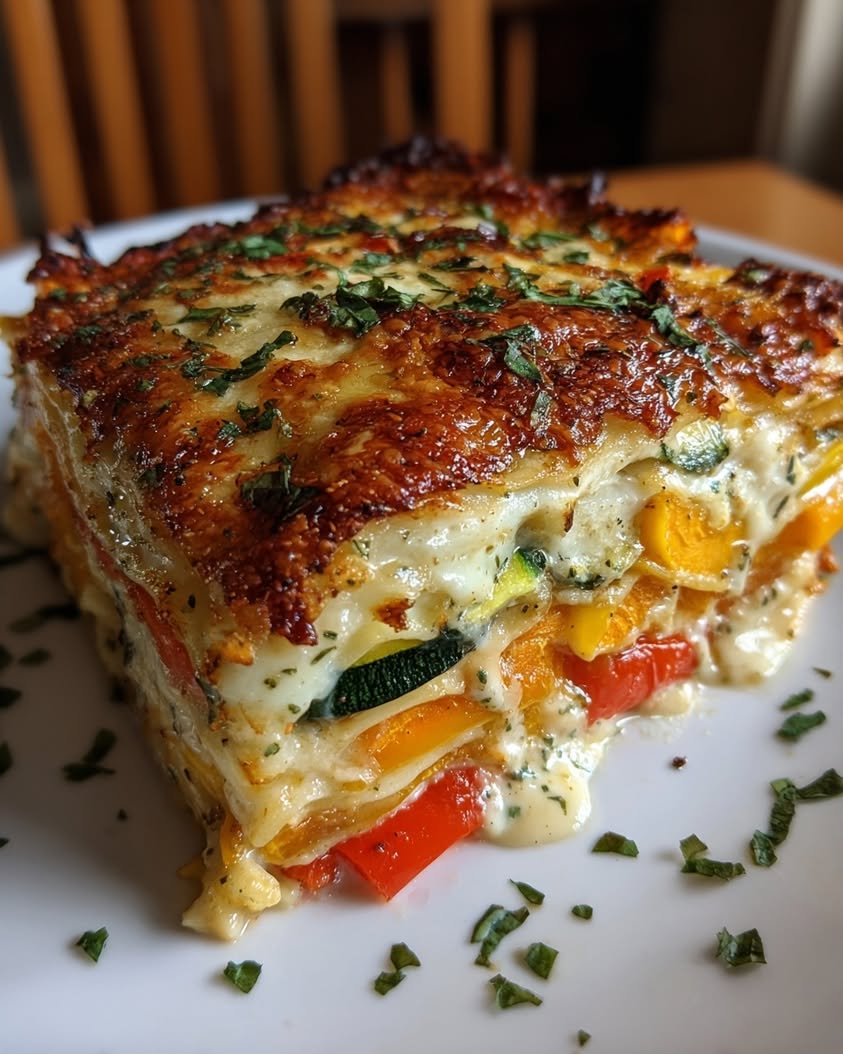
Layered Mediterranean Sweet Potato, Zucchini & Bell Pepper Lasagna with Creamy Garlic Herb Three-Cheese Drizzle: A Vibrant Veggie-Packed Feast
Imagine a lasagna that bursts with the sunny, robust flavors of the Mediterranean coast, yet feels entirely fresh and modern on your dinner table. This Layered Mediterranean Sweet Potato, Zucchini & Bell Pepper Lasagna with Creamy Garlic Herb Three-Cheese Drizzle does exactly that. It reimagines a classic comfort food by replacing traditional pasta with delicate, paper-thin slices of vibrant vegetables. Consequently, each bite offers a beautiful mosaic of earthy sweet potato, tender zucchini, and sweet bell peppers, all nestled between layers of rich, savory tomato sauce and creamy ricotta. Ultimately, this dish is a celebration of produce, proving that a vegetable lasagna can be the star of any meal.
The magic of this Mediterranean Sweet Potato Vegetable Lasagna lies in its harmonious balance. Firstly, roasting the vegetables concentrates their natural sugars, adding a caramelized depth that plays wonderfully against the tangy tomato sauce. Secondly, the crowning glory is a luxurious three-cheese drizzle, a silky blend of feta, Parmesan, and cream cheese infused with garlic and fresh herbs. This sauce cascades over the golden-brown top, creating an irresistible contrast of textures and temperatures. Moreover, it is a visually stunning centerpiece, with layers of orange, green, and red peeking through a creamy, herb-flecked blanket. This recipe is perfect for anyone seeking a hearty, satisfying dish that is naturally gluten-free and packed with nutrients.
Furthermore, this recipe is incredibly versatile and forgiving. Whether you are cooking for a family weeknight dinner or preparing an impressive dish for guests, this Mediterranean Sweet Potato Vegetable Lasagna delivers on every front. It is a make-ahead dream, often tasting even better the next day as the flavors meld. Additionally, it freezes beautifully, providing you with a ready-made gourmet meal for busy days. Embrace the process of layering and creating; the result is a wholesome, flavor-packed casserole that will have everyone asking for seconds. Let us dive into the details of creating this masterpiece.
Quick Recipe Highlights
- Flavor Profile: This Mediterranean Sweet Potato Vegetable Lasagna delivers a symphony of savory, sweet, and tangy notes. Earthy roasted sweet potatoes and zucchini meet the bright sweetness of bell peppers, all balanced by a robust tomato sauce and a salty, creamy cheese drizzle.
- Texture: Expect a wonderful contrast between the tender, melt-in-your-mouth roasted vegetable layers and the creamy, luxurious cheese sauce. The top develops a beautifully golden, slightly crisp edge that gives way to the soft, stacked interior.
- Aroma: As it bakes, your kitchen will fill with the irresistible scents of roasting garlic, sweet caramelizing vegetables, bubbling tomato sauce, and fragrant herbs like oregano and basil. It is an aromatic promise of the comfort to come.
- Visual Appeal: The cross-section reveals stunning stripes of orange, green, and red. The golden-brown, bubbly top adorned with a creamy white and green herb drizzle makes this lasagna a show-stopping centerpiece for any table.
- Skill Level Needed: This is an intermediate recipe due to the vegetable prep and layering technique. However, clear instructions make it very achievable for confident beginners. Patience with slicing and assembly is key.
- Special Equipment: A mandoline slicer is highly recommended for achieving uniformly thin vegetable slices, which ensures even cooking. You will also need a good baking dish, a box grater for cheeses, and a blender or whisk for the drizzle.
Recipe Overview
- Difficulty Level: We rate this Mediterranean Sweet Potato Vegetable Lasagna as intermediate. The challenge lies not in complex techniques, but in the preparation and assembly. Slicing vegetables thinly and evenly requires a bit of care and the right tool. Additionally, building the layers neatly takes a few minutes of focused attention. However, each step is simple and the payoff is immense.
- Category: This dish proudly sits in multiple categories: a stunning vegetarian main course, a perfect make-ahead casserole, and an excellent gluten-free dinner option. It is substantial enough to be the center of the plate, needing only a simple green salad on the side.
- Cuisine: While lasagna is famously Italian, this version draws heavily from broader Mediterranean cuisine. The use of vegetables like zucchini and bell peppers, the inclusion of feta cheese, and the focus on olive oil and herbs like oregano connect it to the healthy, vibrant food traditions of Greece and the surrounding region.
- Cost: This is a moderately priced dish that makes excellent use of seasonal produce. Sweet potatoes, zucchini, and bell peppers are often affordable, especially in summer and fall. The cheeses are the main investment, but they provide immense flavor. Overall, it is cost-effective for a special meal that feeds a crowd.
- Season: This Mediterranean Sweet Potato Vegetable Lasagna shines brightest in late summer and fall when zucchini and bell peppers are at their peak sweetness and abundance. Conversely, it also serves as a wonderful burst of color and nutrition during the colder winter months, bringing sunshine to your table.
- Occasion: It is ideal for Sunday family dinners, potlucks, holiday gatherings for mixed-diet crowds, or meal prep for the week. Its impressive appearance makes it suitable for entertaining, while its comforting nature makes it perfect for a cozy night in.
Why You’ll Love This Recipe
First and foremost, the taste and texture of this Mediterranean Sweet Potato Vegetable Lasagna are utterly captivating. Each forkful is a journey through creamy, savory, and sweet elements. The roasted vegetables become tender and almost silky, absorbing the flavors of the garlicky tomato sauce. Meanwhile, the three-cheese drizzle adds a tangy, salty punch and a luxurious mouthfeel that ties everything together. Unlike pasta-based lasagnas that can feel heavy, this version feels nourishing and light, yet deeply satisfying. You will love discovering how perfectly the natural sweetness of the vegetables complements the savory components.
From a convenience standpoint, this recipe offers significant benefits. Although there is prep work involved, much of it can be done ahead of time. You can slice the vegetables, prepare the sauce, and make the cheese drizzle a day in advance. Consequently, assembly on the day of serving becomes a quick and simple task. Moreover, it bakes into a cohesive, sliceable masterpiece without any fuss. The leftovers are arguably even better, making it a fantastic meal-prep champion. You get a gourmet-quality dinner that reheats beautifully for lunches or easy subsequent dinners throughout the week.
Nutritionally, this Mediterranean Sweet Potato Vegetable Lasagna is a powerhouse. By using vegetables as the “noodles,” you significantly increase your intake of vitamins, minerals, and fiber. Sweet potatoes provide beta-carotene and complex carbohydrates. Zucchini adds hydration and vitamin C, while bell peppers are loaded with antioxidants. The ricotta offers protein and calcium. This dish is naturally gluten-free and can be adapted to be lower in dairy if needed. It is a delicious way to eat more vegetables without feeling like you are making a sacrifice. You are indulging in comfort food that genuinely fuels your body.
For social and entertaining value, this lasagna is a true winner. It effortlessly caters to vegetarians and those avoiding gluten, making it an inclusive choice for mixed-diet parties. Its stunning visual appeal guarantees compliments before anyone even takes a bite. Serving a single, beautiful dish from which everyone can help themselves creates a warm, communal dining experience. It is a conversation starter that demonstrates thoughtfulness and culinary skill. Whether at a casual potluck or a more formal dinner party, it always feels special and celebratory.
Finally, this recipe is remarkably cost-effective and accessible. The primary ingredients are common vegetables and pantry staples. You do not need expensive specialty items or exotic spices. A single dish yields six generous servings, providing excellent value for your grocery budget. Additionally, it is a fantastic way to use up a summer garden bounty or seasonal market finds. The flexibility with cheese types and herb choices means you can adapt it based on what you have on hand. This Mediterranean Sweet Potato Vegetable Lasagna proves that eating well does not have to be complicated or expensive.
Historical Background and Cultural Significance
The story of lasagna stretches back centuries, with roots in ancient Greece and Rome. The name “lasagna” likely derives from the Greek “laganon,” a flat sheet of pasta dough cut into strips. However, the layered casserole we recognize today evolved in the Emilia-Romagna region of Italy, particularly in the city of Bologna. Traditionally, it featured layers of egg pasta, ragù (a meat-based sauce), béchamel, and Parmigiano-Reggiano. This classic dish, known as Lasagna alla Bolognese, became a symbol of Sunday family gatherings and festive occasions throughout Italy and eventually, the world.
The cultural significance of lasagna is deeply tied to family, abundance, and celebration. In Italian culture, preparing lasagna is often a labor of love, a time-consuming process reserved for special days when the whole family gathers. It represents hospitality and generosity, as it is a substantial dish meant to be shared. The act of layering is almost ritualistic, building flavor and texture with care. Over time, lasagna transcended its Italian origins to become a global comfort food, adapted and reinterpreted in countless ways while retaining its core identity as a hearty, layered bake.
The evolution towards vegetable-based lasagnas is a more modern phenomenon, influenced by dietary trends, health consciousness, and culinary creativity. As vegetarian and gluten-free diets gained popularity, home cooks and chefs began seeking alternatives to traditional wheat pasta. Vegetables like zucchini, eggplant, and sweet potatoes, with their ability to be sliced thinly and hold shape when baked, became perfect candidates. This innovation allowed the comforting format of lasagna to be enjoyed by a wider audience. The Mediterranean Sweet Potato Vegetable Lasagna is a direct descendant of this creative adaptation, merging the classic structure with a focus on plant-based ingredients.
Regional variations of vegetable lasagna are now abundant. In Greece, you might find a pastitsio-inspired version with eggplant and béchamel. In the American South, a squash lasagna is common. Our specific recipe draws on the broader Mediterranean culinary palette, incorporating flavors like feta cheese and oregano that are prevalent in Greek cuisine, while using a technique born in Italy. This fusion creates a dish that honors tradition while embracing contemporary tastes and nutritional understanding. It is a beautiful example of how food cultures can blend and evolve to create something new and delicious.
Ingredient Deep Dive
Let us start with the star: sweet potatoes. Originating in Central or South America over 5,000 years ago, sweet potatoes are now a global staple. They are packed with beta-carotene, which converts to vitamin A, crucial for vision and immunity. They also provide fiber, vitamin C, and potassium. For this Mediterranean Sweet Potato Vegetable Lasagna, choose firm, medium-sized potatoes with smooth skin. Avoid any with soft spots or sprouts. Store them in a cool, dark, well-ventilated place—not the refrigerator. For a variation, you could use butternut squash, though its flavor is milder and texture slightly less creamy.
Zucchini, or courgette, is a summer squash that became popular in Italian cooking in the 19th century. It is incredibly versatile and mild, making it a perfect canvas for other flavors. Nutritionally, it is high in water content, fiber, and antioxidants like vitamin C. Select small to medium zucchini that feel heavy for their size, with bright, glossy skin. Larger zucchini can be seedy and watery. Store them in the refrigerator’s crisper drawer. If unavailable, yellow squash makes an excellent, colorful substitute in this vegetable lasagna.
Bell peppers, specifically the red variety called for here, are the sweetest of the capsicum family. They originated in Central and South America and were spread worldwide by Spanish and Portuguese explorers. They are an exceptional source of vitamins A and C. Choose peppers that are firm, with taut, shiny skin and a deep color. The stem should look fresh and green. Store them in the refrigerator. You can use a mix of colors—adding yellow or orange—for even more visual appeal in your Mediterranean lasagna without altering the flavor significantly.
The three-cheese drizzle relies on feta, Parmesan, and cream cheese. Feta, a brined curd cheese from Greece, adds a distinctive tangy saltiness. Authentic Greek feta is made from sheep’s milk or a sheep-goat blend. Parmesan, or Parmigiano-Reggiano, is a hard, granular cheese from Italy with a complex, nutty flavor. It provides umami depth. Cream cheese lends the necessary creaminess and body to create a drizzleable sauce. For best results, use full-fat, block-style cream cheese. Together, they create a rich, flavorful topping that is the signature of this dish.
Common Mistakes to Avoid
- Skipping the Vegetable Salting: Neglecting to salt and drain the zucchini slices is a common error. Zucchini releases a lot of water during cooking. Salting them draws out excess moisture beforehand, preventing a soggy, watery lasagna. Always pat them dry thoroughly after the resting period.
- Cutting Vegetables Too Thick: Using thick slices of sweet potato or zucchini means they will not cook through properly and become tender. They will remain unpleasantly crunchy and make the layers difficult to cut. A mandoline slicer set to 1/8-inch is your best tool for consistent, thin slices.
- Underseasoning the Layers: Vegetables need generous seasoning. Do not be shy with salt, pepper, and herbs at every stage—on the roasted veggies, in the tomato sauce, and in the ricotta mixture. Each component should be flavorful on its own to create a harmonious final dish.
- Using Watery Tomato Sauce: A thin, runny jarred sauce will make the lasagna soupy. Opt for a thick, high-quality marinara or simmer your own to reduce and concentrate the flavors. The sauce should coat the back of a spoon without dripping off immediately.
- Overloading the Ricotta Layer: While tempting, spreading the ricotta mixture too thickly can make the lasagna dense and heavy. Use a light, even hand. The ricotta acts as a flavorful glue between the vegetable layers, not the main filling.
- Skipping the Resting Time: Cutting into the lasagna immediately after baking is a recipe for a messy plate. The structure needs 15-20 minutes to set. This allows the layers to firm up, ensuring you get clean, beautiful slices that hold their shape.
- Burning the Garlic for the Drizzle: Garlic burns quickly and turns bitter. When sautéing for the cheese sauce, cook it only until fragrant, about 30-60 seconds over medium heat. Burnt garlic will ruin the flavor of the entire creamy drizzle.
- Not Preheating the Baking Dish: Placing a cold ceramic or glass dish into a hot oven can cause it to crack. Always ensure your baking dish is at room temperature before adding the assembled lasagna and placing it in the oven.
Essential Techniques
Thin Slicing with a Mandoline: This technique is non-negotiable for perfect vegetable “noodles.” A mandoline ensures uniform thickness, which guarantees even cooking. Always use the safety guard to protect your fingers. If you do not have a mandoline, a very sharp chef’s knife and steady patience are required. The goal is slices thin enough to be pliable but not so thin they disintegrate.
Sweating Vegetables: Salting and draining zucchini (and sometimes eggplant) is called “sweating.” Salt draws out cellular moisture via osmosis. This step is crucial because it prevents excess water from leaching into your lasagna during baking, which would steam the vegetables and create a soggy texture. After salting, let the slices rest on paper towels for 20-30 minutes, then press firmly to remove the extracted moisture.
Building Even Layers: The structure of your Mediterranean Sweet Potato Vegetable Lasagna depends on careful layering. Start with a thin base of tomato sauce to prevent sticking. Then, shingle the vegetable slices in a single, slightly overlapping layer. Spread the ricotta mixture sparingly and evenly. Repeat the process, ending with a final layer of vegetables. This method ensures every bite has a balance of all components.
Creating a Creamy Emulsion (for the Drizzle): The three-cheese sauce is a simple emulsion. The key is gentle, gradual melting. Start with a roux-like base of butter and flour, then slowly whisk in the milk to avoid lumps. Add the cheeses off the heat, allowing residual warmth to melt them smoothly. If the sauce breaks or becomes grainy, a splash of warm milk and vigorous whisking can often bring it back together.
Pro Tips for Perfect Layered Mediterranean Sweet Potato Vegetable Lasagna
First, roast your sweet potato and bell pepper slices on separate parchment-lined baking sheets. This prevents overcrowding, which steams the vegetables instead of roasting them. You want caramelized edges for maximum flavor.
Second, after sweating the zucchini, do not rinse off the salt. Simply pat it dry thoroughly. The residual salt seasons the vegetable perfectly for the layers.
Third, lightly grease your baking dish with olive oil or cooking spray before adding the first layer of sauce. This guarantees easy release and clean serving.
Fourth, let all components cool slightly before assembly. Adding hot roasted vegetables or sauce to the ricotta mixture can cause it to separate or become runny.
Fifth, cover the lasagna with foil for the first 30 minutes of baking. This traps steam and ensures the vegetables cook through tenderly. Then, remove the foil to allow the top to brown and crisp.
Sixth, warm the cheese drizzle slightly before serving. If it has thickened in the fridge, gently reheat it in a saucepan with a splash of milk to restore its drizzling consistency.
Seventh, use a sharp, serrated knife to cut the finished lasagna. A gentle sawing motion will cleanly cut through the tender vegetable layers without squashing them.
Eighth, for a deeper flavor, add a pinch of red pepper flakes or a teaspoon of smoked paprika to your tomato sauce as it simmers.
Variations and Adaptations
For regional variations, consider a Greek-inspired twist by adding a layer of sautéed spinach with dill and using only feta in the ricotta mixture. Alternatively, an Italian version might include layers of thinly sliced eggplant and use a classic basil pesto mixed into the ricotta instead of oregano.
Seasonal adaptations are simple. In fall, incorporate thin slices of butternut squash or roasted pumpkin. In winter, add sautéed mushrooms for an earthy, meaty depth. Spring could welcome thin asparagus spears or artichoke hearts layered in.
Dietary modifications are straightforward. For a vegan Mediterranean Sweet Potato Vegetable Lasagna, use a tofu-based “ricotta” and a cashew cream sauce for the drizzle. For dairy-free, opt for vegan cheese alternatives and a béchamel made with plant-based milk and nutritional yeast.
Flavor variations can take this dish in new directions. Add a Middle Eastern note with a spoonful of harissa in the tomato sauce. For an herby freshness, mix chopped fresh basil, parsley, and chives into the ricotta layer.
Texture modifications could include adding a layer of cooked lentils or quinoa mixed with the tomato sauce for extra heartiness and protein. For a crunchier top, sprinkle panko breadcrumbs (or gluten-free crumbs) mixed with a little olive oil over the final vegetable layer before baking.
Presentation alternatives include making individual lasagnas in ramekins for a personalized touch. You can also deconstruct the elements for a faster bowl meal: roast the vegetables, warm the sauce, and drizzle with the cheese sauce over the top.
Serving and Presentation Guide
Plating this lasagna is part of the pleasure. Use a sharp, offset spatula to lift each portion cleanly from the dish. Place it slightly off-center on a warm, wide-rimmed plate to allow room for the drizzle and garnish.
Garnishing ideas are plentiful. A final flourish of the creamy garlic herb three-cheese drizzle is essential. Then, add a sprinkle of fresh chopped parsley, basil, or microgreens. A few cracks of black pepper, a drizzle of high-quality extra virgin olive oil, or a scattering of toasted pine nuts add texture and visual interest.
Traditional accompaniments keep the meal light and balanced. A simple arugula salad with lemon vinaigrette cuts through the richness. Garlic bread or focaccia is always welcome for soaking up any extra sauce. For a more substantial spread, add roasted broccoli or a white bean salad.
Modern serving suggestions might include presenting the whole baked lasagna on a large wooden board or slate platter. Let guests serve themselves family-style, creating a convivial atmosphere. Offer small bowls of extra cheese drizzle, chili oil, and fresh herbs on the side for customization.
Temperature considerations are key. Serve the lasagna hot or very warm, straight from the oven after its resting period. The cheese drizzle should be warm or at room temperature so it flows nicely. Cold drizzle will not meld with the hot vegetables.
Portion control is easy with this nutrient-dense dish. A single square is very satisfying. Given its richness from the cheese sauce, a smaller portion paired with a large salad often feels just right, leaving room for dessert.
Wine and Beverage Pairing
Wine pairings should complement the earthy vegetables and creamy cheese. A medium-bodied Italian red like Chianti Classico or Barbera works beautifully, as their bright acidity cuts through the richness. Alternatively, a crisp, dry rosé from Provence offers a refreshing counterpoint. For white wine lovers, a fuller-bodied option like an unoaked Chardonnay or a Vermentino can stand up to the layered flavors without being overwhelmed.
Non-alcoholic alternatives are just as important. Sparkling water with a twist of lemon or lime cleanses the palate. A tart pomegranate spritzer or a ginger-based mocktail with herbal notes can mirror the complexity of the dish. Iced herbal tea, like mint or lemon verbena, is also a delightful pairing.
Coffee and tea pairings work well after the meal. A medium-roast coffee with low acidity complements the savory notes. For tea, consider a gentle herbal blend like chamomile or a light, floral oolong. These beverages provide a soothing finish without competing with the meal’s robust flavors.
Temperature considerations are straightforward. Serve red wines slightly below room temperature and white wines well chilled. Non-alcoholic sparkling drinks should be ice-cold to provide a refreshing contrast to the warm, baked lasagna.
Serving suggestions include offering a choice of beverages to cater to all guests. Place a carafe of water on the table as a must. If serving wine, consider decanting the red about 30 minutes before the meal to allow it to open up and breathe.
Storage and Shelf Life
Storage methods are simple for this Mediterranean Sweet Potato Vegetable Lasagna. Allow any leftovers to cool completely to room temperature, which should take no more than two hours to ensure food safety. Then, cover the baking dish tightly with plastic wrap or aluminum foil, or transfer individual portions to airtight containers.
Temperature requirements are strict for food safety. The lasagna must be refrigerated at 40°F (4°C) or below. Do not leave it out on the counter for extended periods after serving. The creamy cheese drizzle should also be stored separately in its own airtight container in the refrigerator.
Container recommendations include glass or BPA-free plastic containers with snug-fitting lids. If storing the entire dish, the original baking dish covered well with foil is acceptable, though it takes up more fridge space. For longer storage, freezer-safe containers or heavy-duty freezer bags are best.
Signs of spoilage are similar to any cooked food. Look for an off smell, such as sourness or fermentation. Visible mold, especially on the cheese components, is a definite sign to discard the entire portion. If the texture becomes excessively watery or slimy, it is best not to consume it.
Reheating instructions are key to preserving quality. Reheat individual portions in the microwave covered with a damp paper towel to prevent drying out. For larger amounts, reheat in a 350°F (175°C) oven, covered with foil, until warmed through (about 20-30 minutes). Add a fresh drizzle of the cheese sauce after reheating.
Freezing guidelines are excellent for this lasagna. It freezes beautifully for up to 3 months. Freeze it either whole (in a disposable aluminum pan) or in individual portions. Thaw overnight in the refrigerator before reheating. Note that the zucchini may release a bit more water upon thawing and reheating, but the flavor will remain excellent.
Make Ahead Strategies
A prep timeline makes entertaining stress-free. You can roast the sweet potatoes and peppers up to 2 days in advance. Slice and sweat the zucchini 1 day ahead, storing the dried slices in a container in the fridge. The tomato sauce and the three-cheese drizzle can also be made 1-2 days prior.
Storage between steps is easy. Keep all pre-cooked components in separate airtight containers in the refrigerator. The ricotta mixture is best prepared the day of assembly to maintain its texture, but you can mix the herbs in ahead of time and add the egg just before building.
Quality impact assessment is positive. Making components ahead often improves the dish, as flavors have time to develop. The key is to assemble the lasagna no more than a few hours before baking. If assembled too far in advance, the vegetables can start to release water, making the bottom layer soggy.
Assembly tips for make-ahead: If you must assemble a day ahead, do not add the final cheese drizzle before baking. Cover the assembled, unbaked lasagna tightly and refrigerate. Let it sit at room temperature for 30 minutes before baking, and add 5-10 minutes to the covered baking time since it will start cold.
Reheating guidelines for fully made-ahead lasagna: If you bake it completely, cool it, and refrigerate it, reheat covered in a 350°F oven until the center is hot (use a thermometer to ensure 165°F). You may need to add a fresh drizzle of the cheese sauce after reheating to refresh the presentation and flavor.
Fresh element additions are the final touch. Always prepare a little extra fresh herb garnish (like basil or parsley) to sprinkle on top after reheating. This adds a burst of color and fresh aroma that revitalizes the make-ahead dish.
Scaling Instructions
Halving the recipe is simple for smaller households. Use an 8×8 inch baking dish. Precisely halve all ingredient quantities. The baking time may be slightly reduced; start checking for doneness around the 40-minute mark. The three-cheese drizzle recipe halves easily, but you may have a little leftover, which is great for salads or roasted vegetables.
Doubling or tripling the recipe is perfect for large gatherings. Double all ingredients and use two 9×13 inch dishes, or a very large lasagna pan. Ensure your oven racks are positioned to allow for even air circulation if baking multiple dishes at once. You may need to rotate the pans halfway through baking. The prep work will take longer, so plan accordingly.
Equipment adjustments are necessary when scaling. A larger baking dish is a must for doubling. You will also need more baking sheets for roasting the increased volume of vegetables. Consider roasting in batches to avoid steaming. A larger saucepan will be needed for making a bigger batch of the cheese drizzle.
Timing modifications are minimal when scaling up. The assembly time will increase linearly. The baking time for a single, deeper lasagna in a larger pan may increase by 10-15 minutes. Always rely on the visual and tactile doneness tests: the top should be golden, and a knife should easily pierce the center vegetables.
Storage considerations change with scale. A double batch means more leftovers. Ensure you have enough refrigerator or freezer space and appropriate containers. Label and date everything clearly. It is often helpful to freeze portions immediately after cooling if you do not plan to eat it all within a few days.
Nutritional Deep Dive
Macro breakdown of this Mediterranean Sweet Potato Vegetable Lasagna is favorable. A serving provides a good balance of complex carbohydrates from the sweet potatoes and vegetables, moderate protein from the ricotta and cheeses, and healthy fats primarily from olive oil and the dairy. It is a satiating meal that provides sustained energy without the blood sugar spike associated with white pasta.
Micronutrient analysis reveals a wealth of vitamins and minerals. Sweet potatoes are famous for vitamin A. Bell peppers and zucchini contribute significant vitamin C. The dairy components provide calcium and phosphorus. Herbs like oregano add antioxidants. The olive oil base offers heart-healthy monounsaturated fats.
Health benefits are numerous. The high fiber content supports digestive health and promotes feelings of fullness. The array of antioxidants from the colorful vegetables helps combat inflammation. The dish is naturally lower in saturated fat than traditional meat-and-pasta lasagnas, especially if you use part-skim ricotta.
Dietary considerations are easily addressed. This recipe is inherently gluten-free. For those monitoring sodium, you can reduce the salt in the vegetable prep and use low-sodium tomato sauce and cheeses. The fat content can be moderated by using reduced-fat dairy options, though this may affect the creaminess of the final drizzle.
Portion analysis shows that one-sixth of the lasagna is a substantial and satisfying meal. Given its nutrient density, you may find you are satisfied with a slightly smaller portion when paired with a large salad. This makes the dish even more economical and allows for better portion control if desired.
Weight management tips include focusing on the vegetable base as the primary source of volume and calories. The cheese drizzle is rich, so using it as a true “drizzle” rather than a blanket sauce can help manage calorie intake without sacrificing flavor. Pairing with a non-starchy side like a green salad maximizes nutrient intake for the calories consumed.
Dietary Adaptations
Gluten-free adaptation is already complete! This Mediterranean Sweet Potato Vegetable Lasagna uses no wheat-based noodles, making it naturally gluten-free. Always check labels on your tomato sauce and pre-shredded cheeses to ensure no gluten-containing additives are present.
Dairy-free adaptation requires substitutions for the ricotta and the three-cheese drizzle. For the ricotta layer, use a blend of crumbled firm tofu, nutritional yeast, lemon juice, and herbs. For the drizzle, create a sauce from soaked cashews, plant-based milk, nutritional yeast, garlic, and a touch of miso for umami.
Vegan adaptation combines the dairy-free changes and also removes the egg from the ricotta mixture. Use a flax egg (1 tbsp ground flax + 3 tbsp water) if a binder is needed, though the tofu mixture often holds together well without it. Ensure all other ingredients, like the tomato sauce, are vegan-certified.
Low-carb and keto adaptations are more challenging due to the sweet potatoes. For a stricter version, replace the sweet potato layer with thinly sliced eggplant or more zucchini. Increase the fat content by using full-fat dairy and adding a layer of sautéed mushrooms. The bell peppers are moderately higher in carbs, so use them sparingly.
Paleo adaptation requires omitting all dairy and grains. Follow the dairy-free guide for the ricotta and sauce, using nutritional yeast sparingly if allowed. Ensure the tomato sauce contains no sugar or unwanted additives. The focus becomes entirely on the vegetables, olive oil, and herbs.
Low-FODMAP adaptation involves careful selection. Sweet potato is low-FODMAP in 1/2 cup servings per meal—ensure your portion size aligns. Use only the green tops of scallions (green parts only) instead of garlic in the sauce and drizzle. Use a garlic-infused olive oil to impart flavor without the FODMAPs. Zucchini and bell pepper (red) are low-FODMAP in typical serving sizes.
Troubleshooting Guide
Texture issues like a watery lasagna almost always stem from insufficient draining of the zucchini or using a watery tomato sauce. Next time, salt the zucchini for longer and press more firmly. Simmer your tomato sauce until very thick. For a current soggy batch, you can carefully pour off excess liquid from the corner of the dish after baking, then let it rest longer to re-set.
Flavor balance problems, such as a bland dish, mean underseasoning occurred. You cannot fix it now for the whole casserole, but you can enhance each serving. Offer flaky sea salt, extra black pepper, and a drizzle of good olive oil at the table. A sprinkle of grated Parmesan or a dash of red wine vinegar can also wake up the flavors on the plate.
Temperature problems, like a burnt top but undercooked center, indicate an oven that runs hot or a dish placed too high. Next time, bake at a slightly lower temperature (325°F) for longer, and always use foil for the first portion of baking. For the current batch, cover the burnt top with foil, reduce the oven temp, and continue baking until a knife pierces the center easily.
Equipment challenges, such as not having a mandoline, can be overcome. Use a sharp vegetable peeler to create very thin, wide ribbons of sweet potato and zucchini. They may be more fragile, but they will work. For bell peppers, simply slice them as thinly as possible with a knife. The layers may be less uniform, but the flavor will be the same.
Ingredient substitution concerns are common. If you cannot find ricotta, cottage cheese blended until smooth is an acceptable substitute. If you are out of feta for the drizzle, goat cheese or a extra sharp white cheddar can provide a different but delicious tang. The recipe is forgiving, so do not be afraid to experiment with what you have.
Timing concerns often arise during assembly. If your components are ready at different times, it is okay. Let everything cool to room temperature before layering. You can even refrigerate the roasted vegetables and sauce once cooled, then assemble the next day. A cold assembly just requires a slightly longer bake time.
I’m Billy, a classically trained culinary school graduate from The Culinary Institute of America with over 12 years in the restaurant industry and over 19 years of cooking experience.