
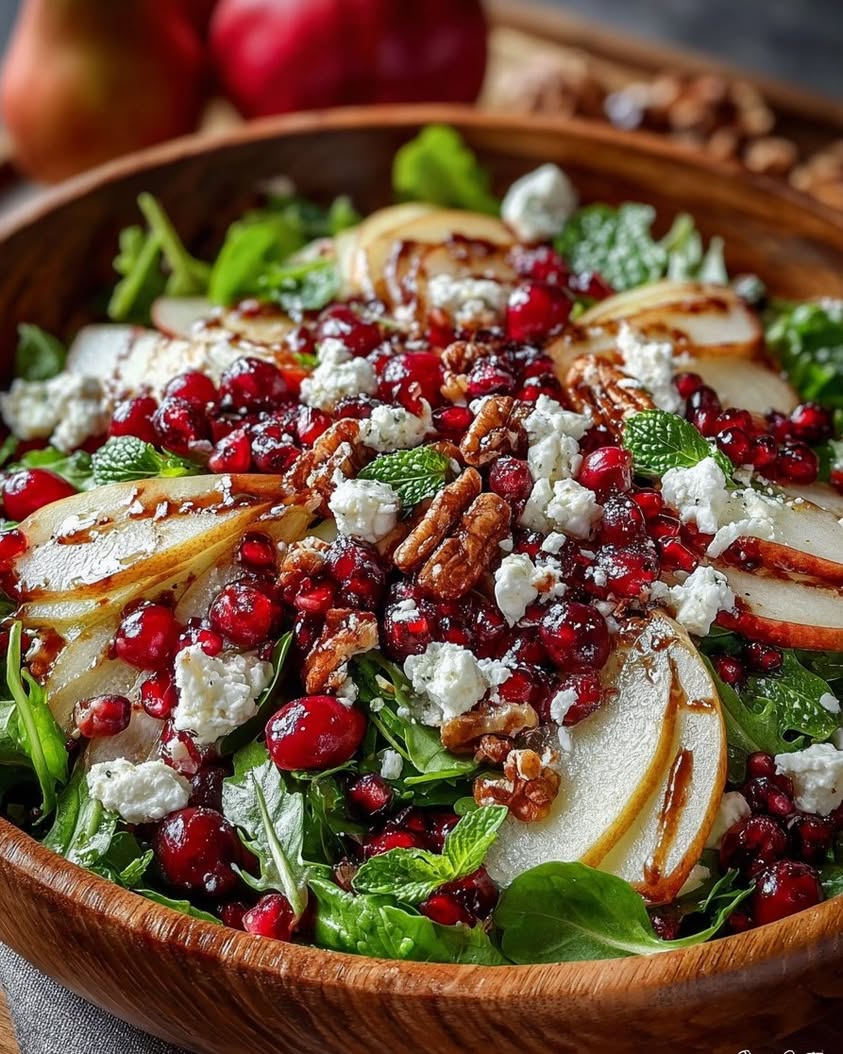
Pear, Pomegranate & Cranberry Winter Salad with Feta Snowflakes: A Festive Symphony of Sweet and Savory
When the air turns crisp and the days grow short, our cravings shift toward food that is both comforting and celebratory. This stunning Pear, Pomegranate & Cranberry Winter Salad with Feta Snowflakes answers that call perfectly. It is a vibrant, no-cook dish that brings the jewel-toned beauty of the season directly to your table. Moreover, it masterfully balances sweet, tart, savory, and crunchy elements in every single bite.
Imagine juicy, ripe pear slices mingling with tart pomegranate arils and chewy dried cranberries. Then, picture a base of hearty greens tossed in a bright maple vinaigrette. Finally, envision delicate shavings of salty feta cheese scattered atop like the first snowfall. This winter salad is not just a side dish; it is a centerpiece. Consequently, it will elevate any holiday meal, from a casual family dinner to an elegant Christmas feast, with its effortless sophistication and burst of fresh flavor.
Quick Recipe Highlights
- Flavor Profile: This winter salad delivers a perfect harmony. You get the natural sweetness of pear, the bright tartness of pomegranate and cranberry, the savory saltiness of feta, and the warm, subtle spice from the dressing. Ultimately, it is a complex yet refreshing taste experience.
- Texture: Every forkful is a textural adventure. Expect the crisp crunch of fresh greens and pecans against the juicy burst of pomegranate. Meanwhile, the creamy softness of pear and the chewy dried cranberries create a delightful contrast, making the salad incredibly satisfying.
- Aroma: The aroma is fresh and subtly sweet. First, you notice the clean scent of the greens and pear. Then, the toasted pecans add a warm, nutty fragrance that complements the tangy notes from the vinaigrette, inviting you to dig in immediately.
- Visual Appeal: This dish is a feast for the eyes. The deep red pomegranate seeds and cranberries pop against the green lettuce and pale yellow pear. Subsequently, the white feta snowflakes create a beautiful winter-wonderland effect that is sure to impress your guests.
- Skill Level Needed: Absolutely beginner-friendly. This recipe requires no cooking, just assembly and a bit of simple knife work. Therefore, even novice cooks can achieve a stunning, restaurant-quality result with minimal effort.
- Special Equipment: You need only basic kitchen tools: a good chef’s knife, a cutting board, a large salad bowl, and a small jar for shaking the dressing. A vegetable peeler is helpful for creating the feta snowflakes, but a knife works too.
Recipe Overview
- Difficulty Level: We rate this winter salad as “Easy” for several reasons. First, there is zero cooking involved. Second, the techniques are simple: washing, slicing, and whisking. The most intricate step is seeding the pomegranate, but you can buy pre-seeded arils to simplify it further. Anyone can make this beautiful dish successfully.
- Category: This recipe falls squarely into the salad category, but it is a special occasion salad. It works wonderfully as a starter course to awaken the palate before a rich meal. Alternatively, you can serve it as a vibrant side dish alongside roasted meats or as a light main course with added protein like grilled chicken.
- Cuisine: This is a modern fusion salad with roots in American and Mediterranean culinary traditions. The use of winter fruits and maple syrup nods to North American seasonal cooking. Meanwhile, the feta cheese and olive oil-based vinaigrette are classic Mediterranean elements, creating a globally inspired dish.
- Cost: The cost is moderate, largely depending on the price of out-of-season pears and pomegranates. Using pre-packaged pomegranate arils and dried cranberries can be more expensive than doing it yourself. However, the ingredients are whole and nutritious, offering good value for a special meal.
- Season: This is unequivocally a winter salad. It is designed to showcase the best produce available during the colder months: crisp pears and vibrant pomegranates. The flavors and colors are inherently festive, making it ideal for the holiday season from November through February.
- Occasion: This salad is perfect for any festive gathering. It shines on Thanksgiving, Christmas, and New Year’s Eve tables. Furthermore, it is excellent for potlucks, dinner parties, or even as a special weekend lunch to brighten a gray winter day.
Why You’ll Love This Recipe
You will adore this winter salad first for its spectacular taste and texture. Each component is chosen for a specific reason. The sweet pear mellows the tart pop of the pomegranate. Meanwhile, the salty feta cheese cuts through the sweetness, and the toasted pecans provide an essential crunchy contrast. This balance ensures that no single flavor overpowers another. Instead, they work in concert to create a refreshing and complex dish that cleanses the palate and delights the senses.
Next, consider the sheer convenience. This Pear, Pomegranate & Cranberry Winter Salad with Feta Snowflakes requires no oven time, which is a major advantage during the busy holiday season. You can prepare nearly every component ahead of time. For instance, toast the nuts, make the dressing, wash the greens, and even slice the pears (with a lemon juice bath to prevent browning). Then, simply assemble everything just before serving. This make-ahead strategy transforms it from a last-minute task into a stress-free masterpiece.
From a nutritional standpoint, this salad is a powerhouse. Pomegranate arils are loaded with antioxidants and vitamin C. Pears offer a good source of fiber and vitamin K. Meanwhile, the greens provide essential vitamins and minerals, and the olive oil in the dressing is a source of heart-healthy fats. Unlike many heavy holiday sides, this dish feels light and energizing. It adds a necessary element of freshness and nutrition to a traditionally indulgent spread.
For entertaining, this salad is a true superstar. Its visual appeal is undeniable. The red and green colors are inherently festive, and the “feta snowflakes” add a whimsical, elegant touch that guests will remember. Serving a beautiful, homemade salad shows care and effort. It also caters to a variety of dietary preferences when served with modifications on the side, making you a thoughtful and accommodating host.
Finally, this recipe is cost-effective and accessible. While some ingredients like pomegranate may seem special, they are readily available in most grocery stores during the winter. You can adapt the recipe based on what you have; for example, use apples instead of pears or walnuts instead of pecans. This flexibility, combined with its stunning results, makes the winter salad an invaluable addition to your seasonal recipe collection.
Historical Background and Cultural Significance
The concept of combining fruit, cheese, and nuts in a salad has ancient roots. Specifically, this practice dates back to Roman times. Early Romans often enjoyed dishes with fresh herbs, cheese, and vinegar-based dressings. The addition of fruit provided a welcome sweetness. Over centuries, this idea traveled through Europe, evolving with local ingredients. Our modern winter salad is a direct descendant of those ancient flavor combinations, updated with New World ingredients like cranberries and maple syrup.
Culturally, salads featuring seasonal fruit hold a special place in holiday traditions, particularly in North America. Cranberries, for instance, are a native fruit long used by Indigenous peoples and later became a staple on the Thanksgiving table. Pomegranates, conversely, have symbolic significance in many cultures, often representing prosperity and abundance. Combining these elements in a winter salad connects us to both historical culinary practices and the symbolic meaning of the season’s harvest.
The recipe has evolved significantly with global trade and modern agriculture. While our ancestors would have used only what was locally available in winter—like stored apples and nuts—we now have access to pomegranates and fresh pears year-round. This availability allows for more vibrant and varied winter salads. The “Feta Snowflakes” presentation is a modern, playful twist that elevates the dish from a simple salad to a purposeful culinary creation, highlighting how presentation has become integral to contemporary cooking.
Regional variations of this theme are endless. In the Mediterranean, a similar salad might feature oranges, olives, and halloumi. In the American South, pecans and a bourbon-based dressing could be common. Our specific version with pear, pomegranate, and cranberry leans into a Northern seasonal palette. This adaptability shows the salad’s fundamental strength: it is a framework. You can insert your local winter fruits, nuts, and cheeses to create a dish that reflects your own culinary landscape and traditions.
Ingredient Deep Dive
Pears: Pears have been cultivated for thousands of years, originating in Asia and Europe. They symbolize immortality in Chinese culture and were beloved by ancient Greeks and Romans. Nutritionally, they are an excellent source of dietary fiber, particularly in the skin, and provide vitamin C and potassium. For this winter salad, choose firm but ripe Bartlett or Anjou pears that yield slightly at the stem. Avoid mushy spots. Store ripe pears in the refrigerator to slow further ripening. If your pears are hard, leave them at room temperature for a day or two. For a substitution, crisp apples like Honeycrisp or Fuji work beautifully.
Pomegranate: The pomegranate is one of the oldest known fruits, deeply embedded in mythology and religion across Mediterranean and Middle Eastern cultures. It often symbolizes life, fertility, and abundance. The arils (seed casings) are nutritional jewels, packed with potent antioxidants called punicalagins and rich in vitamin C and K. Selecting a heavy fruit with taut, unblemished skin indicates juiciness. To store, keep whole pomegranates in the refrigerator for up to two months. You can substitute with fresh blood oranges segments for a different citrusy tartness, though the color and pop will differ.
Dried Cranberries: Unlike fresh cranberries, which are native to North America and famously tart, sweetened dried cranberries are a modern invention. They provide a chewy texture and concentrated sweetness that balances the fresh elements. They contain some fiber and vitamins but are often sweetened with added sugar. Look for fruit juice-sweetened varieties for a cleaner ingredient list. Store them in a cool, dark pantry. As a substitute, try dried cherries or chopped dried apricots for a similar chewy, sweet-tart element in your winter salad.
Feta Cheese: Feta is a brined curd cheese with a history dating back to ancient Greece. It is traditionally made from sheep’s milk or a sheep-goat milk blend, giving it a tangy, salty flavor and crumbly texture. It provides protein, calcium, and beneficial fats. For the best “snowflake” effect, use a block of feta stored in brine, which is firmer than pre-crumbled feta. Keep it submerged in its brine in the refrigerator. For a dairy-free version, a firm almond or tofu-based “feta” can be shaved, though the flavor profile will change.
Mixed Greens & Maple Vinaigrette: Using a mix of greens like baby kale, spinach, and arugula adds depth of flavor and varied texture. These leafy greens are vitamin powerhouses. The vinaigrette, with olive oil, maple syrup, Dijon, and apple cider vinegar, is a classic emulsion. Maple syrup, a North American staple, adds a warm, nuanced sweetness that pairs perfectly with winter flavors. Use pure maple syrup for the best taste. The olive oil should be extra-virgin for its fruity notes. This dressing can be made in bulk and stored for other salads.
Common Mistakes to Avoid
- Using Overripe or Mushy Pears: Overripe pears will turn brown quickly and lack the necessary crisp texture. They can also make the salad soggy. Always select pears that are firm with just a slight give at the neck for the perfect sliceable texture in your winter salad.
- Adding Dressing Too Early: Dressing the salad components, especially the greens and pears, long before serving is a critical error. The acid in the vinaigrette will wilt the greens and oxidize the pears, resulting in a soggy, unappealing dish. Always dress the salad just moments before you plan to eat it.
- Not Toasting the Nuts: Skipping the toasting step for pecans or walnuts leaves them with a raw, sometimes bitter flavor and less crunch. Toasting unlocks their natural oils, deepens their taste, and provides an essential textural contrast that defines a great winter salad.
- Using Pre-Crumbled Feta: Pre-crumbled feta is often coated in anti-caking agents and is too dry to create beautiful “snowflakes.” It will simply look like coarse sand. For the best presentation and creamier texture, always start with a solid block of feta in brine and shave it yourself.
- Neglecting to Taste the Dressing: Not adjusting the dressing to your palate is a missed opportunity. After shaking, taste it on a leaf of lettuce. You may find it needs a pinch more salt, a dash more vinegar for brightness, or a drizzle more maple syrup for balance.
- Improper Pomegranate Seeding Technique: Cutting the pomegranate the wrong way can lead to messy bursts and stained clothing. The best method is to score it around the middle, submerge it in a bowl of water, and break it apart underwater. The arils will sink, and the pith will float.
- Slicing the Pears Far in Advance: Slicing pears and leaving them exposed to air will cause them to brown rapidly. If you must prep ahead, toss the pear slices in a little lemon juice or submerge them in cold water with a squeeze of lemon to preserve their color and freshness.
- Overcomplicating the Greens: Using only one type of green, like delicate butter lettuce, can make the salad too soft. Conversely, using only tough kale without massaging it can be unpleasant. A blend provides the best balance of texture and flavor for the winter salad base.
Essential Techniques
Creating Feta Snowflakes: This technique is simple but transformative for presentation. Using a Y-shaped vegetable peeler, gently drag it across the edge of a cold block of feta. Apply light pressure to create wide, thin curls that resemble snowflakes. If you press too hard, the feta will crumble. The key is a cold cheese and a confident, smooth motion. The visual result elevates the entire winter salad from casual to elegant, adding a whimsical seasonal touch.
Toasting Nuts: Toasting nuts is non-negotiable for maximizing flavor. Spread raw pecans in a single layer on a dry skillet over medium heat. Shake the pan frequently for 3-5 minutes until they become fragrant and slightly darker. Listen for a light cracking sound. The moment you smell their nutty aroma, they are done. Immediately transfer them to a plate to stop the cooking process. This technique prevents burning and ensures an even, golden toast that adds a deep, warm flavor to your winter salad.
Emulsifying the Vinaigrette: A stable vinaigrette coats ingredients evenly. Combine the apple cider vinegar, Dijon mustard, maple syrup, salt, and pepper in a jar. The Dijon acts as an emulsifier. Then, add the olive oil. Seal the jar tightly and shake vigorously for 30 seconds until the mixture is thick and creamy, with no separation. This emulsion ensures every bite of your winter salad has a balanced taste of oil, acid, and sweetness. If it separates, simply shake it again before use.
Preparing Pears Without Browning: Enzymatic browning can dull the bright appearance of pears. After slicing, immediately give them a light toss in a tablespoon of the prepared vinaigrette or a mix of lemon juice and water. The acid creates a protective barrier. You can also submerge them in cold water with a squeeze of lemon until ready to assemble. This technique keeps your pear slices looking fresh and appetizing in the finished winter salad.
Pro Tips for Perfect Pear, Pomegranate & Cranberry Winter Salad with Feta Snowflakes
Chill your salad plates or serving bowl beforehand. A cold surface helps keep the greens crisp and refreshing from the first bite to the last, especially important for a dish served at room temperature.
Massage hearty greens like baby kale lightly with your hands after dressing. This breaks down some of the tough fibers, making them more tender and palatable without losing their structure.
Layer your salad strategically for the best presentation. Start with greens, then arrange pear slices artistically, followed by a sprinkling of pomegranate and cranberries. Finally, add pecans and top with the feta snowflakes just before serving.
Use the pomegranate seeds as a natural “confetti” to fill in any gaps on the plate. Their vibrant red color makes the entire winter salad look more abundant and festive.
If making the dressing ahead, let it come to room temperature and shake it again vigorously before using. Cold olive oil can solidify and make the dressing difficult to emulsify properly.
For an extra flavor dimension, toast the pecans with a tiny pinch of cayenne pepper or cinnamon. This adds a warm, subtle spice that complements the sweet and tart fruits beautifully.
To ensure every guest gets all the components, consider tossing the greens, pears, and dressing in the large bowl, then dividing among plates. Then, top each individual plate with the pomegranate, cranberries, pecans, and feta snowflakes.
Variations and Adaptations
For regional variations, consider a Mediterranean twist by swapping pears for oranges, using Kalamata olives instead of cranberries, and substituting toasted pine nuts for pecans. A French-inspired version might include sliced roasted beets, goat cheese crumbles, and walnuts with a sherry vinaigrette. These adaptations show how the winter salad framework can travel across culinary traditions while maintaining its celebratory essence.
Seasonal adaptations are straightforward. In late fall, use sliced apples and toasted walnuts. For a spring version, substitute strawberries and blueberries for the pomegranate and cranberry, and use goat cheese instead of feta. The dressing can shift from maple to a honey-lemon base. This flexibility allows you to enjoy the salad’s structure year-round with the freshest available produce.
Dietary modifications are easy. For a vegan winter salad, omit the feta or use a plant-based alternative and ensure your maple syrup is vegan-certified. For a nut-free version, replace pecans with roasted pumpkin seeds (pepitas). To make it gluten-free, simply confirm your Dijon mustard and other packaged ingredients are certified gluten-free, which they typically are.
Flavor variations can personalize the dish. Add a handful of fresh mint or tarragon to the greens for an herbal note. Incorporate a tablespoon of orange zest into the dressing for a citrus burst. For a savory edge, add thinly sliced red onion or shallot that has been quick-pickled in the vinegar from the dressing recipe.
Texture modifications can cater to preferences. For more crunch, add sliced radishes or fennel. For creaminess, include slices of ripe avocado or a few dollops of whole-milk ricotta alongside the feta. If you prefer softer textures, you can lightly caramelize the pear slices in a pan with a bit of butter before adding them to the salad.
Presentation alternatives include serving the salad in individual mason jars for a portable potluck option, or deconstructing it on a large platter as a “salad board” where guests can build their own plates. You can also use endive or radicchio leaves as edible cups for a passed appetizer version of this winter salad.
Serving and Presentation Guide
Plating techniques matter for visual impact. For individual servings, use a pair of tongs to create a high, fluffy mound of dressed greens on each plate. Artfully fan the pear slices against one side of the greens. This creates height and dimension. Scatter the pomegranate arils and cranberries so they tumble down the sides, ensuring their vibrant color is visible from all angles.
Garnishing is the final flourish. After adding the toasted pecans, gently place the feta snowflakes on top. Do not toss them in, as they will lose their delicate shape. Finally, a final crack of black pepper over the entire plate adds a professional touch. A few tiny, fresh herb leaves like parsley or chervil can also provide a spot of green contrast.
Traditional accompaniments for this winter salad include roasted turkey, glazed ham, or prime rib. The salad’s acidity and freshness cut through the richness of these meats perfectly. It also pairs wonderfully with creamy soups like butternut squash or potato leek for a lighter winter meal.
Modern serving suggestions might feature this salad as a main course. Simply add grilled chicken breast, seared scallops, or flaked roasted salmon on top. For a vegetarian protein, warm lentils or crispy chickpeas make excellent additions. Serving it on a large, rustic wooden board or a white platter lets the colors truly pop.
Temperature considerations are key. All components should be cold or at cool room temperature. Avoid adding warm ingredients, as they will wilt the greens. If you prep ahead, store everything separately in the refrigerator and assemble just before serving to maintain the ideal crisp, refreshing texture.
Portion control is simple. As a side dish, plan for about 1.5 to 2 cups of salad per person. As a main course, aim for 3-4 cups with added protein. When serving buffet-style, keep the feta snowflakes, nuts, and dressing on the side so guests can customize and the salad base doesn’t become soggy.
Wine and Beverage Pairing
Wine pairings should complement the salad’s sweet and savory balance. A dry Riesling or Gewürztraminer is excellent, as their slight sweetness and acidity mirror the fruit notes without overpowering them. For a red option, a light-bodied, low-tannin Pinot Noir works well; its red fruit flavors harmonize with the pomegranate and cranberry. Avoid heavily oaked or high-tannin wines, as they can clash with the vinaigrette’s acidity.
Non-alcoholic alternatives can be just as sophisticated. A sparkling apple cider provides festive bubbles and apple notes that pair with the pear. For a herbal option, a rosemary-infused lemonade or a mint iced tea offers a refreshing contrast. A simple club soda with a twist of orange or a splash of pomegranate juice also makes a beautiful, cleansing drink alongside this winter salad.
While not traditional for salad, coffee or tea pairings can work if the salad is part of a brunch. A medium-roast coffee with low acidity won’t compete with the dressing. A pot of Earl Grey tea, with its bergamot citrus notes, can surprisingly complement the fruit elements. Serve these beverages after the salad course rather than simultaneously for the best experience.
Temperature is crucial for beverages. White wines and sparkling options should be well-chilled. Non-alcoholic sparklers should be ice-cold. This chill provides a refreshing counterpoint to the salad, which is at a cool room temperature. Always avoid serving warm drinks directly with this dish, as they can make the overall experience feel unbalanced.
Serving suggestions include offering a choice of pairings to guests. You can set up a small beverage station with a bottle of each recommended wine and a carafe of a signature non-alcoholic drink. Clearly label each option. This allows guests to choose their preferred pairing and enhances the feeling of a thoughtfully curated meal centered around your beautiful winter salad.
Storage and Shelf Life
Storage methods must keep components separate to preserve quality. Store undressed, dry greens in a sealed container lined with a paper towel. Keep the prepared dressing in its jar in the refrigerator. Store pear slices submerged in lemon water. Pomegranate arils, dried cranberries, and toasted nuts should each be in their own airtight containers at room temperature (nuts) or in the fridge (pomegranate). Feta should remain in its brine.
Temperature requirements vary. The dressing, pears in water, pomegranate, and feta must be refrigerated. The toasted nuts and dried cranberries are best kept in a cool, dark pantry to maintain their texture. Never store the assembled salad, as it will become soggy and unappetizing within hours. The goal is to maintain the integrity of each part until assembly.
Container recommendations are simple. Use glass or BPA-free plastic containers with tight-fitting lids. Mason jars are perfect for dressing and for storing layered salad ingredients for a next-day lunch (put dressing at the bottom, then sturdy ingredients, with greens on top). For nuts, a simple zip-top bag with the air pressed out works well.
Signs of spoilage include wilted, slimy greens; brown, mushy pears; or mold on any component. The dressing may separate but is still fine—just shake it. If the nuts smell rancid or stale, discard them. Always use your senses: if anything looks, smells, or feels off, it is safer to replace that single ingredient than risk the whole winter salad.
This is not a salad for reheating, as it contains only fresh ingredients. If you have leftovers of an assembled salad, they will be soggy and are best consumed within a few hours. It is not suitable for freezing due to the high water content in the greens and pears, which would turn to mush upon thawing.
Make Ahead Strategies
A prep timeline makes holiday cooking seamless. Up to 3 days ahead: toast the pecans and let them cool completely before storing. Make the vinaigrette and refrigerate. Up to 2 days ahead: seed the pomegranate and store the arils in the fridge. Up to 1 day ahead: wash and thoroughly dry the greens; store them in the fridge in a container with a paper towel. Just before serving (up to 1 hour ahead): slice the pears and keep in lemon water, then assemble.
Storage between steps is critical. Keep each component in its designated container as described in the storage section. The nuts must be completely cool before sealing to prevent steam from making them soft. The dressing should be shaken again after coming to room temperature before using. This staged approach guarantees every element is at its peak for your winter salad assembly.
Assessing quality impact is important. Toasting nuts days ahead has no negative impact if stored properly. The vinaigrette’s flavor often improves as it melds. Pre-washed greens are fine if dried well. The only step that significantly impacts quality if done too early is slicing the pears, which is why it is the final task. Following this plan ensures maximum freshness.
Assembly tips for last-minute ease: have all your prepped containers lined up. Drain and pat the pear slices dry. In a large bowl, toss the greens with just enough dressing to coat lightly. Add the pears and a little more dressing, toss gently. Transfer to a serving platter, then top with the pomegranate, cranberries, pecans, and finally the feta snowflakes. This method is fast and preserves textures.
If you must assemble entirely ahead (for a potluck), use the mason jar method. Put dressing in the bottom, then a layer of pear slices, then cranberries and pomegranate, then nuts, then a big handful of greens, sealed tightly. When ready to eat, shake the jar to distribute the dressing, then pour it all into a bowl. The feta snowflakes should be added from a separate bag after pouring.
Scaling Instructions
Halving the recipe is straightforward for a smaller meal. Simply divide all ingredient quantities by two. Use a smaller salad bowl. The dressing will emulsify better if you still make a full batch and store half for later, as very small volumes can be tricky to whisk properly. All other techniques and timing remain exactly the same for your scaled-down winter salad.
Doubling or tripling for a crowd requires slight adjustments. Use the largest bowl you have, or mix in a very clean sink lined with towels. Toss the greens with dressing in batches to ensure even coating. Consider presenting the salad on two separate platters for easier serving. Toast the nuts in multiple batches to avoid steaming; do not overcrowd the pan. The assembly time will increase slightly, but prep time per unit decreases due to efficiency.
Equipment adjustments may be needed when scaling up. You will need a larger jar or a small blender to make a big batch of dressing. A commercial-sized salad spinner is helpful for washing large volumes of greens. For shaving large amounts of feta, a wider vegetable peeler or even a mandoline (on a thick setting) can speed up the process significantly.
Timing modifications are minimal. The active prep time increases linearly with the quantity. However, tasks like seeding three pomegranates doesn’t take three times as long once you get into a rhythm. The key is to set up an assembly line: wash all greens, then slice all pears, etc., rather than completing one full salad at a time.
Storage considerations become more important for large batches. You will need more containers and refrigerator space. It is even more crucial to store components separately when scaling up, as a large batch of soggy salad represents a greater waste. Clearly label all containers to keep your prep organized for the big event.
Nutritional Deep Dive
A macro breakdown of this winter salad shows a good balance. It provides healthy fats from olive oil, nuts, and cheese. The carbohydrates come primarily from the fruits and a small amount of maple syrup, offering natural sugars and fiber. The protein content is modest from the feta and nuts. This makes it a nutrient-dense side dish that contributes to a balanced meal without excessive calories, especially when compared to richer holiday sides.
The micronutrient analysis is impressive. Pomegranate arils are rich in vitamin C, K, and folate. Pears contribute vitamin C and copper. Leafy greens provide vitamins A, C, K, and various B vitamins. Feta offers calcium and phosphorus. Together, they create a micronutrient powerhouse that supports immune function, bone health, and overall wellness, which is particularly valuable during the winter season.
Health benefits are numerous. The antioxidants in pomegranate and the phytonutrients in the greens combat inflammation. The fiber from pears, greens, and cranberries aids digestion and promotes satiety. The monounsaturated fats in olive oil support heart health. Consuming this salad can help offset some of the indulgences of the holiday season, contributing to a feeling of well-being.
Dietary considerations are mostly positive. The salad is naturally gluten-free. It is vegetarian. For those monitoring sodium, the feta and dressing can be the primary sources, so you can adjust by using less feta or a low-sodium variety. For diabetics, the natural sugars from fruit are balanced with fiber, fat, and protein, which helps moderate blood sugar spikes, especially if portion size is managed.
Portion analysis shows that a standard serving as a side contains a satisfying volume for relatively moderate calories, largely due to the high water and fiber content of the fruits and vegetables. This makes it an excellent choice for weight management during the holidays, as it helps fill you up with nutrient-rich foods before higher-calorie options.
Dietary Adaptations
For a gluten-free winter salad, this recipe is naturally compliant. Simply double-check that your Dijon mustard and any other packaged ingredients (like dried cranberries) are certified gluten-free, which they almost always are. No other changes are needed, making it a safe and delicious option for those with celiac disease or gluten sensitivity.
A dairy-free or vegan adaptation requires omitting the feta cheese. For a similar salty, tangy element, use a block of firm vegan feta (available in many stores) or make your own from marinated tofu or almonds. Ensure the maple syrup is vegan-certified. The rest of the recipe is already plant-based, creating a vibrant vegan winter salad perfect for diverse gatherings.
For a low-carb or keto version, significant modifications are needed. Replace the pear with a lower-carb fruit like a few blackberries or raspberries, or omit fruit entirely and use more non-starchy vegetables like cucumber and bell pepper. Omit the dried cranberries and maple syrup in the dressing, using a keto-friendly sweetener like monk fruit instead. Increase the pecans and feta for fat and protein.
A Paleo adaptation focuses on whole, unprocessed foods. Omit the dairy-based feta cheese. Ensure the dried cranberries are unsweetened or use fresh cranberries lightly sautéed with a touch of honey. The dressing is already Paleo-friendly if you use pure maple syrup in moderation. Add grilled chicken or salmon to make it a complete Paleo meal.
For a Low-FODMAP version, crucial for those with IBS, use only one cup of pomegranate arils per serving (monash guidelines). Omit the pear and replace with up to 20 blueberries. Use only the green tops of scallions instead of shallot if included, and ensure the maple syrup is pure. Lactose-free feta is often well-tolerated in small amounts, but test your individual sensitivity.
Troubleshooting Guide
If your salad is soggy, you likely dressed it too early or didn’t dry the greens thoroughly. Solution: For future attempts, use a salad spinner and dress at the last minute. For salvage, try draining any excess liquid from the bowl and adding a fresh handful of undressed greens to absorb moisture. Re-top with a few fresh garnishes to revive appearance.
If the flavors seem flat or unbalanced, the issue is often in the dressing or seasoning. Solution: Taste and adjust. Add a pinch more salt to the overall salad to make flavors “pop.” A squeeze of fresh lemon juice can add brightness. If it’s too sweet, add a dash more vinegar. If too tart, a tiny drizzle of extra maple syrup or olive oil can round it out.
If the pears brown before serving, they were likely{“success”:true,”message”:”Recipe created successfully”,”post_id”:8708,”tasty_recipe_id”:8708,”shortcode”:” Print
Pear, Pomegranate & Cranberry Winter Salad with Feta Snowflakes
Description
A vibrant and festive winter salad featuring sweet pears, tart pomegranate arils, and dried cranberries, topped with delicate feta snowflakes and a zesty honey-lime dressing.
Ingredients
For the Crust:
- 2 ripe pears, thinly sliced
- 1 cup pomegranate arils
- 1/2 cup dried cranberries
- 4 cups mixed greens (such as arugula and spinach)
- 1/2 cup crumbled feta cheese, shaped into snowflake-like clusters
- 1/4 cup chopped walnuts, toasted
- For the dressing: 3 tablespoons olive oil, 2 tablespoons fresh lime juice, 1 tablespoon honey, salt and pepper to taste
Instructions
1. Prepare the Crust:
- In a small bowl, whisk together olive oil, lime juice, honey, salt, and pepper to make the dressing. Set aside.
- In a large salad bowl, combine mixed greens, sliced pears, pomegranate arils, dried cranberries, and toasted walnuts.
- Drizzle the dressing over the salad and toss gently to coat all ingredients evenly.
- Sprinkle the feta cheese snowflakes on top just before serving to maintain their shape and texture.
Notes
You can customize the seasonings to taste.

I’m Billy, a classically trained culinary school graduate from The Culinary Institute of America with over 12 years in the restaurant industry and over 19 years of cooking experience.