
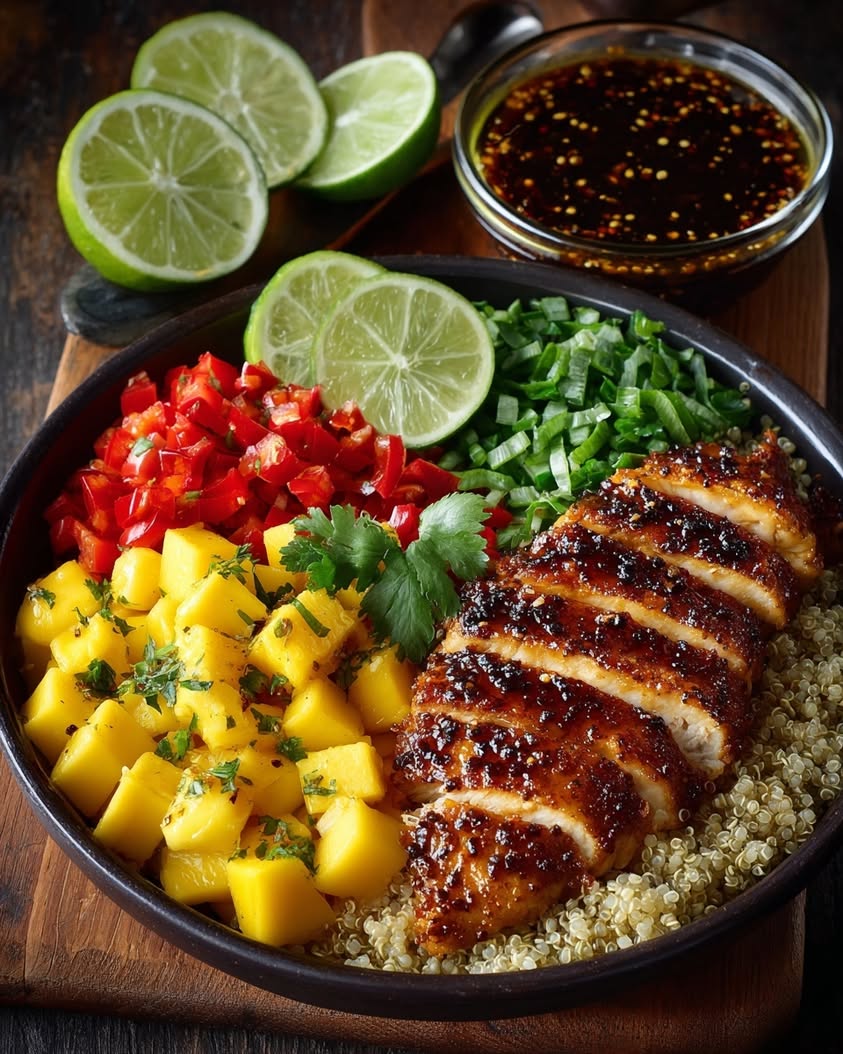
Honey Lime Chicken & Mango Quinoa Stack: A Tropical Dinner Masterpiece
Imagine a dinner that captures the essence of a tropical vacation on a single plate. This Honey Lime Chicken & Mango Quinoa Stack delivers exactly that experience, combining savory, sweet, and tangy flavors into a stunning, layered presentation. The recipe features tender chicken glazed in a sticky honey lime sauce, piled high on a fluffy bed of quinoa studded with juicy mango chunks. Ultimately, it is a complete meal that feels both indulgent and nourishing.
Furthermore, this dish is a feast for the senses. You get the aromatic sizzle of chicken cooking in honey and lime, the vibrant colors of fresh herbs and mango, and the satisfying contrast of textures in every bite. It is perfect for a weeknight when you want something special without hours of work, or for impressing guests at a casual summer gathering. The honey lime chicken mango quinoa recipe is your ticket to a restaurant-quality dinner made at home.
Additionally, the stack presentation transforms simple ingredients into something extraordinary. Each component is prepared separately, then artfully layered to create a tower of flavor. Consequently, you experience the sweet mango quinoa, the savory chicken, and the creamy avocado garnish in perfect harmony. This honey lime chicken mango quinoa recipe is more than just food; it is a memorable dining event.
Quick Recipe Highlights
- Flavor Profile: This dish masterfully balances sweet and savory notes. The honey lime glaze on the chicken offers a caramelized tang, while the mango in the quinoa provides a natural, tropical sweetness. Fresh cilantro and a hint of red onion add a necessary savory and aromatic depth.
- Texture: Enjoy a delightful contrast in every mouthful. The chicken is juicy and slightly charred from cooking, the quinoa is light and fluffy, and the diced mango and avocado add creamy, soft bites. The overall experience is satisfying without being heavy.
- Aroma: As the chicken cooks, the kitchen fills with the irresistible scent of caramelizing honey and zesty lime. Toasted quinoa adds a nutty base note, while the fresh cilantro and mango contribute bright, summery top notes that make the dish smell as good as it tastes.
- Visual Appeal: The stack is a colorful masterpiece. You see golden-brown chicken, bright yellow quinoa with specks of red onion and black beans, vibrant orange mango, and green avocado and cilantro. It is a visually stunning plate that promises a delicious meal.
- Skill Level Needed: This is an accessible recipe for most home cooks. Basic skills like cooking quinoa, pan-searing chicken, and making a simple glaze are all you need. The layering technique is straightforward, making it easy to achieve an impressive presentation.
- Special Equipment: You only need standard kitchen tools: a medium saucepan for the quinoa, a large skillet for the chicken, and a small bowl for whisking the glaze. A sharp knife for dicing and a measuring cup set will also be helpful for precision.
Recipe Overview
- Difficulty Level: We rate this honey lime chicken mango quinoa recipe as “Easy.” The steps are sequential and simple: cook the quinoa, prepare the chicken, and assemble. There are no complex techniques like braising or baking required. Even novice cooks can follow the clear instructions and achieve a fantastic result on their first try.
- Category: This dish fits perfectly into the “Healthy Main Course” and “High-Protein Dinner” categories. It is a balanced one-plate meal featuring lean protein, whole grains, and fresh fruit. You can also serve it as part of a larger spread for a summer barbecue or potluck.
- Cuisine: The honey lime chicken mango quinoa recipe draws inspiration from tropical and fusion cuisines. It combines the sweet-and-sour profile common in Caribbean and Hawaiian cooking with the wholesome, grain-based bowls popular in modern American healthy eating trends. The result is a globally-inspired, contemporary dish.
- Cost: This recipe is very cost-effective, especially when mangoes are in season. Chicken breasts and quinoa are affordable protein and grain staples. The fresh herbs, lime, and honey are pantry items you might already have. Overall, you can make this impressive meal for a fraction of the cost of dining out.
- Season: This stack sings during the late spring and summer months. That is when mangoes are at their peak sweetness and affordability. The light, fresh flavors are ideal for warm weather. However, you can make it year-round using frozen mango chunks for a taste of sunshine in winter.
- Occasion: It is versatile for many occasions. Prepare it for a quick and healthy family dinner on a busy Tuesday. Alternatively, plate it elegantly for a date night at home or a dinner party with friends. The recipe scales easily, making it a reliable choice for both intimate and group meals.
Why You’ll Love This Recipe
First, the taste and texture are absolutely unbeatable. Each bite of this honey lime chicken mango quinoa recipe delivers a symphony of flavors. You get the savory, umami-rich chicken coated in a sticky-sweet glaze. Then, the fluffy quinoa provides a mild, nutty base that soaks up all the delicious juices. The bursts of fresh mango add a juicy sweetness that cuts through the richness, while creamy avocado adds a luxurious, cool finish. It is a perfectly balanced dish that satisfies every craving.
Second, the convenience factor is a major win. You can have this beautiful meal on the table in about 40 minutes. The steps are simple and mostly happen simultaneously. While the quinoa simmers, you cook the chicken. The assembly takes just minutes. Consequently, you spend less time cooking and more time enjoying a fantastic dinner with your family. It is a practical solution for busy evenings when takeout is tempting.
Third, the nutritional profile is outstanding. This honey lime chicken mango quinoa recipe is packed with high-quality protein from the chicken and quinoa, which helps keep you full and supports muscle maintenance. Quinoa is a complete protein and provides fiber for digestive health. Mango and avocado deliver essential vitamins, antioxidants, and healthy fats. It is a meal that fuels your body beautifully without any guilt.
Fourth, this dish has incredible social and entertaining value. The “stack” presentation is a guaranteed conversation starter. It looks like you ordered from a gourmet restaurant. Guests will be impressed by your culinary skills, and you will love how simple it was to put together. Serving individual stacks makes everyone feel special, and the vibrant colors make for stunning photos if you are sharing your meal online.
Finally, it is remarkably cost-effective and accessible. You do not need any rare or expensive ingredients. Chicken, quinoa, mango, lime, and honey are all readily available at any grocery store. You can often find them on sale. Compared to ordering similar meals from a delivery service or eating at a restaurant, making this honey lime chicken mango quinoa stack at home saves you significant money while allowing you to control the quality of every ingredient.
Historical Background and Cultural Significance
The origins of this dish are rooted in modern fusion cuisine rather than a single ancient tradition. Chefs began experimenting with layering techniques and global flavor combinations in the late 20th and early 21st centuries. The honey lime chicken mango quinoa recipe specifically draws from several culinary heritages. The use of honey and citrus as a glaze for poultry has roots in various Mediterranean and Asian cooking. Meanwhile, incorporating fruit into savory grain salads is a hallmark of tropical and Caribbean food cultures.
Culturally, the dish represents a shift towards healthier, visually appealing, and globally-inspired home cooking. Quinoa’s rise to superfood fame in the 2000s brought ancient Andean grains into mainstream American kitchens. Combining it with familiar proteins like chicken and sweet fruits like mango made it more approachable. This stack symbolizes how home cooks today freely mix ingredients and techniques from around the world to create personalized, nutritious meals.
The recipe has evolved significantly since the concept first appeared. Initially, similar dishes might have been served as a deconstructed salad or a bowl. The “stack” or “tower” presentation gained popularity through cooking shows and food blogs, emphasizing aesthetics. Modern versions, like this honey lime chicken mango quinoa recipe, focus on balance: ensuring each layer contributes to the overall flavor and texture rather than just the height. The addition of ingredients like black beans or avocado for creaminess are common contemporary adaptations.
Regional variations of this concept are endless. In the American Southwest, you might find a stack with quinoa, chipotle-lime chicken, corn, and black beans. A Hawaiian-inspired version could use teriyaki-glazed chicken and pineapple instead of mango. Some vegetarian adaptations replace the chicken with grilled tofu or tempeh marinated in the same honey lime sauce. This flexibility is a key part of the dish’s appeal, allowing cooks to adapt the honey lime chicken mango quinoa stack to local ingredients and personal tastes.
Ingredient Deep Dive
Chicken Breast: As the primary protein, chicken breast is a lean and versatile canvas. For centuries, humans have domesticated chickens for their meat, making it a global staple. Nutritionally, it is an excellent source of lean protein and essential B vitamins like niacin and B6, which support energy metabolism. When selecting, look for plump, pink breasts with minimal liquid in the package. For storage, keep it refrigerated and use within 1-2 days of purchase, or freeze for longer storage. If you need a substitute, boneless chicken thighs offer more flavor and juiciness, or you can use firm tofu for a vegetarian option.
Quinoa: This ancient grain from the Andes was sacred to the Inca civilization, who called it the “mother of all grains.” It is a nutritional powerhouse, being a complete protein containing all nine essential amino acids, which is rare for plant-based foods. It is also high in fiber, iron, and magnesium. Choose pre-rinsed quinoa to avoid a bitter saponin coating, or rinse it thoroughly yourself. Store uncooked quinoa in an airtight container in a cool, dark place. For a substitution, you can use an equal amount of cooked couscous, rice, or farro, though the cooking times will vary.
Mango: Known as the “king of fruits” in South Asia, mangoes have been cultivated for over 4,000 years. They are rich in vitamins C and A, which boost immunity and promote skin and eye health. They also contain digestive enzymes and antioxidants. Select mangoes that yield slightly to gentle pressure and have a fruity aroma at the stem. Avoid those with lots of black spots. Store unripe mangoes at room temperature and move ripe ones to the refrigerator. In a pinch, you can substitute with ripe peaches, nectarines, or even pineapple for a different tropical twist.
Honey: Honey is one of humanity’s oldest sweeteners, with evidence of beekeeping dating back to ancient Egypt. Beyond its sweet flavor, it contains trace enzymes, minerals, and antioxidants. The antimicrobial properties of raw honey are also well-documented. For this recipe, a mild, liquid honey like clover or orange blossom works best. Avoid strongly flavored varieties like buckwheat honey, as they can overpower the lime. Store honey at room temperature in a sealed container. If you need a vegan substitute, pure maple syrup or agave nectar will work, though the flavor profile will change slightly.
Lime: Limes originated in Southeast Asia and traveled the world via trade routes. They are packed with vitamin C and flavonoids that have antioxidant and anti-inflammatory benefits. The juice and zest provide the essential acidic component that balances the honey’s sweetness and brightens the entire dish. Choose limes that feel heavy for their size and have a bright, smooth skin. You can store them at room temperature for a few days or in the refrigerator for up to two weeks. In an emergency, you can substitute lemon juice, though the flavor will be less complex and more straightforwardly tart.
Common Mistakes to Avoid
- Overcooking the Chicken: Chicken breast cooks quickly and can become dry and tough if left on the heat too long. Use a meat thermometer to check for an internal temperature of 165°F. Remember, the chicken will continue to cook slightly from residual heat after you remove it from the pan.
- Not Toasting the Quinoa: Skipping the step of toasting the dry quinoa in the saucepan before adding water misses a key flavor opportunity. Toasting for a minute or two enhances its natural nutty flavor, giving the entire dish a deeper, more complex base note.
- Using Unripe Mango: An unripe mango will be hard, tart, and stringy, ruining the sweet, creamy contrast in the stack. Always ensure your mango is ripe and sweet. It should yield slightly to gentle pressure and smell fragrant at the stem end.
- Neglecting to Rest the Chicken: Slicing the chicken immediately after cooking causes all the precious juices to run out onto the cutting board. Let the chicken rest for 5-10 minutes after cooking. This allows the juices to redistribute throughout the meat, ensuring every bite is moist.
- Making the Glaze Too Early: The honey lime glaze can burn if added to a very hot pan at the beginning. Cook the chicken most of the way through first, then add the glaze towards the end. This allows it to caramelize and cling to the chicken without scorching.
- Forgetting to Fluff the Quinoa: After cooking, quinoa can become dense and clumpy if left to sit in the pot. Always fluff it gently with a fork as soon as it’s done. This separates the grains and creates the light, fluffy texture essential for a good stack.
- Over-mixing the Quinoa Salad: When combining the cooked quinoa with mango, beans, and herbs, stir gently. Over-mixing can crush the mango and beans, making the mixture mushy and unattractive. A gentle fold preserves the distinct textures of each ingredient.
- Assembling with Hot Ingredients: Building the stack with piping hot quinoa and chicken will cause the avocado garnish to wilt and become unpleasantly warm. Let both components cool slightly to warm or room temperature before layering for the best textural experience.
Essential Techniques
Pan-Searing Chicken: This technique creates a flavorful, golden-brown crust on the chicken while keeping the interior juicy. Pat the chicken breasts completely dry with paper towels before seasoning. This is crucial because moisture steams the chicken instead of letting it sear. Heat your skillet with oil until it shimmers before adding the chicken. Do not move the chicken for the first few minutes to allow a proper crust to form. A successful sear is evident when the chicken releases easily from the pan without sticking.
Reducing a Glaze: Reducing the honey lime mixture concentrates its flavors and thickens it into a sticky sauce that clings to the chicken. After adding the mixture to the pan, maintain a simmer, not a rolling boil. Stir frequently to prevent burning, especially as it thickens. The glaze is ready when it coats the back of a spoon and leaves a clear trail when you run your finger through it. This process transforms simple ingredients into a rich, complex sauce.
Cooking Perfect Quinoa: The key to fluffy, non-mushy quinoa is the correct water-to-grain ratio and proper resting. The standard ratio is 2 cups liquid to 1 cup quinoa. After bringing it to a boil, reduce to the lowest possible simmer and cover tightly. Do not peek, as this releases steam. Once the water is absorbed, remove it from the heat and let it sit, covered, for 10 minutes. Finally, fluff with a fork to separate the grains. This technique ensures each grain is distinct and tender.
Pro Tips for Perfect Honey Lime Chicken & Mango Quinoa Stack
First, marinate the chicken breasts in a little lime juice and salt for 15-30 minutes before cooking. This simple step adds flavor deep into the meat and helps keep it tender during cooking. Second, use a ring mold or the clean lid from a wide-mouth mason jar to assemble your stacks. This tool creates a perfect, restaurant-style cylinder that holds its shape when you lift the mold away. Third, add a tablespoon of cold butter to the honey lime glaze right at the end of cooking. Swirl it in off the heat to create a richer, glossier sauce that clings beautifully to the chicken.
Fourth, if your mango is very juicy, pat the diced pieces dry with a paper towel before adding them to the quinoa. This prevents the quinoa salad from becoming soggy. Fifth, for an extra layer of flavor, toast your quinoa in a dry pan before adding water. Simply cook it over medium heat for 3-5 minutes until it becomes fragrant and makes a slight popping sound. Sixth, let all components cool to warm or room temperature before stacking. Hot ingredients will wilt your fresh garnishes and make the stack unstable. Seventh, garnish with a sprinkle of toasted sesame seeds or chopped peanuts just before serving. This adds a delightful crunch and nutty flavor that complements the sweet and tangy profile perfectly.
Variations and Adaptations
Regional Variations: Give this stack a Caribbean twist by adding a pinch of allspice and jerk seasoning to the chicken rub. For a Mexican-inspired version, mix corn, black beans, and chopped jalapeño into the quinoa, and use a cilantro-lime crema for drizzling. An Asian fusion take could involve substituting the honey with hoisin sauce in the glaze and adding edamame and shredded carrot to the quinoa base.
Seasonal Adaptations: When mangoes are out of season, use frozen mango chunks (thawed and patted dry) or substitute with diced peaches or nectarines in the summer, or roasted sweet potato cubes in the fall and winter. For a spring version, try adding fresh peas and asparagus tips to the quinoa for a bright, green presentation.
Dietary Modifications: For a gluten-free meal, ensure all your sauces and condiments are certified gluten-free, which this recipe naturally leans toward. To make it dairy-free, simply omit the optional butter from the glaze. A vegan adaptation is easy: use extra-firm tofu or tempeh in place of chicken and maple syrup instead of honey.
Flavor Variations: Experiment with different citrus juices. Orange juice will make a sweeter, milder glaze, while grapefruit juice adds a pleasant bitterness. You can also infuse the quinoa cooking water with a bay leaf or a cinnamon stick for a subtle aromatic background that elevates the entire dish.
Texture Modifications: If you prefer more crunch, add diced bell peppers or jicama to the quinoa salad. For a creamier element without avocado, stir a couple of tablespoons of Greek yogurt or sour cream into the cooked quinoa before assembling. This creates a richer, more cohesive base for the stack.
Presentation Alternatives: If stacking feels fussy, simply serve all the components deconstructed in a beautiful bowl. Layer the quinoa on the bottom, top with sliced chicken, and arrange the mango and avocado artistically around the edges. You can also serve the honey lime chicken sliced over a bed of the mango quinoa salad for a more casual, but equally delicious, presentation.
Serving and Presentation Guide
Plating is key for this dish. Use a wide, shallow bowl or a flat plate to give the stack room to shine. If using a ring mold, pack the quinoa layer first, pressing down gently. Then add the sliced chicken, fanning it out slightly. Carefully lift the mold straight up. For a mold-free method, use a measuring cup to scoop and pack the quinoa, then invert it onto the plate and top with chicken. The goal is a neat, vertical presentation.
Garnishing adds the final touch of freshness and color. Always add creamy elements like avocado or a dollop of yogurt just before serving to prevent browning and wilting. A generous sprinkle of fresh, chopped cilantro or thinly sliced green onion provides a vibrant green contrast. A final drizzle of the reduced honey lime glaze from the pan around the base of the stack adds gloss and reinforces the flavor.
Traditional accompaniments are light and fresh. A simple side salad of mixed greens with a lime vinaigrette complements the stack without competing. For a more substantial meal, grilled vegetables like zucchini or asparagus work beautifully. The stack itself is a complete meal, so sides should be simple and refreshing.
Modern serving suggestions include setting up a “stack bar” for guests. Prepare all the components—quinoa, chicken, mango, beans, sauces, and garnishes—in separate bowls. Let everyone build their own stack or bowl to their liking. This is a fun, interactive way to serve the meal for a casual gathering.
Temperature considerations are important for texture. The ideal serving temperature is warm, not hot. This allows the fresh flavors of the mango and herbs to pop and prevents the avocado from becoming mushy. If you’ve made components ahead, briefly reheat the quinoa and chicken to just warm through before assembling.
Portion control is built into the recipe. One chicken breast and a cup of quinoa salad per person is a satisfying and balanced meal. The visual height of the stack makes the portion feel generous and special, even though the ingredients are wholesome and nutrient-dense.
Wine and Beverage Pairing
Wine pairings should complement the sweet, tangy, and savory notes. A slightly off-dry Riesling is a classic choice. Its natural sweetness mirrors the honey and mango, while its bright acidity cuts through the richness and matches the lime. A New Zealand Sauvignon Blanc, with its zesty citrus and tropical fruit notes, is another excellent match. For red wine lovers, a light, fruity Pinot Noir with low tannins can work well, especially if the chicken has a nice sear.
Non-alcoholic alternatives are just as important. Sparkling water with a squeeze of fresh lime and a few muddled mint leaves is incredibly refreshing. A tropical iced tea, brewed with mango or passionfruit tea bags and lightly sweetened, echoes the dish’s flavors. For a creamy option, a virgin mango lassi (a blended drink of mango, yogurt, and a touch of cardamom) pairs wonderfully and cools the palate.
While not a classic coffee dish, if serving this for a brunch or lunch, a light roast coffee with citrusy notes could be a pleasant, if unconventional, pairing. Iced coffee would also be refreshing. Herbal teas like lemongrass or ginger tea can complement the Asian-inspired elements of the glaze and provide a soothing, aromatic finish to the meal.
Always serve white wines and sparkling beverages well-chilled, between 45-50°F. This crisp temperature enhances their refreshing quality against the warm, savory stack. For non-alcoholic sparkling drinks, serve them over ice with a garnish that matches the plate, like a lime wedge or a small sprig of cilantro.
Storage and Shelf Life
Store all components separately for the best results. Place cooled quinoa salad in an airtight container in the refrigerator for up to 4 days. Store sliced, cooked chicken in its own container with any remaining glaze for up to 3 days. Keep diced avocado and fresh herbs separate and add them only when ready to serve. This prevents sogginess and maintains vibrant colors and textures.
The refrigerator is the best short-term storage solution. Keep everything at or below 40°F. Glass containers with tight-fitting lids are ideal because they do not absorb odors and allow you to see the contents. If you must store an assembled stack, consume it within a day, noting that the avocado will brown and the quinoa may absorb moisture from the other layers.
Signs of spoilage include a sour or off smell, especially from the quinoa or chicken. The chicken may develop a slimy texture. Mold growth, though rare in a short time, is an absolute discard signal. If the mango in the quinoa becomes excessively mushy or releases a lot of liquid, the overall quality has degraded.
Reheating requires care. Gently reheat the quinoa in a microwave with a damp paper towel over it, or in a saucepan with a splash of water to restore moisture. Reheat the chicken in a skillet over low heat with a tablespoon of water or broth to prevent drying out. Never reheat the avocado or fresh herbs.
Freezing is possible for the chicken and quinoa separately, though the texture of the quinoa may become slightly softer upon thawing. Freeze them in airtight containers or freezer bags for up to 2 months. Thaw overnight in the refrigerator before reheating. Do not freeze the mango quinoa mixture with fresh mango, as it will become mushy; use frozen mango added after thawing if you plan to freeze.
Make Ahead Strategies
You can prep almost this entire honey lime chicken mango quinoa recipe in advance. Cook the quinoa up to 3 days ahead and store it chilled. Dice the mango and red onion, rinse the black beans, and chop the herbs. Store these in separate containers in the fridge. Mix them into the quinoa just a few hours before serving to maintain the best texture. You can even cook the chicken 1-2 days ahead; slice it after it rests, then store it with the glaze in the refrigerator.
When storing between steps, keep components airtight and chilled. The key is to prevent the quinoa from drying out and the chicken from absorbing other refrigerator odors. A well-organized fridge with labeled containers makes final assembly a breeze. The quality impact is minimal if you follow these steps; the flavors often meld and improve.
For assembly, have all your prepped components at room temperature or slightly warm. Reheat the quinoa and chicken gently if they were fully chilled. Use your ring mold or assembly tool to quickly build the stacks on individual plates. This final step should take no more than 5-10 minutes, turning prepped ingredients into a stunning dinner instantly.
Reheating guidelines are simple. Warm the quinoa in the microwave with a sprinkle of water, covered. Warm the chicken in a skillet with a tiny bit of broth or water to steam it gently and re-melt the glaze. Avoid the microwave for the chicken if possible, as it can make it rubbery.
Always add the fresh elements right before serving. Dice the avocado at the last minute to prevent browning. Give the cilantro a final chop and sprinkle it on top. A final squeeze of fresh lime juice over the assembled stack just before it hits the table will wake up all the pre-made flavors and make the dish taste freshly prepared.
Scaling Instructions
Halving the recipe for two people is straightforward. Use one chicken breast (butterflied or pounded to even thickness for quick cooking) and 1/2 cup dry quinoa. Halve all other ingredients accordingly. Use a medium skillet instead of a large one for the chicken. The cooking times will remain roughly the same, but keep a closer eye on the smaller quantity of glaze to ensure it doesn’t burn.
Doubling or tripling for a crowd is easy, but requires strategy. Cook the quinoa in batches or use a very large pot to ensure even cooking. Cook the chicken in batches in your skillet; do not overcrowd the pan, or the chicken will steam instead of sear. Keep cooked chicken warm in a low oven (200°F) on a sheet pan while you finish subsequent batches. Multiply the glaze ingredients in a separate bowl, then add it to each batch of chicken as it cooks.
Equipment adjustments are necessary when scaling up. For a double batch, your standard skillet may still work if you cook in two batches. For tripling or more, consider using a large griddle or two skillets simultaneously. You will also need a larger pot for quinoa and more prep bowls for the increased volume of diced ingredients.
Timing modifications are minimal when scaling. Cooking the quinoa will take the same amount of time regardless of batch size, as long as the pot size is appropriate. Cooking the chicken will take longer overall because you must work in batches, but the active cook time per batch remains 6-8 minutes. Factor in this extra time when planning your meal.
Storage considerations for large batches are important. If you have leftovers from a doubled recipe, store components separately as advised. Large batches are perfect for meal prep. Portion the quinoa salad and sliced chicken into individual containers for easy grab-and-go lunches throughout the week.
Nutritional Deep Dive
This honey lime chicken mango quinoa recipe offers a superb macro breakdown. One serving provides approximately 35-40 grams of high-quality protein from the chicken and quinoa, supporting muscle repair and satiety. The complex carbohydrates from the quinoa and mango offer sustained energy release, totaling around 45-50 grams per serving. Healthy fats, primarily from the avocado and cooking oil, contribute about 15-20 grams, including heart-healthy monounsaturated fats.
The micronutrient profile is impressive. Quinoa is rich in magnesium, iron, and B vitamins. Mango delivers a full day’s worth of vitamin C and a significant amount of vitamin A. Chicken provides B6 and niacin. Lime adds more vitamin C and flavonoids. Together, they create a meal dense in vitamins, minerals, and antioxidants that support immune function, energy production, and overall cellular health.
Specific health benefits include improved digestion from the fiber in quinoa and mango. The lean protein aids in weight management by promoting fullness. The antioxidants in mango, lime, and herbs combat oxidative stress. The balanced nature of the meal helps maintain stable blood sugar levels due to the combination of protein, fiber, and healthy fats slowing carbohydrate absorption.
For dietary considerations, this dish is naturally gluten-free. It can be adapted to be dairy-free by omitting optional butter. It is high in protein and fiber, making it suitable for many active lifestyles. Those monitoring sodium can reduce or omit the salt in the recipe, as the other flavors are robust.
A portion analysis shows this is a substantial, meal-sized portion. The stack is designed to be satisfying on its own without the need for heavy sides. The visual height makes the portion appear generous, which can aid in psychological satisfaction and prevent overeating by making you feel you’ve had a complete and decadent meal.
For weight management, this recipe is an excellent choice. The high protein and fiber content promote satiety, helping you feel full longer. The use of natural sugars from honey and mango satisfies sweet cravings in a nutritious way. To reduce calories slightly, you can use a light spray of oil for the chicken and reduce the honey in the glaze by a tablespoon, though the flavor will be less intense.
Dietary Adaptations
Gluten-Free: This honey lime chicken mango quinoa recipe is naturally gluten-free as written. Always double-check that your quinoa is processed in a gluten-free facility and that any pre-made ingredients like chicken broth (if used) are certified gluten-free. This adaptation requires no ingredient swaps, making it one of the easiest versions.
Dairy-Free: To make this recipe dairy-free, simply omit the optional tablespoon of butter from the glaze. The glaze will still be delicious and sticky without it. Ensure any store-bought broth used is dairy-free. The rest of the recipe contains no dairy, making this a simple and effective adaptation.
Vegan: Replace the chicken with extra-firm tofu or tempeh. Press the tofu to remove water, then cube or slice it. Use the same cooking method. Substitute the honey with an equal amount of pure maple syrup or agave nectar. Use vegetable broth for cooking the quinoa. The result is a plant-powered stack with similar sweet, tangy, and savory flavors.
Low-Carb/Keto: For a keto version, replace the quinoa with cauliflower rice. Sauté riced cauliflower in a pan until tender. Omit the black beans and mango, as they are higher in carbs. Increase the avocado and add low-carb vegetables like spinach or zucchini. Use a sugar-free honey substitute or reduce the honey significantly and increase the lime.
Paleo: Omit the black beans and quinoa. Use cauliflower rice or a bed of sautéed greens as the base. Ensure your honey is raw and unprocessed. The chicken, mango, avocado, and herbs are all paleo-friendly. This adaptation focuses on whole, unprocessed ingredients from the paleo-approved food lists.
Low-FODMAP: This adaptation requires more changes. Use the green tops of spring onions only instead of red onion. Replace honey with maple syrup, as honey is high in fructose. Use canned lentils (rinsed well) in place of black beans, ensuring the serving size is within low-FODMAP limits (typically 1/4 cup). Mango is low-FODMAP in servings of about 1/2 cup, so measure carefully.
Troubleshooting Guide
Texture Issues: If your quinoa is mushy, you likely used too much water or didn’t fluff it after cooking. Next time, measure water precisely and let the quinoa rest covered off the heat before fluffing. If your chicken is dry, it was overcooked. Use a meat thermometer and remember to let it rest before slicing to retain juices. For a watery quinoa salad, ensure your mango and other fresh ingredients are patted dry before mixing.
Flavor Balance: If the dish tastes too sweet, balance it with an extra squeeze of fresh lime juice at the end. If it’s too tangy, a small drizzle of honey or olive oil over the finished stack can mellow it. If flavors seem bland, you may have underseasoned. Season the chicken generously before cooking and don’t forget to salt the quinoa water. The layers need individual seasoning to build a flavorful final product.
Temperature Problems: If components are cold when serving, briefly reheat the quinoa and chicken separately. The microwave is fine for the quinoa with a damp paper towel. Reheat chicken in a skillet with a splash of water to steam it gently. Assemble quickly with cold garnishes. The goal is a warm base with cool, fresh toppings.
Equipment Challenges: No ring mold? Use a clean, empty can with both ends removed, a sturdy glass, or a measuring cup. Pack the ingredient in, then lift the tool straight up. If your glaze is burning in the pan, the heat is too high. Reduce to medium-low when adding the honey-lime mixture and stir frequently. Use a non-stick or well-seasoned cast iron skillet for best results.
Ingredient Substitutions: No fresh mango? Frozen mango chunks, thawed and patted dry, work perfectly. No lime? Lemon juice can{“success”:true,”message”:”Recipe created successfully”,”post_id”:8711,”tasty_recipe_id”:8711,”shortcode”:” Print
Honey Lime Chicken & Mango Quinoa Stack
Description
A vibrant, layered dish featuring tender honey-lime chicken, fluffy quinoa, and fresh mango, perfect for a healthy and colorful meal.
Ingredients
For the Crust:
- 1 lb boneless, skinless chicken breasts, cubed
- 1 cup quinoa, rinsed
- 2 cups water or chicken broth
- 1 ripe mango, diced
- 1/4 cup honey
- Juice and zest of 2 limes
- 2 cloves garlic, minced
- 1 tbsp olive oil
- Salt and black pepper to taste
- Fresh cilantro for garnish
Instructions
1. Prepare the Crust:
- In a medium pot, bring water or broth to a boil, add quinoa, reduce heat, cover, and simmer for 15 minutes or until fluffy. Let cool slightly.
- In a bowl, whisk together honey, lime juice, lime zest, garlic, salt, and pepper. Marinate chicken in half of this mixture for 10 minutes.
- Heat olive oil in a skillet over medium heat. Cook chicken for 6-8 minutes until golden and cooked through, then toss with remaining honey-lime sauce.
- To assemble, layer quinoa, chicken, and mango in stacks on plates. Garnish with fresh cilantro and serve warm.
Notes
You can customize the seasonings to taste.

I’m Billy, a classically trained culinary school graduate from The Culinary Institute of America with over 12 years in the restaurant industry and over 19 years of cooking experience.