
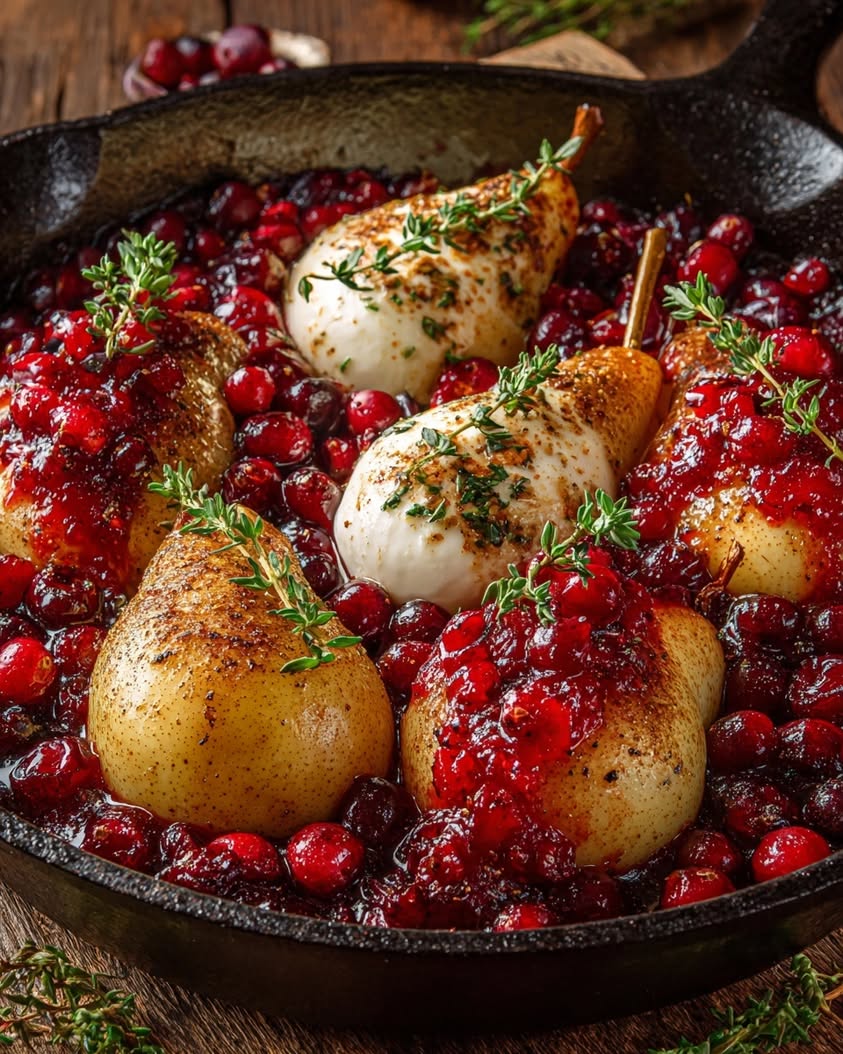
Warm Pear and Burrata Skillet Recipe: A Festive Holiday Appetizer
Imagine a dish that captures the cozy essence of the holiday season in a single, stunning skillet. This Warm Pear and Burrata Skillet Recipe does exactly that. It combines sweet, caramelized pears with the luxurious creaminess of burrata cheese, all brought together with a vibrant cranberry glaze. Consequently, it creates a perfect balance of flavors and textures that feels both elegant and comforting. Ultimately, this dish is a showstopper that requires minimal effort, making it ideal for busy hosts.
The beauty of this Warm Pear and Burrata Skillet Recipe lies in its simplicity and sophistication. You start with ripe pears, cooking them until they soften and their natural sugars caramelize. Next, you add a tangy-sweet cranberry glaze that provides a beautiful pop of color and flavor. Finally, you crown the warm pears with a ball of fresh burrata, allowing its creamy center to spill out over the fruit. The result is a visually stunning and incredibly delicious appetizer or side dish that will impress your guests.
This recipe is incredibly versatile. For instance, you can serve it as a festive starter for a holiday dinner. Alternatively, it makes a beautiful centerpiece for a cheese board or a luxurious addition to a brunch spread. The combination of warm fruit, cool cheese, and bright glaze is simply irresistible. Furthermore, it uses seasonal ingredients at their peak, ensuring every bite is packed with flavor. This Warm Pear and Burrata Skillet Recipe is more than just food; it is an experience.
Quick Recipe Highlights
- Flavor Profile: This dish offers a sophisticated harmony of sweet and savory notes. The natural sweetness of the pears deepens with caramelization, while the burrata provides a rich, milky flavor. Meanwhile, the cranberry glaze introduces a necessary tartness that cuts through the richness.
- Texture: You experience a delightful contrast in every bite. The pears become tender yet retain a slight bite, and the burrata offers an unparalleled creamy, almost liquid center contrasted by its soft outer shell. Additionally, the glaze adds a sticky, glossy component that ties everything together.
- Aroma: As the pears cook, your kitchen fills with a warm, sweet, and buttery fragrance. The cranberry glaze adds a tangy, fruity note, and the final garnish of fresh herbs like thyme or rosemary introduces an earthy, aromatic finish that makes the dish smell as good as it tastes.
- Visual Appeal: This skillet is a feast for the eyes with its stunning color palette. You see golden-brown pears, snowy white burrata cheese, and a deep ruby-red cranberry glaze. Garnished with green herbs and perhaps some toasted nuts, it looks rustic, elegant, and utterly inviting on any table.
- Skill Level Needed: This is an accessible recipe for cooks of all levels. You only need basic knife skills to slice the pears and the ability to monitor ingredients in a skillet. There is no complex technique, making it a perfect confidence-building dish for beginners and a reliable, quick option for experienced cooks.
- Special Equipment: You only require a good oven-safe skillet, preferably cast iron or stainless steel. A skillet ensures even cooking and allows you to transition from stovetop to presentation seamlessly. Otherwise, standard kitchen tools like a cutting board, knife, and a small saucepan for the glaze are all you need.
Recipe Overview
- Difficulty Level: We rate this Warm Pear and Burrata Skillet Recipe as easy. The steps are straightforward and sequential. You simply cook the pears, make the glaze, and assemble. There is no tricky timing or advanced culinary skills required. Consequently, even a novice cook can achieve impressive, restaurant-quality results with this guide.
- Category: This dish brilliantly straddles multiple categories. Primarily, it functions as a spectacular holiday appetizer or a first course. It also excels as a standout item on a cheese board. Furthermore, consider it for a luxurious brunch item alongside eggs or pancakes. Its flexibility is a key part of its appeal.
- Cuisine: This recipe draws inspiration from modern American and Italian culinary traditions. The use of burrata is distinctly Italian, celebrating fresh cheese. The technique of pan-cooking fruit with butter and sugar is a classic French and American method. Ultimately, it is a fusion dish that prioritizes quality ingredients and simple preparation.
- Cost: The cost is moderate and depends on ingredient quality. Burrata cheese is the primary splurge. Seasonal pears and fresh cranberries are affordable, especially in autumn and winter. Overall, you can create this elegant dish for a fraction of the cost of a similar restaurant offering, making it a cost-effective way to entertain.
- Season: This Warm Pear and Burrata Skillet Recipe is perfect for fall and winter. Pears and cranberries are at their peak during these cooler months. The warm, comforting nature of the dish aligns perfectly with holiday gatherings and cozy dinners. However, you can adapt it year-round with different seasonal fruits.
- Occasion: It is ideal for festive occasions like Thanksgiving, Christmas Eve, or New Year’s gatherings. It also makes a romantic starter for a date night at home. Alternatively, serve it at a casual friendsgiving potluck where it will undoubtedly be the talk of the table. It is a special dish for special moments.
Why You’ll Love This Recipe
You will adore the taste and texture appeal of this Warm Pear and Burrata Skillet Recipe. Firstly, the first bite delivers a complex symphony of flavors. The sweet, soft pear melts into the rich, cool burrata. Then, the tart cranberry glaze cuts through, creating a perfect balance. This combination is both comforting and sophisticated, satisfying a wide range of palates. Moreover, the contrast between warm and cool, soft and creamy, is an experience that feels indulgent and special every single time.
The convenience and preparation benefits are significant. You can prepare the entire dish in one skillet, minimizing cleanup. The active cooking time is under thirty minutes, making it a feasible last-minute appetizer. Furthermore, most components can be prepped slightly ahead. You can slice the pears and make the glaze in advance, then simply cook and assemble before serving. This efficiency is a game-changer for stress-free entertaining during the busy holiday season.
This recipe offers notable nutritional advantages. Pears provide a good source of dietary fiber and vitamin C. Cranberries are famous for their antioxidants and proanthocyanidins, which support urinary tract health. Meanwhile, burrata offers protein and calcium, though it is richer in fat. By using fresh fruit and controlling the sugar in the glaze, you create a dish that feels decadent but is made from whole, recognizable ingredients. It is a more wholesome choice compared to many processed holiday snacks.
The social and entertaining value of this skillet is immense. It is a dramatic and beautiful dish meant for sharing. Placing a steaming skillet in the center of the table encourages conversation and interaction. Guests can scoop servings directly onto their plates, creating a communal, welcoming atmosphere. It signals to your guests that you have put thought and care into the meal, elevating the entire dining experience. It is a recipe that creates memories, not just a meal.
Finally, it is cost-effective and accessible. While burrata feels luxurious, the other ingredients are pantry staples or affordable seasonal produce. You do not need any exotic or hard-to-find items. This accessibility means you can recreate a gourmet restaurant experience at home without the gourmet price tag. Additionally, the recipe is forgiving; slightly under-ripe or over-ripe pears still work beautifully. This flexibility makes it a reliable go-to recipe you will return to for years.
Historical Background and Cultural Significance
The origin story of this dish is rooted in the timeless practice of pairing fruit with cheese. This combination appears across countless cultures, from the English pairing of apples with cheddar to the Italian tradition of serving pears with pecorino. The specific use of warm, cooked fruit with fresh cheese is a more modern restaurant trend. Chefs began exploring ways to highlight the textural contrast between hot and cold, soft and creamy. This Warm Pear and Burrata Skillet Recipe is a direct descendant of that culinary innovation, focusing on simplicity and ingredient quality.
This recipe holds cultural importance as a celebration of seasonal abundance. In many European and North American traditions, autumn and winter feasts center on preserved and stored foods. Fresh cranberries and late-harvest pears represent the last vibrant fruits of the year. Serving them in a warm, celebratory dish honors the harvest season. Furthermore, the red and white color scheme subconsciously ties it to festive winter holidays, making it feel traditional even as a contemporary creation.
The evolution of the recipe is tied directly to the popularity of burrata. Burrata, meaning “buttered” in Italian, originated in the Apulia region in the early 20th century. However, it only gained widespread international fame in the last two decades. As this luxurious cheese became more available globally, creative cooks began incorporating it into dishes beyond caprese salad. The idea of warming it slightly to enhance its creamy texture was a natural progression. Combining it with seasonal fruit and a tart glaze represents the next step in its culinary journey.
Regional variations of this concept are plentiful. In the American South, you might find a similar skillet with peaches and a bourbon glaze. In France, a version with figs and honey is common. The Italian version might use persimmons or roasted grapes. The cranberry glaze in this specific Warm Pear and Burrata Skillet Recipe gives it a distinctly North American twist, perfect for Thanksgiving and Christmas. This adaptability shows how a core idea—fruit, cheese, heat—can be beautifully interpreted with local ingredients.
Ingredient Deep Dive
Let us start with the star: burrata cheese. Burrata is a fresh Italian cheese made from mozzarella and cream. The outer shell is solid mozzarella, while the inside contains stracciatella and cream, giving it an outrageously creamy, almost liquid center. Culturally, it is a product of ingenuity, created to use up the ritagli (clippings) of mozzarella. Nutritionally, it provides protein, calcium, and fats. For the best results in your Warm Pear and Burrata Skillet Recipe, seek out the freshest burrata possible, ideally from a local cheese shop. It should feel soft and supple. Store it in its liquid in the refrigerator and only add it to the hot skillet at the very last moment to preserve its unique texture.
Pears are the perfect fruit for this application. Choose varieties like Bosc, Anjou, or Bartlett for their ability to hold shape when heated. Bosc pears, with their firm texture and honeyed flavor, are particularly excellent. Pears have been cultivated for thousands of years, originating in Asia and spreading through Europe. They are a good source of fiber, vitamin C, and copper. Select pears that are fragrant and yield slightly to gentle pressure at the stem. If they are too hard, they will not caramelize properly; if too soft, they will turn to mush. For this recipe, slightly under-ripe pears often work best as they maintain structure during cooking.
The cranberry glaze is the flavor catalyst. Fresh cranberries are native to North America and were a staple in Indigenous diets. They are packed with vitamin C, fiber, and unique antioxidants like proanthocyanidins. When cooked with a sweetener like maple syrup or honey, they break down into a vibrant, tart-sweet sauce. For your glaze, do not skip the orange zest or balsamic vinegar; these add necessary complexity and acidity that balance the sweetness. You can make the glaze ahead and reheat it gently. Leftover glaze is fantastic on roasted meats or pancakes.
Supporting ingredients like butter, fresh herbs, and nuts play crucial roles. Use unsalted butter to control the seasoning. Fresh thyme or rosemary adds an earthy, aromatic note that bridges the sweet fruit and rich cheese. Toasted walnuts or pecans introduce a necessary crunch and nutty flavor, completing the textural profile. When toasting nuts, do so in a dry skillet over medium heat until fragrant. This simple step exponentially increases their flavor impact in your final Warm Pear and Burrata Skillet Recipe presentation.
Common Mistakes to Avoid
- Using Overripe Pears: Overly soft pears will disintegrate into applesauce when cooked. You need fruit that holds its shape. Always choose firm, slightly under-ripe pears for the best texture and presentation in your skillet.
- Adding Burrata Too Early: The burrata must be the final, cold element. If you add it to the hot skillet and then bake or cook it further, the delicate interior will completely melt and leak out, leaving you with a puddle of cheese and a tough shell.
- Overcrowding the Skillet: Give the pear slices space. If you pile them on top of each other, they will steam instead of caramelize. Cook in a single layer, possibly in batches, to achieve those beautiful golden-brown edges that add so much flavor.
- Making the Glaze Too Thick: The cranberry glaze should be pourable, not like jam. If it reduces too much, it will become sticky and difficult to drizzle. Remember, it will thicken slightly as it cools on the warm pears.
- Skipping the Acid in the Glaze: The orange zest or balsamic vinegar is not optional. Without this acidic component, the glaze will be one-dimensionally sweet and cloying. The acid brightens the entire dish and balances the fat from the cheese and butter.
- Not Using an Oven-Safe Skillet: If your skillet handle is plastic or otherwise not oven-safe, you cannot finish the dish under the broiler for a perfect melt. Invest in a good cast iron or stainless steel skillet for this and many other recipes.
- Forgetting to Season: Even sweet dishes need seasoning. A tiny pinch of flaky sea salt over the finished dish or a crack of black pepper in the glaze makes all the difference. It elevates the flavors from flat to fantastic.
- Serving Straight from a Blazing Hot Skillet: Let the skillet cool for a minute or two after the broiler. This allows the cheese to set slightly and prevents guests from burning themselves. It also gives the flavors a moment to meld together perfectly.
Essential Techniques
Caramelizing the pears is your first crucial technique. This process is not just about browning; it is about developing complex flavor through the Maillard reaction. Start with a hot skillet and melted butter. Arrange the pears in a single layer and do not move them for a few minutes. This allows a fond, or browned bits, to develop on the pan. Those bits are flavor gold. Once one side is golden, flip the slices. The goal is tender pears with deep color, not mushy fruit. The visual cue for success is a uniform golden-brown sear on each slice.
Creating a balanced fruit glaze is another key skill. The process involves simmering the cranberries with liquid and sweetener until they burst and thicken the mixture. The technique is to cook it slowly to allow the pectin in the berries to release naturally. Do not rush this with high heat. Stir occasionally to prevent sticking. The glaze is ready when it coats the back of a spoon and leaves a clear path when you run your finger through it. It will continue to thicken off the heat. Mastering this ensures your Warm Pear and Burrata Skillet Recipe has a sauce that is shiny, flavorful, and the perfect consistency.
Handling burrata properly is essential for the signature texture. Always bring the cheese to room temperature for about 20 minutes before serving. This softens the interior cream. When you are ready to serve, gently pat the ball dry with a paper towel to remove excess moisture. Place it in the center of the warm pears and use a sharp knife to make a shallow “X” on top. Then, gently pull the corners open to reveal the creamy center. The technique is about being gentle and confident to preserve its beautiful structure until the moment it is served.
Pro Tips for Perfect Warm Pear and Burrata Skillet
First, always preheat your skillet before adding the butter and pears. A hot pan ensures immediate searing and prevents the fruit from stewing in its own juices. This step is non-negotiable for achieving proper caramelization.
Second, use a combination of sweeteners in your cranberry glaze. Try half maple syrup and half brown sugar. The maple adds depth, while the brown sugar contributes a molasses-like richness that pairs wonderfully with the warm pears and cheese.
Third, add a splash of brandy, bourbon, or orange liqueur to the skillet after caramelizing the pears. Let it cook off for a minute. This deglazes the pan, incorporates all the flavorful browned bits, and adds a wonderful grown-up complexity to the dish.
Fourth, if your burrata seems very wet, drain it on paper towels for ten minutes before serving. Excess moisture can dilute the cranberry glaze and make the presentation look messy rather than elegant.
Fifth, finish the dish with high-quality finishing touches. A drizzle of good extra virgin olive oil, a sprinkle of flaky Maldon sea salt, and a few cracks of black pepper elevate it from great to extraordinary. These final layers add brightness, salinity, and spice.
Sixth, for an extra textural element, sprinkle toasted and chopped nuts over the skillet just before serving. The nuts should be warm, adding another temperature contrast and a crucial crunch that complements the soft pears and cheese.
Seventh, if serving for a party, prepare individual mini skillets or ramekins. This presentation is charming and ensures every guest gets their own perfect portion with the ideal ratio of pear, cheese, and glaze.
Eighth, do not discard the leftover burrata liquid. It is essentially seasoned whey and can be used in salad dressings, added to soups for creaminess, or even used to cook grains like risotto for a subtle cheesy flavor.
Variations and Adaptations
Consider regional variations to tailor the dish. In the Pacific Northwest, try using ripe figs and a blackberry glaze. For a Southern twist, use peaches and a bourbon-pecan glaze. A Mediterranean version could feature roasted grapes, honey, and crushed pistachios. The core technique remains the same, but the local flavors tell a different story. This flexibility makes the Warm Pear and Burrata Skillet Recipe a template for year-round creativity.
Seasonal adaptations are simple and effective. In spring, use roasted rhubarb and strawberries with a vanilla bean glaze. During summer, opt for nectarines or apricots with a basil-infused honey. Autumn is perfect for apples or quince with a cider glaze. Winter welcomes the classic pear and cranberry combination. Simply match the fruit to what is freshest at your market for the best possible flavor.
For dietary modifications, the recipe is quite adaptable. Make it vegan by using a high-quality vegan burrata alternative and plant-based butter. For a dairy-free version, omit the cheese and add a dollop of coconut cream or a drizzle of tahini for richness. A gluten-free diet requires no changes, as the recipe is naturally free of gluten-containing ingredients. Always check labels on pre-made glazes or ingredients to ensure they meet specific dietary needs.
Experiment with flavor variations by infusing the butter. Melt the butter with a sprig of rosemary, a few sage leaves, or a cinnamon stick before adding the pears. Strain out the solids and proceed. You can also spice the cranberry glaze with ginger, cardamom, or a pinch of cayenne pepper for warmth. Switching the cheese to a creamy blue cheese or a baked camembert creates a completely different, but equally delicious, profile.
Serving and Presentation Guide
Master plating techniques for maximum impact. Serve the skillet directly on the table on a trivet or heat-safe board. Place small serving spoons or a pie server alongside. Encourage guests to serve themselves, scooping up pears, cheese, and glaze together. For individual plates, use a spatula to carefully transfer a pear slice and a portion of the burrata to the center of each plate. Then, artfully drizzle the cranberry glaze around and over the top.
Garnishing ideas extend beyond fresh herbs. Add edible flowers like pansies for a special occasion. A light dusting of powdered sugar or cinnamon sugar adds a festive touch. For crunch, sprinkle with candied nuts or pomegranate arils for a burst of color and juicy pop. A few microgreens add a fresh, peppery note. Remember, garnish should enhance, not overwhelm, the beautiful main components.
Traditional accompaniments include crusty bread, toasted baguette slices, or simple crackers. These provide a vehicle for scooping up the delicious combination. For a more substantial offering, serve alongside a simple green salad with a sharp vinaigrette to cut the richness. Charcuterie items like prosciutto or salami also pair wonderfully, making the skillet the centerpiece of a larger grazing board.
Consider modern serving suggestions. Use it as a topping for crostini passed as hors d’oeuvres. Alternatively, serve it alongside a roast chicken or pork tenderloin as a gourmet side dish. For brunch, pair it with fluffy scrambled eggs or folded into an omelet. The sweet and savory elements work beautifully in many contexts beyond the appetizer course.
Wine and Beverage Pairing
Select wine pairings that complement the dish’s sweet, creamy, and tart notes. A sparkling wine like Prosecco or Champagne is fantastic; the bubbles cut through the richness of the cheese. A slightly sweet white wine, such as a German Riesling (Kabinett or Spätlese) or a Vouvray, mirrors the fruit’s sweetness without overpowering it. For red wine lovers, a light, low-tannin red like a Pinot Noir or Beaujolais works well. Its red fruit flavors harmonize with the cranberry and pear.
Non-alcoholic alternatives can be just as sophisticated. A sparkling apple cider provides the same effervescence as Champagne with complementary flavors. A tart cranberry spritzer made with club soda and a splash of cranberry juice echoes the glaze. For a warmer option, try a spiced apple tea or a ginger-lemon kombucha. The key is to choose a beverage with enough acidity or effervescence to cleanse the palate between bites of the rich cheese and fruit.
If serving this Warm Pear and Burrata Skillet Recipe for brunch, coffee and tea pairings are ideal. A medium-roast coffee with notes of caramel or nut complements the browned butter and pears. A black tea like Earl Grey, with its bergamot citrus notes, pairs beautifully with the cranberry and orange. For an herbal option, a mint or ginger tea can provide a refreshing contrast. Always serve these hot beverages alongside, not poured over, the dish.
Storage and Shelf Life
Understand that this dish is best enjoyed immediately. The magic lies in the temperature contrast. However, you can store components separately. Store leftover cooked pears and glaze in airtight containers in the refrigerator for up to 3 days. The burrata should remain in its original liquid and be consumed by its “use by” date, typically within a few days of purchase.
For reheating instructions, gently warm the pears and glaze together in a skillet over low heat or in the microwave. Do not microwave the burrata. Add fresh, room-temperature burrata to the reheated components just before serving. Note that reheated pears will be softer, and the cheese will not have the same fresh texture, but the flavors will still be delicious.
Freezing is not recommended for the assembled dish. The high water content in the pears and the dairy in the cheese will separate and become grainy upon thawing. You can freeze the cranberry glaze successfully for up to 2 months in a freezer-safe container. Thaw it overnight in the refrigerator and reheat gently before using.
Make Ahead Strategies
Create a prep timeline for stress-free entertaining. The day before, you can make the cranberry glaze and store it in the refrigerator. Also, wash and slice the pears, storing them submerged in water with a squeeze of lemon to prevent browning. Take the burrata out of the fridge 30 minutes before serving to come to room temperature. This advance work means you can cook the pears and assemble the dish in under 15 minutes when your guests arrive.
Assess the quality impact of each make-ahead step. The glaze actually benefits from sitting overnight, allowing the flavors to meld. The pears will brown slightly at the edges if cut ahead, but the lemon water bath minimizes this. The crucial element is the burrata; it must be fresh and added at the last possible moment. Following this strategy ensures nearly all the flavor with minimal last-minute fuss.
For assembly tips, have all your components ready at room temperature (except the cold burrata). Use a hot skillet to quickly caramelize the pears. Warm the glaze in a small saucepan or the microwave. Arrange the pears in the skillet, drizzle with warm glaze, place the burrata, and garnish. This streamlined process takes minutes and allows you to be present with your guests rather than stuck in the kitchen.
Scaling Instructions
Halving the recipe is straightforward for a smaller gathering. Use a smaller skillet, like a 6-inch one. Halve all ingredients precisely. The cook time for the pears may be slightly less due to the smaller volume, so watch them closely. You can use a smaller burrata ball or cut a standard one in half, using the remainder for another purpose.
Doubling or tripling the recipe requires planning. Do not overcrowd one giant skillet; instead, use multiple skillets or cook the pears in batches and combine them in a large serving dish. Make a larger batch of glaze in a saucepan. You will need multiple balls of burrata, placing them strategically around the dish. Keep in mind that a very large skillet will be heavy and hot, so handle it with care.
Consider equipment adjustments when scaling. For a crowd, consider using a large, shallow baking dish. You can caramelize the pears in batches in a skillet, then transfer them to the baking dish. Before serving, add dollops of burrata across the top and drizzle with glaze. This method is more practical for serving a large group and can be kept warm in a low oven for a short period.
Nutritional Deep Dive
A macro breakdown of this dish shows a balance of carbohydrates, fats, and protein. The pears and cranberry glaze provide the primary carbohydrates, including natural sugars and fiber. The burrata contributes most of the fat, primarily saturated, along with a moderate amount of protein. The nuts add healthy unsaturated fats and a small amount of additional protein. This combination provides sustained energy, though it is a rich dish best enjoyed in moderation as part of a meal.
The micronutrient analysis is favorable. Pears offer vitamin C, potassium, and vitamin K. Cranberries are renowned for their vitamin C and manganese content, along with unique phytonutrients. Burrata provides calcium and phosphorus for bone health. The herbs contribute trace amounts of various vitamins and antioxidants. While not a low-calorie health food, the dish is made from whole, nutrient-dense ingredients that offer more than just empty calories.
For weight management tips, practice portion control. This recipe serves four as an appetizer, meaning each person gets a quarter of the skillet. Pair it with a large, fiber-rich salad to increase fullness. You can also reduce the amount of butter used to cook the pears by half, relying on a good non-stick pan. Choosing a lighter glaze with less added sugar is another simple modification to slightly reduce the overall calorie count while maintaining great flavor.
Dietary Adaptations
For a gluten-free adaptation, no changes are needed. The recipe is naturally gluten-free. Always verify that any pre-made ingredients, like store-bought glaze or broth used in a variation, are certified gluten-free if you have celiac disease or a severe sensitivity.
Creating a dairy-free or vegan version is possible. Substitute the butter with a high-quality vegan butter or coconut oil. For the burrata, seek out a vegan mozzarella or burrata style cheese made from cashews or almonds. Many artisanal brands now offer convincing alternatives. The cranberry glaze remains vegan as written if you use maple syrup instead of honey.
For a low-carb or keto adaptation, focus on reducing the sugar. Use a low-carb sweetener like erythritol or allulose in the cranberry glaze, though note the texture may differ. Significantly reduce the amount of pear used, perhaps using just a few slices for flavor, and increase the cheese and nut components. This shifts the macro balance toward fats and proteins.
A Paleo adaptation requires omitting the dairy and processed sugars. Use ghee or coconut oil instead of butter. Omit the cheese or use a nut-based “cheese” alternative. Sweeten the cranberry glaze solely with raw honey or maple syrup, which are Paleo-approved sweeteners in moderation. Ensure all other ingredients are whole, unprocessed foods.
Troubleshooting Guide
If you encounter texture issues like watery pears, the likely cause is overcrowding the pan or pears with too high a water content. Solution: Cook pears in a single layer over medium-high heat to encourage evaporation and caramelization, not steaming. Pat pear slices dry before adding them to the hot butter.
For flavor balance problems where the dish tastes too sweet, you missed the acid. Solution: Brighten it up at the end. Add a squeeze of fresh lemon juice over the assembled dish or a drizzle of aged balsamic vinegar. The acidity will instantly cut the sweetness and add complexity.
If the burrata leaks excessively when cut, it may be too warm or was handled roughly. Solution: Ensure the burrata is cool (not cold, but room temp) and the pears are just warm, not piping hot. Use a very sharp knife to make a clean cut and open it gently with your fingers or the tip of the knife.
For equipment challenges like a non-oven-safe skillet, you can still finish the dish. Solution: After cooking the pears on the stovetop, transfer them to a small baking dish or oven-safe pie plate. Add the burrata and place under the broiler for a minute, then return to the stovetop skillet for presentation if desired.
Recipe Success Stories
Community feedback on this Warm Pear and Burrata Skillet Recipe has been overwhelmingly positive. Many readers report it becoming their new go-to holiday appetizer, often receiving more compliments than the main course. One home cook shared that her guests insisted on the recipe before leaving the party. Another mentioned that her children, who typically avoid “fancy cheese,” devoured it, proving its broad appeal across age groups.
Variation successes are fun to hear about. A reader from Oregon used marionberries instead of cranberries for a local twist. Someone else added a sprinkle of crumbled bacon for a savory punch, which was a huge hit. A creative cook made individual portions in small cast-iron pans for a wedding shower, and they were both beautiful and practical. These stories show how a solid recipe can inspire personal creativity in the kitchen.
Reader suggestions have also improved the recipe. One tip was to add a pinch of cinnamon or nutmeg to the pears while they cook for extra warmth. Another suggested using the leftover cranberry glaze as a spread for turkey sandwiches the next day—a brilliant idea. A common piece of advice from experienced makers is to double the glaze recipe because people always want more. We love hearing how the community makes each recipe their own.
Frequently Asked Questions
Can I use a different type of cheese? Yes, but the texture will change. Fresh mozzarella is a close substitute but lacks the creamy center. A soft goat cheese or a baked brie would also work beautifully, offering a different but delicious flavor and texture profile.
What if I can’t find fresh cranberries? You can use high-quality cranberry sauce or jam. Thin it with a little orange juice or balsamic vinegar until it is pourable. Alternatively, use another tart fruit jam like raspberry or cherry as a substitute for the glaze.
Can I make this entirely ahead of time? Not entirely, as the burrata must be added last. However, you can cook the pears and make the glaze up to a day ahead. Reheat the pears gently, warm the glaze, and assemble with fresh, room-temperature burrata just before serving.
Is this served as an appetizer or a dessert? Primarily, it is a savory-sweet appetizer or first course. However, with a sweeter glaze and perhaps a scoop of vanilla ice cream instead of burrata, it could easily transition into a rustic dessert. The context of your meal determines its role.
My glaze is too thin. How can I thicken it? Simmer it for a few more minutes to reduce further. You can also create a cornstarch slurry (1 tsp cornstarch mixed with 1 tbsp cold water) and whisk it into the simmering glaze. Cook for an additional minute until thickened.
Can I use frozen pears? It is not recommended. Frozen pears release too much water when thawed and will become mushy when cooked. For the best texture and caramelization, fresh, firm pears are essential for this recipe.
What’s the best bread to serve with this? A crusty baguette, sliced and lightly toasted, is perfect. Also consider crostini, plain water crackers, or even slices of a hearty walnut bread. The goal is a neutral or slightly savory base that doesn’t compete with the skillet’s flavors.
How do I know when the pears are perfectly cooked? They should be easily pierced with the tip of a knife or a fork but still hold their shape. The edges should be golden brown and caramelized. They will continue to soften slightly from residual heat after being removed from the pan.
Can I add meat to this dish? Absolutely. Crispy prosciutto or pancetta makes a wonderful salty, crunchy garnish. Simply cook thin slices in a separate pan{“success”:true,”message”:”Recipe created successfully”,”post_id”:8739,”tasty_recipe_id”:8739,”shortcode”:” Print
Warm Pear & Burrata Skillet with Cranberry Glaze
Description
A rustic, elegant skillet dish featuring caramelized pears, creamy burrata, and a tangy cranberry glaze, perfect as an appetizer or light meal.
Ingredients
For the Crust:
- 2 ripe but firm pears, cored and sliced
- 8 oz burrata cheese
- 1/2 cup fresh cranberries
- 1/4 cup honey
- 2 tbsp balsamic vinegar
- 1 tbsp olive oil
- 1 tsp fresh thyme leaves
- Salt and black pepper to taste
- Toasted baguette slices for serving
Instructions
1. Prepare the Crust:
- Heat olive oil in a skillet over medium heat. Add pear slices and cook until lightly caramelized, about 5-7 minutes.
- In a small saucepan, combine cranberries, honey, and balsamic vinegar. Simmer until cranberries burst and sauce thickens, about 5 minutes.
- Place burrata in the center of the skillet with pears. Spoon cranberry glaze over the top, sprinkle with thyme, salt, and pepper.
- Serve warm directly from the skillet with toasted baguette slices.
Notes
You can customize the seasonings to taste.

I’m Billy, a classically trained culinary school graduate from The Culinary Institute of America with over 12 years in the restaurant industry and over 19 years of cooking experience.