
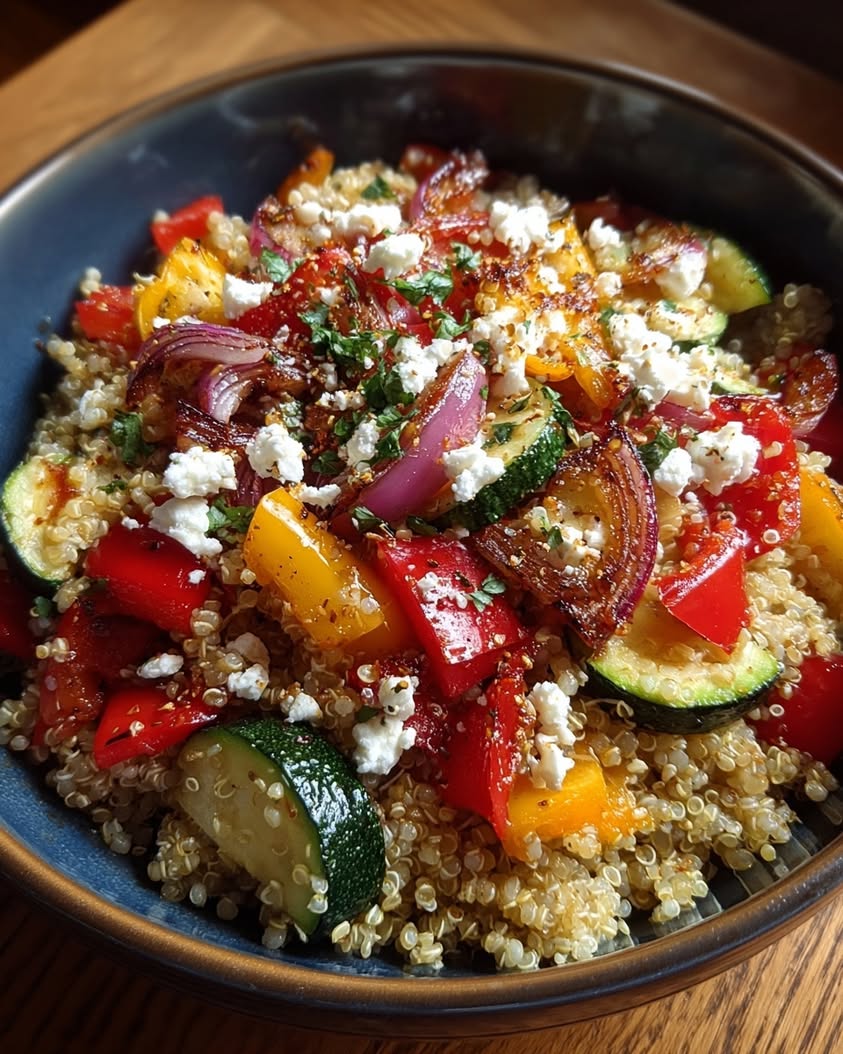
Warm Quinoa Salad with Goat Cheese and Roasted Veggies: A Vibrant, Nutritious Power Bowl
Imagine a dish that perfectly balances hearty comfort with bright, fresh flavors. This Warm Quinoa Salad with Goat Cheese and Roasted Veggies is exactly that. It is a versatile, satisfying meal that feels both nourishing and indulgent. Moreover, it transforms simple, wholesome ingredients into a colorful masterpiece for your table. Consequently, it is a fantastic choice for busy weeknights, yet elegant enough for weekend entertaining.
The magic of this warm quinoa salad lies in its beautiful contrasts. Sweet, caramelized roasted vegetables nestle against fluffy, nutty quinoa. Then, creamy goat cheese adds a tangy richness that melts slightly into the warmth. Finally, a simple lemon vinaigrette ties everything together with a zesty, herbal lift. Ultimately, this recipe delivers a complete, protein-packed meal in one vibrant bowl.
Furthermore, this dish is a celebration of texture and color. You get the tender bite of bell peppers, the earthy softness of sweet potato, and the slight crunch of red onion. Every forkful is a delightful experience. This Warm Quinoa Salad with Roasted Vegetables is not just food; it is a feel-good experience for your body and your taste buds.
Quick Recipe Highlights
- Flavor Profile: This salad offers a symphony of sweet, savory, and tangy notes. The natural sweetness of the roasted vegetables contrasts beautifully with the tangy goat cheese and the bright, acidic lemon dressing. Herbs like thyme add an earthy, aromatic depth that completes the flavor journey.
- Texture: Expect a wonderful play of textures in every bite. The quinoa provides a light, fluffy base, while the roasted veggies are tender with caramelized edges. The creamy goat cheese adds a soft, luxurious element, and toasted nuts or seeds would offer a welcome crunch.
- Aroma: As the vegetables roast, your kitchen will fill with the sweet, comforting scent of caramelizing onions and peppers. The fragrance of fresh thyme and the nutty aroma of cooking quinoa blend together, creating an irresistible olfactory preview of the meal to come.
- Visual Appeal: This dish is a feast for the eyes with its rainbow of colors. Deep orange sweet potatoes, vibrant red bell peppers, and green herbs create a stunning palette against the pale quinoa. The white crumbles of goat cheese provide a beautiful finishing touch.
- Skill Level Needed: This is a beginner-friendly recipe. The techniques involved—chopping vegetables, roasting a tray, and cooking quinoa—are fundamental. If you can use a knife and an oven, you can absolutely master this warm quinoa salad.
- Special Equipment: You need only basic kitchen tools: a good baking sheet, a medium saucepan with a lid, and a small bowl for whisking the dressing. Parchment paper is helpful for easy cleanup but not mandatory.
Recipe Overview
- Difficulty Level: We rate this Warm Quinoa Salad with Roasted Vegetables as “Easy.” The steps are straightforward and mostly hands-off. While there is some chopping involved, the oven and stove do most of the work. This accessibility makes it a perfect recipe for cooks of all levels to build confidence.
- Category: This dish brilliantly straddles multiple categories. It is a hearty salad, a wholesome grain bowl, and a complete vegetarian main course. Additionally, it works wonderfully as a substantial side dish for grilled proteins like chicken or fish.
- Cuisine: This recipe draws inspiration from modern, health-conscious American and Mediterranean cuisines. The use of quinoa, roasted vegetables, and a lemon-herb vinaigrette reflects a contemporary approach to eating that prioritizes whole foods and vibrant flavors.
- Cost: This is a very budget-friendly meal. Quinoa and root vegetables like sweet potato are inexpensive staples. Bell peppers and red onion are also affordable, especially in season. Goat cheese is the “splurge” ingredient, but a little goes a long way in flavor.
- Season: This warm quinoa salad is truly a year-round champion. In fall and winter, it provides cozy, oven-warmed comfort. During spring and summer, it can be served at room temperature for a perfect picnic or patio meal. You can also adapt the vegetables based on what is freshest each season.
- Occasion: Its versatility shines here. It is an ideal make-ahead lunch for the workweek, a simple family dinner, or a stunning potluck contribution. For entertaining, you can prepare components ahead and assemble just before serving for minimal stress.
Why You’ll Love This Recipe
First and foremost, the taste and texture are utterly captivating. This Warm Quinoa Salad with Roasted Vegetables delivers a complex flavor profile that feels gourmet. The sweet, concentrated flavor of the roasted vegetables is a game-changer. Meanwhile, the creamy, tangy goat cheese cuts through the richness perfectly. Every component has a purpose, creating a harmonious and deeply satisfying dish that is far from boring.
Next, consider the sheer convenience. This recipe is a masterclass in efficient cooking. You can chop the veggies while the oven preheats. Then, while they roast, you cook the quinoa and whisk the dressing. Essentially, you are multitasking to create a complete meal with minimal active effort. The result is a nourishing dinner that does not keep you chained to the stove for hours.
From a nutritional standpoint, this bowl is a powerhouse. Quinoa is a complete protein, providing all nine essential amino acids, which is rare for a plant-based food. The colorful vegetables are loaded with vitamins, antioxidants, and fiber. Olive oil and goat cheese contribute healthy fats. Therefore, this Warm Quinoa Salad is a balanced meal that fuels your body and supports overall wellness.
Furthermore, this dish has incredible social and entertaining value. It is visually impressive, making it perfect for sharing. It is also naturally vegetarian and can be easily adapted for gluten-free and vegan guests. Serving a beautiful, hearty salad like this shows care and thoughtfulness. It encourages communal, healthy eating and is always a conversation starter at the table.
Finally, its cost-effectiveness and accessibility are major wins. You can create a restaurant-quality meal for a fraction of the price. The ingredients are easy to find at any standard grocery store. Additionally, the recipe is forgiving; you can swap in different vegetables based on what you have on hand. This Warm Quinoa Salad with Roasted Vegetables proves that eating well does not have to be complicated or expensive.
Historical Background and Cultural Significance
The story of this dish is a modern tale of global culinary fusion. Quinoa, the star grain, has ancient origins in the Andean region of South America. For thousands of years, it was a sacred staple food for the Inca civilization, revered as the “mother of all grains.” However, the combination of quinoa with roasted Mediterranean-style vegetables and European goat cheese is a contemporary invention. This blend reflects our modern, interconnected food culture where traditional ingredients are reimagined in new, health-focused ways.
Cultural significance for this specific recipe stems from the 21st-century wellness movement. As people became more interested in functional, nutrient-dense foods, quinoa experienced a global boom. Dishes like this Warm Quinoa Salad with Roasted Vegetables symbolize a shift towards “clean eating” and mindful consumption. They represent a desire for meals that are as good for the body as they are for the palate, merging ancient wisdom with modern nutritional science.
The evolution of this recipe follows the trend of the grain bowl. Chefs and home cooks began moving away from heavy, cream-based dishes toward bowls highlighting whole grains, lean proteins, and vegetables. The “warm salad” concept itself bridges the gap between a comforting cooked meal and a light, fresh salad. This particular recipe evolved as a way to make superfoods like quinoa approachable, delicious, and suitable for everyday dining.
Regional variations are endless, which is part of the recipe’s charm. In the Southwest U.S., you might find a version with black beans, corn, and a chili-lime dressing. A Mediterranean twist could include olives, artichokes, and feta cheese. For an Asian-inspired bowl, you could use sesame oil, ginger, and edamame. The core template—quinoa + roasted veggies + protein + zesty dressing—is a global canvas. This adaptability ensures the Warm Quinoa Salad remains a perennial favorite across different kitchens and cultures.
Ingredient Deep Dive
Quinoa: This ancient pseudo-grain was domesticated in the Peruvian Andes over 5,000 years ago. Nutritionally, it is a superstar, offering complete protein, fiber, iron, and magnesium. When selecting quinoa, look for a uniform, bead-like shape without moisture. Always rinse it thoroughly under cold water in a fine-mesh strainer to remove its natural bitter coating, called saponin. For substitutions, you can use an equal amount of couscous, farro, or brown rice, though cooking times will vary.
Sweet Potato: Sweet potatoes have a rich history, originating in Central or South America and later spreading across the globe. They are packed with beta-carotene (which converts to Vitamin A), Vitamin C, and potassium. Choose firm potatoes with smooth, unblemished skin. Store them in a cool, dark, well-ventilated place—not the refrigerator. As a substitute, butternut squash or regular potatoes will roast beautifully, though the flavor profile will shift slightly.
Bell Pepper & Red Onion: Bell peppers, native to Central and South America, add crucial sweetness and color. Red onions, with their milder flavor when cooked, have been cultivated since ancient times. Both are excellent sources of Vitamin C and antioxidants. Select peppers that are firm with glossy skin, and onions that are heavy for their size with dry, papery skins. For a variation, try using shallots or yellow onions, or swap bell peppers for zucchini or eggplant.
Goat Cheese (Chèvre): Goat cheese has been produced for millennia, with evidence dating back to ancient Greece. It is often easier to digest than cow’s milk cheese due to different proteins and fats. It provides protein, calcium, and healthy fats. Look for a fresh, soft log. Store it tightly wrapped in the coldest part of your fridge. If you need a substitute, feta cheese offers a similar salty tang, while ricotta salata or even a soft vegan cheese can work for dietary needs.
Lemon Vinaigrette: The simple combination of lemon juice and olive oil is a cornerstone of Mediterranean cooking. Fresh lemon juice provides Vitamin C and bright acidity, while extra virgin olive oil offers heart-healthy monounsaturated fats. Always use freshly squeezed lemon juice for the best flavor, never bottled. For a different twist, you could use red wine vinegar or balsamic vinegar. The key is to balance the acidity with the oil and a touch of mustard for emulsion.
Common Mistakes to Avoid
- Not Rinsing the Quinoa: Skipping the rinse leaves a bitter, soapy taste from the saponin coating. Always rinse quinoa in a fine-mesh strainer under cold running water until the water runs clear. This simple step is non-negotiable for perfect flavor.
- Crowding the Baking Sheet: Piling all the vegetables onto one small pan causes them to steam instead of roast. For proper caramelization, spread them in a single layer with space between pieces. Use two sheets if necessary to avoid overcrowding.
- Underseasoning the Vegetables: Vegetables need ample seasoning before roasting. Toss them generously with salt, pepper, and oil. Remember, seasoning is absorbed during cooking, so be bold. Taste one after roasting and adjust if needed.
- Overcooking the Quinoa: Quinoa should be fluffy, not mushy. Follow the package instructions for the liquid ratio and cook just until the germ ring is visible and the liquid is absorbed. Immediately fluff it with a fork to prevent clumping.
- Adding Goat Cheese While Too Hot: If you stir the goat cheese into the piping hot quinoa and vegetables, it will melt completely and become greasy. Let the mixture cool for 5-10 minutes so the cheese softens and crumbles beautifully without disappearing.
- Using Stale Spices or Herbs: Dried thyme that has been in your cupboard for years will lack flavor. For dried herbs, ensure they are fresh and fragrant. Whenever possible, use fresh herbs like thyme or rosemary for a more vibrant, aromatic result.
- Skipping the Rest Time for the Dressing: Whisking the vinaigrette and using it immediately is fine, but letting it sit for 15 minutes allows the flavors to marry and mellow. This creates a more cohesive and balanced dressing for your warm quinoa salad.
- Neglecting to Taste Before Serving: Always do a final taste test after combining all components. You may need an extra pinch of salt, a squeeze of lemon, or a crack of black pepper. This last adjustment elevates the dish from good to exceptional.
Essential Techniques
Roasting Vegetables: Roasting is the technique that transforms humble vegetables into sweet, caramelized gems. The high, dry heat of the oven concentrates their natural sugars. For mastery, ensure your oven is fully preheated and your vegetables are cut into uniform sizes for even cooking. Toss them thoroughly in oil to promote browning. The common pitfall is under-oiling, which leads to dry, shriveled results. Success is visible when the vegetables are tender with golden-brown, slightly crispy edges.
Cooking Fluffy Quinoa: Perfect quinoa is light, separate, and not waterlogged. The key is the correct water-to-grain ratio, typically 2:1. After bringing it to a boil, reduce to the lowest simmer and cover tightly. Do not peek, as this releases steam. Cook for about 15 minutes until the water is absorbed and the germ spirals out. The pitfall is stirring during cooking, which makes it gummy. Visual success is a pot of fluffy grains where each one is distinct.
Emulsifying a Vinaigrette: An emulsified vinaigrette is a stable, creamy mixture where oil and acid are temporarily bonded. Whisk the lemon juice, mustard, and seasonings vigorously in a bowl. Then, add the olive oil in a very slow, steady stream while whisking constantly. The mustard acts as an emulsifier. The common mistake is adding the oil all at once, which will cause separation. Success is a slightly thickened, homogenous dressing that coats the back of a spoon.
Pro Tips for Perfect Warm Quinoa Salad
First, roast your vegetables on parchment paper. This prevents sticking without excess oil and makes cleanup incredibly easy. Second, add a whole garlic clove or two to the roasting pan. The roasted garlic becomes sweet and spreadable, and you can mash it into the dressing for incredible depth. Third, toast your quinoa in a dry saucepan for a minute before adding water. This enhances its natural nutty flavor.
Fourth, let the cooked quinoa steam off the heat. After turning off the stove, leave the lid on for 5-10 minutes. This allows the grains to fully absorb residual moisture and become extra fluffy. Fifth, reserve some fresh herbs for garnish. Adding a sprinkle of fresh thyme or parsley just before serving provides a burst of color and a fresh aroma that dried herbs cannot match.
Sixth, if making ahead, store the components separately. Keep the roasted veggies, quinoa, and dressing in their own containers in the fridge. Combine them while still slightly cold, then let the salad come to room temperature before serving. This preserves the best texture for each ingredient. Finally, always use a fork to fluff the quinoa, not a spoon. A fork separates the grains gently without crushing them.
Variations and Adaptations
For regional variations, think about flavor profiles you love. A Mexican-inspired version could use chili powder on the veggies, black beans, corn, avocado, and a cilantro-lime dressing. A Greek adaptation might include cherry tomatoes, kalamata olives, cucumber, and oregano with feta cheese. The basic framework of this Warm Quinoa Salad with Roasted Vegetables welcomes these global twists beautifully.
Seasonal adaptations are simple and rewarding. In spring, use asparagus and peas. Summer calls for zucchini, cherry tomatoes, and eggplant. Fall is perfect for Brussels sprouts and squash. In winter, stick with hearty root vegetables like carrots, parsnips, and the sweet potato in our base recipe. This ensures your salad always features the freshest, most flavorful produce available.
Dietary modifications are straightforward. For a vegan warm quinoa salad, omit the goat cheese or use a vegan feta alternative. To make it nut-free, ensure no cross-contamination and skip any nut garnishes. For a higher-protein version, add a can of rinsed chickpeas to the roasting pan or top with grilled chicken or salmon. The recipe is naturally gluten-free, making it safe for those with celiac disease or gluten sensitivity.
Flavor variations can keep this dish exciting. Add warmth with a pinch of smoked paprika or cumin to the vegetables. For an herby punch, stir in a pesto instead of the simple vinaigrette. For a touch of sweetness, add a handful of dried cranberries or cherries with the goat cheese. A tablespoon of capers can introduce a lovely briny note that complements the lemon and cheese.
Serving and Presentation Guide
Plating techniques matter for visual appeal. For a family-style meal, present the Warm Quinoa Salad in a large, shallow bowl or on a platter. For individual servings, use a wide, shallow bowl to showcase the layers. Start with a base of quinoa, artfully arrange the roasted vegetables on top, then crumble the goat cheese over everything. Finally, drizzle the dressing in a zigzag pattern.
Garnishing adds the final professional touch. A sprinkle of fresh chopped parsley, thyme leaves, or microgreens adds color. Toasted pumpkin seeds, sunflower seeds, or slivered almonds provide crunch and visual texture. A final grind of black pepper or a light dusting of paprika around the rim of the bowl can look stunning. A lemon wedge on the side is both functional and decorative.
Consider traditional and modern accompaniments. This salad is a complete meal on its own. However, for a larger spread, it pairs wonderfully with a simple green salad, a bowl of soup like tomato basil, or crusty bread for dipping. For a protein-focused meal, serve it alongside grilled chicken, fish, or tofu. The versatility of this Warm Quinoa Salad with Roasted Vegetables makes it the centerpiece or the supporting star.
Wine and Beverage Pairing
Wine pairings should complement the dish’s earthy, tangy, and slightly sweet notes. A crisp, dry white wine like Sauvignon Blanc is a classic choice. Its citrus and herbal notes mirror the lemon and thyme in the salad perfectly. Alternatively, a light-bodied Pinot Noir with its red fruit and earthy character can stand up to the roasted vegetables without overpowering the goat cheese.
For non-alcoholic alternatives, think of beverages that cleanse the palate. Sparkling water with a squeeze of lemon or lime is always refreshing. A chilled herbal iced tea, like lemon verbena or mint, complements the meal’s freshness. For something more unique, try a cucumber-mint spa water or a tart cherry juice spritzer for a touch of sweetness against the savory salad.
Coffee and tea pairings work best if serving the salad for lunch. A medium-roast coffee with low acidity would not clash with the lemon dressing. For tea, a green tea like sencha or a floral white tea would be lovely. The key is to avoid overly bitter or heavy beverages that might compete with the balanced flavors of the Warm Quinoa Salad.
Storage and Shelf Life
Proper storage is key to enjoying leftovers. Store the completely assembled Warm Quinoa Salad in an airtight container in the refrigerator. It will keep well for 3-4 days. Note that the vegetables may soften slightly, and the quinoa will continue to absorb the dressing, but the flavors will meld and often improve by the next day.
For reheating, gentle methods are best. To retain texture, reheat individual portions in a skillet over medium-low heat with a tiny splash of water or broth to prevent drying out. You can also use the microwave, but cover the bowl and heat in 30-second intervals, fluffing in between. Avoid reheating the entire batch repeatedly, as this degrades quality. It is also delicious served cold straight from the fridge.
Freezing is not generally recommended for the fully assembled salad. The texture of the quinoa can become mushy, and the roasted vegetables turn very soft upon thawing. However, you can successfully freeze cooked quinoa and roasted vegetables separately in freezer bags for up to 3 months. Thaw in the refrigerator overnight and combine with fresh goat cheese and dressing when ready to serve.
Make Ahead Strategies
A smart prep timeline makes weeknights effortless. The day before, chop all your vegetables and store them in a container or zip-top bag in the fridge. You can also cook the quinoa and make the dressing 1-2 days in advance. Store the quinoa and dressing separately in the refrigerator. The dressing may solidify due to the olive oil; simply let it sit at room temperature for 15 minutes and whisk again before using.
For optimal quality, roast the vegetables the day you plan to serve. While they can be roasted ahead, they lose their perfect caramelized texture and can become soggy in the fridge. If you must roast ahead, spread them on a tray to cool completely before storing in an airtight container. To refresh, you can briefly warm them in a skillet or a 350°F oven for a few minutes.
Assembly should be done close to serving time. Combine the cooled (or slightly warm) quinoa and roasted vegetables. Add most of the dressing and toss. Just before serving, crumble the goat cheese over the top and add the final garnish. This ensures the cheese maintains its texture and the salad looks its freshest. If taking for lunch, pack the dressing and cheese separately and combine at mealtime.
Scaling Instructions
Halving the recipe is simple for smaller households. Use half of every ingredient. A standard baking sheet will still work, as the smaller amount of vegetables will have plenty of room to roast. Cooking times may be slightly shorter, so start checking the vegetables at the 20-minute mark. The quinoa will cook in the same amount of time, as the liquid ratio remains 2:1.
Doubling or tripling for a crowd requires minor adjustments. For the vegetables, use multiple baking sheets and rotate them in the oven halfway through cooking to ensure even roasting. You may need to cook the quinoa in batches or use a larger pot to prevent overflow. When making a large batch of dressing, consider using a blender or food processor for easy emulsification.
Timing modifications are minimal when scaling. The quinoa cooking time remains constant. The vegetable roasting time may increase by 5-10 minutes if the pans are very full, as the steam released can slow the browning process. Always rely on visual and textural cues—tender vegetables with browned edges—rather than strictly following the clock. For storage, keep large batches in several smaller containers to maintain freshness and make reheating easier.
Nutritional Deep Dive
This Warm Quinoa Salad with Roasted Vegetables is a macronutrient powerhouse. One generous serving provides a balanced mix of complex carbohydrates from the quinoa and sweet potato, plant-based complete protein from the quinoa, and healthy fats from the olive oil and goat cheese. The fiber content is exceptionally high, promoting digestive health and providing lasting satiety that helps curb snacking between meals.
The micronutrient profile is incredibly diverse. Sweet potatoes are loaded with beta-carotene (Vitamin A), crucial for vision and immune function. Bell peppers offer a huge dose of Vitamin C. Quinoa contributes iron and magnesium, minerals essential for energy production and muscle function. The olive oil provides Vitamin E, a potent antioxidant. Together, these ingredients create a meal that supports overall cellular health and vitality.
From a dietary perspective, this salad is naturally gluten-free and vegetarian. It can be adapted to be vegan or dairy-free with a simple cheese swap. Its low glycemic index, thanks to the fiber and protein, makes it suitable for those monitoring blood sugar. The balance of nutrients also supports weight management goals by providing volume and satisfaction with a moderate calorie count, helping to prevent overeating.
Dietary Adaptations
Gluten-Free: This recipe is naturally gluten-free. Quinoa is a safe, nutritious grain for those with celiac disease or gluten intolerance. Always check labels on pre-packaged ingredients like broth if used, and ensure your cooking area is free from cross-contamination with gluten-containing products.
Dairy-Free/Vegan: For a vegan warm quinoa salad, omit the goat cheese. You can substitute it with a vegan feta cheese, or add creaminess with a handful of avocado or a drizzle of tahini sauce. For added protein, include a can of rinsed chickpeas or roasted tofu cubes. The result is just as satisfying and flavorful.
Low-Carb/Keto: To reduce carbs, significantly decrease or omit the quinoa and sweet potato. Increase the volume with low-carb vegetables like cauliflower florets, broccoli, and mushrooms. Increase the healthy fat content by adding more olive oil, avocado, and perhaps some olives. The goat cheese fits well within a keto framework.
Paleo: Omit the quinoa and goat cheese, as grains and dairy are not Paleo-compliant. Use cauliflower rice as a base. Increase the amount of roasted vegetables and add a protein like grilled chicken or shrimp. For fat, use approved oils like avocado oil and add avocado or nuts.
Troubleshooting Guide
Salad is Too Dry: This usually means the dressing was insufficient or the quinoa dried out. Fix it by whisking up a little extra dressing—just lemon juice, oil, salt, and pepper—and gently folding it into the salad. You can also add a tablespoon of water or vegetable broth when reheating to reintroduce moisture.
Salad is Too Soggy/Wet: Sogginess often comes from adding dressing to hot quinoa, which causes it to absorb too much liquid, or from storing the assembled salad for too long. To rescue it, spread the salad on a baking sheet and place it in a low oven (300°F) for 10-15 minutes to dry out slightly. For future attempts, ensure components are cooled before combining and store dressing separately.
Vegetables Are Not Caramelizing: If your veggies are steaming and becoming mushy instead of browning, the oven temperature is too low or the pan is overcrowded. Ensure your oven is fully preheated and use a high-sided baking sheet, not a deep pan. Give the vegetables plenty of space. Also, avoid stirring them too frequently; let them sit and develop that golden crust.
Quinoa is Bitter or Mushy: Bitterness means the quinoa was not rinsed. Unfortunately, you cannot fix this after cooking. For mushy quinoa, you likely used too much water or cooked it too long. Next time, measure carefully and fluff immediately after cooking. For the current batch, you can try spreading it on a tray to dry slightly, or embrace it as a thicker base.
Recipe Success Stories
Community feedback on this Warm Quinoa Salad is overwhelmingly positive. Many readers report it becoming a weekly “meal prep” staple in their homes. One common success story involves picky eaters, especially children, who initially balk at “salad” but devour this because of the sweet roasted vegetables and creamy cheese. Parents love sneaking such a nutrient-dense meal into their family’s rotation without a fight.
Variation successes are frequently shared. A reader from Colorado added leftover roasted turkey and dried cranberries after Thanksgiving for a brilliant holiday bowl. Another from California swaps in whatever vegetables come in her weekly CSA box, proving the recipe’s ultimate flexibility. Many have successfully made it vegan for potlucks, receiving rave reviews from all dietary camps, which is a true testament to its universal appeal.
Photography tips from enthusiasts highlight the salad’s natural beauty. They recommend using natural light near a window and a simple, neutral-colored bowl to let the colors pop. Shooting from directly above (an overhead shot) captures the beautiful confetti of ingredients. A final tip is to add the fresh herb garnish and a drizzle of dressing just before snapping the photo for the most vibrant, appetizing result.
Frequently Asked Questions
Q: Can I use a different grain instead of quinoa?
A: Absolutely. Farro, couscous, brown rice, or even cauliflower rice are excellent substitutes. Adjust cooking times according to the grain you choose. The method for the rest of the Warm Quinoa Salad with Roasted Vegetables remains the same.
Q: Is this salad good for meal prep?
A: Yes, it is an outstanding meal prep recipe. Store the components separately for best texture. Combine portions as needed throughout the week. It stays fresh in the fridge for 3-4 days, making lunches quick and healthy.
Q: Can I eat this salad cold?
A: Definitely. While designed as a warm quinoa salad, it is delicious at room temperature or chilled. The flavors meld beautifully when cold, making it a perfect take-along lunch or picnic dish.
Q: My goat cheese melted into a mess. What happened?
A: You likely added it while the quinoa and vegetables were too hot. Let the mixture cool for about 10 minutes after combining before crumbling in the cheese. The residual warmth will soften it perfectly without causing it to melt completely.
Q: How can I add more protein?
A: For extra protein, add a can of rinsed chickpeas (roast them with the veggies), a handful of toasted nuts, or a serving of grilled chicken, shrimp, salmon, or tofu on top. The quinoa itself is already a complete protein source.
Q: Can I make this nut-free?
A: Yes, the base recipe is nut-free. Just be cautious if adding garnishes; use seeds like pumpkin or sunflower seeds instead of almonds or walnuts to keep it safe for those with allergies.
Q: What’s the best way to reheat leftovers?
A: Gently reheat in a skillet over medium-low heat with a splash of water or broth to prevent drying. Microwave in 30-second intervals, stirring in between, is also effective. You can also enjoy it cold straight from the fridge.
Q: Can I freeze this salad?
A: Freezing the fully assembled salad is not recommended, as the textures of the vegetables and quinoa suffer. However, you can freeze cooked quinoa and roasted vegetables separately for up to 3 months and combine with fresh cheese and dressing after thawing.
Q: What other dressings work well?
A: A balsamic vinaigrette, a tahini-lemon sauce, or even a simple pesto are fantastic alternatives. The key is a dressing with some acidity to balance the sweetness of the roasted vegetables and the richness of the cheese.
Q: How do I know when the quinoa is done cooking?
A: The quinoa is done when all the liquid is absorbed, the grains are translucent, and the little white germ ring has separated and spiraled out. It should be tender with a slight bite, not mushy.
Additional Resources
For related recipes, explore other hearty grain bowls like a Mediterranean Farro Salad or a Southwest Black Bean and Rice Bowl. If you love the roasting technique, try our sheet-pan recipes for easy dinners. Learning to cook other whole grains like freekeh, bulgur, or barley can expand your salad repertoire immensely, using the same versatile formula you mastered with this warm quinoa salad.
For deeper technique guides, look for resources on “how to roast any vegetable” or “mastering vinaigrettes.” Understanding the science of the Maillard reaction (browning) will make you a better cook overall. Investing in a good quality extra virgin olive oil and learning to taste its differences can elevate all your dishes, not just salads.
Finally, for equipment, a heavy-duty half-sheet pan is invaluable for perfect roasting. A fine-mesh strainer is essential for rinsing quinoa and other grains. A glass jar with a tight lid is perfect for shaking up dressings. With these tools and the foundational skills from this recipe, you are well-equipped to create countless healthy, delicious variations on the Warm Quinoa Salad with Roasted Vegetables theme.
{“success”:true,”message”:”Recipe created successfully”,”post_id”:8751,”tasty_recipe_id”:8751,”shortcode”:” Print
Warm Quinoa Salad with Goat Cheese & Roasted Veggies
Description
A hearty, nutritious salad featuring fluffy quinoa, caramelized roasted vegetables, and creamy goat cheese, tossed in a zesty lemon-herb vinaigrette.
Ingredients
For the Crust:
- 1 cup quinoa, rinsed
- 2 cups vegetable broth
- 1 medium sweet potato, peeled and cubed
- 1 red bell pepper, chopped
- 1 zucchini, sliced
- 2 tablespoons olive oil
- 1 teaspoon dried thyme
- Salt and black pepper to taste
- 4 ounces goat cheese, crumbled
- 1/4 cup chopped fresh parsley
- For the vinaigrette: 3 tablespoons olive oil, 2 tablespoons lemon juice, 1 teaspoon Dijon mustard, 1 garlic clove, minced
Instructions
1. Prepare the Crust:
- Preheat oven to 400°F (200°C). Toss sweet potato, bell pepper, and zucchini with olive oil, thyme, salt, and pepper. Spread on a baking sheet and roast for 20-25 minutes until tender and slightly browned.
- While vegetables roast, combine quinoa and vegetable broth in a saucepan. Bring to a boil, reduce heat, cover, and simmer for 15 minutes or until liquid is absorbed. Fluff with a fork.
- Whisk together olive oil, lemon juice, Dijon mustard, and minced garlic in a small bowl to make the vinaigrette.
- In a large bowl, combine cooked quinoa, roasted vegetables, crumbled goat cheese, and parsley. Drizzle with vinaigrette and toss gently to combine. Serve warm.
Notes
You can customize the seasonings to taste.

I’m Billy, a classically trained culinary school graduate from The Culinary Institute of America with over 12 years in the restaurant industry and over 19 years of cooking experience.