
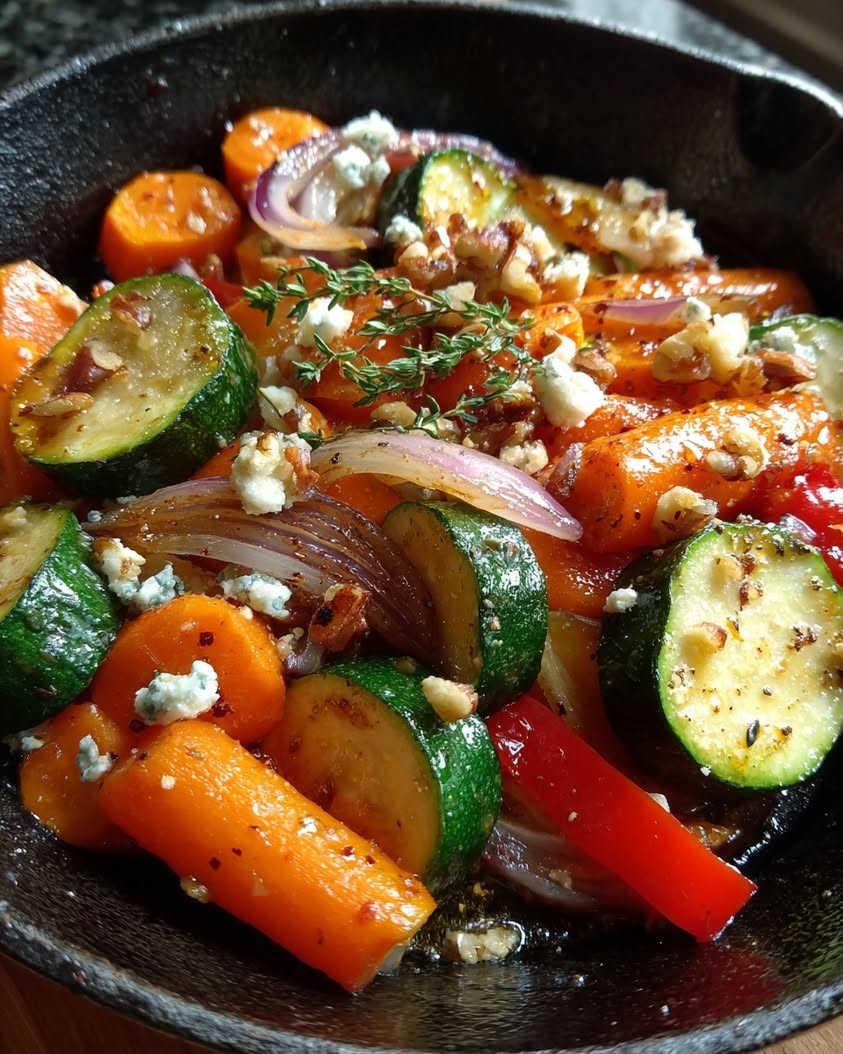
Honey-Glazed Vegetable Skillet with Blue Cheese & Toasted Nuts: A Flavor-Packed One-Pan Wonder
Imagine a vibrant medley of tender-crisp vegetables, each piece glistening with a sweet and savory honey glaze, then topped with creamy, tangy blue cheese crumbles and a satisfying crunch of toasted nuts. This honey-glazed vegetable skillet recipe delivers exactly that. It is a celebration of texture and flavor that transforms simple, wholesome ingredients into a stunning centerpiece dish. Moreover, it all comes together in one pan, making cleanup a breeze and weeknight cooking a joy.
The magic of this honey-glazed vegetable skillet lies in its beautiful balance. The natural sweetness of carrots and red onion caramelizes perfectly under the honey glaze. Simultaneously, earthy Brussels sprouts and hearty sweet potato provide a robust foundation. The final flourish of pungent blue cheese and buttery toasted nuts creates a symphony of taste in every bite. Consequently, this dish feels both rustic and elegant, perfect for a casual family dinner or for impressing guests.
Ultimately, this recipe is a testament to how a few quality ingredients can create something extraordinary. It is a versatile, nutrient-dense meal that highlights the best of seasonal produce. Whether you serve it as a hearty vegetarian main or a spectacular side dish, this honey-glazed vegetable skillet promises to become a new favorite in your cooking repertoire.
Quick Recipe Highlights
- Flavor Profile: This dish masterfully combines sweet, savory, and tangy notes. The honey glaze caramelizes on the vegetables, creating a rich depth, while the blue cheese adds a sharp, creamy counterpoint. Finally, the toasted nuts contribute a warm, earthy finish that ties everything together.
- Texture: Expect a delightful contrast in every forkful. The vegetables achieve a perfect tender-crisp bite with caramelized edges. Meanwhile, the blue cheese offers a soft, crumbly texture, and the toasted nuts provide an essential, satisfying crunch that elevates the entire dish.
- Aroma: As the honey-glazed vegetable skillet cooks, your kitchen will fill with an irresistible fragrance. The scent of caramelizing honey and onions mingles with the earthy roast of Brussels sprouts and the nutty aroma of toasting pecans, creating an olfactory preview of the delicious meal to come.
- Visual Appeal: This skillet is a feast for the eyes with its brilliant color palette. Vibrant orange sweet potatoes, deep green Brussels sprouts, and purple-tinged red onions create a stunning mosaic. The golden glaze and white blue cheese crumbles add the perfect finishing touches for a picture-perfect plate.
- Skill Level Needed: This is an accessible recipe for cooks of all levels. The techniques involve simple chopping, stirring, and roasting. Therefore, even a beginner can achieve fantastic results by following the straightforward steps for building layers of flavor in one pan.
- Special Equipment: You only need a reliable large oven-safe skillet or braiser. A sturdy wooden spoon for stirring and a sharp chef’s knife for prepping the vegetables are the other essential tools. No fancy gadgets are required for this wholesome honey-glazed vegetable skillet.
Recipe Overview
- Difficulty Level: We rate this honey-glazed vegetable skillet recipe as “Easy.” The steps are sequential and simple: chop, sauté, glaze, and roast. There is no complex knife work or advanced cooking methods involved. Essentially, it is a forgiving recipe where the oven does most of the work, making it very approachable.
- Category: This versatile dish fits multiple categories beautifully. It stands strong as a complete vegetarian main course packed with protein and fiber. Alternatively, it serves as a spectacular side dish for roasted chicken, pork chops, or holiday feasts. It is also perfect for meal prep.
- Cuisine: While not tied to one specific tradition, this honey-glazed vegetable skillet draws inspiration from modern American farm-to-table cooking and rustic European flavors. The use of blue cheese nods to French and English culinary traditions, while the honey-glazing technique is a beloved method worldwide for enhancing natural vegetable sugars.
- Cost: This is a cost-effective recipe, especially when using in-season vegetables. Sweet potatoes, carrots, and onions are typically budget-friendly year-round. Blue cheese and nuts are the “splurge” ingredients, but a little goes a long way in terms of flavor impact. Overall, it delivers restaurant-quality taste on a home cook’s budget.
- Season: This honey-glazed vegetable skillet is truly a fall and winter superstar. The ingredients like Brussels sprouts and sweet potatoes are at their peak during these cooler months. However, you can adapt it beautifully for spring and summer by swapping in asparagus, zucchini, or bell peppers.
- Occasion: Its flexibility makes it suitable for any occasion. Whip it up for a simple, healthy weeknight dinner. Alternatively, double the recipe for a potluck or holiday gathering like Thanksgiving. Its stunning presentation also makes it ideal for a dinner party where you want to showcase beautiful, flavorful vegetables.
Why You’ll Love This Recipe
First and foremost, the taste and texture combination is utterly addictive. Each component of this honey-glazed vegetable skillet plays a crucial role. The sweet glaze clinging to the roasted vegetables creates little pockets of caramelized goodness. Then, the moment you bite into a creamy, tangy blue cheese crumble, it melts slightly against the warm veggies. Finally, the crunchy toasted nuts break through, providing a contrasting texture that makes you want to take another bite immediately. This harmonious balance ensures no single flavor overpowers another, instead creating a complex and satisfying mouthfeel.
From a practical standpoint, the convenience factor is a major win. This entire honey-glazed vegetable skillet recipe uses just one pan from start to finish. You begin by toasting the nuts, then sauté the aromatics, and finally roast the vegetables all in the same oven-safe skillet. This method not only minimizes cleanup but also allows the flavors to build and meld beautifully in the pan. Furthermore, the active prep time is minimal; after a quick chop and stir, the oven takes over, freeing you up to set the table or prepare a simple protein.
Nutritionally, this dish is a powerhouse. It is packed with vitamins, minerals, and fiber from a diverse array of colorful vegetables. The honey provides a natural sweetness without refined sugar, while the blue cheese offers calcium and protein. Additionally, the healthy fats from olive oil and nuts aid in the absorption of fat-soluble vitamins from the vegetables. Consequently, this honey-glazed vegetable skillet is a meal that fuels your body deliciously, supporting overall wellness with every vibrant forkful.
For entertaining, this recipe is a true gem. It looks incredibly impressive on the table, with its colorful array of vegetables and elegant garnishes, yet it requires no last-minute fuss. You can prepare it almost entirely ahead of time. Simply reheat the skillet before serving and add the fresh blue cheese and nuts. Guests will be delighted by the sophisticated flavors, and you will appreciate the stress-free preparation. It is a surefire way to showcase your cooking skills without being chained to the stove.
Finally, this honey-glazed vegetable skillet is remarkably cost-effective and accessible. The base vegetables are affordable staples. While blue cheese and nuts might seem like premium ingredients, you need only a small amount to make a big impact. Moreover, the recipe is highly adaptable based on what you have on hand or what is on sale. This flexibility makes it a practical and sustainable choice for regular meal rotation, proving that eating well does not have to be expensive or complicated.
Historical Background and Cultural Significance
The concept of glazing vegetables with honey or other sweeteners has ancient roots across many cultures. Historically, honey was a precious sweetener long before the widespread availability of sugar. Cooks from ancient Rome to medieval Europe would use it to preserve and enhance the flavor of fruits and, later, root vegetables. The technique of creating a honey-glazed vegetable skillet, however, is a more modern interpretation of these age-old practices. It reflects a contemporary desire for simple, one-pan meals that maximize flavor and minimize effort, blending historical preservation methods with today’s fast-paced lifestyle.
Culturally, the dish represents a fusion of traditions. The use of blue cheese, for instance, connects to specific European regions with proud cheesemaking histories, like Roquefort in France or Stilton in England. Incorporating these strong cheeses into vegetable dishes was a way to add richness and depth to humble ingredients. Meanwhile, the practice of toasting nuts for garnish is common in Middle Eastern and Mediterranean cuisines, where they are used to add texture and richness to pilafs, salads, and stews. This honey-glazed vegetable skillet recipe brings these global ideas together on one American-style dinner plate.
The recipe has evolved significantly with the rise of vegetarianism and the focus on plant-forward eating. What might have once been a simple side of glazed carrots has expanded into a hearty, main-dish skillet featuring a diverse mix of vegetables. The modern honey-glazed vegetable skillet is a direct response to the demand for satisfying meatless meals that do not sacrifice flavor or substance. It showcases how vegetable-centric cooking has moved from the periphery to the center of the plate, driven by both health trends and culinary creativity.
Regional variations of this concept are endless. In the American South, you might find a similar skillet with pecans and a bourbon-honey glaze. In parts of Europe, a cook might use walnuts and a local goat cheese instead of blue cheese. The core principle remains: caramelizing vegetables with a sweet glaze and finishing with a rich, creamy element and crunch. This adaptability is a testament to the recipe’s solid foundation. Ultimately, the honey-glazed vegetable skillet is a modern classic that honors historical techniques while embracing today’s diverse, vegetable-loving palate.
Ingredient Deep Dive
Sweet Potato: A cornerstone of this honey-glazed vegetable skillet, sweet potatoes have a storied history originating in Central and South America. They are packed with beta-carotene (which converts to Vitamin A), fiber, and Vitamin C. For the best results, choose firm sweet potatoes with smooth, unblemished skin. Store them in a cool, dark, well-ventilated place—not the refrigerator. If you need a substitute, butternut squash or regular potatoes will work, though the flavor profile will shift slightly.
Brussels Sprouts: These mini cabbages gained popularity in Brussels, Belgium, hence their name. They are nutritional powerhouses, offering high levels of Vitamin K, Vitamin C, and antioxidants. Select small, firm, bright green sprouts with tightly packed leaves. Avoid yellowing or loose leaves. Store them in a plastic bag in the refrigerator’s crisper drawer. For a variation, you could use broccoli florets or chopped kale, adding them later in the cooking process to prevent overcooking.
Blue Cheese: Blue cheese’s bold flavor comes from veins of Penicillium mold introduced during aging. Culturally, varieties like Gorgonzola (Italy) or Danish Blue are famous. It provides calcium and protein. When selecting, look for a cheese that is moist but not leaking, with visible blue veining. Wrap it tightly in parchment or wax paper, then in plastic wrap, and store in the coldest part of your fridge. For a dairy-free version, a creamy vegan cheese or a sprinkle of nutritional yeast can provide a similar umami punch.
Honey: Honey’s use dates back thousands of years, revered in ancient Egypt and Greece. In this glaze, it acts as a natural sweetener and caramelizing agent. It also contains trace enzymes and antioxidants. Choose a locally sourced, raw honey for the most complex flavor. For a vegan honey-glazed vegetable skillet, maple syrup or agave nectar are excellent substitutes, though they will impart their own distinct flavor notes.
Pecans: Native to North America, pecans are a traditional ingredient in Southern U.S. cooking. They are rich in healthy fats, magnesium, and zinc. Toasting them is non-negotiable for this recipe, as it unlocks their oils and maximizes flavor and crunch. Store nuts in an airtight container in the freezer to prevent rancidity. Walnuts or almonds make fine alternatives if pecans are not available.
Common Mistakes to Avoid
- Overcrowding the Skillet: Adding all vegetables at once prevents proper browning and leads to steaming. Cook in batches if necessary to ensure each piece has contact with the hot pan and develops those essential caramelized edges crucial for a great honey-glazed vegetable skillet.
- Using Old, Soft Nuts: Stale nuts taste bitter and lack crunch. Always taste a nut before toasting. If it doesn’t taste fresh and sweet, discard them. Freshly toasted nuts are a key textural element you should not compromise on.
- Adding Blue Cheese Too Early: If you stir the blue cheese into the hot skillet, it will melt completely and become greasy. Always add it as a final garnish after removing the skillet from the heat. This preserves its distinct crumbly texture and sharp flavor.
- Neglecting to Preheat the Skillet: A properly preheated skillet is essential for sautéing the onion and garlic without stewing them. A hot pan ensures they become fragrant and translucent quickly, forming the flavor base for your honey-glazed vegetable skillet.
- Skipping the Vinegar: The small amount of vinegar is not optional. It balances the sweetness of the honey, cuts through the richness of the cheese and nuts, and brightens the entire dish. Without it, the skillet can taste one-dimensionally sweet.
- Underseasoning: Vegetables need ample seasoning. Do not be shy with salt and pepper throughout the cooking process. Season the vegetables when you add them to the pan, and always taste and adjust the final dish before serving.
- Overcooking the Vegetables: The goal is tender-crisp, not mushy. Respect the cook times, especially for quicker-cooking veggies like Brussels sprouts. Remember, they will continue to cook slightly from residual heat after leaving the oven.
- Using a Non-Oven-Safe Skillet: This recipe requires transferring the pan from stovetop to oven. Using a pan with a plastic handle can be disastrous. Always confirm your skillet is oven-safe to at least 400°F before you begin.
Essential Techniques
Proper Vegetable Chopping: Cutting your vegetables into uniform sizes is the most critical technique for this honey-glazed vegetable skillet. Consistent pieces ensure even cooking; smaller pieces will burn while larger ones remain hard. Aim for ¾-inch to 1-inch chunks. This not only affects texture but also allows the honey glaze to coat each piece evenly, creating a harmonious bite where every vegetable is perfectly cooked.
Toasting Nuts: Toasting nuts is a simple but transformative step. It intensifies their flavor by releasing natural oils and adds a crucial crunchy texture. Place them in a dry skillet over medium heat. Shake the pan frequently until they become fragrant and lightly browned, which usually takes 3-5 minutes. Immediately transfer them to a plate to stop the cooking process. The key is constant attention, as they can go from perfectly toasted to burnt in seconds.
Building a Glaze: A good glaze should coat the back of a spoon. For this recipe, you combine honey, vinegar, and seasonings. The technique involves adding it at the right moment—after the vegetables have started to brown—and tossing vigorously to coat every piece. Then, you spread the vegetables in an even layer to allow the glaze to caramelize in the oven’s heat, creating sticky, flavorful edges on your honey-glazed vegetable skillet.
Deglazing (Implicitly): When you add the honey-vinegar mixture to the hot skillet, it sizzles and loosens any browned bits (fond) stuck to the pan. This process, called deglazing, incorporates those concentrated flavor particles into the glaze. It is a fundamental technique for building deep, complex flavor in any pan sauce or glaze, ensuring no deliciousness is left behind.
Pro Tips for Perfect Honey-Glazed Vegetable Skillet
First, prep all your ingredients before you turn on the stove. This “mise en place” is especially helpful for a fast-moving recipe like this honey-glazed vegetable skillet. Having everything chopped and measured prevents burning and ensures a smooth cooking process.
Use the best, freshest blue cheese you can find. A high-quality cheese with bold flavor means you can use less and still have a huge impact. Crumble it with your fingers for irregular, interesting pieces that will distribute better than uniform crumbles from a bag.
Do not wash your skillet between toasting the nuts and cooking the vegetables. The residual nut oils left in the pan will flavor the entire dish, adding an extra layer of richness to your honey-glazed vegetable skillet.
Let the skillet sit for 5 minutes after removing it from the oven before adding the final garnishes. This allows the intense heat to subside slightly, so the blue cheese crumbles soften but do not instantly melt into a pool.
If your vegetables are releasing a lot of liquid and not browning, increase the heat slightly and avoid stirring too often. Let them sit undisturbed for a few minutes to allow moisture to evaporate and caramelization to occur.
For an extra flavor boost, add a teaspoon of fresh thyme leaves or chopped rosemary to the skillet when you add the garlic. The herbal notes pair beautifully with the sweet vegetables and tangy cheese.
If serving as a main course, consider adding a can of drained chickpeas or white beans to the skillet with the other vegetables. This adds plant-based protein and makes the dish even more hearty and satisfying.
Always taste and adjust the seasoning with salt and a final splash of vinegar right before serving. This last-minute adjustment can elevate your honey-glazed vegetable skillet from good to truly memorable.
Variations and Adaptations
Regional Variations: Travel your taste buds by swapping ingredients. For a Mediterranean twist, use walnuts, crumbled feta, and a sprinkle of oregano. For a Southern U.S. version, use pecans, a bourbon-honey glaze, and a pinch of smoked paprika. An Asian-inspired take could feature a soy-honey glaze, sesame oil, toasted sesame seeds, and a crumble of firm tofu instead of cheese.
Seasonal Adaptations: This honey-glazed vegetable skillet framework works year-round. In spring, use asparagus, snap peas, and new potatoes. Summer calls for zucchini, bell peppers, and cherry tomatoes (add these in the last 5 minutes). Fall and winter are perfect for the suggested root vegetables and hardy greens like chopped kale added at the end.
Dietary Modifications: For a vegan honey-glazed vegetable skillet, use maple syrup and a vegan blue cheese alternative or a tahini drizzle. To make it gluten-free, ensure your vinegar is gluten-free (most are) and use tamari instead of soy sauce if making an Asian variation. For a nut-free version, use toasted pumpkin seeds (pepitas) or sunflower seeds.
Flavor Variations: Experiment with the glaze base. Substitute honey for pure maple syrup or pomegranate molasses. Add a tablespoon of Dijon mustard or a teaspoon of smoked paprika to the glaze mixture. A dash of cayenne pepper or red pepper flakes can introduce a welcome spicy kick to balance the sweetness.
Texture Modifications: If you prefer softer vegetables, add a splash of vegetable broth to the skillet before transferring it to the oven and cover it with a lid or foil for the first half of cooking. For maximum crunch, roast the vegetables on a sheet pan instead of a skillet to increase surface area and browning.
Presentation Alternatives: Serve the skillet family-style right in the pan for a rustic feel. Alternatively, plate individual portions over a bed of creamy polenta, quinoa, or farro to soak up the delicious glaze. For appetizers, spoon the mixture onto endive leaves or crostini.
Serving and Presentation Guide
Plating this honey-glazed vegetable skillet beautifully enhances the dining experience. For family-style serving, bring the whole skillet to the table—it makes a dramatic, aromatic statement. Use a clean kitchen towel or trivet to protect your table. Garnish with the toasted nuts and blue cheese, then finish with a final sprinkle of flaky sea salt and a few fresh herb leaves, like parsley or chives, for a pop of green color.
For individual plating, use a wide, shallow bowl or plate. Create a generous mound of the glazed vegetables, ensuring you get a variety of colors and types in each serving. Artfully scatter the blue cheese crumbles and toasted nuts over the top, allowing some to tumble down the sides. A final drizzle of high-quality extra virgin olive oil or a balsamic reduction around the plate adds a professional touch.
Traditional accompaniments include simple proteins that do not compete with the skillet’s robust flavors. A simply roasted chicken, a pan-seared pork chop, or a baked salmon fillet are all excellent choices. For a vegetarian feast, pair it with a hearty lentil soup or a grain salad.
Modern serving suggestions lean into making it a complete bowl meal. Serve the warm honey-glazed vegetable skillet over a base of cauliflower rice, couscous, or freekeh. Add a dollop of lemony yogurt or hummus on the side for extra creaminess. This approach turns the dish into a well-rounded, nutrient-dense lunch or dinner.
Temperature is key. Serve the skillet immediately after garnishing while the vegetables are hot and the cheese is just beginning to soften. The contrast between the warm vegetables and the cool, crumbly cheese is part of the appeal. If you must hold it, keep the skillet warm (without the garnishes) in a low oven, then add the cheese and nuts just before serving.
Portion control is intuitive with this vegetable-forward dish. As a main course, aim for about one-quarter of the skillet per person. As a side dish, one-sixth to one-eighth is sufficient. Remember, the nuts and cheese are calorie-dense, so a little goes a long way in terms of flavor and satisfaction.
Wine and Beverage Pairing
Selecting the right wine for this honey-glazed vegetable skillet involves balancing sweet, savory, and tangy elements. A slightly sweet white wine like an off-dry Riesling or Gewürztraminer is a classic and brilliant choice. The wine’s sweetness mirrors the honey glaze, while its acidity cuts through the richness of the cheese and nuts. Alternatively, a fruity, low-tannin red like a Beaujolais or Pinot Noir can work beautifully, especially if you are serving the dish with a meat accompaniment.
For non-alcoholic alternatives, consider beverages with similar balancing acts. A sparkling apple cider provides sweetness and effervescence. Iced hibiscus tea (agua de jamaica) offers a tart, cranberry-like flavor that complements the blue cheese wonderfully. A simple lemonade or ginger beer also works, as the citrus or spice can cleanse the palate between bites of the rich honey-glazed vegetable skillet.
If you prefer coffee or tea pairings, opt for lighter roasts and flavors. A medium-roast coffee with nutty notes will echo the toasted pecans. A cup of Earl Grey tea, with its bergamot citrus aroma, can provide a lovely aromatic contrast to the savory, earthy vegetables. Serve these after the meal as a digestif rather than alongside.
Temperature considerations are straightforward. White wines and non-alcoholic sparklers should be served well-chilled. Red wines should be served slightly below room temperature, around 60-65°F. Iced teas and lemonades are, of course, served cold. The goal is to have a refreshing beverage that contrasts with the warm, caramelized vegetables.
General serving suggestions include always offering water on the table to cleanse the palate. If hosting, you might offer two beverage options: one wine and one non-alcoholic choice. Pour wines into appropriate glassware to enhance their aroma and flavor, which in turn elevates the entire experience of enjoying your honey-glazed vegetable skillet.
Storage and Shelf Life
Proper storage is essential for maintaining the quality of your honey-glazed vegetable skillet. First, allow the leftovers to cool completely to room temperature, but do not leave them out for more than two hours. Store the vegetable base separately from the garnishes for best results. Place the cooled vegetables in an airtight container in the refrigerator. Store the blue cheese and toasted nuts in their own separate small containers or bags.
Temperature requirements are standard for cooked vegetables. The refrigerator should be at or below 40°F. The honey-glazed vegetable skillet base will keep well for 3-4 days. The toasted nuts can be stored at room temperature in an airtight container for up to a week, but for maximum freshness, store them in the fridge or freezer.
Container recommendations are simple. Use glass or BPA-free plastic containers with tight-fitting lids. For the nuts, a small mason jar or zip-top bag works perfectly. Avoid storing the glazed vegetables in a metal container, as the acidic vinegar in the glaze could react with the metal over time.
Signs of spoilage include an off or sour smell, visible mold (especially on the cheese or vegetable surfaces), or a slimy texture on the vegetables. If you see any of these signs, discard the entire portion immediately. The nuts will become rancid if stale, emitting a bitter, paint-like odor.
Reheating instructions are important for food safety and texture. Reheat only the vegetable portion. Place it in a skillet over medium heat with a splash of water or broth to prevent drying out. Stir until heated through. Alternatively, microwave in a covered dish in 30-second intervals, stirring in between. Do not reheat the blue cheese or nuts; add them fresh after reheating.
Freezing is not recommended for this honey-glazed vegetable skillet. The high water content in the vegetables, combined with the dairy, means the texture will become very mushy and watery upon thawing. The nuts will also lose their crunch. This dish is best enjoyed fresh or refrigerated for a few days.
Make Ahead Strategies
You can efficiently prep this honey-glazed vegetable skillet in stages. The ideal prep timeline involves doing most of the work 1-2 days in advance. Chop all the vegetables and store them in separate airtight containers or zip-top bags in the refrigerator. You can also toast the nuts and make the honey-vinegar glaze mixture ahead of time, storing them at room temperature and in the fridge respectively.
Storage between steps is straightforward. Pre-chopped vegetables will stay fresh for 2-3 days. Keep root vegetables (sweet potato, carrot) together, and store the Brussels sprouts separately as they can release more moisture. The garlic can be minced and stored in a small container. This prep saves you 15 minutes of active time when you are ready to cook.
Assessing the quality impact, pre-chopping vegetables has a minimal effect, especially on hardy roots. The nuts may lose a bit of their peak crunch after a day but will still be delicious. The key is to add all fresh garnishes—the blue cheese and nuts—right before serving to preserve their distinct textures and flavors.
Assembly tips for a make-ahead meal are simple. When ready to cook, pull your prepped ingredients from the fridge. You can start cooking directly from cold, though you may need to add a minute or two to the initial sauté time for the onions to soften. Follow the recipe instructions as written from that point forward.
If you fully cook the honey-glazed vegetable skillet ahead of time, reheat it gently in a 350°F oven, covered, until warmed through. You may want to stir in a tablespoon of water to refresh the glaze. Again, wait to add the blue cheese and nuts until after reheating and just before serving to keep them perfect.
For the freshest result, consider a hybrid approach. Fully roast the glazed vegetables ahead of time. Then, when ready to serve, reheat them in the skillet. While they reheat, quickly re-toast the nuts in a separate small pan to revive their crunch. This method delivers a “just-made” quality with minimal last-minute effort.
Scaling Instructions
Halving this honey-glazed vegetable skillet recipe is simple for smaller households. Use a medium skillet instead of a large one. Precisely halve all ingredient quantities. The cook times may be slightly shorter, so start checking for doneness around the 15-minute mark for the oven roasting step. The key is to ensure the vegetables are still in a single layer for proper browning, even in a smaller pan.
Doubling or tripling the recipe is perfect for a crowd. You will need to use two large skillets or roast the vegetables in batches on sheet pans. If using sheet pans, spread the vegetables in a single layer and roast at 400°F, stirring halfway. The glaze may need to be made in a separate saucepan and then tossed with the roasted vegetables. Do not overcrowd any cooking vessel, or you will steam the vegetables instead of roasting them.
Equipment adjustments are necessary when scaling. For a double batch, two 12-inch skillets are ideal. If tripling, consider using a large roasting pan or multiple sheet pans. Ensure your oven can accommodate multiple pans with proper air circulation; you may need to rotate them top to bottom halfway through cooking.
Timing modifications are minimal when halving but more significant when increasing. For a double batch in skillets, the stovetop sauté time may increase slightly as you work with more volume. The oven time will likely remain similar, but always rely on the visual cue of tender, caramelized vegetables rather than the clock alone.
Storage considerations change with scale. A larger batch means more leftovers. Plan to store them in multiple smaller containers rather than one giant one. This allows for quicker cooling and easier reheating of single servings. Remember, the garnishes (cheese and nuts) should always be stored and added separately to maintain quality.
Nutritional Deep Dive
This honey-glazed vegetable skillet offers a well-rounded macronutrient profile. It is primarily a carbohydrate source from the sweet potatoes, carrots, and honey, providing sustained energy. The healthy fats come from the olive oil, blue cheese, and pecans, which aid in satiety and nutrient absorption. The protein content, while modest, comes from the Brussels sprouts, blue cheese, and nuts. This balance makes it a satisfying meal that stabilizes blood sugar levels.
A micronutrient analysis reveals a vitamin and mineral powerhouse. Sweet potatoes and carrots are loaded with beta-carotene (Vitamin A), crucial for vision and immunity. Brussels sprouts provide a massive dose of Vitamin K for bone health and Vitamin C for collagen synthesis. The nuts contribute magnesium and zinc, while the blue cheese adds calcium and B vitamins. Eating a diverse array of colorful plants, as in this skillet, is a proven strategy for optimal health.
The specific health benefits are numerous. The high fiber content promotes digestive health and feeds beneficial gut bacteria. The antioxidants in the deeply colored vegetables combat oxidative stress and inflammation. Furthermore, the combination of fiber, healthy fats, and protein promotes a long-lasting feeling of fullness, which can support healthy weight management by preventing overeating later.
Dietary considerations are mostly positive. The dish is naturally vegetarian and can be adapted to be gluten-free and vegan. For those monitoring sodium, you can control the amount of added salt and choose a lower-sodium blue cheese. Individuals with diabetes should be mindful of the honey’s carbohydrate content and consider portion size or using a lower-glycemic sweetener like pure maple syrup in moderation.
Portion analysis shows that a one-quarter serving of this honey-glazed vegetable skillet as a main course is a substantial and balanced meal. As a side dish, a one-sixth serving provides a generous helping of vegetables without excessive calories. Using a food scale to portion leftovers can help with precise calorie tracking if that is a personal goal.
For weight management, this dish is an excellent tool. It is volumous and filling due to the high fiber and water content of the vegetables, meaning you can eat a satisfying portion for a relatively moderate calorie count. To make it even more weight-conscious, you can slightly reduce the amount of oil and honey, and increase the proportion of non-starchy vegetables like Brussels sprouts.
Dietary Adaptations
Gluten-Free: This honey-glazed vegetable skillet is naturally gluten-free as written. Simply ensure that any vinegar used is gluten-free (most distilled vinegars are). If adapting with soy sauce, use certified gluten-free tamari or coconut aminos instead.
Dairy-Free/Vegan: For a vegan honey-glazed vegetable skillet, omit the blue cheese. Substitute the honey with maple syrup or agave nectar. For a creamy element, finish with a drizzle of tahini sauce or a sprinkle of nutritional yeast. A vegan feta or cashew-based “cheese” crumble also works wonderfully.
Low-Carb/Keto: To adapt, replace the sweet potato with lower-carb vegetables like cauliflower florets, broccoli, and extra Brussels sprouts. Use a sugar-free maple-flavored syrup or a monk fruit sweetener in place of honey. Be mindful of the carrot amount, as they contain more carbs. Increase the blue cheese and pecans for fat and protein.
Paleo: Omit the blue cheese, as dairy is not Paleo-compliant. Ensure the vinegar is apple cider vinegar. The rest of the base recipe—vegetables, honey, nuts, olive oil—fits perfectly within Paleo guidelines. You could add avocado slices or a compliant sausage for extra fat and protein.
Low-FODMAP: This requires careful modification. Omit the garlic and onion. Use the green tops of green onions (scallions) for flavor instead. Limit sweet potato to a ½ cup serving per person. Ensure the honey is not high-fructose; maple syrup is a safer low-FODMAP sweetener. Blue cheese is often tolerated in small amounts (1 oz), but test your sensitivity.
Nut-Free: Simply omit the pecans. For the crucial crunch, substitute with toasted pumpkin seeds (pepitas) or sunflower seeds. Ensure they are toasted for maximum flavor. This adaptation makes the honey-glazed vegetable skillet safe for schools or gatherings with nut allergies.
Troubleshooting Guide{“success”:true,”message”:”Recipe created successfully”,”post_id”:8769,”tasty_recipe_id”:8769,”shortcode”:” Print Honey-Glazed Vegetable Skillet with Blue Cheese & Toasted Nuts
Description
A savory and sweet medley of roasted vegetables tossed in a honey glaze, topped with crumbled blue cheese and crunchy toasted nuts for a delightful vegetarian main or side dish.
Ingredients
Scale For the Crust:
- 2 cups mixed vegetables (such as carrots, bell peppers, zucchini, and red onion), chopped
- 2 tablespoons olive oil
- 2 tablespoons honey
- 1 tablespoon balsamic vinegar
- 1/2 teaspoon garlic powder
- Salt and black pepper to taste
- 1/4 cup crumbled blue cheese
- 1/4 cup mixed nuts (such as walnuts or pecans), toasted and chopped
Instructions
1. Prepare the Crust:
- Preheat oven to 400°F (200°C). Toss the chopped vegetables with olive oil, salt, and pepper on a baking sheet.
- Roast vegetables for 20-25 minutes until tender and slightly caramelized.
- In a small bowl, whisk together honey, balsamic vinegar, and garlic powder. Drizzle over the roasted vegetables and toss to coat.
- Transfer vegetables to a serving skillet or dish. Top with crumbled blue cheese and toasted nuts. Serve warm.
Notes
You can customize the seasonings to taste.
“}
I’m Billy, a classically trained culinary school graduate from The Culinary Institute of America with over 12 years in the restaurant industry and over 19 years of cooking experience.
Honey-Glazed Vegetable Skillet with Blue Cheese & Toasted Nuts
Description
A savory and sweet medley of roasted vegetables tossed in a honey glaze, topped with crumbled blue cheese and crunchy toasted nuts for a delightful vegetarian main or side dish.
Ingredients
For the Crust:
- 2 cups mixed vegetables (such as carrots, bell peppers, zucchini, and red onion), chopped
- 2 tablespoons olive oil
- 2 tablespoons honey
- 1 tablespoon balsamic vinegar
- 1/2 teaspoon garlic powder
- Salt and black pepper to taste
- 1/4 cup crumbled blue cheese
- 1/4 cup mixed nuts (such as walnuts or pecans), toasted and chopped
Instructions
1. Prepare the Crust:
- Preheat oven to 400°F (200°C). Toss the chopped vegetables with olive oil, salt, and pepper on a baking sheet.
- Roast vegetables for 20-25 minutes until tender and slightly caramelized.
- In a small bowl, whisk together honey, balsamic vinegar, and garlic powder. Drizzle over the roasted vegetables and toss to coat.
- Transfer vegetables to a serving skillet or dish. Top with crumbled blue cheese and toasted nuts. Serve warm.
Notes
You can customize the seasonings to taste.

I’m Billy, a classically trained culinary school graduate from The Culinary Institute of America with over 12 years in the restaurant industry and over 19 years of cooking experience.