
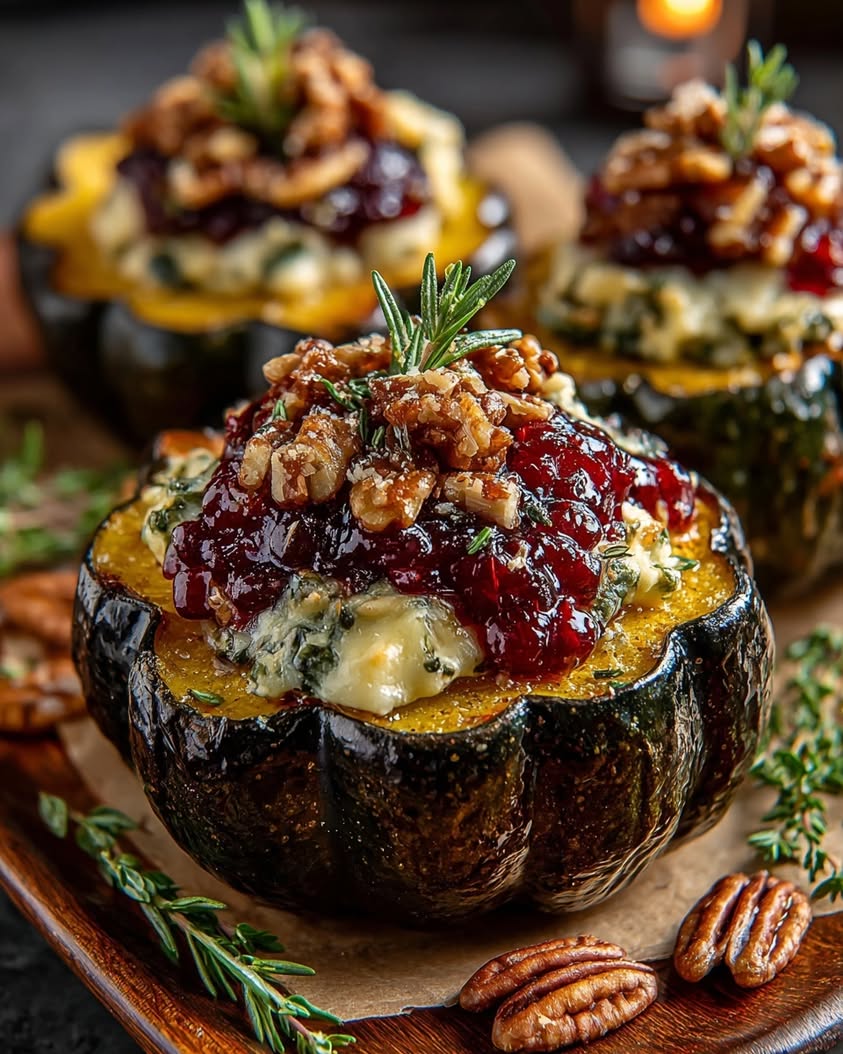
Maple Pecan & Brie Stuffed Acorn Squash with Cranberry Glaze: An Elegant Fall Feast
Welcome the crisp autumn air with a stunning centerpiece dish that captures the very essence of the season. This Maple Pecan Stuffed Acorn Squash Recipe is a symphony of sweet, savory, and creamy flavors, all nestled within a tender, edible bowl. Imagine roasted acorn squash, its flesh caramelized and soft, filled with a luxurious mixture of toasted pecans, melted Brie, and fragrant herbs, then finished with a vibrant, tangy cranberry glaze. This dish is not just a meal; it’s an experience that transforms simple seasonal ingredients into a show-stopping culinary event.
Furthermore, this recipe is a perfect example of how to create an impressive vegetarian main course without complicated techniques. The process is straightforward, allowing the natural beauty and flavor of the ingredients to shine. As the squash roasts, your kitchen will fill with an irresistible aroma that promises a comforting and elegant dinner. Ultimately, this Maple Pecan Stuffed Acorn Squash Recipe is designed to be the star of your holiday table or a special weekend supper, offering a beautiful balance of textures and tastes that will delight every palate.
Additionally, this dish is incredibly versatile. You can easily adapt it for various dietary needs or scale it up for a larger gathering. The combination of hearty squash, rich cheese, crunchy nuts, and sweet-tart glaze creates a complete and satisfying meal. Whether you’re hosting a festive Friendsgiving or simply want to enjoy a cozy night in, this recipe delivers on both flavor and presentation. Let’s dive into the details of creating this unforgettable autumn masterpiece.
Quick Recipe Highlights
- Flavor Profile: This Maple Pecan Stuffed Acorn Squash Recipe masterfully balances sweet maple syrup, savory herbs, and creamy Brie with the bright acidity of a cranberry glaze. The result is a complex, harmonious taste that is both comforting and sophisticated.
- Texture: Enjoy a delightful contrast between the tender, roasted flesh of the acorn squash, the satisfying crunch of toasted pecans, and the gooey, melted Brie cheese. The cranberry glaze adds a lovely, sticky sheen and a slight jammy texture.
- Aroma: As it bakes, the dish releases a warm, inviting fragrance of roasting squash, toasting nuts, and melting cheese, underscored by the sweet notes of maple and the herbal hint of thyme or rosemary.
- Visual Appeal: The presentation is stunning, with the deep green squash halves acting as natural bowls for the golden-brown stuffing. The ruby-red cranberry glaze drizzled on top adds a beautiful pop of color, making it perfect for photography and special occasions.
- Skill Level Needed: This is an accessible recipe for most home cooks. The techniques involve basic roasting, simple stuffing assembly, and making a quick glaze. No advanced culinary skills are required, making it a great project for confident beginners.
- Special Equipment: You only need a sharp knife, a sturdy spoon for scooping, a baking sheet, and a small saucepan for the glaze. A pastry brush can be helpful for applying the maple glaze to the squash.
Recipe Overview
- Difficulty Level: This Maple Pecan Stuffed Acorn Squash Recipe is rated Easy. The steps are sequential and simple: halving and seeding the squash, roasting it, preparing the stuffing, and making a quick glaze. There are no finicky techniques, and most of the cook time is hands-off in the oven.
- Category: This dish functions beautifully as a vegetarian main course, a substantial side dish for a holiday feast, or even an elegant appetizer if using smaller squash halves. It’s a versatile recipe that fits multiple meal planning needs.
- Cuisine: While not tied to one specific tradition, the recipe draws inspiration from modern American fall and holiday cooking. It utilizes classic North American ingredients like acorn squash, cranberries, and maple syrup in a contemporary, chef-inspired way.
- Cost: The cost is moderate, largely dependent on the price of Brie cheese and fresh cranberries. Acorn squash is typically inexpensive in season. Overall, it’s a cost-effective way to create a restaurant-quality dish at home, especially compared to dining out.
- Season: This recipe is quintessentially autumnal. Acorn squash and fresh cranberries are at their peak in the fall, making this the ideal time to make it. The warm, hearty flavors are perfectly suited to cooler weather from September through December.
- Occasion: It’s perfect for Thanksgiving, Christmas, Friendsgiving, or a festive autumn dinner party. It also makes for a special weekend family meal or a impressive Meatless Monday option that feels celebratory.
Why You’ll Love This Recipe
First and foremost, the taste and texture appeal is undeniable. This Maple Pecan Stuffed Acorn Squash Recipe delivers a party of flavors in every bite. You get the natural sweetness of the roasted squash, enhanced by maple. Then, you encounter the savory, creamy burst of Brie, followed by the earthy crunch of pecans. Finally, the cranberry glaze cuts through the richness with a tangy, fruity punch. This combination is incredibly satisfying and keeps your palate interested from start to finish. It’s a dish that feels indulgent yet is rooted in wholesome, real food ingredients.
Next, consider the convenience and preparation benefits. Despite its impressive appearance, this recipe is surprisingly simple to execute. The squash roasts on its own, giving you time to toast the pecans and prepare the stuffing. There’s no need for constant stirring or babysitting. Moreover, the ingredients are easy to find at most grocery stores, especially during the fall season. The assembly is straightforward, and the final presentation looks like you spent hours in the kitchen, even though active prep time is minimal. It’s the ultimate “low effort, high reward” dish for entertaining.
From a nutritional standpoint, this dish offers several advantages. Acorn squash is a fantastic source of vitamins A and C, fiber, and potassium. Pecans provide healthy fats, protein, and minerals. Using pure maple syrup as a sweetener offers antioxidants and a lower glycemic index than refined sugar. While Brie adds richness, it also contributes calcium and protein. Together, these ingredients create a meal that is nourishing and balanced. You’re serving a dish that is as good for the body as it is for the soul, which is always a win.
Furthermore, the social and entertaining value of this Maple Pecan Stuffed Acorn Squash Recipe is immense. It serves as a stunning centerpiece that sparks conversation. It caters beautifully to vegetarian guests at a mixed gathering, ensuring everyone has a spectacular main dish. The individual squash halves make for elegant, pre-portioned servings that simplify plating. Serving this dish shows thoughtfulness and culinary care, making your guests feel truly special. It transforms an ordinary dinner into a memorable event, which is the heart of good hospitality.
Finally, it is cost-effective and accessible. Creating a restaurant-worthy dish at home saves significant money. The main ingredients are seasonal and often affordable. You can also make smart substitutions based on what’s available or on sale without compromising the spirit of the recipe. This accessibility means you can enjoy gourmet flavors without a gourmet budget. Ultimately, this recipe empowers you to create something extraordinary with simple, beautiful ingredients, making it a keeper for your permanent collection.
Historical Background and Cultural Significance
The story of stuffed vegetables spans centuries and cultures, from dolmas in the Middle East to stuffed peppers across Europe and the Americas. The concept of stuffing winter squash, however, is deeply rooted in Native American and early Colonial foodways. Indigenous peoples cultivated varieties of squash, beans, and corn—the “Three Sisters”—and often cooked squash by roasting it in the embers of a fire. Early European settlers adopted these ingredients and methods, eventually creating their own stuffed preparations using local ingredients like nuts, berries, and later, dairy.
Acorn squash, specifically, gained popularity in the United States in the 20th century as a versatile and decorative winter squash. Its distinctive ridges and sweet flesh made it a favorite for home gardens and autumn tables. The practice of stuffing it likely evolved from the broader tradition of stuffing bell peppers or tomatoes, adapted to the hearty, bowl-like shape of the squash. This particular Maple Pecan Stuffed Acorn Squash Recipe is a modern iteration, reflecting contemporary tastes for sweet-savory combinations and elegant, plant-forward presentation.
The cultural significance of this dish lies in its embodiment of the North American harvest. Maple syrup, cranberries, pecans, and squash are all iconic foods of the continent, especially in the northeastern and midwestern United States and Canada. Combining them in one dish is a celebration of autumn abundance. It has become a staple on modern holiday tables, particularly for Thanksgiving and Christmas, where it represents both tradition and a move towards more inclusive, vegetable-centric feasting. It connects us to the land and the season in a direct and delicious way.
Over time, the recipe has seen numerous variations. Some versions use wild rice or quinoa in the stuffing, while others incorporate different cheeses like goat cheese or feta. The cranberry glaze is a contemporary touch, adding a bright, professional finish that elevates the homey concept of stuffed squash. This evolution shows how classic comfort food can be refined and updated for today’s kitchens. The Maple Pecan Stuffed Acorn Squash Recipe, therefore, is more than just a meal; it’s a living part of culinary history, adapting and enduring through generations.
Ingredient Deep Dive
Acorn Squash: This winter squash, named for its acorn-like shape, is native to North and Central America. It was a vital food source for Indigenous peoples long before European contact. Nutritionally, it’s rich in vitamins A and C, potassium, and dietary fiber, which supports digestion and immune health. When selecting, choose squash that are heavy for their size with firm, dull green skin (sometimes with an orange patch) and no soft spots. Store in a cool, dark place for up to a month. For a variation, try delicata squash, which has edible skin, or butternut squash for a sweeter, smoother flesh.
Brie Cheese: Hailing from the Île-de-France region, Brie is known as the “Queen of Cheeses.” Its history dates back to the 8th century. This soft-ripened cheese adds a luxurious, creamy texture and a mild, buttery flavor that melts beautifully. It provides calcium, protein, and vitamins A and B12. Select a wheel that feels springy to the touch and avoid any with an ammonia smell. Store Brie in the refrigerator in its original wrapper. For substitutions, Camembert offers a similar texture with a stronger flavor, while a creamy goat cheese provides a tangy alternative.
Pecans: Pecans are the only major tree nut native to North America, with a history of use by Native Americans spanning over 8,000 years. The name “pecan” comes from an Algonquin word meaning “a nut requiring a stone to crack.” They are an excellent source of healthy monounsaturated fats, antioxidants, and minerals like manganese. Toast them to unlock their rich, buttery flavor and enhance their crunch. Store pecans in an airtight container in the freezer to prevent their oils from turning rancid. Walnuts can be used as a substitute, though they have a more bitter, earthy taste.
Pure Maple Syrup: Made from the sap of sugar maple trees, maple syrup is a traditional sweetener of Indigenous peoples of Northeastern North America. It contains antioxidants and minerals like manganese and zinc, and it has a lower glycemic index than white sugar. Always opt for “pure maple syrup” over pancake syrup, which is primarily corn syrup and flavoring. Grade A Amber Color, Rich Taste is perfect for this recipe. Store it in the pantry before opening and in the refrigerator afterward. In a pinch, honey can be used, but it will impart a distinct floral flavor.
Fresh Cranberries: These tart, red berries are another native North American fruit, used by Indigenous peoples for food, dye, and medicine. They are packed with vitamin C and unique phytonutrients called proanthocyanidins, known for supporting urinary tract health. Choose berries that are firm, shiny, and bright red. They freeze beautifully, so you can buy extra bags in season. For the glaze, you can substitute with high-quality cranberry sauce or jam, though the texture and sweetness will differ. The fresh berries provide a essential vibrant tartness that balances the dish’s sweetness.
Common Mistakes to Avoid
- Not Roasting the Squash Enough First: Attempting to stuff and fully cook raw squash leads to undercooked, hard flesh. Always roast the squash halves until they are fork-tender before adding the stuffing. This ensures the squash is perfectly soft and caramelized.
- Using Untoasted Pecans: Skipping the toasting step results in a bland, sometimes chewy nut texture. Toasting pecans is crucial for deepening their flavor and achieving the necessary crunch that contrasts with the creamy filling.
- Overfilling the Squash Halves: Piling the stuffing too high can cause it to spill over and burn on the baking sheet. It also prevents even heating. Fill the cavities generously but level with the top for the best results.
- Choosing the Wrong Brie: Using an overripe, runny Brie or a cold, hard one can cause issues. The rind should be intact and white. Let the cheese come to room temperature briefly for easier cubing, and remove any overly thick rind if desired.
- Neglecting to Season Each Layer: Forgetting to season the squash cavity before roasting and the stuffing mixture before assembling can lead to a bland final dish. Season with salt and pepper at every stage to build flavor.
- Boiling the Cranberry Glaze: Cooking the cranberry glaze at too high a heat can cause it to become bitter or jammy too quickly. Simmer it gently until the berries just pop and the sauce thickens slightly.
- Serving Immediately Without Resting: Pulling the stuffed squash from the oven and serving it right away can make the filling dangerously hot and loose. Let it rest for 5-10 minutes so the cheese sets slightly and the flavors meld.
- Using a Dull Knife to Cut the Squash: Acorn squash is tough. A dull knife is dangerous and makes the job frustrating. Use a large, sharp chef’s knife and a steady hand, or microwave the whole squash for 2 minutes to slightly soften the skin first.
Essential Techniques
Halving and Seeding Winter Squash Safely: This technique is fundamental for safety and even cooking. First, stabilize the squash on a damp towel. Using a sharp, heavy chef’s knife, carefully cut from the stem down through the base. Use a rocking motion with steady pressure. Scoop out the seeds and stringy pulp with a sturdy spoon or ice cream scoop. The goal is a clean, smooth cavity. A common pitfall is forcing a dull knife, which can slip. Success is a clean cut and intact squash halves ready for roasting.
Toasting Nuts for Maximum Flavor: Toasting nuts like pecans transforms them from bland to richly aromatic. Spread them in a single layer on a dry baking sheet. Toast in a preheated 350°F oven for 5-8 minutes, shaking the pan once, until fragrant and slightly darkened. The key is watching them closely, as they burn easily. The visual cue is a golden-brown color and a strong, nutty smell. This step is non-negotiable for achieving the deep, buttery crunch that defines the stuffing’s texture.
Creating a Simple Fruit Glaze: A glaze adds shine and concentrated flavor. For the cranberry glaze, combine fresh cranberries, maple syrup, and a liquid (like water or orange juice) in a saucepan. Simmer over medium-low heat until the berries pop and the liquid reduces to a syrupy consistency. The technique involves gentle heat to avoid burning the sugars. The success cue is when the sauce coats the back of a spoon and leaves a clear path when you run your finger through it. It will thicken further as it cools.
Stuffing and Final Baking: This technique ensures even heating and perfect texture. After the initial roast, fill the tender squash cavities with your prepared mixture. Return to the oven for the final bake. The goal is to warm the stuffing through, melt the cheese, and allow the top to become golden. The pitfall is over-baking, which can dry out the squash. Success is achieved when the cheese is bubbly and the filling is hot. The squash should be very tender when pierced with a fork.
Pro Tips for Perfect Maple Pecan Stuffed Acorn Squash
For a deeper flavor, brush the cut sides of the squash with olive oil and maple syrup before the initial roast. This encourages caramelization and adds a subtle sweetness to the squash itself.
Toast your pecans on the baking sheet while the oven preheats. This saves time and dishes, just be sure to remove them before they burn when you put the squash in.
If your Brie is very soft, pop it in the freezer for 15 minutes before cubing. This firms it up and makes it much easier to cut into neat pieces without making a mess.
Add a teaspoon of fresh thyme or chopped rosemary to the stuffing mixture. This herbal note complements the sweetness and adds a wonderful aromatic complexity to the dish.
For a glossy, professional finish, brush a little extra maple syrup over the stuffed squash during the last 5 minutes of baking. This gives it an attractive sheen.
Let the cranberry glaze cool for a few minutes before drizzling. A slightly thicker glaze will cling to the squash better than a piping hot, runny one.
Use a melon baller or a small cookie scoop to clean out the squash seeds. It’s the perfect size and shape for scraping the cavity clean and smooth.
For easier serving and maximum crispness, you can roast the squash cut-side down for the first half of the initial roasting time, then flip them over. This steams the flesh slightly and browns the edges.
Variations and Adaptations
Regional Variations: Across different regions, the stuffing changes. In the South, you might find andouille sausage and rice added to the mix. A Midwest version could incorporate wild rice and dried cherries. A coastal adaptation might feature crab meat or lobster in place of some nuts for a luxurious twist. These variations showcase local ingredients and traditions.
Seasonal Adaptations: In winter, use dried cranberries when fresh are unavailable and add chopped apples or pears to the stuffing. For a spring version, try stuffing with asparagus, peas, and leeks with a lemon-herb cheese. Summer could bring a version with zucchini, corn, and fresh tomatoes, though a sturdier squash like pattypan would work better than acorn.
Dietary Modifications: For a vegan Maple Pecan Stuffed Acorn Squash Recipe, omit the Brie and use a vegan cream cheese or a cashew-based cheese sauce. Add nutritional yeast for a cheesy flavor. Ensure your maple syrup is vegan-certified. For a gluten-free version, this recipe is naturally so, just confirm that any pre-packaged ingredients like broth are certified gluten-free.
Flavor Variations: Experiment with different cheeses. Goat cheese offers tanginess, blue cheese adds bold pungency, and smoked gouda provides a deep, savory note. Swap pecans for walnuts or hazelnuts. Infuse the maple glaze with a cinnamon stick or a star anise while simmering for a warm spice undertone.
Texture Modifications: For more textural contrast, add cooked quinoa, farro, or brown rice to the stuffing to make it even heartier. For a smoother, more uniform filling, pulse the toasted pecans in a food processor before mixing with the cheese. Adding panko breadcrumbs to the top before the final bake creates a delightful crispy topping.
Presentation Alternatives: Instead of serving halves, slice the roasted squash into rings, stuff the centers, and stack them for a modern plating style. For appetizers, use mini acorn squashes or stuff the smaller, individual-sized sweet dumpling squash. You can also scoop all the roasted squash flesh out, mix it with the stuffing, and pile it back into the skins for a more rustic, mixed presentation.
Serving and Presentation Guide
Plating Techniques: Place each stuffed squash half on a warm dinner plate or a rustic wooden board. Angle it slightly so the filling is visible. Wipe any drips from the baking sheet off the squash skin for a clean look. The natural bowl shape of the squash does most of the work, making plating simple and elegant.
Garnishing Ideas: After drizzling with cranberry glaze, add a final flourish. A few extra whole toasted pecans, a sprinkle of fresh thyme leaves, or a few microgreens add color and texture. A light dusting of flaky sea salt just before serving enhances all the flavors and adds a gourmet touch.
Traditional Accompaniments: This dish pairs beautifully with classic holiday sides. Serve it alongside garlicky sautéed greens like kale or Swiss chard, a simple arugula salad with a lemon vinaigrette, or roasted Brussels sprouts. For a heartier meal, a wild rice pilaf or creamy mashed potatoes complement it well.
Modern Serving Suggestions: For a contemporary fall feast, serve it with a pear and endive salad, roasted rainbow carrots, or a cauliflower puree. It also stands beautifully on its own as a complete vegetarian main. Consider starting the meal with a butternut squash soup to continue the autumn theme.
Temperature Considerations: Serve the stuffed squash warm, but not scalding hot. The resting period after baking is crucial for both safety and flavor melding. The cranberry glaze can be at room temperature or slightly warm. Ensure plates are warmed to keep the dish at an ideal temperature throughout the meal.
Portion Control Tips: One acorn squash half is a standard serving for a main course. If serving as a side dish alongside other substantial items, you can cut each half in two again, creating quarters. For appetizer portions, seek out the smallest acorn squashes you can find, or use other small, stuffable squash varieties.
Wine and Beverage Pairing
Wine Pairings: The sweet, savory, and creamy profile of this Maple Pecan Stuffed Acorn Squash Recipe calls for versatile wines. A lightly oaked Chardonnay matches the richness of the Brie and complements the squash’s sweetness. A Pinot Noir, with its bright red fruit and earthy notes, pairs wonderfully with the cranberry and herbs. For a festive touch, a dry Riesling or a Gewürztraminer can handle the dish’s sweetness and spice beautifully.
Non-Alcoholic Alternatives: Sparkling apple cider is a classic and perfect pairing, echoing the fall flavors. A cranberry spritzer made with unsweetened cranberry juice, club soda, and a maple syrup simple syrup mirrors the dish’s components. For a warm option, a mulled cider with cinnamon and orange peel creates a cozy, aromatic experience.
Coffee/Tea Pairings: After the meal, a cup of coffee or tea can be delightful. A medium-roast coffee with notes of nut and caramel complements the toasted pecans and maple. For tea, a smoky Lapsang Souchong stands up to the robust flavors, or a cinnamon-spiced chai tea harmonizes with the warm, sweet elements of the dish.
Temperature Considerations: Serve white wines well-chilled but not ice-cold, around 45-50°F, so their flavors aren’t muted. Red wines like Pinot Noir are best served slightly cool, at about 55°F. Non-alcoholic sparkling drinks should be served cold to refresh the palate. Warm beverages like cider or tea should be served piping hot.
Serving Suggestions: Offer a choice of pairings to cater to different preferences. You might set out a bottle of Pinot Noir and a pitcher of sparkling cider. Always provide water on the table to cleanse the palate between bites of the rich, flavorful stuffing and sips of your chosen beverage.
Storage and Shelf Life
Storage Methods: Allow any leftover Maple Pecan Stuffed Acorn Squash to cool completely. Store the stuffed halves whole or scooped out into an airtight container. Separate components if possible—store extra cranberry glaze in its own small jar. Proper storage prevents the squash from becoming soggy and preserves the texture of the pecans.
Temperature Requirements: Refrigerate leftovers promptly. The dish should be stored in the main body of the refrigerator at or below 40°F. Do not leave it at room temperature for more than two hours after cooking, as the dairy and moist environment can promote bacterial growth.
Container Recommendations: Use shallow airtight containers to allow for rapid cooling. Glass containers are ideal as they don’t absorb odors and allow you to see the contents. If storing the squash halves whole, you can place them on a plate and wrap them tightly with plastic wrap or aluminum foil.
Signs of Spoilage: Discard the dish if you notice an off or sour smell, significant mold growth (often fuzzy and green or white), or if the texture becomes excessively slimy or mushy. The cranberry glaze may darken over time, which is normal, but any fermentation bubbles or unusual odors are a sign it has gone bad.
Reheating Instructions: For best results, reheat in the oven. Preheat to 350°F, place the squash on a baking sheet, cover loosely with foil to prevent drying, and warm for 15-20 minutes until heated through. You can also use an air fryer for a crisper top. Microwave reheating is quick but can make the texture rubbery; if using this method, do so in short intervals.
Freezing Guidelines: Freezing is not highly recommended for the complete assembled dish, as the texture of the roasted squash and the creamy Brie can become watery and grainy upon thawing. However, you can freeze the roasted, unstuffed squash halves and the cranberry glaze separately for up to 2 months. Thaw in the refrigerator before assembling and reheating with fresh stuffing.
Make Ahead Strategies
Prep Timeline: You can prepare nearly every component of this Maple Pecan Stuffed Acorn Squash Recipe 1-2 days in advance. Roast the squash halves, let them cool, and store them covered in the fridge. Toast the pecans and store them at room temperature. Make the cranberry glaze and refrigerate it. Cube the Brie and keep it wrapped in the fridge. This makes day-of assembly a breeze.
Storage Between Steps: Store the cooled, roasted squash halves in a single layer on a tray covered with plastic wrap in the refrigerator. Keep the toasted pecans in a zip-top bag or airtight container at room temperature to maintain crunch. Refrigerate the cranberry glaze and the cubed Brie separately.
Quality Impact Assessment: Pre-roasting the squash may make the skin slightly less firm but does not negatively impact flavor or texture of the flesh. Toasted pecans stay crunchy for days. The cranberry glaze may thicken in the fridge; simply warm it gently or thin it with a teaspoon of water or orange juice. Pre-cubed Brie is perfectly fine.
Assembly Tips: On the day of serving, take the roasted squash halves and Brie out of the fridge about 30 minutes before assembling to take the chill off. Stuff the squash, then bake as directed. You may need to add 3-5 extra minutes to the final bake time since you’re starting with cold components.
Reheating Guidelines: If you fully assemble the dish a day ahead and refrigerate it, plan for a longer reheating time. Cover with foil and bake at 375°F for 25-30 minutes, then uncover for the last 5-10 minutes to crisp the top. Check that the center is hot before serving.
Fresh Element Additions: Even with make-ahead prep, add a final fresh touch before serving. Drizzle the reheated glaze, sprinkle with a fresh herb like thyme, or add a few newly toasted pecans for maximum crunch and vibrant flavor just before the dish hits the table.
Scaling Instructions
Halving the Recipe: Halving this Maple Pecan Stuffed Acorn Squash Recipe is straightforward for a smaller meal. Use one medium acorn squash, halve all other ingredient quantities, and bake on a quarter sheet pan or smaller baking dish. The cooking times will remain very similar, but keep a close eye during the final bake, as it may finish a minute or two faster due to less mass in the oven.
Doubling or Tripling: For a crowd, simply multiply the ingredients. Use multiple baking sheets and rotate them from top to bottom racks halfway through roasting to ensure even cooking. You may need to toast the pecans in batches to avoid steaming. Consider making the cranberry glaze in a larger saucepan. Total oven time may increase slightly when the oven is very full; use an instant-read thermometer to check that the stuffing reaches 165°F in the center.
Equipment Adjustments: Scaling up requires planning for sheet pan space. Ensure you have enough large baking sheets. If mixing a large batch of stuffing, use a big bowl. For the glaze, a Dutch oven or large sauté pan provides more surface area for even reduction. When halving, a toaster oven can be perfect for roasting a single squash half, saving energy.
Timing Modifications: When cooking multiple batches or a very large quantity, prep time increases linearly, but cook time may not. Roasting many squash halves at once can add 5-10 minutes to the initial roast time. Always rely on the fork-tender test rather than the clock. For the final bake, check several squash from different areas of the oven to ensure all are done.
Storage Considerations: Leftovers scale proportionally. Ensure you have enough appropriate-sized containers for refrigeration. For large gatherings, you might set up a “stuffed squash bar” where guests can add their own garnishes, which also helps manage leftovers, as components can be stored separately.
Nutritional Deep Dive
Macro Breakdown: One serving of this Maple Pecan Stuffed Acorn Squash Recipe provides a balanced mix of macronutrients. The acorn squash and maple syrup contribute complex carbohydrates for sustained energy. The pecans and Brie offer healthy fats, including monounsaturated fats from the nuts. The cheese and nuts also provide a moderate amount of protein, making this a satisfying main dish. The overall profile is rich and hearty, designed to be a complete meal.
Micronutrient Analysis: This dish is a micronutrient powerhouse. Acorn squash delivers high levels of Vitamin A (as beta-carotene) for eye and skin health, and Vitamin C for immunity. Pecans are an excellent source of manganese, important for bone health and metabolism. Brie provides calcium and phosphorus for strong bones, and B vitamins for energy production. Cranberries add Vitamin C and unique antioxidants.
Health Benefits: The combination of fiber from the squash, healthy fats from the pecans, and antioxidants from the cranberries and maple syrup supports heart health, digestive health, and stable blood sugar. The vitamins and minerals collectively support immune function, vision, and bone density. It’s a nutrient-dense meal that fuels the body with high-quality ingredients.
Dietary Considerations: This recipe is naturally vegetarian and gluten-free. It contains dairy (Brie) and tree nuts (pecans). For those monitoring sodium, the primary source is added salt, which can be adjusted to taste. The dish is moderately high in calories due to the cheese and nuts, making portion awareness key for specific dietary goals.
Portion Analysis: One acorn squash half is a substantial and filling portion. It is designed as a stand-alone main course. If you are pairing it with multiple other rich side dishes, consider it a larger portion of your overall plate. For lighter appetites or as part of a larger feast, cutting a half in two creates a perfect side-dish portion size.
Weight Management Tips: To make this dish more weight-conscious, you can slightly reduce the amount of Brie and pecans, though this will alter the richness. You can also use a light brushing of maple syrup instead of the full amount in the glaze, relying more on the natural sweetness of the roasted squash and cranberries. The high fiber and protein content naturally promotes satiety, helping to control overall calorie intake.
Dietary Adaptations
Gluten-Free: This Maple Pecan Stuffed Acorn Squash Recipe is naturally gluten-free as written. Always double-check that your maple syrup is pure and hasn’t been processed with additives that contain gluten. If using any pre-packaged broths or other additions, ensure they are certified gluten-free.
Dairy-Free/Vegan: For a vegan version, replace the Brie with a vegan cream cheese alternative or a homemade{“success”:true,”message”:”Recipe created successfully”,”post_id”:8784,”tasty_recipe_id”:8784,”shortcode”:” Print
Maple Pecan & Brie Stuffed Acorn Squash with Cranberry Glaze
Description
A warm, savory-sweet dish featuring roasted acorn squash halves stuffed with creamy brie, toasted pecans, and maple syrup, topped with a tangy cranberry glaze.
Ingredients
For the Crust:
- 2 medium acorn squashes, halved and seeded
- 2 tablespoons olive oil
- Salt and black pepper to taste
- 1 cup brie cheese, cubed
- 1/2 cup pecans, toasted and chopped
- 1/4 cup pure maple syrup
- 1/2 cup fresh cranberries
- 1/4 cup water
- 2 tablespoons honey
- 1 teaspoon fresh thyme leaves
Instructions
1. Prepare the Crust:
- Preheat oven to 400°F (200°C). Brush squash halves with olive oil, season with salt and pepper, and place cut-side down on a baking sheet. Roast for 25-30 minutes until tender.
- In a small saucepan, combine cranberries, water, and honey. Simmer over medium heat for 10-12 minutes until cranberries burst and sauce thickens. Set aside.
- Flip roasted squash halves cut-side up. Fill each with brie cubes, pecans, and drizzle with maple syrup. Return to oven for 5-7 minutes until brie melts.
- Remove from oven, top with cranberry glaze and fresh thyme. Serve warm.
Notes
You can customize the seasonings to taste.

I’m Billy, a classically trained culinary school graduate from The Culinary Institute of America with over 12 years in the restaurant industry and over 19 years of cooking experience.