
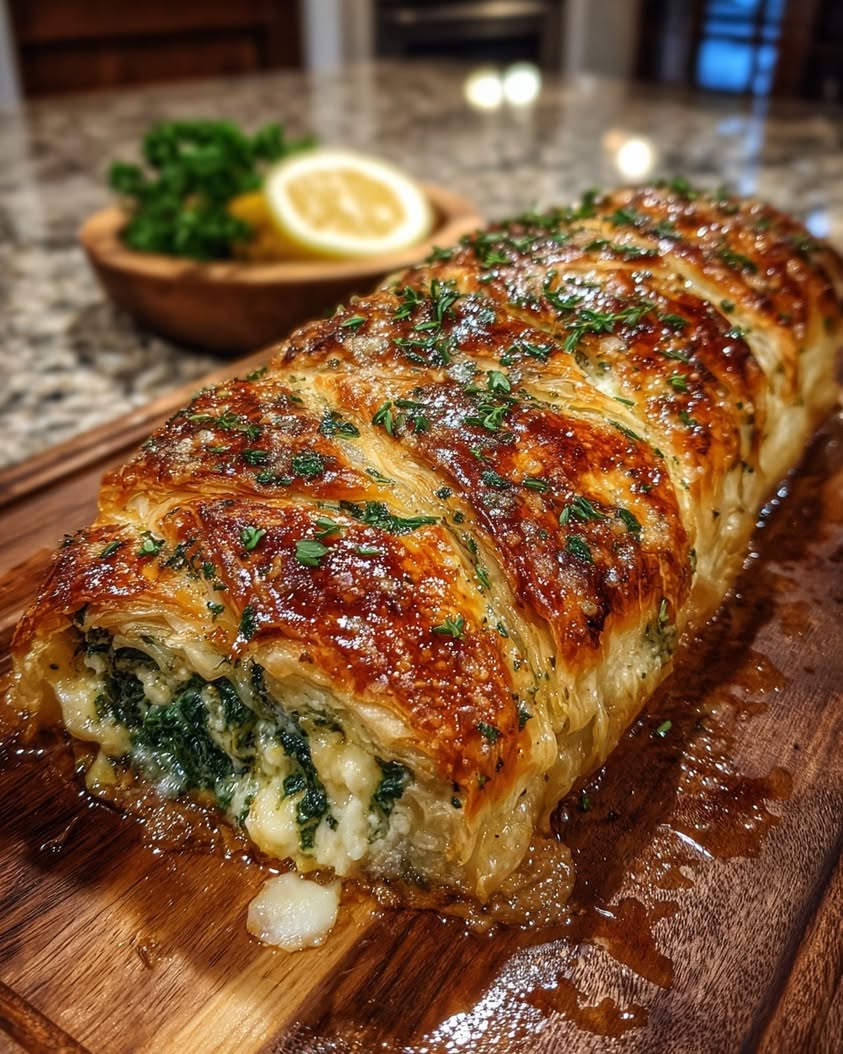
Spinach Ricotta Phyllo Braid Recipe: An Impressive Savory Pastry with a Sweet Glaze
This stunning Spinach Ricotta Phyllo Braid recipe is a showstopper that is surprisingly approachable. It combines creamy, savory filling with flaky, buttery layers of phyllo dough, all finished with a unique and fragrant Lemon Thyme Honey Glaze. The result is a beautiful centerpiece dish perfect for brunch, a light dinner, or entertaining guests. Moreover, the contrast of flavors and textures makes every bite an exciting experience.
Imagine pulling this golden, intricately braided pastry from your oven. The aroma of toasted phyllo and melted cheese fills your kitchen. Then, you drizzle the warm, herb-infused honey glaze over the top, creating a sweet and savory masterpiece. This Spinach Ricotta Phyllo Braid recipe delivers restaurant-quality presentation with homemade heart. Consequently, it is sure to become a new favorite for special occasions and weekend treats alike.
Furthermore, this dish is incredibly versatile. You can serve it as a vegetarian main course, slice it into elegant appetizer portions, or pair it with a simple salad for a complete meal. The process of creating the braid is also a fun and rewarding kitchen project. Ultimately, mastering this Spinach Ricotta Phyllo Braid recipe will give you confidence and a delicious reward.
Quick Recipe Highlights
- Flavor Profile: This dish masterfully balances savory and sweet notes. The creamy ricotta and earthy spinach filling is perfectly seasoned with garlic and nutmeg. Meanwhile, the lemon thyme honey glaze adds a bright, herbal sweetness that cuts through the richness.
- Texture: You get a wonderful contrast in every bite. The phyllo dough bakes into countless shatteringly crisp, flaky layers. Conversely, the interior filling remains luxuriously soft, creamy, and moist.
- Aroma: As it bakes, the scent of buttery pastry and toasted wheat fills the air. The lemon thyme honey glaze, warmed before drizzling, releases vibrant citrus and woody herbal notes that elevate the entire experience.
- Visual Appeal: The braided presentation is instantly impressive. The golden-brown, layered pastry reveals the vibrant green spinach filling within. Finally, the glossy honey glaze adds a beautiful sheen and specks of fresh thyme.
- Skill Level Needed: This recipe requires some care but no advanced techniques. Working with phyllo dough demands a bit of speed and a gentle touch. However, the braiding method is simple and forgiving, making it great for bakers looking to level up.
- Special Equipment: You need only a few basic tools: a baking sheet, parchment paper, a pastry brush, and a mixing bowl. A good knife for chopping spinach and a small saucepan for the glaze round out the list.
Recipe Overview
- Difficulty Level: We rate this Spinach Ricotta Phyllo Braid recipe as intermediate. The primary challenge lies in handling the delicate phyllo dough before it dries out. The braiding technique itself is straightforward once you see the pattern. Therefore, with organized prep and a calm approach, home cooks can absolutely achieve beautiful results.
- Category: This versatile dish fits multiple categories beautifully. It shines as a spectacular vegetarian main course. Alternatively, it serves as an elegant brunch item or a hearty appetizer. Its flexibility makes it a valuable addition to any cook’s repertoire.
- Cuisine: This recipe draws inspiration from Mediterranean and Middle Eastern culinary traditions, where phyllo dough and spinach-cheese fillings are classics. The lemon thyme honey glaze adds a modern, fusion twist that bridges savory pastry with subtle dessert-like notes.
- Cost: This is a cost-effective dish for its impressive yield. Phyllo dough, ricotta, and frozen spinach are budget-friendly staples. Fresh thyme, lemon, and honey are the only “splurge” items, and you use them in small quantities. Overall, you can feed a group for less than the cost of a restaurant appetizer.
- Season: This recipe is fantastic year-round. It feels light and fresh for spring and summer gatherings. Conversely, its warm, baked goodness is also comforting in fall and winter. You can easily find quality spinach and lemons in any season.
- Occasion: It is perfect for holiday brunches like Easter or Mother’s Day. Furthermore, it makes a lovely centerpiece for a ladies’ lunch or a baby shower. It is also ideal for a date night in or as a contribution to a potluck where you want to stand out.
Why You’ll Love This Recipe
First and foremost, the taste and texture are utterly captivating. The creamy, garlicky spinach and ricotta filling is classic comfort food. However, encasing it in ultra-flaky phyllo and adding the sweet, herbal glaze transforms it into something extraordinary. Each component complements the others, creating a harmonious balance that keeps you coming back for another bite. The contrast between the crisp exterior and the soft, warm center is deeply satisfying.
Next, consider the convenience and preparation benefits. While it looks intricate, the active hands-on time is relatively short. You can prepare the filling while the phyllo thaws. Additionally, the assembly is a fun, almost therapeutic process. Importantly, you can even assemble the entire braid ahead of time and refrigerate it before baking. This make-ahead potential is a huge win for stress-free entertaining.
From a nutritional standpoint, this Spinach Ricotta Phyllo Braid recipe offers several advantages. Spinach is packed with iron, vitamins A, C, and K, and fiber. Ricotta cheese provides a good source of protein and calcium. Using phyllo dough, compared to a pie crust or puff pastry, often results in a lighter final product with less saturated fat per serving because you brush on butter rather than having it laminated into the dough.
The social and entertaining value of this dish cannot be overstated. Presenting a golden, braided pastry at the table always elicits “wows.” It encourages sharing and conversation. Slicing it at the table feels like a special event. Consequently, it turns a simple meal into a memorable occasion. It shows your guests you invested time and care, which is the ultimate gesture of hospitality.
Finally, this recipe is cost-effective and accessible. The ingredients are common and affordable. You do not need any specialty kitchen gadgets. Even if you have never worked with phyllo before, this is an excellent recipe to start with. The braid is forgiving, and the delicious results far outweigh any initial nervousness. Ultimately, it delivers maximum impact for minimal financial and technical investment.
Historical Background and Cultural Significance
The roots of this dish lie in the ancient and widespread use of layered doughs. Phyllo, meaning “leaf” in Greek, is the cornerstone of pastries like spanakopita (spinach pie) and tiropita (cheese pie). These dishes have been staples in Eastern Mediterranean and Balkan cuisines for centuries. The technique of stretching dough into paper-thin sheets is an art form passed down through generations. Our Spinach Ricotta Phyllo Braid recipe is a direct descendant of this rich tradition, reimagining the classic pie format into a stunning braided presentation.
Culturally, dishes featuring phyllo and spinach fillings are often associated with celebration, community, and resilience. In many regions, making phyllo from scratch was a communal, time-intensive activity, reserved for holidays and feasts. The ingredients—spinach, cheese, wild herbs—were humble and foraged or farmed locally. Combining them with the labor-intensive dough elevated simple components into a dish worthy of sharing with family and honored guests. This history imbues the recipe with a sense of occasion and connection.
The evolution of the recipe reflects both tradition and adaptation. The classic spanakopita filling combines spinach with feta cheese. Our version uses ricotta for a milder, creamier texture, which is a common variation in many family recipes. The addition of the Lemon Thyme Honey Glaze, however, is a more modern, fusion-inspired twist. It introduces a sweet element that plays on the ancient combination of honey and cheese found in many cultures, while the thyme adds a contemporary, aromatic note.
Regional variations of spinach and phyllo dishes are fascinating. In Turkey, a similar filling might be spiced with mint and dill. In the Balkans, sirene cheese is typically used. Some Middle Eastern versions incorporate sumac or pomegranate molasses for tang. Our braided format itself is a nod to European pastry techniques, showing how culinary ideas travel and merge. This Spinach Ricotta Phyllo Braid recipe sits at a delicious crossroads of these influences, honoring the past while embracing creative freedom.
Ingredient Deep Dive
Phyllo Dough: Phyllo dough has a history dating back to the Ottoman Empire. This paper-thin unleavened dough is made from flour, water, and a small amount of oil or vinegar, stretched meticulously until translucent. Nutritionally, it is lower in fat than many pastries because the butter is brushed between layers rather than incorporated into the dough itself. Select frozen phyllo from the grocery store; keep it frozen until the day of use, then thaw slowly in the refrigerator. Work quickly with one sheet at a time, keeping the rest covered with a damp towel to prevent drying. If you cannot find phyllo, egg roll wrappers or even very thin lavash can work in a pinch, though the texture will differ.
Spinach: We use frozen chopped spinach for convenience and consistency. Spinach has been cultivated for over 2,000 years, originating in Persia. It is a nutritional powerhouse, rich in iron, calcium, vitamins A and C, and antioxidants. Thoroughly thaw and squeeze the spinach dry—this is the most critical step to avoid a soggy braid. Use a clean kitchen towel or your hands to wring out every bit of moisture. For a fresh alternative, you can wilt down a large amount of fresh spinach, but frozen is often more economical and easier to measure for this Spinach Ricotta Phyllo Braid recipe.
Ricotta Cheese: Ricotta, meaning “recooked” in Italian, is a fresh whey cheese with a mild, slightly sweet flavor and a creamy, granular texture. It provides protein, calcium, and a lovely binding quality for the filling. For the best results, use whole-milk ricotta for richness and flavor. Drain any excess liquid from the tub before mixing. If you need a substitute, well-drained cottage cheese blended until smooth or a soft goat cheese can work, though they will alter the flavor profile.
Lemon Thyme Honey Glaze: This glaze is the signature flourish. Honey is one of the world’s oldest sweeteners, used across countless cultures. Its floral notes pair beautifully with dairy. Fresh thyme adds an earthy, aromatic complexity, while lemon zest and juice provide essential brightness to cut the richness. Use a good-quality, mild honey like clover or orange blossom. Warm the mixture gently just to combine; boiling can destroy the delicate flavors of the thyme and lemon. This simple glaze elevates the entire Spinach Ricotta Phyllo Braid recipe from great to unforgettable.
Common Mistakes to Avoid
- Not Thawing Phyllo Properly: Never thaw phyllo dough at room temperature or in the microwave. This causes condensation that makes the sheets gummy. Always thaw it overnight in the refrigerator for the best, driest results.
- Leaving Spinach Too Wet: This is the top cause of a soggy bottom. You must squeeze the thawed spinach until it is completely dry. Use a clean kitchen towel and apply firm pressure; the spinach should feel crumbly, not damp.
- Letting Phyllo Dry Out: Phyllo sheets become brittle and unworkable in minutes when exposed to air. Keep the stack covered with plastic wrap and a damp (not wet) kitchen towel. Work with one sheet at a time and re-cover immediately.
- Using Cold Butter for Brushing: Melt your butter and keep it warm in a small bowl. Cold butter will congeal on the delicate phyllo and tear it. Warm butter brushes on smoothly and helps the layers adhere.
- Overfilling the Braid: Resist the urge to pile on too much filling. A moderate, even layer down the center is key. Otherwise, the braid can burst open during baking, and the phyllo may not cook through properly.
- Skipping the Egg Wash: The egg wash brushed on the assembled braid before baking is crucial. It promotes even, deep golden browning and gives the pastry a beautiful sheen. Do not substitute it with just butter or milk.
- Applying Glaze Too Early: Drizzle the Lemon Thyme Honey Glaze over the braid after it comes out of the oven, not before. Applying it before baking will cause the sugars to burn and the phyllo to become soggy instead of crisp.
- Cutting Immediately: Let the baked braid rest for 5-10 minutes before slicing. This allows the filling to set slightly, ensuring clean cuts and preventing a messy, runny interior.
Essential Techniques
Working with Phyllo Dough: Handling phyllo is the core technique for this Spinach Ricotta Phyllo Braid recipe. The key is organization and speed. Have your melted butter, brush, and filling ready before you unroll the dough. Keep the stack covered with a damp towel to prevent drying, which causes cracking. Gently lift and place each sheet; it is okay if they tear slightly, as you will have multiple layers. Brush each sheet lightly with butter to help subsequent layers stick together and promote flakiness. This process creates the signature hundred-layer effect when baked.
Creating a Tight, Even Braid: The braiding technique is simpler than it looks. After placing the filling down the center, use a sharp knife or kitchen shears to cut diagonal strips on each side. The key is to cut all the way to the filling but not through the center “spine.” Then, fold the strips over the filling, alternating from left to right, overlapping them like a braid. Pull them snugly across; a tight braid holds its shape better during baking. The final result should look neatly woven and secure before you apply the egg wash.
Balancing the Sweet and Savory Glaze: The Lemon Thyme Honey Glaze is a finishing technique that requires balance. Warm the honey gently just until it becomes fluid enough to mix with the lemon juice and thyme. Do not boil it. The goal is to infuse the honey with flavor without cooking off the volatile citrus oils. Let it sit for a few minutes off the heat so the thyme steeps. Drizzle it over the warm braid so it soaks in slightly but leaves a glossy coating. The warmth of the pastry will help the glaze adhere and shine.
Pro Tips for Perfect Spinach Ricotta Phyllo Braid
First, add a tablespoon of breadcrumbs or grated Parmesan to the spinach-ricotta filling. This absorbs any residual moisture and helps prevent sogginess from within.
Second, for extra flavor in the phyllo layers, mix a teaspoon of finely chopped fresh thyme or a pinch of garlic powder into your melted butter before brushing.
Third, if your kitchen is very dry, lightly mist the damp towel covering the phyllo with water from a spray bottle to ensure it stays moist without being dripping wet.
Fourth, use a pizza cutter or sharp kitchen shears to cut the phyllo strips for the braid; they are easier to handle than a knife and create clean cuts.
Fifth, place the baking sheet with the assembled braid in the freezer for 10 minutes before baking. This helps firm up the butter, leading to even flakier layers.
Sixth, for a deeper golden color, use an egg yolk mixed with a teaspoon of water for the wash instead of a whole egg.
Seventh, sprinkle a few flakes of sea salt over the braid after applying the egg wash. This adds a delightful salty crunch that contrasts with the sweet glaze.
Eighth, let the baked braid cool on the baking sheet set on a wire rack. This allows air to circulate underneath, keeping the bottom crisp.
Variations and Adaptations
Regional Variations: To lean Greek, replace the ricotta with crumbled feta cheese and add a handful of chopped fresh dill to the filling. For a Middle Eastern twist, add a pinch of sumac or allspice to the spinach mixture and sprinkle toasted pine nuts over the filling before braiding.
Seasonal Adaptations: In spring, mix in fresh peas or chopped asparagus tips with the spinach. For a fall version, incorporate roasted and chopped butternut squash or mushrooms into the cheese filling, and use sage instead of thyme in the glaze.
Dietary Modifications: For a gluten-free Spinach Ricotta Phyllo Braid, use gluten-free phyllo dough if available, or create “sheets” with gluten-free tortillas brushed with butter. For a dairy-free version, use firm tofu blended with nutritional yeast instead of ricotta and brush the phyllo with olive oil.
Flavor Variations: Add sun-dried tomatoes and kalamata olives to the filling for a salty, tangy punch. Alternatively, stir in cooked, crumbled Italian sausage or bacon for a meatier version. For an herby kick, increase the black pepper and add a pinch of red pepper flakes.
Texture Modifications: For added crunch, sprinkle toasted walnuts or pecans over the filling layer before braiding. To make the filling even creamier, blend the ricotta with one ounce of softened cream cheese before mixing with the spinach.
Presentation Alternatives: Instead of one large braid, create individual servings by making smaller braids on each sheet of phyllo. Alternatively, you can fold the filled phyllo into triangles or rolls for a more casual, hand-held appetizer format.
Serving and Presentation Guide
Plating Techniques: Transfer the entire baked and glazed braid to a large wooden cutting board or a sleek slate platter for a rustic yet elegant presentation. Use a sharp serrated knife to slice it into portions, wiping the blade clean between cuts for neat slices. The goal is to showcase the beautiful cross-section of flaky layers and green filling.
Garnishing Ideas: A final garnish elevates the visual appeal. Sprinkle with extra fresh thyme leaves, lemon zest, or edible flowers. A light dusting of powdered sugar (for a sweet contrast) or a drizzle of high-quality balsamic glaze can add another dimension. A small side bowl of extra Lemon Thyme Honey Glaze for dipping is always welcome.
Traditional Accompaniments: In its cultural context, this dish is often served with a simple Greek salad of tomatoes, cucumbers, red onion, and olives. A side of tzatziki or plain yogurt mixed with garlic and mint also complements the flavors beautifully, adding a cool, creamy element.
Modern Serving Suggestions: For a contemporary brunch, serve a slice alongside a poached egg and a light arugula salad with a lemon vinaigrette. As a dinner main, pair it with a roasted vegetable medley or a hearty lentil soup. For appetizers, slice the braid into one-inch pieces and serve warm on a platter.
Temperature Considerations: This Spinach Ricotta Phyllo Braid is best served warm, within 30 minutes of baking, when the phyllo is at its crispiest. However, it is still delicious at room temperature, making it excellent for buffets. Avoid reheating in the microwave, as it will steam the phyllo soft; use an oven or toaster oven to recrisp.
Portion Control Tips: A single large braid typically yields six generous servings as a main course or up to twelve smaller slices as an appetizer. When serving as part of a larger spread, err on the side of smaller slices so guests can sample other dishes. The rich filling is satisfying, so a little goes a long way.
Wine and Beverage Pairing
Wine Pairings: The savory, creamy filling and sweet glaze call for wines with good acidity to cut through the richness. A crisp, dry white like Sauvignon Blanc or Pinot Grigio works wonderfully. For a red option, choose a light-bodied, low-tannin wine such as Pinot Noir or Beaujolais. The fruit notes in these reds complement the honey glaze without overpowering the dish.
Non-Alcoholic Alternatives: Sparkling water with a twist of lemon or a splash of pomegranate juice mimics the cleansing effect of wine. A chilled, slightly sweet herbal iced tea, like peach or mint, pairs beautifully. For a special treat, a honey-ginger lemonade echoes the flavors in the glaze.
Coffee/Tea Pairings: For a brunch setting, a medium-roast coffee with low acidity is a classic companion. A cup of Earl Grey tea, with its citrusy bergamot notes, harmonizes perfectly with the lemon in the glaze. Alternatively, a soothing chamomile tea provides a gentle, floral finish to the meal.
Temperature Considerations: Always serve white wines and non-alcoholic sparklers well-chilled. Red wines should be slightly cooler than room temperature. Iced beverages should be cold but not diluted; use large ice cubes to prevent watering down the drinks during your meal.
Serving Suggestions: Offer a variety of pairing options if you are hosting a group. Place bottles of chilled water and a carafe of iced tea on the table alongside wine options. This allows guests to choose their preferred accompaniment to this versatile Spinach Ricotta Phyllo Braid recipe.
Storage and Shelf Life
Storage Methods: Store any leftover braid in an airtight container in the refrigerator for up to 3 days. For best results, place parchment paper between slices if stacking them. Do not store at room temperature due to the dairy-based filling.
Temperature Requirements: The braid must be refrigerated at 40°F or below within two hours of baking. Let it cool completely on the counter before covering and refrigerating to prevent condensation from making the pastry soggy.
Container Recommendations: A shallow, lidded glass or plastic container is ideal. You can also wrap individual slices tightly in aluminum foil and then place them in a zip-top bag. Avoid wrapping in plastic wrap alone, as it can trap too much moisture.
Signs of Spoilage: Discard the braid if you notice an off or sour smell, significant sogginess, or any signs of mold. The phyllo will lose its crispness in the fridge, but the flavor should remain fresh for a few days.
Reheating Instructions: To restore crispness, reheat slices in a preheated 350°F oven or toaster oven for 8-12 minutes until warmed through. You can also use an air fryer at 325°F for 5-7 minutes. Avoid the microwave, as it will steam the phyllo soft.
Freezing Guidelines: This Spinach Ricotta Phyllo Braid freezes exceptionally well either before or after baking. Wrap the unbaked or baked (and cooled) braid tightly in plastic wrap, then in foil. Freeze for up to 2 months. Thaw unbaked braids in the refrigerator overnight before baking as directed. Reheat baked-from-frozen braids in a 325°F oven until hot.
Make Ahead Strategies
Prep Timeline: You can prepare the entire Spinach Ricotta Phyllo Braid recipe up to 24 hours in advance. Assemble the braid completely, including the egg wash. Then, instead of baking, cover it loosely with plastic wrap and refrigerate. This allows the flavors to meld and makes entertaining day-of a breeze.
Storage Between Steps: The filling can be made up to two days ahead and stored in an airtight container in the fridge. The Lemon Thyme Honey Glaze can be prepared and stored at room temperature for a day. Keep the phyllo frozen until the day you plan to assemble.
Quality Impact Assessment: Making the braid ahead and refrigerating it before baking has minimal impact on quality. In fact, the phyllo layers may even benefit from the rest, as the butter solidifies, potentially leading to slightly flakier layers. The filling flavors also intensify.
Assembly Tips for Make-Ahead: When assembling ahead, ensure the filled braid is tightly wrapped to prevent the phyllo from drying out in the fridge. Place it on the parchment-lined baking sheet you will bake it on, then cover. This avoids the need to transfer a delicate, chilled braid later.
Reheating Guidelines: If baking from refrigerated, you may need to add 3-5 extra minutes to the baking time. Check for deep golden brown color as your primary doneness indicator. The glaze should always be added fresh after baking, even if you made it ahead.
Fresh Element Additions: If preparing everything in advance, add any fresh herbs (like extra thyme for garnish) or a final sprinkle of flaky salt just before serving. This ensures vibrant color and the best texture for those finishing touches.
Scaling Instructions
Halving the Recipe: Halving this Spinach Ricotta Phyllo Braid recipe is straightforward. Use half of all filling ingredients. You will still use a full package of phyllo (as it is difficult to store half), but you can create a shorter, narrower braid using 6-8 sheets. Baking time may reduce by 5-7 minutes; watch for color.
Doubling or Tripling: To feed a crowd, double or triple the filling ingredients. For each braid, you will need one full package of phyllo. Assemble multiple braids on separate parchment-lined baking sheets. Bake them on separate racks, rotating the sheets halfway through cooking to ensure even browning. You may need to extend baking time slightly.
Equipment Adjustments: When scaling up, ensure you have enough baking sheets and oven space. Consider baking in batches if your oven cannot accommodate multiple sheets at once. Keep the assembled, unbaked braids refrigerated while the first batch cooks to prevent the butter from melting.
Timing Modifications: Larger batches do not significantly increase hands-on prep time if you work efficiently. However, baking time may be slightly longer for each braid if the oven is crowded. Always use an oven thermometer to verify temperature accuracy when baking multiple items.
Storage Considerations: Scaling up often means more leftovers. Plan your storage containers in advance. Consider freezing portions of the baked braid for future quick meals. Label and date everything clearly.
Nutritional Deep Dive
Macro Breakdown: A serving of this Spinach Ricotta Phyllo Braid provides a balance of macronutrients. The phyllo and honey contribute carbohydrates for energy. The ricotta and butter offer fats for satiety and flavor. The ricotta and spinach also provide a moderate amount of protein. The exact values depend on specific brands and amounts of butter used, but it is a satisfying, well-rounded dish.
Micronutrient Analysis: This recipe is a notable source of several key micronutrients. Spinach delivers high levels of Vitamin K for bone health, Vitamin A for vision, and folate. Ricotta cheese provides calcium and phosphorus. Using whole ingredients ensures you get the benefits of these nutrients in their natural form.
Health Benefits: The combination of spinach and cheese offers bone-supporting calcium and vitamin K. The antioxidants in spinach and lemon can help combat inflammation. Using phyllo dough, which is brushed with fat rather than having it incorporated, can result in a lower overall fat content compared to other pastries.
Dietary Considerations: This dish is naturally vegetarian. It contains gluten (phyllo), dairy (ricotta, butter), and eggs (wash). For those monitoring sodium, you can control the amount of salt added to the filling. The sugar content comes primarily from the honey glaze, which is used in moderation.
Portion Analysis: One-sixth of the large braid is a substantial serving as a main course. As an appetizer, a smaller slice is appropriate. Being mindful of portion size helps manage calorie intake while still allowing you to enjoy this rich and flavorful dish.
Weight Management Tips: To lighten the recipe slightly, you can use part-skim ricotta and brush the phyllo with a light coating of olive oil instead of butter. Increasing the ratio of spinach to cheese in the filling also boosts fiber and volume without adding many calories. Serve with a large side salad to increase fullness.
Dietary Adaptations
Gluten-Free: Seek out gluten-free phyllo dough, which is becoming more available. Alternatively, use gluten-free wraps or crepes brushed with butter or oil as layers. Ensure all other ingredients, like breadcrumbs if used, are certified gluten-free.
Dairy-Free: Replace ricotta with a blend of firm crumbled tofu, nutritional yeast, and a pinch of salt for a “cheesy” flavor. Use a high-quality vegan butter or olive oil to brush the phyllo. For the glaze, ensure your honey is vegan or substitute with agave nectar.
Vegan: Follow the dairy-free adaptations and also replace the egg wash. Use a mixture of non-dairy milk (like almond or soy) with a teaspoon of maple syrup or agave to promote browning. Check that your phyllo dough does not contain dairy or eggs, as some brands do.
Low-Carb/Keto: This Spinach Ricotta Phyllo Braid recipe is challenging to adapt for strict keto due to the phyllo. Instead, use large, blanched cabbage or chard leaves as wrappers for the filling, baking them in a dish. Omit the honey glaze or use a sugar-free honey substitute sparingly.
Paleo: Phyllo dough is not paleo-compliant. Create a “crust” with thin slices of sweet potato or plantain, or use grain-free flatbreads. For the filling, use a dairy-free ricotta alternative. The honey glaze is paleo-friendly as is.
Low-FODMAP: Use the green tops of spring onions instead of garlic. Ensure the spinach is thoroughly drained. Use a lactose-free ricotta cheese. The honey glaze is typically fine in small amounts, but monitor your personal tolerance to honey.
Troubleshooting Guide
Phyllo Tearing Excessively: Do not panic. Small tears are normal and will be hidden by subsequent layers. If a sheet rips badly, simply use it anyway and patch it with a piece from another torn sheet. The butter and multiple layers will seal it during baking. Work more gently and ensure your butter is warm, not clumpy.
Soggy Bottom Crust: This is almost always due to excess moisture. Next time, squeeze the spinach even drier. Ensure your baking sheet is preheated in the oven before placing the braid on it (with the parchment). Bake on a lower oven rack to focus heat on the bottom. Let the baked braid cool on a wire rack immediately.
Filling Leaking Out During Baking: This happens if the braid is not folded tightly enough or is overfilled. Ensure your diagonal cuts go close to the filling and fold the strips snugly over each other. Use a moderate amount of filling. A little leakage is normal and can look rustic, but major spills indicate overfilling.
Phyllo Not Browning Evenly: An uneven egg wash can cause this. Apply it evenly over all exposed surfaces. Oven hot spots are another culprit; rotate your baking sheet halfway through the cooking time. If some areas are browning too fast, tent them loosely with aluminum foil.
Glaze Too Thick or Too Thin: If the glaze is too thick to drizzle, warm it gently for a few seconds. If it is too thin, let it sit at room temperature to thicken slightly, or add a bit more honey. The ideal consistency is like warm maple syrup.
Bland Filling: Season the filling aggressively. Do not be shy with salt, pepper, garlic, and nutmeg. Always taste the filling before assembling (you can microwave a tiny spoonful to check). Remember, the phyllo itself is mild, so the filling needs to carry the flavor.
Recipe Success Stories
Community feedback on this Spinach Ricotta Phyllo Braid recipe has been overwhelmingly positive. Many home cooks express surprise at how achievable the braiding technique is. One reader noted, “It looked so fancy I was intimidated, but the step-by-step made it foolproof. My family thought I bought it from a bakery!” This sentiment is common, highlighting how the recipe builds kitchen confidence.
Variation successes are fun to hear about. A cook from California shared her version using vegan ricotta and olive oil, declaring it a hit at her dinner party. Another added artichoke hearts and feta for a Greek spin, reporting that the flavors were “out of this world.” These adaptations show the recipe’s fantastic flexibility.
Reader suggestions have also improved the recipe over time. The tip to add breadcrumbs to the filling came from a community member who struggled with sogginess. Another suggested chilling the assembled braid before baking, which we now include as a pro tip. This collaborative spirit makes the recipe even more reliable.

I’m Billy, a classically trained culinary school graduate from The Culinary Institute of America with over 12 years in the restaurant industry and over 19 years of cooking experience.