
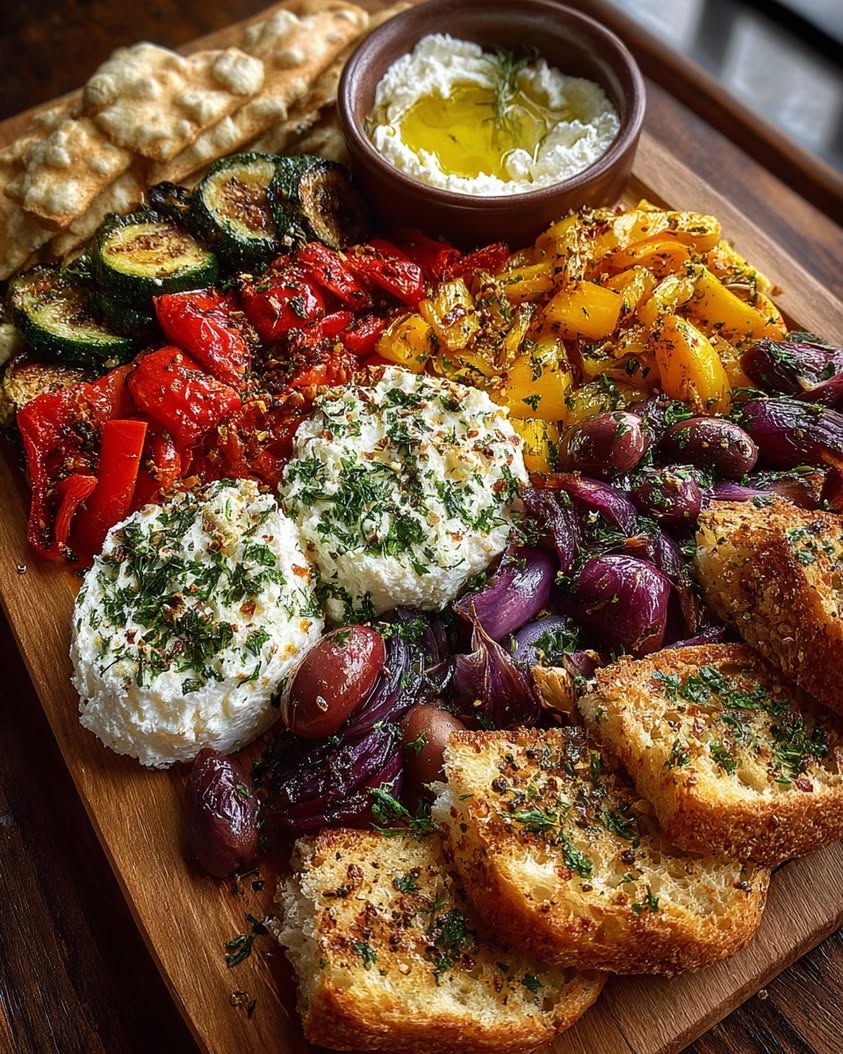
Mediterranean Herb Board with Ricotta Clouds, Roasted Veg & Almond Crunch: The Ultimate Shareable Feast
Imagine a centerpiece that is as stunning as it is delicious. This Mediterranean Herb Board with Ricotta Clouds, Roasted Veg & Almond Crunch is exactly that. It transforms simple, fresh ingredients into an interactive culinary experience. Moreover, it is perfect for gatherings where you want to impress without stress. The board combines creamy, herbed ricotta clouds with sweet, caramelized roasted vegetables and a savory almond crunch. Ultimately, every bite offers a symphony of textures and flavors that celebrate the sun-drenched essence of the Mediterranean.
This recipe is more than just a snack. It is a complete, shareable meal that encourages conversation and connection. The process is wonderfully straightforward. You simply roast vegetables to perfection, whip ricotta with fresh herbs, and toast almonds with spices. Consequently, you create a beautiful, bountiful board that looks like it came from a professional kitchen. The beauty lies in its versatility. You can adapt it with seasonal produce or based on what you have on hand. Therefore, it becomes a reliable go-to for any occasion, from casual weeknights to festive parties.
Creating this Mediterranean Herb Board with Ricotta Clouds, Roasted Veg & Almond Crunch is an act of love for your guests. The aroma of roasting vegetables and toasting nuts will fill your home with an irresistible warmth. Visually, the vibrant colors of the peppers, zucchini, and cherry tomatoes pop against the white ricotta and green herbs. Finally, the board invites everyone to dig in, customize their perfect bite, and enjoy the communal spirit of Mediterranean dining. It is food that is meant to be shared, savored, and celebrated.
Quick Recipe Highlights
- Flavor Profile: This board delivers a bright, herbaceous flavor from the lemon and fresh herbs, balanced by the deep sweetness of roasted vegetables and the salty, savory punch of the almond crunch. Each component complements the others, creating a harmonious and complex taste experience.
- Texture: You will experience a delightful contrast of textures. The ricotta clouds are luxuriously smooth and creamy. Meanwhile, the roasted vegetables offer tender, juicy bites. The almond crunch provides a necessary and satisfying crispy, crunchy element that ties everything together.
- Aroma: As it comes together, the board releases an incredible fragrance. First, you smell the earthy, caramelized scent of roasting vegetables. Then, the bright, citrusy notes of lemon zest and fresh herbs cut through. Finally, the warm, toasty aroma of cumin and coriander from the almonds completes the sensory journey.
- Visual Appeal: This dish is a feast for the eyes. The presentation features vibrant reds and yellows from the peppers and tomatoes, deep greens from zucchini and herbs, and pure white ricotta clouds. It is rustic, abundant, and incredibly inviting on any table.
- Skill Level Needed: This recipe is accessible for cooks of all levels. It requires basic skills like chopping, roasting, and mixing. There is no complicated technique, so it is perfect for beginners. However, the impressive final result makes it look like a chef created it.
- Special Equipment: You only need common kitchen tools. A large baking sheet for roasting, a mixing bowl, and a small skillet for toasting nuts are essential. A good chef’s knife for prepping vegetables and a microplane for zesting lemon will make the process smoother and faster.
Recipe Overview
- Difficulty Level: We rate this Mediterranean Herb Board as easy. The steps are simple and sequential. You prepare components simultaneously, so active time is efficient. There is no fussy plating; the beauty is in the rustic assembly. Anyone comfortable with basic kitchen tasks can achieve fantastic results.
- Category: This recipe fits multiple categories wonderfully. It is an outstanding appetizer or starter for a dinner party. Additionally, it serves as a fantastic light lunch or dinner centerpiece. With some added bread or grains, it becomes a complete and satisfying vegetarian main course for sharing.
- Cuisine: The dish is firmly rooted in Mediterranean cuisine. It draws inspiration from the coastal regions of Italy, Greece, and Southern France. The focus on fresh vegetables, high-quality cheese, olive oil, and herbs is classic. The use of almonds and warm spices also nods to North African influences common in the region.
- Cost: This is a cost-effective way to feed a crowd. Seasonal vegetables and a single container of ricotta form the base. Almonds and spices are pantry staples. Overall, you can create this impressive spread for a fraction of the cost of a charcuterie board with meats and specialty cheeses.
- Season: This board shines brightest in late spring through summer and into early fall. This is when zucchini, bell peppers, and tomatoes are at their peak flavor and most affordable. However, you can adapt it year-round using sturdy winter vegetables like carrots, cauliflower, and sweet potatoes.
- Occasion: It is incredibly versatile for events. Serve it at a casual weekend gathering with friends, a festive holiday party, or a relaxed family meal. It is also perfect for potlucks because it travels well and stays delicious at room temperature. It naturally encourages a social, interactive dining experience.
Why You’ll Love This Recipe
You will adore the taste and texture appeal of this Mediterranean Herb Board. Every bite is a carefully orchestrated experience. First, the creamy, cool ricotta clouds melt on your tongue. Then, the sweet, tender roasted vegetables burst with juice. Finally, the salty, crunchy almonds provide the perfect finish. This combination is utterly addictive. Furthermore, the bright flavors of lemon, garlic, and fresh herbs keep each mouthful lively and refreshing. It is a dish that satisfies on every sensory level without feeling heavy or overly rich.
The convenience and preparation benefits are significant. You can prepare almost every component ahead of time. Roast the vegetables and toast the almonds hours in advance. Meanwhile, whip the ricotta mixture and keep it chilled. When guests arrive, you simply arrange everything on a board. Consequently, you spend less time in the kitchen and more time enjoying the party. The recipe is also forgiving. Vegetable sizes do not need to be perfect, and assembly is intuitive. This takes the pressure off and makes cooking enjoyable.
Nutritional advantages are another major reason to love this board. It is packed with vitamins, fiber, and healthy fats. The colorful vegetables provide a wide range of antioxidants. Ricotta offers a good source of protein and calcium. Additionally, almonds contribute healthy fats, protein, and vitamin E. Using olive oil as the primary fat supports heart health. This is food that makes you feel good. It is nourishing, satisfying, and aligns with a balanced, whole-foods approach to eating.
The social and entertaining value cannot be overstated. This Mediterranean Herb Board with Ricotta Clouds, Roasted Veg & Almond Crunch is a natural conversation starter. It creates a focal point on the table where people can gather, chat, and build their perfect bites. This interactive style of eating is inherently fun and communal. It breaks the ice and makes any meal feel more special and engaging. You are not just serving food; you are creating an experience and a memory for your guests.
Finally, the cost-effectiveness and accessibility are huge perks. You do not need expensive or hard-to-find ingredients. Most items are available at any standard grocery store. Seasonal vegetables keep costs low. Compared to a meat and cheese board, this vegetarian option is often much more budget-friendly. It demonstrates that impressive, restaurant-quality food can be made at home without a huge investment. This makes it a recipe you will return to again and again.
Historical Background and Cultural Significance
The concept of shared boards and platters has deep roots in Mediterranean culinary history. For centuries, meals in this region centered around communal dining. Families and communities would gather around a table laden with bowls of dips, roasted vegetables, olives, bread, and cheese. This style of eating emphasized hospitality, generosity, and social connection. Our Mediterranean Herb Board is a modern homage to this tradition. It captures the spirit of meze, a collection of small dishes served as appetizers or a light meal across Greece, Turkey, and the Middle East.
Cultural importance stems from the ingredients themselves. The Mediterranean diet, celebrated globally for its health benefits, is built on pillars like fresh vegetables, legumes, nuts, olive oil, and moderate dairy. This board exemplifies those principles perfectly. It is not just a recipe; it is an edible representation of a lifestyle that prioritizes fresh, seasonal produce and shared meals. The act of gathering around a bountiful board reinforces social bonds, which is a cornerstone of Mediterranean culture. Food is seen as a reason to come together, celebrate, and connect.
The evolution of the recipe from traditional practices is interesting. Historically, a farmer or family would eat what was locally available and in season. A board might feature whatever vegetables were ripe, local cheese, and foraged herbs. Our modern version takes that adaptable concept and refines it with specific pairings for maximum flavor impact. The “ricotta clouds” technique—whipping ricotta until light—is a contemporary twist on simple fresh cheese. The spiced almond crunch adds a deliberate texture element that elevates the entire experience, showing how classic ideas can be updated for today’s palate.
Regional variations of this concept are endless. In Greece, you might find a similar board with feta, tzatziki, and dolmades. In Italy, it could feature burrata, roasted artichokes, and focaccia. Southern France might include tapenade, ratatouille, and goat cheese. Our board draws from these diverse influences to create a cohesive, pan-Mediterranean experience. This reflects how modern cooking often blends traditions. The result is a dish that feels both timeless and fresh, honoring its origins while being perfectly suited for a contemporary gathering.
Ingredient Deep Dive
Let us start with ricotta cheese. This fresh cheese has Italian origins, dating back to ancient times as a way to use the whey leftover from making other cheeses. Nutritionally, it is a great source of protein and calcium while being lower in fat and sodium than many hard cheeses. For the best results in your Mediterranean Herb Board, seek out whole-milk ricotta for superior creaminess and flavor. Avoid brands with stabilizers like gum, which can make the texture grainy. If you cannot find good ricotta, a fresh goat cheese or even a thick, strained Greek yogurt can be a tangy substitute.
Bell peppers and zucchini are the vegetable stars. These staples of Mediterranean cooking are loaded with vitamins A and C, fiber, and antioxidants. Their high water content makes them ideal for roasting, as they caramelize beautifully without drying out. Select peppers that are firm with taut, shiny skin. Choose zucchini that are medium-sized and feel heavy for their length, indicating they are not pithy. Store them unwashed in your refrigerator’s crisper drawer. For a variation, try using eggplant, red onions, or asparagus depending on the season.
The almond crunch is a game-changer. Almonds have been cultivated around the Mediterranean for thousands of years. They provide healthy monounsaturated fats, vitamin E, and magnesium. Toasting them intensifies their nutty flavor and improves crunch. Use raw, whole almonds for the best texture. The spices—cumin and coriander—are common in North African cuisine, adding a warm, earthy depth that contrasts with the bright herbs. To store, keep almonds in an airtight container in a cool, dark place or the freezer to prevent their oils from turning rancid. For a nut-free version, try toasted pumpkin seeds or chickpeas.
Fresh herbs like basil, parsley, and oregano are non-negotiable for authentic flavor. Herbs are the soul of Mediterranean cooking, used abundantly for their fresh, aromatic qualities. They are rich in phytochemicals and antioxidants. For the brightest taste, buy herbs with perky leaves and no signs of wilting or sliminess. Store them stem-down in a glass of water in the fridge, loosely covered with a bag. If you only have dried herbs, use them sparingly in the roasted veg oil, but fresh is essential for the ricotta. There is no true substitute for their vibrant, green flavor.
Extra virgin olive oil is the liquid gold that ties everything together. It is the fundamental fat of the region, prized for its fruity, peppery flavor and health benefits. Use a good-quality oil you enjoy tasting, as its flavor will shine through. For roasting, a standard olive oil works fine, but for drizzling at the end, use your best extra virgin. Store it in a dark, cool place away from the stove to preserve its quality. The lemon zest and juice provide crucial acidity. Always zest the lemon before juicing it, and use unwaxed, organic fruit if possible for the cleanest flavor.
Common Mistakes to Avoid
- Crowding the Baking Sheet: Do not overcrowd your vegetables when roasting. If the pan is too full, the vegetables will steam instead of caramelize. Consequently, you will get soggy, pale veggies instead of ones with sweet, browned edges. Use two sheets if necessary to ensure each piece has space.
- Using Low-Fat Ricotta: Avoid using part-skim or fat-free ricotta for the clouds. These varieties often contain more stabilizers and have a drier, grainier texture. They will not whip up light and fluffy. Whole milk ricotta is essential for achieving that luxurious, cloud-like consistency.
- Adding Herbs to Hot Ricotta: Never mix the fresh herbs into the ricotta while it is still warm from the fridge. Let the cheese come to room temperature first. Otherwise, the herbs can wilt and turn dark, affecting both the vibrant green color and the fresh flavor of your mixture.
- Forgetting to Toast the Nuts: Skipping the toasting step for the almonds is a major misstep. Raw almonds lack the deep, nutty flavor and satisfying crunch. Toasting them with the spices wakes up their oils and marries the flavors. Watch them closely, however, because they can burn in seconds.
- Underseasoning the Vegetables: Vegetables need ample seasoning before roasting. Do not be shy with salt and pepper. Season them well while they are raw and coated in oil. The seasoning penetrates as they cook. If you only add salt at the end, it will just sit on the surface and taste uneven.
- Not Preheating the Oven: Always ensure your oven is fully preheated before adding the vegetables. A hot oven is crucial for triggering the Maillard reaction, which creates that desirable caramelization and deep flavor. Putting veggies in a cool oven will cause them to cook unevenly and become mushy.
- Using Dull Herbs: Avoid using herbs that are past their prime. Limp, yellowing, or slimy basil or parsley will impart an off flavor. Your herbs should be vibrant and fragrant. If your fresh herbs look sad, it is better to use a high-quality dried herb in the oil for roasting and skip the fresh garnish.
- Skipping the Lemon Zest: Do not just use lemon juice and forget the zest. The zest contains potent aromatic oils that carry the true essence of lemon. It adds a bright, floral note that juice alone cannot provide. Always zest your lemon directly into the ricotta mixture for maximum impact.
Essential Techniques
Roasting Vegetables for Caramelization: This technique is vital for developing deep, sweet flavors. The high, dry heat of the oven causes the natural sugars in the vegetables to caramelize. To master it, cut your vegetables into uniform sizes for even cooking. Toss them thoroughly with oil and seasoning. Most importantly, spread them in a single layer with space between each piece. The visual cue for success is golden-brown, slightly charred edges and tender interiors. A common pitfall is stirring them too often; let them sit to develop that beautiful color.
Whipping Ricotta to Cloud Consistency: This simple step transforms ricotta from dense to ethereal. The goal is to incorporate air, making it light and spreadable. Use a fork or whisk and beat vigorously for a minute or two. The ricotta will lighten in color and increase slightly in volume. The key is to start with room-temperature ricotta, as cold cheese is too stiff. Do not over-whip, however, or it can become loose and watery. Perfectly whipped ricotta should hold a soft peak and feel luxuriously smooth.
Toasting Nuts with Spices: Toasting unlocks the full flavor potential of nuts and spices. Use a dry skillet over medium heat. Add the almonds first, toasting until fragrant and lightly golden. Then, add the spices for just the last 30 seconds. The residual heat from the nuts will toast the spices without burning them. Constant stirring is essential to prevent hot spots. The visual cue is a light golden color on the nuts and a fragrant aroma from the spices. Immediately transfer them to a plate to stop the cooking process.
Building a Visually Appealing Board: Arrangement is an important technique for shareable feasts. Start by placing your larger items, like bowls of ricotta clouds, as anchors. Then, arrange the roasted vegetables in groups, letting their colors create sections. Scatter the almond crunch in piles or trails. Finally, fill gaps with lemon wedges and fresh herb sprigs. The goal is abundance and ease of access. Leave small serving utensils for each component. A common mistake is overcrowding, which makes the board look messy and hard to navigate.
Pro Tips for Perfect Mediterranean Herb Board with Ricotta Clouds, Roasted Veg & Almond Crunch
First, roast your vegetables on parchment paper. This prevents sticking without needing excessive oil and makes cleanup instantaneous. It also helps the vegetables achieve an even roast without burning on the pan.
Season the ricotta mixture generously and let it rest. After mixing the ricotta with herbs, lemon, salt, and pepper, cover it and let it sit for 15 minutes at room temperature. This allows the flavors to meld and deepen beautifully.
Use a microplane for the lemon zest and garlic. This creates a super-fine zest and garlic paste that distributes evenly throughout the ricotta. You will avoid unpleasant chunks of raw garlic and get a smoother, more integrated flavor.
Double the almond crunch. It is that good, and people will gravitate towards it. Making extra ensures there is plenty for every bite and provides a delicious leftover snack for the next day.
Warm your serving board or platter slightly. If using a stone or slate board, pop it in a just-warm oven for a few minutes. A slightly warm surface will keep the ricotta and vegetables at an ideal eating temperature longer.
Add a final flourish of high-quality olive oil. Just before serving, drizzle a little of your best extra virgin olive oil over the entire board. This adds a gorgeous sheen and a burst of fresh, fruity flavor.
Provide different vessels for serving. Offer both spreading knives for the ricotta and small spoons or tongs for the vegetables and almonds. This makes it easy for guests to build their perfect bite without cross-contaminating flavors.
Do not refrigerate the assembled board. The cold will dull the flavors and harden the olive oil. Assemble the board just before serving. If you must prep ahead, keep components separate and combine them at the last moment.
Variations and Adaptations
For regional variations, you can easily tailor this board. Give it a Greek spin by adding kalamata olives, cucumber slices, and a side of tzatziki. For an Italian feel, include ribbons of prosciutto, marinated artichoke hearts, and sun-dried tomatoes. A Middle Eastern version could feature hummus, baba ganoush, and pomegranate seeds. The basic framework of creamy element, roasted veg, and crunchy topping is endlessly adaptable to different culinary traditions.
Seasonal adaptations keep the board exciting year-round. In summer, use zucchini, eggplant, and cherry tomatoes. For fall, switch to cubed butternut squash, Brussels sprouts, and red onion. Winter calls for carrots, parsnips, and cauliflower. In spring, asparagus, new potatoes, and peas are perfect. Adjust roasting times slightly based on the density of the vegetables. The ricotta clouds and almond crunch remain delicious constants.
Dietary modifications are straightforward. For a vegan board, substitute the ricotta with a whipped cashew cheese or a thick, seasoned vegan sour cream. Ensure the bread or crackers served alongside are also vegan. For a gluten-free option, simply serve with gluten-free crackers or crostini. The core components of the board are naturally vegetarian and gluten-free, making it an inclusive choice for many diets.
Flavor variations can personalize the experience. Add heat by incorporating red pepper flakes into the almond crunch or a chopped fresh chili into the ricotta. For a smokier profile, use smoked paprika on the vegetables or in the almond spice mix. Introduce sweetness with a drizzle of honey or balsamic glaze over the roasted vegetables before serving. A tablespoon of chopped sun-dried tomatoes or capers mixed into the ricotta adds a savory, briny punch.
Texture modifications can cater to different preferences. For extra creaminess, add a dollop of labneh or Greek yogurt to the ricotta mixture. For more crunch, include other toasted seeds like pumpkin or sunflower seeds with the almonds. If you prefer a softer crunch, use toasted pine nuts or chopped walnuts instead. You can even add a layer of texture by sprinkling everything with crispy fried shallots or garlic right before serving.
Presentation alternatives offer creative freedom. Instead of one large board, create individual mini-boards on small plates or slate tiles for a dinner party setting. You can also deconstruct it into a salad by tossing the roasted vegetables and almond crunch over a bed of greens, with the ricotta clouds dolloped on top. For a more rustic family-style meal, serve all the components in separate bowls and let everyone build their own plate.
Serving and Presentation Guide
Plating techniques begin with choosing the right canvas. A large wooden board, a marble slab, or even a large ceramic platter works beautifully. Anchor your composition with the bowls of ricotta clouds. Place them slightly off-center to create visual interest. Then, artfully arrange the piles of roasted vegetables, grouping by color to create a vibrant, mosaic-like effect. Let the vegetables spill out naturally rather than stacking them neatly.
Garnishing ideas go beyond just sprinkling herbs. Use whole sprigs of fresh basil, oregano, or dill for a lush, garden-fresh look. Add edible flowers like nasturtiums or pansies for a special occasion. Thin slices of lemon or lemon twists add a bright yellow accent. A final drizzle of vibrant green olive oil or a sprinkle of flaky sea salt over the entire board adds professional polish just before serving.
Traditional accompaniments are key to completing the meal. Serve with plenty of warm, crusty bread for spreading the ricotta and scooping up vegetables. Grilled pita bread, sliced baguette, or a variety of crackers are all excellent choices. You might also include a small bowl of high-quality olives or cornichons on the side for a briny contrast. These elements turn the board from an appetizer into a satisfying meal.
Modern serving suggestions include interactive elements. Provide small plates and let guests create their own compositions. You can also offer additional toppings in small bowls, such as chili oil, a reduced balsamic glaze, or extra almond crunch, so people can customize. For a seated dinner, you could pre-assemble small tasting plates with a bit of each component as a elegant first course.
Temperature considerations are crucial for the best experience. The roasted vegetables and almond crunch are best at room temperature. The ricotta clouds should be cool but not ice-cold. Assemble the board just before serving so the warm vegetables do not melt the ricotta, and the cool ricotta does not chill the vegetables. If the board will be out for a while, you can keep the ricotta bowls on a separate small dish nested in ice.
Portion control tips are helpful for planning. This recipe comfortably serves six as a light meal or appetizer. If serving as a main course for four, consider adding a grain salad or more bread on the side. For a larger party of eight to ten, simply increase the vegetable quantities by half and double the ricotta and almond crunch. Always err on the side of more rather than less, as people will happily enjoy any leftovers.
Wine and Beverage Pairings
Wine pairings should complement the bright, herbal, and earthy flavors. A crisp, dry white wine like a Sauvignon Blanc or Pinot Grigio is a classic choice. Their acidity cuts through the richness of the ricotta and mirrors the lemon notes. A light-bodied, fruity red like a Beaujolais or Pinot Noir can also work beautifully, especially if the vegetables have a deeper roast. For a truly Mediterranean experience, opt for a Greek Assyrtiko or a dry rosé from Provence. These wines have the minerality and freshness to elevate every component on the board.
Non-alcoholic alternatives can be just as sophisticated. Sparkling water with a twist of lemon or a few cucumber slices is always refreshing. For something more crafted, try a homemade herbal iced tea with mint and lemon verbena. A virgin spritz made with blood orange juice, elderflower cordial, and soda water feels festive. These drinks provide the cleansing bubbles or herbal notes that pair well with the food without overpowering it.
While not traditional pairings for this board, coffee and tea can follow the meal nicely. After enjoying this Mediterranean feast, a cup of strong Italian espresso would be a perfect digestif. Alternatively, a pot of mint tea, common in North Africa, would complement the herbal notes and aid digestion. Serve these after the board has been cleared, as they are better suited for the end of the meal rather than alongside the food itself.
Temperature considerations for beverages are simple. White wines, rosés, and non-alcoholic spritzes should be served well-chilled. Light reds are best served slightly cool, at what is often called “cellar temperature.” Iced teas and sparkling waters should be ice-cold. Having a variety of drinks at their ideal temperatures ensures each sip is as enjoyable as the food it accompanies.
Serving suggestions for beverages involve presentation. Offer wines in appropriate glassware to enhance the tasting experience. For non-alcoholic options, use pretty pitchers or glass bottles with fresh herb garnishes. Provide plenty of ice and lemon slices on the side so guests can customize their drinks. Setting up a small beverage station near the food board encourages guests to help themselves and keeps the party flowing smoothly.
Storage and Shelf Life
Storage methods must keep components separate for best results. Store leftover roasted vegetables in an airtight container in the refrigerator for up to 4 days. The ricotta clouds should be kept in a separate sealed container for up to 3 days. The almond crunch can be stored at room temperature in a jar or airtight container for up to a week to maintain its crispness. Never store the assembled board in the fridge, as the textures will suffer.
Temperature requirements are straightforward. The vegetables and ricotta require refrigeration at or below 40°F. The almond crunch is fine in a cool, dry pantry. If you live in a very humid climate, you may want to refrigerate the almond crunch as well to prevent it from becoming soft, though this can slightly dull the flavor.
Container recommendations are important for preserving quality. Use glass or BPA-free plastic containers with tight-fitting lids. For the roasted vegetables, a shallow container is best to prevent them from getting squashed and soggy. For the ricotta, a deeper bowl with a lid is fine. Always let components cool completely to room temperature before sealing and refrigerating to prevent condensation, which leads to sogginess.
Signs of spoilage to watch for include an off or sour smell from the ricotta or vegetables, visible mold (often fuzzy spots in white, green, or black), or a slimy texture on the vegetables. The almond crunch will lose its crispness and may taste stale or rancid if the oils have oxidized. When in doubt, it is always safest to throw it out.
Reheating instructions apply only to the roasted vegetables. To restore their warmth without making them mushy, spread them on a baking sheet and warm in a 350°F oven for 5-10 minutes. You can also use an air fryer for a few minutes to re-crisp the edges. Do not microwave them, as this will steam them and make them limp. The ricotta and almond crunch should be served at their intended temperatures and not reheated.
Freezing guidelines are not recommended for this dish. The high water content in the vegetables and ricotta means they will become watery and lose their texture upon thawing. The almond crunch can be frozen, but it risks absorbing freezer odors. This Mediterranean Herb Board is best enjoyed fresh or from refrigerated leftovers within a few days.
Make Ahead Strategies
A prep timeline makes entertaining stress-free. The day before your event, you can wash and chop all the vegetables. Store them in sealed bags or containers in the fridge. You can also toast the almond crunch and store it at room temperature. On the day of, roast the vegetables 2-3 hours ahead and let them cool to room temperature. Whip the ricotta mixture 1-2 hours ahead and let it sit covered at room temperature to allow flavors to develop. Assemble the board just before guests arrive.
Storage between steps is simple with proper planning. Keep pre-chopped vegetables in the crisper drawer. Leave roasted vegetables in their baking dish covered with foil at room temperature if using within a few hours. The ricotta mixture can be covered with plastic wrap pressed directly onto its surface to prevent a skin from forming. Have all your serving boards, bowls, and utensils cleaned and ready to go.
Quality impact assessment is important. Pre-chopping vegetables has no negative impact. Roasting vegetables ahead is fine, though they are best served within 4 hours of coming out of the oven for optimal texture. The ricotta actually benefits from a short rest. The almond crunch stays perfectly crisp for days. The only element that must be absolutely last-minute is the final assembly and garnishing with fresh herbs.
Assembly tips for last-minute efficiency are key. Have your board clean and on the counter. Place your empty ricotta bowls and any other serving dishes where you want them. When ready, simply transfer the ricotta to the bowls, arrange the vegetables with tongs, scatter the almonds, and add garnishes. This final step should take no more than 5 minutes, leaving you calm and ready to welcome your guests.
Reheating guidelines for make-ahead components are minimal. As mentioned, you can briefly re-warm the roasted vegetables in the oven if you made them more than 4 hours ahead and they’ve cooled completely. Otherwise, serve everything at room temperature. The beauty of this board is that it does not require everything to be piping hot, which simplifies hosting immensely.
Fresh element additions are the final touch. Even if you prepped everything else ahead, always add the final garnishes—the fresh herb sprigs, lemon wedges, and a last drizzle of olive oil—right before serving. This ensures they look vibrant and contribute their peak aroma and flavor to the overall presentation of your Mediterranean Herb Board.
Scaling Instructions
Halving the recipe is easy for a smaller gathering. Simply use half the quantity of all ingredients. Use one standard baking sheet for the vegetables. The roasting time may be slightly shorter, so check for doneness a few minutes early. The ricotta mixture can be made in a small bowl. This scaled-down version is perfect for a romantic dinner for two or a small family meal.
Doubling or tripling the recipe for a crowd is straightforward. For vegetables, you will need multiple baking sheets. Rotate the sheets in the oven halfway through cooking to ensure even roasting. You may need to roast in batches. For the ricotta, mix it in a large bowl or use a stand mixer with the paddle attachment. Triple the almond crunch in a large skillet, toasting in batches if necessary to avoid overcrowding. Use a very large board or multiple boards for serving.
Equipment adjustments are necessary when scaling. For a double batch, ensure you have at least two large baking sheets. You may need a larger mixing bowl for the ricotta. For a triple batch, consider using your largest roasting pan for the vegetables, though baking sheets still provide better caramelization. Have plenty of serving utensils and small plates on hand for guests.
Timing modifications are minimal when scaling up. Roasting time may increase slightly if the oven is very full, as it affects air circulation. Start checking the vegetables at the original time, but be prepared to add 5-10 minutes. The ricotta whipping time remains the same regardless of quantity. The almond crunch may take longer to toast evenly if the skillet is very full; toast in batches for best results.
Storage considerations change with scale. If you have large quantities of leftovers, store components in multiple smaller containers rather than one giant one. This makes it easier to take out just what you need for a quick lunch without disturbing the rest. Label containers with dates. A large batch of almond crunch can be stored in a large jar, but ensure it has an airtight seal to maintain crispness.
Nutritional Deep Dive
A macro breakdown of this Mediterranean Herb Board reveals a balanced profile. The ricotta provides a good source of protein and fat. The vegetables contribute complex carbohydrates and fiber. The almonds add healthy fats, a bit more protein, and fiber. Olive oil is a source of monounsaturated fat. Overall, a serving offers a satisfying mix that supports steady energy levels. It is not overly high in any one macronutrient, making it a well-rounded choice.
The micronutrient analysis is impressive due to the variety of colorful vegetables. Red and yellow bell peppers are exceptionally high in vitamins A and C. Zucchini provides potassium and manganese. Tomatoes contribute lycopene, a powerful antioxidant. The fresh herbs, though used in smaller quantities, add traces of vitamins K, C, and A. Almonds are a great source of vitamin E and magnesium. Ricotta contributes calcium and phosphorus. This diversity ensures you are getting a wide spectrum of essential vitamins and minerals.
Health benefits are aligned with the celebrated Mediterranean diet. This eating pattern is consistently linked to improved heart health, better brain function, and reduced inflammation. The board’s emphasis on plants, healthy fats from olive oil and nuts, and moderate dairy fits this pattern perfectly. The high fiber content supports digestive health. The{“success”:true,”message”:”Recipe created successfully”,”post_id”:8802,”tasty_recipe_id”:8802,”shortcode”:” Print
Mediterranean Herb Board with Ricotta Clouds, Roasted Veg & Almond Crunch
Description
A vibrant, shareable board featuring creamy whipped ricotta, roasted seasonal vegetables, fresh herbs, and a crunchy almond topping, perfect for appetizers or light meals.
Ingredients
For the Crust:
- 1 cup whole milk ricotta
- 2 tablespoons extra virgin olive oil, plus more for drizzling
- 1 zucchini, sliced into rounds
- 1 red bell pepper, sliced
- 1 small eggplant, cubed
- 1/2 cup cherry tomatoes
- 2 cloves garlic, minced
- 1 teaspoon dried oregano
- 1/4 cup sliced almonds, toasted
- 1/4 cup fresh basil leaves
- 1/4 cup fresh parsley, chopped
- Salt and black pepper to taste
- Crusty bread or crackers for serving
Instructions
1. Prepare the Crust:
- Preheat oven to 400°F (200°C). Toss zucchini, bell pepper, eggplant, cherry tomatoes, and minced garlic with 2 tablespoons olive oil, oregano, salt, and pepper on a baking sheet. Roast for 20-25 minutes until tender and slightly charred.
- While vegetables roast, place ricotta in a bowl and whip with a fork or whisk until light and fluffy. Season with a pinch of salt and pepper.
- Toast sliced almonds in a dry skillet over medium heat for 3-4 minutes until golden and fragrant, stirring frequently to prevent burning.
- Arrange the whipped ricotta in dollops (‘clouds’) on a large board or platter. Surround with roasted vegetables, fresh basil, and parsley.
- Sprinkle toasted almonds over the ricotta and vegetables. Drizzle everything with extra olive oil and season with additional salt and pepper if desired.
- Serve immediately with crusty bread or crackers for scooping.
Notes
You can customize the seasonings to taste.

I’m Billy, a classically trained culinary school graduate from The Culinary Institute of America with over 12 years in the restaurant industry and over 19 years of cooking experience.