
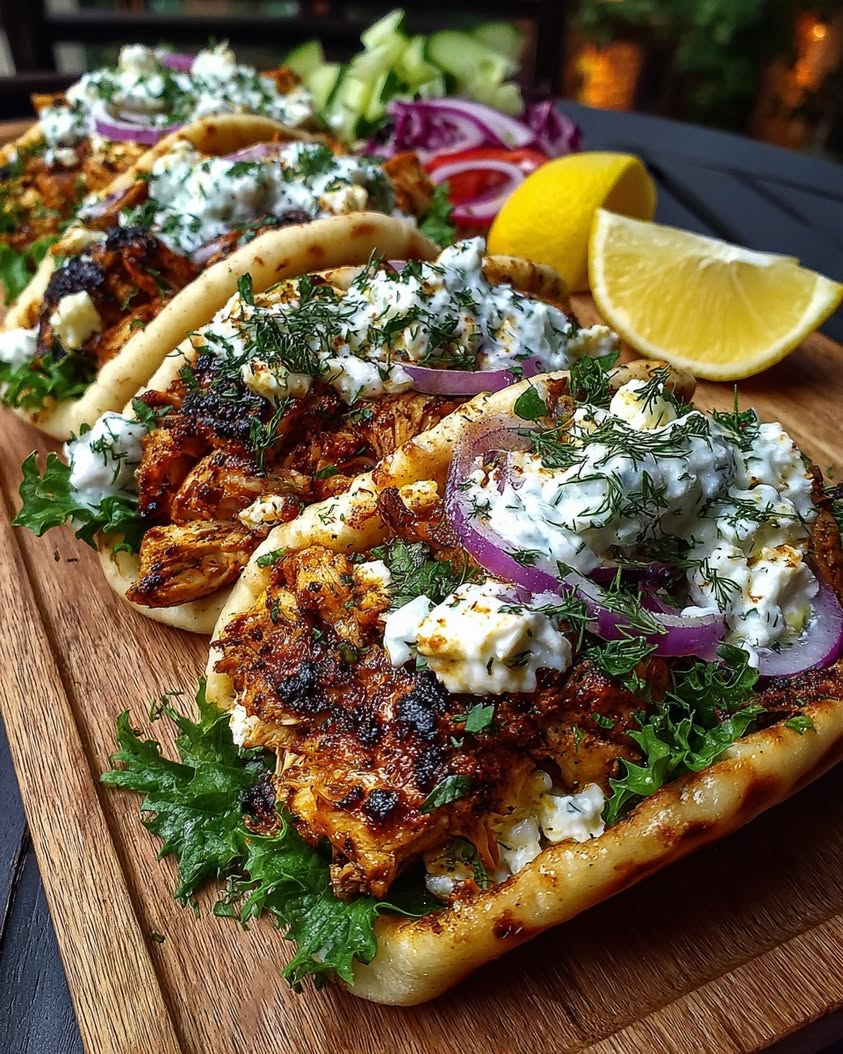
Mediterranean Chicken Gyros with Creamy Feta Tzatziki: A Flavor-Packed Weeknight Wonder
Imagine tender, juicy chicken infused with the vibrant flavors of the Mediterranean, all wrapped in a warm pita and topped with a cool, tangy sauce. This Mediterranean Chicken Gyros recipe brings the bustling energy of a Greek street food stall right into your kitchen. Furthermore, it transforms simple ingredients into an extraordinary meal that feels both indulgent and wholesome. The aroma of oregano, garlic, and lemon will fill your home, promising a dinner that’s anything but ordinary.
This dish is a celebration of contrasts. You get the savory, slightly charred chicken against the creamy, briny feta tzatziki. Additionally, crisp vegetables add a fresh crunch that completes every bite. Ultimately, this Mediterranean Chicken Gyros recipe is designed for real life. It comes together quickly, uses one pan for the chicken, and delivers restaurant-quality flavor without the fuss. Whether you need a fast family dinner or an impressive meal for friends, this recipe is your perfect solution.
Quick Recipe Highlights
- Flavor Profile: This Mediterranean Chicken Gyros recipe delivers a bright, herbaceous punch from fresh oregano and lemon, balanced by the earthy warmth of garlic and paprika. The creamy feta tzatziki adds a tangy, salty counterpoint that ties all the elements together beautifully.
- Texture: Expect tender, succulent chicken strips with a perfect sear, wrapped in a soft, pillowy pita. The tzatziki is luxuriously smooth, while additions like sliced onion and tomato provide a satisfying, fresh crunch.
- Aroma: As the chicken cooks, your kitchen will fill with the irresistible scent of sizzling garlic, zesty lemon, and fragrant Mediterranean herbs. This aromatic promise is a key part of the experience.
- Visual Appeal: The dish is a feast for the eyes with vibrant colors. You see golden-brown chicken, white and green tzatziki, and the reds and greens of fresh vegetables, all wrapped in a warm pita.
- Skill Level Needed: This is a beginner-friendly recipe. Basic skills like chopping, mixing, and pan-searing are all you need. The steps are straightforward and forgiving.
- Special Equipment: No special tools are required. A good skillet, a mixing bowl, and a sharp knife are all you need to create this fantastic Mediterranean Chicken Gyros recipe.
Recipe Overview
- Difficulty Level: We rate this Mediterranean Chicken Gyros recipe as easy. The marinade is a simple mix, the cooking process is quick pan-searing, and assembly requires no technical skill. Consequently, even novice cooks can achieve fantastic results on their first try.
- Category: This dish fits perfectly into the categories of quick dinner, healthy lunch, and party food. It’s substantial enough to be a main course but also works well as part of a mezze platter for sharing.
- Cuisine: This recipe is firmly rooted in Greek and broader Mediterranean cuisine. It draws directly from the tradition of gyros, a beloved street food, while incorporating classic flavors like lemon, oregano, and feta cheese.
- Cost: Making this Mediterranean Chicken Gyros recipe at home is very cost-effective. Chicken thighs are an affordable protein, and the herbs and spices are pantry staples. Overall, it’s a fraction of the cost of restaurant gyros.
- Season: This is truly a year-round recipe. It’s light and fresh for summer but hearty enough for cooler months. The bright flavors are especially welcome when you need a taste of sunshine.
- Occasion: It’s incredibly versatile. Serve it for a casual weeknight dinner, a fun weekend lunch, or as a crowd-pleasing option at your next gathering. Everyone loves building their own gyro.
Why You’ll Love This Mediterranean Chicken Gyros Recipe
First and foremost, the taste is absolutely phenomenal. Each component of this Mediterranean Chicken Gyros recipe works in harmony. The chicken is marinated in a potent blend of lemon juice, olive oil, garlic, and oregano, which tenderizes the meat and packs it with flavor. When seared, it develops a delicious crust. Then, the creamy feta tzatziki sauce cuts through the richness with its cool, tangy profile. Every single bite is a perfect balance of savory, tangy, and fresh.
Secondly, the convenience factor is a major win. Unlike traditional gyros cooked on a vertical rotisserie, this version uses a simple skillet. You can have marinated chicken ready to cook in minutes. Moreover, the tzatziki comes together just as quickly in one bowl. From start to finish, you’re looking at about 35 minutes for a meal that tastes like it took hours. This makes the Mediterranean Chicken Gyros recipe a lifesaver on busy evenings.
Nutritionally, this dish is a smart choice. Chicken thighs provide high-quality protein and beneficial fats. The yogurt-based tzatziki offers probiotics and calcium. Additionally, loading your gyro with tomatoes, onions, and lettuce adds vitamins, fiber, and antioxidants. You can easily use whole-wheat pita for extra fiber. Ultimately, it’s a balanced meal that satisfies cravings while fueling your body well.
For entertaining, this Mediterranean Chicken Gyros recipe is a guaranteed hit. It’s interactive and fun. You can set out all the components—warm pitas, chicken, tzatziki, and a variety of chopped veggies—and let everyone assemble their own creation. This takes the pressure off the host and allows guests to customize their meal. It’s a lively, engaging way to serve a crowd without complicated plating.
Finally, it’s incredibly accessible and cost-effective. The ingredients are easy to find at any grocery store. You likely have many of the spices and dried herbs in your pantry already. By making this Mediterranean Chicken Gyros recipe at home, you save significant money compared to eating out. You also control the quality of ingredients, opting for organic chicken or full-fat Greek yogurt if you prefer.
Historical Background and Cultural Significance
The gyro, a pillar of Greek street food, has a fascinating history. Its name comes from the Greek word “γύρος,” meaning “turn” or “revolution,” referring to the meat cooking on a vertical rotisserie. This cooking method likely traveled to Greece from the Middle East via Turkey, where similar dishes like döner kebab are found. Initially, gyros were made with pork or lamb, stacked in layers on the spit. The outer layer, crisped by the heat, would be shaved off and served. This Mediterranean Chicken Gyros recipe is a modern, home-kitchen adaptation of that iconic process.
Culturally, the gyro is more than just fast food in Greece. It represents conviviality and quick, satisfying nourishment. You find gyro shops everywhere, serving workers, students, and families at all hours. Eating a gyro is often a social, hands-on experience. This Mediterranean Chicken Gyros recipe captures that spirit of sharing and enjoyment. It brings a piece of everyday Greek life to your table, celebrating the simple joy of good food shared with good company.
The recipe has evolved significantly for the home cook. Since most people don’t have a vertical rotisserie at home, adaptations using sliced, marinated meat cooked in a skillet or oven have become popular. This Mediterranean Chicken Gyros recipe follows that practical evolution. Using chicken thighs is also a common modern twist, offering a more accessible and affordable protein than traditional lamb. The creamy feta tzatziki is a flavorful upgrade from the standard cucumber-yogurt sauce, adding an extra layer of authentic Greek flavor.
Regional variations abound across the Mediterranean. In Turkey, the döner kebab is served with different sauces and breads. In the Arab world, shawarma features its own distinct spice blends. This particular Mediterranean Chicken Gyros recipe leans into the Greek identity with its specific herb profile—oregano and mint—and the inclusion of feta cheese. However, it remains adaptable, welcoming influences from across the region. It’s a delicious testament to how culinary traditions travel and transform.
Ingredient Deep Dive
Chicken Thighs: Boneless, skinless chicken thighs are the ideal choice for this Mediterranean Chicken Gyros recipe. Historically, cheaper cuts of meat were used in street food, and thighs fit that bill while delivering superior flavor and juiciness compared to breast meat. They contain more fat, which keeps them moist during high-heat cooking. Nutritionally, they provide iron, zinc, and B vitamins. Select thighs that are uniform in size for even cooking. You can substitute chicken breasts, but reduce cooking time to avoid dryness.
Greek Yogurt: This thick, strained yogurt is the foundation of the tzatziki and a staple in Greek cuisine. Its history in the region dates back thousands of years. It provides a creamy texture and tangy flavor while being packed with protein, calcium, and probiotics for gut health. For the best results in your Mediterranean Chicken Gyros recipe, use full-fat Greek yogurt for maximum richness and stability. Low-fat versions may make the sauce too runny. Store it tightly sealed in the refrigerator.
Feta Cheese: Feta is a brined curd cheese with a protected designation of origin in Greece. Its sharp, salty flavor is iconic. Adding it to tzatziki elevates the sauce dramatically. Feta is a good source of calcium and conjugated linoleic acid. For your Mediterranean Chicken Gyros, choose a block of feta packed in brine rather than pre-crumbled cheese, which often contains anti-caking agents. Crumble it yourself for the best texture and flavor. Store leftover feta in its brine in the fridge.
Fresh Herbs (Oregano & Mint): Oregano is synonymous with Greek cooking, offering an earthy, slightly bitter punch. Mint adds a bright, cooling note. Both herbs have been used medicinally and culinarily in the Mediterranean for millennia. They bring antioxidants and digestive benefits. For the brightest flavor in your Mediterranean Chicken Gyros recipe, use fresh herbs whenever possible. If you must substitute dried oregano, use one-third the amount, as dried herbs are more concentrated. Store fresh herbs stem-down in a glass of water in the fridge.
Pita Bread: This soft, leavened flatbread is the traditional vessel for gyros. Its pocket is perfect for holding fillings. Look for high-quality, fresh pita—often found in the bakery section—or warm store-bought pita briefly in a dry skillet to make it pliable. For a variation, you could use flatbread or even lettuce wraps for a low-carb option. To store, keep pita in a bread bag at room temperature for a few days or freeze for longer storage.
Common Mistakes to Avoid
- Over-marinating the Chicken: While marinating adds flavor, marinating chicken in highly acidic lemon juice for more than 4 hours can actually begin to break down the proteins too much, resulting in a mushy texture. For this Mediterranean Chicken Gyros recipe, 30 minutes to 2 hours is perfectly sufficient.
- Using Low-Fat Yogurt for Tzatziki: Low-fat or non-fat Greek yogurt often contains stabilizers and more water. This can lead to a watery, runny tzatziki sauce that drips out of your gyro. Always use full-fat Greek yogurt for a thick, creamy, and stable sauce that clings to the ingredients.
- Not Draining the Cucumber: Cucumbers contain a huge amount of water. If you don’t grate and drain your cucumber thoroughly for the tzatziki, that water will leach into the yogurt, making the sauce soupy. Take the time to squeeze out the excess liquid with your hands or a towel.
- Crowding the Skillet: When cooking the chicken, give each piece space in the pan. If you overcrowd the skillet, the chicken will steam instead of sear. You’ll miss out on those delicious, flavorful browned bits that are essential to a great Mediterranean Chicken Gyros recipe. Cook in batches if necessary.
- Skipping the Resting Time: After cooking, let the chicken rest for a few minutes before slicing. This allows the juices to redistribute throughout the meat. If you slice immediately, all those flavorful juices will run out onto the cutting board, leaving you with drier chicken.
- Using Cold Pita: A cold, stiff pita bread can tear easily and doesn’t wrap well. Always warm your pitas before assembling your gyros. A quick 30 seconds in a dry skillet or 10 seconds in the microwave makes them soft, pliable, and more flavorful.
- Overfilling the Gyro: It’s tempting to load up the pita with everything. However, an overstuffed gyro is messy and difficult to eat. Be strategic with your portions so you can wrap it neatly and enjoy all the flavors in each bite without the filling falling out.
- Not Tasting the Tzatziki Before Serving: Seasoning is key. After making the tzatziki, always taste it and adjust the salt, lemon, or garlic. Remember, the feta is salty, so factor that in. A well-balanced sauce makes the entire Mediterranean Chicken Gyros recipe shine.
Essential Techniques
Proper Marinating: Marinating is crucial for infusing the chicken with flavor and tenderizing it. For this Mediterranean Chicken Gyros recipe, combine your oil, acid (lemon juice), and seasonings thoroughly. Place the chicken and marinade in a sealed bag or container, ensuring all pieces are coated. Refrigerate for at least 30 minutes. The acid helps break down surface fibers, while the oil carries fat-soluble flavors deep into the meat. Avoid over-marinating with strong acid, as it can make the texture mealy.
Achieving a Perfect Sear: A good sear creates the Maillard reaction, which develops complex, savory flavors and an appealing color. First, pat your marinated chicken thighs very dry with paper towels. Excess moisture will cause steaming. Next, heat your skillet with oil until it shimmers. Then, add the chicken in a single layer without touching. Finally, resist the urge to move it constantly. Let it cook undisturbed for several minutes to form a golden-brown crust before flipping.
Draining Grated Cucumber: This step is non-negotiable for thick tzatziki. After grating the cucumber, place it in a clean kitchen towel or several layers of paper towels. Then, twist and squeeze firmly over the sink to remove as much liquid as possible. The cucumber will look significantly reduced in volume. This prevents water from diluting your yogurt sauce, ensuring it remains creamy and clings to your Mediterranean Chicken Gyros instead of making the pita soggy.
Warming Pita Bread: Warming transforms pita from a mere wrapper into a soft, aromatic component. The best method is using a dry skillet over medium heat. Heat each pita for about 30-60 seconds per side until it puffs slightly and becomes warm and flexible. You can also wrap stacks in a damp paper towel and microwave for 20-30 seconds. This gentle heat revitalizes the bread, making it easier to fold and more enjoyable to eat.
Pro Tips for Perfect Mediterranean Chicken Gyros
First, for deeper flavor, consider marinating the chicken overnight. Use only the olive oil, garlic, and dried herbs for a long marinade, then add the fresh lemon juice just 30 minutes before cooking. This prevents the acid from toughening the meat over many hours.
Second, let your tzatziki sauce rest. After mixing, cover it and refrigerate for at least an hour before serving. This allows the flavors to meld and intensify, resulting in a much more cohesive and delicious sauce for your Mediterranean Chicken Gyros.
Third, slice your chicken against the grain. After the chicken rests, look for the direction of the muscle fibers and cut perpendicular to them. This shortens the fibers, making each piece of chicken in your gyro incredibly tender and easy to bite through.
Fourth, prepare a “gyro bar” for serving. Place all components—warm chicken, tzatziki, sliced tomatoes, onions, lettuce, and even extras like kalamata olives or pepperoncini—in separate bowls. This lets everyone customize their perfect gyro and makes mealtime interactive and fun.
Fifth, if you want to mimic the layered texture of spit-roasted meat, thinly slice the cooked chicken thighs and give them a quick toss back in the hot pan. This creates more edges and a mix of textures that’s closer to the traditional shaved gyro meat.
Sixth, for an extra flavor boost, brush the warmed pita bread very lightly with a mixture of olive oil and a pinch of dried oregano before assembling. This adds another subtle layer of Mediterranean flavor and helps prevent the pita from getting soggy from the tzatziki.
Variations and Adaptations
Regional Variations: To explore different Mediterranean traditions, adjust the spices. For a Turkish-inspired twist, add a pinch of cumin and sumac to the chicken marinade and use a garlic-yogurt sauce without feta. For a Lebanese flair, include some allspice and cinnamon in the spice mix and serve with toum, a powerful garlic sauce.
Seasonal Adaptations: In summer, add grilled zucchini or eggplant slices to your gyro. In cooler months, incorporate roasted red peppers or a spoonful of warm, spiced rice inside the pita. You can also use heartier greens like kale, massaged with a little lemon juice, instead of lettuce.
Dietary Modifications: For a gluten-free Mediterranean Chicken Gyros recipe, use certified gluten-free pita or serve the components over a bed of greens as a gyro salad. For dairy-free, substitute the yogurt and feta with a sauce made from blended soaked cashews, lemon juice, and nutritional yeast.
Flavor Variations: Experiment with the marinade. Add a tablespoon of harissa paste for heat, or use smoked paprika instead of sweet paprika for a deeper, smokier flavor. A spoonful of sun-dried tomato paste in the marinade can add wonderful umami richness.
Texture Modifications: If you prefer a crunchier texture, try adding thinly sliced radishes or pickled red onions. For a creamier experience, add a dollop of hummus inside the pita along with the tzatziki. You can also toast the pita until slightly crisp for a different mouthfeel.
Presentation Alternatives: Skip the wrap entirely and serve deconstructed. Arrange the sliced chicken on a platter with the tzatziki as a dip, pita triangles on the side, and all the veggies for a mezze-style appetizer. Alternatively, layer everything in a jar for a portable gyro salad.
Serving and Presentation Guide
Plating techniques matter for enjoyment. First, lay a warmed pita flat on a plate or piece of parchment paper. Then, spread a generous layer of tzatziki sauce down the center, leaving a border. Next, arrange the sliced chicken evenly over the sauce. After that, layer your vegetables in a colorful stripe. Finally, fold the bottom edge up over the filling, then fold in the sides to create a neat, enclosed packet. Serve seam-side down.
Garnishing adds the final touch. A light sprinkle of extra crumbled feta or a few fresh oregano or mint leaves on top looks beautiful. Additionally, a drizzle of high-quality extra virgin olive oil or a squeeze of fresh lemon juice just before serving can elevate the flavors and appearance of your Mediterranean Chicken Gyros.
Traditional accompaniments are simple. Serve with a side of lemon wedges, kalamata olives, and perhaps a simple Greek salad of cucumber, tomato, and red onion. A bowl of crispy Greek-style potato wedges roasted with oregano and lemon is also a fantastic and hearty side dish.
For modern serving, consider a “naked” gyro bowl. Place a base of quinoa or greens in a bowl, top with the chicken, tzatziki, and all the veggies. This is a popular, low-carb, and Instagram-worthy way to enjoy all the flavors without the bread.
Temperature considerations are key. The chicken and pita should be warm, while the tzatziki and fresh vegetables should be cool. This contrast is part of the magic. Assemble the gyros just before eating to prevent the warm ingredients from wilting the lettuce or making the pita soggy.
Portion control is easy with this Mediterranean Chicken Gyros recipe. One medium pita and one chicken thigh per person is a standard, satisfying serving. For larger appetites, offer two pitas per person. You can also cut assembled gyros in half on a diagonal for a prettier presentation and easier handling.
Wine and Beverage Pairing
Wine pairings should complement the dish’s bright and savory notes. A crisp, acidic Greek Assyrtiko is a perfect regional match, cutting through the richness of the tzatziki. Alternatively, a dry rosé with hints of red fruit works beautifully. For a red wine, choose a light-bodied, low-tannin option like a Greek Xinomavro or a Beaujolais, which won’t overpower the chicken’s herbs.
Non-alcoholic alternatives are just as important. Freshly squeezed lemonade with a sprig of mint mirrors the recipe’s citrus and herb flavors. Sparkling water with a squeeze of lime and a cucumber slice is refreshing and cleansing. A tart pomegranate juice also pairs wonderfully with the Mediterranean flavor profile.
While not traditional, coffee and tea can work after the meal. A strong, sweet Greek coffee would be an authentic finish. For tea, consider a mint tea, which echoes the fresh herbs in the gyro, or a light herbal infusion like chamomile to aid digestion after a flavorful meal.
Temperature is crucial for beverages. White wines, rosés, and non-alcoholic drinks should be served well-chilled. Red wines should be slightly cooler than room temperature. Iced drinks are fantastic for balancing the warmth of the spiced chicken, especially if you’re enjoying your Mediterranean Chicken Gyros on a summer evening.
Serving suggestions include setting out a variety of options. Offer both red and white wine, plus a large pitcher of infused water. This allows guests to choose their perfect pairing. Always provide plenty of ice and fresh citrus slices to let people customize their non-alcoholic drinks.
Storage and Shelf Life
Storage methods must keep components separate. Store leftover cooked chicken in an airtight container in the refrigerator for up to 3-4 days. Keep the tzatziki sauce in its own sealed container for up to 5 days. Store chopped vegetables separately in bags or containers to maintain crispness. Assembled gyros do not store well and will become soggy.
Temperature requirements are straightforward. All leftovers must be refrigerated promptly at 40°F or below. Do not leave the chicken or tzatziki at room temperature for more than two hours. For longer storage, the cooked chicken freezes exceptionally well, while the tzatziki does not freeze successfully due to the dairy separating.
Container recommendations are key for freshness. Use glass or BPA-free plastic containers with tight-fitting lids. For the tzatziki, a container with a minimal air gap is best to prevent oxidation. You can also press a piece of plastic wrap directly onto the surface of the sauce before sealing the lid to keep it from discoloring.
Signs of spoilage include an off or sour smell, especially from the yogurt sauce. The chicken may develop a slimy texture. If you see any mold growth, discard the entire container immediately. When in doubt, throw it out. The fresh vegetables will wilt and become slimy when they are past their prime.
Reheating instructions are simple for the chicken. Gently reheat it in a skillet over medium-low heat with a splash of water or chicken broth to keep it moist. You can also use the microwave at 50% power in short bursts. Avoid reheating the tzatziki; serve it cold. Re-warm pitas in a dry skillet.
Freezing guidelines apply best to the cooked, sliced chicken. Let it cool completely, then spread it in a single layer on a baking sheet to freeze initially. Once frozen solid, transfer the pieces to a freezer-safe bag or container, removing as much air as possible. It will keep for 2-3 months. Thaw overnight in the fridge before reheating.
Make Ahead Strategies
A prep timeline makes entertaining easy. You can marinate the chicken up to 24 hours in advance. Prepare the tzatziki sauce 1-2 days ahead; its flavors improve over time. Chop all your vegetables (except lettuce, which can wilt) the day before and store them in separate containers in the fridge. This leaves only cooking the chicken and warming the pita for last-minute tasks.
Storage between steps is simple. Keep the marinating chicken in a sealed bag or container in the refrigerator. Store the prepared tzatziki in an airtight container. Keep chopped veggies in bags or containers with a dry paper towel to absorb excess moisture. This ensures every component stays fresh and ready for assembly.
Quality impact is generally positive. Marinating longer deepens flavor. Tzatziki tastes better after the flavors meld. The key is to add fresh elements at the end. For instance, add an extra squeeze of lemon to the chicken after reheating, or garnish with freshly chopped herbs just before serving to brighten up the pre-made components.
Assembly tips for a crowd involve setting up a station. Have all your cold components (tzatziki, veggies) ready in bowls. Cook the chicken and keep it warm in a low oven. Warm a stack of pitas wrapped in a towel. Let guests assemble their own Mediterranean Chicken Gyros as they like, which keeps everything fresh and customizable.
Reheating guidelines for pre-cooked chicken are important for texture. The best method is a quick sauté in a pan to re-crisp the edges. If using the microwave, cover the chicken with a damp paper towel and heat in short intervals to prevent it from becoming rubbery. Always reheat only the amount you plan to serve immediately.
Fresh element additions are the final touch. Even if you’ve made everything ahead, always have a fresh lemon to squeeze over the warm chicken just before serving. A last-minute sprinkle of flaky sea salt or a drizzle of good olive oil can also revive and elevate the pre-prepared elements of your Mediterranean Chicken Gyros recipe.
Scaling Instructions
Halving the recipe is straightforward for smaller households. Simply divide all ingredient quantities by two. Use a smaller skillet for cooking the chicken. The marinating and cooking times remain the same. You may have a little extra tzatziki, which is great as a dip for vegetables later in the week.
Doubling or tripling for a crowd is easy. Multiply all ingredients accordingly. Marinate the chicken in a large bowl or several bags. Cook the chicken in batches to avoid overcrowding the pan; keep cooked batches warm on a baking sheet in a 200°F oven. Make the tzatziki in a large mixing bowl.
Equipment adjustments may be needed when scaling up. For a double batch, one large skillet may still work if you cook in two batches. For tripling or more, consider using two skillets simultaneously or using a large griddle pan to cook more chicken at once. You’ll also need larger mixing bowls for the increased volume of tzatziki.
Timing modifications are minimal. The prep time will increase linearly as you chop more vegetables and mix more marinade. The cook time will increase slightly if you must cook the chicken in multiple batches. Factor in an extra 10-15 minutes of active cooking time per additional batch when planning your meal schedule.
Storage considerations change with scale. If making a large batch for meal prep, store components in multiple smaller containers rather than one giant one. This prevents you from having to repeatedly open and close the main container, which introduces air and bacteria and shortens the shelf life of your Mediterranean Chicken Gyros ingredients.
Nutritional Deep Dive
A macro breakdown for one gyro (with one pita) shows a good balance. You get approximately 35-40 grams of high-quality protein from the chicken and yogurt, which supports muscle repair. Healthy fats from olive oil, chicken thighs, and feta provide sustained energy and aid nutrient absorption. Complex carbohydrates from the pita and vegetables offer fiber and fuel. This makes the Mediterranean Chicken Gyros recipe a complete meal.
Micronutrient analysis reveals a wealth of vitamins and minerals. The dish provides Vitamin C from lemon and tomatoes, Vitamin A from lettuce and herbs, and B vitamins from the chicken. You also get calcium from the feta and yogurt, iron from the chicken, and potassium from the cucumber and tomatoes. The herbs contribute antioxidants with anti-inflammatory properties.
Health benefits are tied to the Mediterranean diet pattern, which is linked to heart health, longevity, and stable blood sugar. The olive oil provides monounsaturated fats. The herbs and vegetables are rich in phytonutrients. The lean protein and fiber promote satiety. Regularly enjoying meals like this Mediterranean Chicken Gyros can be part of a healthy, balanced lifestyle.
Dietary considerations are flexible. The recipe is naturally nut-free. For those monitoring sodium, you can reduce the salt in the marinade and use a lighter hand with the feta cheese. The fat content can be adjusted by using chicken breast and low-fat yogurt, though this may sacrifice some flavor and moisture.
Portion analysis shows one serving is satisfying without being excessive. Using one medium pita and one chicken thigh creates a manageable portion. The volume from the vegetables adds bulk and fiber, helping you feel full. This portion aligns well with standard dietary guidelines for protein and vegetable intake at a single meal.
Weight management tips include being mindful of the tzatziki portion, as it is calorie-dense. You can also serve the gyro “open-faced” with just half a pita, or turn it into a salad by skipping the bread entirely and adding an extra cup of greens. These small tweaks to the Mediterranean Chicken Gyros recipe can help align it with specific calorie goals.
Dietary Adaptations
Gluten-Free: This adaptation is simple. Replace regular pita bread with a certified gluten-free pita or flatbread option. Many stores now carry them. Alternatively, serve the chicken, tzatziki, and veggies over a bed of rice or mixed greens for a hearty gyro bowl. Ensure all your spices are certified gluten-free, as cross-contamination can sometimes occur.
Dairy-Free: For the tzatziki, substitute the Greek yogurt with a plain, unsweetened dairy-free yogurt made from coconut or almond milk. The texture will be slightly different, but the flavor can be great. Replace the feta cheese with a dairy-free feta alternative, or simply omit it and add a pinch more salt and a splash of vinegar to the sauce for tang.
Vegan: Replace the chicken with thick slices of marinated portobello mushrooms or extra-firm pressed tofu. Use the same marinade. For the sauce, use a vegan yogurt and a vegan feta alternative. Load up the gyro with grilled vegetables like zucchini, peppers, and eggplant. The result is a delicious, plant-based version of the Mediterranean Chicken Gyros recipe.
Low-Carb/Keto: Omit the pita bread entirely. Serve the chicken and tzatziki over a bed of leafy greens or inside a large, crisp lettuce cup like romaine or butter lettuce. Be mindful of the carb count in the onion and tomato, using them as garnishes rather than main components. Ensure the yogurt used is full-fat with no added sugars.
Paleo: Use compliant ingredients. Marinate the chicken in olive oil, lemon, and herbs. For the sauce, make a “tzatziki” using coconut cream mixed with cucumber, garlic, and dill, omitting the yogurt and feta. Serve the components in a bowl or wrapped in large collard green leaves, which are sturdy and pliable when blanched.
Low-FODMAP: This requires specific swaps. Use garlic-infused olive oil instead of fresh garlic in both the marinade and sauce to get the flavor without the fructans. Use only the green tops of spring onions. Omit the regular onion. Use a lactose-free Greek yogurt for the tzatziki. Ensure the portion size of chicken and other allowed veggies fits within recommended limits.
Troubleshooting Guide
Chicken is Tough or Dry: This usually means it was overcooked. Chicken thighs are forgiving, but they can still dry out. Next time, use a meat thermometer and cook to an internal temperature of 165°F, then let rest. If the chicken was marinated too long in lemon juice, the acid can also cause a tough, stringy texture. Stick to the recommended marinating time.
Tzatziki is Watery: The culprit is almost always undrained cucumber. For a quick fix, you can strain the watery sauce through a fine-mesh sieve for 30 minutes. To salvage it for immediate use, stir in a spoonful of extra-thick Greek yogurt or a pinch of cornstarch. For future batches, squeeze the grated cucumber until no more water drips out.
Lack of Flavor in the Chicken: First, ensure you are using enough salt in the marinade. Salt is essential for flavor penetration. Second, pat the chicken dry before marinating so the marinade clings to it. Third, make sure your spices are fresh; dried oregano loses its potency after about six months. Finally, get a good sear on the chicken, as browning creates complex flavors.
Pita Bread Tears When Folding: This happens if the pita is too cold or too dry. Always warm your pitas before assembling. If they are still cracking, they may be stale. You can brush{“success”:true,”message”:”Recipe created successfully”,”post_id”:8820,”tasty_recipe_id”:8820,”shortcode”:” Print
Mediterranean Chicken Gyros with Creamy Feta Tzatziki
Description
A vibrant and flavorful dish featuring tender, herb-marinated chicken wrapped in warm pita with a tangy feta-infused tzatziki sauce, fresh veggies, and Mediterranean spices.
Ingredients
For the Crust:
- 1 lb boneless, skinless chicken thighs, thinly sliced
- 4 large pita breads or flatbreads
- 1 cup Greek yogurt
- 1/2 cup crumbled feta cheese
- 1 cucumber, grated and drained
- 2 cloves garlic, minced
- 1 lemon, juiced
- 2 tbsp olive oil
- 1 tsp dried oregano
- 1 tsp paprika
- 1/2 red onion, thinly sliced
- 1 tomato, diced
- Salt and black pepper to taste
- Fresh dill or mint for garnish (optional)
Instructions
1. Prepare the Crust:
- In a bowl, combine chicken, olive oil, lemon juice, oregano, paprika, salt, and pepper. Marinate for at least 30 minutes or overnight.
- For tzatziki: Mix Greek yogurt, grated cucumber, minced garlic, feta cheese, and a pinch of salt. Chill until ready to serve.
- Heat a skillet over medium-high heat. Cook marinated chicken for 5-7 minutes per side until browned and cooked through.
- Warm pita breads in a dry skillet or oven for 1-2 minutes.
- Assemble gyros: Spread tzatziki on pita, add chicken, top with red onion, tomato, and fresh herbs. Roll or fold and serve immediately.
Notes
You can customize the seasonings to taste.

I’m Billy, a classically trained culinary school graduate from The Culinary Institute of America with over 12 years in the restaurant industry and over 19 years of cooking experience.