
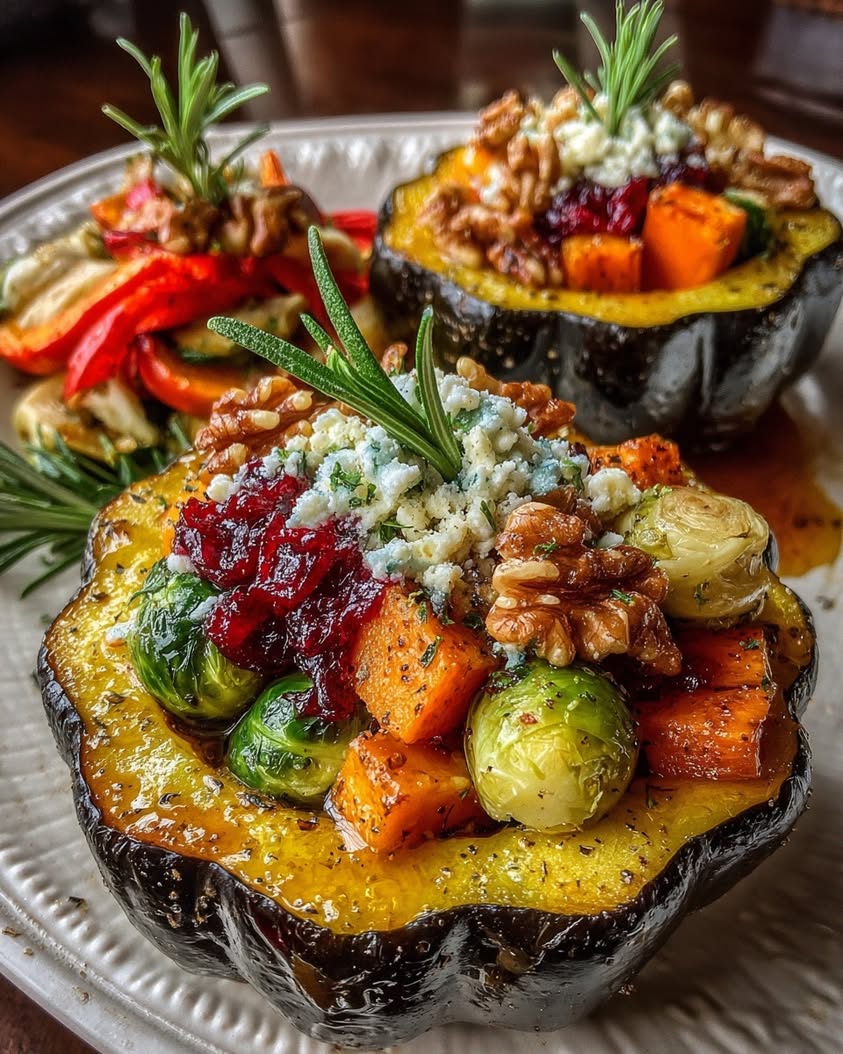
Stuffed Acorn Squash with Feta and Walnuts: A Festive Fall Feast
Welcome the crisp autumn air with a stunning centerpiece dish that celebrates the season’s best produce. This recipe for Stuffed Acorn Squash with Feta and Walnuts delivers a beautiful balance of sweet, savory, and earthy flavors in every single bite. Moreover, it transforms humble ingredients into a visually impressive meal that feels both rustic and elegant. Ultimately, you will create a wholesome dinner that nourishes the body and delights the senses.
Imagine tender, caramelized acorn squash halves cradling a hearty medley of roasted vegetables. This filling features sweet potatoes, earthy Brussels sprouts, and aromatic red onion, all tossed with crunchy walnuts and tangy feta cheese. Finally, a simple cranberry-honey glaze drizzled over the top adds a glossy finish and a pop of tart-sweet flavor. Consequently, this dish offers a complete, satisfying meal that is perfect for a cozy family dinner or a festive holiday table. Indeed, it proves that healthy food can be incredibly delicious and beautiful.
This Stuffed Acorn Squash with Feta and Walnuts recipe is surprisingly simple to prepare, despite its impressive appearance. The oven does most of the work, roasting the squash to perfection while you prepare the flavorful vegetable stuffing. Furthermore, the combination of textures and flavors—from the creamy squash to the crispy walnuts and soft, salty feta—creates a symphony in your mouth. Therefore, whether you are a seasoned cook or a kitchen novice, you can confidently create this seasonal masterpiece. Let’s gather our ingredients and celebrate fall on a plate.
Quick Recipe Highlights
- Flavor Profile: This dish masterfully balances sweet, savory, and tangy notes. The natural sweetness of the roasted acorn squash and sweet potatoes pairs beautifully with the salty, briny feta cheese. Meanwhile, the cranberry-honey glaze introduces a bright, tart counterpoint that ties all the elements together.
- Texture: You will enjoy a wonderful contrast of textures in every forkful. The flesh of the acorn squash becomes tender and almost creamy, while the roasted vegetables offer a slight bite. Additionally, the walnuts provide a crucial crunchy element, and the feta cheese adds soft, crumbly pockets.
- Aroma: As this Stuffed Acorn Squash with Feta and Walnuts roasts, your kitchen will fill with an irresistible fragrance. Expect warm, earthy notes from the squash and Brussels sprouts, sweet caramelization from the onions and sweet potatoes, and a hint of herbal freshness from the thyme.
- Visual Appeal: This recipe is a feast for the eyes with its vibrant autumn color palette. The deep green squash skin contrasts with the orange flesh, jewel-toned cranberry glaze, and pops of white feta and green herbs. Consequently, it makes for a stunning presentation on any dinner table.
- Skill Level Needed: This is an accessible recipe for cooks of all levels. It involves straightforward techniques like chopping, roasting, and mixing. Importantly, no advanced culinary skills are required, making it a fantastic project for a confident beginner or a relaxing cook for an experienced home chef.
- Special Equipment: You only need basic kitchen tools. A sturdy baking sheet, a sharp chef’s knife, a mixing bowl, and a small saucepan for the glaze are essential. Parchment paper is highly recommended for easy cleanup and to prevent the squash from sticking.
Recipe Overview
- Difficulty Level: We rate this Stuffed Acorn Squash with Feta and Walnuts as “Easy.” The steps are sequential and simple: halve and roast the squash, chop and roast the vegetables, make the glaze, and assemble. There is no complicated knife work or finicky techniques. However, paying attention to roasting times ensures perfect texture.
- Category: This versatile dish fits multiple categories beautifully. It serves as a spectacular vegetarian main course, a hearty side dish for a holiday feast, or even a luxurious lunch. Furthermore, its balanced macros and whole-food ingredients make it a fantastic healthy dinner option.
- Cuisine: While not tied to one specific tradition, this recipe draws inspiration from modern American farm-to-table cooking and Mediterranean flavors. The use of feta cheese, walnuts, and olive oil nods to Greek cuisine, while the focus on roasted seasonal vegetables is a hallmark of contemporary rustic cooking.
- Cost: This is a cost-effective meal, especially during the fall and winter when squash and root vegetables are at their peak and most affordable. Acorn squash, sweet potatoes, and onions are typically budget-friendly. Feta cheese and walnuts are the priciest components, but a little goes a long way in terms of flavor.
- Season: This recipe is quintessential autumn and winter cooking. Acorn squash and Brussels sprouts are cold-weather crops, making this dish ideal from October through February. The warm, roasted flavors are perfectly suited for cooler days and holiday gatherings.
- Occasion: It is perfect for a wide range of events. Serve it as a meatless Monday dinner, a Thanksgiving side dish that steals the show, or the centerpiece of a Friendsgiving potluck. Its elegance also makes it suitable for a dinner party where you want to impress guests with minimal stress.
Why You’ll Love This Recipe
First and foremost, the taste and texture of this Stuffed Acorn Squash with Feta and Walnuts are utterly captivating. Each component brings something unique: the squash offers a mellow, nutty sweetness, the roasted vegetables contribute earthy depth, the feta provides a salty punch, and the walnuts add essential crunch. Meanwhile, the cranberry-honey glaze is the finishing touch that brightens the entire dish with its sweet-tart zing. Consequently, every bite is a complex and satisfying experience that will have you coming back for more. Ultimately, it is a flavor combination that feels both comforting and exciting.
From a convenience standpoint, this recipe is a weeknight hero disguised as a weekend showstopper. The preparation is largely hands-off once the ingredients hit the oven. You can easily chop the vegetables while the squash roasts, maximizing your time efficiently. Furthermore, the entire meal cooks on one or two sheet pans, meaning cleanup is a breeze. This Stuffed Acorn Squash with Feta and Walnuts proves that you do not need to dirty every pot and pan in your kitchen to create something extraordinary. Therefore, it is a practical choice for busy cooks who still value a delicious, home-cooked meal.
Nutritionally, this dish is a powerhouse. Acorn squash is loaded with vitamins A and C, fiber, and potassium. Sweet potatoes are another fantastic source of beta-carotene and complex carbohydrates. Brussels sprouts bring a wealth of vitamins K and C, along with antioxidants. Walnuts contribute healthy omega-3 fats and protein, while feta offers calcium and protein. Together, they create a meal that is rich in fiber, vitamins, minerals, and healthy fats. This Stuffed Acorn Squash with Feta and Walnuts is a testament to how nourishing food can also be indulgent and deeply satisfying.
For entertaining, this recipe offers incredible social value. It is visually stunning, making guests feel special the moment you bring it to the table. Moreover, it caters beautifully to diverse dietary needs; it is naturally vegetarian and can be easily adapted to be gluten-free or vegan. Serving a beautiful, whole stuffed squash feels more interactive and communal than a casserole. It encourages conversation and admiration, making your dinner party memorable. This Stuffed Acorn Squash with Feta and Walnuts is not just a meal; it is an experience that brings people together.
Finally, this recipe is remarkably cost-effective and accessible. The main ingredients are humble vegetables that are easy to find at any grocery store or farmers market, especially in season. You can often find acorn squash for a very reasonable price per pound. While feta and walnuts are investment items, you use them as flavorful accents, not the bulk of the dish. This approach makes the meal feel luxurious without the luxury price tag. Essentially, this Stuffed Acorn Squash with Feta and Walnuts allows you to create a restaurant-quality dish on a home-cook budget, which is a win for any home chef.
Historical Background and Cultural Significance
The practice of stuffing vegetables is an ancient culinary technique found in cultures worldwide, born from practicality and resourcefulness. Cooks historically used hollowed-out vegetables as edible vessels to stretch precious fillings like grains, meats, and herbs. Squash, with its naturally sturdy shell and hollow center, was a prime candidate for this treatment. In the Americas, Indigenous peoples cultivated and cooked with various squash varieties for thousands of years, often roasting them directly in the coals of a fire. The modern concept of a meticulously stuffed and roasted acorn squash, however, is a more recent development in home cooking, reflecting a contemporary desire for visually appealing, vegetable-centric meals.
Culturally, stuffed dishes often signify abundance, celebration, and hospitality. Presenting a whole, filled vegetable at the table suggests generosity and care in preparation. The specific combination of ingredients in this Stuffed Acorn Squash with Feta and Walnuts speaks to a fusion of culinary traditions. The use of feta cheese connects it to Mediterranean and Balkan cuisines, where brined cheeses are staples. Walnuts have a long history in both European and Middle Eastern cooking. Meanwhile, the cranberry-honey glaze is a distinctly North American touch, incorporating a native berry often associated with harvest festivals and Thanksgiving. This blend creates a dish that feels both familiar and globally inspired.
The recipe has evolved significantly from its rustic origins. Early stuffed squash might have contained simple mixtures of wild rice, onions, and perhaps some nuts or dried berries. The modern version, like this one with a roasted vegetable medley and a glossy glaze, emphasizes complexity of flavor, texture contrast, and visual presentation. This evolution mirrors broader food trends toward plant-forward eating and “eating the rainbow” for health. The addition of ingredients like Brussels sprouts and sweet potatoes also reflects the modern shopper’s year-round access to a wide variety of produce, allowing for more creative and nutrient-dense fillings beyond basic grains.
Regional variations of stuffed squash are endless, showcasing local ingredients and tastes. In the southern United States, you might find a stuffing with sausage, cornbread, and pecans. An Italian version could feature risotto, mushrooms, and Parmesan cheese. A Middle Eastern take might use spiced rice, lentils, and pomegranate molasses. This particular Stuffed Acorn Squash with Feta and Walnuts sits comfortably in a modern American context—it prioritizes seasonal produce, incorporates global flavor accents, and serves as a complete vegetarian entrée. Its flexibility is its greatest strength, inviting cooks to adapt it based on what is fresh and available in their own region.
Ingredient Deep Dive
Acorn Squash: This winter squash, named for its distinctive acorn-like shape, is native to North and Central America. It was a vital food source for Indigenous peoples long before European colonization. Nutritionally, it is a superstar, providing high levels of vitamin C for immunity, potassium for heart health, and dietary fiber for digestion. Its flesh has a mildly sweet, nutty flavor that becomes wonderfully tender and creamy when roasted. When selecting, choose squash that feel heavy for their size with a deep green rind and a patch of orange where it rested on the ground; avoid any with soft spots or cracks. Store whole acorn squash in a cool, dark place for up to a month. For a substitution, delicata or small sweet dumpling squash work beautifully.
Feta Cheese: Feta is a brined curd cheese with a history dating back to ancient Greece, where it was made from sheep’s or goat’s milk. Its tangy, salty flavor and crumbly texture are iconic. In this Stuffed Acorn Squash with Feta and Walnuts, it acts as a powerful flavor accent, cutting through the sweetness of the squash and vegetables. Feta is a good source of calcium and protein, though it is also high in sodium. For the best quality, look for feta labeled “PDO” (Protected Designation of Origin), which guarantees it was made in Greece using traditional methods. Store feta in its brine in the refrigerator to maintain moisture. If you need a substitute, goat cheese crumbles or a firm ricotta salata would be excellent alternatives.
Walnuts: Walnuts are among the oldest tree foods, with remnants found in Neolithic sites. They are particularly celebrated for their brain-like shape, which led to the ancient doctrine of signatures suggesting they were good for the mind. Modern science confirms they are rich in alpha-linolenic acid, a plant-based omega-3 fatty acid crucial for cognitive and heart health. Toasting walnuts, as this recipe suggests, is a critical step. It deepens their flavor, enhances their crunch, and removes any raw bitterness. Always buy walnuts in small quantities from a store with high turnover, as their high oil content makes them prone to rancidity. Store them in an airtight container in the freezer for longest shelf life. Pecans or toasted hazelnuts make fine substitutes if needed.
Sweet Potatoes & Brussels Sprouts: This vegetable duo forms the hearty base of the stuffing. Sweet potatoes, originating in Central or South America, are packed with beta-carotene, which the body converts to vitamin A. Brussels sprouts, members of the cabbage family developed in Belgium, are fiber-rich and contain compounds with potent antioxidant properties. When roasted, their natural sugars caramelize, creating deep, sweet, and complex flavors that balance the savory elements of the dish. Choose firm sweet potatoes without wrinkles and tight, bright green Brussels sprout heads. Both store well in the crisper drawer of your refrigerator. For variations, try using cubed butternut squash or chopped cauliflower in place of either.
Cranberry-Honey Glaze: This simple glaze provides the final layer of flavor and visual gloss. Cranberries, native to North American bogs, are famously tart and rich in vitamin C and proanthocyanidins, which support urinary tract health. Honey, one of humanity’s first sweeteners, adds floral sweetness and helps create a syrupy consistency. Simmering the two together mellows the cranberries’ sharpness and creates a vibrant, ruby-red sauce. Using fresh or frozen cranberries yields the best texture and flavor compared to canned sauce. For a vegan version, maple syrup can replace honey. This glaze is the perfect finishing touch for your Stuffed Acorn Squash with Feta and Walnuts, adding a festive and bright note.
Common Mistakes to Avoid
- Not Roasting the Squash Cut-Side Down First: Placing the squash halves cut-side down on the baking sheet for the initial roast is crucial. This technique allows the cut surface to caramelize directly against the hot pan, developing a richer flavor and more appealing color. If you roast them cut-side up from the start, they will steam in their own juices and become watery.
- Underseasoning the Squash Cavity: Before roasting, do not forget to season the inside of the squash generously with salt and pepper. The flesh is mild and needs this foundational seasoning to taste its best. Think of the squash bowl as part of the meal, not just a container. Proper seasoning ensures every component, from edge to center, is flavorful.
- Skipping the Toast on the Walnuts: Adding raw walnuts to the stuffing will result in a softer, less flavorful nut. Taking the extra five minutes to toast them in a dry skillet or the oven wakes up their oils, deepens their nutty taste, and provides a essential crunchy contrast in the final Stuffed Acorn Squash with Feta and Walnuts. This step is non-negotiable for optimal texture.
- Overcrowding the Vegetable Pan: When roasting the sweet potatoes, Brussels sprouts, and onion, spread them in a single layer with some space between pieces. Overcrowding causes the vegetables to steam instead of roast, preventing them from achieving those desirable caramelized edges and crispy bits. Use two pans if necessary to ensure proper browning.
- Adding the Feta Too Early: Feta cheese should be mixed into the roasted vegetable filling just before stuffing the squash. If you add it before roasting the vegetables, it will melt into an unappealing, greasy mess. The goal is to have distinct, soft crumbles of salty cheese throughout the stuffing, which only happens if you add it at the end.
- Neglecting to Rest the Glaze: After simmering the cranberry-honey glaze, let it cool and thicken slightly for a few minutes before drizzling. A piping hot glaze will be too runny and may soak into the stuffing rather than sitting prettily on top. A slightly cooled glaze will have a better consistency for drizzling and will cling to the squash and filling.
- Under-roasting the Squash: The squash halves should be completely tender when pierced with a fork before you fill them. If they are undercooked, the skin will be tough to cut through, and the flesh will be unpleasantly firm. The additional bake time after stuffing is primarily to heat the filling and meld flavors, not to cook the squash through.
- Forgetting to Drizzle Olive Oil on the Skin: Rubbing the outside of the squash halves with a little oil before roasting is a small step with big rewards. It helps the skin become soft and edible, and it gives the finished dish a beautiful, glossy appearance. An unoiled skin can become tough and leathery in the dry heat of the oven.
Essential Techniques
Halving and Seeding Winter Squash: This is the first and most important technique. Use a large, sharp chef’s knife and a stable cutting board. Carefully slice off a small piece from the stem and blossom ends to create flat surfaces. Stand the squash upright on one flat end and cut straight down through the center from stem to blossom end. Use a sturdy spoon or ice cream scoop to remove the seeds and stringy pulp. Why it’s important: A clean, even cut ensures the squash halves roast evenly and sit flat on the pan. Common pitfall: Using a dull knife can cause the knife to slip. Visual cue for success: You have two symmetrical, hollowed-out halves with no remaining seeds.
Roasting Vegetables to Caramelization: Roasting is not just cooking; it’s a flavor transformation. Toss cut vegetables uniformly in oil and seasonings to coat every surface. Spread them in a single layer on a preheated sheet pan. The high, dry heat of the oven causes the natural sugars in the vegetables to brown and caramelize. Why it’s important: Caramelization creates complex, sweet, and savory flavors that boiling or steaming cannot achieve. Common pitfall: Crowding the pan, which leads to steaming. How to master it: Do not stir too often; let the vegetables develop a dark brown crust on one side before turning. Visual cue for success: The vegetables have shrunken slightly and have deep golden-brown, crispy edges.
Reducing a Fruit Glaze: A glaze adds shine and concentrated flavor. Combine the cranberries, honey, and water in a saucepan. Bring to a simmer, then cook over medium-low heat, stirring occasionally as the cranberries pop and soften. The liquid will gradually evaporate and thicken. Why it’s important: Reduction intensifies the tart and sweet flavors and creates a syrupy texture that clings to food. Common pitfall: Cooking over too high heat, which can cause the honey to scorch or the glaze to become too thick too quickly. How to master it: Maintain a gentle bubble and watch the consistency. Visual cue for success: The glaze coats the back of a spoon and leaves a clear trail when you run your finger through it.
Pro Tips for Perfect Stuffed Acorn Squash
First, score the flesh of the squash in a crosshatch pattern before the initial roast. This simple act allows the oil and seasonings to penetrate deeper and helps the squash cook more evenly. Consequently, you get more flavorful, tender bites in every forkful.
Second, preheat your baking sheet in the oven. Placing the squash halves directly onto a hot pan gives them an instant sear, jumpstarting the caramelization process on the cut side. This trick is a game-changer for achieving that perfect roasted flavor.
Third, reserve a tablespoon of the toasted walnuts and crumbled feta for garnish. Sprinkling these on top of the assembled dish just before serving adds a final layer of fresh texture and visual appeal, making your Stuffed Acorn Squash with Feta and Walnuts look professionally finished.
Fourth, add a teaspoon of fresh thyme or rosemary leaves to the vegetable medley before roasting. The herbal fragrance will infuse the entire filling, complementing the earthy squash and sweet vegetables beautifully. Fresh herbs always elevate a simple roasted dish.
Fifth, if your cranberry glaze becomes too thick upon cooling, simply whisk in a teaspoon of warm water at a time until it returns to a drizzling consistency. You want it to be pourable but not watery, so it elegantly drapes over the stuffed squash.
Sixth, let the stuffed squash rest for 5-7 minutes after removing it from the oven. This allows the filling to set slightly, making it easier to transfer to plates without everything spilling out. The flavors also have a moment to meld together perfectly.
Variations and Adaptations
For regional variations, consider the ingredients local to your area. A Southern-inspired version could use a cornbread and sausage stuffing with pecans. An Italian twist might feature a filling of cooked farro, sautéed mushrooms, sun-dried tomatoes, and Parmesan cheese. A Middle Eastern adaptation could include spiced chickpeas, apricots, and pistachios with a drizzle of tahini sauce. The basic formula of a roasted squash bowl is incredibly flexible, so feel free to experiment with global flavors you love.
Seasonal adaptations are easy and encouraged. In late summer, try stuffing the squash with a mixture of roasted corn, zucchini, cherry tomatoes, and basil. For a deep winter version, use a mix of roasted parsnips, carrots, and kale with a sprinkle of blue cheese. The cranberry glaze can change with the seasons too; in spring, a lemon-herb vinaigrette would be lovely, while in summer, a balsamic reduction works wonderfully.
Dietary modifications are straightforward. For a vegan Stuffed Acorn Squash, omit the feta or use a vegan feta alternative and replace the honey in the glaze with maple syrup or agave. To make it gluten-free, ensure all your ingredients are certified GF (this recipe naturally is, but always check labels). For a higher-protein version, stir a cup of cooked quinoa or lentils into the roasted vegetable filling before stuffing.
Flavor variations can take this dish in new directions. Add warmth with a pinch of smoked paprika or cayenne pepper to the vegetable toss. For an umami boost, add a tablespoon of white miso paste to the olive oil before coating the vegetables. A splash of apple cider vinegar or balsamic glaze added to the finished dish can provide a different kind of bright acidity compared to the cranberry glaze.
Serving and Presentation Guide
Plating is key for this beautiful dish. Transfer each stuffed squash half to an individual plate or shallow bowl. Use a wide spatula to support the bottom and keep the filling intact. For a family-style presentation, arrange all the halves on a large wooden board or platter, garnished generously with fresh herbs like parsley or thyme. This rustic presentation highlights the natural beauty of the ingredients and makes for a stunning centerpiece.
Garnishing adds the final professional touch. Beyond the reserved walnuts and feta, consider a sprinkle of pomegranate arils for a jewel-like burst of color and tartness. A few microgreens or arugula leaves add a fresh, peppery note. A final drizzle of high-quality extra virgin olive oil or a balsamic glaze around the plate creates a restaurant-worthy finish.
For traditional accompaniments, this Stuffed Acorn Squash with Feta and Walnuts stands beautifully on its own as a vegetarian main. If serving as a side to a protein, it pairs excellently with simply roasted chicken, pork tenderloin, or seared salmon. The sweet and savory notes complement a wide range of meats without overpowering them.
Modern serving suggestions might include starting the meal with a simple apple and kale salad. For a complete fall feast, follow the squash with a creamy pumpkin soup. If you have leftovers, chop up the stuffed squash the next day and toss it with greens for a hearty salad, or warm it and top with a fried egg for a fantastic brunch.
Wine and Beverage Pairing
Choosing the right wine enhances the dining experience. For this Stuffed Acorn Squash with Feta and Walnuts, focus on wines that can bridge the dish’s sweet, savory, and earthy elements. A dry Riesling or Gewürztraminer is a fantastic choice; their slight sweetness and floral notes complement the squash’s sweetness, while their acidity cuts through the richness of the feta and walnuts. Alternatively, a medium-bodied Pinot Noir with its red fruit flavors and earthy undertones mirrors the roasted vegetable notes beautifully without overwhelming the dish.
For non-alcoholic alternatives, consider beverages that offer balance. A sparkling apple cider provides festive effervescence and echoes the autumn flavors. A warm mug of spiced apple tea or a chai latte would be wonderfully cozy. For a refreshing option, a ginger-lemon sparkler (ginger beer mixed with fresh lemon juice and a splash of club soda) offers a zesty contrast that cleanses the palate between bites.
If you prefer beer, opt for a malty amber ale or a Belgian-style Saison. The caramel notes in an amber ale pair well with the roasted vegetables, while the peppery, fruity esters in a Saison can stand up to the tangy feta and sweet glaze. Serve beer slightly chilled, but not ice-cold, to allow the complex flavors to shine alongside the food.
Storage and Shelf Life
Proper storage is essential for maintaining quality. Allow any leftover Stuffed Acorn Squash with Feta and Walnuts to cool completely to room temperature, which should take no more than an hour. Then, transfer the squash halves to an airtight container. You can store them whole or scoop out the filling and store it separately. Refrigerate promptly; the stuffed squash will keep well for 3-4 days.
For reheating, the oven method yields the best results. Preheat your oven to 350°F (175°C). Place the squash on a baking sheet, cover loosely with foil to prevent over-browning, and warm for 15-20 minutes, or until heated through. The microwave is a quicker option but will soften the texture of the walnuts and make the skin rubbery. If using a microwave, heat on medium power in 60-second intervals.
Freezing is possible but with caveats. The texture of the roasted squash may become slightly watery upon thawing. For best results, freeze the cooked vegetable and walnut filling separately in a freezer bag, and freeze the roasted (but unfilled) squash halves wrapped tightly. Thaw both in the refrigerator overnight, then assemble and reheat in the oven. The cranberry-honey glaze freezes very well; store it in a small container. Frozen components are best used within 2 months.
Make Ahead Strategies
You can break this recipe into stages to streamline your cooking day. Up to two days ahead, roast the acorn squash halves. Let them cool, then store them in an airtight container in the refrigerator. Also, chop all your vegetables (sweet potato, Brussels sprouts, onion) and store them together in a separate container. Toast the walnuts and store them at room temperature. Make the cranberry-honey glaze and refrigerate it.
On the day of serving, your prep is minimal. Simply toss the pre-chopped vegetables with oil and seasonings, then roast them according to the recipe. While they roast, you can gently reheat the squash halves in the oven to take the chill off. Assemble the stuffing with the roasted veggies, feta, and toasted walnuts, fill the squash, and finish baking. Warm the glaze gently on the stovetop or in the microwave before drizzling. This strategy cuts active prep time in half when you are ready to serve.
Scaling Instructions
This recipe scales up or down beautifully. For a single serving, use one small acorn squash and quarter the filling ingredients. The roasting times may be slightly shorter, so keep an eye on doneness. To double or triple the recipe for a crowd, you will need multiple baking sheets. Roast the squash and vegetables in batches if your oven cannot accommodate multiple pans with proper air circulation. Rotate the pans halfway through cooking for even browning.
When scaling, note that the cranberry glaze recipe can be easily doubled. However, do not simply double the simmering time; instead, watch for the same visual cues of thickness. The most important scaling tip is to avoid overcrowding your pans. It is better to use three half-full sheet pans than two overcrowded ones, as proper browning is key to flavor. If you are making a large batch, consider using disposable aluminum pans for easy transport if you are taking the dish to a potluck.
Nutritional Deep Dive
This Stuffed Acorn Squash with Feta and Walnuts is a nutritionally balanced meal. One serving (one stuffed squash half) provides a robust mix of complex carbohydrates from the squash and sweet potatoes, healthy fats from the olive oil and walnuts, and protein from the feta and walnuts. It is particularly high in dietary fiber, which promotes satiety and digestive health. The dish is also rich in micronutrients: Vitamin A (from beta-carotene in the squash and sweet potatoes), Vitamin C (from Brussels sprouts and squash), Vitamin K (from Brussels sprouts), and several B vitamins.
From a health perspective, the combination of fiber, healthy fats, and protein helps regulate blood sugar levels, preventing the spikes and crashes associated with more refined meals. The antioxidants in the colorful vegetables and cranberries combat oxidative stress. For those managing their weight, this dish is volumous and filling without being excessively high in calories, making it an excellent choice for a satisfying dinner that supports your goals. Always remember, the specific nutritional values will vary based on the exact size of your squash and the amount of oil and cheese used.
Dietary Adaptations
Gluten-Free: This recipe is naturally gluten-free as written. Just double-check that your feta cheese does not contain any anti-caking agents derived from wheat (most do not), and ensure all other packaged ingredients are certified GF if you have celiac disease or a severe sensitivity.
Dairy-Free/Vegan: Omit the feta cheese. For a cheesy, tangy element, use a high-quality vegan feta alternative or crumbled, seasoned tofu. Replace the honey in the glaze with an equal amount of maple syrup or agave nectar. The result will be a vibrant, plant-based feast that is still packed with flavor and texture.
Low-Carb/Keto: This dish in its standard form is not low-carb due to the squash and sweet potatoes. For a keto adaptation, use the acorn squash as the vessel but fill it with a mixture of roasted low-carb vegetables like cauliflower, broccoli, and mushrooms. Increase the proportion of walnuts and feta for fat and protein, and use a sugar-free sweetener in the glaze with a few raspberries instead of cranberries.
Nut-Free: Simply omit the walnuts. For added crunch, you could use toasted pumpkin seeds (pepitas) or sunflower seeds instead. Ensure your guests are not allergic to these seeds as well. The flavor profile will shift slightly but will remain delicious.
Troubleshooting Guide
Squash is Too Hard After Roasting: If a fork does not easily pierce the flesh, return the squash to the oven, cut-side down, and continue roasting in 10-minute increments. Cover the edges with foil if they are browning too much. Undercooked squash usually means your oven runs cool, the squash was very large, or it needed more time. Use an oven thermometer to verify your oven’s temperature accuracy.
Filling is Too Dry: A dry stuffing can result from over-roasting the vegetables or not using enough oil. To remedy, drizzle a tablespoon of vegetable broth or a little more olive oil over the filling before the final bake. You can also mix a spoonful of the cranberry glaze into the vegetable mixture before stuffing to add moisture and flavor.
Filling is Too Wet/Soggy: This happens if the vegetables were not roasted long enough or were crowded on the pan, causing them to steam. If you notice excess moisture in the mixing bowl before stuffing, drain it off. For already-baked soggy squash, you can carefully scoop out the filling, spread it on a pan, and broil for a few minutes to evaporate some moisture, then repack it.
Glaze is Too Thin or Too Thick: If your glaze is runny, return it to the stove and simmer a few minutes longer until it reduces. If it has become too thick and jam-like (especially after refrigeration), simply reheat it gently while whisking in a teaspoon of warm water at a time until it reaches a drizzling consistency.
Frequently Asked Questions
Q: Can I use a different type of squash?
A: Absolutely. Delicata squash is a wonderful alternative as its skin is edible, eliminating the need for scooping. Butternut squash can be used, but you would need to cut it into large “boats” rather than halves. The cooking time may vary slightly depending on the density and thickness of the squash you choose.
Q: Can I make this stuffing with quinoa or rice?
A: Yes, you can incorporate cooked grains. For a heartier filling, mix 1 to 1.5 cups of cooked quinoa, wild rice, or farro into the roasted vegetable mixture. This will stretch the filling further and add a different texture. Adjust seasoning as grains can absorb flavors.
Q: How do I know when the acorn squash is perfectly cooked?
A: The squash is done when you can easily pierce the thickest part{“success”:true,”message”:”Recipe created successfully”,”post_id”:8823,”tasty_recipe_id”:8823,”shortcode”:” Print
Stuffed Acorn Squash with Roasted Vegetable Medley, Feta, Walnuts & Cranberry-Honey Glaze
Description
A hearty and festive vegetarian dish featuring roasted acorn squash halves stuffed with a colorful medley of roasted vegetables, tangy feta, crunchy walnuts, and a sweet-tart cranberry-honey glaze.
Ingredients
For the Crust:
- 2 medium acorn squash, halved and seeded
- 2 tablespoons olive oil, divided
- 1 teaspoon salt, divided
- 1/2 teaspoon black pepper, divided
- 1 medium red onion, chopped
- 1 bell pepper (any color), chopped
- 1 zucchini, chopped
- 1 cup Brussels sprouts, trimmed and halved
- 1/2 cup dried cranberries
- 1/2 cup walnuts, roughly chopped
- 4 ounces feta cheese, crumbled
- 1/4 cup honey
- 1/4 cup cranberry juice
- 1 teaspoon fresh thyme leaves
Instructions
1. Prepare the Crust:
- Preheat oven to 400°F (200°C). Place squash halves cut-side up on a baking sheet. Brush with 1 tablespoon olive oil and season with 1/2 teaspoon salt and 1/4 teaspoon pepper. Roast for 25-30 minutes until tender.
- In a large bowl, toss red onion, bell pepper, zucchini, and Brussels sprouts with remaining 1 tablespoon olive oil, 1/2 teaspoon salt, and 1/4 teaspoon pepper. Spread on a separate baking sheet and roast for 20-25 minutes until vegetables are caramelized and tender.
- In a small saucepan over medium heat, combine honey and cranberry juice. Simmer for 5-7 minutes until slightly thickened to form a glaze. Remove from heat and stir in thyme.
- In a large bowl, combine roasted vegetables, dried cranberries, walnuts, and feta cheese. Gently mix to combine.
- Fill each roasted squash half with the vegetable mixture. Drizzle with the cranberry-honey glaze before serving.
Notes
You can customize the seasonings to taste.

I’m Billy, a classically trained culinary school graduate from The Culinary Institute of America with over 12 years in the restaurant industry and over 19 years of cooking experience.