
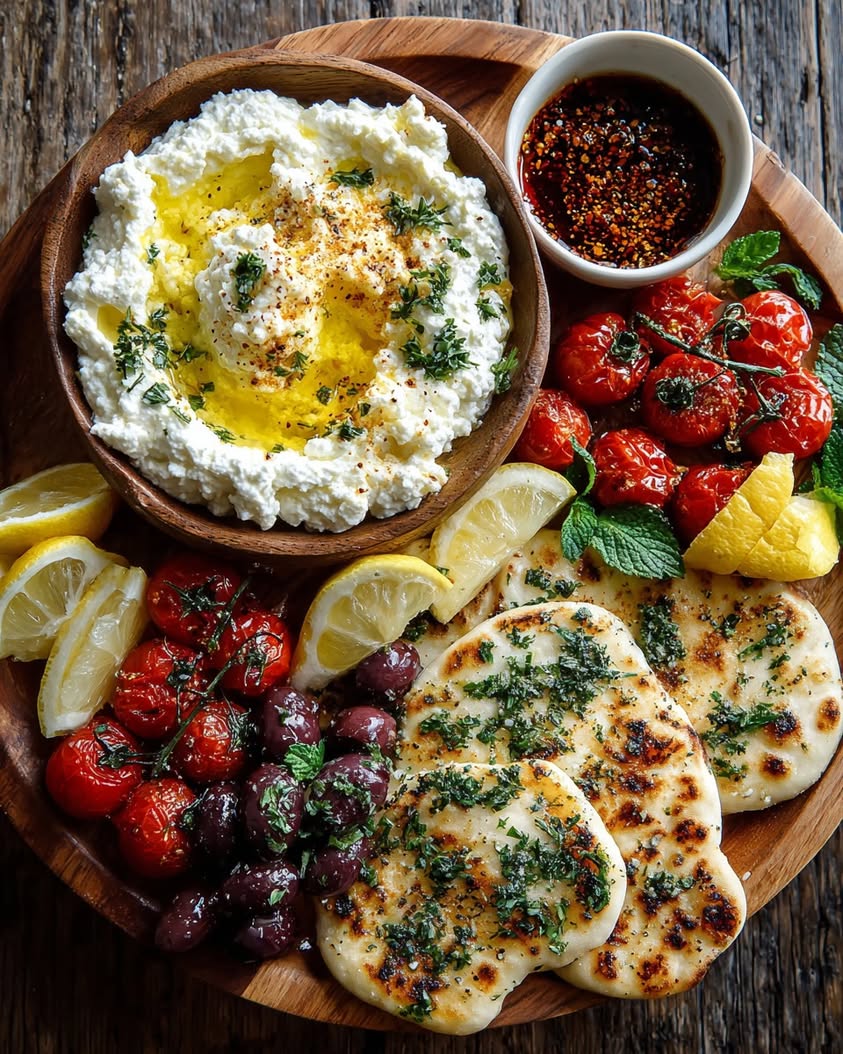
Creamy Ricotta Mediterranean Sharing Board with Garlic Flatbread: Your Ultimate Entertaining Centerpiece
Imagine a stunning platter that brings the vibrant spirit of the Mediterranean coast directly to your table. This Creamy Ricotta Mediterranean Sharing Board with Garlic Flatbread is not just a meal; it’s an experience designed for connection and celebration. Furthermore, it masterfully combines the cool, luxurious texture of whipped ricotta with the bold, sun-drenched flavors of classic mezze. Ultimately, this recipe transforms simple, high-quality ingredients into a visually breathtaking and utterly delicious centerpiece perfect for any gathering.
The beauty of this Creamy Ricotta Mediterranean Sharing Board lies in its elegant simplicity and incredible versatility. You begin with a base of velvety, herb-infused ricotta, then artfully arrange a colorful array of marinated vegetables, briny olives, and sweet fruits around it. Meanwhile, warm, fragrant garlic flatbreads bake to golden perfection, ready for tearing and dipping. Consequently, every bite offers a new combination of creamy, crunchy, tangy, and savory notes, creating a dynamic and interactive dining adventure for everyone.
This approach to eating encourages sharing and conversation, making it ideal for relaxed entertaining. Whether you’re hosting a casual weekend brunch, a festive appetizer spread, or a light summer dinner, this board delivers impressive results with minimal fuss. Moreover, you can easily customize the components based on seasonality and personal preference. Therefore, let’s explore how to build your own unforgettable Creamy Ricotta Mediterranean Sharing Board with Garlic Flatbread.
Quick Recipe Highlights
- Flavor Profile: This board delivers a harmonious balance of rich, creamy ricotta, bright lemon, aromatic herbs, and the savory depth of roasted garlic. Additionally, briny olives and sweet honey provide delightful contrasting notes that dance on the palate.
- Texture: Experience a wonderful play of textures, from the impossibly smooth and cloud-like whipped ricotta to the crisp vegetables and chewy dried fruits. Meanwhile, the warm, soft, and slightly chewy garlic flatbread offers the perfect vehicle for scooping.
- Aroma: As the flatbread bakes, the kitchen fills with the irresistible, warm scent of roasted garlic and fresh herbs. Subsequently, the bright zest of lemon and the earthy fragrance of extra virgin olive oil complete the aromatic symphony.
- Visual Appeal: The board is a feast for the eyes, featuring a stunning palette of creamy white ricotta, vibrant red peppers, deep purple olives, green herbs, and golden flatbread. Consequently, its abundant and artful presentation is instantly inviting.
- Skill Level Needed: This recipe requires only basic kitchen skills like mixing, slicing, and simple baking. Importantly, the assembly is intuitive and forgiving, allowing for creative expression without strict rules.
- Special Equipment: You need a baking sheet for the flatbread, a mixing bowl, and a hand mixer or whisk for the ricotta. Ultimately, a large wooden board or platter is essential for the beautiful final presentation.
Recipe Overview
- Difficulty Level: We rate this Creamy Ricotta Mediterranean Sharing Board as “Easy” because it involves no complex techniques. Primarily, the work consists of simple prep like chopping and mixing, while the flatbread uses straightforward store-bought dough. Therefore, even novice cooks can achieve spectacular, crowd-pleasing results with confidence.
- Category: This versatile dish fits multiple categories beautifully. It serves perfectly as a substantial appetizer or mezze spread, a light main course for lunch, or a stunning centerpiece for a grazing-style dinner party. Additionally, it’s excellent for brunch alongside eggs.
- Cuisine: The recipe draws direct inspiration from the relaxed, ingredient-focused culinary traditions of the Mediterranean region, particularly Greece, Italy, and the Levant. Key elements like high-quality olive oil, fresh herbs, brined cheeses, and marinated vegetables are hallmarks of this healthy and flavorful cuisine.
- Cost: Creating this board is surprisingly cost-effective, especially when you consider its yield and visual impact. While premium olive oil and good ricotta are worthwhile investments, many components like olives, nuts, and seasonal vegetables are pantry-friendly. Overall, it offers exceptional value for entertaining.
- Season: This Creamy Ricotta Mediterranean Sharing Board shines brightest in late spring through summer when produce like cherry tomatoes, cucumbers, and fresh herbs are at their peak. However, it’s truly a year-round recipe, as you can easily adapt it with roasted winter vegetables, dried fruits, and preserved items.
- Occasion: It’s the ultimate social food, ideal for casual gatherings, book clubs, date nights at home, holiday parties, or even a luxurious treat for yourself. Its build-ahead nature also makes it a stress-free choice for the host.
Why You’ll Love This Recipe
First and foremost, the taste and texture of this Creamy Ricotta Mediterranean Sharing Board are utterly captivating. The whipped ricotta becomes impossibly light and luxurious, acting as a creamy canvas for the zest of lemon and the fragrance of herbs. Then, with each scoop onto a piece of warm garlic flatbread, you encounter a burst of flavor from marinated artichokes, a pop of sweetness from grapes, or the salty punch of a Kalamata olive. Consequently, every bite is a unique and delightful discovery, preventing any chance of flavor fatigue during your meal.
From a convenience standpoint, this recipe is a host’s dream. Significantly, you can prepare almost every component ahead of time. You can whip the ricotta, marinate the vegetables, and even shape the flatbread dough hours in advance. Then, simply bake the flatbread and arrange the board just before guests arrive. This strategic approach minimizes last-minute stress and maximizes your time spent with friends and family. Moreover, cleanup is straightforward, often involving just a few bowls and a baking sheet.
Nutritionally, this board aligns with the celebrated Mediterranean diet, which is renowned for supporting heart health and longevity. The foundation features healthy fats from olive oil and nuts, quality protein from ricotta and legumes (if using chickpeas), and a rainbow of vitamins and antioxidants from fresh and marinated vegetables. Furthermore, because it’s a sharing-style meal, it naturally encourages mindful eating and portion control as you graze and savor each combination.
The social and entertaining value of this Creamy Ricotta Mediterranean Sharing Board cannot be overstated. It inherently breaks down formal barriers and encourages interaction, as everyone gathers around to build their perfect bite. It becomes a conversation starter and a focal point for the gathering. Importantly, it caters to diverse preferences effortlessly; picky eaters can choose what they like, while adventurous ones can experiment. This flexibility makes it a universally appealing choice for any group.
Finally, this dish is remarkably cost-effective and accessible. You don’t need expensive or rare ingredients to create something spectacular. In fact, you can build a beautiful board using what you have on hand, supplementing with a few fresh items. The recipe is also highly scalable, easily feeding a small family or a large party by simply adjusting quantities. Therefore, it delivers restaurant-quality presentation and flavor at a fraction of the cost, making impressive entertaining accessible to everyone.
Historical Background and Cultural Significance
The concept of a shared platter or “mezze” spread has deep roots in the culinary cultures surrounding the Mediterranean Sea. Historically, this style of eating originated from the practical need to offer hospitality with whatever resources were available. Travelers and guests would be welcomed with small dishes of olives, cheese, bread, and preserved vegetables. Over time, this practice evolved into a cherished social ritual across Greece, Turkey, Lebanon, and beyond, emphasizing community, generosity, and the enjoyment of food as a communal experience.
Culturally, the sharing board epitomizes the Mediterranean philosophy of “slow food” and connection. Meals are not just about sustenance but about taking time to relax, converse, and enjoy the company of others. Each component on a board like this tells a story of regional production: the olive oil from groves in Italy or Greece, the brined cheeses from ancient preservation methods, the flatbread baked in communal ovens. Consequently, eating from a shared platter connects you to centuries of tradition and a way of life centered around the table.
The recipe itself represents a modern evolution of these traditions. While classic mezze might feature feta or labneh, using creamy, whipped ricotta is a nod to Italian influences, particularly from regions like Sicily. The addition of honey for drizzling bridges the savory and sweet elements common in Middle Eastern cuisine. This fusion highlights how Mediterranean food cultures, while distinct, share common values of quality ingredients, simplicity, and flavor harmony. Today’s “grazing board” trend directly descends from these age-old customs.
Regional variations of this concept are endless. In Greece, you would find a “pikilia” with tzatziki, dolmades, and spanakopita. In the Levant, a spread might include hummus, baba ganoush, and falafel. Our Creamy Ricotta Mediterranean Sharing Board draws from this entire palette, creating a accessible, crowd-pleasing version that honors the spirit of the original tradition. It allows home cooks to celebrate this rich culinary heritage in their own kitchens, creating new memories around a very old idea of shared abundance.
Ingredient Deep Dive
Whole Milk Ricotta Cheese is the star of this board. Originating in Italy, ricotta is a fresh cheese made from the whey leftover from other cheese production, giving it a light, slightly grainy texture that becomes sublime when whipped. Nutritionally, it provides a good source of protein and calcium with a milder flavor and lower sodium content than many aged cheeses. For the best results, seek out whole-milk ricotta from the dairy section, not the shelf-stable tubs. If your ricotta seems watery, drain it in a fine-mesh strainer for 30 minutes before whipping to achieve maximum creaminess.
Extra Virgin Olive Oil (EVOO) is the essential lifeblood of Mediterranean cooking and this recipe. The highest quality, cold-pressed oil offers fruity, peppery notes that elevate every element, from the ricotta to the flatbread. Historically, olive oil has been a cornerstone of the region’s economy and diet for millennia. It is rich in monounsaturated fats and antioxidants, linked to numerous health benefits. Always choose an EVOO you enjoy tasting on its own. Store it in a cool, dark place to prevent rancidity. For a vibrant finishing touch, consider a flavored oil infused with lemon or herbs.
Pizza Dough serves as the convenient base for our homemade garlic flatbread. Using store-bought dough streamlines the process dramatically while still yielding a fresh-baked, aromatic bread. This reflects the modern adaptation of traditional flatbreads like focaccia or pita. For best results, let the dough come to room temperature for easier shaping. You can also explore whole wheat or gluten-free dough alternatives. Before baking, brushing the dough generously with the garlic-herb oil not only adds flavor but also helps it achieve a beautiful, golden-brown crust with a soft interior perfect for tearing and sharing.
Common Mistakes to Avoid
- Using watery ricotta without draining it first. This can make your whipped ricotta mixture runny and prevent it from holding its elegant, cloud-like shape on the board. Always check the consistency and drain if necessary.
- Overworking the pizza dough when shaping the flatbread. Handling the dough too much can make the flatbread tough. Gently stretch and press it into shape without kneading it extensively a second time.
- Burning the garlic in the oil for the flatbread. Garlic burns quickly and becomes bitter. Gently warm the oil with the garlic just until it becomes fragrant, then immediately remove it from the heat to infuse.
- Arranging the board too early. If the whipped ricotta and cut vegetables sit out for hours, they can dry out or weep. Prepare components separately and assemble the full board no more than 30 minutes before serving.
- Neglecting to season the ricotta mixture adequately. Ricotta is mild and needs salt, lemon, and herbs to sing. Taste and adjust the seasoning before transferring it to the board.
- Cutting the flatbread before serving. Tearing warm, freshly baked bread is part of the sensory experience. Serve the flatbread whole or in large pieces on the board for guests to tear apart themselves.
- Overcrowding the board. While abundance is the goal, leaving a little negative space makes the board look more artful and intentional. It also makes it easier for guests to access the ingredients.
- Forgetting to provide small plates and utensils. While finger food is fun, a small plate, a spreader for the ricotta, and cocktail forks for olives make the experience much more comfortable for everyone.
Essential Techniques
Whipping Ricotta is the key technique that transforms this humble cheese into a luxurious spread. The goal is to incorporate air, making it light, smooth, and spreadable. Use a hand mixer, stand mixer, or a vigorous whisk. First, ensure your ricotta is well-drained to avoid a watery result. Then, whip it on medium speed for 1-2 minutes until it noticeably lightens in texture and increases slightly in volume. The visual cue for success is a creamy, almost mousse-like consistency that holds a soft peak when you lift the whisk. Avoid over-whipping, as it can sometimes cause separation.
Infusing Oil for the flatbread is a simple way to build deep, aromatic flavor. Gently heat extra virgin olive oil in a small saucepan with minced garlic and your chosen dried herbs (like oregano or rosemary). The key is to warm it over low heat just until the garlic sizzles softly and becomes fragrant, which usually takes 2-3 minutes. Do not let the garlic brown or fry, as it will turn bitter. Once infused, remove the oil from the heat and let it steep. This technique gently cooks the garlic just enough to mellow its bite and allows the herb flavors to bloom into the fat.
Artful Board Assembly is the final, creative technique. Start by placing your anchor item—the bowl of whipped ricotta—slightly off-center on a large board or platter. Then, build outwards in groups, creating little “pockets” of different ingredients like olives, vegetables, and fruits. Use the flatbread as a structural element, leaning it against the ricotta bowl or placing it in an open space. The principle is to create height, variety, and ease of access. Think about color contrast and texture as you arrange. A well-composed board looks abundant yet organized, inviting guests to explore every corner.
Pro Tips for Perfect Creamy Ricotta Mediterranean Sharing Board
For an extra-smooth ricotta, press it through a fine-mesh sieve with a spatula before whipping. This breaks down any remaining curds and guarantees a silky texture.
Let the pizza dough rest at room temperature for at least 30 minutes before shaping. This relaxes the gluten, making it much easier to stretch without springing back.
Add a tablespoon of high-quality honey to the whipped ricotta for a subtle, sophisticated sweetness that complements the savory elements beautifully.
Warm your serving board or platter slightly before assembling. A room-temperature board can chill the ricotta too quickly. A quick rinse with hot water and a thorough dry does the trick.
Garnish with both fresh and dried herbs. Sprinkle dried oregano over the flatbread oil before baking, and use fresh, delicate herbs like dill or mint as a final garnish on the board for maximum aroma.
Include one or two “surprise” elements for textural contrast, like toasted pine nuts, crispy chickpeas, or a small dish of high-quality balsamic glaze for drizzling.
Variations and Adaptations
For regional variations, lean into specific Mediterranean cuisines. Create a Greek-inspired board by swapping ricotta for a block of feta drizzled with oil, adding dolmades, and serving with pita. For an Italian focus, include prosciutto, marinated mozzarella balls, and sun-dried tomatoes. A Middle Eastern twist could feature hummus alongside the ricotta, with pickled turnips and za’atar-spiced flatbread.
Seasonal adaptations make this board a year-round favorite. In summer, load up with heirloom cherry tomatoes, fresh figs, and basil. For fall, incorporate roasted squash, pomegranate arils, and walnuts. Winter boards can highlight citrus segments, roasted grapes, and hearty seeded crackers. Spring calls for fresh peas, radishes, and asparagus tips.
Dietary modifications are straightforward. For a vegan board, use a high-quality vegan ricotta or a whipped white bean dip. Make gluten-free flatbread using GF pizza dough or serve with certified gluten-free crackers. For a lower-carb option, increase the vegetable crudités and serve the ricotta with endive leaves or cucumber rounds for scooping.
Serving and Presentation Guide
Begin plating by selecting a very large wooden board, slate slab, or even a large, rimless platter. Place your bowl of whipped ricotta first, positioning it slightly off-center to create visual interest. Then, arrange the warm garlic flatbread in a stack or fan it out against the bowl. Next, group the remaining components in small piles or clusters around the board, placing heavier items like dish of olives closer to the center and lighter items like herbs towards the edges.
For garnishing, a final drizzle of vibrant green olive oil over the ricotta and a sprinkle of flaky sea salt adds professional polish. Scatter whole fresh herb sprigs, edible flowers, or lemon wedges in any empty spaces to fill gaps and add color. Remember, the goal is an abundant, “garden-like” presentation that looks effortlessly composed. Provide small plates, cheese knives for spreading, and cocktail forks to make grazing easy and elegant for your guests.
Wine and Beverage Pairing
For wine pairings, a crisp, dry white wine like a Greek Assyrtiko, Italian Pinot Grigio, or Spanish Albariño complements the board’s bright and briny flavors beautifully. Their acidity cuts through the richness of the ricotta. Alternatively, a light-bodied, fruity red like a Beaujolais or a chilled Lambrusco can also work wonderfully with the savory and salty elements. Ultimately, the variety on the board is very forgiving, so choose a wine you enjoy.
Non-alcoholic alternatives are just as exciting. Sparkling water with a twist of lemon or lime is always refreshing. For something more special, try a homemade rosemary-lemonade, a pomegranate spritzer, or a minty iced tea. These drinks mirror the herbal and citrus notes on the board without competing. Serve all beverages well-chilled to refresh the palate between the diverse flavors of the sharing board.
Storage and Shelf Life
Store leftover components separately in airtight containers in the refrigerator. The whipped ricotta will keep for up to 3 days, though it may release some liquid; simply stir it before using again. Marinated vegetables and olives will last for up to 5 days. The flatbread is best enjoyed the day it’s made but can be stored in a bread bag at room temperature for 1 day; refresh it in a warm oven for a few minutes before serving again.
For reheating, only the flatbread benefits from it. Warm leftovers in a 350°F oven for 5-7 minutes until soft and fragrant again. Do not freeze the assembled ricotta mixture, as the texture will become grainy upon thawing. You can, however, freeze the baked and cooled flatbread in a freezer bag for up to 1 month. Reheat from frozen in the oven. Always discard any components that develop an off smell or visible mold.
Make Ahead Strategies
You can prepare nearly this entire Creamy Ricotta Mediterranean Sharing Board ahead of time. The day before, whip the ricotta with lemon, herbs, and seasoning, then store it covered in the fridge. Marinate your vegetables (like artichokes or peppers) in olive oil and herbs. Wash and dry grapes, and portion out olives and nuts. Store each component in its own container. You can even shape the flatbread on the baking sheet, cover it tightly with plastic wrap, and refrigerate it overnight.
On the day of serving, simply remove the ricotta from the fridge 20-30 minutes before assembling to take the chill off. Bake the flatbread according to the recipe. While it bakes and cools slightly, arrange your pre-prepped items on the board. This timeline ensures everything tastes fresh and vibrant, and you can enjoy the party instead of being stuck in the kitchen. Add any delicate fresh herbs as a final touch right before guests arrive.
Scaling Instructions
Halving this recipe is simple for a smaller, intimate gathering. Use half a tub of ricotta and one package of pizza dough. Reduce all other components proportionally. The assembly method remains the same; just use a medium-sized board or platter. Cooking time for the flatbread may be slightly less if you’re making a smaller piece, so keep an eye on it.
To double or triple the recipe for a crowd, use multiple baking sheets for the flatbread, baking them in batches or on separate oven racks (rotating halfway). Whip the ricotta in larger batches or make several separate flavored batches (one with lemon, one with herbs). For assembly, consider creating multiple themed boards or one very large, spectacular centerpiece. The key is to ensure you have enough serving utensils and space for guests to gather around and access all the delicious components.
Nutritional Deep Dive
This board offers a balanced profile of macronutrients. The ricotta and nuts provide protein and healthy fats, which promote satiety. The vegetables and fruits contribute complex carbohydrates and fiber for sustained energy. The olive oil is a primary source of heart-healthy monounsaturated fats. As a grazing meal, it encourages mindful eating, allowing you to listen to your body’s hunger cues.
Micronutrient-wise, the variety is impressive. You get vitamin C from bell peppers and lemon, vitamin K and antioxidants from leafy herbs and olives, and various minerals from the cheese and nuts. The colorful array of plants ensures a wide spectrum of phytonutrients. Because you control what you take, it’s easy to focus on the nutrient-dense components you enjoy most, making healthy eating a pleasure rather than a chore.
Dietary Adaptations
For a gluten-free version, use certified gluten-free pizza dough or serve the board with GF crackers, sliced gluten-free baguette, or vegetable crudités. Ensure all packaged items like marinated vegetables are labeled gluten-free.
To make it dairy-free/vegan, substitute the ricotta with a vegan alternative made from almonds or cashews, or use a creamy white bean dip (blend canned cannellini beans with lemon, garlic, and tahini). Check that your flatbread dough or chosen bread is vegan-friendly.
For a lower-carb or keto adaptation, increase the proportion of non-starchy vegetables like cucumbers, bell peppers, and celery. Serve the ricotta with keto-friendly dippers like cheese crisps or endive leaves. Omit the honey and use a sugar-free sweetener if desired for the ricotta.
Troubleshooting Guide
If your whipped ricotta is too runny, the cheese likely had too much moisture. Next time, drain it in a fine-mesh strainer lined with cheesecloth for 30-60 minutes before whipping. For a quick fix, you can gently fold in a tablespoon of finely grated Parmesan to help thicken it without overpowering the flavor.
If the flatbread is tough or chewy, the dough was likely overworked during shaping or baked too long. Remember to handle the dough gently. Also, bake it just until puffed and golden, not until it’s deeply browned and hard. Brushing generously with oil before baking helps keep it tender.
If your board looks sparse or disorganized, remember the principle of grouping. Cluster similar items together in odd numbers (3 olives, 5 artichoke hearts) for a more natural look. Use small bowls or ramekins for loose items like olives to contain them and add height. Fill any large gaps with bunches of grapes or herb sprigs.
Recipe Success Stories
Readers love how this Creamy Ricotta Mediterranean Sharing Board becomes the star of their gatherings. One home cook shared that she made it for her book club, and it was such a hit that the group spent more time talking about the food than the book! Another reader adapted it for a baby shower, using pink and purple fruits for a color-themed board that was both beautiful and delicious.
Many have found creative variations, like adding spicy Calabrian chili paste to the ricotta for a kick, or swapping in smoked almonds for extra depth. A common piece of feedback is that the recipe gives them the confidence to improvise. The simple framework of “creamy base + bread + variety of toppings” has empowered people to create their own signature boards using what they love or have on hand, reducing food waste and sparking culinary creativity.
Frequently Asked Questions
Can I use low-fat ricotta? You can, but the result won’t be as rich or creamy. Whole milk ricotta whips into a much more luxurious texture and has better flavor. For the best experience, we highly recommend sticking with whole milk.
What can I use instead of store-bought pizza dough? You can use homemade pizza dough, naan bread brushed with the garlic oil and warmed, or even pita bread. The goal is to have a warm, soft, flavorful bread for scooping and spreading.
How far in advance can I assemble the board? Assemble the full board no more than 30 minutes before serving to prevent the ricotta from drying out and the vegetables from wilting. You can prepare all components separately hours or a day ahead.
What are good vegetarian protein additions? To make the board more substantial, add marinated chickpeas, cannellini beans, cubes of marinated tofu, or a side of lentil salad. Toasted nuts and seeds also contribute protein and healthy fats.
My flatbread puffed up like a balloon in the oven. What happened? This is normal! It means your dough was active and created a great air pocket. Simply press it down gently with a spatula when it comes out of the oven. You can also dock the dough all over with a fork before baking to prevent large bubbles.
Can I make this nut-free? Absolutely. Simply omit the pistachios or any other nuts. You can replace them with seeds like toasted pumpkin or sunflower seeds for a similar crunchy element without the allergens.
What’s the best way to reheat leftover flatbread? Reheat it in a 350°F oven for 5-7 minutes or in a toaster oven until warm. The microwave will make it soft and chewy, not crisp-tender.
How do I choose a good quality olive oil? Look for “extra virgin” and a harvest date on the bottle (the fresher, the better). It should be stored in a dark glass bottle or tin. A good test is that it should smell fresh and grassy or fruity, not bland or musty.
Additional Resources
If you loved the interactive, build-your-own aspect of this Creamy Ricotta Mediterranean Sharing Board, explore other grazing-style recipes. A seasonal charcuterie board, a brunch board with sweet and savory items, or a dessert-only “sweet board” are all fantastic ways to entertain. Each follows the same principle of abundance and choice, making guests feel welcomed and catered to.
To deepen your Mediterranean cooking skills, learn more about key techniques like making homemade labneh, preserving lemons, or crafting the perfect tzatziki. Understanding the flavor profiles of common herbs like za’atar, dill, and mint will also help you customize future boards. Investing in a few quality staples like a flavorful olive oil, a aged balsamic, and sea salt flakes will elevate not just this board, but countless other dishes in your kitchen.
{“success”:true,”message”:”Recipe created successfully”,”post_id”:8841,”tasty_recipe_id”:8841,”shortcode”:” Print
Creamy Ricotta Mediterranean Sharing Board with Garlic Flatbread
Description
A vibrant, shareable appetizer featuring creamy ricotta topped with herbs and honey, served alongside a homemade garlic flatbread and an array of Mediterranean-inspired accompaniments.
Ingredients
For the Crust:
- 1 cup whole milk ricotta cheese
- 2 tablespoons extra virgin olive oil
- 1 tablespoon honey
- 1 teaspoon lemon zest
- 1 tablespoon fresh thyme leaves
- Salt and black pepper to taste
- 1 cup all-purpose flour
- 1/2 cup warm water
- 1 teaspoon active dry yeast
- 1/2 teaspoon sugar
- 2 cloves garlic, minced
- 2 tablespoons melted butter
- 1/4 cup Kalamata olives
- 1/4 cup marinated artichoke hearts
- 1/2 cup cherry tomatoes, halved
- 1/4 cup roasted red peppers, sliced
- Fresh basil leaves for garnish
Instructions
1. Prepare the Crust:
- In a small bowl, combine warm water, yeast, and sugar. Let sit for 5 minutes until frothy. In a mixing bowl, add flour and yeast mixture, knead for 5 minutes until smooth. Cover and let rise for 1 hour.
- Preheat oven to 400°F (200°C). Roll dough into a thin circle, place on a baking sheet. Mix melted butter and minced garlic, brush over dough. Bake for 10-12 minutes until golden, then cut into wedges.
- In a serving bowl, mix ricotta, olive oil, honey, lemon zest, thyme, salt, and pepper until creamy. Spread on a board or platter.
- Arrange garlic flatbread wedges, olives, artichokes, tomatoes, and peppers around the ricotta. Garnish with basil and drizzle with extra olive oil if desired.
- Serve immediately, allowing guests to scoop ricotta and toppings onto flatbread.
Notes
You can customize the seasonings to taste.

I’m Billy, a classically trained culinary school graduate from The Culinary Institute of America with over 12 years in the restaurant industry and over 19 years of cooking experience.