
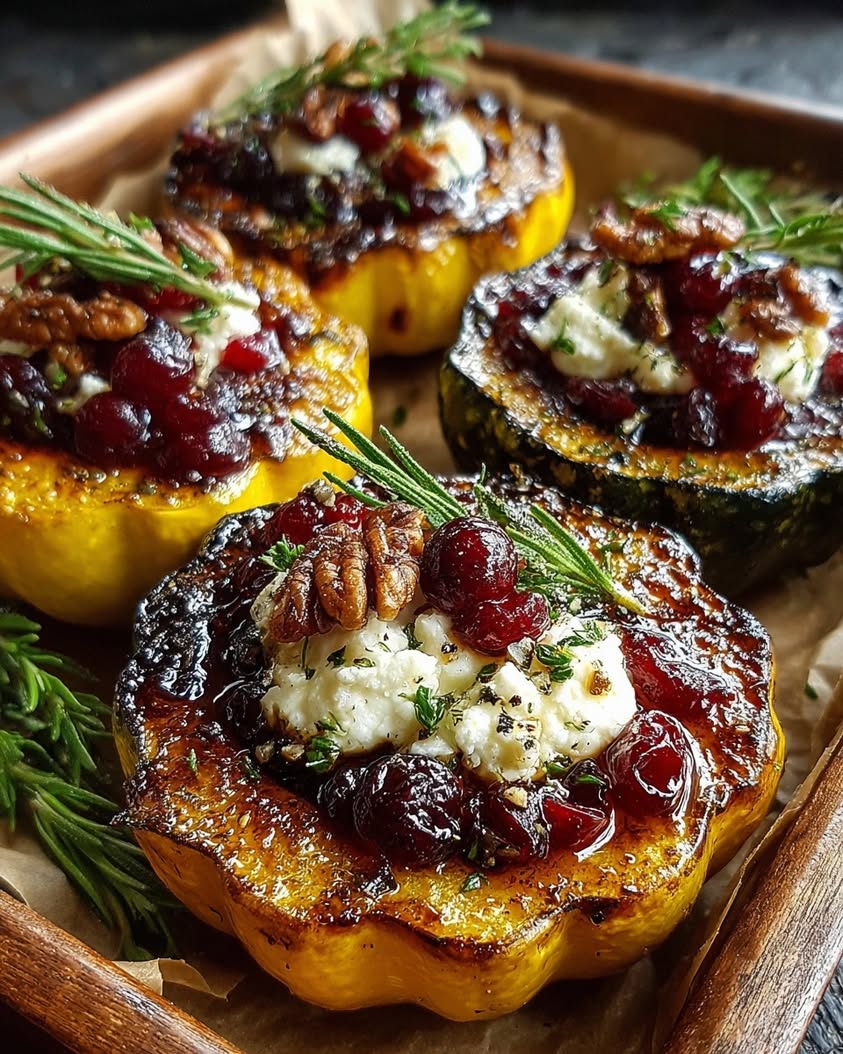
Honey-Roasted Acorn Squash Delight: A Festive Side Dish with Goat Cheese & Cranberry Glaze
Welcome to a recipe that captures the very essence of autumn on a plate. This Honey-Roasted Acorn Squash Delight is not just a side dish; it’s a celebration of seasonal flavors and textures. Imagine tender, caramelized squash, its natural sweetness deepened by a honey glaze, then topped with creamy, tangy goat cheese and a vibrant, tart cranberry reduction. Consequently, every bite is a perfect harmony of sweet, savory, and tangy notes. This dish is a showstopper for holiday tables, yet simple enough for a cozy weeknight dinner. Ultimately, it transforms humble winter squash into an elegant culinary experience.
Furthermore, the beauty of this Honey-Roasted Acorn Squash Delight lies in its stunning presentation. The deep green shells cradle the golden-orange flesh, creating a natural serving vessel that looks beautiful on any table. The ruby-red cranberry glaze drizzled over the white goat cheese creates a festive color palette that screams celebration. Meanwhile, the aroma that fills your kitchen as it roasts is pure comfort—warm, sweet, and nutty. This recipe is a fantastic way to enjoy healthy, seasonal produce without sacrificing an ounce of flavor or visual appeal. It’s a guaranteed crowd-pleaser that will have everyone asking for the recipe.
Quick Recipe Highlights
- Flavor Profile: This dish masterfully balances sweet, savory, and tangy elements. The natural sweetness of the roasted acorn squash is enhanced by honey, then contrasted beautifully with the sharp, creamy goat cheese. Finally, the tart cranberry glaze cuts through the richness, creating a complex and satisfying taste experience.
- Texture: You’ll enjoy a wonderful contrast of textures. The squash becomes meltingly tender and almost custard-like inside, with slightly caramelized, crisp edges. Meanwhile, the creamy goat cheese adds a soft, luxurious mouthfeel, and the cranberry glaze provides a lovely, sticky viscosity.
- Aroma: As it roasts, your kitchen will fill with the warm, comforting scents of caramelizing honey, toasted squash, and earthy thyme. The cranberry glaze adds a final bright, fruity note that makes the whole dish smell incredibly inviting and festive.
- Visual Appeal: This dish is a feast for the eyes. The vibrant green squash halves are stunning vessels filled with golden-orange flesh, snowy white cheese, and glossy red glaze. It’s a rustic yet elegant presentation that requires minimal effort for maximum impact.
- Skill Level Needed: This is a beginner-friendly recipe. The techniques involved—halving squash, mixing a simple glaze, and roasting—are fundamental. Therefore, even novice cooks can achieve impressive, restaurant-quality results with confidence.
- Special Equipment: You need only a sharp chef’s knife, a sturdy spoon for scooping, a baking sheet, and a small saucepan. A pastry brush is helpful for applying the glaze but not strictly necessary. No fancy gadgets are required.
Recipe Overview
- Difficulty Level: We rate this Honey-Roasted Acorn Squash Delight as easy. The steps are straightforward: prep the squash, mix the glaze, roast, and assemble. The most challenging part is safely cutting the squash, which is manageable with a sharp knife and a little care. Consequently, it’s perfect for cooks of all levels looking for an impressive yet simple dish.
- Category: This recipe falls squarely into the side dish category, ideal for holidays like Thanksgiving or Christmas. However, it’s substantial enough to serve as a vegetarian main course when paired with a hearty grain salad or some crusty bread. It’s versatile for many meal occasions.
- Cuisine: While not tied to one specific tradition, this dish draws inspiration from modern American farm-to-table cuisine. It utilizes classic autumn ingredients popular in North American and European holiday cooking, combining them in a fresh, contemporary way that highlights their natural flavors.
- Cost: This is a very cost-effective recipe, especially in the fall and winter when acorn squash is in season. Goat cheese and fresh cranberries are the priciest components, but a little goes a long way. Overall, you can create this beautiful dish for a fraction of the cost of a store-bought prepared side.
- Season: This Honey-Roasted Acorn Squash Delight is a quintessential autumn and winter recipe. Acorn squash and cranberries are at their peak during these cooler months, offering the best flavor and texture. It brings warmth and festive color to the table when the weather turns cold.
- Occasion: It’s perfect for holiday feasts like Thanksgiving, Christmas, or Friendsgiving as a standout side. Additionally, it’s excellent for dinner parties, potlucks, or even as a special weekend family meal. It elevates any gathering with its beautiful presentation and delicious taste.
Why You’ll Love This Recipe
First and foremost, the taste and texture appeal of this Honey-Roasted Acorn Squash Delight is undeniable. Each component plays a specific role in creating a symphony in your mouth. The squash becomes incredibly sweet and tender, practically melting on your tongue. Then, the creamy, tangy goat cheese provides a rich counterpoint that cleanses the palate. Finally, the bright, tart cranberry glaze adds a necessary pop of acidity that ties everything together. This balance ensures that no single flavor overpowers the others, making each bite perfectly harmonious and utterly satisfying from start to finish.
Next, consider the convenience and preparation benefits. This recipe requires minimal hands-on time. After the initial prep of cutting and seeding the squash, the oven does most of the work. You can easily prepare the cranberry glaze while the squash roasts, making efficient use of your time. Moreover, the ingredients are simple and often already in a well-stocked pantry during the fall. There’s no need for complicated techniques or hard-to-find items. This simplicity means you can focus on enjoying the cooking process and the company of your guests rather than stressing over a complicated recipe.
Furthermore, the nutritional advantages are significant. Acorn squash is a powerhouse of vitamins A and C, fiber, and potassium. Using honey as a natural sweetener is a better alternative to refined sugars. Goat cheese offers protein and calcium, often in a more easily digestible form for some people compared to cow’s milk cheese. Cranberries are famous for their antioxidants and urinary tract health benefits. Consequently, this dish is not just delicious; it’s genuinely nourishing. It allows you to indulge in a decadent-tasting side while still feeding your body wholesome, nutrient-dense ingredients.
Additionally, the social and entertaining value of this dish is high. Its stunning visual presentation is guaranteed to draw compliments from your guests. Serving food in its natural shell feels rustic, elegant, and thoughtful. It’s a fantastic conversation starter and makes people feel like you’ve gone to extra special effort, even though the process is quite simple. This Honey-Roasted Acorn Squash Delight has a “wow” factor that belies its ease, making you look like a culinary rock star at any potluck or dinner party without the associated stress.
Finally, the cost-effectiveness and accessibility are major wins. Winter squash is one of the most affordable produce items during the colder months. You can often find acorn squash for just a dollar or two each. The other ingredients—honey, olive oil, herbs—are pantry staples. While goat cheese and fresh cranberries are a small splurge, they are used sparingly as garnishes, so a little creates a big impact. This recipe proves that eating seasonally and beautifully doesn’t have to break the bank. It’s an accessible luxury that anyone can prepare and enjoy.
Historical Background and Cultural Significance
The story of acorn squash in North America is deeply intertwined with Indigenous agriculture. For centuries, Native American tribes cultivated various types of squash, beans, and corn in a symbiotic planting system known as the “Three Sisters.” Acorn squash, with its hardy shell and excellent storage properties, was a vital winter food source. It was often roasted in the embers of a fire or boiled. The introduction of honey by European settlers later provided a new way to sweeten this native vegetable, creating flavor combinations that would evolve over generations into dishes like our Honey-Roasted Acorn Squash Delight.
Culturally, squash holds a place of importance in autumn harvest festivals across many societies. In the United States, it became a staple of Thanksgiving celebrations, symbolizing the bounty of the harvest. Meanwhile, cranberries, another native North American fruit, were used by Indigenous peoples for food, dye, and medicine. Their pairing with squash is a relatively modern innovation but one that draws on deeply rooted, regional ingredients. This recipe, therefore, connects us to a long history of using what the land provides in late autumn, celebrating preservation and sustenance through the winter months.
The evolution of this specific recipe is a testament to modern culinary trends favoring simple, ingredient-driven dishes. The farm-to-table movement championed letting seasonal produce shine with minimal fuss. Roasting vegetables to concentrate their sugars became a beloved technique in home kitchens. Adding a cheese like goat cheese, which gained immense popularity in the late 20th century for its tangy flavor profile, provided a sophisticated touch. The cranberry glaze is a contemporary twist on classic cranberry sauce, reducing it to a syrupy consistency perfect for drizzling. Thus, this Honey-Roasted Acorn Squash Delight is a delicious product of historical tradition meeting modern taste.
Regional variations of stuffed or roasted squash abound. In Italy, delicata squash might be roasted with rosemary and Parmesan. In the American South, sweet potatoes reign supreme with marshmallows. Our version leans into a Northern aesthetic, using ingredients common in the Northeast and Midwest: hardy squash, wild honey, and tart cranberries. Some variations might use maple syrup instead of honey, feta instead of goat cheese, or pomegranate arils instead of a cranberry glaze. Each adaptation tells a story of local availability and taste preferences, making the humble squash a versatile canvas for cultural expression and seasonal eating around the world.
Ingredient Deep Dive
Let’s start with the star: acorn squash. This winter squash is named for its distinctive acorn-like shape. It has a dark green, ridged shell and sweet, slightly nutty orange flesh. Historically, it was valued for its long storage life. Nutritionally, it’s rich in vitamin C for immunity, potassium for heart health, and dietary fiber for digestion. When selecting, choose squash that feels heavy for its size with a firm, dull rind free of soft spots. Store it in a cool, dark place for up to a month. For a substitution, try delicata squash (no need to peel) or butternut squash cut into large chunks.
Next, consider the honey. Honey is one of humanity’s oldest sweeteners, used for thousands of years across countless cultures. Its flavor varies dramatically based on the flowers the bees visit, from mild clover to robust buckwheat. In this Honey-Roasted Acorn Squash Delight, it not only sweetens but also helps create a beautiful caramelized glaze. Honey contains trace enzymes, antioxidants, and minerals. For best results, use a locally sourced, raw honey if possible for superior flavor. If you need a substitute, pure maple syrup is an excellent vegan alternative that pairs wonderfully with squash and still provides that glossy caramelization.
Now, examine the goat cheese, or chèvre. This cheese has a history dating back thousands of years in the Mediterranean and Middle East. Its distinctive tangy flavor comes from the fatty acids in goat’s milk. It’s often easier to digest for those sensitive to cow’s milk lactose. Goat cheese is a good source of protein, calcium, and healthy fats. Select a fresh, soft log of plain goat cheese for easy crumbling. For storage, keep it tightly wrapped in the refrigerator. If you’re not a fan of goat cheese, feta cheese makes a salty, briny substitute, while ricotta salata offers a firmer, milder alternative.
Finally, the cranberry glaze component. Cranberries are one of only three major fruits native to North America. They were a vital food source for Indigenous peoples and later for sailors to prevent scurvy. They are packed with vitamin C and unique antioxidants called proanthocyanidins. For the glaze, use fresh or frozen cranberries; avoid sweetened dried cranberries as they won’t break down properly. Fresh cranberries should be firm and brightly colored. They keep for weeks in the fridge or can be frozen for a year. For a twist, you could use fresh pomegranate juice reduced to a syrup or a high-quality cherry jam thinned with a little vinegar.
Common Mistakes to Avoid
- Not Using a Sharp Knife: Acorn squash has a tough rind. A dull knife is dangerous and can slip. Always use a sharp chef’s knife and employ a rocking motion, applying steady pressure. For extra safety, you can microwave the whole squash for 1-2 minutes to slightly soften the skin first.
- Skipping the Seed Scooping: The stringy pulp and seeds in the center must be thoroughly removed. If left in, they become unpleasant to eat and can burn during roasting. Use a sturdy spoon or an ice cream scoop to clean out the cavity completely, creating a smooth bowl for the other ingredients.
- Underseasoning the Squash: The flesh of the squash itself needs seasoning beyond just the honey glaze. Generously season the cut sides with salt and pepper before adding oil or honey. This foundational seasoning enhances the natural flavor of the vegetable and is a crucial step for a well-balanced dish.
- Overcrowding the Pan: Placing the squash halves too close together on the baking sheet causes them to steam rather than roast. Steaming makes the flesh soggy and prevents caramelization. Ensure there is at least an inch of space between each half to allow hot air to circulate and create those delicious, caramelized edges.
- Applying Glaze Too Early: If you brush all the honey glaze on at the beginning, the sugars can burn in the hot oven before the squash is tender. Instead, roast the squash until almost done, then apply the glaze for the last 10-15 minutes. This allows the glaze to set and caramelize without burning.
- Overcooking the Cranberry Glaze: When making the cranberry reduction, cook it just until the berries pop and the liquid thickens to a syrupy consistency. If cooked too long, it can become overly thick, sticky, and bitter. Remember it will thicken further as it cools. Aim for a sauce that coats the back of a spoon.
- Adding Cheese Before Roasting: Goat cheese will melt into a puddle and potentially burn if added before roasting. It should always be a finishing garnish added after the squash comes out of the oven. The residual heat will slightly soften it without causing it to lose its shape and creamy texture.
- Serving Straight from the Oven: While warm is ideal, serving the squash piping hot means the cheese will immediately melt into nothingness. Let the roasted squash cool for 5-7 minutes after coming out of the oven. Then add the cheese and glaze. This allows the flavors to settle and ensures perfect textural contrast.
Essential Techniques
Safely Halving Winter Squash: This is the most important technique for this Honey-Roasted Acorn Squash Delight. First, stabilize the squash on a cutting board with a damp towel underneath to prevent slipping. Using a sharp, heavy chef’s knife, carefully pierce the squash along the indentations from the stem to the point. Apply firm, steady pressure, rocking the knife slightly if needed. Never try to force it through in one chop. Once halved, use a spoon to scrape out the seeds and stringy pulp thoroughly. Mastering this ensures safety and creates perfect vessels for roasting.
The Art of Roasting for Caramelization: Roasting is a dry-heat method that concentrates flavors and sugars. For perfect squash, preheat your oven fully—a hot oven (400°F or above) is key. Tossing the squash in oil ensures even heat transfer and prevents sticking. The space between pieces on the pan is critical; overcrowding leads to steaming. Roast cut-side down first to develop a sear, then flip and glaze. The visual cue for success is deeply golden-brown edges and flesh that pierces easily with a fork. This technique transforms the squash from bland to deeply flavorful and sweet.
Creating a Simple Fruit Glaze: A glaze adds shine, flavor, and acidity. The technique involves cooking fruit with a sweetener and liquid until it breaks down and thickens. For the cranberry glaze, combine cranberries, honey, water, and a pinch of salt. Bring to a simmer, then reduce heat. As the cranberries pop, they release pectin, which naturally thickens the mixture. Stir occasionally to prevent scorching. The glaze is done when it coats the back of a spoon and has reduced by about half. Cooling will thicken it further. This technique balances the squash’s sweetness with vibrant tartness.
Pro Tips for Perfect Honey-Roasted Acorn Squash Delight
Score the Flesh: Before roasting, use a sharp knife to score the cut side of the squash in a crosshatch pattern. This simple step allows the honey and olive oil to penetrate deeper into the flesh, resulting in more flavorful squash throughout, not just on the surface.
Infuse Your Oil: Warm the olive oil with the fresh thyme sprigs for a few minutes before brushing it onto the squash. This infuses the oil with herbal flavor, giving the entire dish a more complex and aromatic base note.
Use Two Temperatures: Start roasting the squash at a higher temperature (425°F) cut-side down to get a good sear. Then, reduce the heat to 375°F after flipping and adding the glaze. This method ensures tender flesh without burning the sugary glaze.
Finish with Fresh Herbs: Along with the goat cheese, sprinkle the finished dish with finely chopped fresh parsley or chives. The bright green color adds visual pop, and the fresh herbal flavor provides a final layer of complexity that dried herbs cannot match.
Toast the Squash Seeds: Don’t discard the seeds! Clean them, toss with a little oil and salt, and roast on a separate pan until crispy. Use them as a crunchy, nutritious garnish on top of the finished dish for added texture.
Balance the Glaze Acidity: Taste your cranberry glaze before serving. If it’s too tart, stir in an extra teaspoon of honey. If it’s too sweet, a tiny splash of balsamic or apple cider vinegar can bring back the necessary bright, balancing acidity.
Warm Your Plates: For the best dining experience, especially if serving as a main course, warm your serving plates briefly. This keeps the squash and melted cheese at an ideal temperature for longer, allowing your guests to savor every warm, delicious bite.
Variations and Adaptations
For regional variations, consider the ingredients local to your area. In the South, substitute sorghum syrup or bourbon-infused honey. In the Pacific Northwest, use marionberries instead of cranberries for the glaze. A Mediterranean twist could feature za’atar in the oil and crumbled feta cheese. For a French-inspired version, use herbes de Provence and a dollop of crème fraîche. These simple swaps can transport the basic recipe to different culinary landscapes while maintaining its core structure and appeal.
Seasonal adaptations are easy and encouraged. In late summer, try this with pattypan squash. For a deep winter version, use sweet dumpling squash. If fresh cranberries are unavailable, a high-quality whole-berry cranberry sauce simmered down makes a fine glaze, or use a different seasonal fruit like a pear-ginger compote. In spring, a lighter lemon-herb oil and fresh peas could create a completely new dish. The method remains constant, but the ingredients shift with nature’s calendar.
Dietary modifications are straightforward. For a vegan Honey-Roasted Acorn Squash Delight, use maple syrup instead of honey and a vegan cream cheese or almond-based feta instead of goat cheese. To make it nut-free, ensure your vegan cheese substitute is nut-free. For a lower-carb version, reduce the amount of honey slightly and monitor the cranberry glaze portion, as cranberries do contain natural sugars. The squash itself is nutrient-dense and fits well into many balanced eating plans.
Flavor variations can personalize the dish immensely. Add warmth with a pinch of cayenne or smoked paprika to the oil. Incorporate sweetness with a sprinkle of cinnamon or nutmeg on the squash before roasting. For a savory edge, scatter crispy fried shallots or pancetta bits over the top along with the cheese. A drizzle of browned butter mixed with the honey adds incredible nutty richness. Don’t be afraid to experiment with your favorite spice blends.
Serving and Presentation Guide
Plating techniques for this dish are key to its visual impact. Serve each squash half on individual plates as a beautiful, self-contained portion. Alternatively, for a family-style presentation, arrange the halves on a large, rustic wooden board or a beautiful platter. You can also scoop the roasted flesh out of the skins, mash it lightly with the goat cheese, and then return it to the shells for a more composed look before drizzling with glaze. This method is especially helpful if serving to guests who might struggle with cutting the squash at the table.
Garnishing ideas extend beyond the cheese and glaze. Fresh thyme or rosemary sprigs add greenery. Toasted pepitas or walnuts provide crunch. A light dusting of flaky sea salt like Maldon just before serving enhances all the flavors and adds a gourmet touch. A microplane of orange zest over the top introduces a fantastic citrus aroma that complements the cranberry perfectly. Remember, garnishes should be edible and enhance the eating experience, not just sit on the plate for decoration.
For traditional accompaniments, this Honey-Roasted Acorn Squash Delight pairs classically with roast turkey, baked ham, or pork tenderloin. For a vegetarian feast, serve it alongside wild rice pilaf, lentil loaf, or a massaged kale salad. Modern serving suggestions might include placing it on a table next to other vibrant vegetable sides like roasted Brussels sprouts with bacon or a colorful farro salad. It also stands beautifully as the centerpiece of a vegetarian charcuterie board with crusty bread, assorted cheeses, and nuts.
Wine and Beverage Pairing
Wine pairings for this dish should consider its sweet, savory, and tangy profile. A slightly off-dry Riesling or Gewürztraminer is a classic and excellent choice. The wine’s touch of sweetness mirrors the honey, while its acidity cuts through the richness of the cheese. Alternatively, a light-bodied Pinot Noir with its red fruit notes complements the cranberry beautifully. For a richer option, a Chardonnay with minimal oak (unoaked is best) can stand up to the squash’s creaminess without overpowering it. The goal is to choose a wine that acts as a refreshing counterpoint, not a competing flavor.
Non-alcoholic alternatives can be just as thoughtful. A sparkling apple cider provides festive bubbles and autumnal flavor. A tart cranberry spritzer (cranberry juice mixed with club water and a squeeze of lime) echoes the glaze. For a warm option, a mulled apple juice with cinnamon and clove creates a cozy pairing. Herbal teas like peppermint or chamomile served iced or hot can cleanse the palate between bites. The key is to offer a beverage with some acidity or effervescence to balance the dish’s sweet and rich elements.
Storage and Shelf Life
Store any leftover Honey-Roasted Acorn Squash Delight properly to maintain quality. First, scoop the flesh, cheese, and glaze out of the shell and place it in an airtight container. The empty shell does not store well once cooked and becomes soggy. Refrigerate the mixture for up to 3 days. Signs of spoilage include an off smell, significant moisture separation, or mold. The texture of the squash will soften further upon storage, but the flavors often meld and deepen, which can be quite pleasant.
Reheating instructions are important for best results. To reheat, place the squash mixture in an oven-safe dish, cover with foil, and warm in a 350°F oven until heated through, about 15-20 minutes. You can also reheat gently in a skillet over medium-low heat, stirring occasionally. Avoid the microwave if possible, as it can make the goat cheese rubbery and the squash mushy. If using the microwave, do so in short bursts and stir between intervals. Add a fresh sprinkle of goat cheese after reheating to revive the creamy element.
Freezing is not generally recommended for this specific assembled dish. The high water content of the squash leads to a very mushy texture upon thawing. The dairy in the goat cheese will separate and become grainy. However, you can successfully freeze plain roasted acorn squash flesh. Puree it after roasting, freeze in portions, and use later for soups or muffins. The cranberry glaze can also be frozen separately in an ice cube tray for future use on other dishes.
Make Ahead Strategies
You can prep components of this Honey-Roasted Acorn Squash Delight ahead of time to streamline your cooking day. Up to two days in advance, wash and halve the squash, scoop out the seeds, and store the halves wrapped in damp paper towels in a large resealable bag in the refrigerator. You can also make the cranberry glaze completely ahead; it keeps beautifully in the fridge for up to a week and often tastes better as the flavors meld. Simply reheat it gently or bring it to room temperature before using.
For the day of serving, take your pre-prepped squash out of the fridge about 30 minutes before roasting to take the chill off. This helps it cook more evenly. Roast the squash as directed. While it roasts, if you made the glaze ahead, gently warm it on the stove. Crumble your goat cheese. This staged approach means that when the squash comes out of the oven, you can assemble and serve immediately with minimal last-minute fuss, allowing you to enjoy your own party.
Scaling Instructions
Halving the recipe is simple for a smaller meal. Use one medium acorn squash, halve all other ingredient quantities, and use a quarter sheet pan or small baking dish. The cook time may reduce slightly, so start checking for doneness around the 35-minute mark. Doubling or tripling for a crowd is also easy. You will need multiple baking sheets. Crucially, rotate the sheets from top to bottom rack halfway through cooking to ensure even roasting. You may also need to extend the cook time by 5-10 minutes due to the increased volume in the oven.
When scaling up, equipment adjustments are necessary. Ensure your oven can accommodate multiple racks with enough space for air circulation. If your sheets are too crowded, roast in batches and keep the first batch warm in a low oven (200°F) tented with foil. For timing modifications, prep all squash first, then roast in succession if needed. Storage considerations for leftovers remain the same, though you will obviously have more containers. Scaling this recipe is very forgiving, making it an ideal choice for flexible holiday planning.
Nutritional Deep Dive
This Honey-Roasted Acorn Squash Delight offers a favorable macro breakdown. One serving provides a good balance of complex carbohydrates from the squash, healthy fats from the olive oil and goat cheese, and a moderate amount of protein from the cheese. It’s a fiber-rich dish, thanks to the squash, which aids in satiety and digestive health. The natural sugars from the honey and squash are balanced by the fiber and fat, leading to a more stable blood sugar response compared to a highly refined dessert.
The micronutrient analysis is impressive. Acorn squash is exceptionally high in vitamin C and a powerhouse of vitamin A (from beta-carotene), crucial for immune function and eye health. It also provides potassium, magnesium, and B vitamins. Goat cheese contributes calcium and phosphorus for bone health. Cranberries add more vitamin C and a unique array of antioxidants. Together, these ingredients create a dish that supports overall wellness, particularly during the cold and flu season when these nutrients are most needed.
Dietary Adaptations
For a gluten-free version, this recipe is naturally perfect as written. No ingredients contain gluten. Just ensure that any pre-made broth or other additions you might experiment with are certified gluten-free if you have celiac disease or a severe sensitivity.
To make it dairy-free and vegan, replace the honey with maple syrup or agave nectar. Substitute the goat cheese with a vegan alternative like a cashew-based cheese spread, a crumbled vegan feta, or even a dollop of thick, unsweetened coconut yogurt for tang. The result is still rich, flavorful, and satisfying.
For a Paleo adaptation, use honey (which is Paleo-approved in moderation) and omit the goat cheese, as dairy is typically excluded. You could add toasted nuts or a drizzle of tahini for richness instead. The cranberry glaze is Paleo-friendly as long as you use just cranberries, honey, and water.
A Low-FODMAP version requires careful modification. Acorn squash is only low-FODMAP in a ½ cup serving, so stick to a small portion. Use maple syrup instead of honey (honey is high in fructose). Omit the goat cheese or use a hard, aged goat cheese in a small amount (30g), as the lactose is lower. The cranberries are fine in moderation.
Troubleshooting Guide
If your squash is tough and not tender, it likely needed more roasting time. Oven temperatures can vary. Simply return it to the oven, checking every 5-7 minutes. Cover loosely with foil if the top is getting too dark while the inside finishes cooking. Next time, ensure your oven is fully preheated and use an oven thermometer for accuracy.
If the glaze burned on the squash, you applied it too early or your oven was too hot. You can carefully scrape off the worst of the burnt bits and add a fresh drizzle of the reserved cranberry glaze after baking to cover it up. For the future, remember to add the honey glaze only in the last 10-15 minutes of cooking.
If the finished dish tastes one-dimensional or bland, it probably needs more salt and acid. Season each layer! Salt the squash before roasting. Finish the plated dish with a flaky sea salt. If it’s still flat, a tiny squeeze of lemon juice over the top can work wonders to brighten all the flavors instantly.
Recipe Success Stories
Community feedback on this Honey-Roasted Acorn Squash Delight has been overwhelmingly positive. Many home cooks report it becoming the new “must-have” side dish for their Thanksgiving, often replacing traditional candied yams. One reader shared how her children, who normally refuse vegetables, asked for seconds because they loved the sweet honey flavor. Another found that doubling the cranberry glaze to have extra on the table was a game-changer, as guests enjoyed it on their turkey and rolls as well.
Adaptation stories from readers are inspiring. A vegan reader successfully used a almond-based feta and said it was a hit at her potluck. Someone else added crumbled cooked sausage to the cavity for a heartier meal and raved about the results. A photographer shared that placing the squash on a bed of autumnal leaves (outside the plate, for decoration) made for stunning social media photos that garnered hundreds of likes. These stories show the recipe’s versatility and its power to bring people together over delicious, beautiful food.
Frequently Asked Questions
Q: Can I use frozen acorn squash?
A: It’s not recommended for this specific presentation. Frozen squash is usually cubed and will not hold the iconic “half” shape. The texture also becomes much wetter when roasted from frozen, preventing proper caramelization. For the best Honey-Roasted Acorn Squash Delight, fresh squash is essential.
Q: My squash is very large. Should I adjust the time?
A: Absolutely. Larger squash will need more time. If your halves are very thick, you can increase the initial roasting time before adding the glaze by 10-15 minutes. Always rely on the fork-tender test rather than the clock. The flesh should offer no resistance when pierced.
Q: Can I make this without honey?
A> Yes. Maple syrup is the best 1:1 substitute and creates a wonderful flavor. Agave nectar or even brown sugar dissolved in a little melted butter will also work. The cooking process remains the same.
Q: What can I use instead of fresh cranberries for the glaze?
A> If fresh are unavailable, frozen cranberries work perfectly—no need to thaw. In a pinch, you can use a high-quality whole-berry cranberry sauce from a jar. Simmer it in a pan to reduce and thicken slightly before using.
Q: Is it possible to roast the seeds from the squash?
A> Definitely! Clean off the stringy pulp, rinse, pat dry, toss with a little oil and salt, and roast on a pan at 325°F for 15-20 minutes until golden and crispy. They make a fantastic, zero-waste garnish for the dish.
Q: Can I prep and roast the squash a day ahead?
A> You can roast it a day ahead, but the texture is best fresh. If you must, roast until just tender, let cool, cover, and refrigerate. Reheat in a 350°F oven until warm throughout, then add the fresh cheese and glaze.
Q: My goat cheese is very cold and hard to crumble.
A> Let it sit at room temperature for 20-30 minutes before you plan to use it. It will soften significantly, making it easy to crumble with your fingers or a fork.

I’m Billy, a classically trained culinary school graduate from The Culinary Institute of America with over 12 years in the restaurant industry and over 19 years of cooking experience.