
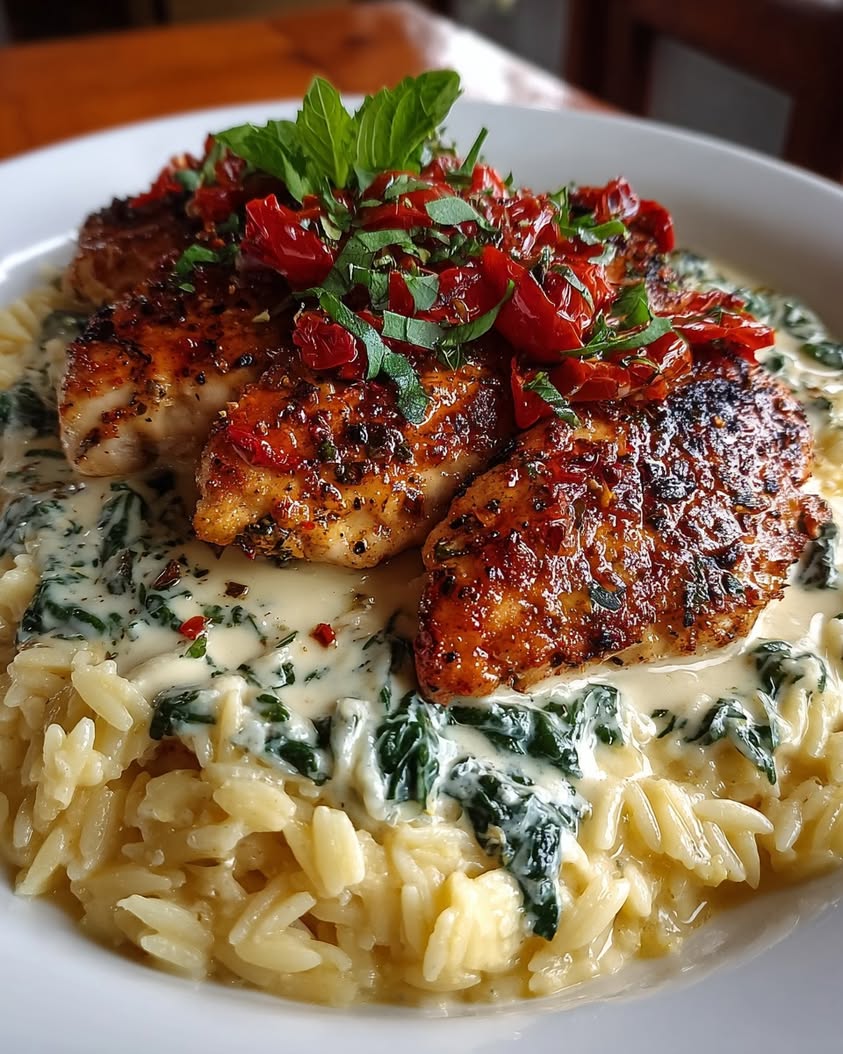
Tuscan Herb Chicken with Orzo & Whipped Feta: A Creamy, Comforting One-Pan Wonder
Imagine a dish that captures the rustic, sun-drenched spirit of the Italian countryside, all from the comfort of your own kitchen. This Tuscan Herb Chicken with Orzo & Whipped Feta recipe is exactly that. It is a complete, satisfying meal that brings together tender, herb-crusted chicken, creamy orzo pasta, and a tangy, cloud-like whipped feta finish. Ultimately, this recipe delivers restaurant-quality flavor with surprisingly simple, straightforward steps.
The magic of this Tuscan Herb Chicken Orzo recipe lies in its layers of flavor and texture. First, you sear chicken breasts until they develop a beautiful golden crust. Next, you cook the orzo directly in the same pan, allowing it to soak up all the delicious chicken drippings and herbs. Finally, you crown the entire dish with a luxurious, airy whipped feta that melts into the warm orzo. Consequently, every bite is a perfect harmony of savory, creamy, and tangy notes.
This recipe is a fantastic solution for busy weeknights and impressive enough for weekend guests. Moreover, it uses mostly pantry-staple ingredients and requires just one skillet, meaning cleanup is a breeze. If you are searching for a reliable, crowd-pleasing dinner that feels both comforting and elegant, this Tuscan Herb Chicken with Orzo & Whipped Feta is your answer.
Quick Recipe Highlights
- Flavor Profile: This dish features savory, garlicky, and herbaceous notes from the chicken, balanced by the bright, tangy creaminess of the whipped feta. The sun-dried tomatoes add a sweet, concentrated burst of flavor that ties everything together beautifully.
- Texture: You get a wonderful contrast between the juicy, seared chicken and the tender, slightly chewy orzo pasta. The whipped feta adds a smooth, velvety layer that creates a luxurious mouthfeel against the other components.
- Aroma: As it cooks, your kitchen will fill with the irresistible scent of garlic, rosemary, and thyme sizzling in olive oil. This aromatic foundation is the hallmark of authentic Tuscan-inspired cooking and promises a delicious meal ahead.
- Visual Appeal: The dish presents beautifully with golden-brown chicken resting on a bed of creamy, speckled orzo. A generous dollop of snowy white whipped feta and a sprinkle of fresh herbs creates a restaurant-worthy plate that is as pretty as it is tasty.
- Skill Level Needed: This is a beginner-friendly recipe. The techniques involved, such as pan-searing chicken and simmering pasta, are fundamental. As long as you follow the steps for timing, you will achieve fantastic results even on your first try.
- Special Equipment: You only need a large, oven-safe skillet and a food processor or blender for the whipped feta. A standard skillet works, but a heavy-bottomed one like cast iron ensures perfect, even searing on the chicken.
Recipe Overview
- Difficulty Level: We rate this Tuscan Herb Chicken Orzo recipe as “Easy.” The process is linear and logical: prepare the whipped feta, cook the chicken, then cook the orzo in the same pan. There are no advanced techniques like making a roux or delicate sauces. Even novice cooks can follow the clear steps to create an impressive outcome.
- Category: This is a definitive main course, a complete protein-and-carb dinner. It fits perfectly into categories like “One-Pan Meals,” “Weeknight Dinners,” and “Comfort Food.” Additionally, it can be dressed up for a “Date Night at Home” or “Easy Entertaining” menu.
- Cuisine: The dish is inspired by the rustic, hearty cooking of Tuscany, Italy. It uses classic Tuscan flavors like rosemary, garlic, and sun-dried tomatoes. However, the whipped feta finish is a modern, creative twist that adds a Greek-inspired creamy element, making it a delicious fusion.
- Cost: This is a moderately priced meal. Chicken breasts and orzo are affordable protein and starch bases. The feta cheese, sun-dried tomatoes, and fresh herbs are the splurge items, but they provide immense flavor value. Overall, it is far more economical than dining out for a similar dish.
- Season: This Tuscan Herb Chicken recipe is truly versatile across seasons. It feels cozy and warming in fall and winter. Conversely, the bright flavors of lemon and herbs also make it light and suitable for spring and summer, especially if served with a crisp side salad.
- Occasion: It is incredibly versatile for occasions. It is quick enough for a Tuesday family dinner, elegant enough for a Friday night date, and reliable enough for feeding a small group of friends. It is a true all-purpose recipe for your repertoire.
Why You’ll Love This Recipe
First and foremost, the taste and texture combination is utterly irresistible. The chicken, infused with garlic and herbs, provides a savory, protein-packed foundation. The orzo becomes incredibly creamy as it cooks, absorbing the chicken broth and creating a risotto-like consistency without the constant stirring. Then, the whipped feta introduces a cool, tangy, and luxuriously smooth element that cuts through the richness. Every forkful delivers a complex and satisfying experience that will have everyone asking for seconds.
From a convenience standpoint, this Tuscan Herb Chicken Orzo recipe is a weeknight hero. It is designed as a one-pan meal, which drastically reduces cleanup time. Furthermore, the active cooking time is minimal; most of the process involves simmering, allowing you to prepare a side salad or simply relax. The ingredient list is also straightforward, with no hard-to-find items. You can easily pull this together with what you likely already have in your pantry and fridge.
Nutritionally, this dish offers a well-rounded balance. Chicken breast is an excellent source of lean protein. Orzo, a form of pasta, provides energizing carbohydrates. Using a moderate amount of olive oil and incorporating vegetables like spinach and sun-dried tomatoes adds healthy fats, fiber, and vitamins. The whipped feta, while indulgent, uses a tangy cheese that is often lower in fat than heavy cream-based sauces, offering big flavor without excessive heaviness.
For social and entertaining value, this recipe is a guaranteed crowd-pleaser. It presents beautifully on the plate, making it look like you spent hours in the kitchen. The flavors are familiar yet elevated, appealing to both picky eaters and food enthusiasts. You can easily double the recipe in a larger pan to feed a group, and it holds well, making it perfect for family-style serving. It is a dish that fosters conversation and comfort around the table.
Finally, it is remarkably cost-effective and accessible. Compared to ordering takeout or going to a restaurant, cooking this Tuscan Herb Chicken with Orzo & Whipped Feta at home saves significant money. The ingredients are not exotic or expensive. Chicken and pasta are staples, and the recipe transforms them into something special. This accessibility means you can enjoy a gourmet-tasting meal on a regular budget, which is a win for any home cook.
Historical Background and Cultural Significance
The culinary roots of this dish are firmly planted in the Tuscan tradition, a region of Italy celebrated for its “cucina povera” or “poor kitchen” philosophy. This style of cooking emphasizes simplicity, quality ingredients, and resourcefulness. Tuscan cooks historically made the most of available local produce, wild herbs, and inexpensive cuts of meat. Our recipe honors this tradition by using humble chicken and pasta, elevated with the vibrant flavors of rosemary, garlic, and sun-dried tomatoes—ingredients that thrive in the Tuscan sun.
Culturally, meals in Tuscany are central to family and community life, often prepared and enjoyed slowly. Dishes are designed to be hearty and satisfying, fueling a day of work in the fields. The use of herbs like rosemary and thyme is not just for flavor; these plants grow abundantly in the Mediterranean climate and have been used for centuries both culinarily and medicinally. This Tuscan Herb Chicken Orzo recipe channels that spirit of nourishment and communal eating, bringing a taste of that warm, familial atmosphere to your table.
The recipe has evolved by incorporating modern techniques and global influences. Traditionally, a Tuscan chicken dish might be served with beans or rustic bread. Using orzo, a rice-shaped pasta, adds a creamy texture that is reminiscent of risotto but much simpler. The whipped feta finish is a more contemporary twist, introducing a Greek element that complements the Mediterranean flavor profile perfectly. This evolution shows how classic foundations can be adapted with new ideas to create exciting fusion cuisine.
Regional variations of this concept are endless. In different parts of Italy, you might find chicken cooked with white wine and olives, or with artichokes and lemon. The beauty of this Tuscan Herb Chicken recipe framework is its adaptability. You could swap the spinach for kale, use oregano instead of thyme, or add a splash of cream to the orzo. Each variation tells a slightly different story, but all celebrate the core principle of making delicious, comforting food from simple, good ingredients.
Ingredient Deep Dive
Chicken Breasts: Boneless, skinless chicken breasts are the lean canvas for our herb crust. A staple in modern kitchens, they are prized for their mild flavor and quick cooking time. Nutritionally, they are an excellent source of high-quality protein and B vitamins, particularly niacin and B6, which support energy metabolism. For the best results in this Tuscan Herb Chicken Orzo recipe, look for breasts that are similar in size and thickness to ensure even cooking. You can also pound them gently to an even thickness. Store raw chicken in the coldest part of your fridge and use within 1-2 days, or freeze for longer storage. For a substitution, chicken thighs offer more flavor and juiciness due to their higher fat content.
Orzo Pasta: Orzo, meaning “barley” in Italian for its resemblance to the grain, is a small, rice-shaped pasta. It is a versatile ingredient common in Italian and Greek soups and salads. When cooked in broth as in this recipe, it releases starch and becomes wonderfully creamy, mimicking the texture of risotto. It provides carbohydrates for energy and is typically enriched with B vitamins and iron. Choose a good quality brand for the best texture. Store dry orzo in your pantry indefinitely in a sealed container. If you need a gluten-free alternative, look for orzo made from brown rice or corn flour.
Feta Cheese: Feta is a brined, crumbly cheese traditionally made from sheep’s milk or a sheep-goat milk blend in Greece. It has a tangy, salty flavor and a creamy yet granular texture. For the whipped feta finish in this recipe, its sharpness is mellowed into a smooth, spreadable delight. Feta is a good source of calcium and protein. When selecting feta for whipping, choose a block stored in brine for the best moisture and flavor; pre-crumbled feta often contains anti-caking agents that can affect smoothness. Store leftover feta in its brine in the refrigerator. For a dairy-free version, try whipping soaked cashews with lemon juice and nutritional yeast.
Sun-Dried Tomatoes: These are ripe tomatoes that have been dried to remove most of their water content, concentrating their sweet, tangy, and umami flavor. They are a hallmark of Mediterranean pantries. Sun-dried tomatoes are rich in lycopene, an antioxidant, and vitamin C. For the Tuscan Herb Chicken recipe, you can use either dry-packed or oil-packed varieties; if using oil-packed, drain and chop them, and you can use some of the flavorful oil for sautéing. Store dry-packed tomatoes in a cool, dark place and oil-packed ones in the fridge after opening. A good substitute is a tablespoon of tomato paste for depth, though you will lose the chewy texture.
Common Mistakes to Avoid
- Overcrowding the Pan: When searing the chicken, do not add all the pieces at once if they are touching. This causes the pan temperature to drop drastically, resulting in steamed, grey chicken instead of beautifully browned. Cook in batches if necessary to ensure each piece has space to sear properly.
- Underseasoning the Chicken: Chicken breast needs ample seasoning to taste great. Be generous with salt and pepper when seasoning the chicken before searing. The herb mixture should adhere well to create a flavorful crust that seasons the entire dish as it cooks.
- Not Toasting the Orzo: Skipping the step of toasting the dry orzo in the pan for a minute is a missed opportunity. This simple act adds a subtle nutty flavor to the pasta and helps it maintain a better texture when simmered in the broth.
- Using Cold Feta: Attempting to whip feta straight from the refrigerator is difficult. For the creamiest whipped feta finish, let the cheese and cream cheese sit at room temperature for 15-20 minutes before blending. This allows them to incorporate smoothly and aerate properly.
- Adding Spinach Too Early: If you stir the fresh spinach into the orzo at the beginning of the simmering process, it will overcook and become slimy. Always add delicate greens like spinach at the very end, just until wilted, to preserve their color and texture.
- Insufficient Liquid for Orzo: Orzo absorbs a lot of liquid as it cooks. If you do not use enough broth, the pasta will be undercooked and the dish will be dry. Follow the liquid measurements closely, and have a little extra warm broth on hand in case you need to adjust at the end.
- Overcooking the Chicken: Chicken breasts cook quickly and can become dry and tough if left on the heat too long. Use a meat thermometer and pull the chicken from the pan when it reaches 160°F internally; it will carry over to a safe 165°F as it rests.
- Skipping the Rest for Chicken: Cutting into the chicken immediately after cooking causes all the precious juices to run out. Always let the seared chicken rest for 5-10 minutes before slicing. This allows the juices to redistribute, guaranteeing a moist result.
Essential Techniques
Pan Searing for a Golden Crust: Achieving a perfect sear on the Tuscan herb chicken is crucial for flavor development. The technique, known as the Maillard reaction, creates hundreds of new flavor compounds when proteins and sugars brown at high heat. To master it, ensure your skillet is very hot before adding the oil, then add the chicken and do not move it for several minutes. This allows a crust to form. A common pitfall is flipping too early; the chicken should release easily from the pan when it is properly seared. Look for a deep golden-brown color with crisp edges.
Deglazing the Pan: After removing the chicken, you will see flavorful browned bits stuck to the bottom of the pan. Deglazing is the process of adding a liquid (in this case, chicken broth) to loosen those bits. This step is non-negotiable for building depth of flavor in your Tuscan Herb Chicken Orzo recipe. As you pour in the broth, use a wooden spoon to vigorously scrape the pan bottom. Those fond, or browned bits, will dissolve into the broth, creating an instant, rich sauce base that infuses the orzo with incredible savory taste.
Simmering Orzo to Creaminess: Cooking the orzo directly in the seasoned broth is what gives this dish its risotto-like quality without the labor. The key is to maintain a gentle simmer—small bubbles breaking the surface—not a rolling boil. This allows the orzo to cook evenly and absorb liquid slowly, releasing its starches to thicken the surrounding broth into a creamy sauce. Stir occasionally to prevent sticking. The visual cue for success is tender orzo suspended in a thickened, creamy liquid, not a watery soup or a dry, sticky mass.
Whipping Feta to a Smooth Consistency: Transforming crumbly feta into a light, spreadable cloud requires the mechanical action of a food processor or blender. The technique incorporates air, changing the cheese’s texture entirely. For success, use room-temperature ingredients and process until completely smooth, scraping down the sides as needed. A common pitfall is under-processing, leaving a grainy texture. Process for a full 1-2 minutes. The whipped feta finish should be homogenous, creamy, and hold soft peaks when scooped.
Pro Tips for Perfect Tuscan Herb Chicken with Orzo & Whipped Feta
For maximum flavor, marinate the chicken in the herb and garlic mixture for 30 minutes in the refrigerator before cooking. This allows the flavors to penetrate the meat more deeply.
Use a high-quality, low-sodium chicken broth. Since the dish reduces as it simmers, a low-sodium broth prevents it from becoming too salty, especially with the feta and sun-dried tomatoes adding their own saltiness.
Finish the whipped feta with a drizzle of high-quality extra virgin olive oil and a crack of black pepper just before serving. This adds a fruity note and visual appeal to the creamy topping.
If your orzo has absorbed all the liquid but still seems too al dente, add a splash more warm broth or water and continue to simmer for a few more minutes until the desired tenderness is reached.
Let the whipped feta come to room temperature for about 10 minutes before serving if you made it ahead and refrigerated it. This restores its creamy, spreadable texture.
Garnish with both fresh herbs and a sprinkle of crumbled feta for contrasting textures. The fresh herbs provide a bright pop, while the extra crumbles offer a salty bite.
Variations and Adaptations
For regional variations, consider a Greek twist by adding kalamata olives and artichoke hearts to the orzo. Alternatively, for a more French Provençal feel, use herbes de Provence on the chicken and stir in a spoonful of Dijon mustard with the broth. The basic framework of this Tuscan Herb Chicken Orzo recipe welcomes these cultural shifts beautifully.
Seasonal adaptations are easy. In spring, add fresh peas and asparagus tips with the spinach. For summer, use fresh cherry tomatoes instead of sun-dried and finish with basil. In autumn, incorporate sautéed mushrooms and swap spinach for chopped Swiss chard. Winter calls for heartier additions like cannellini beans or chopped roasted squash.
Dietary modifications are straightforward. For gluten-free, use certified gluten-free orzo or substitute with a short grain rice like Arborio, adjusting liquid slightly. To make it dairy-free, create a whipped topping from soaked cashews, lemon juice, and a pinch of salt instead of feta. For a lower-carb option, serve the herb chicken and sauce over cauliflower rice or zucchini noodles instead of orzo.
Flavor variations can keep this dish exciting. Add a pinch of red pepper flakes to the herb mix for heat. Stir a tablespoon of pesto into the finished orzo. Use lemon zest in the whipped feta for extra brightness. Swap the feta for whipped goat cheese (chèvre) for a tangier, earthier finish.
Serving and Presentation Guide
Plating is key for visual appeal. Spoon a generous amount of the creamy orzo onto the center of a warm, shallow bowl or plate. Slice the rested Tuscan herb chicken on a diagonal and fan the slices over the orzo. This showcases the beautiful sear on the chicken. Then, add a large, elegant dollop of the whipped feta right on top or slightly to the side.
Garnishing adds the final touch. Sprinkle with fresh chopped parsley, dill, or chives for color. A light drizzle of extra virgin olive oil or a balsamic glaze around the plate adds sophistication. For texture, a small handful of toasted pine nuts or walnuts provides a delightful crunch against the creamy elements.
Traditional accompaniments would include a simple green salad with a lemon vinaigrette to cleanse the palate. A crusty baguette is perfect for soaking up any remaining creamy sauce on the plate. For a more complete Tuscan-inspired meal, start with a classic bruschetta or a soup like ribollita.
Modern serving suggestions might include deconstructing the elements for a family-style spread. Place the orzo in a large serving bowl, the sliced chicken on a platter, and the whipped feta in a small bowl with a spoon. Let everyone build their own plate, which is great for gatherings and accommodates different preferences easily.
Wine and Beverage Pairing
Wine pairings should complement the dish’s creamy, herbal, and tangy notes. A crisp, medium-bodied white wine like Pinot Grigio or Vermentino from Italy itself is a classic choice; their acidity cuts through the richness. Alternatively, a light red with low tannins, such as a Chianti Classico or a Grenache, pairs wonderfully with the savory chicken and sun-dried tomatoes without overwhelming the palate.
For non-alcoholic alternatives, consider sparkling water with a twist of lemon or a homemade rosemary-lemonade to echo the herbal themes. An iced herbal tea, like mint or chamomile, can be very refreshing. A tart cherry juice spritzer also offers a nice balance to the savory and creamy flavors.
If serving this as a brunch or lunch dish, coffee and tea pairings work well. A medium-roast coffee with low acidity complements the meal. For tea, a robust black tea like English Breakfast or an herbal citrus tea can be a lovely finish. Serve these beverages after the meal to aid digestion.
Storage and Shelf Life
Store leftovers in an airtight container in the refrigerator for up to 3 days. It is best to store the components separately if possible: keep the sliced chicken, orzo mixture, and whipped feta in their own containers. This prevents the orzo from becoming soggy and the whipped feta from weeping into the warm pasta.
For reheating, gently warm the chicken and orzo in a skillet over medium-low heat with a splash of broth or water to loosen the sauce. Avoid the microwave if possible, as it can make the chicken rubbery and the orzo gummy. The whipped feta should be served cold or at room temperature; do not heat it.
This Tuscan Herb Chicken Orzo recipe can be frozen, but with caveats. Freeze the chicken and orzo mixture (without the spinach and whipped feta) for up to 2 months. Thaw overnight in the refrigerator before reheating. Note that the orzo’s texture may become softer upon thawing. The whipped feta does not freeze well, as it will separate and become grainy.
Make Ahead Strategies
You can significantly speed up dinner time by prepping components ahead. The whipped feta can be made 2-3 days in advance and stored in an airtight container in the refrigerator. The herb and garlic mixture for the chicken can also be prepped and stored in the fridge. You can even coat the chicken in the herbs, cover it, and refrigerate for up to 8 hours to marinate.
For a full make-ahead meal, cook the entire dish through the orzo simmering step, but hold off on adding the spinach. Let it cool, then store the chicken and orzo separately in the fridge. When ready to serve, reheat the orzo in a pan, stir in the spinach to wilt, and reheat the chicken gently in the oven or skillet. Add the fresh whipped feta finish just before serving.
Scaling Instructions
Halving the recipe for two people is simple. Use a medium skillet and reduce all ingredients by half. Cooking times will remain roughly the same, though the orzo may cook a minute or two faster due to the smaller volume. Keep a close eye on the chicken, as smaller pieces may cook more quickly.
Doubling or tripling for a crowd requires a large Dutch oven or a very wide skillet to ensure the orzo cooks evenly. You may need to sear the chicken in more batches to avoid overcrowding. When simmering the orzo, stir more frequently to prevent sticking on the bottom. The total simmer time may increase by a few minutes to ensure all the orzo is tender.
Nutritional Deep Dive
This Tuscan Herb Chicken Orzo recipe provides a balanced macronutrient profile. A serving offers a substantial amount of lean protein from the chicken, which supports muscle maintenance and satiety. The orzo contributes complex carbohydrates for sustained energy. The fats come primarily from olive oil and feta, providing heart-healthy monounsaturated fats. The spinach and sun-dried tomatoes add fiber, vitamins A, C, K, and antioxidants like lycopene.
For dietary considerations, this dish is naturally high in protein. To reduce sodium, use no-salt-added broth and reduce the salt in the herb rub. For those monitoring carbohydrates, a smaller portion of orzo can be served with extra vegetables. The recipe is not inherently low-fat due to the cheese and oil, but these ingredients are used in moderation to create richness and flavor.
Dietary Adaptations
Gluten-Free: Use a certified gluten-free orzo pasta, which is commonly made from rice or corn flour. Ensure your chicken broth is also certified gluten-free, as some brands contain gluten-based additives.
Dairy-Free: Omit the whipped feta finish. For a creamy alternative, create a sauce by blending soaked raw cashews with lemon juice, water, nutritional yeast, and a pinch of salt until completely smooth.
Lower-Carb/Keto: Replace the orzo with cauliflower rice. Sauté the riced cauliflower in the pan after deglazing, but only cook for 5-7 minutes until tender-crisp. The sauce will not thicken the same way, so you may want to add a touch of cream cheese to the pan to create creaminess.
Troubleshooting Guide
Orzo is Too Dry/Sticky: This means it absorbed all the liquid before it was fully cooked. Fix it by adding more warm broth or water, about 1/4 cup at a time, and continue simmering until the orzo is tender and the sauce is creamy again.
Whipped Feta is Grainy: This is usually because the feta was too cold or under-processed. Ensure ingredients are at room temperature. Process for a full 1-2 minutes, scraping down the sides frequently, until no graininess remains. Adding a tablespoon of the brine from the feta container can also help smooth it out.
Chicken is Dry: Overcooking is the likely cause. Next time, use a meat thermometer and remove chicken at 160°F. For the current batch, slice it and serve it with extra sauce or a drizzle of olive oil to add moisture back.
Frequently Asked Questions
Can I use chicken thighs instead of breasts? Absolutely. Bone-in, skin-on thighs will add more flavor and stay juicier. Adjust cooking time slightly, as thighs take a few minutes longer to cook through. You may also want to render the skin crispy for extra texture.
What can I use instead of orzo? Other small pastas like ditalini, small shells, or even pearl couscous (Israeli couscous) work well. For a grain, Arborio rice will give you a true risotto, but requires more stirring and liquid adjustment.
My whipped feta is too thick. How can I thin it? Add a teaspoon of milk, cream, or even a little of the feta brine at a time while processing until it reaches your desired, spreadable consistency.
Can I make this without a food processor for the feta? Yes, but it requires elbow grease. Use room-temperature ingredients and mash the feta and cream cheese together vigorously with a fork until as smooth as possible. It will be more rustic but still delicious.
Is it necessary to use an oven-safe skillet? It is recommended for flexibility, as you could finish the dish in the oven if preferred. However, for the stovetop method described, a regular skillet works perfectly fine as long as it has a lid for simmering the orzo.
Can I add other vegetables? Definitely. Sliced mushrooms, bell peppers, or zucchini can be sautéed after removing the chicken and before adding the orzo. Add hearty vegetables earlier and delicate ones like spinach at the end.
How do I prevent the herbs from burning when searing the chicken? Pat the chicken dry before applying the herb rub. Also, ensure your oil is hot but not smoking before adding the chicken. The herbs should toast and become fragrant, not blacken.
Additional Resources
If you loved this Tuscan Herb Chicken with Orzo & Whipped Feta, explore other one-pan wonders like a Lemon Garlic Butter Salmon with Asparagus or a hearty Sausage and Pepper Skillet. For more Tuscan inspiration, try a classic Ribollita soup or a simple Focaccia bread to soak up sauces.
To master the techniques used here, check out our guides on “How to Pan Sear Chicken Perfectly Every Time” and “The Ultimate Guide to Deglazing for Maximum Flavor.” Understanding these fundamentals will improve all your cooking.
For ingredient insights, we have deep dives on “Selecting and Storing Fresh Herbs” and “A Guide to Mediterranean Cheeses.” Learning about your ingredients empowers you to make better choices and substitutions.
{“success”:true,”message”:”Recipe created successfully”,”post_id”:8886,”tasty_recipe_id”:8886,”shortcode”:” Print
Tuscan Herb Chicken with Orzo & Whipped Feta Finish
Description
A vibrant, one-pan Mediterranean-inspired dish featuring juicy herb-marinated chicken thighs, tender orzo pasta, and a creamy whipped feta sauce for a tangy, elegant finish.
Ingredients
For the Crust:
- 4 boneless, skinless chicken thighs
- 2 tbsp olive oil, divided
- 1 tbsp Tuscan herb blend (rosemary, thyme, oregano, garlic powder)
- 1 cup orzo pasta
- 2 cups chicken broth
- 1 cup cherry tomatoes, halved
- 1/2 cup crumbled feta cheese
- 1/4 cup Greek yogurt
- 1 tbsp lemon juice
- Fresh parsley, chopped, for garnish
- Salt and black pepper to taste
Instructions
1. Prepare the Crust:
- Season chicken thighs with Tuscan herb blend, salt, and pepper. Heat 1 tbsp olive oil in a large skillet over medium-high heat. Sear chicken for 5-6 minutes per side until golden and cooked through. Remove and set aside.
- In the same skillet, add remaining olive oil and orzo. Toast for 1-2 minutes, then pour in chicken broth. Bring to a simmer, cover, and cook for 10-12 minutes until orzo is tender and liquid is absorbed.
- While orzo cooks, blend feta, Greek yogurt, and lemon juice in a food processor until smooth and creamy. Set aside.
- Stir cherry tomatoes into the cooked orzo and cook for 1-2 minutes until slightly softened. Return chicken to the skillet to warm through.
- Serve orzo and chicken topped with dollops of whipped feta and a sprinkle of fresh parsley.
Notes
You can customize the seasonings to taste.

I’m Billy, a classically trained culinary school graduate from The Culinary Institute of America with over 12 years in the restaurant industry and over 19 years of cooking experience.