
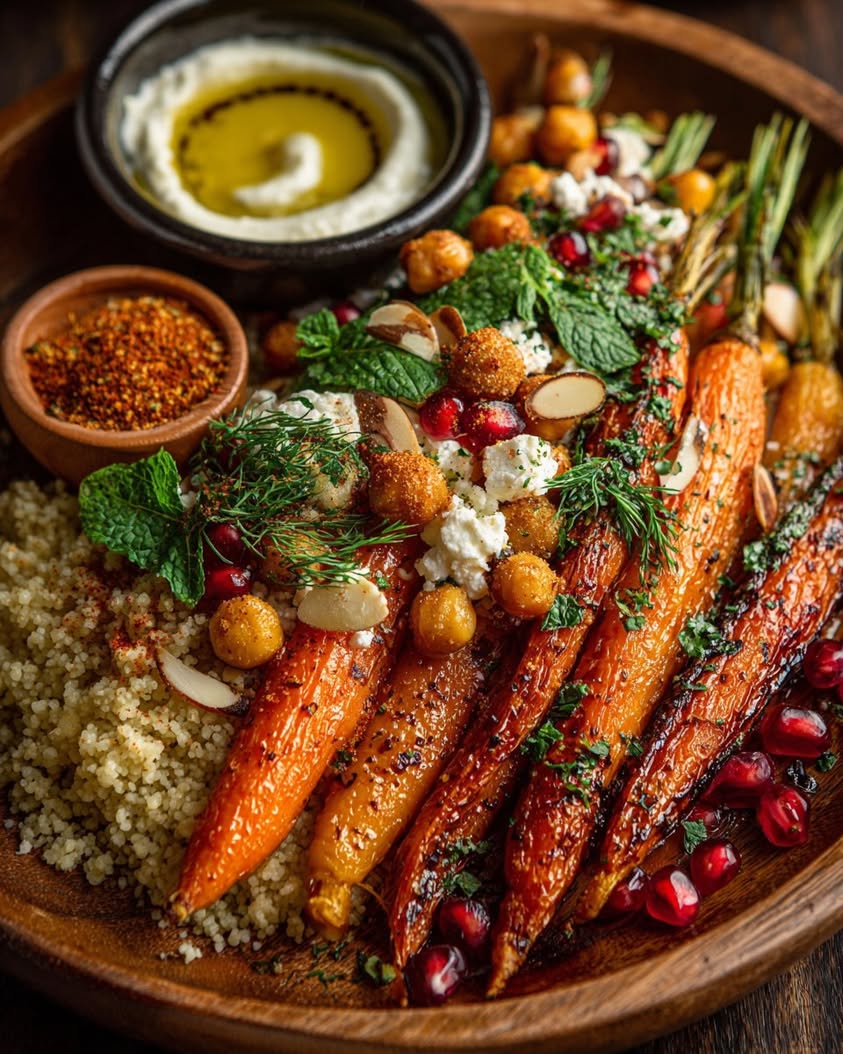
Roasted Carrot & Chickpea Bowl with Feta, Almonds & Lemon-Herb Drizzle: A Vibrant, Nourishing Meal
This Roasted Carrot Chickpea Bowl Recipe is a celebration of simple, wholesome ingredients transformed into something spectacular. Moreover, it is a perfect example of how plant-based meals can be deeply satisfying and packed with flavor. The process involves roasting carrots and chickpeas together until they are caramelized and crispy, then combining them with creamy feta, crunchy almonds, and a zesty lemon-herb drizzle. Consequently, you get a meal that is as beautiful to look at as it is delicious to eat, making it ideal for both busy weeknights and impressive lunches.
Imagine sweet, tender carrots paired with savory, crispy chickpeas, all brought together with a bright, herby sauce. This roasted carrot chickpea bowl is a masterclass in balancing textures and flavors. Additionally, it is incredibly versatile, allowing you to use seasonal vegetables or adapt it to your pantry staples. Ultimately, this recipe proves that healthy eating does not have to be boring or complicated. Instead, it can be a vibrant, flavorful experience that leaves you feeling nourished and energized.
The magic of this dish lies in its layers. First, the roasting process intensifies the natural sugars in the carrots. Meanwhile, the chickpeas become wonderfully crisp. Then, the tangy feta and the sharp lemon-herb drizzle cut through the richness, creating a harmonious bite every time. This Roasted Carrot Chickpea Bowl Recipe is a fantastic gateway to more vegetable-centric meals. Furthermore, it is a complete meal in one bowl, offering protein, fiber, healthy fats, and complex carbohydrates. Therefore, it is a smart choice for anyone looking to eat well without sacrificing taste.
Quick Recipe Highlights
- Flavor Profile: This bowl delivers a symphony of sweet, savory, tangy, and earthy notes. The roasted carrots offer a natural sweetness, while the chickpeas provide a savory, umami depth. Meanwhile, the lemon-herb drizzle and briny feta add a necessary tangy and salty punch that brightens the entire dish.
- Texture: You will experience a delightful contrast in every mouthful. Expect tender, caramelized carrots alongside crispy, crunchy chickpeas. Additionally, the creamy feta and the crunchy toasted almonds create a satisfying play between soft and crisp elements that keeps each bite interesting.
- Aroma: As the carrots and chickpeas roast, your kitchen will fill with warm, comforting scents of cumin and garlic. Later, the fresh aroma of chopped parsley and bright lemon zest from the drizzle adds a final, refreshing layer that makes the dish smell as good as it tastes.
- Visual Appeal: This bowl is a feast for the eyes with its vibrant orange carrots, golden-brown chickpeas, white feta crumbles, and green herb drizzle. The colorful presentation makes it incredibly inviting and perfect for sharing on social media or at the dinner table.
- Skill Level Needed: This is a beginner-friendly recipe requiring only basic kitchen skills like chopping and mixing. Importantly, the oven does most of the work. Consequently, even novice cooks can achieve restaurant-quality results with minimal effort and no special techniques.
- Special Equipment: You need only a standard baking sheet, a mixing bowl, and a small blender or food processor for the drizzle. Alternatively, you can finely chop the herbs and whisk the drizzle by hand. Therefore, no fancy gadgets are required to make this wholesome meal.
Recipe Overview
- Difficulty Level: We rate this Roasted Carrot Chickpea Bowl Recipe as “Easy” because it involves straightforward steps like chopping, tossing, and roasting. There is no intricate knife work or complex cooking methods. Essentially, if you can use an oven, you can master this dish. The process is forgiving and allows for personal adjustments without risk of failure.
- Category: This recipe fits perfectly into several meal categories. Primarily, it is a hearty and satisfying main dish salad or grain bowl. It also works wonderfully as a substantial side dish for grilled proteins. Furthermore, it is an excellent candidate for meal prep, as the components hold up well in the refrigerator for several days.
- Cuisine: While not tied to one specific tradition, this bowl draws inspiration from Mediterranean and Middle Eastern flavors. The use of chickpeas, lemon, cumin, and fresh herbs is classic to those regions. However, the assembly as a modern “bowl” meal gives it a contemporary, global fusion feel that is adaptable and universally appealing.
- Cost: This is a very budget-friendly meal. Carrots and chickpeas are inexpensive pantry staples. Feta, almonds, and fresh herbs are the only items that might carry a higher cost, but they are used in modest amounts. Overall, you can create four generous servings for a fraction of the cost of a restaurant meal, making it fantastic for families.
- Season: This roasted carrot chickpea bowl is truly a year-round recipe. In fall and winter, the roasted vegetables provide comforting warmth. During spring and summer, the bright lemon-herb drizzle makes it feel light and refreshing. You can also adapt it with seasonal produce, like adding asparagus in spring or swapping carrots for roasted squash in autumn.
- Occasion: It is incredibly versatile for different occasions. Serve it for a quick and healthy weeknight dinner. Alternatively, pack it for a satisfying work or school lunch. It is also elegant enough for casual entertaining or potlucks, as it can be served warm, at room temperature, or even cold.
Why You’ll Love This Recipe
You will adore the taste and texture appeal of this Roasted Carrot Chickpea Bowl Recipe. Each component is carefully chosen to create a perfect balance. The sweet, caramelized carrots contrast beautifully with the savory, crispy chickpeas. Then, the creamy, salty feta and the crunchy almonds add further layers. Finally, the vibrant lemon-herb drizzle ties everything together with a burst of freshness. Every single bite offers a complex and satisfying experience that makes you forget you are eating something so wholesome and good for you.
The convenience and preparation benefits are major selling points. This entire meal comes together on one baking sheet for easy cleanup. Furthermore, the hands-on time is minimal, as the oven handles the cooking. This makes it an ideal choice for busy evenings when you want a nutritious meal without spending hours in the kitchen. You can even prep the vegetables and make the drizzle ahead of time. Then, simply roast everything when you are ready to eat, streamlining your dinner routine significantly.
Nutritional advantages are at the core of this dish. Chickpeas are an excellent source of plant-based protein and fiber, which promote satiety and digestive health. Carrots are loaded with beta-carotene, essential for eye health. Almonds provide healthy fats and vitamin E. Together, they create a meal that stabilizes energy levels and keeps you full for hours. This roasted carrot chickpea bowl is a powerhouse of vitamins, minerals, and antioxidants, supporting overall wellness in a delicious package.
The social and entertaining value of this bowl is high. Its colorful, restaurant-style presentation is sure to impress guests. It is also naturally vegetarian, making it a safe and appealing option for diverse groups. You can easily set up a “bowl bar” with extra toppings like avocado, different grains, or additional sauces, allowing everyone to customize their meal. This interactive element makes it fun for gatherings and takes the pressure off the host to please every single palate.
Cost-effectiveness and accessibility round out the reasons to love this recipe. The ingredients are common, affordable, and available at any standard grocery store. You likely have many of the spices and pantry items already. This recipe demonstrates how to turn humble, inexpensive components into a spectacular meal. It is a fantastic way to eat well on a budget without compromising on flavor or satisfaction, proving that gourmet-quality food does not require a gourmet budget.
Historical Background and Cultural Significance
The origin story of bowl meals, or “grain bowls,” is a modern tale of global fusion. While the concept of combining grains, vegetables, and proteins in one vessel is ancient, the contemporary wellness bowl trend gained massive popularity in the 2010s. This Roasted Carrot Chickpea Bowl Recipe is a direct descendant of that movement, emphasizing balance, nutrition, and visual appeal. It borrows elements from various culinary traditions, particularly the Mediterranean use of chickpeas and herbs and the Middle Eastern practice of roasting vegetables with warm spices like cumin.
Cultural importance of the core ingredients is profound. Chickpeas, also known as garbanzo beans, have been a staple food across the Middle East, India, and the Mediterranean for thousands of years. They are celebrated in dishes like hummus, falafel, and chana masala. The carrot has a long history, originally cultivated in Central Asia. Its journey west brought it into European and later global cuisine. Combining these two humble, historically significant ingredients in a modern format honors their legacy while adapting them for today’s eating habits.
The evolution of the recipe reflects broader dietary shifts. As more people seek plant-forward, flexitarian meals, dishes like this roasted carrot chickpea bowl have risen to prominence. They answer the demand for meals that are satisfying, protein-rich without relying heavily on meat, and full of whole-food ingredients. The addition of a creamy, zesty drizzle is a modern touch that elevates simple roasted components, showcasing how contemporary cooking techniques and flavor pairings can refresh ancient staples.
Regional variations of this concept are endless. In the Mediterranean, you might find a similar combination with olives and a yogurt-based sauce. In the American Southwest, the spices could shift to chili powder and the drizzle to a lime crema. The basic template of roasted vegetable + legume + crunch + creamy element + bright sauce is universally adaptable. This particular recipe with feta and almonds leans into Greek and Levantine flavors, but its structure invites you to explore and create your own cultural fusion based on available ingredients and personal taste.
Ingredient Deep Dive
Carrots: Carrots are root vegetables with a rich history dating back to Persia. They were originally purple or yellow; the orange variety was developed in the Netherlands. Nutritionally, they are famous for beta-carotene, which the body converts to vitamin A, crucial for vision and immune function. They also provide fiber, vitamin K1, and potassium. For this roasted carrot chickpea bowl, select firm, smooth carrots without cracks. Store them in the crisper drawer of your refrigerator. You can substitute with parsnips, sweet potatoes, or beets for a different flavor and color profile.
Chickpeas: Chickpeas are one of the earliest cultivated legumes, with origins in the Middle East over 7,000 years ago. They are a dietary cornerstone in many cultures. They are an excellent source of plant-based protein, fiber, folate, and iron. Using canned chickpeas makes this recipe quick, but dried chickpeas cooked from scratch work perfectly. For the crispiest result, dry the canned chickpeas thoroughly with a towel before roasting. Store unused canned chickpeas in a sealed container in the fridge for up to four days. For a substitution, try white beans or lentils, though the texture will differ.
Feta Cheese: Feta is a brined curd cheese with a tangy, salty flavor, traditionally made from sheep’s or goat’s milk in Greece. Its crumbly texture and sharp taste provide a creamy contrast in this bowl. It offers calcium and protein. Look for authentic Greek feta in brine for the best flavor. Store it in its brine in the refrigerator. For a dairy-free version of this roasted carrot chickpea bowl, substitute with a firm tofu crumbled with nutritional yeast and lemon juice, or use a vegan feta alternative.
Almonds: Almonds are seeds from the fruit of the almond tree, native to the Middle East. They have been prized for millennia for their nutritional value. They provide healthy monounsaturated fats, vitamin E, magnesium, and protein. Toasting them enhances their flavor and crunch. Store almonds in an airtight container in a cool, dark place to prevent rancidity. You can substitute with other nuts like walnuts or pecans, or seeds like pumpkin or sunflower seeds for a nut-free version.
Lemon-Herb Drizzle: This sauce is a simple vinaigrette elevated with fresh herbs. Lemon juice, a source of vitamin C, adds necessary acidity. Fresh parsley or cilantro provides chlorophyll and vibrant flavor. Olive oil, a monounsaturated fat, carries the flavors and adds richness. The combination of garlic and cumin ties the sauce to the roasted vegetables. For the best result, use fresh lemon juice and herbs. Store leftover drizzle in the fridge for up to three days. A tahini-lemon sauce or a simple yogurt-garlic sauce would also be delicious alternatives.
Common Mistakes to Avoid
- Crowding the Baking Sheet: Do not overcrowd the carrots and chickpeas on the pan. If they are too close together, they will steam instead of roast. Consequently, you will miss out on the desirable caramelization and crisp texture. Always use a large enough sheet and spread the ingredients in a single layer.
- Using Wet Chickpeas: Forgetting to drain and thoroughly dry the canned chickpeas is a critical error. Excess moisture prevents crisping and can make the chickpeas soggy. Always pat them very dry with a clean kitchen towel or paper towels before tossing them with oil and spices.
- Neglecting to Preheat the Oven: Placing the vegetables in a cold oven leads to uneven cooking. A properly preheated oven ensures immediate searing and consistent roasting. Always allow your oven to reach the full temperature, which typically takes about 15 minutes, before adding your baking sheet.
- Overlooking the Lemon Zest: Skipping the lemon zest in the drizzle is a missed opportunity for flavor. The zest contains aromatic oils that provide a powerful citrus essence without the acidity of the juice. Always zest your lemon before juicing it to capture this bright, fragrant element.
- Chopping Carrots Inconsistently: Cutting carrots into wildly different sizes results in uneven cooking. Smaller pieces will burn before larger pieces are tender. Aim for uniform pieces, about 1-inch in size, to ensure everything roasts evenly and is ready at the same time.
- Adding Fresh Herbs Before Roasting: If you add delicate fresh herbs like parsley to the baking sheet before roasting, they will burn and turn bitter. Fresh herbs should always be reserved for the drizzle or used as a fresh garnish after the roasting process is complete.
- Underseasoning the Vegetables: Vegetables need ample seasoning to taste their best. Do not be shy with salt and pepper before roasting. The seasoning penetrates the food as it cooks, building layers of flavor from the inside out. Taste and adjust the seasoning after roasting as well.
- Not Tossing Halfway Through: Failing to shake the pan or stir the ingredients halfway through the roasting time can lead to uneven browning. One side may become too dark while the other remains pale. A quick stir ensures all sides get exposure to the hot pan and oven air.
Essential Techniques
Dry Roasting Chickpeas: Thoroughly drying canned chickpeas is the most important step for achieving a crispy texture. After rinsing, spread them on a clean kitchen towel and gently rub them dry. Removing the loose skins that come off during drying also helps. This technique eliminates surface moisture, allowing the chickpeas to roast and crisp up instead of steaming in their own water. The visual cue for success is a golden-brown, slightly shrunken chickpea with a crunchy exterior.
Uniform Vegetable Cutting: Cutting carrots into consistent pieces is crucial for even cooking. Use a sharp knife and aim for similar size and shape, such as 1-inch chunks or halved lengthwise if using smaller carrots. This technique ensures that every piece cooks at the same rate, so you do not end up with some pieces mushy and others undercooked. The goal is uniform tenderness and caramelization across all pieces on the baking sheet.
Making an Emulsified Drizzle: A proper lemon-herb drizzle should be slightly emulsified, meaning the oil and acid are combined into a cohesive sauce. To achieve this, whisk the lemon juice, herbs, and seasonings vigorously while slowly streaming in the olive oil. Alternatively, pulse everything in a small blender. This technique creates a smoother, more unified sauce that clings to the ingredients instead of separating and pooling at the bottom of the bowl.
Pro Tips for Perfect Roasted Carrot Chickpea Bowl
First, for extra crispy chickpeas, let the dried, oiled chickpeas sit on the baking sheet for 10 minutes before the oven preheats. This allows the oil to absorb and the exterior to dry further. Consequently, you will achieve an even crispier result that holds up well under the drizzle.
Second, roast your vegetables on the middle rack of the oven. This position provides the most consistent, radiant heat for even browning. Avoid the top rack, which can cause quicker burning, especially for the chickpeas.
Third, add a pinch of sweet paprika or smoked paprika to the spice mix for the vegetables. This adds a subtle warmth or smokiness that complements the cumin beautifully and adds another layer of complexity to the flavor profile.
Fourth, toast the almonds in a dry skillet over medium heat for 3-5 minutes until fragrant. This step, done while the vegetables roast, maximizes their nutty flavor and crunch, elevating the final texture of your bowl.
Fifth, if you have time, marinate the red onion (if using as a garnish) in the lemon juice for 10 minutes before assembling. This quick-pickling step tames the raw onion bite and infuses it with a lovely tangy flavor.
Sixth, reserve a few whole herbs and some lemon zest for a final garnish on top of the assembled bowls. This adds a fresh, vibrant pop of color and aroma that makes the presentation look professionally finished.
Variations and Adaptations
Regional Variations: To take this roasted carrot chickpea bowl around the world, consider a few swaps. For a Moroccan twist, use preserved lemon in the drizzle and add olives and a sprinkle of cinnamon to the roasted vegetables. For a Mexican-inspired version, use chili powder and lime juice, swap feta for cotija cheese, and add avocado and corn. The basic formula is wonderfully adaptable to the spice profiles and ingredients of any cuisine you love.
Seasonal Adaptations: Embrace produce seasonality. In spring, add roasted asparagus or fresh peas. Summer welcomes zucchini or cherry tomatoes. Fall is perfect for swapping carrots for cubed butternut squash or adding roasted Brussels sprouts. In winter, hearty roots like parsnips or turnips work beautifully. Adjusting the vegetables keeps this recipe exciting and fresh all year long.
Dietary Modifications: This bowl is easily modified for specific diets. For a vegan roasted carrot chickpea bowl, omit the feta or use a plant-based alternative. To make it gluten-free, ensure all packaged spices are certified GF. For a higher-protein version, add a scoop of quinoa or farro to the base, or include a soft-boiled egg on top.
Flavor Variations: Experiment with different spice blends. Try harissa paste mixed with the oil for a spicy kick. Use za’atar seasoning on the vegetables for an earthy, Middle Eastern flavor. Alternatively, a drizzle of balsamic glaze at the end can add a sweet-and-sour note. Do not be afraid to personalize the flavors to your palate.
Serving and Presentation Guide
Plating techniques matter for visual appeal. Start with a shallow, wide bowl to showcase all the colorful components. If including a grain like quinoa or farro, place it at the bottom as a base. Then, artfully arrange the roasted carrots and chickpeas over it, rather than dumping them in a pile. This creates height and allows each ingredient to be visible.
Garnishing is the final touch. Sprinkle the toasted almonds and crumbled feta evenly over the top. Drizzle the lemon-herb sauce in zig-zags or circles. Finally, add a final flourish of fresh whole parsley or cilantro leaves and a light grating of lemon zest. This layered approach makes the bowl look restaurant-quality and inviting.
Consider traditional accompaniments. A side of warm pita bread or flatbread is perfect for scooping up the last bits. A simple green salad with a light vinaigrette can start the meal. For a more substantial spread, serve alongside other Mediterranean dips like hummus or tzatziki.
Wine and Beverage Pairing
Wine pairings should complement the earthy, tangy, and herbal notes. A crisp, dry white wine like Sauvignon Blanc or Pinot Grigio pairs wonderfully. Their acidity matches the lemon in the drizzle and cuts through the richness of the feta. Alternatively, a light-bodied, fruity red like a Gamay or Pinot Noir can also work well, especially if the dish includes warmer spices.
For non-alcoholic alternatives, consider sparkling water with a wedge of lemon or lime to echo the citrus notes. A minty iced herbal tea, like Moroccan mint, provides a refreshing contrast. A ginger-based kombucha can also pair nicely, as its effervescence and spice complement the savory elements of the bowl.
Storage and Shelf Life
Store components separately for best results. Keep the roasted carrots and chickpeas in an airtight container in the refrigerator for up to 4 days. The lemon-herb drizzle can be stored in a separate jar for up to 3 days. The feta and toasted almonds should be kept in their own containers at room temperature or in the fridge, respectively.
Signs of spoilage include an off smell, slimy texture on the vegetables, or mold. The drizzle may separate, which is normal; simply shake or whisk it to recombine. To reheat the roasted components, spread them on a baking sheet and warm in a 350°F oven for about 10 minutes to restore some crispness. Avoid microwaving, as it will make the chickpeas soft.
Make Ahead Strategies
You can prep this roasted carrot chickpea bowl efficiently. The day before, wash and chop the carrots, storing them in water in the fridge. Drain and dry the chickpeas, storing them in a container. Make the lemon-herb drizzle and store it in a jar. Toast the almonds and crumble the feta. Then, assembly on busy nights takes just the 30-minute roasting time. This strategy makes weeknight cooking seamless and stress-free.
Scaling Instructions
This recipe scales beautifully. To halve it, simply use half of all ingredients and consider using a smaller baking sheet. To double or triple for a crowd, use multiple baking sheets and rotate their positions in the oven halfway through cooking to ensure even roasting. You may need to add a few extra minutes to the cooking time when the sheets are crowded. The drizzle scales linearly; just blend larger batches in a standard blender.
Nutritional Deep Dive
This roasted carrot chickpea bowl is a nutritionally balanced meal. The chickpeas provide substantial plant-based protein and fiber, promoting muscle repair and digestive health. Carrots deliver a powerful dose of vitamin A for vision and immune support. Almonds contribute healthy fats and vitamin E, an antioxidant. Feta adds calcium and more protein. The olive oil in the drizzle is a source of heart-healthy monounsaturated fats. Together, they create a meal that supports sustained energy, satiety, and overall nutrient intake.
Dietary Adaptations
Gluten-Free: This recipe is naturally gluten-free. Simply ensure that any packaged spices or canned goods you use are certified gluten-free, as cross-contamination can sometimes occur in processing facilities.
Dairy-Free/Vegan: Omit the feta cheese. For a creamy, tangy substitute, make a “feta” from crumbled extra-firm tofu marinated in lemon juice, nutritional yeast, and a pinch of salt. Alternatively, use a store-bought vegan feta. The rest of the bowl is already plant-based.
Low-Carb/Keto: To reduce carbs, significantly increase the portion of roasted non-starchy vegetables (like adding more carrots is fine in moderation, but also include broccoli or cauliflower). Reduce or omit the chickpeas, as they are higher in carbohydrates. Increase the almonds and feta for fat and protein.
Troubleshooting Guide
Chickpeas Not Crispy: If your chickpeas are soft, the most likely cause is insufficient drying or overcrowding on the pan. For a fix, you can sauté them in a dry non-stick skillet over medium heat for 5-7 minutes after roasting to drive off extra moisture and crisp them up. Next time, be meticulous about drying.
Drizzle Too Acidic: If your lemon-herb sauce is too sharp, balance it by whisking in a teaspoon of honey or maple syrup. Alternatively, add a tablespoon of plain yogurt or tahini to mellow the acidity and add creaminess. Always taste and adjust before serving.
Vegetables Undercooked: If carrots are still firm after the recommended time, your oven temperature may be off or the pieces may be too large. Simply return the pan to the oven and check every 5 minutes until tender. Using an oven thermometer can help ensure accurate temperature for future batches.
Frequently Asked Questions
Can I use different beans? Yes, you can substitute chickpeas with other sturdy beans like cannellini or butter beans. However, chickpeas get the crispiest when roasted, so other beans may have a softer texture but will still be delicious.
Can I make this bowl ahead for meal prep? Absolutely. Store all components separately in airtight containers in the fridge. Assemble your bowls just before eating to maintain the best texture, especially for the chickpeas and almonds.
Is this recipe freezer-friendly? The roasted carrots and chickpeas can be frozen for up to 2 months, though the chickpeas may lose some crispness. Thaw in the refrigerator and re-crisp in the oven. The drizzle and fresh garnishes should not be frozen.
What can I use instead of feta? Goat cheese crumbles, queso fresco, or even ricotta salata are good substitutes. For a dairy-free option, try the marinated tofu method mentioned in the dietary adaptations section.
My drizzle separated. What did I do wrong? Separation is natural for oil-based dressings. Simply shake or whisk it vigorously again before using. For better emulsion next time, blend all ingredients together or slowly whisk the oil into the other components.
Can I add a grain to this bowl? Definitely. This roasted carrot chickpea bowl is excellent served over a bed of quinoa, farro, brown rice, or couscous. The grain will absorb the extra drizzle and make the meal even more filling.
How do I know when the carrots are done roasting? The carrots are done when they are tender enough to be easily pierced with a fork and have caramelized, browned edges. The natural sugars will have started to caramelize, enhancing their sweetness.
Additional Resources
If you loved this Roasted Carrot Chickpea Bowl Recipe, explore other vibrant bowl meals on our site. We have a collection of grain bowls, Buddha bowls, and power bowls that follow a similar “formula” for easy, healthy eating. For technique guides, check out our posts on how to roast any vegetable perfectly or how to make creamy, dairy-free sauces. For ingredient inspiration, our seasonal produce guides can help you adapt this bowl throughout the year. Finally, a good quality half-sheet pan and a small blender are our top equipment recommendations for mastering recipes like this one.
{“success”:true,”message”:”Recipe created successfully”,”post_id”:8907,”tasty_recipe_id”:8907,”shortcode”:” Print
Roasted Carrot & Chickpea Bowl with Feta, Almonds & Lemon-Herb Drizzle
Description
A vibrant and satisfying bowl featuring sweet roasted carrots and crispy chickpeas, topped with creamy feta, crunchy almonds, and a zesty lemon-herb drizzle.
Ingredients
For the Crust:
- 4 large carrots, peeled and sliced into 1-inch pieces
- 1 can (15 oz) chickpeas, rinsed and drained
- 2 tbsp olive oil, divided
- 1 tsp smoked paprika
- 1/2 tsp ground cumin
- Salt and black pepper to taste
- 1/2 cup crumbled feta cheese
- 1/4 cup sliced almonds, toasted
- 2 tbsp fresh parsley, chopped
- For the Lemon-Herb Drizzle: 3 tbsp olive oil, 2 tbsp fresh lemon juice, 1 tbsp chopped fresh dill, 1 clove garlic, minced, Salt to taste
Instructions
1. Prepare the Crust:
- Preheat oven to 400°F (200°C). On a baking sheet, toss carrots and chickpeas with 1 tbsp olive oil, smoked paprika, cumin, salt, and pepper. Roast for 25-30 minutes until carrots are tender and chickpeas are crispy.
- While roasting, prepare the lemon-herb drizzle by whisking together 3 tbsp olive oil, lemon juice, dill, minced garlic, and salt in a small bowl until combined.
- In a large bowl or on plates, assemble the roasted carrots and chickpeas. Top with crumbled feta, toasted almonds, and chopped parsley.
- Drizzle the lemon-herb sauce generously over the bowl just before serving. Toss lightly if desired and enjoy warm.
Notes
You can customize the seasonings to taste.

I’m Billy, a classically trained culinary school graduate from The Culinary Institute of America with over 12 years in the restaurant industry and over 19 years of cooking experience.