
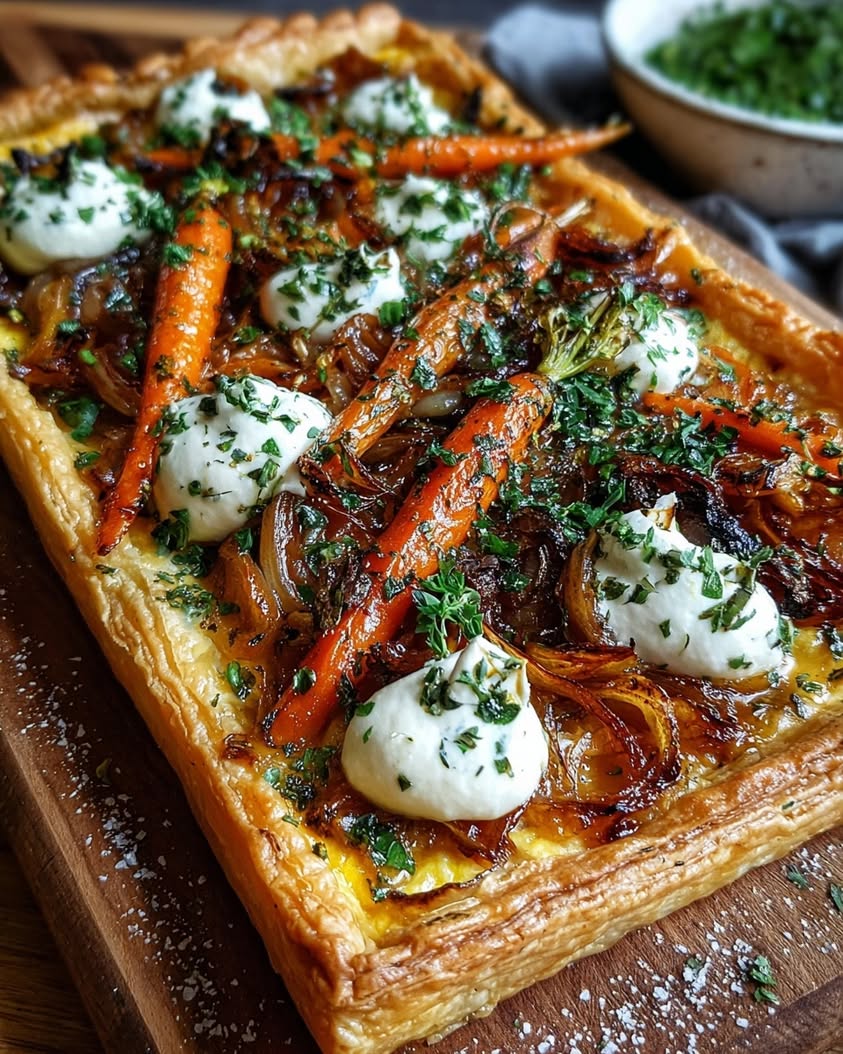
Caramelized Carrot & Onion Tart with Ricotta Cream & Herb Drizzle: A Sweet and Savory Masterpiece
Imagine a dish that perfectly balances the earthy sweetness of slow-cooked vegetables with the creamy tang of fresh cheese, all nestled in a crisp, buttery crust. This Caramelized Carrot & Onion Tart with Ricotta Cream & Herb Drizzle is exactly that kind of showstopper. Moreover, it transforms humble root vegetables into an elegant centerpiece worthy of any dinner party or special weekend meal. The process of caramelization unlocks a deep, complex flavor in the carrots and onions, creating a filling that is both rich and surprisingly sophisticated.
Consequently, every bite of this savory tart offers a delightful textural journey. You get the flaky, golden pastry giving way to the soft, jammy sweetness of the caramelized vegetables. Then, a cloud of lemony ricotta cream cuts through the richness, while a final drizzle of vibrant herb oil adds a fresh, aromatic finish. Ultimately, this Caramelized Carrot Onion Tart Recipe is a celebration of layered flavors and thoughtful cooking. It proves that vegetarian dishes can be profoundly satisfying and visually stunning, making it a fantastic addition to your culinary repertoire.
Quick Recipe Highlights
- Flavor Profile: This tart masterfully combines sweet, savory, and herbal notes. The caramelized carrots and onions develop a profound, almost jammy sweetness, which is beautifully balanced by the bright, lemony ricotta cream and the fresh, peppery herb drizzle.
- Texture: Expect a wonderful contrast in every forkful. A crisp, buttery pastry shell holds a layer of soft, meltingly tender vegetables and a pillow of smooth, whipped ricotta. The herb oil adds a final, luxurious mouthfeel that ties everything together.
- Aroma: As this tart bakes, your kitchen will fill with the warm, inviting scents of roasting carrots, sweet onions, and toasty pastry. Furthermore, the fresh herbs in the drizzle contribute a final burst of garden-fresh fragrance when served.
- Visual Appeal: The tart is a feast for the eyes with its golden-brown crust, vibrant orange carrot ribbons, and creamy white ricotta topping. A drizzle of emerald-green herb oil creates stunning visual contrast, making it perfect for photographing and impressing guests.
- Skill Level Needed: This recipe is ideal for confident home cooks. It involves several techniques like blind-baking pastry and properly caramelizing vegetables. However, with clear instructions, even an adventurous beginner can achieve fantastic results.
- Special Equipment: You will need a 9-inch tart pan with a removable bottom for the classic shape and easy release. A rolling pin, parchment paper, and pie weights (or dried beans) are essential for blind-baking the perfect crust.
Recipe Overview
- Difficulty Level: We rate this Caramelized Carrot Onion Tart Recipe as intermediate. The individual steps are straightforward, but successfully executing them in sequence requires some kitchen organization. Managing the pastry, the vegetable filling, and the two separate components of the topping demands attention, yet the process is deeply rewarding.
- Category: This dish beautifully straddles several categories. It’s a spectacular vegetarian main course, an impressive appetizer for a crowd, or a stunning side dish for a holiday feast. Its versatility is one of its greatest strengths.
- Cuisine: While tarts have strong roots in French cuisine, this recipe takes a modern, vegetable-forward approach. It draws inspiration from Mediterranean flavors with its use of ricotta, lemon, and fresh herbs, resulting in a light yet satisfying dish.
- Cost: This is a very cost-effective recipe, especially when carrots and onions are in season. The most significant investments are the butter for the pastry and a good-quality ricotta. Overall, it delivers restaurant-quality presentation and flavor for a fraction of the price.
- Season: This tart shines in the late summer through fall when carrots are at their sweetest. However, it works year-round as root vegetables are always available. It brings a touch of sunny warmth to a winter table or makes a lovely light meal in the spring.
- Occasion: It’s perfect for a fancy brunch, a meatless Monday dinner, or as the star of a vegetarian Thanksgiving. Additionally, it travels well for potlucks and can be served at room temperature, making it an excellent choice for picnics and outdoor gatherings.
Why You’ll Love This Recipe
First and foremost, the taste and texture of this Caramelized Carrot & Onion Tart are simply unforgettable. The slow cooking process transforms ordinary vegetables into something extraordinary, concentrating their natural sugars into a sweet, savory depth. Paired with the light, citrus-kissed ricotta, each bite is a harmonious blend of creamy, crunchy, and soft elements. Consequently, it satisfies cravings for something both comforting and elegant, proving that plant-based eating is never boring.
From a practical standpoint, this Caramelized Carrot Onion Tart Recipe offers fantastic convenience. You can prepare many components ahead of time. For instance, the pastry dough can be made days in advance, and the vegetables can be caramelized ahead. This make-ahead flexibility is a huge win for entertaining, as it allows you to assemble and bake just before serving for the freshest result. Therefore, you can enjoy the process without the last-minute stress.
Nutritionally, this tart is packed with benefits. Carrots are an excellent source of beta-carotene, fiber, and vitamin A, supporting eye health and immunity. Onions provide antioxidants and prebiotic fibers that aid gut health. Using a whole-milk ricotta adds a dose of protein and calcium. Altogether, it’s a meal that fuels your body with wholesome ingredients while delighting your palate, making healthy eating an absolute pleasure.
For social gatherings, this tart is a true conversation starter. Its beautiful presentation immediately signals care and effort. Serving a homemade tart feels special and personal, creating a memorable dining experience for your friends and family. It’s a dish that encourages people to linger at the table, savoring each slice and asking for the recipe. Ultimately, it builds connection through the shared joy of good food.
Finally, this recipe is remarkably cost-effective and accessible. It utilizes affordable, pantry-staple vegetables and turns them into something luxurious. You don’t need expensive cuts of meat or rare ingredients to create a showstopping meal. With basic kitchen tools and a little time, you can produce a tart that looks and tastes like it came from a high-end bakery, making gourmet cooking achievable for any home chef.
Historical Background and Cultural Significance
The concept of the savory tart, or “quiche” in French cuisine, has ancient roots. Early versions were essentially custards baked in bread dough, dating back to medieval German kingdoms. The modern tart, with its delicate pastry shell, evolved in France. Traditionally, these tarts were a practical way to use seasonal ingredients, preserve harvests, and create filling meals from readily available produce. The Caramelized Carrot & Onion Tart is a direct descendant of this tradition, focusing on the humble, storaged root vegetables that sustained communities through colder months.
Culturally, tarts hold a significant place across Europe. In France, the “tarte salée” is a lunchtime staple, found in bakeries and homes alike. Similarly, in Italy, “crostata” can be sweet or savory. This recipe blends these influences, using a French-style pastry technique with Italian-inspired toppings like ricotta and fresh herbs. This fusion reflects modern global cooking, where borders blur and the best techniques from different cuisines come together to create something new and exciting.
The evolution of this specific recipe mirrors broader food trends. As vegetarian and vegetable-forward dining gained popularity, chefs began elevating simple vegetables to center stage. Caramelization, a technique once reserved for meats, became a celebrated method for unlocking the deep, umami-rich potential in plants. Therefore, this Caramelized Carrot Onion Tart Recipe is a product of contemporary culinary philosophy, which respects ingredients and employs technique to maximize their inherent flavor.
Regional variations of vegetable tarts are endless. In Provence, you might find a “tarte aux poireaux” (leek tart). In Switzerland, a “Zwiebelkuchen” (onion cake) is autumnal comfort food. Our version, with its focus on caramelized carrots and a creamy cheese topping, is a modern interpretation. It invites customization based on what’s in your garden or market, continuing the tart’s historical role as a versatile, adaptable vessel for seasonal bounty.
Ingredient Deep Dive
Carrots: Cultivated for over a thousand years, carrots originated in Central Asia and were initially purple or yellow. The orange carrot we know today was developed by Dutch growers in the 17th century. Nutritionally, they are powerhouses of beta-carotene, which the body converts to vitamin A, crucial for vision, immunity, and skin health. For the best flavor in this Caramelized Carrot Onion Tart Recipe, choose firm, smooth carrots with deep orange color and fresh, green tops if possible. Store them in the crisper drawer in a plastic bag. If you need a substitution, parsnips or sweet potatoes can offer a similar sweetness, though the color and flavor profile will shift.
Yellow Onions: Onions are one of the oldest cultivated vegetables, prized by ancient Egyptians who saw their concentric circles as symbols of eternal life. They are rich in vitamin C, B vitamins, and the antioxidant quercetin, which has anti-inflammatory properties. For caramelizing, yellow onions are ideal because of their perfect balance of sweetness and pungency. Choose onions that are firm, heavy for their size, with dry, papery skins. Store in a cool, dark, well-ventilated place. Shallots or red onions can be used, but they will caramelize faster and have a slightly different flavor note.
Ricotta Cheese: Ricotta, meaning “recooked” in Italian, is a fresh whey cheese with a history rooted in resourcefulness, as it was made from the leftover whey from other cheese production. It’s a good source of protein and calcium and is lower in fat and sodium than many hard cheeses. For the creamiest topping in your tart, seek out whole-milk ricotta from the dairy section, not the shelf-stable kind. For a dairy-free version, blended silken tofu or a high-quality vegan ricotta alternative can work, though the flavor will be different.
Fresh Herbs (for the drizzle): Herbs like parsley, chives, or dill have been used for millennia for both culinary and medicinal purposes. They are bursting with phytonutrients, antioxidants, and fresh flavor without adding calories. The herb drizzle is not just a garnish; it’s a vital component that adds brightness and cuts the richness of the tart. Always choose herbs that look vibrant and perky, not wilted. Store them stem-down in a glass of water in the fridge, covered loosely with a bag. You can use almost any soft herb here based on your preference or what’s available.
Common Mistakes to Avoid
- Not Blind-Baking the Crust Properly: Skipping the blind-baking step or not using pie weights will result in a soggy, undercooked bottom crust. The weights are essential to keep the pastry from puffing up, ensuring it stays flat and crisps up beautifully. Always dock the dough with a fork before baking to prevent large air bubbles.
- Rushing the Caramelization: The magic of this Caramelized Carrot Onion Tart Recipe happens with low, slow cooking. If you crank up the heat to speed up the process, the onions and carrots will burn on the outside before softening and releasing their sugars on the inside. Patience is key for that deep, sweet flavor.
- Using Wet Ricotta: If your ricotta is watery, your creamy topping will be loose and may make the tart soggy. Always drain ricotta in a fine-mesh sieve for 15-30 minutes before whipping it. For an even thicker consistency, you can wrap it in cheesecloth and let it drain longer.
- Overworking the Pastry Dough: Handling the dough too much after adding the water develops the gluten, leading to a tough, chewy crust instead of a tender, flaky one. Mix just until the dough comes together, then form it into a disc and let it rest. This relaxes the gluten.
- Slicing the Carrots Too Thick: Uniform, thin slices or ribbons are crucial for even cooking and proper caramelization. If the pieces are too thick, they will remain crunchy and won’t meld into the soft, jammy filling you desire. A mandoline or a sharp knife and careful attention are your best tools.
- Adding the Herb Drizzle Before Baking: The fresh herb oil is a finishing element. If you add it before the tart goes into the oven, the herbs will wilt, turn brown, and lose their vibrant flavor and color. Always drizzle it over the baked tart just before serving.
- Not Letting the Tart Rest: Cutting into the tart immediately after it comes out of the oven will cause the filling to ooze and the slices to lose their shape. Let it cool on a rack for at least 15-20 minutes. This allows everything to set, making for cleaner, more beautiful slices.
- Seasoning at Only One Stage: Seasoning should be layered. Season the vegetables as they cook, season the ricotta cream, and taste the final herb drizzle. Building seasoning in stages creates a more complex and balanced flavor profile throughout the entire dish.
Essential Techniques
Blind Baking: This technique involves pre-baking a pastry crust before adding a wet filling. It’s absolutely critical for this Caramelized Carrot Onion Tart Recipe to prevent a soggy bottom. You line the chilled dough with parchment paper, fill it with pie weights, and bake. The weights keep the crust from puffing up or slumping down. After a initial bake, you remove the weights and parchment and bake it a few more minutes to dry out the center. The visual cue for success is a light golden brown color all over the crust.
Caramelization: This is a chemical process where the natural sugars in vegetables brown and develop complex flavors when exposed to low, steady heat. It’s not the same as sautéing. The key is to cook the sliced carrots and onions in butter or oil over medium-low heat, stirring occasionally, for a long time—often 30-40 minutes. You cannot rush it. The vegetables will first soften, then slowly turn a deep golden brown. They are done when they are meltingly tender and taste intensely sweet and savory.
Whipping Ricotta Cream: Transforming ricotta from a grainy, moist cheese into a smooth, spreadable cream requires two steps: draining and whipping. Draining removes excess whey. Then, whipping it with a fork or electric mixer incorporates air, lightens the texture, and allows it to blend smoothly with lemon zest and seasoning. The goal is a fluffy, homogeneous mixture that holds its shape when dolloped, not a loose, runny one.
Making a Herb Oil Drizzle: This is a simple way to add a punch of fresh flavor and visual flair. Simply chop fresh herbs finely and stir them into good-quality olive oil. You can let it infuse for 30 minutes to deepen the flavor. The oil carries the herb’s essence and allows you to distribute it evenly over the tart in a beautiful, glossy drizzle that wouldn’t be possible with chopped herbs alone.
Pro Tips for Perfect Caramelized Carrot & Onion Tart
First, chill your pastry dough thoroughly before and after rolling it out. A cold dough is much easier to handle and will result in a flakier crust because the butter pieces stay distinct until they hit the oven’s heat.
For the most beautiful presentation, use a vegetable peeler to create long, elegant ribbons from your carrots instead of rounds. These ribbons will caramelize beautifully and create a lovely layered effect in the tart shell.
Enhance the caramelization by adding a tiny pinch of sugar to the carrots and onions as they cook. This isn’t to make them sweet, but to kickstart the Maillard reaction and help achieve that perfect golden-brown color more evenly.
Add a layer of flavor insurance by brushing the hot, blind-baked crust with a thin layer of Dijon mustard or a beaten egg white before adding the filling. This creates a moisture barrier that helps keep the crust extra crisp.
Let your ricotta cream shine by using microplane zest from a whole lemon, not just juice. The zest contains potent aromatic oils that provide a brighter, more complex citrus flavor without adding extra liquid.
If your herb oil is too thick to drizzle, simply warm it slightly for a few seconds. Warm oil is much more fluid and will cascade beautifully over the tart, creating those Instagram-worthy drips down the sides.
For clean, professional slices, use a sharp, thin-bladed knife. Wipe the blade clean with a damp cloth between each cut to ensure every slice is picture-perfect.
Variations and Adaptations
Regional Variations: Take this Caramelized Carrot Onion Tart Recipe on a world tour. For a French twist, add a layer of sautéed leeks and use Gruyère cheese in the ricotta mixture. For a Mediterranean flair, mix chopped Kalamata olives and crumbled feta into the filling. An Indian-inspired version could include warming spices like cumin and coriander in the caramelization process and use a cilantro-mint chutney as the drizzle.
Seasonal Adaptations: This tart is a perfect canvas for the seasons. In spring, use fresh peas and asparagus tips. Summer calls for caramelized zucchini and cherry tomatoes. In fall, incorporate roasted squash or mushrooms. For winter, a mix of parsnips, turnips, and carrots with a hint of rosemary is deeply comforting.
Dietary Modifications: For a gluten-free tart, use your favorite gluten-free pastry blend or a pressed crust made from almond flour. To make it vegan, use a plant-based butter and pastry, caramelize the veggies in oil, and substitute the ricotta with a whipped blend of firm silken tofu, nutritional yeast, and lemon juice.
Flavor Variations: Infuse the olive oil for caramelizing with a sprig of thyme or rosemary. Add a tablespoon of balsamic vinegar to the vegetables in the last few minutes of cooking for a sweet-tangy note. Stir a tablespoon of prepared pesto into the ricotta cream for an herbal punch.
Texture Modifications: For a richer filling, mix an egg yolk into the caramelized vegetables before adding them to the shell. For added crunch, sprinkle toasted pine nuts or walnuts over the tart before the final bake. For a smoother topping, blend the ricotta in a food processor until completely silky.
Presentation Alternatives: Skip the large tart pan and make individual mini tarts in a muffin tin for a passed appetizer. Alternatively, use the same filling to make a galette—simply pile the ingredients onto a rolled-out round of dough, fold the edges over, and bake free-form on a sheet pan for a rustic look.
Serving and Presentation Guide
Plating this tart is part of the fun. First, place the whole tart on a large, simple cutting board or a plain white platter to let the colors pop. Use a sharp knife to score the top into portions before adding the final drizzle; this guides your cuts and ensures even serving. When slicing, use a pie server or a thin spatula to gently lift each piece, supporting the bottom crust to keep it intact.
Garnishing elevates the visual appeal. Beyond the herb drizzle, consider a final flourish. A sprinkle of flaky sea salt like Maldon adds texture and highlights flavors. Edible flowers, such as nasturtiums or chive blossoms, introduce a stunning, delicate touch. A few microgreens or a light dusting of paprika around the plate’s edge can provide beautiful color contrast.
For traditional accompaniments, a simple green salad with a sharp vinaigrette is perfect to cut through the tart’s richness. A bowl of soup, like a creamy tomato or lentil, makes for a complete, cozy meal. If serving as part of a larger spread, it pairs wonderfully with other vegetable dishes, cured meats, or a selection of cheeses.
Modern serving suggestions include slicing it thin and serving it as an appetizer on small plates. For a brunch, pair it with a fruit salad and sparkling wine. You can also deconstruct it for a stylish plating: crumble the baked pastry, spoon the carrot mixture alongside a quenelle of ricotta cream, and artistically drizzle the herb oil around the plate.
Temperature is flexible but important. This tart is delicious warm, at room temperature, or even slightly chilled. For the best texture contrast, aim for just-warm or room temperature. If you’ve refrigerated it, let it sit out for 30 minutes before serving, or warm it gently in a 300°F oven for 10 minutes to re-crisp the crust.
Portion control is easy with a tart. A standard 9-inch tart typically yields 6 generous wedges as a main course or 8-10 smaller slices as an appetizer. For a buffet, consider pre-slicing it to make serving effortless for your guests. Remember, a little goes a long way with this rich, flavorful dish.
Wine and Beverage Pairing
Choosing the right wine enhances the Caramelized Carrot Onion Tart Recipe beautifully. The tart’s sweet-savory profile and creamy element pair excellently with white wines that have good acidity. A crisp, unoaked Chardonnay or a French Chablis complements the richness without overpowering the vegetables. Alternatively, a dry Rosé with its berry notes and bright acidity is a fantastic, versatile choice. For red wine lovers, opt for a light-bodied, low-tannin red like a Pinot Noir or Gamay (Beaujolais), which won’t clash with the sweetness of the carrots.
For non-alcoholic alternatives, think about beverages that offer refreshment and contrast. A sparkling water with a squeeze of lemon or lime cleanses the palate. A homemade ginger-lemonade provides a zesty, spicy counterpoint to the tart’s creaminess. Iced herbal tea, such as mint or chamomile, offers a soothing, aromatic companion that won’t compete with the dish’s delicate flavors.
If serving this tart for brunch or with a dessert course, coffee and tea pairings work wonderfully. A medium-roast coffee with low acidity complements the caramelized notes. For tea, an Earl Grey with its citrusy bergamot flavor mirrors the lemon in the ricotta, while a simple green tea offers a clean, palate-cleansing finish.
Always consider serving temperature. White wines and rosés should be chilled but not ice-cold (45-55°F). Red wines should be slightly cooler than room temperature, around 55-60°F. Non-alcoholic sparkling drinks are best served very cold to maximize their refreshing quality. Proper temperature ensures the beverages taste their best and perform their role in the pairing.
Storage and Shelf Life
Proper storage is key to enjoying your tart leftovers. First, allow the tart to cool completely to room temperature after baking. Then, cover it tightly with plastic wrap or transfer slices to an airtight container. You can store the whole tart or individual slices in the refrigerator. The tart will keep well for up to 3 days when refrigerated properly. The crust may soften slightly over time, but the flavors will continue to meld and develop.
For longer storage, this Caramelized Carrot & Onion Tart freezes quite successfully. Wrap the cooled tart (or slices) tightly in a layer of plastic wrap, followed by a layer of aluminum foil to prevent freezer burn. Label it with the date. Frozen tart will maintain best quality for up to 2 months. Avoid freezing the tart with the fresh herb drizzle, as herbs do not freeze well in oil; add that fresh after reheating.
Reheating requires care to restore texture. For a refrigerated slice, place it on a baking sheet in a 350°F oven for 10-15 minutes, or until warmed through and the crust is re-crisped. You can also use an air fryer at 325°F for 5-7 minutes. For a frozen tart, thaw it overnight in the refrigerator before reheating using the oven method. Avoid the microwave, as it will make the crust soggy.
Recognizing spoilage is important for food safety. Discard the tart if you notice any off odors, such as sourness or rancidity. Visible mold growth is an immediate sign to throw it away. If the ricotta topping has separated and become watery or discolored, it’s best to err on the side of caution and not consume it.
Make Ahead Strategies
This Caramelized Carrot Onion Tart Recipe is a dream for planning ahead. You can break down the preparation over several days. The pastry dough can be made and shaped into a disc, wrapped tightly, and refrigerated for up to 3 days or frozen for a month. You can even roll it out, fit it into the tart pan, and keep it frozen, ready to blind-bake straight from the freezer (just add a few extra minutes to the baking time).
The caramelized carrot and onion filling can be cooked up to 2 days in advance. Simply let it cool, store it in an airtight container in the refrigerator, and bring it to room temperature before assembling the tart. This not only saves time but can deepen the flavors as they meld overnight. The ricotta cream can also be prepared a day ahead; whip it, then store it covered in the fridge.
Assessing the quality impact of make-ahead steps is reassuring. The crust benefits from chilling, which relaxes the gluten. The filling’s flavor improves with time. The only component that must be absolutely fresh is the herb oil drizzle, which you should make just before serving to preserve its vibrant color and aroma. Therefore, you can do 90% of the work ahead of your event.
For assembly, have all your pre-made components ready. Spread the room-temperature filling into the blind-baked, cooled shell. Dollop or spread the ricotta cream over the top. At this point, you can cover the assembled-but-unbaked tart loosely with plastic and refrigerate it for a few hours before baking. Add 5-7 minutes to the final bake time if you’re putting a cold tart in the oven.
Scaling Instructions
Halving this recipe is straightforward if you’re cooking for fewer people. Simply divide all ingredient quantities by two. Use a 7-inch tart pan for the scaled-down version. The blind-baking and final baking times will be slightly shorter—start checking for doneness about 5 minutes earlier than the original recipe states. All other techniques remain the same.
Doubling or tripling the recipe is perfect for a party or potluck. Multiply all ingredients accordingly. For multiple tarts, it’s best to bake them one at a time on the middle rack for even heat circulation. If you must bake two at once, rotate the pans halfway through baking. Remember that caramelizing a large batch of vegetables may take longer, as crowding the pan steams them; cook in batches for the best results.
Equipment adjustments are necessary when scaling. For a double batch, ensure you have a large enough skillet or use two skillets to caramelize the vegetables properly. If making mini tarts, a muffin tin is essential, and baking time will drop to about 15-20 minutes for the final bake. Always adjust your timeline, as prep work will take longer with larger quantities.
Nutritional Deep Dive
This Caramelized Carrot & Onion Tart offers a balanced macronutrient profile. A typical serving provides a good amount of complex carbohydrates from the carrots, onions, and pastry, offering sustained energy. The ricotta cheese contributes a solid dose of protein and healthy fats, which promote satiety. The olive oil in the drizzle adds heart-healthy monounsaturated fats. While not a low-calorie dish, it is nutrient-dense, meaning you get a high volume of vitamins and minerals per calorie consumed.
The micronutrient analysis is impressive. Carrots are famously rich in beta-carotene (vitamin A), crucial for vision and immune function. Onions provide vitamin C, B vitamins, and the antioxidant quercetin. Ricotta is a source of calcium and phosphorus for bone health. The fresh herbs, though used in small amounts, contribute trace minerals and phytonutrients. Together, they make this a dish that supports overall wellness.
For dietary considerations, this tart is naturally vegetarian. With a few modifications (gluten-free crust, vegan cheese), it can fit into more restrictive diets. It contains dairy, gluten (from the flour), and eggs (if used in the pastry). For portion control and weight management, enjoy a slice alongside a large green salad filled with non-starchy vegetables to create a filling, fiber-rich meal that satisfies without overindulgence.
Dietary Adaptations
Gluten-Free: Successfully adapt this Caramelized Carrot Onion Tart Recipe by using a reliable gluten-free all-purpose flour blend in the pastry. Look for one that contains xanthan gum, or add ½ teaspoon per cup of flour to mimic gluten’s binding properties. A press-in crust made from almond flour and butter is another excellent, naturally gluten-free option that adds a nutty flavor.
Dairy-Free/Vegan: Replace the butter in the crust with a high-quality vegan butter stick or solid coconut oil. For the ricotta cream, blend soaked cashews or firm silken tofu with nutritional yeast, lemon juice, and a pinch of salt until smooth and creamy. Caramelize the vegetables in olive oil. The result is a completely plant-based tart that’s still rich and satisfying.
Low-Carb/Keto: Focus on modifying the crust. Create a crust from a mixture of almond flour, grated parmesan cheese, and an egg. This creates a sturdy, flavorful base with minimal carbs. You can keep the carrot amount modest and increase the onion slightly, as onions have fewer net carbs than carrots. Ensure the ricotta is full-fat.
Paleo: Follow a similar path to the keto adaptation for the crust, using almond or coconut flour and omitting any dairy. For the topping, a dairy-free “ricotta” made from macadamia nuts or a compliant coconut cream would be suitable. Verify all ingredients align with Paleo guidelines.
Troubleshooting Guide
Soggy Bottom Crust: This is the most common issue. The solution is always proper blind baking. Ensure your pie weights are in direct contact with the dough, and bake until the crust is fully set and lightly colored before adding filling. If it happens, you can sometimes salvage a baked tart by carefully transferring a slice to a hot skillet for a minute to re-crisp the bottom.
Filling is Too Wet: If your tart seems watery, the carrots may have released too much liquid. Next time, ensure you cook the caramelized mixture until all visible liquid has evaporated and the vegetables are jammy. For an immediate fix, you can carefully tilt the baked tart to drain excess liquid or blot the top gently with a paper towel.
Ricotta Topping is Grainy: Graininess usually comes from not whipping the ricotta enough or using a lower-quality brand. To fix it, you can push the ricotta mixture through a fine-mesh sieve or give it a quick blend with an immersion blender or food processor until smooth before adding your lemon and herbs.
Vegetables are Burning Instead of Caramelizing: Your heat is too high. Immediately lower the heat and add a tablespoon of water to the pan to deglaze and stop the burning. Continue cooking on low. Always caramelize over medium-low to low heat, and be patient—it’s a slow process.
Frequently Asked Questions
Q: Can I use pre-made puff pastry instead of tart dough?
A: Absolutely. Thaw a sheet of puff pastry, press it into your tart pan, trim the edges, and blind bake it according to package directions. The result will be taller and flakier than a traditional tart crust, but equally delicious and a great time-saver.
Q: My carrots aren’t getting sweet. What did I do wrong?
A: Carrots need time and the right heat to release their sugars. You likely didn’t cook them long enough or had the heat too high, causing surface burning before the interior sugars developed. Cook them low and slow, stirring occasionally, for at least 25-30 minutes.
Q: Can I make this tart without a tart pan?
A: Yes. You can use a 9-inch pie dish for a deeper-dish version, though the presentation will be different. For a free-form look, make a galette: roll the dough into a circle, pile the filling in the center, fold the edges over, and bake on a sheet pan.
Q: How do I know when the tart is fully baked?
A: The crust should be a deep golden brown all around. The ricotta topping will be set and may have a few very light golden spots. The carrot and onion filling will be bubbling slightly at the edges. A knife inserted into the vegetable layer should go in easily.
Q: What’s the best way to reheat a single slice?
A: To preserve the crust’s texture, use an oven or toaster oven. Preheat to 350°F, place the slice on a baking sheet, and heat for 8-12 minutes until warm. An air fryer at 325°F for 4-5 minutes also works brilliantly.
Q: Can I use{“success”:true,”message”:”Recipe created successfully”,”post_id”:8934,”tasty_recipe_id”:8934,”shortcode”:” Print A savory tart with sweet caramelized carrots and onions, a creamy ricotta base, and a fresh herb drizzle. You can customize the seasonings to taste.Caramelized Carrot & Onion Tart with Ricotta Cream & Herb Drizzle
Description
Ingredients
For the Crust:
Instructions
1. Prepare the Crust:
Notes

I’m Billy, a classically trained culinary school graduate from The Culinary Institute of America with over 12 years in the restaurant industry and over 19 years of cooking experience.