
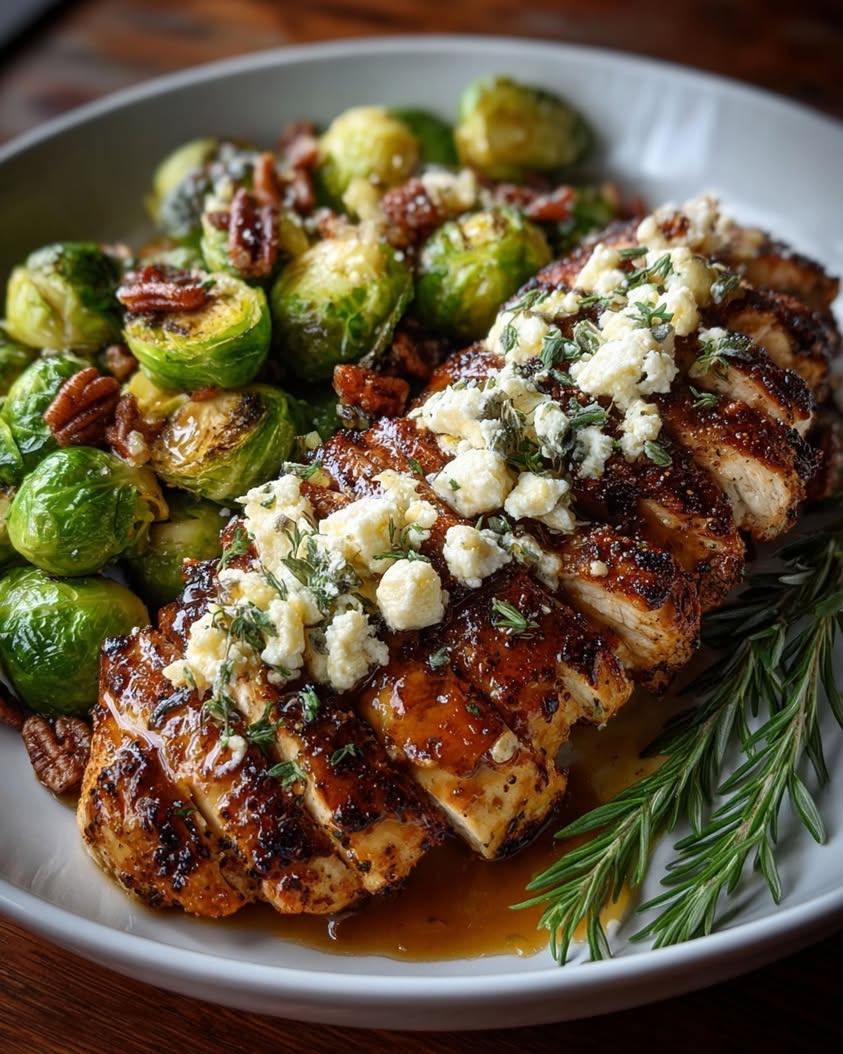
Maple Dijon Chicken with Roasted Brussels Sprouts, Goat Cheese & Candied Pecans: A Sweet, Savory, and Satisfying Dinner
Imagine a dinner that perfectly balances sweet and savory notes with contrasting textures in every single bite. This Maple Dijon Chicken with Roasted Brussels Sprouts, Goat Cheese & Candied Pecans is exactly that kind of showstopping meal. Furthermore, it transforms simple, wholesome ingredients into an elegant dish that feels special enough for company yet straightforward enough for a busy weeknight. The magic lies in the harmony of flavors: juicy chicken glazed with a sticky maple Dijon sauce, paired with caramelized roasted Brussels sprouts, all finished with creamy goat cheese and crunchy candied pecans.
Consequently, this recipe is a fantastic way to enjoy seasonal produce while creating a complete, protein-packed meal on one sheet pan. The process is wonderfully simple. First, you coat chicken breasts in a vibrant glaze. Next, you toss Brussels sprouts with oil and seasoning. Then, everything roasts together, allowing the chicken juices to mingle with the vegetables. Finally, you top it all with tangy cheese and sweet nuts for a restaurant-quality presentation. Ultimately, this Maple Dijon Chicken with Brussels Sprouts delivers immense flavor with minimal fuss and cleanup.
Quick Recipe Highlights
- Flavor Profile: This dish masterfully combines sweet maple syrup, tangy Dijon mustard, and savory garlic. The roasted Brussels sprouts develop a nutty, caramelized depth that complements the glaze perfectly. Finally, the salty goat cheese and sweet candied pecans add the final, contrasting flavor layers.
- Texture: You get a wonderful contrast between the tender, juicy chicken and the crispy, charred edges of the Brussels sprouts. The creamy crumbles of goat cheese melt slightly from the heat, while the candied pecans provide an essential, satisfying crunch that ties the whole dish together.
- Aroma: As it roasts, your kitchen will fill with the sweet, smoky scent of caramelizing maple syrup and the pungent, warm aroma of roasting garlic and mustard. The nutty fragrance of the Brussels sprouts as they crisp up is utterly irresistible and promises a delicious meal.
- Visual Appeal: The dish boasts a beautiful color palette: golden-brown chicken, deep green and crispy Brussels sprouts, white flecks of goat cheese, and the rich brown of the pecans. It looks abundant, rustic, and incredibly appetizing on the plate, making it perfect for sharing photos or impressing guests.
- Skill Level Needed: This is a beginner-friendly recipe that requires basic kitchen skills like chopping, mixing, and using a sheet pan. It’s an excellent introduction to balancing flavors and using the roasting technique to develop depth without advanced techniques or special equipment.
- Special Equipment: You only need a large baking sheet, parchment paper for easy cleanup, a small bowl for the glaze, and a knife and cutting board. A good pair of tongs is helpful for turning the chicken and tossing the sprouts halfway through cooking.
Recipe Overview
- Difficulty Level: We rate this Maple Dijon Chicken with Brussels Sprouts as “Easy” because it uses straightforward techniques like mixing a simple glaze and roasting. The steps are sequential and logical, with minimal hands-on time after prep. Even novice cooks can achieve excellent results by following the clear instructions for temperature and timing.
- Category: This recipe falls squarely into the “Main Course” or “Dinner” category, providing a complete protein and vegetable component in one dish. It can also be considered a “Sheet Pan Meal,” which emphasizes its convenience, and a “Healthy Dinner” option due to its lean protein and vegetable focus.
- Cuisine: While not tied to a specific traditional cuisine, this dish draws inspiration from modern American and French-inspired bistro cooking. The use of Dijon mustard and goat cheese nods to French flavors, while the maple syrup and pecans bring a North American, particularly New England, influence to the table.
- Cost: This is a moderately priced meal. Chicken breasts and Brussels sprouts are typically affordable, especially in season. The goat cheese and pure maple syrup are the “splurge” items, but a little goes a long way. You can make cost-effective swaps, like using chicken thighs or a different nut, without sacrificing core flavor.
- Season: This Maple Dijon Chicken with Brussels Sprouts is ideal for fall and winter when Brussels sprouts are at their peak sweetness and heartier meals are desired. However, it works beautifully year-round thanks to the reliable availability of both main ingredients. The warm, roasted flavors feel cozy in cooler months.
- Occasion: It’s versatile enough for a simple family dinner, a casual dinner party with friends, or even a festive holiday meal like Thanksgiving or Christmas. The impressive presentation and complex flavor profile make it feel special, while the easy preparation keeps stress low for the cook.
Why You’ll Love This Recipe
First and foremost, the taste and texture combination is absolutely unbeatable. Each forkful of this Maple Dijon Chicken with Brussels Sprouts offers a symphony of sensations: the sweet and sticky glaze on the chicken, the savory, almost nutty flavor of the roasted sprouts, the bright tang from the goat cheese, and the sweet crunch of the pecans. It’s a dish that keeps you interested from the first bite to the last, with no element overpowering another. Moreover, the contrast between hot, savory components and the cool, creamy cheese is a classic culinary trick that delights the palate every single time.
From a convenience standpoint, this recipe is a true weeknight hero. Since everything cooks together on one sheet pan, you minimize both active cooking time and cleanup. You can have the chicken glazed and the sprouts trimmed in about 15 minutes, then let the oven do the rest of the work. This efficiency makes it perfect for busy evenings when you want a wholesome, home-cooked meal without spending hours in the kitchen. Additionally, the ingredients are easy to find at any standard grocery store, with no obscure or hard-to-source items required.
Nutritionally, this Maple Dijon Chicken with Brussels Sprouts packs a powerful punch. Chicken breast is an excellent source of lean protein, essential for muscle repair and keeping you full. Brussels sprouts are a cruciferous vegetable superstar, loaded with fiber, vitamins C and K, and antioxidants. Using pure maple syrup adds sweetness with a slightly better nutrient profile than refined sugar, providing minerals like manganese and zinc. When you combine these elements, you create a balanced meal that fuels your body deliciously.
For entertaining, this dish is a social superstar. It looks incredibly impressive when brought to the table directly on the sheet pan or plated beautifully. Guests will be wowed by the professional appearance and complex flavors, often not realizing how simple it was to prepare. This allows you to spend more time with your company and less time fussing in the kitchen. It’s also easy to double or triple for a crowd, making it a reliable choice for potlucks or large family gatherings where you need a guaranteed crowd-pleaser.
Finally, it’s cost-effective and accessible. You can often find chicken and Brussels sprouts on sale, and the recipe is forgiving with substitutions. Don’t have pecans? Use walnuts or almonds. Not a fan of goat cheese? Try feta or blue cheese crumbles. This flexibility means you can adapt the Maple Dijon Chicken with Brussels Sprouts based on what’s in your pantry or fridge, reducing food waste and making the most of your grocery budget while still enjoying a restaurant-quality meal at home.
Historical Background and Cultural Significance
The story of this dish is less about ancient tradition and more about the modern evolution of home cooking. It represents a fusion of ingredients and techniques from different culinary worlds. The use of maple syrup as a glaze has roots in North American Indigenous cooking and early colonial practices, where it was a vital sweetener. Meanwhile, Dijon mustard hails from the city of Dijon, France, with a history dating back to the Middle Ages. Combining these two distinct condiments is a relatively recent, innovative approach that showcases global pantry mixing in contemporary cuisine.
Culturally, the dish speaks to the current demand for meals that are both wholesome and full of flavor. The rise of the “sheet pan dinner” as a category reflects a societal shift towards efficiency and minimal cleanup in home kitchens. This Maple Dijon Chicken with Brussels Sprouts fits perfectly into that movement. Furthermore, the inclusion of Brussels sprouts marks a significant cultural rehabilitation; once a maligned vegetable, they have been resurrected by roasting techniques that unlock their natural sweetness, making them a darling of the food world and a staple on modern menus.
The recipe’s evolution is tied to the popularity of sweet and savory pairings in modern gastronomy. Chefs have long understood the appeal of contrasting flavors, but this combination has trickled down into everyday home cooking remarkably well. The addition of goat cheese and candied nuts is a bistro-inspired touch, elevating a simple protein and vegetable into something more elegant. This reflects a broader trend where home cooks seek to replicate restaurant-style “composed” plates with manageable effort, using high-quality, accessible ingredients to create depth and interest.
Regarding regional variations, the core concept is highly adaptable. In the Southern U.S., you might find a version using a bourbon-maple glaze and pecans, playing on local flavors. In a more Mediterranean twist, one could substitute the maple with honey, use rosemary, and swap goat cheese for feta. The basic formula—glazed protein + roasted hearty vegetable + cheese + crunch—is a template that travels well. This particular iteration with maple, Dijon, and Brussels sprouts has become a modern classic in its own right, celebrated on food blogs and dinner tables for its reliable deliciousness and photogenic appeal.
Ingredient Deep Dive
Let’s start with the star: chicken breasts. As a lean protein, chicken breast is a blank canvas that readily absorbs the flavors of the maple Dijon glaze. Historically, chicken has been a global staple due to its relatively quick rearing time. Nutritionally, it’s rich in protein, niacin, and selenium. For best results, choose breasts that are similar in size and thickness to ensure even cooking. You can also pound them slightly to an even thickness. For storage, keep raw chicken in the coldest part of your fridge and use within 1-2 days, or freeze for longer storage. For a substitution, boneless, skinless chicken thighs work wonderfully and offer a juicier, more forgiving result due to their higher fat content.
Brussels sprouts are the essential vegetable component. These miniature cabbages have a long history in Europe, particularly Belgium, which is how they got their name. They are packed with nutrients, including vitamins C and K, fiber, and antioxidants that support health. When selecting them, look for firm, bright green sprouts that are similar in size for even roasting. Avoid any with yellowing leaves or a strong odor. Store them unwashed in a plastic bag in your refrigerator’s crisper drawer. If you need a substitute, broccoli florets or cauliflower cut into bite-sized pieces would roast well with similar timing, though the distinct nutty flavor of Brussels sprouts is hard to replicate.
The glaze relies on two key players: pure maple syrup and Dijon mustard. Pure maple syrup is the boiled-down sap of sugar maple trees, a tradition pioneered by Indigenous peoples of North America. It contains antioxidants and minerals like manganese and zinc, unlike artificial pancake syrup. Always opt for “pure” or “100%” maple syrup for the best flavor. Dijon mustard, originating from Dijon, France, is made from brown mustard seeds and white wine. It adds a sharp, tangy complexity that cuts through the sweetness. For storage, keep maple syrup in the fridge after opening to prevent mold. Dijon mustard stays fine in the pantry. For a substitution, you could use honey instead of maple syrup, and a whole-grain or spicy brown mustard can stand in for Dijon in a pinch.
Finally, the finishing touches: goat cheese and candied pecans. Goat cheese, or chèvre, has a history dating back thousands of years. Its tangy, creamy profile contrasts beautifully with the sweet glaze. It’s often easier to digest for those sensitive to cow’s milk. Look for a soft, crumbly log. Candied pecans add the crucial crunch and a burst of sweetness. You can buy them pre-made or easily make your own by tossing pecans with a bit of maple syrup and roasting them for a few minutes. For storage, keep goat cheese tightly wrapped in the fridge. For substitutions, feta cheese offers a similar salty tang, and blue cheese would provide a stronger flavor. For the nuts, candied walnuts or almonds, or even plain toasted pecans, would work well if you prefer less sweetness.
Common Mistakes to Avoid
- Crowding the Pan: Placing the chicken and Brussels sprouts too close together steams them instead of roasting. Consequently, you’ll get soggy sprouts and chicken that doesn’t develop a nice sear. Always use a large enough baking sheet and ensure space between pieces for proper air circulation and caramelization.
- Using Imitation Maple Syrup: Pancake syrup or artificial maple flavoring will make the glaze overly sweet and thin, lacking the deep, complex flavor of pure maple syrup. This mistake can throw off the entire balance of the dish, resulting in a cloying sauce instead of a rich, nuanced glaze.
- Not Drying the Brussels Sprouts: If you wash your sprouts and don’t dry them thoroughly, the excess water will prevent them from crisping up in the oven. You’ll end up with steamed, mushy vegetables. Always pat them completely dry with a clean kitchen towel or salad spinner after washing.
- Underseasoning the Sprouts: Brussels sprouts need ample seasoning before roasting. Simply tossing them in oil is not enough. Be generous with salt and pepper, and consider adding garlic powder or paprika to enhance their natural flavor as they caramelize.
- Overcooking the Chicken: Chicken breasts can dry out quickly if left in the oven too long. Since they cook alongside the vegetables, it’s crucial to check their internal temperature with a meat thermometer. Remove them from the oven as soon as they reach 165°F at the thickest part.
- Adding the Goat Cheese and Pecans Too Early: If you add these toppings before roasting, the cheese will melt into a puddle and the pecans will burn. They are finishing elements meant to be sprinkled on at the very end, using the residual heat to slightly warm the cheese without losing its texture.
- Skipping the Toss Midway: Forgetting to toss the Brussels sprouts and turn the chicken halfway through the cooking time leads to uneven cooking. One side of the sprouts will burn while the other remains raw, and the chicken will glaze only on one side.
- Using a Dark Baking Sheet Without Adjusting: Dark pans absorb more heat and can cause the edges of the food to burn faster. If using a dark sheet, consider reducing the oven temperature by 25°F and keeping a close eye on the food during the last few minutes of cooking.
Essential Techniques
Creating an Emulsified Glaze: Whisking the maple syrup, Dijon mustard, and oil together vigorously is crucial. This technique, called emulsification, combines liquids that don’t normally mix (like oil and water-based ingredients) into a smooth, cohesive sauce. A proper emulsion ensures the glaze coats the chicken evenly and doesn’t separate in the oven. The key is to whisk continuously while slowly drizzling in the oil. If your glaze breaks and looks oily, simply add a teaspoon of warm water and whisk again until it comes back together.
Dry-Roasting Vegetables: The goal with the Brussels sprouts is to achieve caramelization, not steaming. This requires high heat, adequate space on the pan, and dry vegetable surfaces. The Maillard reaction—a chemical process between amino acids and sugars—occurs at around 300°F and above, creating those delicious browned, complex flavors. To master it, preheat your oven fully, toss the sprouts in just enough oil to coat (too much will make them greasy), and spread them in a single layer. The visual cue for success is crispy, deeply browned edges and tender interiors.
Basting for Flavor: Spooning the pan juices over the chicken during the last few minutes of cooking is a simple but transformative technique. This basting action redistributes the concentrated, reduced glaze and chicken drippings back onto the meat, adding another layer of flavor and keeping the surface moist. It also helps create a beautifully glossy, sticky finish. Use a spoon or a silicone brush, and be careful of the hot pan. The cue to start basting is when the chicken is nearly cooked through and the glaze in the pan has thickened slightly.
Pro Tips for Perfect Maple Dijon Chicken
First, bring your chicken breasts to room temperature for about 15 minutes before cooking. This simple step helps them cook more evenly, preventing a scenario where the outside is overdone while the inside is still raw.
For extra flavor, marinate the chicken in the maple Dijon glaze for up to 30 minutes in the refrigerator before roasting. This allows the flavors to penetrate the meat more deeply, resulting in a more seasoned and juicy final product.
Cut larger Brussels sprouts in half from stem to tip, but leave very small ones whole. This ensures everything cooks at the same rate and provides more flat surfaces for caramelization, which is where the best flavor develops.
Invest in an instant-read meat thermometer. It’s the only foolproof way to know your chicken is perfectly cooked to 165°F without cutting into it and losing precious juices. Check the thickest part of the breast.
Let the chicken rest for 5-10 minutes after removing it from the oven and before slicing. This allows the juices, which have been driven to the center by the heat, to redistribute throughout the meat, ensuring every bite is moist.
If your pecans aren’t candied, you can quickly candy them yourself. Toss a cup of pecans with a tablespoon of maple syrup and a pinch of salt, then spread on a parchment-lined sheet and bake at 350°F for 8-10 minutes, watching closely to prevent burning.
For a deeper flavor, add a teaspoon of smoked paprika or a tablespoon of finely chopped fresh rosemary to the Brussels sprouts before tossing them with oil. This adds an aromatic layer that complements the sweet and savory glaze beautifully.
Use the leftover pan drippings! After removing the food, scrape any sticky, caramelized bits from the pan into a small bowl. You can drizzle this intensely flavorful “pan sauce” over the plated dish for an extra boost of maple Dijon goodness.
Variations and Adaptations
For regional variations, consider a Southern twist by adding a tablespoon of bourbon to the glaze and using candied pecans. A Mediterranean version could substitute honey for maple, add lemon zest to the sprouts, and use crumbled feta instead of goat cheese. These adaptations show how the basic framework of this Maple Dijon Chicken with Brussels Sprouts can travel across culinary traditions while maintaining its core appeal of balanced flavors and textures.
Seasonal adaptations are easy. In spring, substitute asparagus spears or halved baby potatoes for the Brussels sprouts. In summer, try zucchini and bell pepper chunks, though they may cook faster. For a winter holiday version, add peeled, cubed butternut squash to the pan and garnish with pomegranate arils instead of pecans for a festive, colorful crunch.
Dietary modifications are straightforward. For a gluten-free meal, ensure your Dijon mustard is certified gluten-free (most are, but check labels). To make it dairy-free, simply omit the goat cheese or use a vegan goat-style cheese alternative. The recipe is naturally nut-free if you omit the pecans, though you’ll lose the textural contrast.
Flavor variations can personalize the dish. Add a minced chipotle pepper in adobo sauce to the glaze for a smoky heat. Stir a tablespoon of whole-grain mustard into the glaze for extra texture and a milder mustard flavor. Incorporate sliced shallots or red onion wedges to roast with the Brussels sprouts for added sweetness and depth.
Texture modifications can cater to different preferences. If you dislike crunchy nuts, substitute with toasted breadcrumbs or crispy fried onions for a different kind of crunch. For a creamier overall dish, you can make a sauce by whisking a little goat cheese into the warm pan drippings and drizzling it over everything before serving.
Presentation alternatives include serving the components separately on a large platter for a family-style meal, or slicing the chicken and arranging it neatly over a bed of the sprouts for individual plates. You can also chop the roasted chicken and sprouts and toss everything together in a large bowl with the cheese and nuts for a hearty, deconstructed salad.
Serving and Presentation Guide
Plating techniques matter for visual appeal. For individual servings, place a generous scoop of the roasted Brussels sprouts in the center of a warm plate. Slice the chicken breast on a diagonal and fan the slices over or beside the sprouts. This showcases the interior of the juicy chicken. Alternatively, for a rustic family-style presentation, bring the entire sheet pan to the table lined with a clean kitchen towel, allowing guests to serve themselves directly from the cooking vessel.
Garnishing is your final opportunity to enhance the dish. Beyond the goat cheese and pecans, consider a light sprinkle of flaky sea salt like Maldon to finish, or a few fresh herb leaves such as thyme or parsley for a pop of color and freshness. A light drizzle of high-quality olive oil or a balsamic reduction around the plate edge can add a professional touch.
Traditional accompaniments are simple to let the main dish shine. A crusty baguette or a loaf of sourdough is perfect for soaking up any remaining glaze and pan juices. For a more substantial meal, serve it over a bed of creamy polenta, mashed potatoes, or cauliflower puree, which will act as a delicious base for the flavorful components.
Modern serving suggestions might include turning leftovers into a grain bowl the next day. Simply add the chopped chicken and sprouts to a bowl with quinoa or farro, an extra dollop of goat cheese, and a simple vinaigrette. You can also stuff the mixture into a warm pita or wrap for a delicious lunch.
Temperature considerations are key. This Maple Dijon Chicken with Brussels Sprouts is best served hot from the oven, with the goat cheese just beginning to soften from the residual heat. If you need to hold it, tent the entire pan loosely with foil to keep it warm for up to 15 minutes, but add the cheese and nuts right before serving to maintain their textures.
Portion control is built-in if you follow the recipe, which is designed for four servings. A typical portion includes one chicken breast and a quarter of the Brussels sprouts mixture. If serving heartier appetites or as part of a larger spread with multiple sides, you can stretch it to five or six servings by adding an extra vegetable side dish or more bread.
Wine and Beverage Pairing
Wine pairings should complement the sweet, savory, and tangy notes. An off-dry Riesling or Gewürztraminer is a fantastic choice because their slight sweetness mirrors the maple glaze, while their acidity cuts through the richness of the goat cheese. Alternatively, a medium-bodied Pinot Noir with its red fruit flavors and low tannins won’t overpower the chicken and pairs beautifully with the earthy Brussels sprouts. For a richer option, an oaked Chardonnay with notes of vanilla and butter can stand up to the dish’s robust flavors.
Non-alcoholic alternatives can be just as thoughtful. A sparkling apple cider provides sweet effervescence that cleanses the palate. For a more sophisticated option, try a ginger beer with its spicy kick, which contrasts nicely with the sweetness of the glaze. Iced hibiscus or berry tea, slightly sweetened, offers a tart and refreshing counterpoint to the savory elements of the meal.
While not a classic pairing for this dish, a warm beverage like coffee or tea could work if serving the meal for a cozy brunch or lunch. A medium-roast coffee with low acidity would complement the nutty, caramelized flavors without clashing. A cup of Earl Grey tea, with its citrusy bergamot notes, could provide a bright, aromatic finish that contrasts the dish’s richness.
Temperature considerations are standard: serve white wines and sparkling ciders well-chilled, around 45-50°F. Serve red wines like Pinot Noir slightly below room temperature, around 55-60°F, to allow their flavors to shine without the alcohol becoming too prominent. Non-alcoholic sparkling drinks should be served ice-cold for maximum refreshment.
Serving suggestions include offering both a white and a red wine option if you’re hosting a dinner party, as personal preferences vary. Always pour water as well to cleanse palates between bites. If serving a non-alcoholic sparkler, consider adding a few fresh berries or a sprig of rosemary to the glass for an elegant touch that matches the meal’s aesthetic.
Storage and Shelf Life
Storage methods are straightforward but important for food safety. Allow the Maple Dijon Chicken with Brussels Sprouts to cool completely before storing. Separate the chicken from the sprouts if possible, as the vegetables retain moisture and can make the chicken skin soggy. Place components in separate airtight containers. The goat cheese and pecans should always be stored separately in their own containers to maintain their distinct textures until you’re ready to re-assemble and eat.
Temperature requirements are non-negotiable. All leftovers must be refrigerated within two hours of cooking. Store them in the main body of the refrigerator, not in the door, where temperatures are more consistent and colder. The ideal fridge temperature is at or below 40°F to inhibit bacterial growth and keep your leftovers safe for consumption.
Container recommendations include glass meal-prep containers with tight-fitting lids, which are ideal for reheating. Alternatively, you can use shallow containers to allow the food to cool faster and more evenly. Avoid storing large, deep piles of warm food, as the center may stay warm too long, entering the “danger zone” where bacteria multiply rapidly.
Signs of spoilage include an off or sour smell, a slimy texture on the chicken or sprouts, or any visible mold. The glaze may separate as it sits, which is normal, but any fizzy or fermented smell is a warning sign. When in doubt, throw it out. Properly stored, the cooked chicken and sprouts will last 3-4 days in the refrigerator.
Reheating instructions are key to preserving quality. Reheat the chicken and sprouts separately in a 350°F oven on a baking sheet until warmed through, about 10-15 minutes. This method helps re-crisp the sprouts. You can also use an air fryer for a quicker, crispier result. The microwave is a last resort, as it will steam the sprouts and make them soggy. Always add the fresh goat cheese and pecans after reheating.
Freezing guidelines are possible but with caveats. You can freeze the cooked, glazed chicken and the roasted Brussels sprouts separately in freezer-safe bags or containers for up to 2-3 months. However, note that the texture of the Brussels sprouts will become softer upon thawing and reheating. The glaze may also separate. Thaw overnight in the refrigerator before reheating as directed above. Do not freeze the assembled dish with goat cheese or pecans.
Make Ahead Strategies
A prep timeline can turn this into a 15-minute dinner on a busy night. The day before, you can trim and halve the Brussels sprouts, storing them in an airtight container lined with a paper towel in the fridge. You can also make the maple Dijon glaze and store it in a jar in the refrigerator. Even the chicken can be placed in a dish and coated with the glaze, then covered and refrigerated overnight, allowing it to marinate.
Storage between steps is simple. Keep prepped vegetables and marinating chicken in separate containers in the refrigerator. If you’ve coated the chicken in glaze ahead of time, ensure it’s well-covered to prevent drying out. Bring the glaze to room temperature and give it a good shake or stir before using, as the oil may have separated during storage.
Quality impact assessment is positive for most make-ahead steps. Marinating the chicken will only improve its flavor and tenderness. Pre-cutting the Brussels sprouts is fine, though they may dry out slightly at the cut edges—this can actually promote better browning. The key is to add any fresh herbs, cheese, or nuts only at the final moment before serving to preserve their texture and vibrancy.
Assembly tips for a make-ahead meal are easy. When ready to cook, simply take your prepped ingredients from the fridge, arrange the chicken and sprouts on your sheet pan as directed, and roast. Having everything ready to go streamlines the process immensely and reduces the “I’m hungry now” stress that leads to poor cooking decisions.
Reheating guidelines for a fully made-ahead and cooked dish are the same as for leftovers. Reheat in the oven to restore texture. If you’ve pre-cooked the entire dish, store the components separately and reheat the chicken and sprouts, then add the fresh toppings. This ensures the final presentation and mouthfeel are as close as possible to freshly made.
Fresh element additions are non-negotiable. No matter how much you prep ahead, always reserve the goat cheese and candied pecans. Add these after reheating, just before serving. Their contrasting cool creaminess and dry crunch are defining characteristics of the dish that are lost if they are subjected to the storage and reheating process.
Scaling Instructions
Halving the recipe is simple for a smaller household. Use two chicken breasts and halve all other ingredient quantities. You can use a standard quarter sheet pan or a smaller baking dish. Cooking times may be slightly reduced by 5-7 minutes since there’s less mass in the oven, so start checking for doneness early. The glaze can be halved precisely, but making a full batch and storing half for another use is also efficient.
Doubling or tripling for a crowd requires planning. You’ll need multiple large baking sheets and may need to roast in batches or use multiple oven racks. Rotate the pans top-to-bottom and front-to-back halfway through cooking to ensure even browning. It’s crucial not to overcrowd the pans even when scaling up; use more pans rather than overfilling one. Cooking time may increase slightly, so rely on your meat thermometer.
Equipment adjustments are necessary when scaling. For a double batch, two standard half-sheet pans are ideal. If your oven can’t fit two pans with proper air circulation, cook one batch after the other and keep the first batch warm in a low oven (200°F) tented with foil. For a triple batch, you might need to use three pans and employ all oven racks, rotating diligently.
Timing modifications are minimal when scaling up or down, as the thickness of the chicken and size of the sprouts are the primary time drivers, not the quantity. However, a very full pan may steam more, potentially adding a few minutes to achieve proper caramelization. Always use visual cues (browning) and the internal temperature of the chicken as your ultimate guides, not just the clock.
Storage considerations change with scale. If you’ve made a large batch, cool the leftovers quickly by spreading them out on a clean baking sheet before transferring to shallow containers for the fridge. This prevents the large mass of food from staying in the “danger zone” too long. Label containers with the date, as it’s easy to lose track of leftovers from a big meal.
Nutritional Deep Dive
A macro breakdown for one serving (assuming 4 servings) is approximately: 450-500 calories, 35-40g of protein from the chicken, 20-25g of carbohydrates primarily from the maple syrup and Brussels sprouts, and 20-25g of fat from the oil, goat cheese, and pecans. This balance provides sustained energy, with protein and healthy fats promoting satiety. The carbs are largely from natural, complex sources with a moderate glycemic impact, especially if you use a high-quality pure maple syrup.
The micronutrient analysis is impressive. Brussels sprouts deliver a huge dose of Vitamin K (essential for blood clotting and bone health) and Vitamin C (a powerful antioxidant). They also provide folate and potassium. Chicken breast is an excellent source of B vitamins, particularly B6 and niacin, which support metabolism. Goat cheese contributes calcium and phosphorus. Maple syrup adds small amounts of manganese and zinc, minerals important for immune function and enzyme reactions.
Health benefits of this meal are multifaceted. The high protein and fiber content aids in muscle maintenance and digestive health, respectively. The antioxidants in Brussels sprouts and maple syrup help combat oxidative stress. The monounsaturated fats from the olive oil and pecans support heart health. As a whole, this Maple Dijon Chicken with Brussels Sprouts is a nutrient-dense meal that supports overall wellness without relying on processed ingredients.
Dietary considerations are generally positive. The dish is naturally gluten-free (check your Dijon label). It’s high in protein, making it suitable for active lifestyles. For those managing carbohydrate intake, the primary sources are vegetables and a modest amount of natural sweetener, making it a reasonable choice, though the maple syrup does contribute sugars. The fat content is moderate and comes from quality sources.
Portion analysis shows this is a satisfying, single-plate meal. The combination of lean protein, fibrous vegetables, and healthy fats is designed to keep you full for hours. If weight management is a goal, you can slightly reduce the amount of oil used to toss the sprouts and be mindful of the portion of candied pecans, though their small quantity provides significant flavor and texture payoff.
Weight management tips include using a kitchen scale to portion the chicken evenly if precision is needed. You can also increase the ratio of Brussels sprouts to chicken on your plate for more volume and fiber with fewer calories. Using a spray oil for the sprouts can reduce fat content slightly without sacrificing the necessary coating for roasting. Remember, the satisfaction factor of this flavorful meal can prevent later snacking on less healthy options.
Dietary Adaptations
For a gluten-free version, this Maple D{“success”:true,”message”:”Recipe created successfully”,”post_id”:8940,”tasty_recipe_id”:8940,”shortcode”:” Print
Maple Dijon Chicken with Roasted Brussels Sprouts, Goat Cheese & Candied Pecans
Description
A savory-sweet sheet pan dinner featuring tender chicken thighs glazed with maple and Dijon, paired with caramelized Brussels sprouts, tangy goat cheese, and crunchy candied pecans.
Ingredients
For the Crust:
- 4 bone-in, skin-on chicken thighs
- 1 lb Brussels sprouts, trimmed and halved
- 3 tbsp olive oil, divided
- 1/4 cup pure maple syrup
- 2 tbsp Dijon mustard
- 2 cloves garlic, minced
- 1 tsp smoked paprika
- Salt and black pepper to taste
- 1/4 cup crumbled goat cheese
- 1/4 cup candied pecans, roughly chopped
- Fresh thyme leaves for garnish
Instructions
1. Prepare the Crust:
- Preheat oven to 400°F (200°C). Line a large baking sheet with parchment paper.
- In a small bowl, whisk together maple syrup, Dijon mustard, minced garlic, smoked paprika, and 1 tbsp olive oil. Season chicken thighs with salt and pepper, then coat evenly with the maple Dijon mixture.
- Toss Brussels sprouts with remaining 2 tbsp olive oil, salt, and pepper. Arrange chicken and Brussels sprouts in a single layer on the prepared baking sheet.
- Roast for 25-30 minutes, until chicken is cooked through (internal temperature 165°F) and Brussels sprouts are tender and caramelized.
- Remove from oven. Sprinkle with crumbled goat cheese and candied pecans. Garnish with fresh thyme and serve warm.
Notes
You can customize the seasonings to taste.

I’m Billy, a classically trained culinary school graduate from The Culinary Institute of America with over 12 years in the restaurant industry and over 19 years of cooking experience.