
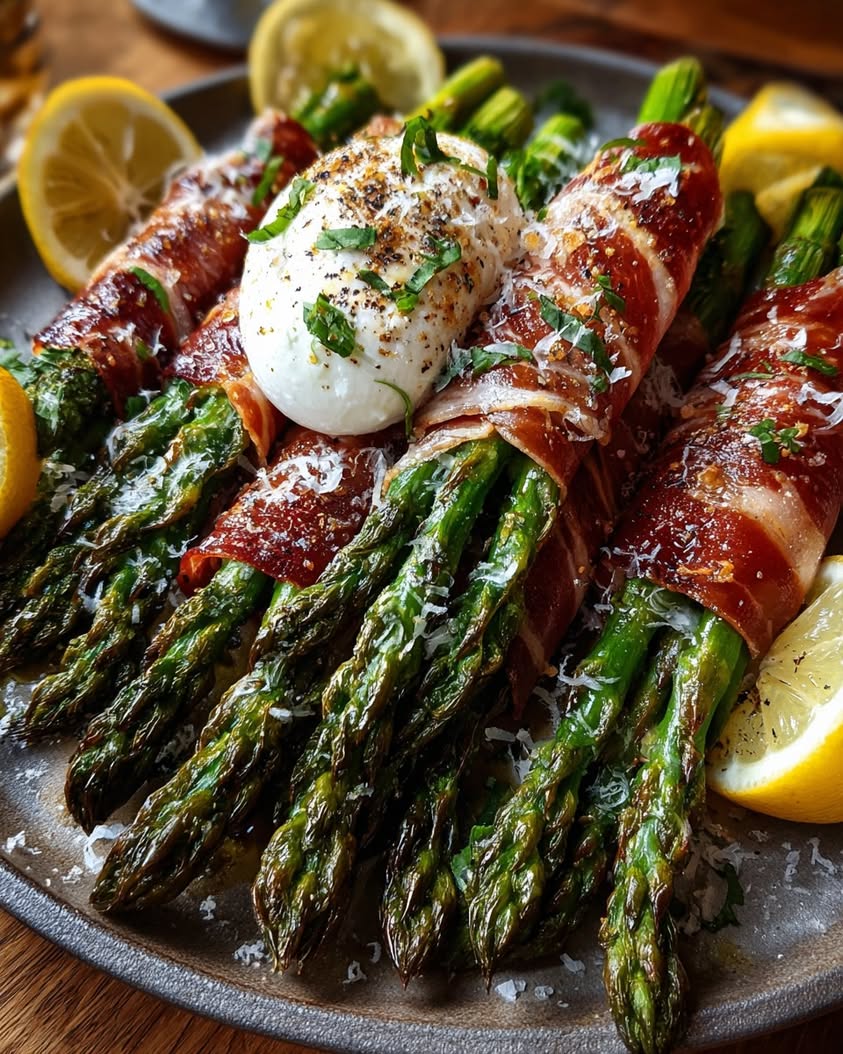
Crispy Prosciutto-Wrapped Asparagus with Burrata: An Elegant Appetizer in 30 Minutes
Imagine a dish that perfectly balances salty, creamy, and fresh flavors with a stunning visual presentation. This recipe for Crispy Prosciutto-Wrapped Asparagus with Burrata does exactly that. It transforms simple spring ingredients into an elegant appetizer that feels restaurant-worthy. Moreover, it comes together in just thirty minutes, making it an ideal choice for both weeknight dinners and special gatherings. The combination of textures and tastes is truly unforgettable.
The magic of this Crispy Prosciutto-Wrapped Asparagus with Burrata lies in its beautiful simplicity. You start with vibrant green asparagus spears, wrap them in thin slices of savory prosciutto, and roast them until the ham crisps and the asparagus becomes tender. Then, you place them atop a luxurious bed of creamy burrata cheese. Finally, a generous shower of lemon zest and a drizzle of olive oil bring everything to life. Consequently, each bite offers a symphony of contrasting yet harmonious elements.
Quick Recipe Highlights
- Flavor Profile: This dish delivers a perfect balance of salty, savory prosciutto against the mild, milky sweetness of fresh burrata. The bright, citrusy pop of lemon zest cuts through the richness, while the asparagus adds a clean, earthy note. Ultimately, every component works together to create a sophisticated and well-rounded taste.
- Texture: You experience a fantastic contrast in every mouthful. The prosciutto becomes shatteringly crisp in the oven, wrapping around tender-crisp asparagus spears. Meanwhile, the burrata provides an incredibly lush and creamy base that melts on your tongue. This interplay of crispy, tender, and creamy textures is the hallmark of the dish.
- Aroma: As the prosciutto-wrapped asparagus roasts, your kitchen fills with the irresistible, savory scent of curing pork and roasting vegetables. After plating, the fresh, zesty fragrance of grated lemon zest adds a bright top note. The overall aroma is inviting and complex, promising a delicious experience.
- Visual Appeal: The presentation is strikingly beautiful. The deep red, crispy prosciutto wraps around bright green asparagus spears, all arranged on a white canvas of oozing burrata. A final garnish of yellow lemon zest and green herbs adds vibrant color contrast. This makes the dish as photogenic as it is tasty.
- Skill Level Needed: This is an accessible recipe for cooks of all levels. The primary skills involved are simple wrapping and basic roasting. There is no complicated knife work or delicate sauce-making. Therefore, even a beginner can achieve impressive results with minimal effort.
- Special Equipment: You only need a standard baking sheet and parchment paper for easy cleanup. A microplane or fine grater for the lemon zest is highly recommended. Other than that, no special tools are required, making this recipe very approachable.
Recipe Overview
- Difficulty Level: We rate this Crispy Prosciutto-Wrapped Asparagus with Burrata as easy. The steps are straightforward and sequential. You simply prepare the asparagus, wrap it, roast it, and assemble. There are no tricky techniques or precise temperatures to master. As a result, success is almost guaranteed on the first try.
- Category: This dish fits perfectly into the appetizer or starter category. It is also substantial enough to serve as a light lunch or a elegant side dish for a spring dinner. Furthermore, it can be part of a larger antipasto or charcuterie board. Its versatility is a key strength.
- Cuisine: The recipe draws inspiration from Italian culinary traditions. Prosciutto and burrata are both iconic Italian ingredients. The preparation method, focusing on high-quality components with simple preparation, is classically Italian. However, the specific combination is a modern take on these classic flavors.
- Cost: This is a moderately priced appetizer. Prosciutto and burrata are premium ingredients, but a little goes a long way. One bundle of asparagus, a few slices of prosciutto, and one ball of burrata can serve four people generously. For a special occasion, the cost is justified by the impressive result.
- Season: Spring is the ideal season for this Crispy Prosciutto-Wrapped Asparagus with Burrata. This is when asparagus is at its peak—sweet, tender, and readily available. The fresh, green flavors embody the essence of spring. Of course, you can make it year-round with grocery store asparagus.
- Occasion: This dish is perfect for elegant entertaining, such as dinner parties, holiday meals, or bridal showers. It also makes a wonderful romantic appetizer for a date night at home. Conversely, it is simple enough for a treat-yourself weeknight meal. It elevates any moment.
Why You’ll Love This Recipe
First and foremost, the taste and texture appeal is immediate and profound. The salty, crispy prosciutto provides a savory punch that complements the mild, creamy burrata perfectly. The asparagus adds a necessary fresh, vegetal note and a satisfying crunch. Meanwhile, the lemon zest introduces a burst of citrus that brightens the entire dish. Consequently, each forkful is a balanced and exciting flavor journey that never feels heavy or one-dimensional.
Secondly, the convenience and preparation benefits are significant. This entire Crispy Prosciutto-Wrapped Asparagus with Burrata comes together in about thirty minutes with minimal active cooking time. Most of the work happens in the oven, freeing you up to prepare other dishes or entertain guests. The ingredient list is short and the steps are simple, reducing kitchen stress. Therefore, you can create a stunning, impressive dish without spending hours in the kitchen.
From a nutritional standpoint, this recipe offers several advantages. Asparagus is a fantastic source of fiber, folate, and vitamins A, C, and K. Prosciutto, while salty, provides a concentrated source of protein. Burrata offers protein and calcium, though it is higher in fat. By balancing a vegetable, a protein, and a dairy element, you create a more complete nutritional profile. Ultimately, it is a more balanced choice than many other creamy appetizers.
The social and entertaining value of this dish cannot be overstated. It looks incredibly elegant and gourmet on a platter, making guests feel special. The act of cutting into the burrata and dragging a prosciutto-wrapped spear through the creamy center is interactive and fun. It serves as a fantastic conversation starter and sets a luxurious tone for the meal. As a result, it makes any host feel accomplished and any guest feel welcomed.
Finally, consider the cost-effectiveness and accessibility. While prosciutto and burrata are premium items, you only need small amounts per serving. One ball of burrata and a few slices of prosciutto can serve four people amply. Asparagus is generally affordable, especially in season. Compared to ordering a similar appetizer at a restaurant, making this Crispy Prosciutto-Wrapped Asparagus with Burrata at home is remarkably economical. You get high-end flavor for a fraction of the price.
Historical Background and Cultural Significance
The origin story of this dish is a modern fusion of Italian ingredient traditions. Prosciutto, specifically Prosciutto di Parma, has a history dating back to Roman times, prized for its preservation method and delicate flavor. Burrata, however, is a much newer invention, created in the Puglia region of Italy in the early 20th century as a way to use up mozzarella scraps. Wrapping vegetables in cured meats is a timeless Italian technique for adding flavor. This specific recipe for Crispy Prosciutto-Wrapped Asparagus with Burrata is a contemporary celebration of these elements, likely born in modern home kitchens and trendy restaurants seeking simple, impactful plates.
Culturally, each component holds deep significance in Italian cuisine. Prosciutto represents the art of salumi and the importance of regional, protected designations. Burrata embodies the ingenuity of Italian cheesemakers, creating luxury from simplicity. Asparagus is a celebrated spring vegetable across Europe, often foraged and featured in festivals. Combining them on one plate speaks to the Italian culinary philosophy of “less is more”—where a few superb ingredients, treated respectfully, create something greater than the sum of their parts. This dish is a tribute to that ethos.
The evolution of the recipe follows broader food trends. As global appreciation for authentic Italian ingredients grew, so did experimentation with them. The trend of pairing creamy burrata with contrasting textures became popular in the 2010s. Wrapping asparagus in prosciutto is a classic technique, but placing it on burrata and finishing with lemon zest is a modern twist that highlights brightness and freshness. This evolution reflects a desire for dishes that are both rustic and refined, simple yet sophisticated. It is a recipe perfectly suited to today’s cooking style.
Regional variations of this concept abound throughout Italy and beyond. In Puglia, you might find burrata served with roasted bitter greens or fried bread. In the north, asparagus might be wrapped in speck or pancetta. Some versions might include a balsamic glaze reduction, a sprinkle of toasted nuts, or fresh herbs like mint or basil. The basic formula of crispy pork, tender vegetable, and fresh cheese is endlessly adaptable. Our version of Crispy Prosciutto-Wrapped Asparagus with Burrata focuses on the pure, unadulterated flavors, allowing the quality of each ingredient to shine.
Ingredient Deep Dive
Asparagus: This spring vegetable has been cultivated for over 2,000 years, originally by the ancient Greeks and Romans who prized it for its taste and purported medicinal qualities. Nutritionally, it is low in calories but high in essential nutrients like folate, fiber, and vitamins A, C, and K. It also contains asparagine, an amino acid that acts as a natural diuretic. For this recipe, select firm, bright green spears with tight, purple-tinged tips and smooth stems. Avoid woody or wilted stalks. Store asparagus upright in a jar with an inch of water in the refrigerator, loosely covered with a bag, for up to 4 days. For a substitution, try broccolini or green beans, adjusting cooking time as needed.
Prosciutto: Prosciutto is a dry-cured ham that is a cornerstone of Italian antipasti. Its production is a centuries-old art, involving salting, resting, and aging pork legs for months or even years. This process concentrates flavors and creates a silky, melt-in-your-mouth texture. It provides a savory, salty depth and high-quality protein. Look for prosciutto di Parma or San Daniele for the best quality, sliced paper-thin at the deli counter. Avoid pre-packaged, thick slices. Store leftover prosciutto in the refrigerator, wrapped in parchment paper and then plastic wrap, for up to a week. For a substitute, try serrano ham or thinly sliced pancetta, though pancetta will render more fat.
Burrata: Burrata, meaning “buttered” in Italian, is a fresh cheese consisting of a mozzarella shell filled with stracciatella (shredded mozzarella) and cream. Invented in the 1920s in Puglia, it was a resourceful way to use up mozzarella curds. It is rich in calcium and protein but also high in saturated fat, so enjoy in moderation. Select burrata that is stored in water or whey and feels soft and supple. It should be consumed very fresh, ideally on the day of purchase. Store it in its liquid in the refrigerator for no more than 1-2 days. The only true substitute is fresh mozzarella, which will be less creamy inside.
Lemon Zest: The zest is the brightly colored outer skin of the lemon, containing essential oils packed with intense citrus flavor and aroma. Historically, citrus fruits were luxury items traded along spice routes. The zest provides a powerful burst of flavor without the acidity of the juice. It is rich in antioxidants and vitamin C. Use organic lemons if possible, as you are eating the outer skin. Wash and dry the lemon thoroughly before zesting. A microplane grater yields the finest zest. Store whole lemons in the refrigerator. In a pinch, a small amount of finely chopped preserved lemon rind can work, but it is saltier.
Common Mistakes to Avoid
- Using Thick Asparagus Spears Without Trimming: Failing to trim the woody ends of asparagus results in a tough, stringy, and inedible base. Always bend each spear near the bottom; it will snap naturally at the point where the tough part ends. This ensures every bite is tender.
- Overwrapping with Prosciutto: Using too many layers of prosciutto per spear prevents it from getting truly crispy. The prosciutto will steam and become chewy instead. Use just one thin slice per spear, wrapping it in a single, loose layer so the heat can circulate and crisp it effectively.
- Crowding the Baking Sheet: Placing the wrapped spears too close together on the pan causes them to steam rather than roast. This leads to soggy prosciutto and limp asparagus. Ensure there is space between each spear for hot air to flow around them, guaranteeing all-over crispiness.
- Underseasoning the Asparagus: Assuming the prosciutto provides all the necessary salt is a common error. Lightly season the asparagus with pepper and a tiny pinch of salt before wrapping. The prosciutto is salty, but the asparagus itself needs a hint of seasoning to stand out.
- Skipping the Lemon Zest: The lemon zest is not just a garnish; it is a critical flavor component that cuts through the fat of the cheese and prosciutto. Using only lemon juice can make the dish wet. Freshly grated zest provides intense aroma and flavor without added moisture.
- Using Cold Burrata: Serving the burrata straight from the refrigerator dulls its flavor and makes its texture too firm. Let the burrata sit at room temperature for 20-30 minutes before serving. This allows its creamy interior to soften and its milky sweetness to fully express itself.
- Overcooking the Asparagus: Roasting for too long makes the asparagus mushy and causes the prosciutto to over-hardened. The asparagus should be tender-crisp, not soft. Watch carefully near the end of the cooking time, as oven temperatures can vary significantly.
- Not Patting the Asparagus Dry: If you wash the asparagus and do not dry it thoroughly, the extra moisture will steam the spears and prevent the prosciutto from adhering and crisping properly. Always use a clean kitchen towel or paper towels to pat the spears completely dry before wrapping.
Essential Techniques
Trimming Asparagus: This technique is crucial for ensuring every part of the vegetable is enjoyable. Instead of cutting arbitrarily, hold a spear at both ends and bend it. It will snap naturally at the junction between the tough, woody end and the tender stalk. This method is foolproof and guarantees no wasted, fibrous bites. For efficiency, line up several spears after finding the first break point and cut the rest at the same length.
Wrapping with Prosciutto: The goal is a secure but not constricting wrap that allows for crispiness. Lay a slice of prosciutto flat on your work surface. Place an asparagus spear at one end and roll diagonally, overlapping the prosciutto slightly. The prosciutto should stick to itself. Do not wrap too tightly, as the asparagus will shrink slightly during cooking. A diagonal wrap covers more surface area and looks more elegant than a straight band.
Roasting for Crispiness: High, dry heat is essential for rendering the prosciutto fat and crisping it while cooking the asparagus. Preheat your oven fully. Use a parchment-lined baking sheet to prevent sticking without adding oil. Arrange the spears with space between them. Roast until the prosciutto is crisp and the asparagus is tender when pierced with a fork. The prosciutto will continue to crisp slightly as it cools.
Zesting a Lemon: Proper zesting captures the flavorful oils without the bitter white pith. Use a fine microplane grater or the small holes of a box grater. Gently rub the lemon against the grater in short strokes, rotating the fruit frequently. Only grate the bright yellow outer layer. Stop as soon as you see white. Do not zest directly over the dish; zest onto a plate or cutting board first to measure and ensure no pith is included.
Pro Tips for Perfect Crispy Prosciutto-Wrapped Asparagus with Burrata
First, bring all your ingredients to room temperature before starting, especially the burrata. This simple step ensures even cooking for the asparagus and optimal creaminess for the cheese. Second, invest in a quality microplane for the lemon zest. It creates a fine, fluffy zest that disperses flavor beautifully without any bitter pith. Third, after trimming the asparagus, give the spears a very light drizzle of olive oil and a crack of black pepper before wrapping. This seasons the vegetable itself.
Fourth, if your prosciutto slices are very large, you can tear them in half lengthwise to make them go further and avoid overly thick wraps. Fifth, place the wrapped asparagus seam-side down on the baking sheet. The weight of the spear will help seal the prosciutto as it cooks. Sixth, let the roasted asparagus cool for just a minute or two before placing it on the burrata. This prevents the residual heat from melting the cheese too aggressively.
Seventh, use a sharp knife to score the top of the burrata ball in a crosshatch pattern before placing it on the plate. This makes it easier for guests to access the creamy interior. Eighth, finish the plated dish with a final drizzle of high-quality extra virgin olive oil and a sprinkle of flaky sea salt. This adds a professional touch and enhances all the flavors.
Variations and Adaptations
For regional variations, consider using different cured meats. Spanish serrano ham or Italian speck would work wonderfully. In France, you might use jambon de Bayonne. For the cheese, try a creamy goat cheese log or a dollop of ricotta mixed with herbs instead of burrata. These swaps take the basic concept in new, delicious directions while maintaining the core appeal of salty, creamy, and fresh.
Seasonal adaptations are easy. In summer, wrap prosciutto around grilled zucchini or eggplant slices. For fall, try wrapping roasted Brussels sprout halves or par-cooked sweet potato wedges. In winter, endive spears or roasted carrot sticks could be delightful. The method remains the same; only the vegetable changes. This makes the recipe for Crispy Prosciutto-Wrapped Asparagus with Burrata a template for year-round creativity.
Dietary modifications are straightforward. For a gluten-free version, this recipe is naturally perfect as-is. To make it dairy-free, substitute the burrata with a vegan cashew or almond-based “mozzarella” style cheese. For a lower-carb or keto adaptation, the recipe is already excellent, though you could increase the ratio of prosciutto to asparagus if desired. There are many ways to tailor it to specific needs.
Flavor variations can add exciting twists. Add a drizzle of aged balsamic glaze or a balsamic reduction over the top after plating. Sprinkle with toasted pine nuts or chopped hazelnuts for crunch. Incorporate fresh herbs like chopped chives, tarragon, or basil into the presentation. A pinch of red pepper flakes added before roasting can introduce a subtle heat. Experiment to find your favorite combination.
Serving and Presentation Guide
Plating techniques matter for this visually stunning dish. Place the whole ball of burrata in the center of a large, shallow plate or platter. Use a sharp knife to make a deep cross-cut on top and gently open it to reveal the creamy interior. Arrange the warm Crispy Prosciutto-Wrapped Asparagus spears artfully around and over the burrata, leaning them against the cheese. This creates height and dimension.
Garnishing ideas extend beyond lemon zest. Add a scattering of fresh microgreens, pea shoots, or delicate edible flowers for color. A final flourish of flaky sea salt, such as Maldon, adds texture and a burst of salinity. A light drizzle of your best extra virgin olive oil around the plate adds shine and richness. Keep garnishes simple to let the main ingredients remain the stars.
Traditional accompaniments might include crusty, grilled bread or crostini to scoop up the melted burrata and any remaining bits. For a fuller antipasto spread, add marinated olives, roasted peppers, and slices of other cured meats. A simple arugula salad with a lemon vinaigrette served on the side complements the flavors perfectly and adds another green element.
Modern serving suggestions include presenting the dish as a shareable centerpiece for a grazing table. Alternatively, you can plate individual servings by placing a quarter of the burrata and three to four asparagus spears on small plates. For a lunch, serve it alongside a poached egg or a simple quinoa salad. The versatility in presentation matches its versatility in flavor.
Wine and Beverage Pairing
Wine pairings should complement the dish’s salty, creamy, and bright characteristics. A crisp, dry white wine like Pinot Grigio or Sauvignon Blanc works beautifully. Their acidity cuts through the richness of the burrata and balances the saltiness of the prosciutto. A light-bodied, fruity red like a chilled Beaujolais or a Bardolino can also be delightful if you prefer red wine. Sparkling options like Prosecco or Franciacorta add a celebratory feel and their bubbles cleanse the palate perfectly.
For non-alcoholic alternatives, consider a sparkling water with a twist of lemon or lime to echo the citrus notes. A tart lemonade or a sophisticated elderflower cordial with soda water would be refreshing. Iced herbal teas, such as mint or verbena, offer a clean, palate-cleansing effect. The goal is to choose a beverage that refreshes the mouth after each rich, savory bite.
While not traditional, certain light coffees or teas could pair if serving this as part of a brunch. A bright, citrusy tea like Earl Grey might pick up on the lemon zest. A light roast coffee with floral notes could be interesting, though it is a less intuitive match. Generally, stick to wines, sparkling options, or refreshing non-alcoholic drinks for the best experience.
Storage and Shelf Life
Storage methods for leftovers are limited but effective. The assembled dish with the burrata is best enjoyed immediately. However, you can store any leftover roasted Crispy Prosciutto-Wrapped Asparagus spears separately in an airtight container in the refrigerator for up to 2 days. The burrata should be stored in its own container with any leftover liquid. Unfortunately, the prosciutto will lose its crispiness upon refrigeration and become chewy.
Reheating instructions are specific. To revive leftover asparagus, reheat it in a toaster oven or conventional oven at 375°F for 5-7 minutes to try and recrisp the prosciutto. Avoid the microwave, as it will make the prosciutto rubbery and the asparagus mushy. The burrata should not be reheated; serve any leftovers cold or at room temperature. The dish will not be as perfect as when fresh, but it can still be tasty.
Freezing is not recommended for this recipe. The high water content in the asparagus will cause it to become watery and limp when thawed. The burrata will separate and become grainy. The prosciutto will suffer in texture. This is a dish meant to be made and enjoyed fresh. Plan your quantities accordingly to minimize waste.
Make Ahead Strategies
A prep timeline can save you time when entertaining. You can wash, dry, and trim the asparagus a day in advance. Store the prepared spears wrapped in a damp paper towel inside a resealable bag in the refrigerator. You can also separate the prosciutto slices and have them ready on a plate. Do not wrap the asparagus in advance, as the moisture from the vegetable will make the prosciutto soggy.
Assembly tips for last-minute ease are simple. About 30 minutes before your guests arrive, take the burrata out of the fridge to come to room temperature. Wrap the asparagus with prosciutto and arrange them on the baking sheet. Cover lightly with plastic wrap. When ready, simply pop the tray in the preheated oven. This way, you spend only a few active minutes in the kitchen while your guests are present.
Fresh element additions are key. Always zest the lemon and drizzle the final olive oil just before serving. If you are adding fresh herbs as garnish, chop them at the last minute to preserve their color and vitality. The contrast between the warm, crispy asparagus and the cool, fresh garnishes is part of the dish’s charm. A little last-minute effort makes a big difference.
Scaling Instructions
Halving the recipe is simple for a romantic dinner for two. Use half a bundle of asparagus, 6-8 slices of prosciutto, and one small burrata ball (or half a standard ball). Use a smaller baking sheet or quarter sheet pan. The cooking time may reduce by 2-3 minutes, so watch closely. All other steps and ratios remain proportional.
Doubling or tripling the recipe for a party is easy, but requires planning. You will need multiple baking sheets. Rotate the sheets halfway through cooking and swap their positions in the oven for even roasting. You may need to roast in batches to avoid overcrowding. For the burrata, you can either use one very large ball per platter or multiple smaller balls scattered across a large serving board.
Equipment adjustments are minimal. The main consideration is having enough oven space and baking sheets. If you are making a very large batch, consider using the convection setting if your oven has one, as it promotes better air circulation and crispiness. Ensure you have a platter large enough to present the increased quantity beautifully. Otherwise, the process scales linearly without complication.
Nutritional Deep Dive
A macro breakdown for one serving (approximately 4 spears with burrata) is estimated. You can expect a good balance: moderate protein from the prosciutto and burrata, healthy fats primarily from the cheese and olive oil, and low net carbohydrates from the asparagus. The dish is not low in sodium due to the cured meat, so those monitoring salt intake should be mindful. It is, however, relatively low in sugar and high in flavor.
The micronutrient analysis highlights the benefits of asparagus. It provides a significant amount of Vitamin K for blood clotting and bone health, folate for cell repair and DNA synthesis, and Vitamin A for vision and immunity. The lemon zest adds a boost of Vitamin C and antioxidants. The burrata contributes calcium for bone strength. While rich, the dish offers more than just empty calories.
Health benefits include the promotion of digestive health from the fiber in asparagus. The protein helps with satiety, potentially preventing overeating later. The antioxidants from the vegetables and lemon zest combat oxidative stress. However, the saturated fat and sodium content mean it should be enjoyed as part of a balanced diet, not an everyday staple. It is a treat with nutritional perks.
Dietary Adaptations
For a gluten-free diet, this Crispy Prosciutto-Wrapped Asparagus with Burrata is naturally perfect. No ingredients contain gluten. Always check prosciutto labels to ensure no gluten-containing additives were used in curing, but this is rare. Serve with gluten-free bread or crackers if desired.
For a dairy-free version, replace the burrata with a high-quality vegan mozzarella-style cheese that has a creamy texture. Many brands now make convincing alternatives from cashews or almonds. Alternatively, a dollop of creamy, seasoned hummus or a white bean puree can provide a satisfying, creamy base, though the flavor profile will shift.
For a vegan adaptation, omit the prosciutto and burrata entirely. Wrap the asparagus in thin strips of marinated, baked tofu or seasoned eggplant. Use a vegan creamy cheese as the base. The lemon zest and olive oil will still provide fantastic flavor. You will lose the signature salty-pork element, but you can add umami with a sprinkle of nutritional yeast or a dash of smoked paprika.
For a low-carb or keto diet, this recipe is already an excellent fit. Asparagus is a low-carb vegetable. The fats from the burrata and olive oil are encouraged. The prosciutto provides protein with minimal carbs. Simply ensure there is no added sugar in your prosciutto (check labels on American-style brands) and enjoy it as is.
Troubleshooting Guide
If your prosciutto is not getting crispy, the oven may not be hot enough, or the spears are too crowded. Ensure your oven is fully preheated and use an oven thermometer to verify accuracy. Spread the spears out more on the baking sheet. Also, make sure you are using thinly sliced prosciutto, not thick-cut ham. If it’s still chewy, try broiling for the last 1-2 minutes, watching carefully to prevent burning.
If the asparagus is undercooked or overcooked, oven temperature and spear thickness are the culprits. Thicker spears need more time; thinner spears need less. If undercooked, return to the oven for 3-5 minute increments. If overcooked and mushy, note the timing for next time. Using spears of uniform thickness ensures even cooking. Consider blanching very thick spears in boiling water for 1 minute before wrapping and roasting to guarantee tenderness.
If the burrata is too cold and firm, you did not let it come to room temperature. The creamy interior needs to soften to be spreadable. If you are in a hurry, you can gently place the sealed burrata packet (in its water) in a bowl of warm water for 5-10 minutes. Do not microwave it, as it may burst or become stringy.
If the lemon zest tastes bitter, you likely grated too deeply and included the white pith. The pith is intensely bitter. Always use a light touch and stop as soon as you see white. Use a fine microplane, not a large grater. If you have bitter zest, it is best to discard it and start with a new lemon, being more careful.
Recipe Success Stories
Community feedback on this Crispy Prosciutto-Wrapped Asparagus with Burrata has been overwhelmingly positive. Many home cooks report that it has become their go-to “impress the guests” appetizer. One reader mentioned serving it at a holiday party where it disappeared faster than any other dish. Another noted that their children, who usually avoid asparagus, devoured it because of the crispy prosciutto. These stories highlight its universal appeal and foolproof nature.
Variation successes are fun to hear about. One cook added a drizzle of truffle oil for a decadent twist. Another used white asparagus when it was in season for a elegant variation. A third reader, who is pescatarian, successfully wrapped the asparagus in smoked salmon instead of prosciutto and loved the result. These adaptations show how the recipe serves as a fantastic template for personal creativity.
Photography tips from readers often focus on natural light. Shooting the dish near a window, with the creamy burrata as the focal point, yields beautiful images. Using a dark-colored plate or a rustic wooden board can make the colors of the asparagus and prosciutto pop. A final tip is to take the photo immediately after adding the lemon zest, when the colors are most vibrant and the cheese is perfectly oozing.
Frequently Asked Questions
Can I make this ahead of time? You can prep the asparagus and have ingredients ready, but for best results, assemble and roast just before serving. The prosciutto loses its crispiness if wrapped too far in advance or stored after cooking.
What can I use instead of burrata? Fresh mozzarella is the closest substitute, though it will be less creamy inside. A log of creamy goat cheese or a scoop of whole-milk ricotta are also delicious, albeit different, options.
Can I cook this on the grill? Absolutely. Wrap the asparagus as directed. Preheat your grill to medium-high. Place the spears perpendicular to the grates so they don’t fall through. Grill for 6-8 minutes, turning occasionally, until prosciutto is crisp and asparagus is tender.
Is prosciutto raw? Yes, prosciutto is a dry-cured ham, meaning it is preserved with salt and air-drying, not cooked with heat. The roasting process in this recipe fully cooks it, making it safe to eat and transforming its texture to crispy.
How do I know when the asparagus is done? The asparagus should be easily pierced with the tip of a knife or a fork, and it will have brightened in color. The prosciutto will be visibly crisp and slightly shrunken around the spear.
Can I use thick asparagus? Yes, but you may need to increase the roasting time by 5-7 minutes. To ensure even cooking, you can also blanch thick spears in boiling water for 1-2 minutes before wrapping and roasting.
Why is my prosciutto soggy? Sogginess is usually caused by overcrowding on the pan (which steams them), wrapping with wet asparagus, or using slices that are too thick. Ensure spears are dry, spaced apart, and wrapped in a single thin layer.
Is this served hot or cold? It is best served warm. The asparagus and prosciutto should be warm from the oven, placed on room-temperature or slightly cool burrata. This temperature contrast is part of the experience.
Can I add other seasonings? Definitely. Before wrapping, you can sprinkle the asparagus with garlic powder, onion powder, or a little smoked paprika. After plating, fresh herbs like thyme, chives, or basil are wonderful additions.
What do I serve with{“success”:true,”message”:”Recipe created successfully”,”post_id”:8973,”tasty_recipe_id”:8973,”shortcode”:” Print A simple yet elegant appetizer featuring tender asparagus wrapped in crispy prosciutto, served with creamy burrata and bright lemon zest. You can customize the seasonings to taste.Crispy Prosciutto-Wrapped Asparagus with Burrata & Lemon Zest
Description
Ingredients
For the Crust:
Instructions
1. Prepare the Crust:
Notes

I’m Billy, a classically trained culinary school graduate from The Culinary Institute of America with over 12 years in the restaurant industry and over 19 years of cooking experience.