
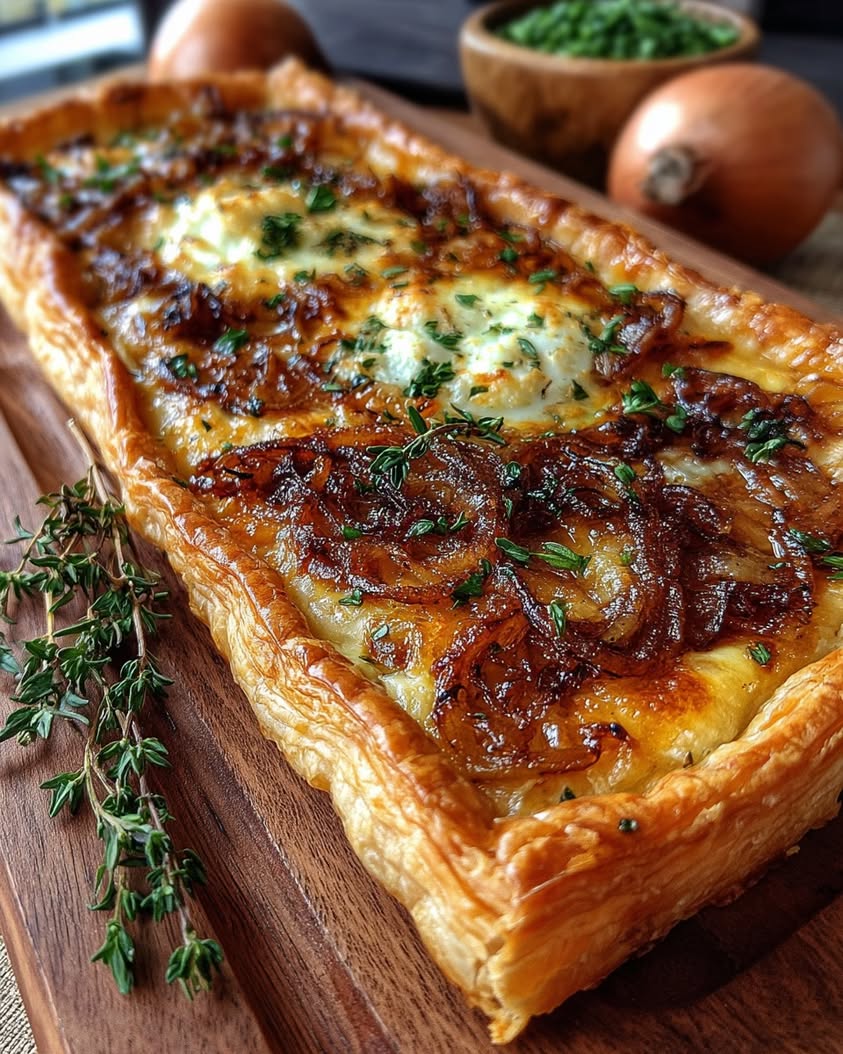
Caramelized Onion & Gruyère Tart with Fresh Thyme: An Elegant Savory Pastry
Imagine a golden, flaky pastry shell filled with a luxurious layer of sweet, jammy onions and crowned with nutty, melted cheese. This Caramelized Onion Gruyère Tart Recipe is that perfect culinary daydream made real. Consequently, it transforms simple, humble ingredients into a show-stopping centerpiece. The deep, complex sweetness of slowly cooked onions pairs magically with the rich, savory depth of Gruyère cheese. Moreover, fresh thyme adds a fragrant, earthy note that ties everything together beautifully.
This tart is incredibly versatile. For instance, you can serve it as an impressive appetizer for a dinner party, a stunning main course for a light lunch, or even as part of a festive brunch spread. The process of making it is almost as rewarding as eating it. Specifically, the act of slowly caramelizing the onions fills your kitchen with an irresistible aroma that promises something truly special. Ultimately, this Caramelized Onion Gruyère Tart Recipe delivers a sophisticated flavor profile with a surprisingly approachable method.
Mastering this dish feels like a culinary achievement. The contrast between the crisp pastry and the soft, yielding filling creates a textural symphony in every bite. Furthermore, the visual appeal of the golden-brown cheese and the specks of green thyme makes it a photographer’s dream. Whether you are a seasoned home cook or a confident beginner looking for a challenge, this recipe provides clear guidance for a flawless result. Let’s explore how to create this masterpiece step by step.
Quick Recipe Highlights
- Flavor Profile: This Caramelized Onion Gruyère Tart Recipe delivers a perfect balance of sweet and savory. The onions transform into a deeply sweet, almost jam-like consistency, which contrasts beautifully with the salty, nutty Gruyère. Additionally, the fresh thyme introduces a subtle, aromatic earthiness that elevates the entire dish.
- Texture: Expect a delightful contrast in every bite. The pastry should be crisp, buttery, and shatteringly flaky. Meanwhile, the filling is luxuriously soft, creamy, and unctuous from the melted cheese and tender onions. This combination makes the eating experience deeply satisfying.
- Aroma: While cooking, the tart will fill your home with an incredible fragrance. First, you will smell the sweet, pungent scent of onions softening and caramelizing. Then, the nutty, slightly funky aroma of melting Gruyère cheese takes over. Finally, the herbal notes of fresh thyme complete the sensory bouquet.
- Visual Appeal: This tart is a feast for the eyes. The pastry bakes to a perfect golden-brown color. The cheese forms a beautiful, bubbly, bronzed crust on top. Strategically placed thyme leaves add a touch of green, making the whole presentation look professional and inviting.
- Skill Level Needed: This recipe is ideal for an intermediate home cook. It requires patience for caramelizing onions and a gentle hand with pastry. However, with careful attention to the instructions, a motivated beginner can absolutely achieve excellent results.
- Special Equipment: You will need a reliable 9-inch tart pan with a removable bottom. This is essential for getting clean slices. Additionally, having a rolling pin, parchment paper, and pie weights or dried beans for blind baking will ensure your crust is perfect.
Recipe Overview
- Difficulty Level: We rate this Caramelized Onion Gruyère Tart Recipe as intermediate. The primary reason is the need for two key techniques: proper blind baking of the pastry and patient caramelization of onions. Both steps require attention to detail and timing, but neither is overly complex. Following the steps sequentially guarantees success.
- Category: This dish fits wonderfully into multiple categories. It shines as a luxurious appetizer or starter. Alternatively, it serves beautifully as a light main course alongside a simple green salad. Furthermore, it is a spectacular addition to any brunch or lunch buffet table.
- Cuisine: While tarts are foundational to French cuisine, this recipe has a broad, modern appeal. The combination of caramelized onions and Gruyère is a classic French bistro pairing. However, the straightforward preparation makes it accessible to any home kitchen, regardless of culinary tradition.
- Cost: This is a moderately priced dish that delivers high-end flavor. Onions and thyme are very inexpensive. The main costs come from the Gruyère cheese and good-quality butter for the pastry. Considering the impressive result, the cost per serving is quite reasonable for a special occasion.
- Season: This tart is fantastic year-round, but it feels particularly comforting in fall and winter. The rich, warm flavors pair perfectly with cooler weather. Conversely, it also makes a lovely spring or summer dish when served at room temperature with a crisp white wine on a patio.
- Occasion: This recipe is perfect for entertaining. It is elegant enough for holiday gatherings, dinner parties, or Mother’s Day brunch. Moreover, it is substantial enough for a cozy family dinner. Simply put, it elevates any meal from ordinary to memorable.
Why You’ll Love This Recipe
First and foremost, the taste and texture of this Caramelized Onion Gruyère Tart Recipe are utterly captivating. The slow-cooked onions develop a profound, natural sweetness that is completely addictive. Paired with the rich, slightly sharp, and wonderfully meltable Gruyère, each bite is a harmonious blend of savory and sweet. The buttery, flaky crust provides the perfect crunchy vehicle for the soft filling. This combination creates a deeply satisfying eating experience that feels both rustic and refined at the same time.
From a convenience standpoint, this tart offers significant preparation benefits. You can break down the steps over time. For example, caramelize the onions a day or two in advance. You can also blind bake the tart shell ahead of schedule. Therefore, when you are ready to serve, assembly and final baking are quick and stress-free. This make-ahead flexibility is a huge advantage for entertaining, as it allows you to be a relaxed host rather than a frantic cook.
Nutritionally, this dish has some surprising advantages. Onions are a great source of prebiotic fiber, which supports gut health, and they contain antioxidants like quercetin. Gruyère cheese provides a good amount of calcium and protein. While it is a rich dish, a modest slice alongside a large, vibrant salad creates a balanced meal. You are enjoying real, whole ingredients without any processed components, which is always a win for home cooking.
The social and entertaining value of this tart cannot be overstated. It looks incredibly impressive when brought to the table, often eliciting genuine “wows” from guests. It is easy to slice and serve, making it ideal for a crowd. Because it is delicious warm or at room temperature, it removes the pressure of perfect timing. This Caramelized Onion Gruyère Tart Recipe becomes a conversation piece, a dish that people will remember and ask you for again.
Finally, this recipe is cost-effective and accessible. It transforms inexpensive onions and a few other basic ingredients into something that tastes luxurious. You do not need exotic or hard-to-find items. A well-stocked supermarket will have everything you require. Investing in a good tart pan is a one-time cost that opens the door to countless other savory and sweet recipes. Ultimately, this dish proves that spectacular food does not have to be complicated or expensive.
Historical Background and Cultural Significance
The savory tart, or “quiche” in French cuisine, has a long and storied history rooted in European peasant cooking. Originally, these dishes were a practical way to use up leftovers and stretch precious ingredients. A simple pastry crust filled with eggs, cream, and whatever was on hand—cheese, vegetables, or bits of meat—baked into a hearty, portable meal. The Caramelized Onion Gruyère Tart Recipe is a direct descendant of this tradition, elevating the humble onion through the slow, transformative process of caramelization.
Caramelized onions hold a special place in many culinary cultures, from French onion soup to Italian onion marmalata. The technique of slowly cooking onions until their sugars break down and brown is ancient, a method of preserving and intensifying flavor before modern refrigeration. In the context of a tart, this method transforms a staple vegetable into the star of the show. Gruyère cheese, from the Swiss/French border region, brings its own history of alpine dairy farming, adding a note of terroir and artisan craftsmanship to the dish.
The evolution of this specific recipe mirrors broader food trends. As home cooks became more interested in restaurant-quality techniques, dishes that featured deep, layered flavors like caramelization gained popularity. The pairing of sweet onion and nutty cheese is a classic bistro combination, often seen in tarts, sandwiches, and soups. Modern versions, like this one, emphasize the purity of these flavors, often using fresh herbs like thyme to add a bright, contemporary note without overwhelming the central duo.
Regional variations of onion and cheese tarts abound. In Alsace, you might find a similar tart with the addition of bacon or lardons. In other parts of Switzerland, Raclette cheese could stand in for Gruyère. Some Italian versions might include a touch of balsamic vinegar in the onions. The beauty of the basic formula is its adaptability. This particular Caramelized Onion Gruyère Tart Recipe represents a refined, focused take on a global comfort food, celebrating the alchemy that happens when simple ingredients are treated with care and respect.
Ingredient Deep Dive
Yellow Onions: The foundation of this Caramelized Onion Gruyère Tart Recipe. Onions have been cultivated for over 5,000 years and were prized by ancient civilizations for their storage ability and flavor. Nutritionally, they are low in calories but high in vitamin C, B vitamins, and the antioxidant quercetin, which has anti-inflammatory properties. For caramelizing, choose firm, heavy yellow onions with dry, papery skins; their higher sugar content compared to white or red varieties is ideal. Store them in a cool, dark, well-ventilated place—not in the plastic bag from the store. If you must substitute, sweet onions like Vidalia work well but may cook faster.
Gruyère Cheese: This Swiss cheese is essential for its distinct flavor and excellent melting qualities. Traditionally made in alpine villages, Gruyère has a complex, nutty, and slightly salty taste with a smooth texture when melted. It provides a significant amount of calcium and protein. Look for cheese that is labeled “Gruyère” from Switzerland or France for authenticity; avoid pre-shredded bags, as they contain anti-caking agents that can hinder melting. Store Gruyère wrapped in parchment paper inside a loose plastic bag in the refrigerator’s cheese drawer. Possible substitutes include Comté, Beaufort, or a good-quality Swiss cheese, though the flavor profile will shift slightly.
Fresh Thyme: This herb provides the aromatic high notes. Thyme has been used since ancient times for both culinary and medicinal purposes. It contains thymol, a compound with antioxidant properties. Fresh thyme is far superior to dried in this recipe, as it offers a brighter, more complex fragrance. Look for vibrant green sprigs without any black spots or dryness. Store fresh thyme loosely wrapped in a damp paper towel inside a plastic bag in the refrigerator. If you have no fresh thyme, a tiny pinch of dried thyme can be added to the onions while cooking, but use it sparingly as it is much more potent.
Puff Pastry or Tart Dough: The vessel that holds everything together. A homemade pâte brisée (shortcrust pastry) made with butter, flour, and ice water provides the ultimate flaky, buttery texture. For convenience, a high-quality all-butter frozen puff pastry is an excellent shortcut that still yields impressive results. The pastry contributes to the dish’s satisfying texture contrast. If making your own, use very cold butter and handle the dough minimally to ensure flakiness. Store homemade dough wrapped in plastic in the fridge for up to 2 days or frozen for a month. A pre-made pie crust can work in a pinch but will be less crisp and delicate.
Common Mistakes to Avoid
- Rushing the Onions: This is the most critical error. Caramelization is a slow chemical process that cannot be hurried over high heat. If you crank up the flame, you will simply burn the onions, resulting in a bitter taste. Patience is the key ingredient here.
- Using a Dull Knife: Slicing onions with a dull knife crushes cell walls, releasing more of the compounds that make you cry. A sharp chef’s knife creates clean cuts, making the prep process faster and more pleasant.
- Overcrowding the Pan: When starting the onions, if you put too many in the pan at once, they will steam instead of sauté. Use a wide, heavy-bottomed skillet and cook in batches if necessary to ensure they have space to brown properly.
- Not Blind Baking the Crust: Skipping the step of baking the pastry shell with weights before adding the filling is a recipe for a soggy bottom. The blind bake sets the structure, ensuring a crisp base that can support the wet filling.
- Using Pre-Shredded Cheese: Pre-shredded cheese is coated with starches or cellulose to prevent clumping. These additives can prevent the cheese from melting into a smooth, cohesive layer. Always grate your Gruyère fresh from the block.
- Adding Raw Thyme Sprigs: If you place whole sprigs of thyme on the tart, the woody stems become unpleasant to eat. Always strip the leaves from the stems before sprinkling them over the filling for the best texture and flavor distribution.
- Slicing the Tart While Hot: Cutting into the tart immediately after it comes out of the oven will cause the filling to ooze out and the slices to lose their shape. Allow it to rest and set for at least 15-20 minutes for clean, beautiful portions.
- Ignoring Seasoning Layers: Season only at the end, and your tart will taste flat. Remember to season the onions as they cook and again lightly when assembling the tart. Building layers of seasoning creates a more deeply flavored final product.
Essential Techniques
Caramelizing Onions: This technique is the soul of the Caramelized Onion Gruyère Tart Recipe. It involves slowly cooking sliced onions in fat over medium-low heat until their natural sugars break down and brown. The process can take 30-45 minutes; rushing it leads to burning. Stir occasionally, but not constantly, to allow contact with the pan for browning. Deglazing the pan with a splash of water, wine, or vinegar helps lift the flavorful browned bits (fond) and prevents sticking. Success is visual and olfactory: the onions will turn a deep, uniform golden brown and smell intensely sweet and rich.
Blind Baking Pastry: Blind baking is pre-baking a pastry crust before adding a wet filling. This is crucial to prevent a soggy bottom. First, you line the chilled dough in the tart pan, then prick it with a fork. Next, line it with parchment paper or foil and fill it with pie weights, dried beans, or rice. This weights the dough down so it doesn’t puff up or slump. Bake until the edges are set, then remove the weights and parchment and bake a few minutes more to dry out the base. The crust should look matte and feel dry to the touch, not shiny or damp.
Cheese Grating and Distribution: Grating your own cheese from a block is non-negotiable for optimal melt and flavor. Use the large holes of a box grater for the best texture. When distributing the cheese over the tart, do not just dump it in the center. Instead, sprinkle it evenly from edge to edge. This ensures every bite has the perfect cheese-to-onion ratio and promotes even browning. A uniform layer also helps the filling set into a cohesive slice.
Pro Tips for Perfect Caramelized Onion & Gruyère Tart
Use a mandoline slicer for perfectly uniform onion slices. Consistent thickness is key for even cooking, and a mandoline achieves this in seconds, saving you time and tears. Just remember to use the safety guard.
Add a pinch of sugar to the onions only if they are not caramelizing after a long time. Sometimes onions have lower natural sugar content. A tiny sprinkle can help kickstart the Maillard reaction, but use it sparingly to avoid an overly sweet result.
Brush the blind-baked tart shell with a thin layer of Dijon mustard before adding the filling. This French trick adds a subtle tangy layer that cuts through the richness and provides a moisture barrier to help keep the crust crisp.
Let your tart pan rest on a preheated baking sheet in the oven. This ensures the bottom crust gets direct, intense heat from below, promoting a crispier finish. It also makes transferring the filled tart in and out of the oven much safer.
For an extra flavor boost, deglaze your onion pan with a tablespoon of dry white wine or sherry vinegar at the end of cooking. The acidity will balance the sweetness and lift any delicious browned bits from the pan into your filling.
If your tart crust is browning too quickly during the final bake, create a simple shield. Gently tent the edges with strips of aluminum foil to protect them while the center continues to cook and the cheese bubbles.
For a gorgeous golden finish, you can brush the very edges of the pastry with an egg wash (a beaten egg with a splash of water) before the final bake. This gives it a professional, glossy sheen.
Invest in a tart pan with a removable bottom. This is the single best tool for ensuring you can release the tart perfectly for slicing and serving. Non-stick pans are helpful, but the removable bottom is the real game-changer.
Variations and Adaptations
Regional Variations: Explore global twists on the classic Caramelized Onion Gruyère Tart Recipe. For an Alsatian flair, scatter 4 ounces of cooked, chopped bacon or lardons over the onions before adding the cheese. For an Italian touch, add a tablespoon of chopped sun-dried tomatoes or a drizzle of balsamic glaze after baking. A Provençal version could include a layer of sautéed mushrooms or a sprinkle of herbes de Provence with the thyme.
Seasonal Adaptations: Make this tart a year-round favorite by incorporating seasonal produce. In spring, add thin slices of asparagus or fresh peas. Summer invites a topping of halved cherry tomatoes added in the last 10 minutes of baking. For a hearty winter version, mix in roasted cubes of butternut squash or pumpkin with the onions.
Dietary Modifications: This recipe is adaptable for various needs. For a gluten-free tart, use a certified gluten-free pie crust or puff pastry. To make it dairy-free, substitute the Gruyère with a high-quality vegan melting cheese and use a plant-based butter for the crust. For a lower-carb option, skip the pastry and bake the onion and cheese mixture in a greased pie dish until set, creating a crustless frittata-style dish.
Flavor Variations: Experiment with different cheese and herb combinations. Try using aged Gouda for a caramel note, or Fontina for ultra-creaminess. Swap fresh thyme for rosemary (use less, as it’s stronger) or sage. For a hint of spice, add a pinch of red pepper flakes to the onions as they cook, or a few turns of black pepper over the cheese before baking.
Serving and Presentation Guide
Plating this tart beautifully enhances the dining experience. First, ensure the tart is fully set and slightly cooled. Then, using a sharp, thin-bladed knife, cut clean slices, wiping the blade between cuts. Slide a flat, wide spatula under each slice to transfer it to individual plates without breaking. For a rustic look, serve it right on the tart pan base or a wooden board and let guests serve themselves.
Garnishing adds the final touch of freshness and color. A simple scattering of additional fresh thyme leaves or microgreens works wonderfully. For a pop of color and acidity, a small pile of dressed baby arugula or watercress on the side of the plate is perfect. A light drizzle of high-quality extra virgin olive oil or a balsamic reduction around the plate adds visual flair and flavor.
Traditional accompaniments keep the focus on the tart. A simple mixed green salad with a sharp vinaigrette is the classic pairing, as the acidity cuts through the richness. For a heartier meal, serve with a bowl of tomato soup. Charcuterie, cornichons, and olives also make excellent companions if serving the tart as part of a larger appetizer spread.
Wine and Beverage Pairing
Choosing the right wine elevates the Caramelized Onion Gruyère Tart Recipe. The sweet, savory, and rich flavors pair beautifully with wines that have good acidity to cut through the fat. A dry, crisp white like Sauvignon Blanc or a French Chablis is excellent. For red wine lovers, a lighter-bodied, low-tannin red such as Pinot Noir or Beaujolais complements without overpowering. An off-dry Riesling can also be a surprising and delightful match, playing off the sweetness of the onions.
For non-alcoholic alternatives, consider options with complexity. Sparkling water with a twist of lemon provides simple refreshment. A tart cherry or pomegranate juice spritzer mimics the acidity of wine. Iced herbal tea, like lemon verbena or mint, offers a refreshing contrast. Even a non-alcoholic dry cider can mirror the pairing principles of a traditional cider with its bright, apple-driven acidity.
Storage and Shelf Life
Proper storage is key to enjoying leftovers. First, allow the tart to cool completely to room temperature. Then, cover it tightly with plastic wrap or transfer slices to an airtight container. Store in the refrigerator for up to 3 days. The crust will soften over time, but the flavors will remain delicious.
Reheating instructions are simple. To restore crispness, reheat individual slices in a toaster oven or conventional oven at 350°F for 8-10 minutes. Avoid the microwave, as it will make the pastry soggy. You can also enjoy leftover slices cold or at room temperature straight from the fridge—they make a fantastic quick lunch.
Freezing is possible but with caveats. Freeze the fully baked and cooled tart (or slices) wrapped tightly in plastic and then foil for up to 1 month. Thaw overnight in the refrigerator before reheating in the oven. Note that the texture of the pastry may suffer slightly, becoming less flaky, but the flavor will hold up well.
Make Ahead Strategies
This Caramelized Onion Gruyère Tart Recipe is ideal for advanced preparation. You can caramelize the onions up to 3 days in advance; simply store them cooled in an airtight container in the refrigerator. The tart dough can be made, shaped in the pan, and chilled (covered) for 2 days, or frozen for a month. You can even blind bake the crust a day ahead; once cooled, wrap it well at room temperature.
For the best quality, assemble the tart just before you plan to bake it. Spread the cold onions in the blind-baked shell, top with cheese and thyme, and bake. This prevents the crust from getting soggy from sitting with the filling. If you must assemble completely ahead, refrigerate the unbaked, assembled tart for no more than 2 hours before baking to maintain texture integrity.
Scaling Instructions
Scaling this recipe is straightforward. To halve it, simply divide all ingredient quantities by two and use a 7-inch tart pan. The cooking times for the onions and the tart may be slightly reduced, so keep a close eye. To double or triple for a crowd, multiply the ingredients and use multiple tart pans. Do not try to bake one gigantic tart, as the center may not cook properly. Instead, make several standard-sized tarts for even baking and easier serving.
When scaling, pay special attention to the onion caramelization process. Cooking a double or triple batch of onions will require a much larger pan or cooking in batches to avoid steaming. The blind-baking time for the crusts remains the same per pan. Allow extra time for assembly if you are making multiple tarts.
Nutritional Deep Dive
A serving of this tart provides a balance of macronutrients from the carbohydrates in the crust and onions, protein and fat from the cheese, and additional fat from the butter in the pastry. It is a energy-dense dish, with the majority of calories coming from fat, which contributes to the satisfying richness. The onions contribute dietary fiber and various micronutrients like vitamin C and B vitamins.
For those monitoring intake, consider it a occasional treat or balance it with lighter sides. The Gruyère cheese is a significant source of calcium, essential for bone health, and contains conjugated linoleic acid (CLA), which some studies link to health benefits. Using whole, unprocessed ingredients means you avoid unwanted additives, making this a wholesome choice for a special meal.
Dietary Adaptations
Gluten-Free: Successfully adapt this recipe by using a high-quality gluten-free pie crust mix or a store-bought gluten-free puff pastry. Ensure all other ingredients, like mustard, are certified gluten-free. The texture of the crust will be slightly different but still delicious.
Dairy-Free/Vegan: Create a plant-based version by using a vegan butter substitute in the crust and a melty vegan cheese alternative for the topping. Nutritional yeast can be sprinkled with the cheese for a more savory, umami depth. Caramelize the onions in olive oil instead of butter.
Low-Carb/Keto: Omit the traditional pastry crust. Instead, press a mixture of almond flour, grated Parmesan cheese, and an egg into the tart pan to form a crust. Bake until set before adding the filling. Be mindful that onions have natural carbs, so portion size is key.
Troubleshooting Guide
Soggy Bottom Crust: This almost always results from under-blind baking or adding filling to a warm shell. Ensure your blind-baked crust is fully cooked and completely cool before assembling. Placing the tart pan on a preheated baking sheet during the final bake also drives heat into the bottom for extra crispness.
Onions Are Burning, Not Caramelizing: Your heat is too high. Immediately reduce the flame to medium-low and add a tablespoon of water to the pan to stop the burning and deglaze. Continue cooking slowly, stirring more frequently. Using a heavy-bottomed pan distributes heat more evenly and prevents hot spots.
Cheese Isn’t Browning: Move your oven rack to the upper third of the oven for the last 5 minutes of baking. The closer proximity to the top heating element will encourage browning. Alternatively, you can use the broiler for 1-2 minutes at the very end, but watch it constantly to prevent burning.
Recipe Success Stories
Readers who have tried this Caramelized Onion Gruyère Tart Recipe often share their joy at the impressive results. Many note that the step-by-step guidance on caramelizing onions transformed their cooking, giving them a technique they now use in soups, sandwiches, and more. One home cook reported bringing it to a potluck where it was the first dish to disappear, with several guests requesting the recipe on the spot.
Adaptation successes are common. A reader with a gluten intolerance used a cauliflower crust with great success. Another added leftover roasted chicken to make it a more substantial main course. The recipe’s framework is praised for being both reliable and flexible, encouraging creativity while ensuring a delicious base every time.
Frequently Asked Questions
Q: Can I use frozen onions to save time?
A: While fresh onions are highly recommended for best texture and flavor, you can use frozen sliced onions in a pinch. Thaw and drain them very well to remove excess moisture, which would hinder proper caramelization. The final result may be slightly softer but will still be tasty.
Q: My tart shell shrank a lot during blind baking. What happened?
A: Shrinkage is usually caused by overworking the dough or not letting it rest/chill sufficiently before baking. Always handle pastry dough minimally, chill it thoroughly in the pan before baking, and ensure you are using enough pie weights to hold the sides in place.
Q: Can I make this tart without a tart pan?
A: Yes, you can use a 9-inch pie plate. The presentation will be different (straight sides vs. fluted), and you may need to adjust blind-baking time slightly. A springform pan can also work in a pinch, but watch for leaks if the bottom isn’t perfectly sealed.
Q: How do I know when the onions are properly caramelized?
A: They will be reduced in volume by about two-thirds, have a deep, uniform golden-brown color (not just pale yellow), and a jam-like consistency. They should taste intensely sweet, not sharp or pungent. The process typically takes 30-45 minutes of slow cooking.
Q: Is there a substitute for Gruyère cheese?
A: Absolutely. Comté, Emmental, Jarlsberg, or even a good-quality Swiss cheese are excellent substitutes. For a different flavor, aged white cheddar or Gouda can work, though they will alter the classic taste profile of the tart.
Q: Can I prepare and freeze the unbaked tart?
A: It is possible. Assemble the tart completely, then freeze it solid on a baking sheet before wrapping tightly. Bake from frozen, adding 10-15 minutes to the baking time. However, for best texture, freezing the separate components (dough, onions) is generally more reliable.
Q: Why is my cheese oily or separating?
A: Cheese can “break” and release oil if baked at too high a temperature. Ensure your oven is accurately calibrated and you are baking at the recommended temperature. Using very fresh, high-quality cheese from a block also helps prevent separation.
Additional Resources
If you loved this Caramelized Onion Gruyère Tart Recipe, explore other savory pastry dishes. A classic Quiche Lorraine or a seasonal vegetable galette would be wonderful next projects. Mastering a basic pâte brisée (shortcrust pastry) will open doors to countless sweet and savory creations, from fruit tarts to meat pies.
For technique guides, look for resources on knife skills for efficient vegetable prep, the science of blind baking, and the chemistry of caramelization. Understanding these fundamentals will make you a more confident and versatile cook in all areas of your kitchen.
{“success”:true,”message”:”Recipe created successfully”,”post_id”:8982,”tasty_recipe_id”:8982,”shortcode”:” Print
Caramelized Onion & Gruyère Tart with Fresh Thyme
Description
A savory tart featuring sweet caramelized onions, nutty Gruyère cheese, and aromatic fresh thyme on a buttery, flaky crust.
Ingredients
For the Crust:
- 1 sheet frozen puff pastry, thawed
- 2 large yellow onions, thinly sliced
- 2 tablespoons unsalted butter
- 1 tablespoon olive oil
- 1 teaspoon sugar
- 1 cup shredded Gruyère cheese
- 1 tablespoon fresh thyme leaves
- Salt and black pepper to taste
- 1 egg, beaten (for egg wash)
Instructions
1. Prepare the Crust:
- Preheat oven to 400°F (200°C). Roll out puff pastry on a parchment-lined baking sheet and prick all over with a fork. Brush edges with egg wash.
- In a large skillet, melt butter with olive oil over medium heat. Add onions, sugar, salt, and pepper. Cook, stirring occasionally, until onions are golden brown and caramelized, about 20-25 minutes.
- Spread caramelized onions evenly over puff pastry, leaving a 1-inch border. Sprinkle with Gruyère cheese and fresh thyme.
- Bake for 20-25 minutes, until crust is golden and cheese is melted and bubbly. Let cool slightly before slicing and serving.
Notes
You can customize the seasonings to taste.

I’m Billy, a classically trained culinary school graduate from The Culinary Institute of America with over 12 years in the restaurant industry and over 19 years of cooking experience.