
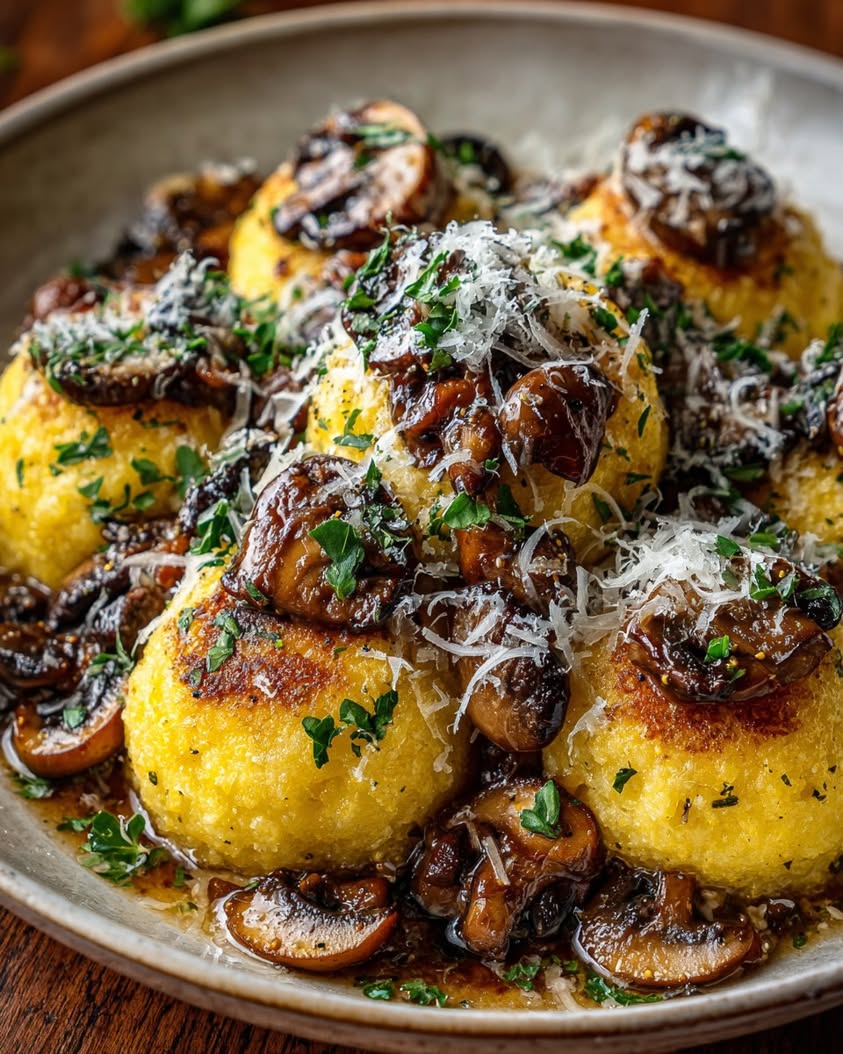
Crispy Polenta Rounds with Mushroom Ragù: An Elegant, Earthy Appetizer
Imagine a dish that perfectly marries creamy, golden polenta with a rich, savory mushroom ragù. This recipe for Crispy Polenta Rounds with Mushroom Ragù delivers exactly that. Moreover, it transforms humble ingredients into a stunning appetizer or light main course. The contrast between the crunchy exterior of the polenta and the tender, umami-packed mushrooms creates a truly memorable eating experience. Consequently, this dish feels both rustic and refined, making it ideal for a cozy dinner or a special gathering.
Creating these Crispy Polenta Rounds with Mushroom Ragù is a rewarding culinary project. The process involves two main components, each building layers of flavor. First, you prepare a creamy polenta, then chill and crisp it to perfection. Simultaneously, you slowly simmer a medley of mushrooms into a luxurious ragù. Finally, you assemble the dish with a generous shower of Parmesan cheese. The result is a symphony of textures and tastes that will impress any guest. Ultimately, this recipe proves that vegetarian cooking can be deeply satisfying and complex.
The beauty of this Crispy Polenta Rounds with Mushroom Ragù recipe lies in its versatility. For instance, you can use a variety of mushrooms based on season and availability. Additionally, you can prepare components ahead of time for easy assembly. This flexibility makes it a fantastic choice for entertaining. The aromatic scent of garlic, herbs, and mushrooms sautéing will fill your kitchen with an irresistible warmth. Therefore, this dish promises not just a delicious meal, but also the joyful process of creating it.
Quick Recipe Highlights
- Flavor Profile: These Crispy Polenta Rounds with Mushroom Ragù offer a deep umami base from the mushrooms, balanced by the sweet creaminess of corn polenta. Furthermore, garlic, thyme, and a touch of tomato paste add aromatic complexity. Finally, salty Parmesan cheese ties all the elements together perfectly.
- Texture: You get a fantastic textural play here. The polenta rounds boast a delightfully crispy, golden crust that gives way to a soft, creamy interior. Meanwhile, the mushroom ragù provides a tender, almost meaty bite. This combination creates a satisfying mouthfeel in every forkful.
- Aroma: As the mushrooms sauté, they release an earthy, woodsy scent. This aroma mingles beautifully with the fragrant garlic and fresh thyme. Subsequently, the nutty smell of browning polenta and melting Parmesan fills the air, signaling that your dish is ready to enjoy.
- Visual Appeal: The presentation is stunning. Golden-brown polenta rounds act as a sturdy base for the dark, glossy mushroom ragù. A final garnish of green parsley and white Parmesan cheese adds bright contrast. Consequently, this dish looks as impressive on the plate as it tastes.
- Skill Level Needed: This recipe is accessible to confident home cooks. It requires basic knife skills for chopping and the patience to simmer the ragù to develop flavor. Managing two components simultaneously is the main challenge, but careful timing leads to great results.
- Special Equipment: You will need a sturdy baking sheet for crisping the polenta and a large skillet for the ragù. A sharp chef’s knife makes prepping mushrooms easier. Additionally, a round cutter or glass helps form uniform polenta rounds for even cooking.
Recipe Overview
- Difficulty Level: We rate these Crispy Polenta Rounds with Mushroom Ragù as intermediate. The recipe involves multiple steps including making polenta, chilling it, and preparing a slow-simmered sauce. However, each step is straightforward with clear instructions. Managing the timing between the two components is the key skill to master for success.
- Category: This dish shines as an elegant appetizer or a hearty vegetarian main course. It also works beautifully as a side dish for a larger feast. The substantial nature of the polenta and ragù makes it filling enough for a centerpiece. Therefore, it fits multiple slots on your menu with ease.
- Cuisine: The recipe draws inspiration from Northern Italian cuisine, where polenta and mushroom ragù are classic staples. The technique of crisping cooked polenta is a traditional method for using leftovers. Meanwhile, the ragù reflects the Italian love for slow-cooked, wine-infused sauces. Ultimately, it’s a homage to rustic Italian cooking.
- Cost: This is a moderately priced dish. Polenta (cornmeal) is very affordable. Mushrooms can vary in cost; using a mix of cremini and a small amount of wild mushrooms keeps it budget-friendly. Parmesan cheese is the priciest ingredient, but a little adds immense flavor. Overall, it delivers restaurant-quality taste without the high cost.
- Season: Autumn is the perfect season for Crispy Polenta Rounds with Mushroom Ragù, as wild mushrooms are at their peak. However, it’s truly a year-round comfort food. In winter, it provides hearty warmth. During cooler spring evenings, it feels nourishing and satisfying. So, you can enjoy it whenever you crave earthy flavors.
- Occasion: This dish is perfect for a dinner party where you want to impress vegetarians and meat-eaters alike. It’s also ideal for a festive holiday appetizer or a romantic date night at home. Furthermore, it makes a special weekend family meal. Its elegant presentation suits any celebration.
Why You’ll Love This Recipe
First and foremost, the taste and texture combination is utterly irresistible. The Crispy Polenta Rounds with Mushroom Ragù deliver a powerful umami punch from the deeply savory mushrooms. Each bite starts with a satisfying crunch, then moves to creamy polenta, and finishes with the tender ragù. This layered experience keeps your palate engaged. Moreover, the flavors are complex yet harmonious, making the dish feel gourmet. You will love how each component complements the others so perfectly.
From a convenience standpoint, this recipe offers significant preparation benefits. Interestingly, you can make both the polenta and the ragù a day or two in advance. This make-ahead flexibility is a huge advantage for stress-free entertaining. When ready to serve, you simply crisp the polenta rounds and reheat the sauce. Consequently, you can spend time with your guests instead of being stuck in the kitchen. The final assembly is quick and easy, resulting in a seemingly elaborate dish with manageable effort.
Nutritionally, these Crispy Polenta Rounds with Mushroom Ragù pack a healthy punch. Polenta is a whole-grain food providing fiber and complex carbohydrates for sustained energy. Mushrooms are low in calories but rich in B vitamins, selenium, and antioxidants. Using olive oil adds heart-healthy monounsaturated fats. Therefore, this is a nourishing meal that satisfies without heaviness. It’s a fantastic way to incorporate more plant-based, whole-food ingredients into your diet in a delicious format.
The social and entertaining value of this dish is exceptionally high. It presents beautifully on a platter, making it a conversation starter. Because it’s vegetarian, it accommodates diverse dietary preferences at the table. Serving individual portions feels special and considered. Guests will appreciate the thoughtful preparation and robust flavors. Ultimately, this recipe helps you create a memorable dining experience that feels both rustic and refined, perfect for bringing people together over great food.
Finally, this recipe is cost-effective and accessible. Polenta is an inexpensive pantry staple. While specialty mushrooms can be pricey, the recipe works wonderfully with affordable cremini or button mushrooms. A small amount of Parmesan goes a long way in terms of flavor. You likely already have many of the other ingredients like garlic, herbs, and tomato paste on hand. So, you can create an impressive, restaurant-quality dish without a restaurant-quality budget, making it a practical choice for regular rotation.
Historical Background and Cultural Significance
Polenta’s origin story stretches back centuries before corn arrived in Europe. Initially, ancient Romans made a similar mush from spelt or other grains. After Columbus’s voyages, corn from the Americas transformed Italian cuisine, particularly in Northern regions like Lombardy and Veneto. Corn flour, or “polenta,” became a vital staple for peasants because it was cheap, filling, and easy to store. Consequently, this golden porridge sustained generations and became deeply woven into the cultural fabric of Northern Italy, often called “cucina povera” or poor kitchen cuisine.
The cultural importance of polenta cannot be overstated. For a long time, it was the primary carbohydrate source for rural families, served daily. It was traditionally cooked slowly in a copper pot called a “paiolo” over an open fire. Families would pour the cooked polenta onto a wooden board in the center of the table, topping it with whatever was available—often a simple ragù, cheese, or milk. This communal style of eating reinforced family bonds. Therefore, polenta represents more than food; it symbolizes heritage, resilience, and shared sustenance.
The evolution of the recipe from a simple porridge to Crispy Polenta Rounds with Mushroom Ragù reflects culinary innovation. Leftover cooked and cooled polenta solidifies, allowing it to be sliced and fried, grilled, or baked. This transformation gave birth to “polenta fritta” or “polenta concia.” Adding a rich mushroom ragù as a topping elevates it from peasant food to trattoria fare. Modern chefs have embraced this versatility, creating elegant appetizers and sides. Thus, the dish beautifully bridges historical tradition and contemporary dining.
Regional variations of polenta dishes are abundant across Italy. In Piedmont, it might be layered with a rich beef stew. In Tuscany, wild boar ragù is a classic pairing. The mushroom ragù in our Crispy Polenta Rounds recipe has strong ties to the forested regions of the north, where foraged fungi like porcini are prized. Some areas use white polenta made from buckwheat. The type of cheese grated on top also varies by locality. Exploring these variations offers a delicious glimpse into Italy’s diverse culinary landscape and regional identities.
Ingredient Deep Dive
Let’s start with polenta, which is simply coarsely ground yellow cornmeal. Historically, it sustained millions in Europe after corn’s introduction. Nutritionally, it’s a good source of complex carbs and fiber, especially if you use whole-grain cornmeal. For selection, look for packages labeled “polenta” or coarse-ground cornmeal; avoid instant or quick-cooking varieties for the best texture. Store it in an airtight container in a cool, dry place. If you need a substitution, grits are the closest alternative, though the flavor and texture will be slightly different.
Mushrooms are the star of the ragù, providing a deep, meaty umami flavor. Culturally, they have been foraged and revered across Europe for millennia. They are low in calories but rich in B vitamins, potassium, and antioxidants like selenium. For selection, choose mushrooms that are firm, dry, and without slimy spots. A mix of cremini (baby bellas) and a few dried porcini (rehydrated) creates excellent depth. Store fresh mushrooms in a paper bag in the refrigerator. For substitutions, consider using all cremini, or add shiitakes for a more intense flavor.
Parmesan cheese, or Parmigiano-Reggiano, is a hard, aged cheese from Italy with a protected designation of origin. Its history dates back nearly 1,000 years. It adds a salty, nutty, savory element that is irreplaceable. Nutritionally, it’s high in protein and calcium. When selecting, look for the words “Parmigiano-Reggiano” stamped on the rind for authenticity. Store it wrapped in parchment paper inside an airtight container in the fridge. For a dairy-free version, a sprinkle of nutritional yeast can mimic some of the umami, though the flavor profile will change significantly.
Fresh thyme is a classic herb in French and Italian cooking, known for its subtle, earthy flavor. It pairs perfectly with mushrooms. Historically, thyme has been used for both culinary and medicinal purposes for centuries. It contains antioxidants and has antimicrobial properties. Select bunches with vibrant green leaves and flexible stems. Store it loosely wrapped in a damp paper towel in the fridge. If substituting, dried thyme works but use one-third the amount, as it’s more potent. Rosemary can also work in a pinch, though it’s much stronger.
Common Mistakes to Avoid
- Using Instant Polenta: Instant polenta often results in a gummy, less flavorful texture. Always opt for traditional coarse-ground cornmeal for the best creamy yet firm result. The longer cooking time is essential for developing the polenta’s full flavor and proper consistency.
- Underseasoning the Polenta Water: Polenta needs to be seasoned from within. Salting the cooking water generously is crucial because the bland cornmeal absorbs that seasoning. If you only salt at the end, the flavor will be superficial and the rounds may taste flat.
- Not Letting the Polenta Set Fully: Rushing the chilling step is a common error. The polenta must be completely cold and firm to slice cleanly and hold its shape when crisping. Plan for at least 2 hours in the fridge, or better yet, make it a day ahead.
- Crowding the Pan When Searing: When browning the polenta rounds, give them space in the pan. Overcrowding creates steam, which prevents a crispy, golden crust from forming. Cook in batches if necessary to ensure each round gets proper contact with the hot surface.
- Skipping the Mushroom Browning Step: Do not simply simmer the mushrooms. You must sauté them first over high enough heat to drive off their moisture and achieve a deep, caramelized brown color. This “fond” on the pan is the foundation of the ragù’s rich flavor.
- Using Cheap, Pre-Grated Parmesan: Pre-grated cheese contains anti-caking agents that prevent it from melting smoothly. It also lacks the complex flavor of freshly grated Parmigiano-Reggiano. Always grate your cheese from a block just before using for the best taste and texture.
- Adding Garlic Too Early: Garlic burns easily and becomes bitter. Always add minced garlic to the pan after the mushrooms have browned and the heat has been reduced. This allows its flavor to infuse the oil without scorching, preserving its aromatic sweetness.
- Neglecting to Deglaze the Pan Properly: After browning the mushrooms, the flavorful browned bits stuck to the pan are liquid gold. Use the wine or broth to scrape them all up thoroughly. This process, called deglazing, incorporates those concentrated flavors directly into your sauce.
Essential Techniques
Slow-Simmering Polenta: The key to creamy, lump-free polenta is a slow, steady cook with frequent stirring. Pour the cornmeal into simmering water in a thin, steady stream while whisking constantly. This prevents clumps from forming. Then, reduce the heat to low and simmer gently, stirring often with a wooden spoon. The long cooking time allows the starch granules to fully swell and release, creating a smooth, creamy texture. A common pitfall is rushing this step or using heat that’s too high, which can cause the polenta to spit and scorch on the bottom. Success is a thick, porridge-like consistency that pulls away from the sides of the pot.
Searing for a Crispy Crust: Achieving a perfect golden crust on your polenta rounds requires proper searing technique. First, ensure the polenta is cold and firm. Pat the rounds dry with a paper towel to remove any surface moisture, which is the enemy of browning. Heat your oil in a skillet over medium-high heat until it shimmers. Then, add the rounds without crowding. Let them cook undisturbed for 3-4 minutes to develop a crust before peeking or moving. The visual cue for success is a deep golden-brown color and a crisp edge when you lift one with a spatula. This technique creates the essential textural contrast in the dish.
Building a Flavorful Ragù: A great ragù is built in layers. Start by sautéing onions until soft and translucent to create a sweet base. Then, add the mushrooms and cook over sufficiently high heat to evaporate their liquid and achieve browning—this is the Maillard reaction, which develops deep umami. Next, add aromatics like garlic and thyme, followed by tomato paste, which you “cook out” for a minute to sweeten it. Deglazing with wine adds acidity and complexity. Finally, simmering with broth allows all the flavors to meld. The pitfall is rushing the browning or simmering steps; patience here is non-negotiable for a rich, concentrated sauce.
Pro Tips for Perfect Crispy Polenta Rounds
First, for ultra-creamy polenta, consider using a combination of water and milk, or even a splash of cream at the end. This adds richness and helps achieve a luxurious texture that sets firmly but stays tender inside.
Second, when spreading the hot polenta into a pan to chill, smooth the top with a spatula dipped in water. This prevents sticking and gives you a perfectly even surface for cutting uniform rounds later.
Third, use a biscuit cutter or the rim of a sturdy glass to cut your polenta rounds. Dip the cutter in water between cuts to ensure clean edges and prevent the polenta from tearing or sticking.
Fourth, don’t discard the polenta scraps from cutting rounds! Pan-fry them alongside the rounds for a cook’s snack, or crumble them over a salad for added texture.
Fifth, if your mushroom ragù seems too thin after simmering, let it cook uncovered for a few extra minutes to reduce and thicken. Conversely, if it’s too thick, add a splash of broth or water to loosen it.
Sixth, for an extra flavor boost, add a teaspoon of soy sauce or a dash of Worcestershire sauce to the mushroom ragù. These ingredients enhance the umami depth without making the sauce taste Asian or overpowering the other flavors.
Seventh, let the seared polenta rounds drain on a wire rack instead of paper towels. This keeps the bottom crispy by allowing air to circulate, preventing steam from making it soggy.
Eighth, finish the dish with both grated Parmesan and a few shavings made with a vegetable peeler. The grated cheese melts into the ragù, while the shavings on top add visual appeal and a burst of flavor.
Variations and Adaptations
For regional variations, look to Italy itself. In Piedmont, you might top the rounds with a rich Brasato al Barolo sauce. A Tuscan version could feature a classic ragù di cinghiale (wild boar). For a Ligurian touch, incorporate pesto into the polenta or as a drizzle on top. These adaptations connect the dish directly to specific Italian locales and their iconic ingredients.
Seasonal adaptations are easy and rewarding. In spring, add fresh peas and asparagus tips to the ragù. Summer calls for lighter toppings like a fresh tomato and basil salad or a blob of herbed ricotta. Autumn is prime for wild mushrooms. In winter, incorporate hearty greens like kale or Swiss chard into the sauce for added nutrition and color.
Dietary modifications are straightforward. For a vegan Crispy Polenta Rounds with Mushroom Ragù, use plant-based butter or oil for the polenta, and substitute the Parmesan with nutritional yeast or a vegan hard cheese. Ensure your wine is vegan-friendly. For a gluten-free version, the recipe is naturally compliant—just confirm that your broth and any added sauces are certified gluten-free.
Flavor variations can take this dish around the world. Add smoked paprika and chorizo for a Spanish twist. Incorporate coconut milk, lemongrass, and ginger for an Asian-inspired version. For a French bistro feel, use a mix of wild mushrooms, finish the ragù with a touch of cream, and garnish with chopped tarragon instead of parsley.
Texture modifications can cater to different preferences. For a softer bite, skip the searing and simply warm the polenta rounds in the oven. For maximum crunch, coat the polenta rounds in a light dusting of semolina or fine breadcrumbs before pan-frying. You can also bake them at a high temperature with a brush of oil for a hands-off, less oily crisp.
Presentation alternatives offer creative freedom. Instead of rounds, slice the set polenta into squares or triangles. Serve the ragù in a bowl alongside a stack of polenta “fries.” For a family-style meal, spread the crispy polenta on a platter and spoon the ragù over the top, letting everyone serve themselves. Individual mini cocottes or cast-iron skillets also make for a charming presentation.
Serving and Presentation Guide
Plating techniques matter for visual impact. For individual servings, place two or three crispy polenta rounds slightly overlapping in the center of a warm plate. Spoon the hot mushroom ragù generously over the top, allowing some to spill onto the plate. This creates height and visual interest. Alternatively, for a rustic family-style presentation, arrange all the rounds on a large platter and mound the ragù in the center, letting guests assemble their own bites.
Garnishing is the final touch that elevates the dish. A sprinkle of freshly chopped flat-leaf parsley adds a necessary pop of green and freshness. Beyond parsley, consider microgreens, chive blossoms, or fried sage leaves. A final drizzle of high-quality extra virgin olive oil or a balsamic glaze around the plate adds shine and a touch of acidity. Always add the Parmesan garnish just before serving to prevent it from melting and disappearing.
Traditional accompaniments for polenta dishes are simple. A crisp, bitter green salad dressed with lemon vinaigrette balances the richness of the ragù. Sautéed bitter greens like rapini or escarole also pair beautifully. For a more substantial meal, consider grilled Italian sausages on the side. A crusty baguette is essential for sopping up any leftover sauce on the plate.
Modern serving suggestions might include a dollop of lemon-thyme ricotta on top of the ragù for added creaminess. You could also offer a small side of pickled vegetables, like onions or radishes, to cut through the richness. For a wine-pairing dinner, place a card listing the wine next to each setting to create a curated experience.
Temperature considerations are crucial. The polenta rounds should be served hot and crispy, straight from the pan. The mushroom ragù should be piping hot. Warm your serving plates beforehand to ensure the dish stays hot longer at the table. If preparing components in advance, have everything reheated and ready for quick assembly just before guests sit down.
Portion control tips depend on the course. As an appetizer, one or two rounds per person is sufficient. For a main course, plan for three to four rounds per serving. Remember, the dish is rich and filling. You can always supplement with a larger salad or side vegetables if you’re concerned about quantity. It’s better to have a little extra than to run out.
Wine and Beverage Pairing
Wine pairings for Crispy Polenta Rounds with Mushroom Ragù should complement the earthy, umami-rich flavors. A medium-bodied red wine with good acidity is ideal. Pinot Noir is a classic choice, as its red fruit notes and earthy undertones mirror the mushrooms beautifully. A Chianti Classico or other Sangiovese-based wine offers tart cherry flavors and herbal notes that cut through the richness. For white wine lovers, a full-bodied, oak-aged Chardonnay or a rich Viognier can stand up to the dish’s weight. The key is to avoid overly tannic wines, which can clash with the earthiness.
Non-alcoholic alternatives can be just as sophisticated. A rich, savory mushroom broth served in a small cup makes a wonderful pairing, doubling down on the umami theme. For something brighter, a sparkling lemonade or a ginger beer with a squeeze of lime cleanses the palate. Kombucha, especially a plain or ginger variety, offers acidity and effervescence that contrasts nicely with the creamy polenta. Iced herbal tea, like rosemary or thyme-infused tea, can also echo the herbal notes in the ragù.
Coffee and tea pairings work well if serving this dish for a brunch or lunch. A medium-roast coffee with low acidity won’t overpower the flavors. For tea, consider an earthy Pu-erh tea, which shares deep, fermented notes with the mushrooms, or a smoky Lapsang Souchong. These beverages provide a warm, comforting end to the meal that aligns with the dish’s rustic character.
Temperature considerations are simple: serve red wines slightly below room temperature (around 60-65°F) and white wines well-chilled. Non-alcoholic sparkling drinks should be ice-cold. Broths and teas should be served piping hot to provide a comforting contrast or complement to the warm dish.
Serving suggestions include offering a small pour of wine alongside the appetizer portion. For a main course, a full glass is appropriate. Place water glasses on the table as well to cleanse the palate between bites. If offering a non-alcoholic broth, serve it in a small espresso cup or demitasse for an elegant touch. Always allow guests to choose their preferred pairing to enhance their personal dining experience.
Storage and Shelf Life
Storage methods for leftovers are straightforward but important for maintaining quality. Store the crispy polenta rounds and mushroom ragù separately in airtight containers. The polenta will lose its crispness upon refrigeration, but it will still be tasty. The ragù stores and reheats very well. Never store them combined, as the sauce will make the polenta soggy.
Temperature requirements are standard refrigerator cold (below 40°F) for short-term storage. Both components will keep for up to 3-4 days. For longer storage, you can freeze the ragù and the uncooked, set polenta (before searing). Do not freeze seared polenta rounds, as the texture will become very poor upon thawing and reheating.
Container recommendations include shallow containers for the ragù to allow it to cool quickly and evenly. Glass containers are ideal as they don’t absorb odors and allow you to see the contents. For the polenta rounds, place them in a single layer separated by parchment paper in a container, or store them stacked if you don’t mind them sticking together slightly.
Signs of spoilage to watch for include an off or sour smell, visible mold (often fuzzy spots), or a slimy texture on the mushrooms or polenta. If the ragù develops bubbles or an alcoholic smell, it may be fermenting and should be discarded. Always reheat leftovers to a steaming hot internal temperature (165°F) to ensure food safety.
Reheating instructions are key to reviving the dish. Reheat the ragù in a saucepan over medium-low heat, stirring occasionally, adding a splash of broth or water if it’s too thick. To re-crisp the polenta rounds, place them on a baking sheet in a single layer and bake in a 400°F oven for 10-15 minutes, or pan-fry them again in a bit of oil. Avoid the microwave for the polenta, as it will make it rubbery.
Freezing guidelines: The mushroom ragù freezes excellently for up to 3 months. Cool it completely, then transfer to freezer-safe bags or containers, leaving some headspace for expansion. Thaw overnight in the refrigerator before reheating. You can also freeze the uncooked, set polenta slab, tightly wrapped in plastic wrap and foil, for up to 1 month. Thaw in the fridge before slicing and searing.
Make Ahead Strategies
A smart prep timeline can turn this into a weeknight-friendly meal. Day 1: Prepare the polenta, spread it into the pan, and chill overnight. Also, chop the onions and mushrooms, storing them separately in containers in the fridge. Day 2 (day of serving): In the afternoon or a few hours before dinner, cook the mushroom ragù and let it cool. 30 minutes before serving: Slice and sear the polenta rounds, reheat the ragù, and assemble. This breaks the work into manageable chunks.
Storage between steps is simple. The set polenta slab can be kept in its pan, tightly covered with plastic wrap, in the refrigerator for up to 3 days. Pre-chopped vegetables should be stored in sealed containers. The fully cooked and cooled ragù can be refrigerated for 3 days. Having everything prepped and ready makes final assembly a matter of minutes rather than an hour.
Quality impact assessment is positive for make-ahead. The mushroom ragù’s flavor often improves after a day in the fridge, as the ingredients have more time to meld. The polenta texture remains perfect for slicing and frying after chilling. The only element that must be done fresh is the searing of the polenta rounds to achieve that essential crispy texture. Therefore, making ahead enhances convenience without sacrificing quality.
Assembly tips for serving a crowd are easy. Keep the seared polenta rounds warm on a baking sheet in a 200°F oven. Have the ragù simmering on the stove. Set up a garnish station with grated Parmesan, chopped parsley, and a pepper mill. This allows you to plate dishes quickly and consistently, or even let guests build their own plates buffet-style for a more interactive meal.
Reheating guidelines for pre-made components are crucial. Always reheat the ragù gently on the stovetop; a microwave can make the mushrooms rubbery. For the polenta, never reheat sliced rounds in the microwave—they will steam and become soggy. The oven or stovetop searing method is the only way to restore or maintain crispness. Adding a fresh garnish after reheating brightens up the dish.
Fresh element additions are the secret to making a make-ahead dish taste freshly made. Always add a final sprinkle of freshly chopped herbs (parsley, chives) just before serving. Grate the Parmesan cheese at the last moment. A final drizzle of a flavorful finishing oil or a squeeze of lemon juice can also wake up all the pre-developed flavors and add a new layer of brightness.
Scaling Instructions
Halving the recipe is straightforward for a smaller household. Simply divide all ingredient quantities by two. Use a smaller pan (like a loaf pan) for setting the polenta. The cooking times for both the polenta and the ragù may be slightly shorter because there’s less volume, so keep a close eye. This is a perfect way to enjoy Crispy Polenta Rounds with Mushroom Ragù without having days of leftovers, though the leftovers are delicious.
Doubling or tripling the recipe for a party is very doable. For the polenta, you may need to cook it in two batches or use a very large pot, as stirring a huge volume can be difficult. For the ragù, use your largest Dutch oven or cook the mushrooms in batches to ensure proper browning; crowding the pan will steam them. Baking the polenta rounds in the oven on multiple sheet pans is more efficient than pan-frying in batches when scaling up.
Equipment adjustments are necessary when scaling. A large rimmed baking sheet will hold a double batch of polenta for setting. A 6-8 quart Dutch oven is essential for a large batch of ragù. If you’re baking the polenta rounds instead of pan-frying, you’ll need multiple oven racks and may need to rotate the pans for even browning. Ensure you have enough storage containers for any make-ahead components.
Timing modifications are minimal when scaling up. The polenta will take slightly longer to come to a simmer and thicken when making a larger batch. The ragù simmering time remains roughly the same, as surface area affects reduction more than volume. The main time increase comes from the hands-on work of slicing more polenta rounds and potentially cooking them in more batches. Plan accordingly and allow extra prep time.
Storage considerations change with scale. A large batch of ragù will take longer to cool to a safe refrigerator temperature. To speed cooling and prevent bacterial growth, divide the hot ragù into several shallow containers before refrigerating. For a large slab of polenta, you can cut it into sections that fit your containers. Clearly label everything with the date, as it’s easy to lose track with party-sized quantities.
Nutritional Deep Dive
A macro breakdown for a serving of Crispy Polenta Rounds with Mushroom Ragù shows a good balance. The polenta provides complex carbohydrates for energy, while the mushrooms and Parmesan contribute protein. The olive oil used for cooking adds healthy fats. This combination offers sustained energy release rather than a quick sugar spike. It’s a satisfying meal that can fit into various dietary patterns when portion size is considered.
The micronutrient analysis reveals hidden benefits. Mushrooms are an excellent source of B vitamins like riboflavin and niacin, which support energy metabolism. They also provide selenium, a powerful antioxidant. Polenta made from whole-grain cornmeal offers magnesium and some iron. Parmesan cheese is rich in calcium and phosphorus for bone health. The onions and garlic contribute antioxidants and compounds with anti-inflammatory properties.
Health benefits of this dish are numerous. The fiber from the polenta and mushrooms supports digestive health and promotes satiety. The monounsaturated fats from olive oil are heart-healthy. The antioxidants from the vegetables and mushrooms help combat oxidative stress. As a plant-forward meal, it aligns with dietary patterns associated with lower risks of chronic diseases. It’s a nourishing choice that feels indulgent.
Dietary considerations are mostly positive. The dish is naturally vegetarian and can be made gluten-free and vegan with simple swaps. It is not low-carb, as polenta is a grain-based food. Those on sodium-restricted diets should be mindful of the salt in the broth, cheese, and seasoning. For{“success”:true,”message”:”Recipe created successfully”,”post_id”:8988,”tasty_recipe_id”:8988,”shortcode”:” Print
Crispy Polenta Rounds with Mushroom Ragù & Parmesan
Description
A comforting Italian-inspired dish featuring golden, crispy polenta rounds topped with a rich, savory mushroom ragù and freshly grated Parmesan cheese.
Ingredients
For the Crust:
- 1 tube (18 oz) pre-cooked polenta, sliced into 1/2-inch rounds
- 2 tablespoons olive oil, divided
- 1 pound mixed mushrooms (such as cremini, shiitake, or oyster), sliced
- 1 small onion, finely chopped
- 2 cloves garlic, minced
- 1/2 cup dry white wine or vegetable broth
- 1 (14.5 oz) can crushed tomatoes
- 1 teaspoon dried thyme
- Salt and black pepper to taste
- 1/2 cup grated Parmesan cheese, plus extra for serving
- Fresh parsley, chopped (for garnish)
Instructions
1. Prepare the Crust:
- Preheat oven to 400°F (200°C). Arrange polenta rounds on a baking sheet, brush with 1 tablespoon olive oil, and bake for 20-25 minutes until golden and crispy, flipping halfway through.
- While polenta bakes, heat remaining 1 tablespoon olive oil in a large skillet over medium heat. Add onion and cook until softened, about 5 minutes. Add garlic and cook for 1 minute until fragrant.
- Add mushrooms to the skillet and cook until they release their liquid and brown, about 8-10 minutes. Pour in white wine or broth, scraping up any browned bits, and simmer until reduced by half.
- Stir in crushed tomatoes, thyme, salt, and pepper. Reduce heat to low and simmer for 15-20 minutes, stirring occasionally, until the ragù thickens. Stir in 1/2 cup Parmesan until melted.
- To serve, place crispy polenta rounds on plates, spoon mushroom ragù over the top, and garnish with extra Parmesan and fresh parsley.
Notes
You can customize the seasonings to taste.

I’m Billy, a classically trained culinary school graduate from The Culinary Institute of America with over 12 years in the restaurant industry and over 19 years of cooking experience.