
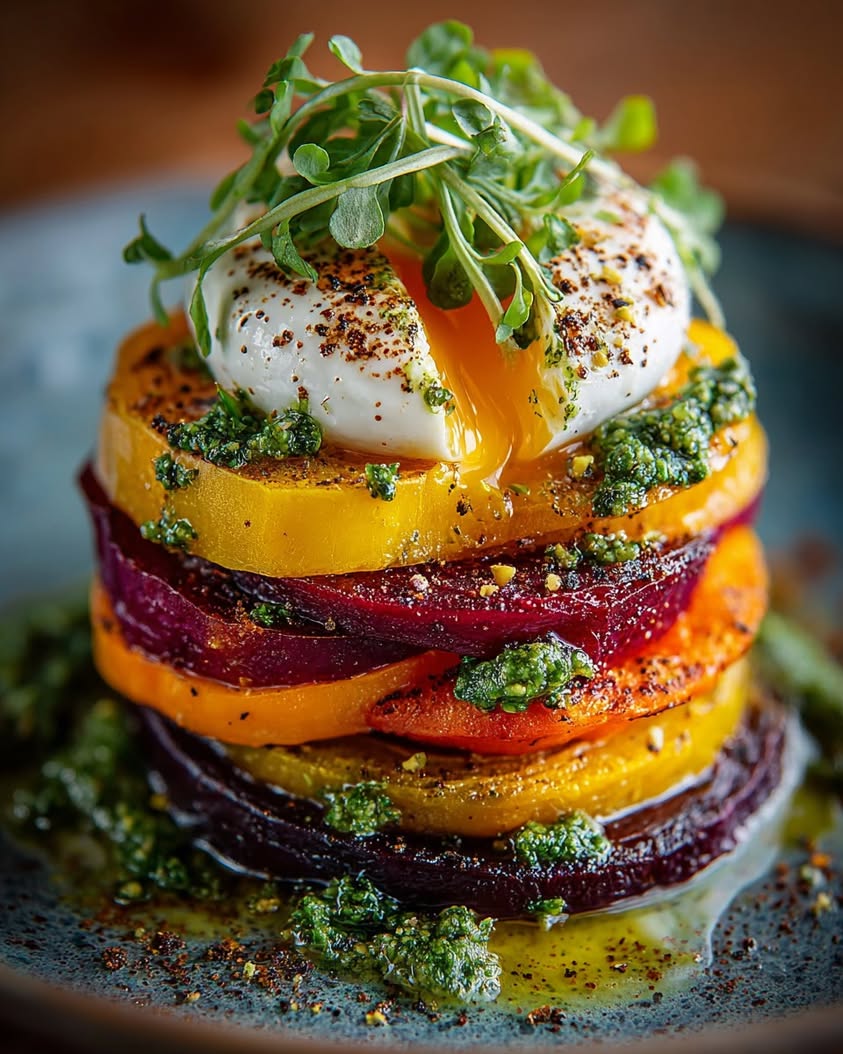
Golden Beet & Burrata Stack with Pistachio Pesto: A Showstopping Vegetarian Appetizer
Elevate your next gathering with this stunning Golden Beet & Burrata Stack with Pistachio Pesto. This recipe transforms simple, earthy ingredients into an elegant, restaurant-worthy dish that is surprisingly simple to assemble. Moreover, the combination of sweet roasted beets, creamy burrata, and vibrant green pesto creates a symphony of flavors and textures on the plate. Consequently, it is perfect for impressing guests or treating yourself to a special vegetarian meal.
The visual appeal of this golden beet burrata stack is undeniable. Golden beets offer a sunny, jewel-like hue that contrasts beautifully with the snowy white cheese and emerald green pesto. Each component brings its own unique character: the beets are tender and subtly sweet, the burrata is luxuriously rich and milky, and the pistachio pesto adds a nutty, herbaceous punch. Ultimately, this dish is a celebration of color, taste, and sophisticated simplicity.
Quick Recipe Highlights
- Flavor Profile: This dish masterfully balances earthy sweetness from the roasted golden beets with the decadent creaminess of fresh burrata. The pistachio pesto introduces a bright, nutty, and herbaceous layer that ties everything together without overpowering the delicate components.
- Texture: You will experience a wonderful contrast between the firm yet tender slices of beet, the luscious, oozing center of the burrata, and the coarse, crunchy texture of the pistachio pesto. Each bite offers a satisfying interplay of soft and crisp elements.
- Aroma: As you roast the beets, their natural sugars caramelize, filling your kitchen with a warm, earthy scent. Meanwhile, the pesto releases fresh aromas of basil and toasted nuts, creating an inviting and complex fragrance.
- Visual Appeal: The stacked presentation is dramatic and elegant. The golden yellow beets, white cheese, and green pesto create a stunning tri-color effect that looks beautiful on any table. It is a true feast for the eyes.
- Skill Level Needed: This is an accessible recipe for most home cooks. The primary skills required are simple roasting and using a food processor. Assembly is straightforward, making it a great choice for cooks of all levels looking to create an impressive dish.
- Special Equipment: You will need a baking sheet for roasting the beets and a food processor or blender to make the pistachio pesto. A sharp knife and a mandoline (for even beet slices) are helpful but not strictly necessary.
Recipe Overview
- Difficulty Level: We rate this golden beet burrata stack recipe as easy. Most of the hands-on time is passive, as the beets roast in the oven. The pesto comes together in minutes in a food processor. Finally, assembly is simply layering the components, requiring no advanced culinary techniques.
- Category: This dish fits perfectly into several categories: it is an outstanding vegetarian appetizer or starter. Additionally, it can serve as a light lunch or a elegant side dish alongside grilled proteins. It is versatile for many dining occasions.
- Cuisine: While not tied to one specific tradition, this recipe draws inspiration from modern Italian and Californian cuisine. It uses classic Italian ingredients like burrata and basil in a contemporary, visually-driven presentation popular in West Coast cooking.
- Cost: The cost is moderate, largely dependent on the price of fresh burrata and pistachios. Golden beets are typically comparable in price to red beets. Overall, you can create a luxurious-tasting dish for a fraction of the cost of ordering it in a restaurant.
- Season: This golden beet burrata stack shines in late summer and fall when beets are at their peak sweetness. However, because beets store well, you can enjoy this recipe year-round. It is particularly refreshing in warmer months as a cool, elegant starter.
- Occasion: It is ideal for dinner parties, holiday gatherings, romantic meals, or any time you want to serve something special. Its make-ahead potential also makes it excellent for entertaining, as you can prepare components ahead of time.
Why You’ll Love This Recipe
First and foremost, the taste experience of this golden beet burrata stack is unforgettable. The natural candy-like sweetness of the roasted beets pairs magically with the rich, buttery flavor of burrata. Furthermore, the homemade pistachio pesto cuts through the richness with its bright acidity and savory depth. Each forkful delivers a complex harmony that is both satisfying and sophisticated. It is a dish that will have everyone asking for the recipe.
From a practical standpoint, this recipe offers incredible convenience. You can roast the beets and make the pesto a full day in advance. Consequently, when you are ready to serve, assembly takes just minutes. This make-ahead flexibility is a game-changer for stress-free entertaining. You get all the credit for a stunning dish without the last-minute kitchen frenzy.
Nutritionally, this golden beet burrata stack is packed with benefits. Golden beets are an excellent source of fiber, folate, and immune-boosting vitamins. Pistachios provide healthy fats, protein, and antioxidants. Meanwhile, burrata offers a good dose of calcium and protein. Together, they create a dish that feels indulgent while still providing substantive nutritional value. It is a wholesome choice that does not sacrifice flavor.
For social gatherings, this dish is a true conversation starter. Its dramatic, vertical presentation immediately elevates the table setting. It shows thoughtfulness and care, making guests feel special. Because it is vegetarian and can be adapted for other dietary needs, it is an inclusive option that caters to diverse preferences. It is a reliable way to impress at potlucks, bridal showers, or festive dinners.
Finally, considering cost-effectiveness, this golden beet burrata stack delivers restaurant-quality elegance on a reasonable budget. While burrata and pistachios are premium ingredients, a little goes a long way in this recipe. Compared to dining out, you can create multiple impressive servings for the price of one restaurant appetizer. It is an accessible way to bring gourmet cooking into your home kitchen.
Historical Background and Cultural Significance
The story of this dish is a modern tale of culinary fusion. Individually, its components have deep roots. Beets have been cultivated since ancient times, prized by Romans and later across Europe for both their roots and greens. Burrata, however, is a relatively recent invention from the Puglia region of Italy in the early 20th century, created as a way to use up leftover mozzarella curds and cream. The concept of stacking food for presentation gained massive popularity in the late 20th and early 21st centuries with the rise of modern plating techniques in fine dining.
Culturally, this golden beet burrata stack represents a shift towards vegetable-centric, visually-driven eating. It reflects a contemporary food philosophy that celebrates seasonal produce as the star of the plate. The use of golden beets instead of traditional red ones speaks to a desire for novelty and aesthetic appeal. This dish is less about tradition and more about innovation, combining timeless flavors in a new, architecturally pleasing form.
The evolution of the recipe follows broader food trends. The pesto, traditionally made with pine nuts, sees a creative twist with pistachios, showcasing a willingness to experiment with nut varieties. The stack format itself is an evolution from simpler salads or caprese-style arrangements. Chefs began layering ingredients to create height and drama on the plate, a technique that home cooks have enthusiastically adopted for special occasions.
Regional variations of this concept abound. In different areas, you might find stacks using red beets, chioggia beets, or even roasted vegetables like zucchini and eggplant. The cheese could be substituted with fresh mozzarella, goat cheese, or a vegan alternative. The pesto might incorporate different herbs like mint or arugula, or nuts like walnuts or almonds. This adaptability is a key part of the dish’s appeal, allowing it to reflect local ingredients and personal taste.
Ingredient Deep Dive
Golden beets are the sunny foundation of this stack. Unlike their red cousins, golden beets have a milder, sweeter flavor and, crucially, they do not “bleed” their color. This makes them ideal for elegant plating. Nutritionally, they are rich in betalains, antioxidants with anti-inflammatory properties, and are a great source of fiber and potassium. When selecting beets, look for firm, smooth bulbs with vibrant greens attached if possible. Store them unwashed in the refrigerator for up to two weeks. For a substitution, you can use red beets, but be aware they will stain the other components.
Burrata is the luxurious heart of this dish. Meaning “buttered” in Italian, burrata is a fresh cheese consisting of a mozzarella pouch filled with soft stracciatella and cream. Its history is rooted in the resourcefulness of Italian cheesemakers in Puglia. It provides a rich source of calcium and protein. Always seek out the freshest burrata possible, ideally from a local cheese shop, and use it within a day or two of purchase. For a lighter option, fresh mozzarella (mozzarella di bufala is excellent) can be used, though you will lose the signature creamy center.
The pistachio pesto is the flavor-packed accent. Pistachios have been cultivated in the Middle East for millennia and add a distinct, slightly sweet nuttiness compared to traditional pine nuts. They are packed with healthy fats, protein, and vitamins like B6. For the best flavor, use raw, unsalted pistachios and toast them lightly yourself. Fresh, bright green basil is non-negotiable for a vibrant pesto. If you need a substitute for pistachios, pine nuts, walnuts, or even almonds will work, though the flavor profile will shift. A high-quality extra virgin olive oil will make a noticeable difference in the final result.
Common Mistakes to Avoid
- Underseasoning the Beets: Roasting beets without adequate seasoning is a common error. Be sure to toss the beet slices generously with olive oil, salt, and pepper before roasting. This step builds foundational flavor directly into the vegetable layers.
- Overprocessing the Pesto: Pulsing the pesto ingredients too long in the food processor can heat the basil and turn the pesto brown and bitter. Instead, use short pulses until the mixture is combined but still has some texture from the nuts.
- Using Warm Beets for Assembly: Assembling the stack with warm beets will cause the delicate burrata to melt and lose its shape. Always allow the roasted beet slices to cool completely to room temperature before you begin stacking.
- Skipping the Toasted Nuts: Adding raw pistachios to the pesto will result in a bland, flat flavor. Taking the extra five minutes to toast the nuts in a dry pan unlocks their essential oils and deep, rich taste, elevating the entire dish.
- Choosing Low-Quality Olive Oil: Since olive oil is a primary ingredient in the pesto, using a low-quality or old bottle will negatively impact the flavor. Invest in a good, fresh extra virgin olive oil for the best results.
- Not Draining the Burrata: Fresh burrata often sits in whey or water. Failing to drain it thoroughly before assembling will create a puddle of liquid on your plate, making the stack soggy and difficult to handle.
- Cutting Beets Unevenly: Slices that are too thick will be difficult to stack neatly, while slices that are too thin may tear. Aim for consistent 1/4-inch slices for the best structural integrity and eating experience.
- Forgetting to Taste as You Go: Always taste your pesto before assembling and adjust the seasoning with more salt, lemon juice, or cheese as needed. Pesto should be boldly flavored to stand up to the sweet beets and rich cheese.
Essential Techniques
Roasting Beets to Perfection is the first critical technique. Roasting, as opposed to boiling, concentrates the beets’ natural sugars and intensifies their flavor. To master it, toss uniformly sliced beets with oil and seasoning, then spread them in a single layer on a parchment-lined sheet. This ensures even cooking and caramelization. A common pitfall is overcrowding the pan, which steams the beets instead of roasting them. You will know they are done when the slices are tender enough to be pierced easily with a fork and the edges may just begin to crisp.
Creating a Vibrant Pistachio Pesto is the next key skill. The goal is to emulsify the oil with the other ingredients while preserving texture and bright color. Start by pulsing the nuts, garlic, and cheese until coarsely ground. Then, add the basil and pulse a few more times before streaming in the oil while the processor runs briefly. Over-processing is the main pitfall, as it generates heat and oxidizes the basil. Success is visible: the pesto should be a vibrant green with a coarse, spoonable consistency, not a smooth paste.
Stacking for Stability and Presentation is the final assembly technique. The goal is a tall, stable stack that looks elegant and is easy to eat. Start with your largest beet slice as a base. Add a small spoonful of pesto, then a slice of burrata, repeating the layers. The key is to use modest amounts of pesto and cheese between layers; too much will cause sliding. Finish with a final beet slice, a dollop of burrata, a drizzle of pesto, and a garnish. A successful stack stands proudly without leaning or oozing ingredients uncontrollably.
Pro Tips for Perfect Golden Beet & Burrata Stack
Use a mandoline slicer for perfectly uniform beet rounds. This ensures even roasting and creates stable, professional-looking layers for your stack. Additionally, it saves significant time and effort compared to hand-slicing.
Let the roasted beets cool completely on the baking sheet. This stops the cooking process and allows them to firm up slightly, making them much easier to handle during assembly without breaking.
Toast your pistachios in a dry skillet over medium heat. Watch them closely, shaking the pan frequently, until they are fragrant and just beginning to show a hint of color. This deepens their flavor immensely.
Reserve a few whole toasted pistachios and some small basil leaves for garnish. These final touches add visual texture and a burst of fresh flavor that elevates the finished presentation.
If your pesto is too thick, thin it with a teaspoon of warm water or more olive oil until it reaches a drizzling consistency. This makes it easier to plate artistically around the stack.
Bring the burrata to room temperature for about 15 minutes before assembling. Cold cheese straight from the fridge is too firm to slice neatly and lacks the luxurious, creamy mouthfeel.
Use a wide, flat spatula or a small plate to transfer the assembled stack to its serving dish. This helps keep the layers intact during the move from your work surface.
Variations and Adaptations
For regional variations, consider a Mediterranean twist by adding a layer of roasted red pepper or a sprinkle of za’atar. A French-inspired version could use a dollop of tapenade between layers. An Asian-fusion adaptation might incorporate a miso-sesame glaze on the beets and a wasabi-spiked cream.
Seasonal adaptations are simple and effective. In spring, use tender, roasted baby golden beets and incorporate fresh peas or mint into the pesto. For a winter version, add a layer of roasted squash or a sprinkle of pomegranate arils for a festive, colorful crunch.
Dietary modifications are straightforward. For a vegan golden beet stack, replace burrata with a vegan mozzarella or a thick cashew cream. Use nutritional yeast instead of Parmesan in the pesto. For a nut-free version, substitute toasted sunflower seeds or pepitas for the pistachios.
Flavor variations can personalize the dish. Add a teaspoon of orange zest to the beet roasting oil for a citrus note. Incorporate a handful of fresh mint or arugula into the pesto for a different herbal profile. A drizzle of aged balsamic glaze over the finished stack adds a sweet-tart complexity.
Texture modifications might include adding a crispy element. Consider a sprinkle of toasted breadcrumbs or crushed pistachios between layers for crunch. Alternatively, serve the stack on a base of peppery arugula or microgreens for a contrasting mouthfeel.
Presentation alternatives offer creative freedom. Instead of a stack, arrange the beet slices in a sunburst pattern on a platter, dot with burrata, and drizzle with pesto for a family-style serving. You can also deconstruct the elements into a composed salad for easier large-group entertaining.
Serving and Presentation Guide
Plating techniques start with choosing the right canvas. A plain white or dark-colored plate provides the best contrast for the vibrant ingredients. Use a small offset spatula to carefully place the assembled stack in the center of the plate. For a modern touch, use a ring mold to build a perfectly cylindrical stack directly on the plate, then gently lift the mold away.
Garnishing ideas should enhance, not overwhelm. A final drizzle of high-quality extra virgin olive oil around the base of the stack adds shine. Scatter the reserved crushed pistachios and tiny basil leaves over the top. A few grains of flaky sea salt, like Maldon, on the burrata crown provides a final flavor pop and textural sparkle.
Traditional accompaniments are light and complementary. A simple side of crusty, grilled bread is perfect for scooping up any extra pesto and cheese. A light, bitter green salad dressed with lemon vinaigrette balances the richness of the stack. For a heartier meal, add a portion of grilled fish or chicken.
Modern serving suggestions might include presenting individual stacks on small appetizer plates as a starter course. Alternatively, create one large, shareable stack on a wooden board or slate platter for a communal dining experience. Serve with a selection of artisan crackers and olives.
Temperature considerations are crucial. The beets and pesto should be at cool room temperature. The burrata should be slightly cool but not ice-cold. This balance ensures the cheese is creamy and the flavors are at their most expressive. Avoid serving any component straight from the refrigerator.
Portion control is built into the recipe. One stack, as described, makes a perfect appetizer portion for one person. For a light lunch, consider serving two stacks per person or adding a substantial side salad. The richness of the burrata is satisfying, so a little goes a long way.
Wine and Beverage Pairing
Wine pairings should complement the dish’s earthy sweetness and creamy richness. A crisp, high-acid white wine like Sauvignon Blanc or Pinot Grigio cuts through the fat of the cheese beautifully. For a more complex pairing, try a dry Rosé with strawberry notes or a light-bodied, low-tannin red like Pinot Noir, which won’t overpower the beets. The key is to choose wines with good acidity to balance the dish.
Non-alcoholic alternatives can be just as sophisticated. A sparkling water with a twist of lemon or lime cleanses the palate between bites. For a more crafted option, a basil-infused lemonade or a cucumber-mint spritzer echoes the herbal notes in the pesto. Iced green tea also pairs wonderfully, offering a clean, slightly bitter counterpoint.
Coffee and tea pairings are less traditional but can work. If serving this stack for a brunch occasion, a light roast coffee with bright acidity would be complementary. A cup of delicate white tea or a floral herbal tea like chamomile would not compete with the dish’s subtle flavors and could make for a lovely light lunch pairing.
Temperature considerations for beverages are standard: white wines and rosés should be chilled, light reds slightly cool. Non-alcoholic sparkling drinks should be served cold. The goal is to have the beverage refresh the palate, so a cool temperature is generally most effective against the rich, room-temperature stack.
Serving suggestions include pouring wines by the glass for individual servings or offering a carafe of a non-alcoholic spritzer for the table. Always provide water to accompany any pairing. For a formal dinner, you might pair this appetizer with one wine and transition to another for the main course.
Storage and Shelf Life
Storage methods for components are separate. Store cooled, roasted beet slices in an airtight container in the refrigerator for up to 4 days. Place the pistachio pesto in a jar, press a piece of plastic wrap directly onto its surface to limit oxidation, seal, and refrigerate for up to 5 days. Keep burrata in its original liquid in the refrigerator and use by the date on the package.
Temperature requirements are strictly refrigerated for all components except during assembly and serving. Never leave the assembled stack at room temperature for more than one hour. The dairy in the burrata and pesto is perishable and must be kept cold for safety.
Container recommendations include glass containers for the beets and pesto, as they do not retain odors. For the pesto, a small jar with a tight-fitting lid is ideal. Always drain the burrata and place it in a fresh container if the original packaging is damaged or leaky.
Signs of spoilage are important to recognize. For beets, look for excessive softening or a sour smell. Pesto will darken naturally, but if it develops an off odor or visible mold, discard it. Burrata is spoiled if it smells strongly sour or ammonia-like, or if the texture becomes unpleasantly slimy.
Reheating instructions apply only to the beets if you wish to serve them warm in a different dish. Gently warm them in a skillet with a touch of oil or in a 300°F oven for a few minutes. Do not reheat the assembled stack, as it will ruin the burrata.
Freezing guidelines are limited. You can freeze the pesto (without the cheese) for up to 3 months; add the Parmesan after thawing. Do not freeze roasted beets, as they become mushy. Never freeze burrata, as the texture will be completely destroyed upon thawing.
Make Ahead Strategies
Prep timeline can span two days. Day 1: Roast the beets and let them cool, then store them. Make the pesto and store it. Day 2 (or day of serving): Remove beets and pesto from the fridge about 30 minutes before assembling to take the chill off. Drain the burrata. Then, assemble the stacks just before serving for the best texture and presentation.
Storage between steps is simple. Keep the beets and pesto in separate, sealed containers in the refrigerator. The pesto may darken slightly on top; simply stir it before using. This separation prevents the beets from becoming soggy and allows each component to retain its distinct character.
Quality impact assessment is positive. Beets actually benefit from resting, as their flavors meld and sweeten. The pesto’s flavors also marry and deepen overnight. The only element that must be absolutely fresh is the burrata, which should be purchased as close to serving day as possible.
Assembly tips for make-ahead include having all your components ready and laid out. Use a paper towel to pat the beet slices dry if any condensation has formed in the fridge. Have your garnishes prepped and plates ready to streamline the final process.
Reheating guidelines are not applicable for the final dish. The beauty of this make-ahead plan is that no reheating is needed. The components come together at cool room temperature, which is the ideal serving state for this particular recipe.
Fresh element additions are key. Even if you prepped everything else, always add the final garnishes—the extra pistachios, basil leaves, and flaky salt—right before serving. This ensures maximum visual appeal and a burst of fresh flavor and texture.
Scaling Instructions
Halving the recipe is straightforward for a romantic dinner for two. Use one medium golden beet, one ball of burrata, and simply prepare a half-batch of pesto. All cooking times remain the same. You may need to use a smaller baking sheet for the beets. The assembly process is identical, just yielding fewer stacks.
Doubling or tripling for a party requires a bit more planning. You will need multiple baking sheets to roast the beets in single layers—rotate the sheets halfway through cooking for evenness. Make the pesto in batches to avoid overfilling your food processor. For assembly, set up a station with all components and build stacks in an assembly-line fashion. Consider assigning one person to assembly for efficiency.
Equipment adjustments may be necessary when scaling up. Ensure you have enough sheet pans and that your food processor is large enough for bigger pesto batches (or plan to make multiple batches). Have plenty of clean plates or a large platter ready for the finished stacks.
Timing modifications are minimal when scaling. The beet roasting time may increase slightly if the pans are very crowded, so check for tenderness. Pesto preparation time increases linearly with batch size. The assembly time will be the most variable factor; building 12 stacks takes significantly longer than building 4.
Storage considerations become more important for larger batches. You will need more refrigerator space for the components. It is best to store the roasted beets in a single layer between sheets of parchment in a large container to prevent sticking. Have multiple small containers ready for any leftover pesto.
Nutritional Deep Dive
Macro breakdown for one serving is favorable. The dish provides a balance of complex carbohydrates from the beets, healthy fats from the pistachios, olive oil, and burrata, and a moderate amount of protein from the cheese and nuts. It is not a low-calorie appetizer due to the rich cheese and nuts, but these are nutrient-dense sources of energy.
Micronutrient analysis reveals a wealth of vitamins and minerals. Golden beets contribute folate, potassium, and vitamin C. Pistachios are a source of B vitamins, copper, and manganese. Burrata provides calcium and phosphorus. The basil in the pesto adds vitamin K and additional antioxidants.
Health benefits are linked to the anti-inflammatory compounds in beets (betalains) and the heart-healthy monounsaturated fats in pistachios and olive oil. The fiber from the beets aids digestion. Together, these components support cardiovascular health, reduce inflammation, and provide sustained energy.
Dietary considerations include being vegetarian and gluten-free as written. It contains dairy (burrata, Parmesan) and tree nuts (pistachios). For those monitoring sodium, you can control the amount of added salt in the pesto and on the beets. The dish is naturally grain-free.
Portion analysis shows that one stack is a satisfying appetizer that won’t ruin an appetite for a main course. It provides substantial flavor and richness in a controlled size. The visual height of the stack also contributes to a feeling of abundance, supporting mindful portion satisfaction.
Weight management tips include being mindful of the pesto and oil used. You can lightly brush the beets with oil instead of tossing to reduce fat content slightly. Remember, the fats present are primarily the healthy unsaturated kind, which are satiating and important for nutrient absorption.
Dietary Adaptations
For a gluten-free diet, this golden beet burrata stack is naturally compliant as written. Just ensure that any served accompaniments, like bread or crackers, are certified gluten-free. Always check the label on pre-grated Parmesan cheese, as some brands use anti-caking agents containing wheat.
For a dairy-free or vegan adaptation, replace burrata with a high-quality vegan mozzarella alternative or a thick, seasoned cashew cheese. In the pesto, substitute nutritional yeast or a vegan Parmesan alternative for the dairy-based Parmesan. The result will be different but still delicious and visually similar.
For a low-carb or keto diet, this recipe can be modified. The primary carbs come from the beets. You can reduce the portion size of the beet layers or substitute them with thick slices of roasted zucchini or eggplant. Ensure the pesto is made without added sweeteners.
For a Paleo adaptation, omit the dairy-based cheese. Replace burrata with slices of avocado or a dollop of homemade paleo “cheese” made from nuts. Omit the Parmesan from the pesto or use a sprinkle of nutritional yeast if allowed in your paleo guidelines.
For a Low-FODMAP diet, this requires careful modification. Golden beets are only low-FODMAP in servings of 20 grams (about two thin slices), so you would make a much smaller stack. Use only the green tops of basil (avoid garlic), and replace pistachios with a low-FODMAP nut like macadamias. Omit the garlic entirely.
Troubleshooting Guide
If your stack is sliding or unstable, the issue is likely too much pesto or burrata between the beet layers. The fix is to use these components as a glue, not a filling. Use just a teaspoon of pesto spread thinly, and pat the burrata slice dry before placing it. Chill the assembled stack for 10 minutes to help it set before serving.
If the pesto turns brown or tastes bitter, it was likely over-processed, which oxidizes the basil. Unfortunately, you cannot reverse this. For next time, use the pulse function and stop as soon as it’s combined. To salvage a bitter batch, try adding a touch more lemon juice or a sweet component like a roasted red pepper to balance it.
If the beets are too hard or undercooked, you can return them to the oven for another 5-10 minutes. If they are already cool, you can microwave them briefly in a covered dish with a splash of water to steam them to tenderness. Prevent this by testing with a fork before removing them from the oven initially.
If the burrata is too watery and makes the stack soggy, you did not drain it thoroughly enough. Drain the burrata on paper towels for 10-15 minutes before slicing. For an already-assembled soggy stack, you can carefully lift it with a spatula, replace the bottom beet slice with a fresh, dry one, and reassemble.
If you lack a food processor for the pesto, you can use a mortar and pestle for an authentic, textured result. Alternatively, very finely chop the nuts, garlic, and basil by hand, then mix in the cheese and olive oil. The texture will be coarser, but the flavor will still be excellent.
If timing is off and components are at different temperatures, prioritize the cheese. The beets and pesto can be slightly cool, but the burrata should not be ice-cold. If the burrata is too cold, let it sit out briefly. If the beets are warm, you must wait for them to cool to avoid melting the cheese.
Recipe Success Stories
Community feedback on this golden beet burrata stack recipe has been overwhelmingly positive. Many home cooks report that it has become their go-to “impress the guests” appetizer. They love how the stunning presentation belies the simple preparation. Several have mentioned successfully making it for holiday dinners, where its vibrant colors fit the festive table perfectly.
Variation successes are frequently shared. One reader created a beautiful version using chioggia (candy stripe) beets for an even more dramatic visual. Another added a thin layer of smoked salmon between the beet and cheese for a pescatarian twist, reporting rave reviews. A third used a combination of golden and red beets for a striking ombre effect in their stacks.
Adaptation stories for dietary needs are common and inspiring. A vegan follower made the stack using a cashew-based burrata and nutritional yeast in the pesto, saying it was a hit at their mixed-diet Thanksgiving. Another cook with a nut allergy used toasted sunflower seeds in the pesto and said the flavor was still fantastic, proving the recipe’s versatility.
Reader suggestions have included brilliant tips like adding a microplane of lemon zest over the finished stack for brightness, or serving it with a side of honey for drizzling. One creative cook suggested using cookie cutters to cut the beet slices into fun shapes for a children’s party (using milder cheese), which was a clever way to get kids to eat vegetables.
Photography tips from the community emphasize natural light. The best photos are taken in indirect sunlight, which makes the golden beets glow and the pesto look vibrantly green. Overhead shots showcasing the stack’s height and side shots highlighting the oozing burrata center are both highly recommended angles for capturing this dish’s beauty.
Frequently Asked Questions
Can I use red beets instead of golden beets? Yes, you can absolutely use red beets. The flavor is very similar, though some find golden beets slightly milder. The main difference is visual: red beets will stain the burrata and pesto pink. For a dramatic look, you can embrace this, but if you want clean color separation, golden beets are best.
Can I make this recipe ahead of time? Yes, this is an excellent make-ahead dish. Roast the beets and prepare the pesto up to two days in advance. Store them separately in the refrigerator. Assemble the stacks just before serving to maintain the best texture and presentation.
What can I substitute for burrata? Fresh mozzarella (especially mozzarella di bufala) is the closest substitute in flavor and texture, though you’ll miss the creamy center. For a vegan version, try a high-quality vegan mozzarella or a thick cashew cheese. Goat cheese would also work but will impart a tangier flavor.
My pesto turned out too thick. How can I fix it? A thick pesto is easily fixed. Simply stir in a teaspoon of warm water at a time until it reaches your desired drizzling consistency. You can also use more extra virgin olive oil, but water works well without making the pesto overly oily.
How do I store leftovers? It’s best to store the components separately. Dismantle any uneaten stacks. Store beet{“success”:true,”message”:”Recipe created successfully”,”post_id”:8994,”tasty_recipe_id”:8994,”shortcode”:” Print
Golden Beet & Burrata Stack with Pistachio Pesto
Description
A vibrant and elegant vegetarian dish featuring roasted golden beets, creamy burrata cheese, and a nutty pistachio pesto, layered into a stunning stack.
Ingredients
For the Crust:
- 4 medium golden beets, trimmed and scrubbed
- 1 tablespoon olive oil
- Salt and black pepper to taste
- 8 ounces burrata cheese
- 1 cup fresh basil leaves
- 1/2 cup shelled pistachios, toasted
- 1/4 cup grated Parmesan cheese
- 1 garlic clove
- 1/4 cup extra-virgin olive oil
- 1 tablespoon lemon juice
- Microgreens or arugula for garnish
Instructions
1. Prepare the Crust:
- Preheat oven to 400°F (200°C). Toss beets with olive oil, salt, and pepper. Wrap each beet in foil and roast for 45-60 minutes until tender. Let cool, then peel and slice into 1/2-inch rounds.
- For the pesto: In a food processor, combine basil, pistachios, Parmesan, garlic, lemon juice, salt, and pepper. Pulse until coarse. With motor running, slowly add extra-virgin olive oil until smooth.
- To assemble: On a plate, layer beet slices, alternating with dollops of burrata and drizzles of pesto to form a stack. Top with extra burrata, a final pesto drizzle, and garnish with microgreens or arugula.
Notes
You can customize the seasonings to taste.

I’m Billy, a classically trained culinary school graduate from The Culinary Institute of America with over 12 years in the restaurant industry and over 19 years of cooking experience.