
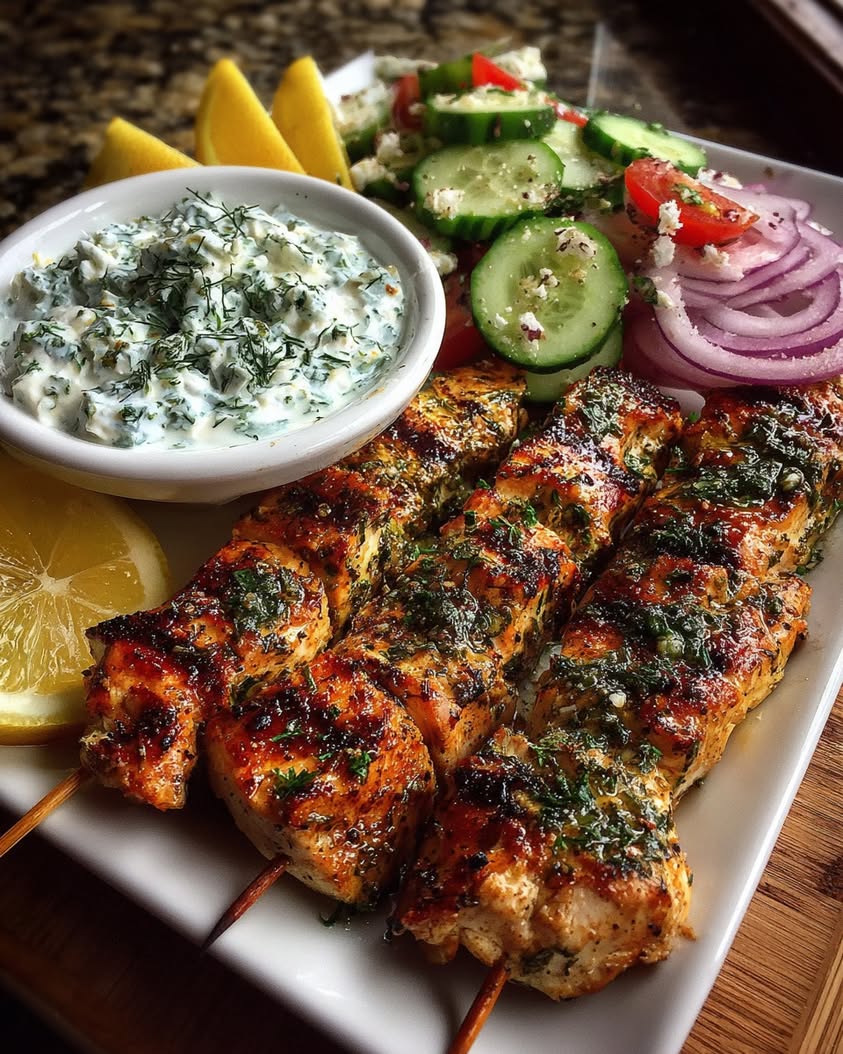
Lemon Herb Chicken Skewers Recipe: A Flavorful Mediterranean Feast
Imagine the sizzle of juicy chicken hitting a hot grill, the vibrant aroma of fresh lemon and herbs filling the air, and the promise of a light, refreshing meal that feels like a vacation on a plate. This Lemon Herb Chicken Skewers recipe delivers exactly that experience. It transforms simple ingredients into a stunning Mediterranean-inspired dinner that is perfect for busy weeknights and impressive enough for weekend entertaining. Moreover, the combination of tender, marinated chicken with cool, creamy tzatziki and a crisp cucumber salad creates a symphony of textures and flavors.
This dish is a celebration of fresh, wholesome ingredients. Each component, from the zesty marinade to the cooling salad, works in harmony. Consequently, you get a meal that is both satisfying and light. The beauty of this Lemon Herb Chicken Skewers recipe lies in its simplicity and versatility. You can cook the skewers on an outdoor grill, a grill pan, or even under the broiler. Therefore, you can enjoy this taste of the Mediterranean any time of year, regardless of the weather.
Ultimately, this recipe is about more than just food; it is about creating a moment. It encourages you to gather around the table, share stories, and savor each bite. The bright, herbaceous flavors are instantly uplifting. Furthermore, the visual appeal of the golden-brown skewers alongside the white tzatziki and green salad makes for a beautiful presentation. This Lemon Herb Chicken Skewers recipe is your ticket to a delicious, healthy, and utterly enjoyable dining experience.
Quick Recipe Highlights
- Flavor Profile: This Lemon Herb Chicken Skewers recipe bursts with bright, tangy lemon, aromatic fresh herbs like oregano and dill, and savory garlic. The flavors are fresh and Mediterranean-inspired, perfectly balanced by the cool, garlicky tzatziki sauce.
- Texture: You will enjoy a fantastic contrast of textures. The chicken skewers offer a slightly charred, caramelized exterior with a tender and juicy interior. Meanwhile, the cucumber salad provides a refreshing crunch, and the tzatziki adds a smooth, creamy element.
- Aroma: As the skewers cook, the air fills with the irresistible scent of grilling meat, zesty lemon, and earthy herbs. The fresh dill in the tzatziki and salad adds a final, fragrant note that is incredibly inviting.
- Visual Appeal: The presentation is vibrant and colorful. Golden-brown chicken skewers are served alongside a bright white tzatziki sauce and a salad of crisp green cucumbers and red onion. It is a feast for the eyes that promises a delicious meal.
- Skill Level Needed: This is a beginner-friendly recipe. The techniques involve simple chopping, mixing, and grilling. No advanced culinary skills are required, making it an excellent choice for novice cooks looking to impress.
- Special Equipment: You will need wooden or metal skewers. If using wooden skewers, remember to soak them in water for at least 30 minutes to prevent burning. A grill, grill pan, or broiler is also necessary for cooking the skewers.
Recipe Overview
- Difficulty Level: We rate this Lemon Herb Chicken Skewers recipe as easy. The steps are straightforward: marinate, skewer, and grill. There is no complex knife work or tricky cooking methods. Even the accompanying sauces and salads require simple mixing. Consequently, cooks of all levels can achieve fantastic results with minimal stress.
- Category: This dish falls perfectly into the categories of main course, healthy dinner, and grilling recipe. It is a protein-focused meal that is light yet satisfying. Additionally, it works wonderfully for meal prep, as the components hold up well in the refrigerator for a few days.
- Cuisine: The recipe draws direct inspiration from Greek and broader Mediterranean cuisine. The use of lemon, oregano, garlic, olive oil, and yogurt-based tzatziki are hallmarks of this region’s cooking. It celebrates the fresh, vibrant, and health-conscious flavors that Mediterranean food is famous for worldwide.
- Cost: This is a very cost-effective meal to prepare. Chicken breast is an affordable protein, and the herbs, lemon, and vegetables are inexpensive, especially when in season. Greek yogurt, a staple for tzatziki, is also budget-friendly. You can create an impressive feast for four without straining your grocery budget.
- Season: While this Lemon Herb Chicken Skewers recipe shines in the spring and summer when fresh herbs are abundant and grilling is ideal, it is truly a year-round dish. You can easily prepare it indoors with a grill pan or broiler during colder months, bringing a taste of sunshine to your winter table.
- Occasion: It is incredibly versatile for different occasions. Serve it as a simple family weeknight dinner, a healthy lunch option, or the star of a summer barbecue or dinner party. The skewers are fun to eat and easy to serve, making them a hit at casual gatherings.
Why You’ll Love This Recipe
First and foremost, the taste and texture combination is absolutely unbeatable. Each bite of the Lemon Herb Chicken Skewers recipe offers a burst of juicy, flavorful chicken with a hint of smoky char. The marinade penetrates the meat deeply, ensuring every piece is packed with the zesty lemon and herb flavor. Then, the cool, creamy tzatziki cuts through the richness, while the cucumber salad adds a necessary crisp and acidic bite. This balance makes the dish feel light and refreshing, not heavy or greasy. You will find yourself reaching for more, not because you are overly full, but because each flavor component makes you want another taste.
Next, consider the sheer convenience and preparation benefits. This recipe is a weeknight hero. The active hands-on time is minimal, and much of the work is passive marinating time. You can prepare the marinade and tzatziki in advance, making assembly a breeze. Furthermore, cooking on skewers is not just for presentation; it ensures quick, even cooking. The chicken pieces are uniform and cook in just minutes. This means you can have a restaurant-quality meal on the table in well under an hour, with most of that time being hands-off. It is the perfect solution for when you want something delicious but do not want to spend all evening in the kitchen.
From a nutritional standpoint, this meal is a powerhouse. Lean chicken breast provides high-quality protein to keep you full and support muscle health. The olive oil in the marinade offers heart-healthy monounsaturated fats. Additionally, the fresh herbs, lemon, garlic, cucumbers, and yogurt are loaded with vitamins, antioxidants, and probiotics. This Lemon Herb Chicken Skewers recipe is naturally gluten-free and can be adapted to be low-carb or dairy-free with simple swaps. It is a meal that nourishes your body without sacrificing an ounce of flavor, aligning perfectly with a balanced, wholesome eating style.
The social and entertaining value of this dish is exceptionally high. Food on sticks is inherently fun and communal. Serving these skewers at a barbecue or dinner party encourages interaction and a relaxed dining atmosphere. They are easy to eat, easy to serve, and always impress guests. You can even set up a “skewer bar” with different sauces and sides, allowing people to customize their plates. This interactive element turns a simple meal into a memorable event. Consequently, this recipe becomes a go-to for hosting, ensuring you can enjoy your own party instead of being stuck in the kitchen.
Finally, the cost-effectiveness and accessibility of the ingredients make this a repeat-worthy recipe. You do not need any rare or expensive components. Chicken breast, lemon, garlic, common herbs, yogurt, and cucumber are staples found in any supermarket. The recipe is forgiving, allowing for substitutions based on what you have on hand. For instance, you can use dried oregano if fresh is unavailable, or swap Greek yogurt for a dairy-free alternative. This accessibility means you can enjoy the vibrant flavors of this Lemon Herb Chicken Skewers recipe anytime, making it a reliable favorite in your culinary rotation.
Historical Background and Cultural Significance
The concept of cooking meat on skewers over an open flame is ancient and spans countless cultures, from Asian satay to Middle Eastern kebabs. Specifically, the Greek version, known as souvlaki, is a cornerstone of Greek street food and taverna culture. While our Lemon Herb Chicken Skewers recipe is a modern, simplified take, its roots are deeply embedded in this tradition. Historically, souvlaki was a practical way to cook small pieces of meat quickly, often using less tender cuts that benefited from marinating. Soldiers were said to have cooked meat on their swords over fires, a practice that evolved into the skewers we use today.
Culturally, skewered meats hold significant importance in Mediterranean social life. They are synonymous with celebration, community, and shared meals. In Greece, souvlaki is not just fast food; it is a social experience often enjoyed with friends and family late into the evening. The accompanying tzatziki sauce has its own rich history, with variations found across the Eastern Mediterranean. Its base of yogurt, cucumber, and garlic speaks to the region’s culinary staples, offering a cooling contrast to spiced or grilled meats. Together, they represent a culinary philosophy centered on fresh ingredients, bold flavors, and communal dining.
The evolution of this recipe in Western kitchens is fascinating. As global travel increased, so did the appreciation for Mediterranean diets, celebrated for their health benefits and vibrant flavors. The classic souvlaki was adapted to suit local tastes and ingredient availability. Chicken became a popular, leaner alternative to traditional pork or lamb. The marinades were simplified, often highlighting lemon and oregano as the dominant flavors. This evolution gave rise to the accessible, health-conscious Lemon Herb Chicken Skewers recipe we know today—a dish that captures the spirit of its origins while fitting seamlessly into modern cooking routines.
Regional variations of skewered meats are endless, which highlights the adaptability of the concept. In Turkey, you might find shish kebabs with more robust spices like paprika and sumac. In the Middle East, kofta kebabs incorporate ground meat and aromatic herbs. Our recipe leans into the Greek profile with lemon, oregano, and dill. However, the basic formula—marinated protein, skewered and grilled—is a global canvas. Understanding this history enriches the cooking experience. When you make these skewers, you are participating in a cooking tradition that is thousands of years old, connecting your kitchen to a vast and delicious culinary heritage.
Ingredient Deep Dive
Starting with the chicken, boneless, skinless chicken breasts are the star. Chicken breast is a fantastic lean protein, low in fat and high in essential nutrients like niacin and selenium. For the best results in your Lemon Herb Chicken Skewers recipe, look for plump, evenly sized breasts. To ensure tenderness, do not skip the marinating step, as the acid in the lemon juice helps break down fibers. You can also substitute chicken thighs for a juicier, more flavorful result. Always pat the chicken dry before cubing it for more effective browning on the grill.
Fresh lemon juice and zest are non-negotiable for the signature bright flavor. The juice provides acidity that tenderizes the chicken and balances the dish’s richness. Meanwhile, the zest contains potent aromatic oils that pack a concentrated citrus punch. Always use fresh lemons; bottled juice lacks vibrancy. Roll your lemons on the counter before juicing to get more yield. Nutritionally, lemons are rich in vitamin C and antioxidants. They are a key component that makes this recipe taste fresh and lively.
Fresh herbs like oregano and dill define the Mediterranean character. Oregano offers a robust, earthy flavor, while dill contributes a light, grassy note. Dried oregano can work in a pinch, but use half the amount, as it is more concentrated. Fresh dill, however, is irreplaceable in the tzatziki and salad. Herbs are not just flavor agents; they are packed with phytonutrients and antioxidants. Store fresh herbs stem-down in a glass of water in the fridge, covered with a plastic bag, to extend their life.
Greek yogurt is the foundation of authentic tzatziki. Its thick, strained consistency is crucial for a creamy sauce that will not water out. Greek yogurt is also a nutritional powerhouse, high in protein and probiotics for gut health. For a dairy-free version, use a thick, plain coconut or almond milk yogurt. When making the tzatziki for your Lemon Herb Chicken Skewers recipe, always squeeze the grated cucumber thoroughly to remove excess water. This step is the secret to a thick, dip-able sauce that perfectly complements the grilled chicken.
Finally, the cucumber for the salad should be crisp and fresh. English or Persian cucumbers are ideal because they have fewer seeds and thinner skin, requiring no peeling. They add a crucial hydrating crunch and are very low in calories. Cucumbers contain silica for skin health and have anti-inflammatory properties. For the best texture, slice them just before serving if possible. Along with red onion and a simple vinaigrette, they create a refreshing side that completes the meal’s flavor profile beautifully.
Common Mistakes to Avoid
- Not Soaking Wooden Skewers: This is a critical fire-prevention step. Always soak wooden skewers in water for at least 30 minutes before threading the chicken. Otherwise, they will char and potentially burn on the grill, imparting a bitter taste to your Lemon Herb Chicken Skewers.
- Overcrowding the Skewers: Leave a small space between each piece of chicken on the skewer. If the pieces are packed too tightly, they will steam instead of grill, preventing that desirable caramelized, charred exterior that adds so much flavor.
- Skipping the Marinating Time: The marinade does more than add flavor; the acid helps tenderize the chicken. Rushing this process results in less flavorful, potentially tougher skewers. Aim for at least 30 minutes, though 2-4 hours is ideal for deeper flavor penetration.
- Using a Cold Grill: Make sure your grill, grill pan, or broiler is fully preheated before adding the skewers. A hot cooking surface is essential for creating a quick sear that locks in juices. If the surface is not hot enough, the chicken will stick and dry out.
- Constant Flipping: Resist the urge to move the skewers constantly. Place them on the grill and let them cook for a few minutes to develop grill marks and release naturally. Then, flip once and cook the other side. This technique ensures proper browning.
- Overcooking the Chicken: Chicken breast cooks quickly and can become dry if left on the heat too long. Use a meat thermometer and pull the skewers off the heat when the internal temperature reaches 165°F (74°C). The carryover heat will finish the job.
- Not Draining the Cucumber for Tzatziki: After grating the cucumber for the sauce, you must squeeze out the excess water using a clean kitchen towel or your hands. If you skip this, your tzatziki will be watery and runny, failing to coat the chicken properly.
- Cutting the Chicken Unevenly: Take care to cut the chicken breast into uniform, 1 to 1.5-inch cubes. Consistent size is key to even cooking. Smaller pieces will overcook and dry out before larger pieces are done, ruining the texture of your entire skewer.
- Adding Salt to the Marinade Too Early: If marinating for more than a few hours, hold off on adding salt to the marinade until you are ready to cook. Salt can draw moisture out of the chicken over long periods, potentially making it dry after grilling.
- Serving Immediately Without Resting: Let the cooked Lemon Herb Chicken Skewers rest for 5 minutes after grilling. This allows the juices to redistribute throughout the meat. If you cut into them right away, those precious juices will run out onto the plate, leaving the chicken drier.
Essential Techniques
Creating a Balanced Marinade: A good marinade needs three components: acid (lemon juice), oil (olive oil), and flavorings (herbs, garlic). The acid helps tenderize, the oil carries flavor and promotes browning, and the aromatics provide taste. Whisk them vigorously to form an emulsion before adding the chicken. This ensures every piece gets coated evenly. The key is balance—too much acid can make the surface mushy, while too little means less flavor. For this Lemon Herb Chicken Skewers recipe, the given ratios are perfect.
Proper Skewering: Threading the chicken correctly is crucial for even cooking. Use two skewers parallel to each other for each kebab. This method stabilizes the chicken cubes, preventing them from spinning when you try to flip them. Alternatively, if using single skewers, thread the pieces firmly but not too tightly. Leave a tiny gap between pieces to allow heat to circulate. This technique ensures all sides of the chicken get direct heat for uniform browning and cooking.
Achieving the Perfect Grill Sear: Preheat your cooking surface until it is very hot. Oil the grates or pan lightly just before adding the skewers. Place the skewers down and do not move them for 3-4 minutes. You are waiting for the chicken to release easily and show defined grill marks. If it sticks, it is not ready to flip. This sear creates the Maillard reaction, developing complex, savory flavors that are the hallmark of a great grilled dish.
Preparing Tzatziki: The technique for perfect tzatziki is all about moisture control. Grate the cucumber and immediately mix it with a pinch of salt. Let it sit for 10 minutes—the salt will draw out water. Then, using your hands or a cheesecloth, squeeze the grated cucumber forcefully until no more liquid drips out. This step is non-negotiable. Mix the dry cucumber into thick Greek yogurt with garlic, lemon, and dill. The result is a creamy, cohesive sauce that will not separate.
Pro Tips for Perfect Lemon Herb Chicken Skewers
First, for maximum flavor, add the lemon zest to the marinade along with the juice. The zest contains fragrant oils that paste-like juice cannot provide, giving your chicken a more intense citrus aroma.
Second, if you have time, let the assembled tzatziki sauce rest in the refrigerator for at least an hour before serving. This allows the garlic flavor to mellow and permeate the yogurt, creating a more harmonious sauce.
Third, when making the cucumber salad, soak the sliced red onion in the lemon juice or vinegar from the dressing for 10 minutes before combining with the cucumber. This quick-pickling step tames the onion’s raw bite and integrates its flavor beautifully.
Fourth, use a pastry brush to lightly coat the skewers with a little extra olive oil right before they hit the grill. This guarantees a beautiful sear and helps prevent any sticking, especially on grill grates.
Fifth, do not discard the leftover marinade after removing the chicken. Instead, bring it to a rapid boil in a small saucepan for two minutes to kill any bacteria, then use it as a basting sauce during the last minute of grilling for an extra flavor boost.
Sixth, if cooking indoors on a grill pan, ensure your kitchen is well-ventilated. The high heat needed for a good sear can create some smoke, so turn on your hood fan and open a window if possible.
Seventh, for the most visually appealing presentation, use a mix of green herbs as a garnish. Sprinkle extra chopped dill or oregano over the finished platter of skewers, tzatziki, and salad for a fresh, professional touch.
Eighth, let all components come close to room temperature before serving. Cold tzatziki and salad are fine, but take the grilled skewers out of the fridge if you cooked them ahead. Briefly warm them in the oven to restore their juicy texture.
Variations and Adaptations
For regional variations, explore different herb profiles. Swap the oregano for za’atar for a Levantine twist, or use rosemary and thyme for a more Provençal flavor. You could also add a teaspoon of ground cumin or smoked paprika to the marinade for warmth and depth. The basic Lemon Herb Chicken Skewers recipe is a perfect template for global exploration.
Seasonal adaptations are simple. In summer, add skewered cherry tomatoes or zucchini chunks between the chicken pieces. In fall, serve the skewers over a warm farro salad with roasted squash. The marinade and cooking method remain constant, allowing you to pair the chicken with seasonal produce from your market.
Dietary modifications are straightforward. For a dairy-free version, use a thick coconut milk yogurt in the tzatziki. To make it Whole30 or Paleo, ensure your yogurt is compliant or simply serve with a garlic-herb mayo. For a lower-carb option, increase the portion of chicken and salad while omitting any pita bread typically served on the side.
Flavor variations can cater to different palates. For a spicy kick, add a minced jalapeño or a teaspoon of red pepper flakes to the marinade. For a sweeter note, incorporate a tablespoon of honey or maple syrup into the marinade balance the lemon’s acidity. A tablespoon of Dijon mustard can also add a nice tangy complexity.
Texture modifications can involve the protein itself. Try using shrimp or firm fish like salmon or halibut cut into chunks. Adjust cooking time accordingly, as seafood cooks much faster. For a vegetarian version, use large chunks of halloumi cheese or marinated extra-firm tofu. These alternatives provide a completely different but equally satisfying experience.
Presentation alternatives can make the dish more fun. Instead of one large platter, serve individual portions on small plates with a skewer, a dollop of tzatziki, and a mound of salad. For a party, serve the skewers upright in a tall glass filled with grains or decorative stones, creating an impressive centerpiece that guests can grab easily.
Serving and Presentation Guide
Plating techniques matter for visual impact. Arrange the grilled Lemon Herb Chicken Skewers diagonally across a large, rustic platter or individual plates. Place a generous bowl of creamy tzatziki in the center or to the side. Scatter the crisp cucumber salad around the edges, allowing the colors to pop against the golden-brown chicken. This creates a balanced, inviting, and restaurant-quality presentation.
Garnishing ideas are simple but effective. A final drizzle of high-quality extra virgin olive oil over the skewers adds shine and flavor. Sprinkle with freshly chopped dill, oregano, or flat-leaf parsley. A few lemon wedges on the side are both decorative and functional, allowing guests to add an extra squeeze of brightness. A light dusting of paprika or sumac on the tzatziki adds a spot of color.
Traditional accompaniments include warm pita bread or flatbread for scooping up tzatziki and salad. You could also serve with a side of lemon rice, orzo pasta, or a simple Greek potato salad. These starchy sides help round out the meal and are perfect for sopping up any delicious juices and sauces left on the plate.
Modern serving suggestions might include deconstructing the skewers. Slide the chicken off the sticks and serve it over a bed of quinoa or mixed greens for a hearty salad bowl. Alternatively, stuff the chicken, tzatziki, and salad into warm pita pockets or flatbread wraps for a handheld meal. This approach is excellent for lunches or casual dinners.
Temperature considerations are key for the best experience. The skewers should be served hot off the grill or warm. The tzatziki and cucumber salad should be served chilled or at a cool room temperature. This contrast between hot and cold is part of what makes the dish so refreshing and satisfying. Avoid letting the hot skewers sit directly on top of the cold salad, as it will wilt the cucumbers.
Portion control tips are helpful for meal planning. Typically, one to two skewers per person is a good serving for a main course, depending on their size and what else you are serving. If this is part of a larger mezze spread with many other small dishes, one skewer per person is sufficient. The beauty of this Lemon Herb Chicken Skewers recipe is its scalability for any gathering size.
Wine and Beverage Pairing
For wine pairings, you want something that complements the dish’s bright acidity and herbal notes without overpowering it. A crisp, dry white wine like a Greek Assyrtiko, a Sauvignon Blanc, or a Pinot Grigio is an excellent choice. Their citrus and mineral notes mirror the lemon in the marinade. If you prefer red, opt for a light-bodied, low-tannin red like a Beaujolais or a Greek Xinomavro, served slightly chilled. The fruitiness will pair well without clashing with the herbs.
Non-alcoholic alternatives can be just as sophisticated. Sparkling water with a squeeze of lemon or lime is a classic, clean pairing. For something more crafted, try a minty iced tea or a cucumber-lemonade. The cucumber in the drink will echo the salad, creating a cohesive flavor experience. Herbal iced teas, like lemon verbena or chamomile, also work beautifully with the Mediterranean flavors.
While not traditional, certain iced coffees or teas could work if served after the meal. A glass of strong, unsweetened iced tea would cleanse the palate. However, during the meal, it is best to stick with beverages that have a bright or neutral profile to complement, not compete with, the vibrant flavors of the Lemon Herb Chicken Skewers recipe.
Temperature considerations for beverages are straightforward. White wines and non-alcoholic options should be served well-chilled. If serving a light red, aim for a slight chill, around 55°F (13°C). Iced drinks should be cold but not so icy that they numb the palate, as you want to fully taste the nuances of the food.
Serving suggestions include offering a variety. At a party, set out a pitcher of homemade cucumber-lemonade and a bottle of chilled white wine. Provide plenty of ice and clean glassware. This allows guests to choose their preferred pairing and ensures everyone has a refreshing drink to enjoy alongside the flavorful skewers and sides.
Storage and Shelf Life
Storage methods for leftovers are simple but important. Store each component separately for the best quality. Place cooled chicken skewers in an airtight container in the refrigerator. Keep the tzatziki in its own sealed container, and store the cucumber salad separately, ideally with its dressing. This prevents the salad from becoming soggy and the tzatziki from thinning out.
Temperature requirements are standard refrigerator temperatures, at or below 40°F (4°C). Do not leave the assembled dish at room temperature for more than two hours, as the dairy-based tzatziki and cooked chicken are perishable. Always refrigerate promptly after serving to maintain food safety.
Container recommendations include glass or BPA-free plastic containers with tight-fitting lids. For the skewers, you can lay them flat in a shallow container. For the tzatziki, a small mason jar or bowl covered with plastic wrap is ideal. Using clear containers helps you see what you have and reduces the chance of forgotten leftovers.
Signs of spoilage to watch for include an off or sour smell from the chicken or tzatziki, any visible mold, or a significant change in texture (e.g., the yogurt becoming excessively watery or slimy). The cucumber salad will wilt and become mushy after a day or two but is still safe if it smells fresh. When in doubt, throw it out.
Reheating instructions apply only to the chicken skewers. To retain moisture, reheat them gently. The best method is in a preheated 325°F (163°C) oven for about 10 minutes, or until warmed through. You can also use the microwave on medium power in short bursts. Avoid reheating the tzatziki or salad; serve them cold.
Freezing guidelines are best for the cooked chicken only. Freeze the grilled chicken pieces (removed from the skewers) in a single layer on a baking sheet, then transfer to a freezer bag. They will keep for 2-3 months. Thaw in the refrigerator overnight. The tzatziki and cucumber salad do not freeze well, as they will separate and become watery upon thawing.
Make Ahead Strategies
Your prep timeline can be spread over two days. On Day 1, you can make the tzatziki sauce and the marinade. Store both in the refrigerator. The flavors in the tzatziki will actually improve overnight. You can also cut the vegetables for the salad and store them in a container, but wait to add the dressing. On Day 2, cut and marinate the chicken for 30 minutes to 4 hours, then skewer and grill. This split approach makes dinner assembly incredibly fast.
Storage between steps is easy with proper planning. Keep the prepared marinade in a jar or bowl in the fridge. Store the chicken separately until you are ready to marinate. Once you combine chicken and marinade, keep it refrigerated until grill time. Never marinate at room temperature for extended periods due to food safety risks with raw poultry.
Quality impact assessment shows that most components hold up excellently. The tzatziki is better made ahead. The marinated chicken can sit for up to 4 hours (or even overnight, though omit salt if marinating overnight). The only element that suffers from advance prep is the dressed cucumber salad, which will wilt. Prepare the vegetables ahead, but toss with dressing just before serving.
Assembly tips for efficiency include pre-soaking your skewers the night before. You can also cube all the chicken and have it ready in a bowl in the fridge. When it is time to cook, simply pour the pre-made marinade over it, toss, and thread onto the skewers. Having everything measured and prepped is called “mise en place” and turns cooking into a smooth, enjoyable process.
Reheating guidelines for make-ahead chicken are gentle. If you grill the skewers a few hours ahead, let them cool, then cover and refrigerate. Reheat in a 300°F (150°C) oven until just warm, about 8-10 minutes. This gentle heat prevents them from drying out. They can also be served at room temperature, which is perfectly safe and still delicious.
Fresh element additions are the final touch. Even if you make everything else ahead, have some extra lemon wedges, a sprig of fresh dill, or a bottle of good olive oil on hand to finish the dish. A last-minute drizzle or sprinkle makes the pre-made meal look and taste freshly prepared, elevating the entire dining experience.
Scaling Instructions
Halving the recipe is straightforward for a smaller household. Simply divide all ingredient quantities by two. Use one large chicken breast, half a lemon, etc. The cooking time will remain roughly the same, as the skewer size does not change, but you may need fewer skewers. Keep an eye on the grill, as a smaller batch might cook a minute or two faster due to less crowding on the cooking surface.
Doubling or tripling the recipe for a crowd is easy, as it is mostly a matter of multiplying ingredients. However, do not marinate all the chicken in one gigantic bowl, as the pieces on the bottom will get crushed. Use two or three separate bowls or large resealable bags for marinating. You will also need to cook in batches on the grill to avoid steaming. Keep the cooked skewers warm on a baking sheet in a low oven (200°F / 95°C) while you finish the rest.
Equipment adjustments become necessary when scaling up. If you are making a large batch, ensure you have enough skewers. Consider using disposable aluminum pans to transport marinated chicken to the grill. You may also need a second bowl for tzatziki and a larger platter for serving. Planning your equipment needs ahead of time prevents last-minute scrambling during your party prep.
Timing modifications are minimal when scaling, but logistics change. For a double batch, you might need to extend your marinating time slightly to ensure all the chicken gets enough flavor, simply because there is more of it in the same volume of marinade. Cooking will take longer overall because you must work in batches. Factor this into your party timeline, starting the grill earlier than you would for a single recipe.
Storage considerations for large batches are important. If you have many leftovers, divide them into meal-sized portions before refrigerating. This makes it easy to grab a single serving for lunch. Label containers with the date. Remember, the cucumber salad is best eaten fresh, so if you have a huge amount left, you might want to repurpose it into a new dish, like adding it to a green salad the next day.
Nutritional Deep Dive
The macro breakdown of this Lemon Herb Chicken Skewers recipe is excellent for a balanced diet. A serving provides a high amount of lean protein from the chicken, which is essential for muscle repair and satiety. The fats come primarily from the heart-healthy monounsaturated fats in olive oil. Carbohydrates are low and come mainly from the vegetables and small amount in yogurt, making this a naturally lower-carb meal option. The balance supports stable energy levels without spiking blood sugar.
A micronutrient analysis reveals a wealth of vitamins and minerals. Chicken breast is a good source of B vitamins, particularly B6 and niacin, which support energy metabolism. Lemon juice provides a boost of vitamin C and antioxidants. The fresh herbs, cucumber, and garlic contribute various phytonutrients with anti-inflammatory properties. Greek yogurt adds calcium and probiotics for bone and gut health. This dish is a nutrient-dense choice.
The health benefits are significant. The lean protein aids in weight management by promoting fullness. The healthy fats support cardiovascular health. The antioxidants from herbs, lemon, and garlic combat oxidative stress. The probiotics in yogurt promote a healthy gut microbiome, which is linked to improved immunity and digestion. This recipe embodies the principles of the Mediterranean diet, which is consistently linked to longevity and reduced disease risk.
Dietary considerations are easily managed. The recipe is naturally gluten-free. For those with dairy intolerance, the tzatziki can be adapted. It is also suitable for{“success”:true,”message”:”Recipe created successfully”,”post_id”:8997,”tasty_recipe_id”:8997,”shortcode”:” Print
Lemon Herb Chicken Skewers with Tzatziki & Cucumber Salad
Description
Juicy, marinated chicken skewers grilled to perfection, served with a refreshing cucumber salad and creamy homemade tzatziki sauce.
Ingredients
For the Crust:
- 1.5 lbs boneless, skinless chicken breasts, cut into 1-inch cubes
- 1/4 cup olive oil
- 3 tbsp lemon juice
- 3 cloves garlic, minced
- 1 tbsp dried oregano
- 1 tsp dried thyme
- Salt and black pepper to taste
- 8 wooden or metal skewers
- 1 large cucumber, thinly sliced
- 1/2 red onion, thinly sliced
- 2 tbsp fresh dill, chopped
- 2 tbsp red wine vinegar
- 1 cup Greek yogurt
- 1/2 cucumber, grated and squeezed dry
- 1 tbsp lemon juice
- 1 clove garlic, minced
- 1 tbsp fresh mint, chopped
Instructions
1. Prepare the Crust:
- In a bowl, whisk together olive oil, lemon juice, minced garlic, oregano, thyme, salt, and pepper. Add chicken cubes, toss to coat, and marinate for at least 30 minutes.
- Thread marinated chicken onto skewers. Preheat grill or grill pan over medium-high heat and cook skewers for 10-12 minutes, turning occasionally, until chicken is cooked through.
- For the cucumber salad, combine sliced cucumber, red onion, dill, and red wine vinegar in a bowl. Toss gently and season with salt and pepper.
- For the tzatziki, mix Greek yogurt, grated cucumber, lemon juice, minced garlic, mint, and a pinch of salt in a bowl. Chill until ready to serve.
- Serve chicken skewers with cucumber salad and tzatziki sauce on the side.
Notes
You can customize the seasonings to taste.

I’m Billy, a classically trained culinary school graduate from The Culinary Institute of America with over 12 years in the restaurant industry and over 19 years of cooking experience.