
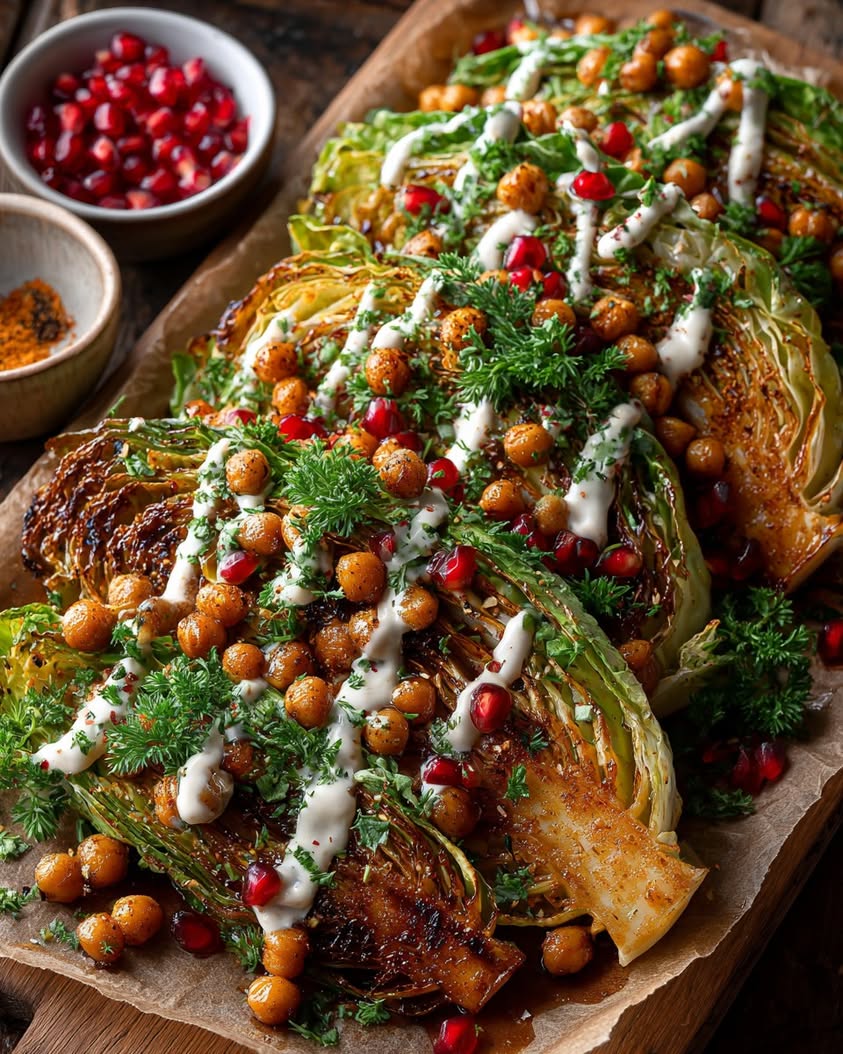
Caramelized Cabbage Steaks with Tahini Drizzle & Crispy Chickpeas: A Flavor-Packed Plant-Based Feast
Forget everything you thought you knew about cabbage. This recipe for Caramelized Cabbage Steaks with Tahini Drizzle & Crispy Chickpeas transforms a humble, often overlooked vegetable into the star of a stunning and satisfying meal. Imagine thick, hearty slices of cabbage roasted until their edges are deeply golden and their natural sugars have emerged in a sweet, nutty caramelization. Meanwhile, each slice is a perfect vehicle for a creamy, tangy tahini sauce and a crunchy topping of spiced, crispy chickpeas. The result is a dish that is not only visually impressive but also a symphony of contrasting textures and bold, comforting flavors.
Moreover, this recipe is a fantastic gateway to more adventurous plant-based cooking. It demonstrates how simple ingredients, when treated with care, can yield extraordinary results. The process of making these Caramelized Cabbage Steaks is surprisingly straightforward, requiring minimal hands-on time. Consequently, you can pop everything in the oven and let the heat work its magic. Ultimately, this dish proves that eating your vegetables can be the most exciting part of your dinner, offering a delicious and nutritious centerpiece that will impress both family and guests alike.
Quick Recipe Highlights
- Flavor Profile: These Caramelized Cabbage Steaks offer a beautiful balance of sweet, savory, and nutty notes. The cabbage itself becomes sweet and deeply savory from roasting, while the tahini drizzle adds a creamy, slightly bitter, and tangy element. The crispy chickpeas contribute a final punch of spice and umami, creating a complex and utterly satisfying taste experience.
- Texture: This dish is a masterclass in texture. You get the tender, almost meaty bite of the roasted cabbage steak, contrasted with the luxuriously smooth and creamy tahini sauce. Finally, the crispy, crunchy chickpeas scattered on top provide a delightful pop and textural counterpoint that makes every forkful exciting.
- Aroma: As these Caramelized Cabbage Steaks roast, your kitchen will fill with an irresistible, comforting aroma. You’ll smell the sweet, caramelizing notes of the cabbage mingling with the earthy, toasty scent of roasting chickpeas and warming spices like cumin and paprika. The nutty fragrance of the tahini sauce adds the final aromatic layer.
- Visual Appeal: The presentation is stunning. The cross-section of the cabbage steak is naturally beautiful, revealing its layered structure. A generous drizzle of creamy, off-white tahini sauce over the golden-brown steak looks elegant, while the rustic, bronze-colored crispy chickpeas add visual interest and texture. It’s a dish that looks as good as it tastes.
- Skill Level Needed: This recipe is perfect for cooks of all levels. It requires basic knife skills to slice the cabbage and simple mixing for the sauces and chickpeas. The primary cooking method is roasting, which is very forgiving. Therefore, even a beginner can achieve fantastic results with this guide.
- Special Equipment: You need only standard kitchen tools. A sharp chef’s knife and a sturdy cutting board are essential for safely slicing the cabbage. Additionally, you’ll need a large baking sheet (or two), mixing bowls, and a whisk or fork for the tahini drizzle. Parchment paper is highly recommended for easy cleanup.
Recipe Overview
- Difficulty Level: We rate this recipe as “Easy” for several compelling reasons. First, the techniques involved—slicing, tossing, and roasting—are fundamental. Second, the oven does most of the work, minimizing active cooking time. Third, the ingredients are simple and forgiving; a few extra minutes of roasting won’t ruin the dish. Consequently, it’s an accessible recipe that builds confidence in the kitchen.
- Category: These Caramelized Cabbage Steaks are incredibly versatile. They can serve as a spectacular vegetarian or vegan main course, especially when paired with a grain like quinoa or farro. Alternatively, they make a show-stopping side dish for grilled meats or fish. They also fit beautifully into a “bowl” meal or a hearty salad component.
- Cuisine: This dish draws inspiration from Mediterranean and Middle Eastern culinary traditions, primarily through the use of tahini, chickpeas, and spices like cumin and paprika. However, the technique of roasting thick vegetable “steaks” is a modern, global approach to plant-based cooking. The result is a fusion dish that feels both familiar and excitingly new.
- Cost: This is an exceptionally budget-friendly recipe. Cabbage and chickpeas are two of the most affordable pantry staples. Tahini, while a specialty ingredient, is used sparingly and lasts for many recipes. Overall, you can create this impressive, restaurant-quality meal for a fraction of the cost of dining out, making it perfect for regular rotation.
- Season: Cabbage is a hearty vegetable available year-round, but it truly shines in the cooler months. This recipe for Caramelized Cabbage Steaks is ideal for fall and winter, offering the warm, comforting, oven-roasted flavors we crave. That said, its bright, creamy tahini drizzle also makes it feel fresh and appropriate for spring and summer meals.
- Occasion: This dish is suitable for any occasion. It’s simple enough for a casual weeknight dinner yet elegant and impressive enough for a dinner party or holiday gathering (it makes a fantastic vegetarian Thanksgiving centerpiece). It’s also perfect for meal prep, as components hold up well in the fridge.
Why You’ll Love This Recipe
First and foremost, the taste and texture combination is utterly addictive. The magic of these Caramelized Cabbage Steaks lies in the transformation. Roasting unlocks a natural sweetness in the cabbage you never knew was there, creating a rich, almost nutty base. Then, the cool, creamy tahini sauce cuts through that richness with its tangy, sesame flavor. Finally, the crispy chickpeas deliver a satisfying crunch and a hit of warm spice. Every element complements the others, creating a harmonious and deeply satisfying dish that will make you see cabbage in a whole new light.
Furthermore, the convenience factor is a major win. After the initial prep of slicing the cabbage and tossing the chickpeas in oil and spice, the oven handles the rest. This hands-off cooking time means you can prepare other components of your meal, set the table, or simply relax. The recipe is also incredibly forgiving; if the chickpeas need a few more minutes to crisp up or the cabbage could use more color, you can simply leave them in the oven a bit longer. This flexibility makes it stress-free and reliable.
From a nutritional standpoint, this dish is a powerhouse. Cabbage is loaded with vitamins C and K, fiber, and powerful antioxidants. Chickpeas provide plant-based protein and more fiber, helping to keep you full and satisfied. Tahini, made from sesame seeds, offers healthy fats, calcium, and iron. Together, they create a meal that is not only delicious but also nourishing and supportive of overall health. It’s a perfect example of how healthy eating can be indulgent and exciting.
For entertaining, these Caramelized Cabbage Steaks are a true showstopper. Serving a whole, beautifully presented vegetable “steak” feels special and thoughtful, especially for vegetarian or vegan guests. The dramatic presentation on a platter, drizzled with sauce and scattered with chickpeas, invites conversation and admiration. It’s a dish that communicates care and culinary creativity, making any meal feel like an occasion without requiring complex techniques or expensive ingredients.
Finally, the cost-effectiveness and accessibility are unbeatable. Cabbage is one of the most affordable vegetables in the produce aisle, and a single head can yield multiple generous servings. Canned chickpeas and a jar of tahini are pantry staples that have a long shelf life and can be used in countless other recipes. This means you can create a stunning, restaurant-worthy meal on a tight budget. It democratizes gourmet plant-based eating, proving you don’t need rare ingredients to make something extraordinary.
Historical Background and Cultural Significance
The story of this dish is a modern tale of culinary innovation. While cabbage itself has been a dietary staple across Europe and Asia for millennia, often preserved as sauerkraut or kimchi, the concept of a “cabbage steak” is a relatively recent invention. This technique likely emerged from the contemporary plant-based and foodie movements, which sought to elevate humble vegetables into centerpiece-worthy mains. The idea of slicing a dense vegetable like cabbage into thick slabs and applying high-heat roasting methods traditionally used for meat is a clever subversion that speaks to modern dietary trends and creativity in the kitchen.
Culturally, the components tell a richer story. Cabbage holds significant importance in many traditions. In Eastern Europe, it’s the soul of comforting dishes like stuffed cabbage rolls. In East Asia, it’s the primary vehicle for the complex fermentation of kimchi, a cornerstone of Korean cuisine. By treating cabbage as a “steak,” this recipe respectfully borrows its hearty, sustaining nature from these old-world traditions while presenting it in a bold, new-world format. It bridges cultural histories through a single, versatile ingredient.
The evolution of the recipe is a testament to global flavor fusion. The pairing with tahini and chickpeas is a direct nod to the culinary traditions of the Levant and Eastern Mediterranean, where these ingredients are foundational. Tahini, a paste of ground sesame seeds, is the backbone of sauces like tarator and dips like hummus. Chickpeas, or garbanzo beans, are a ancient protein source central to diets from the Middle East to India. Combining these timeless elements with a modern Western cooking technique (the vegetable steak) creates a dish that feels both globally informed and entirely new.
Regional variations of this concept are already appearing, demonstrating its adaptability. In some kitchens, the tahini drizzle might be swapped for a romesco sauce or a zhug for a different cultural twist. The spice blend on the chickpeas might shift from cumin and paprika to za’atar or berbere. Some cooks add a sprinkle of pomegranate molasses after roasting for a sweet-tart punch, or use nutritional yeast in the tahini sauce for a cheesy flavor. This flexibility ensures the core idea of Caramelized Cabbage Steaks can travel and adapt, absorbing local flavors and ingredients wherever it goes.
Ingredient Deep Dive
Green Cabbage: The humble green cabbage is the star. This hardy brassica has been cultivated for over 4,000 years and was prized by ancient Romans for its medicinal properties. Nutritionally, it’s a superstar, offering a huge dose of vitamin C, vitamin K, and fiber, particularly when cooked. When selecting a head, look for one that feels heavy for its size with tightly packed, crisp leaves and no signs of browning or wilting. Store it whole in the refrigerator’s crisper drawer, where it can last for weeks. For a variation, try savoy cabbage for more tender leaves or red cabbage for a stunning color and a slightly peppery flavor.
Tahini: Tahini is a paste made from hulled, ground sesame seeds and is a cornerstone of Middle Eastern cuisine. Its history dates back centuries, and it’s mentioned in ancient texts. It provides healthy fats, protein, calcium, and iron. A good tahini should be pourable and have a smooth, not gritty, texture with a balanced flavor—nutty and rich but not unpleasantly bitter. Stir the jar well before using, as separation is natural. Store it in a cool, dark place after opening. If you need a substitute, cashew butter or sunflower seed butter can work in a pinch, though the flavor profile will change.
Chickpeas (Garbanzo Beans): Chickpeas are one of the earliest cultivated legumes, with origins in the Middle East over 7,000 years ago. They are a fantastic source of plant-based protein, fiber, and minerals like iron and folate. For this recipe, canned chickpeas offer ultimate convenience. Be sure to rinse and drain them thoroughly and pat them very dry with a clean towel—this is the secret to achieving true crispiness in the oven. Dried, cooked chickpeas can also be used. For a different twist, try cannellini beans or giant butter beans for a larger, creamier crisp.
Common Mistakes to Avoid
- Slicing the Cabbage Too Thin: If you slice the cabbage less than 3/4-inch thick, the steaks will likely overcook, become floppy, and lose their structural integrity. They need that thickness to hold up to roasting and develop a caramelized exterior while staying tender inside. Use a sharp knife and cut confidently from the core outward.
- Not Drying the Chickpeas: Skipping the step of thoroughly patting the canned chickpeas dry is the number one reason they won’t get crispy. Any residual moisture will steam them in the oven, leaving you with soft, chewy beans instead of crunchy gems. Take the extra minute to dry them well with paper towels.
- Overcrowding the Baking Sheet: If you cram the cabbage steaks and chickpeas onto one pan, they will steam instead of roast. The vegetables need space for hot air to circulate and create caramelization and crispness. Use two baking sheets if necessary to ensure everything has room.
- Underseasoning the Cabbage: Cabbage is a large, dense vegetable that needs ample seasoning. A light sprinkle of salt and pepper won’t penetrate. Be generous with salt, pepper, and oil on both sides of each steak to ensure the seasoning carries through every bite.
- Adding the Tahini Drizzle Before Serving: If you drizzle the tahini sauce over the hot cabbage steaks right out of the oven and then let them sit, the sauce will soak in and lose its visual appeal and distinct creamy texture. Always add the drizzle just before serving for the best presentation and mouthfeel.
- Using Old or Poor-Quality Tahini: Tahini can go rancid or become overly bitter over time. Taste your tahini before using it. If it smells off or tastes unpleasantly sharp, it will negatively impact your sauce. Fresh, high-quality tahini has a smooth, rich, nutty flavor.
- Not Preheating the Oven: Starting with a fully preheated oven is non-negotiable for this recipe. A hot oven immediately begins the caramelization process on the cabbage and chickpeas. Putting them in a cold oven will lead to uneven cooking and soggy results.
- Neglecting the Core: The core is what holds the cabbage steak together. Do not remove it entirely. Simply trim any excessively thick or tough parts, but leave enough of the core intact so the leaves remain connected, creating that beautiful “steak” presentation.
Essential Techniques
How to Slice a Cabbage Steak: This technique is crucial for structural integrity. First, remove any loose or damaged outer leaves. Then, place the cabbage on its side on a stable cutting board. Using a large, sharp chef’s knife, slice straight down through the cabbage, aiming for slices about 1-inch thick. You will get 2-3 perfect steaks from the center of the head. The outer pieces will fall apart into wedges—these are still delicious for roasting. The goal is to keep the core intact to hold the rings together. A sharp knife ensures a clean cut without crushing the leaves.
Patting Chickpeas Dry: This simple step is the difference between crispy and soggy chickpeas. After rinsing canned chickpeas in a colander, spread them out on a clean kitchen towel or several layers of paper towels. Gently roll them around and pat them thoroughly until the towels come away dry. Removing this surface moisture allows the oven’s heat to immediately start crisping the skin rather than steaming it. Taking an extra two minutes here guarantees a perfect, crunchy texture.
Whisking Tahini Sauce: Tahini sauce can seize up and become thick and pasty when you first add liquid. The key is to start with the tahini paste and your acid (lemon juice) in a bowl. Whisk vigorously—the mixture will thicken and look almost broken. Then, add ice water very slowly, just a tablespoon at a time, whisking continuously after each addition. The sauce will suddenly loosen, become smooth, creamy, and pourable. This emulsion process is essential for the perfect drizzle consistency.
Pro Tips for Perfect Caramelized Cabbage Steaks
First, for maximum caramelization, make sure your oven rack is in the center position and fully preheated. Next, use a pastry brush to generously coat both sides of each cabbage steak with oil; this ensures even coverage. Additionally, don’t be afraid of a little char on the edges—it adds fantastic flavor. Meanwhile, toss your chickpeas in a bowl with oil and spices to coat them evenly before spreading them on the pan. Furthermore, check the chickpeas a few minutes before the timer goes off; if they aren’t crisp, let them roast a little longer. Finally, let the cabbage steaks rest for 5 minutes after roasting before plating; this allows the juices to settle.
Variations and Adaptations
For regional variations, take inspiration from global pantries. A Mexican-inspired version could use smoked paprika and chili powder on the chickpeas, with a cilantro-lime crema instead of tahini. An Asian-fusion twist might involve brushing the cabbage with a miso-sesame glaze and topping with wasabi peas. For seasonal adaptations, in summer, top the finished dish with fresh cherry tomatoes and basil. In winter, add roasted squash or a sprinkle of toasted nuts. The basic formula is endlessly adaptable to what’s fresh and inspiring.
Dietary modifications are straightforward. The recipe is naturally vegan and gluten-free. For a nut-free version, substitute the tahini with a sunflower seed butter sauce. To lower the carbs slightly, you can reduce the number of chickpeas or omit them, focusing on the cabbage and a protein-rich sauce. For a richer, non-vegan option, a drizzle of garlicky yogurt or tzatziki works beautifully in place of the tahini. The core technique remains the same across all adaptations.
Serving and Presentation Guide
Plating is key for visual impact. Place one warm Caramelized Cabbage Steak slightly off-center on a wide, shallow bowl or plate. Using a spoon, generously drizzle the creamy tahini sauce back and forth over the steak, allowing some to pool on the plate. Then, scatter a hearty handful of the crispy chickpeas over the top and around the base. For garnish, a final flourish of chopped fresh parsley, a sprinkle of sesame seeds, or a pinch of flaky sea salt adds color and texture. Serve immediately while the contrasts between hot/cool and crispy/creamy are at their peak.
For traditional accompaniments, consider serving these steaks over a bed of fluffy couscous, quinoa, or farro to soak up the extra tahini sauce. A simple, bright side salad with a lemony vinaigrette balances the richness. For a more substantial meal, add a dollop of hummus or a side of roasted vegetables. Modern serving suggestions include slicing the steak and arranging it in a grain bowl with pickled onions, avocado, and a soft-boiled egg. Temperature is crucial—serve the cabbage hot from the oven and the tahini sauce cool or at room temperature.
Wine and Beverage Pairing
Wine pairings should complement the dish’s earthy, nutty, and slightly sweet flavors. A crisp, unoaked white wine like a Sauvignon Blanc or a dry Riesling cuts through the richness of the tahini beautifully. Alternatively, a light-bodied, fruity red with low tannins, such as a Gamay (Beaujolais) or a Pinot Noir, can work well with the caramelized notes. For a non-alcoholic option, sparkling water with a squeeze of lemon is always refreshing. A tart cherry or pomegranate spritzer also mirrors the dish’s sweet-and-savory profile. Iced mint tea or a slightly bitter ginger beer can provide a wonderful contrast.
Storage and Shelf Life
Store components separately for best results. Cooled Caramelized Cabbage Steaks can be kept in an airtight container in the refrigerator for 3-4 days. The crispy chickpeas will lose their crunch in the fridge; store them at room temperature in a paper-towel-lined container for up to 2 days. The tahini sauce can be refrigerated in a sealed jar for up to a week; it will thicken, so thin it with a little water or lemon juice before using. Signs of spoilage include an off smell, slimy texture on the cabbage, or mold. Reheat cabbage steaks in a 350°F oven or toaster oven until warmed through to restore some texture.
Make Ahead Strategies
You can significantly streamline dinner by prepping components ahead. The tahini sauce can be made 2-3 days in advance and stored in the fridge. The cabbage can be sliced into steaks, wrapped in damp paper towels, and stored in a bag in the fridge for a day before roasting. You can even rinse and dry the chickpeas a day ahead. Then, when ready to cook, simply toss the chickpeas with oil and spice, brush the cabbage with oil, and roast. This “mise en place” approach cuts active prep time to under 10 minutes. Assemble everything fresh from the oven for the best quality.
Scaling Instructions
This recipe scales beautifully for a crowd. To double or triple it, simply multiply all ingredients accordingly. The key is to use multiple baking sheets and rotate them in the oven halfway through cooking to ensure even caramelization. You may also need to extend the cooking time by 5-10 minutes if the oven is very full. For halving the recipe, use one baking sheet and keep an eye on the chickpeas, as they may cook faster. No equipment adjustments are needed beyond ensuring you have enough sheet pans. Store any leftovers as directed above.
Nutritional Deep Dive
This dish is a nutritional powerhouse. One serving provides a substantial amount of dietary fiber from both the cabbage and chickpeas, promoting digestive health and satiety. The chickpeas contribute plant-based protein, essential for muscle repair and keeping you full. The healthy fats from the olive oil and tahini support nutrient absorption and heart health. Furthermore, cabbage is rich in vitamin C for immunity and vitamin K for bone health. The spices, like cumin and paprika, contain antioxidants. It’s a meal that supports weight management through high volume and nutrient density with relatively moderate calories.
Dietary Adaptations
This recipe is naturally gluten-free and vegan, making it suitable for many dietary needs. For a strict Whole30 or Paleo adaptation, omit the chickpeas and ensure your tahini is compliant (no added oils or sugars). You could add roasted walnuts or almonds for crunch instead. For a lower-carb or Keto approach, focus on the cabbage steak and tahini sauce, significantly reducing or omitting the chickpeas. For a nut-free version, replace the tahini drizzle with a sauce made from sunflower seed butter or a creamy avocado-based dressing. Always check individual ingredient labels to confirm they meet specific dietary protocols.
Troubleshooting Guide
If your cabbage isn’t caramelizing, your oven temperature may be too low, or the steaks may be overcrowded. Ensure proper preheating and spacing. For soggy chickpeas, the culprit is almost always insufficient drying before roasting. Pat them relentlessly dry next time. If the tahini sauce is too thick and pasty, you likely added the water too quickly. Whisk in additional ice water, one teaspoon at a time, until it smooths out. If it’s too thin, whisk in a little more tahini paste. If the cabbage steaks are burning on the bottom before they’re tender inside, try placing them on a higher oven rack or using parchment paper to insulate slightly.
Recipe Success Stories
The community response to this Caramelized Cabbage Steaks recipe has been overwhelmingly positive. Many home cooks report that it has become a “vegetable conversion” dish for skeptical family members. One reader shared that adding a sprinkle of smoked paprika to the chickpeas took it to another level. Another successfully served it as the main course for a vegetarian Thanksgiving, garnished with pomegranate arils for a festive touch. Photographers suggest shooting the dish in natural light to capture the gloss of the tahini drizzle and the deep golden color of the cabbage. The consensus is that its simplicity and “wow” factor make it a repeat favorite.
Frequently Asked Questions
Can I use red cabbage instead of green? Absolutely. Red cabbage works beautifully and adds a stunning purple hue. Note that it may have a slightly peppery flavor and might cook a tiny bit faster, so keep an eye on it.
My tahini sauce is bitter. What did I do wrong? Some tahini brands are naturally more bitter. You can balance it by adding a touch more lemon juice or a tiny drizzle of maple syrup or honey. Always taste and adjust the sauce to your preference.
Can I make the chickpeas crispy without oil? For an oil-free version, you can roast the dried chickpeas with a spritz of vegetable broth or aquafaba (the liquid from the can). They won’t get quite as uniformly crispy but will still be delicious.
How do I reheat leftovers without making them soggy? Reheat the cabbage steaks in a toaster oven or conventional oven at 350°F until warm. This helps re-crisp the edges. Avoid the microwave, as it will steam them.
What can I do with the leftover cabbage wedges? The outer wedges that don’t form perfect steaks are perfect for roasting alongside the steaks or chopping for a slaw, stir-fry, or soup. Don’t waste any part of the head.
Is this recipe kid-friendly? It can be! Kids often enjoy the sweet, roasted flavor of the cabbage. You can serve the tahini sauce on the side for dipping and let them build their own plate with the crunchy chickpeas.
Can I use dried chickpeas instead of canned? Yes. Use 1.5 cups of cooked chickpeas from dried. The key is to ensure they are fully cooked and patted very dry before tossing with oil and roasting.
Why is my tahini sauce so thick and clumpy? This is normal when you first mix tahini and lemon juice. Just keep whisking and add ice water slowly. It will suddenly transform from a thick paste into a smooth, creamy sauce.
Additional Resources
If you loved these Caramelized Cabbage Steaks, explore other ways to elevate vegetables. Try our recipes for Crispy Roasted Brussels Sprouts with Balsamic Glaze or a hearty Lentil and Mushroom Stuffed Acorn Squash. For more tahini inspiration, our Creamy Tahini Salad Dressing is a versatile staple. To master oven-roasting, check out our guide on Roasting Times for Every Vegetable. Investing in a good half-sheet pan and parchment paper sheets will make this and many other recipes even easier. Finally, explore different global spice blends to customize the crispy chickpeas for your next batch.
{“success”:true,”message”:”Recipe created successfully”,”post_id”:9006,”tasty_recipe_id”:9006,”shortcode”:” Print
Caramelized Cabbage Steaks with Tahini Drizzle & Crispy Chickpeas
Description
A hearty vegetarian dish featuring thick slices of cabbage roasted until tender and caramelized, topped with a creamy tahini sauce and crispy spiced chickpeas.
Ingredients
For the Crust:
- 1 medium head green cabbage, cut into 1-inch thick steaks
- 1 can (15 oz) chickpeas, drained and rinsed
- 3 tablespoons olive oil, divided
- 1 teaspoon smoked paprika
- 1/2 teaspoon garlic powder
- Salt and black pepper to taste
- 1/4 cup tahini
- 2 tablespoons lemon juice
- 2 tablespoons water
- 1 teaspoon maple syrup
- Fresh parsley, chopped for garnish
Instructions
1. Prepare the Crust:
- Preheat oven to 400°F (200°C). Line a baking sheet with parchment paper.
- Place cabbage steaks on the baking sheet. Drizzle with 1 tablespoon olive oil and season with salt and pepper. Roast for 20 minutes.
- Toss chickpeas with remaining 2 tablespoons olive oil, smoked paprika, garlic powder, salt, and pepper. Spread on a separate baking sheet and roast alongside cabbage for 20-25 minutes until crispy.
- While roasting, whisk tahini, lemon juice, water, maple syrup, and a pinch of salt in a bowl until smooth. Add more water if needed for a drizzle consistency.
- Remove cabbage and chickpeas from oven. Drizzle tahini sauce over cabbage steaks, top with crispy chickpeas, and garnish with parsley before serving.
Notes
You can customize the seasonings to taste.

I’m Billy, a classically trained culinary school graduate from The Culinary Institute of America with over 12 years in the restaurant industry and over 19 years of cooking experience.