
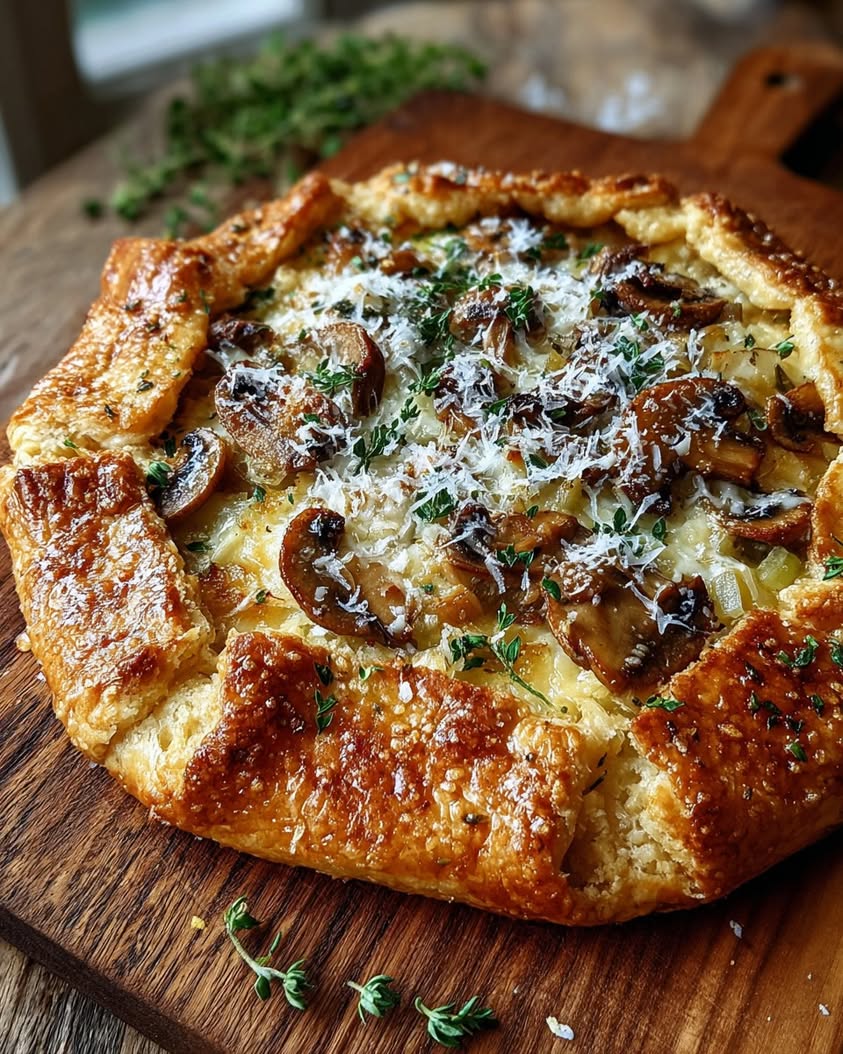
Creamy Mushroom & Leek Galette with Gruyère Crust: A Rustic Masterpiece
Imagine a dish that combines the earthy comfort of a savory pie with the free-form elegance of rustic French baking. This Creamy Mushroom & Leek Galette with Gruyère Crust delivers exactly that experience. Furthermore, it transforms simple, humble ingredients into a stunning centerpiece worthy of any dinner table. The aroma alone, as it bakes, will fill your kitchen with promises of rich, savory goodness.
This recipe celebrates the deep, umami flavors of mushrooms, the sweet subtlety of leeks, and the nutty, melting quality of Gruyère cheese. Consequently, every bite offers a perfect harmony of textures and tastes. The galette format, with its beautifully folded, cheesy crust, is forgiving for bakers of all levels. Ultimately, it is a dish that feels special yet approachable, perfect for a cozy family dinner or an impressive meal with friends.
Quick Recipe Highlights
- Flavor Profile: This galette features a deeply savory and umami-rich filling from the caramelized mushrooms and leeks. The Gruyère cheese adds a nutty, slightly salty complexity that ties everything together beautifully.
- Texture: You will enjoy a flaky, buttery, and crisp crust that shatters with each bite. Meanwhile, the interior offers a luxuriously creamy and tender filling, creating a delightful contrast.
- Aroma: While baking, the scent of toasted cheese, earthy mushrooms, and sweet alliums will permeate your home. It is an irresistible fragrance that builds anticipation perfectly.
- Visual Appeal: The rustic, free-form shape with golden, crimped edges and bubbling cheesy filling is incredibly inviting. Its presentation is artfully imperfect and wholly charming.
- Skill Level Needed: This recipe requires basic knife skills for prepping vegetables and comfort with making a simple pastry dough. However, the galette is famously forgiving, making it a great project for confident beginners.
- Special Equipment: You only need a rolling pin, a large skillet, and a baking sheet. A food processor makes the crust quicker, but you can easily mix it by hand with a pastry cutter.
Recipe Overview
- Difficulty Level: We rate this Creamy Mushroom & Leek Galette with Gruyère Crust as intermediate. The process involves making a from-scratch crust and properly cooking down the vegetables to concentrate their flavors. However, the steps are straightforward and the rustic nature of a galette forgives minor imperfections in shaping.
- Category: This dish sits perfectly at the intersection of a savory tart, a rustic pie, and a vegetable-forward main course. It is ideal for brunch, lunch, or a light dinner, especially when paired with a simple salad.
- Cuisine: The galette has its roots in French country cooking, known for its simple, ingredient-driven dishes. This version incorporates classic French flavors like Gruyère, crème fraîche, and thyme, staying true to its culinary heritage.
- Cost: Using affordable staples like flour, butter, and common mushrooms keeps costs moderate. Investing in a good Gruyère and fresh cremini or shiitake mushrooms elevates the dish without breaking the bank.
- Season: This galette shines in the fall and winter when mushrooms and leeks are at their peak. Conversely, it also provides comforting warmth during cooler months, making it a seasonal favorite.
- Occasion: It is versatile enough for a weeknight treat yet elegant enough for holiday entertaining. Serve it at a casual gathering, a vegetarian potluck, or as the star of a festive brunch spread.
Why You’ll Love This Recipe
First and foremost, the taste and texture of this Creamy Mushroom & Leek Galette with Gruyère Crust are utterly captivating. The filling is a masterclass in umami, with mushrooms cooked until they release their deep, earthy juices and leeks softened to sweet perfection. Additionally, the Gruyère cheese does double duty, providing a sharp, nutty flavor in the crust and a gooey, melted layer atop the filling. Each forkful delivers the satisfying crunch of the crust followed by the lush, creamy interior, creating a dining experience that is both comforting and sophisticated.
From a convenience standpoint, this galette offers significant benefits. Unlike a traditional pie requiring a precise pan, the free-form nature means no fussy crimping or blind baking. You simply roll, fill, and fold. Moreover, the components can be prepared in stages; make the dough ahead or cook the filling in advance. Consequently, assembly before baking becomes a quick and simple task, making meal planning effortless for busy cooks who still want to serve something impressive.
Nutritionally, this dish packs a powerful vegetable punch. Mushrooms are a fantastic source of B vitamins, selenium, and antioxidants, while leeks provide prebiotic fiber and vitamin K. Using whole-grain flour in the crust adds fiber and nutrients, boosting the health profile. Importantly, the richness comes from quality fats like butter and cheese, which contribute to satiety and flavor, ensuring you feel satisfied without being overly heavy.
For social and entertaining value, this galette is a true winner. Its stunning visual appeal on a serving board creates an immediate centerpiece that encourages sharing. It is inherently a communal dish, perfect for slicing at the table. Furthermore, it caters beautifully to vegetarian guests without feeling like a compromise, and its robust flavors please even the most ardent meat-eaters. It is a conversation starter that demonstrates care and culinary skill.
Finally, this Creamy Mushroom & Leek Galette with Gruyère Crust is remarkably cost-effective and accessible. The core ingredients are pantry and refrigerator staples for many home cooks. You can adapt it based on what is seasonal or on sale, using different mushroom varieties or a similar melting cheese. Therefore, it is a versatile template that allows for creativity without requiring expensive or hard-to-find components, making gourmet rustic cooking achievable on a reasonable budget.
Historical Background and Cultural Significance
The galette finds its origins in the rustic kitchens of Brittany, a region in northwest France. Traditionally, a galette referred specifically to a large, thin buckwheat crêpe, often used as a wrap for savory fillings. Over time, however, the term evolved in French cuisine to describe any free-form, round pastry baked on a flat surface. This particular savory version, often called a “galette complète” when including ham, egg, and cheese, represents the peasant cooking ethos of making delicious food from readily available local ingredients.
Culturally, the galette symbolizes simplicity and resourcefulness. It was a practical solution for home bakers without specialized pie tins or the desire for fussy presentation. The folded edges simply contained the filling, prioritizing flavor and substance over formal appearance. This style of baking is deeply embedded in French country life, often associated with family meals, harvest celebrations, and a connection to the land. The use of mushrooms and leeks directly reflects foraging and garden harvests.
The evolution of the galette recipe mirrors broader culinary trends. While the classic version remained simple, modern interpretations have embraced global flavors and gourmet ingredients. The addition of a cheese-incorporated crust, as in this Gruyère version, is a contemporary twist that adds another layer of flavor and texture. Similarly, the creamy mushroom and leek filling elevates the humble vegetable medley into something luxurious, showcasing how traditional formats can be adapted for modern palates while respecting their roots.
Regional variations of the savory galette are plentiful across France. In Alsace, you might find a version with onions and bacon. In Provence, it could feature tomatoes, olives, and herbs. The versatility of the format is its greatest strength. Our Creamy Mushroom & Leek Galette with Gruyère Crust borrows from the Alpine regions with its use of Gruyère, a cheese from Switzerland and eastern France, creating a beautiful fusion of rustic pastry technique and rich, mountain-inspired flavors.
Ingredient Deep Dive
Mushrooms: Cultivated for thousands of years, mushrooms hold a place in culinary and medicinal history across many cultures, from ancient Egypt to China. Nutritionally, they are a powerhouse, offering B vitamins like riboflavin and niacin for energy metabolism, selenium as a potent antioxidant, and even vitamin D when exposed to UV light. For this galette, select cremini or shiitake mushrooms that are firm, dry, and have intact caps. Avoid any that are slimy or have a strong ammonia smell. Store them in a paper bag in the refrigerator for up to a week. If unavailable, you can substitute with portobellos (remove the gills) or a mix of wild mushrooms for a more intense flavor.
Leeks: A member of the allium family alongside onions and garlic, leeks have been a staple in European cooking since ancient times, famously cherished by the Romans. They provide a milder, sweeter flavor and are an excellent source of prebiotic fiber, which supports gut health, as well as vitamin K for bone health and blood clotting. Choose leeks with crisp, dark green tops and firm, white stalks. Because they trap soil between their layers, cleaning them thoroughly is crucial: slice them lengthwise and rinse under cold water. Store them unwashed in the refrigerator’s crisper drawer. For a substitute, sweet onions or shallots can work, though the flavor profile will be slightly different.
Gruyère Cheese: This famous Swiss cheese, named after the town of Gruyères, has been produced since the 12th century. It is a hard, yellow cheese known for its complex, nutty, and slightly salty flavor that becomes wonderfully creamy when melted. It adds protein and calcium to the dish. When selecting Gruyère, look for a firm texture and avoid any with excessive moisture or cracks. For the crust, it is best to buy a block and grate it yourself, as pre-shredded cheese contains anti-caking agents that can affect meltability. Store it wrapped in parchment paper in the cheese drawer of your fridge. Good substitutes include Comté, Emmental, or a sharp white cheddar.
Crème Fraîche: This cultured cream is a staple in French cuisine, thicker and less tangy than American sour cream. It adds a luxurious, rich acidity that balances the earthiness of the mushrooms without curdling during high-heat cooking. It contributes fat for satiety and a velvety texture. You can find it in the dairy section of most supermarkets. To make a substitute, mix one cup of heavy cream with two tablespoons of buttermilk, let it sit at room temperature for 12-24 hours until thickened, then refrigerate. For a different twist, full-fat sour cream or mascarpone can be used, though the flavor will vary.
Common Mistakes to Avoid
- Not Cooking the Filling Enough: Undercooked vegetables will release excess water into the galette during baking, resulting in a soggy bottom crust. Always cook the mushroom and leek mixture until all visible liquid has evaporated and the vegetables begin to caramelize.
- Using a Warm Dough: Rolling out pastry dough that hasn’t chilled sufficiently leads to a tough crust and difficult handling. Ensure your dough is firm and cold from the refrigerator before attempting to roll it; this keeps the butter solid for flaky layers.
- Overworking the Crust: Handling the dough too much develops the gluten, making it tough and chewy instead of tender and flaky. Mix just until the dough comes together, and use a light touch when rolling and folding.
- Skimping on Salt: Both the crust and the filling need adequate seasoning to highlight their flavors. Taste your filling before assembling, and remember to salt the dough. Mushrooms, in particular, need salt to deepen their umami character.
- Rolling the Dough Too Thin: A crust rolled thinner than 1/8-inch may tear under the weight of the filling or fail to provide a sturdy, flaky base. Aim for an even thickness to support the ingredients.
- Forgetting the Egg Wash: Skipping the egg wash on the folded crust edges means missing out on that beautiful, deep golden-brown, glossy finish. It is a simple step that significantly enhances visual appeal.
- Overfilling the Center: Piling too much filling in the middle leaves little room for folding the edges and can cause leaks during baking. Leave a generous 2-inch border clear for easy and clean folding.
- Not Preheating the Baking Sheet: Placing the galette on a hot baking sheet helps kickstart the cooking of the bottom crust, preventing sogginess. This pro tip is easy to implement and makes a noticeable difference.
Essential Techniques
Making a Flaky Crust: The key to a flaky crust is keeping the butter cold and in distinct pieces within the flour. When the cold butter hits the hot oven, it steams, creating pockets that become flaky layers. To master this, use chilled butter and ice water, and work quickly. A common pitfall is letting the butter soften or over-mixing the dough into a homogeneous paste. You should see visible pea-sized butter bits when you add the water. The dough is ready when it just holds together when pinched.
Sweating vs. Sautéing Vegetables: For the filling, you want to sweat the leeks and mushrooms to draw out their moisture and concentrate their flavor, not just quickly sauté them. This means cooking them over medium heat with a pinch of salt, often with a lid initially, to gently coax out the water. Then you remove the lid to let that liquid evaporate. The visual cue for success is when the vegetables have significantly reduced in volume, appear tender, and no liquid pools in the bottom of the pan. This step is crucial to prevent a watery galette.
Folding a Galette: The rustic fold is what defines a galette. After rolling the dough into a circle, you mound the filling in the center, leaving a border. Then, you lift the edges of the dough and fold them over the filling, creating pleats as you go. The technique is forgiving; uneven folds add charm. The importance lies in creating a contained vessel for the filling. The common pitfall is folding too tightly or leaving too small a border, which can lead to breaks. The dough should be relaxed and draped, not stretched taut.
Pro Tips for Perfect Creamy Mushroom & Leek Galette with Gruyère Crust
Grate your Gruyère cheese from a block instead of using pre-shredded. Pre-shredded cheese contains anti-caking agents like potato starch that can inhibit smooth melting and affect the texture of your crust.
Let the cooked mushroom and leek filling cool completely before assembling the galette. A hot filling will start to melt the butter in your carefully chilled dough, leading to a greasy, tough crust.
Use a bench scraper to help lift and fold the edges of your dough. This tool prevents you from handling the dough too much with warm hands and provides clean, easy lifts for perfect pleats.
For an extra flavor boost, add a teaspoon of fresh thyme leaves or a pinch of chopped rosemary to the mushroom mixture as it cooks. These herbs complement the earthy flavors beautifully.
If your dough tears while rolling or folding, do not panic. Simply patch it with a small piece of reserved dough and press to seal. The rustic nature of the galette hides minor repairs perfectly.
Place your rolled-out dough on parchment paper before adding the filling. Then, you can slide the parchment paper directly onto the preheated baking sheet, preventing any messy or risky transfers.
For a deeper golden color, you can brush the crust with a second coat of egg wash halfway through the baking time. This gives it a professional, glossy finish.
Allow the galette to rest for at least 10 minutes after baking before slicing. This lets the creamy filling set slightly, ensuring clean cuts and perfect slices that hold their shape.
Variations and Adaptations
Regional Variations: To travel through flavor, try a Mediterranean version with sun-dried tomatoes, Kalamata olives, and feta cheese. Alternatively, for a German-inspired twist, add some crispy diced speck or ham and swap the Gruyère for Emmentaler. A Provençal take could include herbes de Provence and a layer of tapenade under the mushrooms.
Seasonal Adaptations: In spring, substitute asparagus tips and fresh peas for the mushrooms. During summer, a ratatouille-style galette with zucchini, eggplant, and tomatoes is magnificent. For a hearty winter option, incorporate roasted squash or sweet potatoes along with the mushrooms for added sweetness and substance.
Dietary Modifications: For a gluten-free galette, use a trusted 1:1 gluten-free flour blend in the crust. To make it dairy-free, substitute the butter with cold vegan butter or refined coconut oil, use a plant-based cheese, and replace the crème fraîche with cashew cream.
Flavor Variations: Introduce a tablespoon of white wine or dry sherry to deglaze the pan after cooking the mushrooms for a subtle acidity. For a richer, deeper note, stir a teaspoon of Dijon mustard or a dash of truffle oil into the filling before assembling.
Texture Modifications: For a crunchier texture, sprinkle toasted walnuts or pine nuts over the filling before folding the crust. To make it more substantial, add a layer of cooked lentils or a sprinkle of breadcrumbs mixed with Parmesan under the mushroom mixture.
Presentation Alternatives: Instead of one large galette, make individual-sized portions for a personalized plating option. You can also shape the dough into a rectangle for a more modern, tart-like appearance. For a festive touch, use cookie cutters to create decorative shapes from excess dough to place on top before baking.
Serving and Presentation Guide
Plating Techniques: Transfer the baked galette to a large wooden cutting board or a simple, neutral-colored platter. This rustic presentation complements the dish’s homemade charm. Use a sharp, serrated knife or a pizza cutter for clean slices. Wipe the blade between cuts to keep the presentation neat.
Garnishing Ideas: A final flourish elevates the visual appeal. Consider a scattering of fresh, delicate herbs like chopped chives, parsley, or thyme leaves. A light drizzle of high-quality olive oil or a balsamic glaze adds shine and a flavor accent. For texture, a few flaky sea salt crystals or microgreens on top just before serving are perfect.
Traditional Accompaniments: In the French tradition, a simple green salad with a sharp vinaigrette is the classic pairing, cutting through the richness of the galette. A bowl of lightly dressed arugula or mixed greens with a lemon-Dijon dressing works wonderfully.
Modern Serving Suggestions: For a heartier meal, serve with a side of roasted potatoes or a warm lentil salad. At brunch, pair it with a poached egg on top or a side of fresh fruit. A dollop of herb-infused crème fraîche or sour cream on the side is also a delightful addition.
Temperature Considerations: This Creamy Mushroom & Leek Galette with Gruyère Crust is best served warm, not piping hot, allowing the flavors to settle. If it has cooled, reheat slices in a 350°F oven for about 10 minutes to restore the crust’s crispness. Avoid the microwave, as it will make the crust soggy.
Portion Control Tips: One large galette typically yields six generous slices as a main course or eight smaller slices as an appetizer or side. When serving as part of a larger spread with multiple dishes, plan for smaller portions. The rich, satisfying nature of the dish means a little goes a long way.
Wine and Beverage Pairing
Wine Pairings: The earthy mushrooms and nutty Gruyère call for wines with good acidity and earthy notes themselves. A Pinot Noir from Burgundy or Oregon, with its red fruit and earthy undertones, is a classic and perfect match. Alternatively, a dry white wine like an unoaked Chardonnay or a French Chablis complements the creamy filling without overpowering it. For a more adventurous pick, a dry Riesling or a Gamay can also work beautifully.
Non-Alcoholic Alternatives: Sparkling water with a twist of lemon or a dash of bitters cleanses the palate between bites. For something more complex, try a chilled, non-alcoholic ginger beer, which cuts through the richness with its spice. A tart cherry or pomegranate spritzer also provides a nice counterpoint to the savory flavors.
Coffee/Tea Pairings: After the meal, a medium-roast coffee with low acidity can be a pleasant finish. For tea, consider an earthy Pu-erh tea, which mirrors the mushrooms’ depth, or a light, floral white tea that offers a refreshing contrast. These are best enjoyed after the meal rather than during.
Temperature Considerations: Serve white wines and non-alcoholic sparkling drinks well-chilled. Red wines should be served slightly below room temperature, around 60-65°F, to allow their flavors to shine without accentuating alcohol heat. This ensures each beverage complements the warm galette perfectly.
Serving Suggestions: Always offer water on the table to cleanse the palate. If serving wine, consider pouring a small taste for guests to try with their first bite before filling glasses. For non-alcoholic options, present them in elegant glassware to make the experience feel just as special.
Storage and Shelf Life
Storage Methods: Once completely cooled, store leftover galette in an airtight container or tightly wrapped in aluminum foil. For best results, place it on a plate or flat surface in the refrigerator to prevent the crust from getting crushed. Do not leave it at room temperature for more than two hours after baking.
Temperature Requirements: Refrigeration is essential for any leftovers containing dairy and cooked vegetables. Store the galette in the main body of your refrigerator, not in the door, where temperatures fluctuate more. The ideal fridge temperature is at or below 40°F to ensure food safety.
Container Recommendations: A large, shallow airtight container is ideal. If you do not have one large enough, you can carefully wrap the whole galette or individual slices in a layer of plastic wrap followed by a layer of foil. This double layer helps prevent the crust from absorbing refrigerator odors and becoming soggy.
Signs of Spoilage: Discard the galette if you notice any off odors, such as sourness or ammonia (especially from the mushrooms). Visible mold, an excessively soggy or slimy texture on the filling, or a rancid smell from the crust are all clear indicators it is no longer safe to eat.
Reheating Instructions: To restore the crust’s crispness, always reheat in an oven or toaster oven. Preheat to 350°F and place slices on a baking sheet for 10-15 minutes, or until heated through. Avoid using the microwave, as it will steam the crust and make it limp and soggy.
Freezing Guidelines: You can freeze the baked and cooled galette whole or in slices. Wrap it tightly in plastic wrap, then in foil, and place in a freezer bag. It will keep for up to 2 months. Thaw overnight in the refrigerator before reheating in the oven as directed above. Note that the texture of the creamy filling may be slightly less velvety after freezing.
Make Ahead Strategies
Prep Timeline: You can break this recipe into stages over two days. Day 1: Prepare the dough, wrap it tightly, and refrigerate. Cook the mushroom and leek filling, let it cool, and store it separately in the fridge. Day 2: Remove the dough to soften slightly for rolling, assemble the galette, and bake. This makes weeknight preparation a breeze.
Storage Between Steps: The dough disk can be refrigerated for up to 2 days. For longer storage, wrap it well and freeze for up to a month; thaw in the refrigerator overnight before using. The cooked and cooled filling can be stored in an airtight container in the refrigerator for up to 3 days.
Quality Impact Assessment: Making components ahead often improves flavor, as it allows the dough to hydrate fully and the filling’s flavors to meld. The texture of the final baked galette will be virtually identical to one made entirely on the same day, provided the filling is cooled before assembly.
Assembly Tips: When assembling from pre-made components, ensure your filling is cold and your dough is just pliable enough to roll without cracking. If the dough is too hard from the fridge, let it sit at room temperature for 10-15 minutes. Roll it out on parchment paper for easy transfer.
Reheating Guidelines: If you fully assemble the galette ahead of time but do not bake it, you can wrap it tightly and refrigerate for several hours. You may need to add a few extra minutes to the baking time since you are starting with a cold galette. Brush with egg wash just before baking.
Fresh Element Additions: If preparing ahead, add any delicate fresh herbs (like parsley or chives) as a garnish after baking, not to the filling before storage. This preserves their bright color and fresh flavor. You can also grate a little extra Gruyère on top just before baking for a fresh, melty finish.
Scaling Instructions
Halving the Recipe: To make a smaller galette, simply divide all ingredient quantities by two. Use a standard-sized skillet for the reduced filling amount. The dough will be smaller and easier to roll; aim for a 10-inch circle instead of 14 inches. Baking time may be reduced by 5-10 minutes, so start checking for doneness earlier when the crust is golden and the filling is bubbly.
Doubling or Tripling: For a crowd, you can double or triple the recipe. It is often easier to make multiple individual galettes rather than one gigantic one, as large pastries can be difficult to transfer. Prepare the dough in separate batches to avoid overworking it. Use multiple skillets or cook the filling in batches to ensure proper evaporation of liquid. You may need to bake them in shifts or on multiple oven racks, rotating the sheets halfway through.
Equipment Adjustments: When scaling up, ensure you have enough baking sheets and parchment paper. If making one very large galette, you may need to roll the dough directly on the parchment paper on your counter, then carefully slide it onto a large, preheated baking sheet or even a pizza stone.
Timing Modifications: Cooking time for the filling will increase slightly when making larger batches, as overcrowding the pan steams the vegetables instead of sautéing them. Bake times for multiple galettes may vary; use visual cues (golden brown crust, bubbling filling) as your primary guide rather than strict timer adherence.
Storage Considerations: Leftovers from a scaled-up recipe will be more plentiful. Plan your storage accordingly with enough airtight containers. Consider freezing portions of unbaked, assembled galettes for future easy meals. Wrap them well and bake from frozen, adding 10-15 minutes to the baking time.
Nutritional Deep Dive
Macro Breakdown: A serving of this galette provides a balance of carbohydrates from the crust and vegetables, healthy fats from butter, olive oil, and cheese, and a moderate amount of protein primarily from the Gruyère and mushrooms. The exact values depend on specific ingredients and slice size, but it is a satisfying, energy-dense meal that fits well into a balanced diet when paired with a light salad.
Micronutrient Analysis: This dish is a notable source of several key micronutrients. Mushrooms contribute B vitamins and selenium. Leeks offer vitamin K and folate. Gruyère cheese provides a significant amount of calcium and phosphorus for bone health. Using whole-wheat flour in the crust would further increase the fiber, magnesium, and zinc content.
Health Benefits: The vegetables provide antioxidants and anti-inflammatory compounds. The fiber from the leeks and potential whole grains supports digestive health. The fats from dairy can aid in the absorption of fat-soluble vitamins present in the vegetables. As a vegetarian main, it is a good source of nutrients often associated with meat-centric meals.
Dietary Considerations: This is a vegetarian recipe but not vegan or gluten-free as written. It contains dairy and gluten. For those monitoring sodium, be mindful of the salt added to the crust and filling, and consider using a lower-sodium cheese. The dish is not suitable for those with lactose intolerance unless adaptations are made.
Portion Analysis: One-sixth of a large galette is a substantial main course portion. Due to its richness, it is very satiating. If you are watching calorie intake, you can enjoy a smaller slice (one-eighth) alongside a large portion of leafy greens to create a voluminous, satisfying plate without excessive calories.
Weight Management Tips: To make this dish more weight-conscious, you can use a light hand with the butter in the crust, reduce the amount of cheese slightly, and ensure you load the filling with plenty of vegetables. Pairing it with a large, non-starchy vegetable side, like a big green salad, helps control overall calorie density while keeping you full.
Dietary Adaptations
Gluten-Free: Substitute the all-purpose flour with a 1:1 gluten-free baking blend that contains xanthan gum. Brands like Bob’s Red Mill or King Arthur work well. Handle the dough gently, as it may be more fragile. Rolling it between two sheets of parchment paper can make transfer easier. The baking time may be slightly different, so rely on visual cues.
Dairy-Free: Replace the butter in the crust with an equal amount of high-quality, cold vegan butter or refined coconut oil. Use a plant-based Gruyère-style cheese shreds or a melty vegan mozzarella. Substitute the crème fraîche with a thick, unsweetened plain coconut yogurt or cashew cream. The flavor profile will shift but can still be delicious.
Vegan: Follow the dairy-free adaptations above. For the egg wash, use a plant-based milk (like soy or almond) brushed on the crust, or a mixture of plant milk and maple syrup for browning. Ensure all other ingredients, like wine for deglazing, are vegan-certified.
Low-Carb/Keto: This is a challenging adaptation due to the flour-based crust. A potential alternative is to create a “crust” from fathead dough (made with almond flour, mozzarella, and cream cheese) or a ground almond/parmesan crust. The mushroom and leek filling is already relatively low in carbs, but note that leeks do contain some carbohydrates.
Paleo: A paleo version requires a grain-free and dairy-free crust. Consider a crust made from almond flour, tapioca flour, and coconut oil. For the filling, use ghee or coconut oil, and replace the crème fraîche with coconut cream. Omit the cheese or use a nutritional yeast sprinkle for a cheesy flavor.
Low-FODMAP: For those sensitive to FODMAPs, replace the leeks with the green tops of leeks or scallions (green parts only). Use a firm, low-FODMAP cheese like aged cheddar in place of Gruyère, and ensure the crème fraîche is lactose-free. Stick to common mushrooms in moderate amounts, as some wild varieties can be higher in FODMAPs.
Troubleshooting Guide
Texture Issues (Soggy Bottom Crust): This is the most common problem and is usually caused by excess moisture in the filling or a cold baking surface. To fix it next time, ensure you cook the filling until all liquid evaporates, let it cool completely, and always bake on a preheated baking sheet or pizza stone. If it happens, you can try placing the leftover slice bottom-side up in a hot skillet for a minute to re-crisp.
Flavor Balance (Bland Filling): If your galette tastes flat, it likely needs more salt or acidity. Season the filling generously in the skillet and taste before assembling. A splash of lemon juice or a teaspoon of Dijon mustard stirred in at the end can brighten the flavors. Remember, mushrooms absorb a lot of salt during cooking.
Temperature Problems (Burnt Edges, Undercooked Center): This occurs if the oven is too hot or the galette is placed too high in the oven. Bake in the center rack. If the edges are browning too quickly, tent them with strips of aluminum foil. If the center is underdone, the filling may have been too cold or thick; ensure it is spread in an even layer.
Equipment Challenges (Dough Sticking): If your dough sticks to the counter while rolling, gently lift it with a bench scraper and dust the surface and rolling pin with more flour. To prevent this, always roll the dough on a lightly floured surface or, even better, between two sheets of parchment paper, which requires no extra flour and allows for easy transfer.
Ingredient Substitutions (Wrong Cheese Melting): If your chosen cheese substitute did not melt well, it may have been too dry or not designed for melting. Next time, look for cheeses labeled as “good for melting” or incorporate a small amount of a creamier cheese, like fontina, into your blend to improve the texture{“success”:true,”message”:”Recipe created successfully”,”post_id”:9009,”tasty_recipe_id”:9009,”shortcode”:” Print
Creamy Mushroom & Leek Galette with Gruyère Crust
Description
A rustic, savory tart with a flaky Gruyère-infused crust, filled with sautéed mushrooms, leeks, and a creamy herb sauce.
Ingredients
For the Crust:
- 1 1/4 cups all-purpose flour
- 1/2 cup cold unsalted butter, cubed
- 1/2 cup grated Gruyère cheese
- 1/4 teaspoon salt
- 3–4 tablespoons ice water
- 2 tablespoons olive oil
- 1 large leek, white and light green parts thinly sliced
- 8 ounces cremini mushrooms, sliced
- 2 cloves garlic, minced
- 1/2 cup heavy cream
- 1 teaspoon fresh thyme leaves
- Salt and black pepper to taste
- 1 egg, beaten (for egg wash)
Instructions
1. Prepare the Crust:
- In a food processor, combine flour, salt, and cold butter; pulse until mixture resembles coarse crumbs. Add Gruyère and pulse briefly. Gradually add ice water until dough comes together. Shape into a disk, wrap in plastic, and chill for 30 minutes.
- Heat olive oil in a skillet over medium heat. Add leeks and sauté until softened, about 5 minutes. Add mushrooms and cook until browned and liquid evaporates, about 8 minutes. Stir in garlic, then add cream and thyme; simmer until thickened. Season with salt and pepper, then let cool.
- Preheat oven to 400°F (200°C). Roll dough into a 12-inch circle on parchment paper. Spread filling in center, leaving a 2-inch border. Fold edges over filling, pleating as needed. Brush crust with egg wash.
- Bake for 25-30 minutes until crust is golden. Let cool slightly before slicing.
Notes
You can customize the seasonings to taste.

I’m Billy, a classically trained culinary school graduate from The Culinary Institute of America with over 12 years in the restaurant industry and over 19 years of cooking experience.