
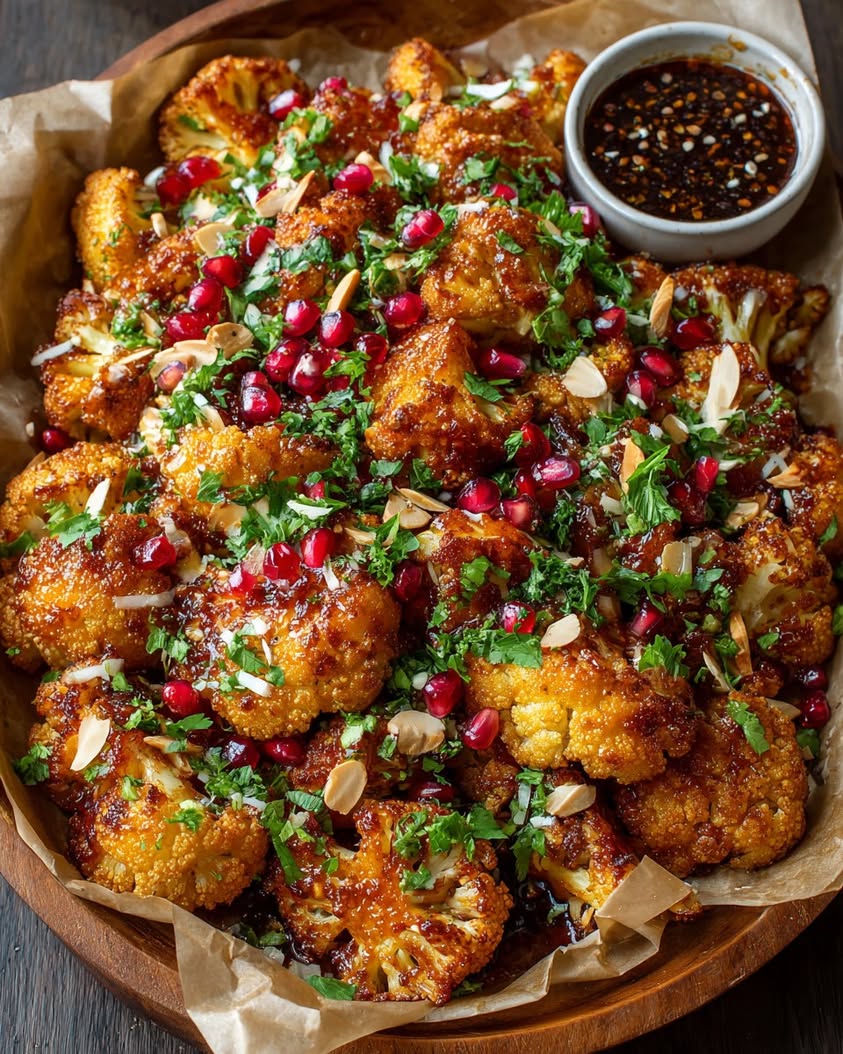
Honey Harissa Roasted Cauliflower with Tahini & Pomegranate Seeds: A Flavor Explosion
Imagine a dish that transforms a humble vegetable into a stunning centerpiece. This honey harissa roasted cauliflower with tahini and pomegranate seeds does exactly that. Consequently, it delivers a symphony of flavors and textures that will surprise and delight everyone at your table. Moreover, the process is surprisingly simple, turning basic ingredients into a culinary masterpiece.
The magic begins with roasting. Specifically, high heat caramelizes the natural sugars in the cauliflower, creating deep, nutty flavors. Meanwhile, the spicy-sweet honey harissa glaze coats each floret, creating a sticky, flavorful crust. Finally, a drizzle of cool, creamy tahini sauce and a sprinkle of juicy pomegranate seeds add the perfect finishing touches. Ultimately, this dish proves that plant-based eating can be incredibly exciting and satisfying.
This recipe is perfect for busy weeknights or impressive dinner parties. In fact, it requires minimal hands-on time. Furthermore, the ingredients are versatile and often already in a well-stocked pantry. Therefore, you can create a memorable meal without stress. This honey harissa roasted cauliflower with tahini is a guaranteed crowd-pleaser that celebrates bold, global flavors.
Quick Recipe Highlights
- Flavor Profile: This honey harissa cauliflower offers a perfect balance. Initially, you taste the sweet, floral notes of honey, followed by the warm, smoky heat of harissa. Subsequently, the earthy tahini and bright, tart pomegranate seeds create a complex and addictive taste experience.
- Texture: The texture contrast is key. The roasted cauliflower florets become tender with beautifully crisp, caramelized edges. Meanwhile, the creamy tahini sauce adds a luxurious, smooth mouthfeel. Finally, the crunchy pomegranate seeds provide a delightful pop with every bite.
- Aroma: As it roasts, the kitchen fills with an irresistible fragrance. The scent of toasting spices from the harissa blends with the sweet caramelization of honey and cauliflower. It’s a warm, inviting aroma that promises a delicious meal.
- Visual Appeal: This dish is a feast for the eyes. The golden-brown, glazed cauliflower looks stunning against the white drizzle of tahini. Additionally, the vibrant ruby-red pomegranate seeds and green herbs create a colorful, restaurant-worthy presentation on any plate.
- Skill Level Needed: This is an accessible recipe for all cooks. Basically, it involves simple chopping, mixing, and roasting. Therefore, even beginner cooks can achieve fantastic results. The techniques are straightforward but yield a dish that tastes professionally crafted.
- Special Equipment: You only need basic kitchen tools. A good baking sheet is essential for proper roasting. Furthermore, a small bowl for mixing the glaze and a whisk for the tahini sauce are all that’s required. No fancy gadgets are necessary.
Recipe Overview
- Difficulty Level: This honey harissa roasted cauliflower recipe is rated easy. The steps are simple and sequential, involving no complicated techniques. Chopping the cauliflower, whisking a glaze, and roasting are fundamental skills. Consequently, it’s a fantastic recipe for building kitchen confidence while creating something special.
- Category: This dish is wonderfully versatile. It shines as a spectacular vegetarian main course. Alternatively, it serves as a vibrant and flavorful side dish alongside grilled meats or fish. It also fits perfectly into a mezze or sharing platter for entertaining.
- Cuisine: This recipe draws inspiration from North African and Middle Eastern culinary traditions. Harissa paste originates from Tunisia, while tahini and pomegranate are staples across the Levant. The combination creates a modern, fusion dish that honors these rich food cultures with every bite.
- Cost: This is an incredibly cost-effective meal. A head of cauliflower is inexpensive, acting as the hearty base. Pantry staples like oil, honey, and spices form the glaze. Tahini and pomegranate are investment ingredients that last for many recipes. Overall, it delivers high-end flavor on a modest budget.
- Season: This honey harissa cauliflower is excellent year-round but feels particularly fitting in fall and winter. Cauliflower is at its peak during cooler months. Moreover, the warm spices are comforting when the weather turns cold. Conversely, the fresh toppings make it light enough for a spring or summer meal.
- Occasion: It’s perfect for any event. Serve it for a simple, healthy family dinner during the week. Furthermore, it’s impressive enough for holiday gatherings, like a Thanksgiving side. It also makes a beautiful centerpiece for a vegetarian dinner party or festive brunch.
Why You’ll Love This Recipe
First and foremost, the taste and texture are utterly captivating. This honey harissa roasted cauliflower with tahini is a rollercoaster for your palate. Each forkful delivers a new sensation, from sticky-sweet glaze to creamy sauce and juicy seed pops. The harissa provides a gentle, building heat that is warming, not overwhelming. Therefore, it satisfies cravings for something both savory and slightly sweet, making it a dish you’ll want to make repeatedly.
Secondly, the convenience factor is a major win. From prep to plate, this recipe takes less than an hour. Most of that time is hands-off roasting, allowing you to prepare other parts of your meal. The ingredient list is short and the steps are minimal. Consequently, you can whip up a stunning, healthy dish even on your busiest nights without sacrificing flavor or quality.
Nutritionally, this dish is a powerhouse. Cauliflower is loaded with vitamins C and K, fiber, and antioxidants. Tahini provides healthy fats, protein, and minerals like calcium and iron. Pomegranate seeds are famous for their antioxidant content. Together, they create a meal that is as nourishing as it is delicious. You’re feeding your body well while treating your taste buds.
For entertaining, this honey harissa cauliflower is a superstar. It looks spectacular on a table, sparking conversation. It caters beautifully to vegetarian, vegan, and gluten-free guests, simplifying menu planning. The bold flavors pair well with a variety of other dishes, from simple grains to elaborate feasts. It’s a reliable recipe that will earn you compliments and recipe requests every time you serve it.
Finally, it’s incredibly accessible and cost-effective. The main ingredient is an affordable vegetable transformed by a few key flavor agents. You likely have many components like oil, honey, and spices already. This recipe demonstrates how to eat well without spending a fortune. It encourages creativity in the kitchen and makes gourmet, global flavors achievable for any home cook.
Historical Background and Cultural Significance
The story of this dish is a tapestry of trade routes and traditions. Cauliflower itself has a long history, believed to have originated in Asia Minor before spreading to the Mediterranean. Meanwhile, harissa, the fiery chili paste, is the heart of Tunisian cuisine. Its name comes from the Arabic word “harasa,” meaning to pound or break, referring to the traditional method of grinding chilies and spices. The use of honey as a sweetener and preservative dates back millennia across these regions, creating a natural bridge between the heat of the spice and the desire for balance.
Each component carries deep cultural weight. Tahini, a paste of ground sesame seeds, is a cornerstone of Levantine and Middle Eastern food culture, appearing in dishes from hummus to halva. Pomegranates are rich in symbolism, representing abundance, fertility, and eternity in many cultures from ancient Persia to Greece. Combining these elements on a roasted vegetable is a relatively modern interpretation. However, it respectfully draws from centuries of culinary practice where balancing contrasting flavors—sweet, spicy, creamy, tart—is a celebrated art form.
The evolution of this recipe reflects contemporary cooking trends. Roasting vegetables to achieve deep caramelization has become a global standard for enhancing flavor. The modern fusion of North African harissa with a honey glaze speaks to today’s interconnected food world. This honey harissa roasted cauliflower is not a traditional historic dish but a new creation built on ancient foundations. It represents how global cuisines can inspire innovative, delicious, and approachable home cooking.
Regional variations of this concept abound. In Morocco, you might find roasted vegetables with a chermoula marinade. In Lebanon, roasted cauliflower is often served with a garlicky toum sauce. The specific combination of honey, harissa, tahini, and pomegranate is a unique fusion. It allows home cooks to explore these vibrant flavor profiles in one accessible dish. This recipe honors its ingredients’ origins while creating something fresh and exciting for the modern table.
Ingredient Deep Dive
Cauliflower: This versatile cruciferous vegetable is the star. Cultivated for centuries, it’s known for its mild flavor and ability to absorb surrounding seasonings. Nutritionally, it’s a great source of fiber, vitamins C and K, and contains compounds linked to various health benefits. When selecting, choose a head that feels heavy for its size with tightly packed, creamy-white florets and fresh, green leaves. Avoid any with brown spots or a loose structure. Store it unwashed in a perforated bag in the refrigerator’s crisper drawer for up to a week. For substitutions, broccoli or romanesco cauliflower can work, though cooking times may vary slightly.
Harissa Paste: This Tunisian chili paste is the flavor engine. Traditionally made with smoked red peppers, garlic, caraway, coriander, and cumin, it adds a complex, smoky heat. It brings anti-inflammatory capsaicin from the chilies and the digestive benefits of warming spices. Look for harissa in tubes or jars in the international aisle; quality varies, so taste a bit first. Once opened, store it in the refrigerator. If you can’t find harissa, a mix of tomato paste, smoked paprika, cayenne, and cumin can approximate the flavor, though it will lack the same depth.
Honey: Nature’s sweetener balances the harissa’s heat. Its floral notes complement the earthy vegetables and spices. Honey also contains antioxidants and has natural preservative qualities. For the best flavor in this honey harissa cauliflower, use a mild, runny honey like clover or wildflower. Darker honeys like buckwheat can overpower. Vegans can substitute maple syrup or agave nectar. Store honey at room temperature in a sealed container to prevent crystallization.
Tahini: This sesame seed paste adds essential creaminess. A staple across the Middle East, it’s rich in healthy fats, protein, calcium, and copper. Always stir your tahini well before using, as the oil naturally separates. For the sauce, quality matters—look for 100% ground sesame seeds with no added oils. A good tahini should taste nutty, not bitter. Store it upside down in the pantry to help with mixing, then refrigerate after opening. For a nut-free alternative, sunflower seed butter thinned with lemon juice and water can mimic the texture.
Pomegranate Seeds: These jewel-like arils provide a crucial burst of freshness and color. Symbolic in many cultures, they are packed with vitamin C, antioxidants, and fiber. You can buy them pre-seeded for convenience or seed a fresh pomegranate yourself. To store, keep seeds in an airtight container in the fridge for up to 5 days, or freeze them on a tray before transferring to a bag. For a substitute, try chopped fresh cherries, pomegranate molasses drizzle, or even a few dried cranberries for a different kind of tart chew.
Common Mistakes to Avoid
- Overcrowding the Pan: Placing the cauliflower florets too close together steams them instead of roasting them. They need space for hot air to circulate and create those desirable caramelized edges. Always use a large enough baking sheet and spread the florets in a single layer.
- Using Old, Dull Tahini: Tahini can become rancid or overly bitter over time. Always taste it before using. Furthermore, failing to stir it thoroughly will result in a separated, oily sauce that won’t emulsify properly with the lemon juice and water.
- Applying Glaze Too Early: If you coat the cauliflower in the honey harissa mixture before roasting, the sugars can burn in the high heat. Instead, roast the cauliflower first until it’s nearly tender, then apply the glaze for the final minutes to caramelize perfectly without scorching.
- Skipping the Acid: The lemon juice in the tahini sauce is not optional. It cuts through the richness of the tahini and balances the sweetness of the honey. Without it, the dish can taste one-dimensional and heavy.
- Underseasoning the Cauliflower: Cauliflower needs ample seasoning. Don’t forget to toss the florets with salt and oil before roasting. This foundational seasoning is crucial for building layers of flavor from the inside out.
- Not Preheating the Oven: A properly hot oven is essential for getting the right texture. Starting in a cold oven will cause the cauliflower to steam and become soggy rather than achieving a crispy, roasted exterior.
- Using Thick, Chilled Honey: If your honey is very thick or crystallized, it won’t mix evenly with the harissa and oil. Warm it gently by placing the jar in a bowl of warm water to thin it out for easy mixing.
- Neglecting the Garnish: The fresh herbs and pomegranate seeds are integral, not just decorative. They add necessary freshness, texture, and visual appeal. Skipping them leaves the dish feeling incomplete and less vibrant.
Essential Techniques
Proper Cauliflower Floret Cutting: This technique ensures even cooking. First, remove the outer leaves and slice off the stem. Then, turn the head upside down and use a small knife to cut around the core, releasing the florets. Finally, break or cut larger florets into uniform, bite-sized pieces. Uniformity is key so every piece roasts at the same rate. Avoid cutting them too small, or they may burn. The goal is substantial florets with flat surfaces to maximize caramelization.
Creating an Emulsified Tahini Sauce: A smooth, creamy sauce requires proper emulsification. Start with well-stirred tahini. Whisk in the lemon juice vigorously; the mixture will initially seize and thicken dramatically. This is normal. Then, gradually add cold water, whisking constantly, until the sauce thins to a perfect drizzling consistency. The cold water and steady whisking force the oil and solids to combine into a stable, creamy emulsion. If your sauce breaks or is too thin, whisk in a bit more tahini to bring it back together.
The Two-Stage Roasting Method: This is the secret to perfect honey harissa cauliflower. First, roast the oiled and seasoned florets at a high temperature until they are tender and starting to brown. This step develops the vegetable’s foundational flavor. Second, remove the pan, toss the florets with the honey-harissa glaze, and return to the oven for a shorter time. This final stage allows the glaze to caramelize and cling to the hot cauliflower without burning, creating a sticky, flavorful coating.
Pro Tips for Perfect Honey Harissa Roasted Cauliflower
- For extra crispy edges, pat the washed cauliflower florets completely dry with a clean kitchen towel before tossing them with oil. Any residual water will promote steaming.
- Line your baking sheet with parchment paper for easy cleanup. The honey in the glaze can become sticky and hard to scrub off a bare pan.
- If you prefer more heat, add an extra teaspoon of harissa paste to the glaze. Conversely, for a milder dish, mix the harissa with a tablespoon of tomato paste to temper the spice level.
- Toast your own sesame seeds and sprinkle them on top along with the pomegranate for an added layer of nutty flavor and crunch.
- Let the roasted cauliflower rest for 5 minutes after it comes out of the oven before drizzling with tahini. This allows the glaze to set slightly so the sauce doesn’t just run off.
- Use the leftover tahini sauce as a dip for vegetables or a dressing for grain bowls throughout the week. It keeps well in the fridge for up to 5 days.
- For a more substantial meal, serve the honey harissa cauliflower over a bed of fluffy couscous, quinoa, or lentils to soak up all the delicious sauces.
Variations and Adaptations
Regional Variations: Explore different global flavor profiles. For a Greek twist, replace the harissa glaze with a mixture of lemon juice, oregano, and olive oil, and use a tzatziki sauce instead of tahini. For an Indian-inspired version, toss the cauliflower in a curry powder and yogurt marinade before roasting, and garnish with cilantro and mango chutney.
Seasonal Adaptations: Adapt the toppings based on what’s fresh. In summer, use fresh chopped tomatoes or peaches for sweetness. In winter, garnish with toasted walnuts or a sprinkle of za’atar. You can also roast other seasonal vegetables like sweet potatoes or Brussels sprouts using the same honey harissa method.
Dietary Modifications: This recipe is naturally gluten-free and vegetarian. For a vegan honey harissa cauliflower, simply substitute the honey with maple syrup or agave nectar. To make it nut-free, ensure your tahini is processed in a dedicated facility, or replace the tahini sauce with a dairy-free yogurt sauce.
Flavor Variations: Experiment with the glaze. Add a tablespoon of soy sauce or balsamic vinegar for umami depth. Incorporate grated fresh ginger or orange zest into the honey-harissa mixture for a bright, citrusy note. Smoked paprika can enhance the smokiness if your harissa is mild.
Texture Modifications: For ultimate crispiness, toss the roasted cauliflower in the glaze and then broil for 2-3 minutes, watching closely. For a softer, more stew-like dish, add a splash of vegetable broth to the baking sheet after glazing and cover with foil to finish cooking.
Presentation Alternatives: Serve the whole roasted cauliflower head for a dramatic presentation. Coat it in the glaze and roast until tender. Present it whole on a platter, drizzle with tahini, and let guests break off florets. Alternatively, skewer the roasted florets for a fun, handheld appetizer.
Serving and Presentation Guide
Plating Techniques: For individual servings, place a generous scoop of cauliflower in the center of a shallow bowl or plate. Drizzle the tahini sauce in a zigzag or circular pattern over the top, allowing some to pool around the base. This creates visual interest and ensures sauce in every bite. For family-style, mound the honey harissa cauliflower on a large, colorful platter. Drizzle the tahini generously over the entire mound, then sprinkle the pomegranate seeds and herbs over the top, letting some fall naturally onto the platter.
Garnishing Ideas: The classic garnish of pomegranate seeds and fresh cilantro or parsley is perfect. For extra flair, add a sprinkle of toasted sesame seeds, chopped pistachios, or pine nuts for crunch. A light dusting of sumac or smoked paprika adds color and a flavor boost. A few delicate mint leaves can also provide a refreshing contrast.
Traditional Accompaniments: In the spirit of its influences, serve this dish with warm pita bread or flatbread for scooping. It pairs beautifully with other mezze like hummus, baba ganoush, and stuffed grape leaves. A simple cucumber and tomato salad with a lemon-olive oil dressing complements the rich flavors perfectly.
Modern Serving Suggestions: Transform it into a hearty grain bowl. Layer a base of quinoa or farro, add the roasted cauliflower, and drizzle with tahini. Top with avocado slices, pickled red onions, and a soft-boiled egg for a complete meal. It also makes a fantastic filling for wraps or pita pockets with some fresh greens.
Temperature Considerations: This honey harissa cauliflower is best served warm, shortly after it comes out of the oven, when the textures are at their peak. The tahini sauce should be at room temperature so it drizzles easily. However, the dish is also delicious at room temperature, making it excellent for picnics or potlucks.
Portion Control Tips: As a main course for four, one large head of cauliflower is sufficient. As a side dish, it can serve 6-8 people. If doubling the recipe for a crowd, use two baking sheets and rotate them in the oven halfway through cooking to ensure even browning.
Wine and Beverage Pairing
Wine Pairings: The sweet-spicy glaze and creamy tahini call for wines with good acidity and a touch of sweetness. A slightly off-dry Riesling or Gewürztraminer is a fantastic match, as their floral notes and acidity cut through the richness. For red wine lovers, a fruity, low-tannin Beaujolais or a Grenache-based rosé works well. Avoid heavily oaked wines, as they can clash with the dish’s vibrant flavors.
Non-Alcoholic Alternatives: Sparkling water with a squeeze of lemon or lime is always refreshing. For something more special, try a pomegranate spritzer made with pomegranate juice, sparkling water, and a sprig of mint. A tart, chilled hibiscus tea (agua de jamaica) complements the Middle Eastern flavors beautifully. Ginger beer also pairs nicely, as its spice echoes the harissa.
Coffee/Tea Pairings: After the meal, a cup of mint tea is a traditional and perfect choice, aiding digestion and cleansing the palate. For coffee, a medium-roast brew with notes of caramel or nut can be a pleasant finish, echoing the toasted notes in the dish.
Temperature Considerations: Serve white wines and non-alcoholic spritzers well-chilled. Red wines should be served slightly cooler than room temperature. Iced teas and sparkling drinks should be very cold to provide a refreshing contrast to the warm, spiced cauliflower.
Serving Suggestions: Always offer water alongside any beverage pairing to cleanse the palate. If serving wine, pour a small taste first to see how it interacts with the complex flavors of the honey harissa cauliflower. Encourage guests to take a bite, then a sip, to experience how the pairing enhances both the food and the drink.
Storage and Shelf Life
Storage Methods: Allow any leftover honey harissa roasted cauliflower to cool completely to room temperature. Store the roasted cauliflower, tahini sauce, and pomegranate seeds separately in airtight containers. This prevents the cauliflower from becoming soggy and the pomegranate seeds from bleeding color. The cauliflower and sauce can be stored in the refrigerator for up to 3-4 days.
Temperature Requirements: All components must be refrigerated. Do not leave the assembled dish at room temperature for more than two hours. The tahini sauce, containing lemon juice, is acidic and preserves well, but dairy-free sauces should always be kept cold.
Container Recommendations: Use glass containers with tight-fitting lids for the cauliflower to prevent it from absorbing other refrigerator odors. A small jar is ideal for the tahini sauce. The pomegranate seeds can be kept in a small bowl covered with plastic wrap or a reusable silicone lid.
Signs of Spoilage: Discard the cauliflower if it develops an off smell, becomes slimy, or shows signs of mold. The tahini sauce may separate, which is normal; simply re-whisk it. However, if it smells sour or fermented, it should be thrown out. Pomegranate seeds that have turned brown or mushy are past their prime.
Reheating Instructions: To restore the crispy texture, reheat the cauliflower in an air fryer or toaster oven at 375°F for 5-8 minutes until hot and re-crisped. You can also use a conventional oven on a baking sheet. Avoid the microwave, as it will make the florets soft and soggy. Add the fresh tahini drizzle and pomegranate seeds only after reheating.
Freezing Guidelines: Freezing is not recommended for the fully assembled dish. The roasted cauliflower can be frozen before adding the glaze. Spread the plain roasted florets on a baking sheet to freeze solid, then transfer to a freezer bag for up to 2 months. Thaw in the refrigerator and reheat in the oven, then add the glaze and fresh toppings.
Make Ahead Strategies
Prep Timeline: You can significantly speed up dinner time with smart prep. The day before, cut the cauliflower into florets and store them in a sealed container or bag in the refrigerator. Mix the honey harissa glaze and store it in a small jar at room temperature. Seed the pomegranate and make the tahini sauce; store both separately in the fridge.
Storage Between Steps: Keeping components separate is crucial for quality. The pre-cut cauliflower may dry out slightly, which can actually help with crisping. The tahini sauce may thicken in the fridge; simply whisk in a teaspoon of warm water to loosen it before serving. The glaze may solidify if honey-based; let it sit at room temperature before using.
Quality Impact Assessment: Prepping the cauliflower a day ahead has minimal negative impact. Making the tahini sauce ahead often improves the flavor as the ingredients meld. The pomegranate seeds are best prepared fresh but will keep for a day. The glaze can be made up to three days ahead without issue.
Assembly Tips: When ready to cook, simply toss the pre-cut cauliflower with oil and salt, then roast. In the last 10 minutes of roasting, toss with the pre-made glaze. While the cauliflower finishes, take the tahini sauce and pomegranate seeds out of the fridge to take the chill off. This streamlined process gets dinner on the table in under 30 minutes of active time.
Reheating Guidelines: If you fully cook and glaze the cauliflower ahead, reheat it as described in the storage section to restore texture. Do not re-add the pomegranate seeds until after reheating, as they will become cooked and lose their pop.
Fresh Element Additions: Always add the final fresh garnishes—herbs and pomegranate seeds—right before serving. This ensures they retain their vibrant color, crisp texture, and bright flavor, providing the essential contrast to the warm, roasted vegetables.
Scaling Instructions
Halving the Recipe: To serve two, use half a large head of cauliflower. Halve all other ingredient quantities proportionally. Use a standard baking sheet; the smaller quantity will cook slightly faster, so check for doneness 5 minutes earlier. The tahini sauce recipe halves easily, but you may have leftover sauce, which is great for salads.
Doubling or Tripling: For a crowd, simply multiply the ingredients. The key is to use multiple baking sheets. Do not pile the cauliflower onto one sheet, or it will steam. Roast on two racks in the oven and swap their positions halfway through cooking for even browning. You may need to add a few extra minutes to the cooking time.
Equipment Adjustments: When scaling up, ensure you have enough large, rimmed baking sheets. If you only have one, roast in consecutive batches, keeping the first batch warm in a low oven while the second cooks. For the tahini sauce, a larger mixing bowl or a blender can help emulsify a big batch smoothly.
Timing Modifications: Larger batches may require a slightly longer roasting time, but not double. Increase the initial roast time by 5-10 minutes, then check for tenderness. The glazing time remains the same. When cooking multiple sheets, the total oven time will be longer if you’re roasting in batches.
Storage Considerations: If making a large batch for leftovers, store components separately as advised. Scale the tahini sauce as needed, but note it’s best fresh. Consider garnishing only the portion you plan to serve immediately to keep leftovers in their best condition for reheating.
Nutritional Deep Dive
Macro Breakdown: This honey harissa roasted cauliflower is a well-balanced dish. The cauliflower and pomegranate provide complex carbohydrates and fiber. Tahini and olive oil contribute healthy monounsaturated and polyunsaturated fats, which aid in nutrient absorption. The tahini and cauliflower also offer a moderate amount of plant-based protein. The honey adds simple carbohydrates for energy. It’s a meal that provides sustained energy without a heavy calorie load.
Micronutrient Analysis: This dish is a micronutrient powerhouse. Cauliflower is rich in vitamin C, vitamin K, folate, and choline. Tahini is an excellent source of copper, manganese, phosphorus, and magnesium. Pomegranate seeds provide vitamin C and vitamin K. The spices in harissa, like cumin and coriander, contain various antioxidants and anti-inflammatory compounds. Together, they support immune function, bone health, and overall cellular protection.
Health Benefits: Consuming this meal supports several health goals. The high fiber content promotes digestive health and satiety. The antioxidants from the vegetables, pomegranate, and spices combat oxidative stress. The healthy fats support heart health and brain function. The compounds in cruciferous vegetables like cauliflower are being studied for their potential cancer-protective properties. It’s anti-inflammatory eating at its most delicious.
Dietary Considerations: This recipe is naturally gluten-free, dairy-free, and vegetarian. It can easily be made vegan with a sweetener swap. It’s suitable for most eating patterns, though those on strict low-carb or keto diets may want to reduce the amount of honey or use a sugar-free substitute and watch their portion of pomegranate seeds.
Portion Analysis: A serving as a main course provides a satisfying volume of food for a reasonable number of calories, largely due to the low-calorie density of cauliflower. As a side dish, the portion contributes valuable nutrients and flavor without overwhelming the plate. The fats from the tahini and oil help you feel full and satisfied.
Weight Management Tips: This dish is excellent for weight management. It’s high in volume and fiber, which promotes fullness. To reduce calories slightly, you can use a light hand with the oil in the roasting stage or spritz the cauliflower with oil instead of tossing. The tahini sauce is calorie-dense, so drizzle mindfully. The dish’s big flavors prevent feelings of deprivation.
Dietary Adaptations
Gluten-Free: This honey harissa roasted cauliflower is naturally gluten-free. All ingredients—cauliflower, spices, oil, honey, tahini, lemon, and pomegranate—are inherently free of gluten. Always double-check your harissa paste label, as very rarely some brands might include wheat-based thickeners, but this is exceedingly uncommon.
Dairy-Free: The recipe contains no dairy products. Tahini is made from sesame seeds, not dairy. The creamy texture of the sauce comes from the emulsified sesame paste, lemon, and water. It’s a perfect rich and creamy component for those avoiding dairy, lactose, or casein.
Vegan: Adapting this recipe is simple. Replace the honey with an equal amount of maple syrup, agave nectar, or vegan brown rice syrup. Ensure your harissa paste doesn’t contain any fish-based ingredients (most don’t). All other components are plant-based. You’ll achieve the same sweet-spicy balance with a vegan sweetener.
Low-Carb/Keto: For a keto-friendly version, replace the honey with a sugar-free maple-flavored syrup or a monk fruit sweetener mixed with a little water to achieve a syrup consistency. Significantly reduce or omit the pomegranate seeds, as they contain sugars. The cauliflower, tahini, and oils are all excellent for a keto diet, providing fat and fiber.
Paleo: To make this Paleo, substitute the honey (which is Paleo) but replace the tahini. Tahini is made from sesame seeds, which are technically a seed, but some strict Paleo followers avoid them. Instead, make a sauce from soaked and blended cashews with lemon juice and water to mimic the creaminess.
Low-FODMAP: Cauliflower is high in FODMAPs (specifically mannitol) and may not be suitable during the elimination phase. A suitable swap could be roasted carrots or bell peppers. Use garlic-infused oil instead of fresh garlic in the harissa or glaze if needed. Ensure the honey is replaced with maple syrup, as honey is high in fructose.
Nut-Free: This recipe is naturally nut-free. Tahini is a seed butter, not a nut butter. However, always check that your tahini is processed in a facility free from cross-contamination if you have a severe allergy. All other ingredients pose no nut risk.
Troubleshooting Guide
Cauliflower is Soggy, Not Crispy: This is usually due to overcrowding or insufficient oven heat. Ensure florets are in a single layer with space between them. Pat them completely dry before oiling. Make sure your oven is fully preheated. If your oven runs cool, try increasing the temperature by 25°F. Using convection bake, if available, can also promote better crisping.
Glaze is Burning: If the honey harissa mixture is blackening, you applied it too early or your oven is too hot. Remember the two-stage method: roast plain first, then glaze. If your oven has hot spots, rotate the pan. You can also reduce the oven temperature to 400°F for the glazing stage to gently caramelize without burning.
Tahini Sauce is Too Thick or Too Thin: If it’s a pasty lump, you haven’t added enough liquid. Whisk in more cold water, one tablespoon at a time, until it flows.{“success”:true,”message”:”Recipe created successfully”,”post_id”:9012,”tasty_recipe_id”:9012,”shortcode”:” Print
Honey Harissa Roasted Cauliflower with Tahini & Pomegranate Seeds
Description
A vibrant, sweet-and-spicy roasted cauliflower dish topped with creamy tahini sauce and jewel-like pomegranate seeds for a burst of freshness.
Ingredients
For the Crust:
- 1 large head cauliflower, cut into florets
- 2 tablespoons olive oil
- 1 tablespoon harissa paste
- 1 tablespoon honey
- 1 teaspoon ground cumin
- 1/2 teaspoon salt
- 1/4 teaspoon black pepper
- 1/4 cup tahini
- 2 tablespoons lemon juice
- 2–3 tablespoons water
- 1/4 cup pomegranate seeds
- 2 tablespoons chopped fresh parsley
Instructions
1. Prepare the Crust:
- Preheat oven to 425°F (220°C). Line a baking sheet with parchment paper.
- In a large bowl, whisk together olive oil, harissa paste, honey, cumin, salt, and pepper. Add cauliflower florets and toss to coat evenly.
- Spread cauliflower in a single layer on the prepared baking sheet. Roast for 25-30 minutes, flipping halfway, until tender and charred at edges.
- While cauliflower roasts, make tahini sauce: In a small bowl, whisk tahini and lemon juice until smooth. Gradually add water until a drizzle-able consistency forms.
- Transfer roasted cauliflower to a serving platter. Drizzle with tahini sauce, then sprinkle with pomegranate seeds and parsley. Serve warm.
Notes
You can customize the seasonings to taste.

I’m Billy, a classically trained culinary school graduate from The Culinary Institute of America with over 12 years in the restaurant industry and over 19 years of cooking experience.