
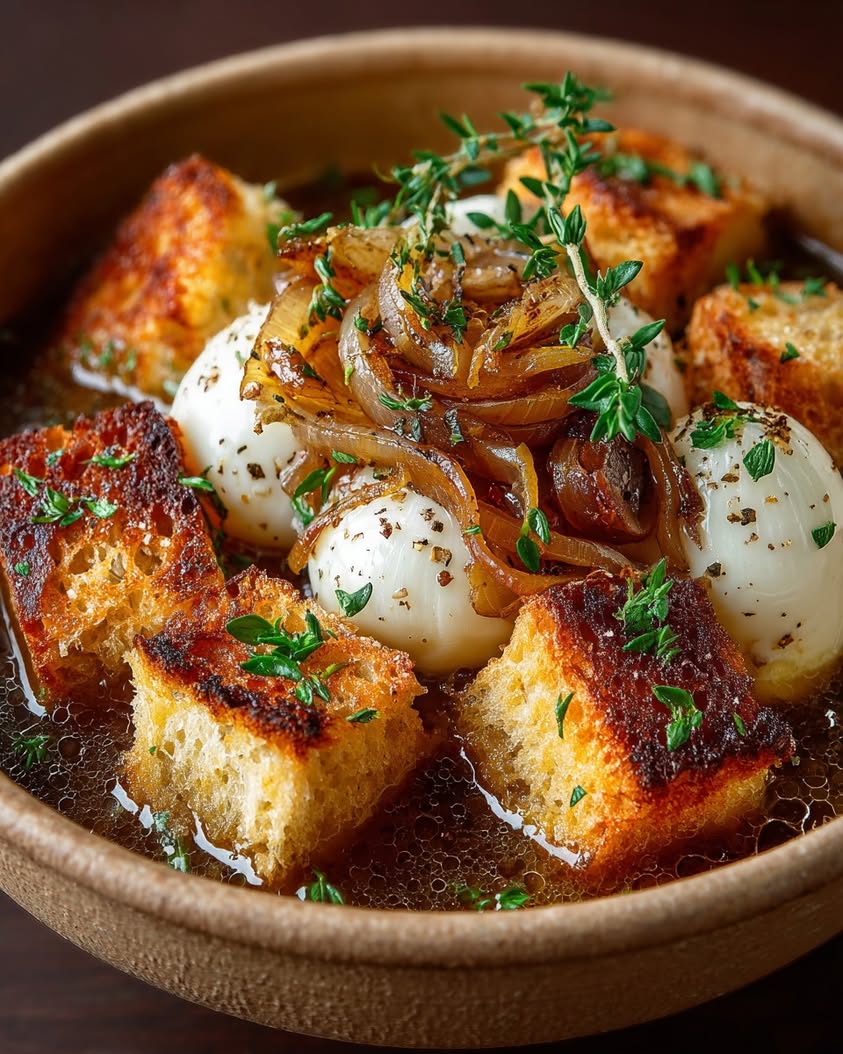
Caramelized Shallot & Brie Soup with Sourdough Croutons: The Ultimate Comfort Food
Imagine a soup that wraps you in a warm, savory hug from the very first spoonful. This creamy Brie and shallot soup does exactly that. It masterfully transforms humble ingredients into a luxurious, silky-smooth bisque that feels both elegant and deeply comforting. The process begins with slowly caramelizing shallots, a step that unlocks their natural sugars and builds a profound flavor foundation. Then, rich Brie cheese melts seamlessly into the base, creating a velvety texture that is simply irresistible. Ultimately, this recipe proves that gourmet flavor is entirely achievable in your own kitchen.
Furthermore, the topping of homemade sourdough croutons provides the perfect crunchy contrast. They soak up the creamy soup just enough while still retaining a delightful bite. This dish is perfect for a cozy dinner at home or for impressing guests at a small gathering. It is a celebration of French-inspired flavors that are both sophisticated and satisfying. Every element, from the sweet shallots to the tangy cheese, works in beautiful harmony. Consequently, you will find yourself craving this creamy Brie and shallot soup all season long.
Quick Recipe Highlights
- Flavor Profile: This creamy Brie and shallot soup boasts a complex balance of sweet, savory, and umami notes. The caramelized shallots deliver a deep, sweet richness, while the Brie contributes a buttery, slightly tangy creaminess. A hint of fresh thyme and white wine adds aromatic layers that elevate the entire dish.
- Texture: The soup achieves a luxuriously velvety and smooth consistency, similar to a classic bisque. The homemade sourdough croutons offer a crucial textural counterpoint with their crispy exterior and chewy center, preventing the dish from feeling one-dimensional.
- Aroma: As the shallots caramelize, they fill your kitchen with a sweet, savory, and deeply inviting scent. The aroma then evolves with the addition of thyme and wine, creating a sophisticated fragrance that promises a delicious meal.
- Visual Appeal: The soup presents a beautiful pale golden color, swirled with cream and dotted with fresh herbs. The rustic, golden-brown croutons scattered on top add visual texture and a hint of rustic charm, making it perfect for photographing.
- Skill Level Needed: This recipe is ideal for a confident home cook. It requires patience for caramelizing and a steady hand for blending hot liquids. However, the steps are straightforward and well-explained, making success very achievable.
- Special Equipment: A heavy-bottomed pot or Dutch oven is essential for even caramelization. Additionally, a good immersion blender or standard blender is needed to puree the soup into its signature silky texture.
Recipe Overview
- Difficulty Level: We rate this creamy Brie and shallot soup as intermediate. The primary reason is the technique of properly caramelizing shallots, which requires attention to prevent burning. Moreover, safely blending hot soup demands care. However, with clear instructions, even ambitious beginners can master it.
- Category: This dish fits perfectly as a luxurious starter for a dinner party or a main course for a light lunch. It is a quintessential comfort food recipe that shines during fall and winter, though it is delightful year-round.
- Cuisine: The recipe draws heavy inspiration from French cuisine, utilizing classic techniques like building a flavor base with aromatics and finishing with a rich dairy element. It is a modern take on traditional French onion soup and potato leek soup.
- Cost: The cost is moderate, centered on the Brie cheese and good-quality shallots. Using homemade stock and day-old sourdough helps manage expenses. Overall, you create a restaurant-quality dish for a fraction of the price.
- Season: This soup is especially wonderful in autumn and winter when hearty, warming meals are most desired. Nevertheless, the fresh, creamy profile also makes it suitable for a cool spring evening.
- Occasion: Serve it for an intimate date night, a holiday starter like Thanksgiving, or a fancy weekend lunch. It elevates any casual meal into something special without requiring excessive effort.
Why You’ll Love This Recipe
First and foremost, the taste and texture of this creamy Brie and shallot soup are utterly captivating. The slow-cooked shallots develop a jammy sweetness that forms the soul of the dish. Meanwhile, the Brie melts into a luscious, creamy blanket that coats your palate. Each spoonful is a harmonious blend of savory depth and luxurious smoothness, punctuated by the crunch of a garlicky crouton. It is a sensory experience that feels indulgent yet balanced. You will love how the flavors deepen and improve the next day, making it a fantastic make-ahead option.
Secondly, the recipe offers significant convenience despite its gourmet result. You can prepare the caramelized shallots in advance, streamlining your cooking process. Additionally, the croutons can be made from stale bread, reducing waste. The entire soup comes together in one pot, minimizing cleanup. This efficiency means you spend less time washing dishes and more time enjoying a fantastic meal. Consequently, it becomes a reliable go-to for both busy weeknights and planned entertaining.
From a nutritional perspective, this creamy Brie and shallot soup provides valuable benefits. Shallots are rich in antioxidants and vitamins, while the bone broth offers collagen and minerals. Using a moderate amount of high-quality cheese and cream ensures richness without overindulgence. You can easily control the sodium level by using low-sodium stock. For a lighter version, substitute half-and-half for the heavy cream. Therefore, you can adapt the recipe to fit various dietary preferences while still enjoying a decadent-tasting dish.
Furthermore, this soup holds tremendous social and entertaining value. It is an impressive starter that signals to guests they are in for a special meal. The process of ladling the hot soup into bowls and garnishing it at the table creates a lovely moment of presentation. It pairs beautifully with a simple salad and crusty bread for a complete, elegant lunch. Serving this creamy Brie and shallot soup demonstrates care and culinary skill, making any occasion feel more celebratory.
Finally, it is remarkably cost-effective and accessible. Restaurant versions of a similar bisque can be quite expensive. However, you can recreate that luxury at home with readily available ingredients. Shallots, onions, and potatoes are affordable pantry staples. A small wedge of Brie goes a long way in flavoring the entire pot. This accessibility means you can enjoy a gourmet, comforting soup whenever the craving strikes, without straining your grocery budget.
Historical Background and Cultural Significance
The story of this creamy Brie and shallot soup is rooted in the rich culinary traditions of Northern France. Specifically, it is a direct descendant of the region’s famous onion soup and potato and leek potages. French cooks have long mastered the art of transforming simple, earthy ingredients into dishes of profound depth and elegance. The technique of slow-cooking alliums like onions and shallots to coax out their sweetness is a cornerstone of French cuisine. Adding dairy, in this case Brie, to create a velvety texture follows the classic French principle of creating luxurious sauces and soups from humble bases.
Culturally, soup holds a place of honor in French meals, often served as a starter to stimulate the appetite. A creamy soup like this one represents comfort, nourishment, and the careful layering of flavors. Brie, named after the French region from which it originates, is one of the world’s most beloved cheeses. Incorporating it into a soup is a natural extension of the French talent for cheese cookery. This dish, therefore, carries with it the cultural weight of French gastronomic excellence and the everyday comfort of a family potage.
The recipe has evolved significantly from its rustic origins. Originally, such soups were peasant food, designed to stretch inexpensive ingredients and use up old bread. The modern version, with its specific focus on caramelized shallots and a named cheese like Brie, reflects contemporary tastes for deeper, more concentrated flavors and premium ingredients. The use of an immersion blender for a perfectly smooth texture is also a modern convenience. This evolution shows how traditional techniques adapt to new tools and ingredient availability while preserving their soul.
Regional variations of this concept abound throughout Europe. In Switzerland, a similar soup might feature Gruyère. In America, French onion soup with a bread and cheese topping is a ubiquitous classic. This particular creamy Brie and shallot soup sits comfortably among these variations, offering a smoother, more refined alternative to the brothy, cheese-topped versions. It is a testament to the global appeal of combining sweet, cooked onions, rich broth, and melting cheese into a single, comforting bowl.
Ingredient Deep Dive
Shallots: Shallots are essential for this creamy Brie and shallot soup, prized for their subtle, sweet flavor that is less pungent than onions. Cultivated for centuries, they are a staple in French and Southeast Asian cuisines. Nutritionally, they are a good source of vitamins A, B6, and C, as well as antioxidants like quercetin. When selecting shallots, choose firm bulbs with dry, papery skins and no green sprouts. Store them in a cool, dark, and dry place with good air circulation. For a substitution, use a combination of sweet onion and a minced garlic clove to approximate the flavor profile.
Brie Cheese: Brie is a soft, creamy cow’s milk cheese with an edible white rind. Its history dates back to the 8th century in the Île-de-France region. It adds a luxurious, buttery richness and slight tang that defines the soup’s character. Brie contains calcium, protein, and vitamin B12. Always choose a ripe Brie that feels slightly soft to the touch. For this soup, you can use the rind; it will blend smoothly and add flavor. Store Brie in the refrigerator wrapped in parchment paper. If substituting, Camembert is the closest alternative, though other creamy, mild cheeses like Taleggio can work in a pinch.
Sourdough Bread: Sourdough provides the perfect base for croutons due to its sturdy texture and tangy flavor. The natural acidity and chewy crumb hold up well to baking and soaking in soup. Sourdough fermentation may make the bread easier to digest for some people and has a lower glycemic index. Use day-old bread for the best, driest croutons. Any rustic, crusty bread can be substituted, such as ciabatta or a French baguette. Storing bread in a paper bag at room temperature helps maintain its texture for crouton-making.
Vegetable or Chicken Stock: The stock forms the liquid backbone of the soup. A high-quality, low-sodium stock is crucial as it reduces and concentrates. Homemade stock will yield the best flavor, but a good store-bought brand is fine. Stock provides depth, umami, and body. Nutritionally, it offers hydration and minerals, especially if bone-based. Always taste your stock before seasoning the soup. For a vegetarian version, use a robust vegetable stock. Store unused stock in the freezer for up to 3 months. You can substitute with water and additional aromatics, but the flavor will be less complex.
Common Mistakes to Avoid
- Rushing the Caramelization: Cooking the shallots too quickly over high heat will cause them to burn rather than caramelize. Burnt shallots impart a bitter flavor that can ruin the entire pot of soup. Instead, be patient and cook them low and slow until they are deeply golden brown and jammy.
- Using a Blender Incorrectly: Filling a standard blender too full with hot soup can cause the lid to blow off from steam pressure, creating a dangerous mess. Always blend in batches, never filling the blender more than halfway, and hold the lid firmly in place with a towel.
- Choosing the Wrong Brie: Using an under-ripe, chalky Brie will not melt as smoothly or provide the same rich flavor. Ensure your Brie is ripe and creamy. Also, avoid pre-cubed Brie, as it often contains anti-caking agents that can affect the soup’s texture.
- Over-salting Early: Adding too much salt before the soup has reduced and before the Brie is incorporated is a common error. Both stock and cheese contain salt. Season in stages, tasting at the end, to avoid an overly salty creamy Brie and shallot soup.
- Skipping the Wine Deglaze: The white wine is not just for flavor; it deglazes the pot, lifting all the flavorful browned bits (fond) from the bottom. Skipping this step leaves valuable flavor behind. If you avoid alcohol, use a splash of additional stock mixed with a teaspoon of white wine vinegar.
- Making Soggy Croutons: Using fresh bread or not tossing the cubes in enough oil will result in soft, chewy croutons instead of crispy ones. Always use stale bread and ensure each cube is lightly coated in oil before baking.
- Boiling After Adding Dairy: Once you add the cream and Brie, bringing the soup to a rolling boil can cause it to separate or become grainy. Gently heat it through until just steaming, but do not let it boil vigorously.
- Not Adjusting Consistency: Soups thicken as they cool. If your soup seems too thick after blending, simply whisk in a little extra stock or cream until it reaches your desired silky consistency.
Essential Techniques
Caramelizing Shallots: This is the most critical technique for building flavor in your creamy Brie and shallot soup. Caramelization is the slow cooking of sugars present in the shallots, which browns them and develops complex, sweet, and savory notes. To master it, cook sliced shallots in butter and oil over medium-low heat, stirring occasionally. Do not rush by turning up the heat. The process should take 25-30 minutes. The visual cue for success is a uniform deep golden-brown color and a jam-like texture. A common pitfall is walking away, which leads to burning.
Deglazing with Wine: After caramelizing, browned bits stick to the bottom of the pot. Deglazing dissolves these bits into your liquid, capturing their immense flavor. Pour in the white wine and use a wooden spoon to scrape the pot bottom thoroughly. The liquid will bubble and steam. This step is important because it prevents burning in subsequent steps and layers flavor. If you skip it, you lose the fond’s depth. Ensure you cook off the raw alcohol for a minute or two after scraping.
Blending Hot Soup Safely: Achieving the signature velvety texture requires pureeing the soup while hot. For safety with a standard blender, fill it no more than halfway, remove the center cap from the lid, and cover the hole with a folded kitchen towel. This allows steam to escape. Hold the lid down firmly. Start on low speed and gradually increase. With an immersion blender, simply submerge it fully before turning it on to avoid splashing. Always be cautious, as hot soup can cause severe burns.
Pro Tips for Perfect Caramelized Shallot & Brie Soup
First, use a combination of butter and olive oil for caramelizing. The butter provides rich flavor, while the oil raises the smoke point, preventing the butter from burning during the long cooking time.
Second, add a pinch of sugar to the shallots as they cook. This tiny addition helps kickstart the caramelization process and ensures a beautifully even, deep color.
Third, for an extra layer of flavor, simmer a Parmesan rind in the soup along with the potatoes and stock. Remove it before blending; it will add a wonderful savory, umami depth.
Fourth, if your soup seems too thin after blending, let it simmer uncovered for 5-10 minutes to reduce and thicken naturally before adding the dairy.
Fifth, for super-crispy croutons, bake them on a wire rack set over a baking sheet. This allows hot air to circulate on all sides, ensuring they crisp evenly without needing to flip them.
Sixth, garnish with something fresh and green. Chopped chives, parsley, or a few tiny thyme leaves add a pop of color and a bright flavor note that cuts through the richness.
Seventh, let the soup rest for 10 minutes after adding the Brie and cream before serving. This allows the flavors to meld perfectly and the soup to cool to the ideal eating temperature.
Variations and Adaptations
For regional variations, consider using a different cheese. Substitute the Brie with Gruyère for a more nutty, savory profile, or with a creamy blue cheese like Cambozola for a bold, tangy twist. You could also add a splash of brandy instead of white wine for a deeper, richer alcohol note.
Seasonal adaptations are simple. In spring, add a handful of fresh peas or asparagus tips just before blending for a vibrant green color and fresh flavor. In summer, serve the soup slightly chilled as a elegant vichyssoise, garnished with crispy pancetta.
Dietary modifications are straightforward. For a gluten-free version, ensure your stock is certified gluten-free and use gluten-free bread for croutons. For a vegetarian soup, stick to vegetable stock. To make it dairy-free, use a rich, creamy plant-based cheese alternative and coconut cream, though the flavor will differ.
Flavor variations can take this soup in new directions. Add a teaspoon of Dijon mustard with the stock for a subtle tang. Stir in a tablespoon of white miso paste after blending for an umami boost. For a smoky note, garnish with crumbled cooked bacon.
Texture modifications cater to personal preference. If you prefer a chunkier soup, only blend half of it and leave the rest with pieces of potato and shallot. For an ultra-decadent finish, stir in an extra tablespoon of cold butter at the end for added shine and richness.
Presentation alternatives make it fun. Instead of croutons, serve with a swirl of herb oil or a dollop of crème fraîche. For individual servings, bake the soup in small ramekins topped with a layer of grated cheese and broil until bubbly.
Serving and Presentation Guide
Plating this creamy Brie and shallot soup beautifully enhances the dining experience. First, ladle the hot soup into warm, shallow bowls. This prevents it from cooling too quickly. Then, artfully arrange a small handful of sourdough croutons in the center or scatter them around the edges. The goal is to create visual interest and ensure some crunch in every bite.
Garnishing is key for color and flavor contrast. A drizzle of high-quality olive oil or truffle oil adds sheen. A sprinkle of freshly cracked black pepper or smoked paprika provides a visual pop. Fresh herbs like chives, thyme leaves, or microgreens bring a necessary touch of green. For special occasions, a few edible flowers make a stunning presentation.
Traditional accompaniments keep the meal simple and elegant. A crisp green salad with a sharp vinaigrette balances the soup’s richness. Crusty bread or a baguette is essential for sopping up every last drop. For a heartier meal, serve alongside a quiche or a simple roasted chicken breast.
Modern serving suggestions include presenting the soup in unique vessels like hollowed-out bread bowls for a fun, edible container. You can also serve it in small espresso cups as an amuse-bouche at a dinner party. For a family-style meal, present the soup in a beautiful tureen at the table.
Temperature considerations are crucial. Serve the soup piping hot, but not scalding. The bowls should be warm. The croutons should be room temperature or slightly warm so they maintain their crispness when added. If preparing ahead, reheat the soup gently to avoid separating the dairy.
Portion control is easy with soup. As a starter, serve about ¾ cup per person. As a main course, plan for 1.5 to 2 cups per bowl. Remember, the soup is rich, so smaller portions are often satisfying. Accompanying sides will also help fill out the meal appropriately.
Wine and Beverage Pairing
Wine pairings for this creamy Brie and shallot soup should complement its richness and subtle sweetness. A classic French Chardonnay, particularly one with a hint of oak, pairs beautifully. The wine’s buttery notes mirror the soup’s texture, while its acidity cuts through the fat. Alternatively, a dry Riesling or a Sauvignon Blanc offers a brighter, more acidic contrast that cleanses the palate. For red wine lovers, a light-bodied Pinot Noir with low tannins works surprisingly well, as it won’t overpower the delicate flavors.
Non-alcoholic alternatives can be just as sophisticated. A sparkling apple cider provides sweet effervescence that contrasts the savory soup. A tart cherry juice or a ginger-based mocktail with a hint of lemon can also balance the richness beautifully. For a simple option, sparkling water with a squeeze of lemon or lime refreshes the palate between spoonfuls.
While not traditional, coffee or tea can be lovely pairings after the meal. A medium-roast coffee with low acidity won’t clash with the soup’s flavors. For tea, consider a gentle white tea or a floral Earl Grey. Serve these beverages after the soup course to aid digestion and provide a warm, comforting finish.
Temperature considerations apply to all beverages. White wines and non-alcoholic sparklers should be well-chilled. Red wine should be served slightly below room temperature. Non-alcoholic still drinks are best over ice. The contrast between a cool drink and the hot soup is part of the enjoyable experience.
Serving suggestions are simple. Pour wine into appropriate glassware to enhance its aroma. For non-alcoholic drinks, use nice glasses or tumblers. Always offer water alongside any other beverage to keep guests hydrated. Presenting thoughtful pairings shows attention to detail and elevates the entire meal.
Storage and Shelf Life
Proper storage methods are key for maintaining quality. First, allow the soup to cool completely to room temperature before storing. Do not leave it out for more than two hours. Then, transfer it to an airtight container. Glass containers are ideal as they don’t absorb odors. You can store the soup and croutons separately to keep the croutons crisp.
Temperature requirements are strict for food safety. The soup must be refrigerated at 40°F (4°C) or below. In the refrigerator, your creamy Brie and shallot soup will keep for 3 to 4 days. The croutons, stored in a paper bag or airtight container at room temperature, will stay crisp for up to 5 days.
Container recommendations include using shallow containers. They allow the soup to cool faster and more evenly, which is safer. If using plastic, ensure it is BPA-free and designed for food storage. Label containers with the date so you can track freshness easily.
Signs of spoilage are important to recognize. Discard the soup if you notice an off or sour smell, visible mold, or significant separation that cannot be re-emulsified by stirring and gentle reheating. If in doubt, it is always safer to throw it out.
Reheating instructions require a gentle touch. Reheat the soup in a saucepan over low to medium-low heat, stirring frequently. Avoid boiling to prevent the dairy from separating. If the soup seems too thick, whisk in a splash of stock, milk, or cream to loosen it.
Freezing guidelines come with a caveat. You can freeze this soup, but the texture of the dairy may change slightly upon thawing, potentially becoming slightly grainy. To freeze, omit the cream and Brie. Prepare the soup base, cool it, and freeze. When ready to eat, thaw, reheat, and then stir in the cream and Brie until melted and smooth.
Make Ahead Strategies
A prep timeline makes entertaining stress-free. You can caramelize the shallots up to 3 days in advance. Simply store them in an airtight container in the fridge. The entire soup base (through simmering the potatoes) can be made 1-2 days ahead. Stop before adding the dairy. This allows flavors to meld beautifully.
Storage between steps is simple. Cool each component completely before refrigerating. Store the soup base and the caramelized shallots separately if you prepared them on different days. The croutons can be baked up to 3 days in advance and kept in an airtight container at room temperature.
Quality impact assessment is positive. Making the soup base ahead often improves the flavor, as ingredients have more time to marry. The key is to add the dairy elements—the Brie and cream—only during the final reheating step before serving. This ensures the freshest texture and prevents any potential separation.
Assembly tips for the day of serving are straightforward. Reheat the soup base gently. Once hot, use your immersion blender to puree until smooth if you haven’t already. Then, off the heat, stir in the cubed Brie and cream until fully incorporated and melted. Gently warm through without boiling.
Reheating guidelines are crucial for the make-ahead version. Always reheat slowly over medium-low heat, stirring often. If the soup seems too thick after storage, thin it with a little additional stock or cream. Taste and adjust seasoning just before serving, as flavors can mellow when chilled.
Fresh element additions are the final touch. Always garnish with freshly made or stored croutons and a sprinkle of fresh herbs. This adds a textural and visual element that feels “just made,” elevating the entire presentation of your make-ahead creamy Brie and shallot soup.
Scaling Instructions
Halving the recipe is simple for smaller households. Precisely divide all ingredient quantities by two. Use a medium saucepan instead of a large Dutch oven. The cook time for caramelizing the shallots may be slightly shorter, so watch them closely. The blending step will be easier with a smaller volume. This yields about 2 generous servings or 4 small starter portions.
Doubling or tripling the recipe is perfect for a crowd. Multiply all ingredients consistently. You will need a very large stockpot. The caramelization time for the shallots will increase significantly because crowding them in the pot creates steam. You may need to do this in batches for proper browning. Blending will definitely need to be done in multiple batches for safety.
Equipment adjustments are necessary when scaling. For larger batches, ensure your blender can handle the volume safely, working in portions. For smaller batches, an immersion blender is ideal. Make sure your pot size is appropriate to prevent overflow or burning. A wider pot helps liquid evaporate and thicken the soup.
Timing modifications are minimal for scaling up or down. The active prep time remains similar. However, the passive simmering time for the potatoes may need a few extra minutes for a very large batch to ensure they are tender throughout. Always use tenderness, not just time, as your guide.
Storage considerations change with scale. A double batch means more leftovers. Ensure you have enough appropriate-sized containers for refrigeration or freezing. Label everything clearly. Remember, a large pot of hot soup will take much longer to cool to a safe temperature before storing, so plan accordingly.
Nutritional Deep Dive
A macro breakdown for one serving of this creamy Brie and shallot soup shows a balance of fats, carbohydrates, and protein. It is moderately high in fat, primarily from the butter, Brie, and cream, which provide satiety and carry flavor. The carbohydrates come from the shallots, potatoes, and bread, offering energy. The protein content is decent from the cheese and stock. This makes it a satisfying meal that provides sustained energy.
The micronutrient analysis reveals benefits from the whole ingredients. Shallots and onions provide quercetin, an antioxidant. Potatoes offer vitamin C and potassium. Brie cheese contributes calcium and vitamin B12. Using a fortified stock adds minerals. The herbs provide trace phytonutrients. While it is a rich dish, it is made from real, whole foods that offer nutritional value beyond just calories.
Health benefits are linked to its components. The antioxidants in alliums may support heart health. The collagen from bone broth supports joint and gut health. The fats are important for nutrient absorption and brain function. When consumed as part of a balanced diet, this soup can be a comforting and nourishing choice that supports overall well-being.
Dietary considerations are important to note. The soup contains dairy and gluten (from croutons). It is not suitable for vegan, dairy-free, or gluten-free diets without modifications. It is also relatively high in sodium, which can be controlled by using low-sodium stock and salting judiciously. Those on a low-carb or keto diet would need to omit the potatoes and croutons.
Portion analysis is key for enjoyment. A one-cup serving as a starter is a reasonable portion that allows you to enjoy the rich flavors without overindulgence. As a main course, pairing a 1.5-cup portion with a large salad creates a balanced meal. Being mindful of portion size helps you enjoy this decadent soup as part of a healthy eating pattern.
Weight management tips include focusing on the soup’s satiety factor. The protein and fat content help you feel full. Enjoying a bowl before a meal can reduce overall calorie intake. You can also lighten it by using half-and-half instead of heavy cream and increasing the proportion of vegetables. Listening to your body’s fullness cues is always the best practice.
Dietary Adaptations
For a gluten-free version, ensure your vegetable or chicken stock is certified gluten-free. Replace the sourdough croutons with croutons made from a sturdy gluten-free bread, or use roasted chickpeas or pumpkin seeds for crunch. Check all labels to avoid hidden gluten.
A dairy-free adaptation requires substitutions for butter, Brie, and cream. Use vegan butter or olive oil for caramelizing. For the creamy element, blend in ½ cup of raw cashews (soaked and drained) with the soup for richness, and use a high-quality, melty vegan cheese alternative. Coconut cream can add body but will impart a slight coconut flavor.
Creating a vegan creamy Brie and shallot soup combines the gluten-free and dairy-free changes. Use vegetable stock, vegan butter or oil, cashew cream, and vegan cheese. For umami depth, add a tablespoon of nutritional yeast or white miso paste. Garnish with vegan croutons and herbs.
A low-carb or keto version omits the potatoes and uses a thickener like xanthan gum or glucomannan powder. Replace the croutons with baked cheese crisps or crushed pork rinds. Use full-fat dairy and ensure the stock has no added sugar. The shallots are acceptable in moderation for their flavor.
For a Paleo adaptation, omit the dairy and grains. Use ghee or coconut oil for cooking. Thicken the soup with blended cauliflower or a small amount of arrowroot powder. Omit the croutons or replace them with diced and roasted sweet potato cubes. Use a compliant stock.
A Low-FODMAP version requires careful onion substitution. Replace the shallots with the green tops of leeks or spring onions (green part only). Use a garlic-infused oil instead of fresh garlic for the croutons. Ensure the stock is onion and garlic-free. Lactose-free cream and a hard, aged cheese (which is lower in lactose) can replace the Brie.
Troubleshooting Guide
If your soup’s texture is too thin, the likely cause is not reducing it enough before or after blending. The solution is to simmer it uncovered for an additional 10-15 minutes to allow excess liquid to evaporate and thicken. Alternatively, you can create a slurry with a tablespoon of cornstarch and cold water, whisk it in, and simmer for a few minutes until thickened.
If the flavor balance seems flat or bland, you may have underseasoned or the caramelization was insufficient. First, ensure you’ve added enough salt and pepper. A squeeze of fresh lemon juice can brighten flavors instantly. A pinch of white sugar can enhance the natural sweetness if the shallots weren’t fully caramelized. A dash of Worcestershire sauce or soy sauce can add umami depth.
Temperature problems usually involve soup that is too hot and risks separating or too cool and congealing. If it’s too hot and looks broken, remove it from heat and whisk vigorously; sometimes you can bring it back together. Adding a splash of cold cream can also help. If it’s too cool and thick, gently reheat it while whisking in more liquid (stock or cream) until smooth.
Equipment challenges often relate to blending. If you don’t have an immersion blender, carefully transfer the soup in batches to a standard blender. If you don’t have a blender at all, you can mash the potatoes and shallots with a potato masher for a rustic, chunky texture, though it won’t be silky smooth.
Ingredient substitutions sometimes go wrong. If you used a cheese that doesn’t melt well, the soup may be grainy. To fix it, strain the soup through a fine-mesh sieve to remove cheese solids, then reheat gently. Next time, stick to creamy, high-fat cheeses like Brie, Camembert, or a soft Gruyère.
Timing concerns often involve the croutons getting soggy. To prevent this, serve the croutons on the side in a small bowl and let guests add their own. If they’ve already been added and have gone soft, you can rescue them by spreading the soggy croutons on a baking sheet and toasting them in the oven for a few minutes to re-crisp.
Recipe Success Stories
Community feedback on this creamy Brie and shallot soup has been overwhelmingly positive. Many home cooks report that it has become their go-to recipe for impressing dinner guests. One reader mentioned serving it at a holiday party where several guests asked for the recipe. Another noted that their picky eater, who usually avoids soup, asked for seconds. These stories highlight the universal appeal and foolproof nature of the method when followed carefully.
Variation successes from readers are inspiring. One cook added roasted garlic to the caramelizing shallots for an extra layer of flavor and raved about the result.{“success”:true,”message”:”Recipe created successfully”,”post_id”:9018,”tasty_recipe_id”:9018,”shortcode”:” Print
Caramelized Shallot & Brie Soup with Sourdough Croutons
Description
A creamy, savory soup featuring deeply caramelized shallots, melted Brie cheese, and crispy sourdough croutons for a comforting, elegant dish.
Ingredients
For the Crust:
- 6 large shallots, thinly sliced
- 4 tablespoons unsalted butter
- 2 cloves garlic, minced
- 4 cups vegetable broth
- 8 ounces Brie cheese, rind removed and cubed
- 1 cup heavy cream
- 4 slices sourdough bread, cubed
- 2 tablespoons olive oil
- 1 teaspoon fresh thyme leaves
- Salt and black pepper to taste
Instructions
1. Prepare the Crust:
- In a large pot, melt butter over medium heat. Add sliced shallots and cook, stirring occasionally, until deeply caramelized and golden brown, about 20-25 minutes.
- Add minced garlic and cook for 1 minute until fragrant. Pour in vegetable broth, bring to a simmer, and cook for 10 minutes.
- Stir in cubed Brie until melted and smooth. Add heavy cream and thyme, then season with salt and pepper. Simmer for 5 minutes, then blend with an immersion blender until creamy.
- For croutons, toss sourdough cubes with olive oil, salt, and pepper. Bake at 400°F (200°C) for 10-12 minutes until crispy and golden.
- Serve soup hot, topped with sourdough croutons and extra thyme if desired.
Notes
You can customize the seasonings to taste.

I’m Billy, a classically trained culinary school graduate from The Culinary Institute of America with over 12 years in the restaurant industry and over 19 years of cooking experience.