
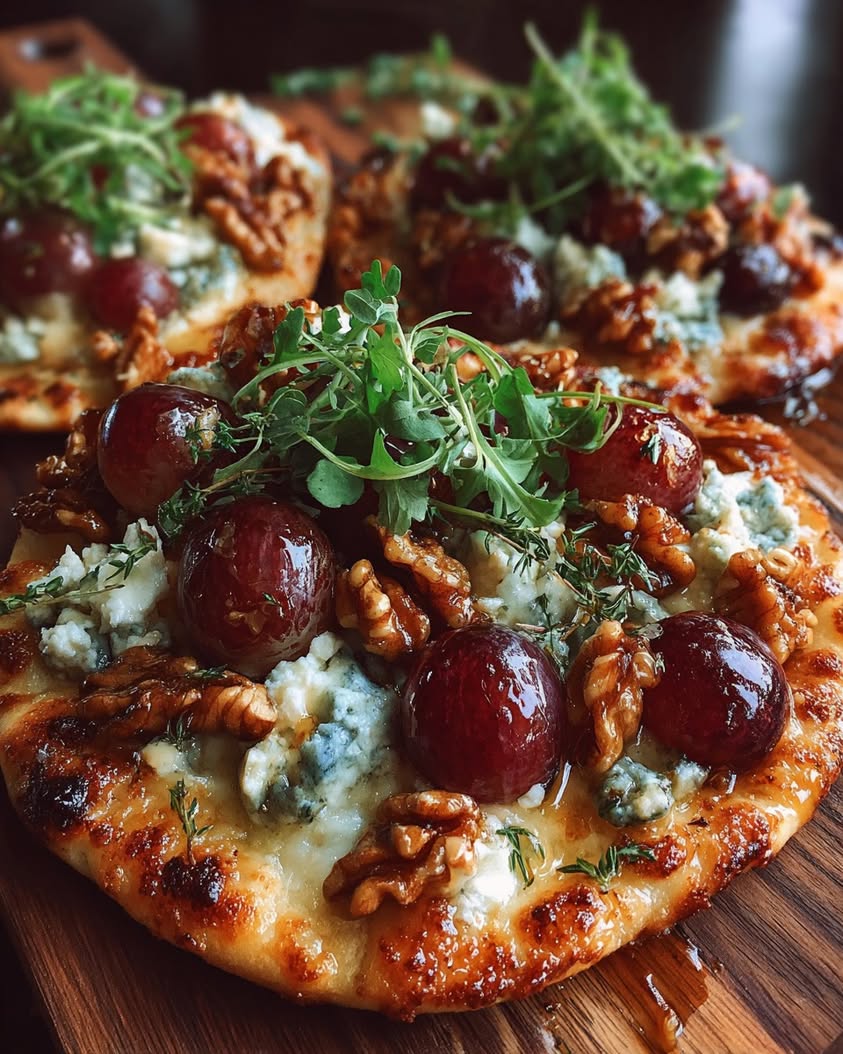
Roasted Grape & Blue Cheese Flatbread with Candied Walnuts: An Elegant Appetizer
Imagine the perfect bite. First, you get the crisp, chewy base of a warm flatbread. Then, a burst of sweet, jammy roasted grapes hits your palate. Immediately after, the sharp, creamy tang of blue cheese cuts through the sweetness. Finally, a crunchy, sugary walnut provides the perfect finish. This roasted grape blue cheese flatbread is that perfect bite, transformed into an entire appetizer. It is a symphony of contrasting flavors and textures that feels incredibly sophisticated, yet comes together with minimal effort.
This recipe is a fantastic way to elevate your entertaining game or to simply treat yourself to a gourmet snack. The process of roasting grapes concentrates their natural sugars, transforming them into little pockets of intense flavor. When paired with the boldness of blue cheese and the sweet crunch of candied walnuts, the result is nothing short of magical. Moreover, this roasted grape blue cheese flatbread is versatile enough for a casual Friday night or a fancy holiday party. It consistently impresses guests with its unique combination of ingredients and beautiful presentation.
Ultimately, this dish proves that gourmet flavor does not require complicated techniques. With just a handful of quality ingredients and about half an hour, you can create a show-stopping appetizer. The roasted grape blue cheese flatbread is a testament to the power of simple, bold pairings. It is a recipe you will return to again and again for its reliability and its ability to wow a crowd every single time.
Quick Recipe Highlights
- Flavor Profile: This roasted grape blue cheese flatbread masterfully balances sweet and savory. The roasted grapes offer a deep, caramelized sweetness that perfectly complements the sharp, salty punch of the blue cheese. Additionally, the honey and balsamic drizzle adds a final layer of complex acidity and floral notes.
- Texture: You experience a wonderful textural journey with every bite. The flatbread provides a sturdy, crisp base that yields to a chewy center. Meanwhile, the roasted grapes are soft and jammy, the blue cheese is creamy and crumbly, and the candied walnuts deliver an essential, satisfying crunch.
- Aroma: As this roasted grape blue cheese flatbread bakes, your kitchen will fill with an irresistible fragrance. You will smell the sweet, fruity scent of caramelizing grapes mingling with the earthy, pungent aroma of melting blue cheese and the toasty, sugary notes of the walnuts.
- Visual Appeal: This dish is a feast for the eyes with its stunning color contrast. The deep purple of the roasted grapes pops against the white and blue veins of the cheese. Furthermore, the golden-brown flatbread and amber-colored walnuts create a warm, inviting palette that is simply beautiful on a platter.
- Skill Level Needed: This is an accessible recipe for cooks of all levels. The techniques involved—tossing grapes in oil, toasting walnuts, and assembling flatbread—are straightforward. Consequently, even a beginner can achieve professional-looking and tasting results with ease.
- Special Equipment: You need only basic kitchen tools. A baking sheet, a small skillet for the walnuts, and a sharp knife are essential. A pizza stone or baking steel can elevate the flatbread’s crispiness, but a standard sheet pan works perfectly well.
Recipe Overview
- Difficulty Level: We classify this roasted grape blue cheese flatbread as easy for several reasons. First, there is no complicated dough to make if you use store-bought flatbread or naan. Second, the cooking steps are simple and largely hands-off, like roasting grapes and toasting walnuts. Finally, assembly is intuitive and forgiving, allowing for personal touches without risk of failure.
- Category: This dish fits beautifully into multiple meal categories. Primarily, it shines as an elegant appetizer or starter for a dinner party. It also makes a fantastic light lunch or dinner when paired with a simple green salad. Furthermore, it can be cut into small pieces and served as a passed hors d’oeuvre at a cocktail party.
- Cuisine: This recipe draws inspiration from Mediterranean and modern American fusion cuisines. Flatbreads have roots across the Mediterranean and Middle East. The combination of fruit, cheese, and nuts, however, is a classic pairing found in contemporary American cooking, making this roasted grape blue cheese flatbread a delicious hybrid of traditions.
- Cost: Making this roasted grape blue cheese flatbread is surprisingly cost-effective. The main ingredients—grapes, walnuts, blue cheese, and flatbread—are relatively inexpensive, especially when in season. A single batch serves four generously as an appetizer for a fraction of the cost of a similar dish at a restaurant.
- Season: This recipe is excellent year-round but truly shines in the late summer and early fall. This is when grape varieties are at their peak of sweetness and flavor. Nevertheless, thanks to the reliable availability of grapes, you can enjoy this roasted grape blue cheese flatbread any time you crave its unique taste.
- Occasion: It is perfect for a wide array of occasions. Serve it as a sophisticated starter for a dinner party, a centerpiece for a wine and cheese night, or a special weekend treat. It is also ideal for holiday gatherings, offering a unique alternative to more common appetizers.
Why You’ll Love This Recipe
You will adore the explosive taste and texture of this roasted grape blue cheese flatbread. Each component plays a crucial role in creating a harmonious bite. The sweet, bursting grapes contrast magnificently with the bold, creamy cheese. Simultaneously, the candied walnuts add a necessary crunch that ties everything together. This interplay of sweet, savory, creamy, and crunchy is deeply satisfying and keeps you reaching for another slice. It is a flavor experience that feels indulgent and refined, yet is built from simple, honest ingredients.
You will appreciate the incredible convenience of this recipe. From start to finish, it takes about thirty-five minutes, with most of that time being hands-off oven time. You can easily prepare the grapes and walnuts while your oven preheats. Furthermore, using a pre-made flatbread base eliminates the need for dough-making, streamlining the process significantly. This makes the roasted grape blue cheese flatbread a perfect last-minute appetizer when guests are on their way or when you want a special meal without a lengthy cooking project.
You can feel good about the nutritional profile of this appetizer. Grapes are rich in antioxidants and vitamins. Walnuts provide healthy fats, protein, and omega-3s. Blue cheese offers calcium and protein, albeit with a higher fat content. When enjoyed in moderation as part of a balanced diet, this roasted grape blue cheese flatbread provides more nutritional value than many other fried or heavily processed starters. It is a choice that delights your palate and nourishes your body.
You will find immense social and entertaining value in this dish. This roasted grape blue cheese flatbread is a guaranteed conversation starter. Its unique combination is visually stunning and intrigues guests. It pairs wonderfully with a variety of wines, making it the cornerstone of a great gathering. Serving it demonstrates thoughtfulness and culinary flair, impressing your friends and family with minimal stress on your part. It is a recipe that makes you look like a gourmet chef.
You will love the cost-effectiveness and accessibility of the ingredients. Unlike some gourmet dishes that require rare or expensive items, this roasted grape blue cheese flatbread uses components found in any well-stocked supermarket. You can often find flatbread, grapes, walnuts, and a small wedge of blue cheese without breaking the bank. This accessibility means you can enjoy a restaurant-quality appetizer at home anytime the craving strikes, making special occasions feel more frequent and affordable.
Historical Background and Cultural Significance
The concept of baking bread with toppings is ancient, with roots tracing back to early civilizations around the Mediterranean. Flatbreads served as edible plates for meats, cheeses, and oils long before the pizza we know today. The combination of fruit and cheese, however, is a timeless pairing seen across European culinary history. From Italian figs with pecorino to French pears with Roquefort, the balance of sweet and savory, creamy and firm, has long been celebrated. This roasted grape blue cheese flatbread is a modern, assembled iteration of that classic, global tradition.
Culturally, flatbreads hold significant importance as a staple food from the Middle East and India to the Mediterranean and beyond. They represent sustenance, community, and simplicity. Adding luxurious toppings like cheese and fruit often signified a special occasion or a display of hospitality. In this context, our roasted grape blue cheese flatbread continues that tradition of turning a humble bread base into a vehicle for celebration and sharing. It transforms everyday ingredients into a dish meant for gathering and enjoyment.
The recipe has evolved significantly with modern kitchen conveniences and global ingredient availability. Historically, one might have used local cheese, foraged nuts, and seasonal fruit on whatever bread was available. Today, we can intentionally pair specific varieties like creamy Gorgonzola with red grapes and candied walnuts. The technique of roasting grapes to intensify their flavor is a contemporary approach that maximizes taste. Thus, this roasted grape blue cheese flatbread is a delicious product of both ancient tradition and modern culinary innovation.
Regional variations of this concept are endless. In the Middle East, you might find manakish with za’atar and cheese. In Italy, focaccia is topped with rosemary and olives. Our version leans into a French or Italian sensibility with the blue cheese and grape combination, but the format is universally adaptable. You could easily imagine a Spanish version with Manchego and quince paste, or a Greek version with feta and olives. This versatility underscores the flatbread’s role as a global culinary canvas, with our roasted grape blue cheese flatbread being one beautiful expression.
Ingredient Deep Dive
Red Grapes: Grapes are one of the oldest cultivated fruits, with evidence of winemaking dating back over 8,000 years. They are rich in antioxidants like resveratrol, vitamin C, and vitamin K. For this roasted grape blue cheese flatbread, choose seedless red grapes with a deep color; they should be plump, firm, and firmly attached to their stems. Avoid any that are wrinkled or soft. Store them unwashed in the refrigerator in a perforated bag for up to a week. For a variation, try using black grapes for an even deeper flavor or a mix of red and green for visual appeal.
Blue Cheese: Blue cheese’s history is famously accidental, believed to have originated when cheese was stored in caves with natural Penicillium mold. Varieties like Gorgonzola, Roquefort, and Stilton offer distinct flavors from mild to intensely pungent. It provides calcium, protein, and vitamins but is high in saturated fat and sodium. For your flatbread, select a blue cheese that is creamy yet crumbly. If you prefer a milder taste, choose Gorgonzola Dolce. For more punch, opt for a traditional Roquefort. Store tightly wrapped in the fridge. For substitutions, try a creamy goat cheese or a sharp feta for a different but delicious profile.
Walnuts: Walnuts are among the oldest tree foods, revered in ancient Persia and Rome. They are an excellent source of plant-based omega-3 fatty acids, antioxidants, and protein. “Candying” them for this recipe involves cooking them briefly with sugar or honey to create a sweet, crunchy coating. Always choose fresh, plump walnut halves without a bitter smell, which indicates rancidity. Store walnuts in an airtight container in the refrigerator or freezer to prevent their oils from spoiling. For a nut-free version, you can candy pumpkin seeds (pepitas) for a similar crunchy texture.
Flatbread: The flatbread base is your canvas. You can use store-bought naan, pita, or pre-made pizza crusts for ultimate convenience. Look for brands with minimal ingredients for the best flavor and texture. Alternatively, for a project, you can make your own simple dough with flour, water, yeast, and olive oil. The key is a base that can get crisp in the oven without becoming too hard. If you need a gluten-free roasted grape blue cheese flatbread, many excellent gluten-free flatbread or cauliflower crust options are available in stores now.
Balsamic Glaze & Honey: These finishing touches add layers of flavor. True traditional balsamic glaze (Aceto Balsamico Tradizionale) is aged for years and has a complex, sweet-tart flavor. A good-quality supermarket glaze works perfectly here. Honey, one of humanity’s first sweeteners, adds floral notes and helps balance the blue cheese’s saltiness. For a vegan version, use maple syrup or agave nectar. A drizzle of high-quality extra virgin olive oil before serving can also add a lovely, peppery finish to your roasted grape blue cheese flatbread.
Common Mistakes to Avoid
- Overcrowding the Baking Sheet: When roasting the grapes, spread them in a single layer with space between. Crowding causes them to steam rather than roast, preventing the caramelization that develops their deep, sweet flavor. Use a large enough pan or roast in batches if necessary.
- Using Stale or Rancid Nuts: Walnuts contain delicate oils that can turn rancid quickly, imparting a bitter taste. Always taste a walnut before using it. Store nuts properly in the fridge or freezer and buy from stores with high turnover to ensure freshness for your candied walnuts.
- Choosing the Wrong Blue Cheese: A blue cheese that is too dry or overly pungent can overwhelm the other flavors. Aim for a creamy, crumbly variety that is bold but balanced. If you are unsure, ask for a sample at the cheese counter to find one you enjoy.
- Underseasoning the Flatbread Base: The flatbread itself needs seasoning. Before adding toppings, brush it lightly with olive oil and sprinkle with a pinch of sea salt. This simple step ensures every part of your roasted grape blue cheese flatbread is flavorful, not just the toppings.
- Burning the Candied Walnuts: The sugar coating can go from golden to burnt in seconds. Use medium-low heat and stir constantly. The moment the sugar melts and coats the nuts evenly, immediately transfer them to parchment paper to cool and stop the cooking process.
- Adding Toppings Too Early: If you assemble the entire flatbread and then bake it, the cheese can over-melt and burn before the crust crisps. For best results, partially bake the flatbread base first, then add the cheese and grapes for the final few minutes just to warm through.
- Skipping the Rest Time: Let the flatbread cool for 2-3 minutes after pulling it from the oven. This allows the molten cheese to set slightly, making it easier to slice cleanly without all the toppings sliding off. It also prevents burning your mouth.
- Neglecting the Finish: The drizzle of balsamic glaze and honey is not just decorative. It adds vital acidity and sweetness that lifts and balances the entire dish. Do not skip this final, impactful step on your roasted grape blue cheese flatbread.
Essential Techniques
Roasting Grapes: Roasting grapes is a simple technique that transforms their texture and flavor. The high, dry heat of the oven causes the water in the grapes to evaporate, concentrating their natural sugars. Meanwhile, the edges caramelize, creating a deeper, almost jam-like taste. To master it, toss grapes in just enough oil to coat, spread them in a single layer, and roast at a high temperature (around 400°F) until they are slightly shriveled and juicy. The key visual cue is seeing the skins just begin to split, releasing their sweet juices onto the pan.
Candying Nuts: Candying nuts involves coating them in melted sugar to create a sweet, crunchy shell. The importance lies in adding texture and contrasting sweetness to savory dishes. To do it successfully, combine nuts with a small amount of sugar (or honey) in a dry skillet over medium-low heat. Stir constantly until the sugar melts and turns a light amber color, coating each nut evenly. Immediately pour them onto parchment paper to cool. The common pitfall is walking away, as the sugar can burn in an instant. Success is a glossy, hardened coating that is not dark brown.
Assembling and Baking Flatbread: Proper assembly ensures a crisp base and perfectly melted toppings. First, par-bake your flatbread base for 3-5 minutes to get it started. This prevents a soggy center. Then, add your toppings strategically: cheese first, then the roasted grapes and walnuts. Return to the oven just until the cheese softens and the flatbread edges are golden brown. The technique prevents the more delicate toppings from burning. The visual cue for doneness is a crisp, golden crust and cheese that is warmed through and slightly melty.
Pro Tips for Perfect Roasted Grape & Blue Cheese Flatbread
Preheat your baking sheet in the oven. By placing your flatbread directly onto a hot surface, you jumpstart the crisping process on the bottom, mimicking the effect of a pizza stone for an extra-crunchy base.
Use a mix of blue cheeses. Combine a milder, creamier blue like Gorgonzola Dolce with a small amount of a sharper, saltier variety like Roquefort. This creates a more complex flavor profile in every bite.
Add fresh herbs after baking. Sprinkle the finished flatbread with fresh thyme leaves or chopped rosemary. The heat will wilt them slightly, releasing their aromatic oils without burning them, adding a bright, fresh note.
Season each layer. Lightly salt the grapes before roasting and season the flatbread base with a pinch of flaky sea salt after brushing with oil. Building layers of seasoning ensures a fully seasoned dish.
Make the candied walnuts in advance. They can be prepared days ahead and stored in an airtight container at room temperature. This breaks up the prep work and makes final assembly a breeze.
Let the grapes cool slightly before topping. Adding piping hot grapes to the cheese can cause it to melt too quickly and become greasy. A five-minute cool-down period makes assembly cleaner.
Use a pizza cutter for clean slices. A sharp pizza wheel or rocker cutter glides through the crispy crust and toppings without dragging the cheese and grapes off the base, giving you perfect portions.
Drizzle with a high-quality finishing oil. After adding the balsamic and honey, a final thread of good extra virgin olive oil adds a peppery, fruity note that ties all the rich flavors together beautifully.
Variations and Adaptations
Regional Variations: Explore global flavors by changing the cheese and fruit. For a Spanish twist, use Manchego cheese and figs or membrillo (quince paste). A French version could feature Brie or Camembert with sliced pears. An Italian-inspired flatbread might use fresh mozzarella with prosciutto and arugula added after baking, moving beyond the classic roasted grape blue cheese flatbread concept.
Seasonal Adaptations: This recipe adapts wonderfully to the seasons. In fall, use roasted cubes of butternut squash or sliced apples with the blue cheese. For spring, try asparagus tips and fresh peas with a lemon-herb ricotta. Summer invites toppings like fresh peaches, corn, and basil. The basic formula of fruit/vegetable + cheese + crunch remains endlessly versatile.
Dietary Modifications: For a gluten-free version, use a certified gluten-free flatbread or cauliflower crust. To make it dairy-free, substitute the blue cheese with a vegan cashew-based “blue cheese” or a creamy, tangy vegan feta. For a nut-free option, replace the candied walnuts with toasted, seasoned pumpkin seeds or crispy chickpeas.
Flavor Variations: Infuse different flavors into the base. Brush the flatbread with garlic-infused olive oil or a thin layer of fig jam before adding cheese. Add a sprinkle of fresh thyme or rosemary to the grapes before roasting. A pinch of red pepper flakes added to the candied walnuts can introduce a subtle, welcome heat.
Texture Modifications: If you prefer a softer flatbread, do not par-bake the base; simply assemble and bake. For extra crunch, sprinkle a little finely grated Parmesan cheese over the crust edges before the final bake; it will create a delicious, crispy, cheesy rim.
Presentation Alternatives: Instead of one large flatbread, use mini naan or pita rounds to create individual appetizers. Alternatively, bake the components separately and let guests assemble their own bites on crostini for an interactive appetizer station, deconstructing the roasted grape blue cheese flatbread experience.
Serving and Presentation Guide
Plating Techniques: For a rustic family-style presentation, place the whole roasted grape blue cheese flatbread on a large wooden cutting board or a simple slate slab. Alternatively, slice it into wedges or squares and arrange them slightly fanned out on a elegant platter. For individual servings, plate a slice or two alongside a small mound of lightly dressed arugula salad.
Garnishing Ideas: Beyond the balsamic and honey drizzle, garnish with fresh microgreens, baby arugula, or delicate edible flowers for a pop of color. A final sprinkle of flaky sea salt like Maldon adds visual sparkle and a burst of salinity. Freshly cracked black pepper also provides visual contrast and flavor.
Traditional Accompaniments: This flatbread is rich and flavorful on its own. Traditionally, it needs little accompaniment beyond a simple, acidic side to cut through the fat. A light salad of bitter greens (arugula, endive) with a lemon vinaigrette is the perfect partner. It cleanses the palate between bites.
Modern Serving Suggestions: For a contemporary appetizer spread, pair it with other Mediterranean-inspired small plates like olives, marinated artichokes, and hummus. Serve it as part of a “flatbread flight,” offering small slices of different varieties (like a classic margherita and a meat lover’s) alongside your roasted grape blue cheese flatbread for comparison.
Temperature Considerations: This dish is best served warm, not piping hot. Allowing it to rest for 3-5 minutes lets the cheese set slightly, making it easier to eat. The flavors also have a chance to meld and become more distinct when served just above room temperature.
Portion Control Tips: As an appetizer, one standard-sized flatbread (about 10-12 inches) comfortably serves four people, yielding 2-3 slices each. For a light main course, plan on half a flatbread per person, paired with a substantial salad. Cutting into smaller, bite-sized squares makes it perfect for a cocktail party where guests will be sampling many items.
Wine and Beverage Pairing
Wine Pairings: The sweet and savory nature of this flatbread calls for wines that can bridge that gap. A slightly sweet white wine like an off-dry Riesling or Vouvray complements the grapes and tames the blue cheese’s saltiness. Alternatively, a light-bodied, low-tannin red like a Pinot Noir or Beaujolais works beautifully, as its fruity notes echo the roasted grapes without clashing. For a bold choice, a rich, nutty Amontillado sherry is a classic pairing with blue cheese and creates a stunning flavor harmony.
Non-Alcoholic Alternatives: Sparkling water with a twist of lemon or lime cleanses the palate effectively. For a more crafted option, try a tart cherry or pomegranate spritzer. A grape-based drink, like a non-alcoholic sparkling grape juice, mirrors the main ingredient in a fun, thematic way. Iced herbal tea, such as hibiscus or mint, also provides a refreshing, slightly tannic counterpoint to the rich flatbread.
Coffee and Tea Pairings: While not a typical pairing for an appetizer, if serving this for a brunch or lunch, consider beverages like a lightly roasted coffee with nutty notes, which can complement the walnuts. A black tea like Earl Grey, with its bergamot citrus notes, can cut through the richness of the cheese surprisingly well.
Temperature Considerations: Serve white wines and sparkling beverages well-chilled, between 45-50°F. Red wines should be served slightly cooler than room temperature, around 55-60°F, to keep them refreshing alongside the warm flatbread. Non-alcoholic spritzers should be ice-cold to provide the best contrast.
Serving Suggestions: Offer a variety of pairing options if you are hosting a group. Place a bottle of Riesling and a bottle of Pinot Noir on the table with the roasted grape blue cheese flatbread. Provide both sparkling water and a crafted non-alcoholic option to ensure all guests have a delightful beverage match.
Storage and Shelf Life
Storage Methods: Store any leftover roasted grape blue cheese flatbread in an airtight container in the refrigerator for up to 2 days. It is best to store slices with space between them, separated by parchment paper, to prevent them from sticking together. The candied walnuts should be stored separately at room temperature in a sealed container to maintain their crunch.
Temperature Requirements: The assembled flatbread must be refrigerated due to the dairy content. Never leave it at room temperature for more than two hours. The candied walnuts, however, are shelf-stable and should be kept in a cool, dry pantry away from heat and sunlight to prevent the sugar coating from becoming sticky.
Container Recommendations: Use a shallow, airtight glass or plastic container for the flatbread. A container that is too tall can cause condensation to drip onto the crust, making it soggy. For the walnuts, a mason jar or a zip-top bag with the air pressed out works perfectly.
Signs of Spoilage: Discard the flatbread if you notice any off odors, significant sogginess, or visible mold (beyond the blue cheese veins, of course). The walnuts are spoiled if they smell bitter or rancid, which indicates their oils have oxidized.
Reheating Instructions: To restore crispness, reheat slices in a toaster oven, air fryer, or conventional oven at 375°F for 5-7 minutes. Avoid the microwave, as it will make the crust rubbery and the toppings overly soft. Reheating will re-melt the cheese and re-crisp the crust effectively.
Freezing Guidelines: Freezing is not recommended for the fully assembled flatbread, as the texture of the grapes and the flatbread base will suffer significantly upon thawing. However, you can freeze the roasted grape component separately in a freezer bag for up to 2 months and the candied walnuts for up to 3 months.
Make Ahead Strategies
Prep Timeline: You can prepare nearly every component of this roasted grape blue cheese flatbread 1-2 days in advance. Roast the grapes and let them cool, then store them in a container in the fridge. Prepare the candied walnuts and store them at room temperature. Crumble the blue cheese and keep it wrapped in the fridge. This leaves only assembly and baking for the day of serving.
Storage Between Steps: Store the cooled roasted grapes in a sealed container; they may release some juice, which is fine. Keep the crumbled blue cheese in a separate airtight container. Have your flatbreads ready on the counter. This modular prep turns a 35-minute recipe into a 10-minute final bake.
Quality Impact Assessment: Prepping ahead has minimal negative impact and can even improve flavor. The roasted grapes’ flavors deepen when chilled. The candied walnuts stay perfectly crunchy. The only caution is to ensure the flatbread base itself is not pre-baked too far in advance, as it can stale.
Assembly Tips: When ready to serve, take the grapes and cheese out of the fridge 15-20 minutes beforehand to take the chill off. Assemble the flatbread on a parchment-lined sheet and bake as directed. Adding cold toppings to a hot oven can slightly increase the bake time.
Reheating Guidelines: If you must fully assemble and bake ahead, reheat as directed in the storage section. For best results, add a few fresh walnut pieces and a fresh drizzle of balsamic after reheating to revive the textures and flavors.
Fresh Element Additions: Always add the final garnishes—the fresh herbs, extra drizzle of honey or balsamic, and a sprinkle of flaky salt—after the flatbread comes out of the oven, even if you baked a pre-assembled one. This ensures vibrant flavor and visual appeal.
Scaling Instructions
Halving the Recipe: Halving this roasted grape blue cheese flatbread is straightforward for a smaller yield. Use half the amount of each ingredient. You can roast the grapes on a smaller pan or use a toaster oven. The cook times will remain roughly the same, but keep a close eye as smaller batches can cook slightly faster. Use a single small flatbread or cut a large one in half before topping.
Doubling or Tripling: To serve a crowd, simply multiply the ingredients. You will need to roast the grapes in multiple batches or on multiple sheet pans to avoid steaming. Make the candied walnuts in a larger skillet, but do not overcrowd the pan; work in batches if needed. Bake the flatbreads in batches or on multiple oven racks, rotating the pans halfway through for even cooking.
Equipment Adjustments: Scaling up requires planning. Ensure you have enough baking sheets and oven space. Consider using disposable aluminum pans for easy cleanup at large parties. If baking multiple flatbreads, a convection oven setting can help cook them evenly and more quickly by circulating the hot air.
Timing Modifications: When making multiple flatbreads, the prep time increases linearly, but the cook time per batch remains the same. Factor in the time to bake in successive batches. You can par-bake all the flatbread bases first, then top and finish them in a quicker final bake to streamline service.
Storage Considerations: For a large event, you can prep all components (grapes, candied walnuts, crumbled cheese) the day before. Assemble and bake in batches as needed to serve hot, fresh flatbread throughout your gathering, rather than having one giant batch go cold.
Nutritional Deep Dive
Macro Breakdown: A serving of this roasted grape blue cheese flatbread provides a balance of macronutrients. The flatbread and grapes contribute carbohydrates for energy. The blue cheese and olive oil provide fats, including saturated fat from the cheese. Walnuts add healthy unsaturated fats and a modest amount of plant-based protein. The dish is not a high-protein meal but fits well as part of a balanced diet when paired with a protein-rich side like a lentil salad.
Micronutrient Analysis: This dish offers valuable micronutrients. Grapes are a source of vitamin C, vitamin K, and antioxidants like resveratrol. Blue cheese provides calcium, essential for bone health, and vitamin B12. Walnuts are rich in manganese, copper, and magnesium. Using whole-grain flatbread can further increase the fiber, B-vitamin, and mineral content of the meal.
Health Benefits: The combination of ingredients offers several benefits. The antioxidants in grapes and walnuts support heart health and combat inflammation. The calcium in cheese supports bone density. The monounsaturated fats from olive oil are heart-healthy. However, the sodium and saturated fat content of blue cheese means this is best enjoyed in moderation as part of an overall healthy eating pattern.
Dietary Considerations: This recipe is vegetarian but not suitable for vegan, dairy-free, or gluten-free diets without modifications. It contains common allergens: dairy (cheese), gluten (flatbread), and tree nuts (walnuts). Always check labels on pre-made flatbread for hidden allergens if serving guests with restrictions.
Portion Analysis: As an appetizer serving 4, each portion is satisfying but not overly large, helping with calorie control. The richness of the cheese and the sweetness of the grapes are naturally satiating, which can prevent overeating. Being mindful of portion size allows you to enjoy the indulgent flavors without excess.
Weight Management Tips: To make this dish more weight-conscious, use a lighter hand with the cheese and olive oil. Choose a whole-grain, thin-crust flatbread for more fiber. Increase the proportion of grapes to cheese for volume with fewer calories. Remember, it is an appetizer; pairing it with a large, low-calorie salad can create a filling meal that manages overall calorie intake.
Dietary Adaptations
Gluten-Free: To create a gluten-free roasted grape blue cheese flatbread, simply substitute the regular flatbread with a certified gluten-free alternative. Many stores sell gluten-free naan, pizza crusts, or flatbreads. You can also use a pre-baked gluten-free crust or even make a simple one with gluten-free flour blends. Ensure all other ingredients, like pre-crumbled cheese, are certified gluten-free, as cross-contamination can occur.
Dairy-Free: For a dairy-free version, replace the blue cheese with a vegan alternative. Several brands make cultured cashew or almond-based “blue cheese” spreads or crumbles that mimic the tangy, pungent flavor. Alternatively, a creamy vegan feta or a tangy tofu ricotta can provide a similar salty, creamy element. Use olive oil instead of butter for any greasing.
Vegan: A vegan adaptation requires both dairy-free cheese and a substitute for honey. Use maple syrup or agave nectar for the sweet drizzle. Choose a vegan flatbread (check for dairy or honey in the ingredients). Use a plant-based blue cheese or a crumble of marinated tofu with miso for umami. The roasted grapes and cand{“success”:true,”message”:”Recipe created successfully”,”post_id”:9030,”tasty_recipe_id”:9030,”shortcode”:” Print
Roasted Grape & Blue Cheese Flatbread with Candied Walnuts
Description
A savory-sweet flatbread featuring roasted grapes, tangy blue cheese, and crunchy candied walnuts on a crispy crust.
Ingredients
For the Crust:
- 1 pre-made flatbread or pizza dough
- 1 cup red grapes, halved
- 4 oz blue cheese, crumbled
- 1/2 cup walnuts
- 2 tbsp honey
- 1 tbsp olive oil
- 1 tsp fresh thyme leaves
- Salt and black pepper to taste
- 1 tbsp balsamic glaze for drizzling
Instructions
1. Prepare the Crust:
- Preheat oven to 400°F (200°C). Toss grapes with olive oil, salt, and pepper, then roast on a baking sheet for 15 minutes until softened.
- In a small skillet over medium heat, toast walnuts for 3-4 minutes. Add honey and stir until coated and caramelized, about 2 minutes. Set aside to cool.
- Place flatbread on a baking sheet. Top with roasted grapes, blue cheese, and candied walnuts. Bake for 10-12 minutes until cheese melts and crust is golden.
- Remove from oven, sprinkle with fresh thyme, and drizzle with balsamic glaze before serving.
Notes
You can customize the seasonings to taste.

I’m Billy, a classically trained culinary school graduate from The Culinary Institute of America with over 12 years in the restaurant industry and over 19 years of cooking experience.