
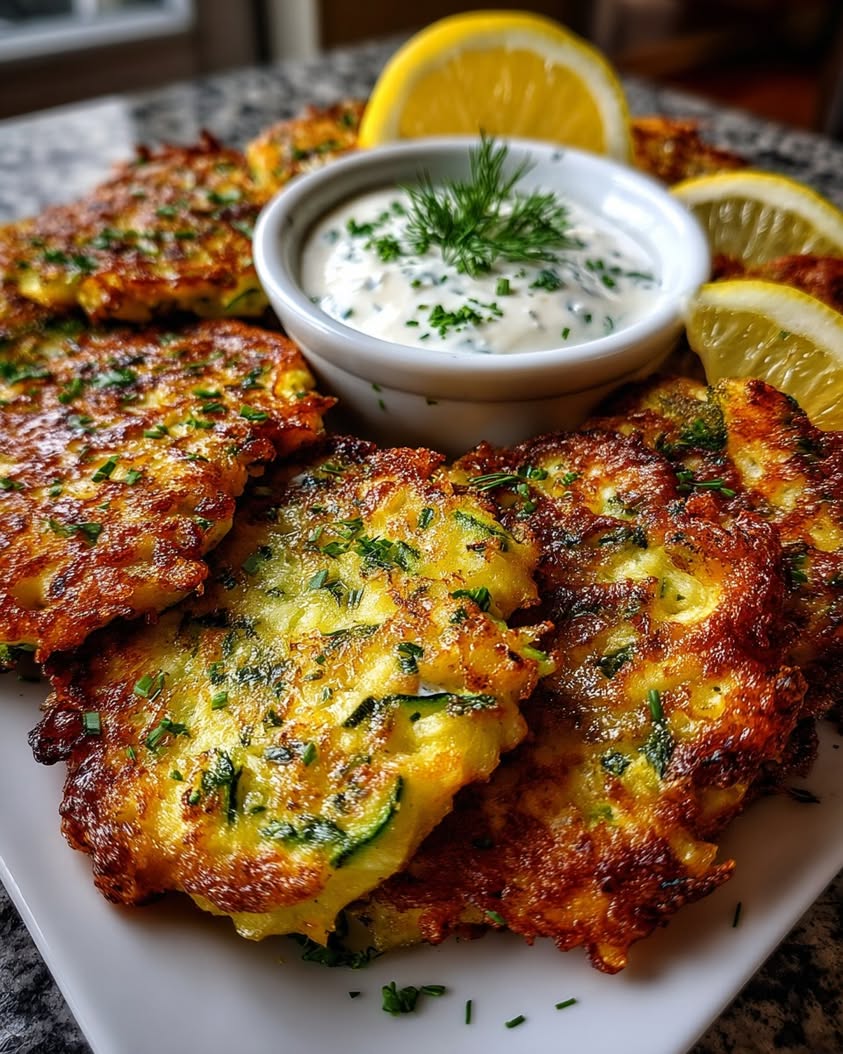
Crispy Zucchini Fritters with Lemon Dill Yogurt Sauce: Your New Favorite Summer Appetizer
Imagine biting into a golden, crispy patty that shatters perfectly to reveal a tender, savory interior bursting with the fresh, mild flavor of summer squash. This is the magic of a well-made crispy zucchini fritters recipe. These delightful little cakes transform humble zucchini into a star-worthy dish that works equally well as a light lunch, a stunning appetizer, or a flavorful side. Moreover, they are a fantastic way to use up a garden bounty, ensuring no zucchini goes to waste.
The true brilliance of this crispy zucchini fritters recipe lies in its beautiful contrast. Each fritter offers a satisfying crunch that gives way to a soft, almost creamy center. Paired with a bright, tangy lemon dill yogurt sauce, the flavors sing in perfect harmony. The sauce cuts through any richness, adding a refreshing herbal note that elevates the entire experience. Consequently, you get a dish that feels both indulgent and refreshingly light.
Ultimately, this recipe celebrates simplicity and fresh ingredients. You likely have most of the components in your pantry already. From grating the zucchini to mixing the simple batter, the process is straightforward and rewarding. The aroma of these fritters frying is irresistible, promising a delicious payoff that will have everyone asking for the recipe. Therefore, get ready to fall in love with this versatile and utterly delicious creation.
Quick Recipe Highlights
- Flavor Profile: These fritters deliver a savory, slightly salty base from the Parmesan and garlic, beautifully balanced by the fresh, herbal notes of dill and the bright acidity of lemon in the accompanying sauce. The zucchini itself provides a subtle, sweet earthiness that forms the perfect canvas.
- Texture: The hallmark of a great crispy zucchini fritters recipe is its textural contrast. You achieve a deeply golden, shatteringly crisp exterior through pan-frying, while the interior remains remarkably tender, moist, and light, never doughy or heavy.
- Aroma: As the fritters cook, your kitchen will fill with the warm, inviting scent of frying garlic and onion, mingled with the fresh green aroma of zucchini and dill. The lemon zest in the sauce adds a final burst of citrus fragrance that tantalizes the senses.
- Visual Appeal: These fritters are a feast for the eyes, boasting a beautiful, uneven golden-brown crust flecked with green herbs and specks of Parmesan. Served with a dollop of creamy white yogurt sauce and a fresh dill sprig, the presentation is rustic yet elegant.
- Skill Level Needed: This is a beginner-friendly recipe. The techniques involved—grating, squeezing, mixing, and pan-frying—are fundamental. No special chef skills are required, making it an excellent project for novice cooks looking to impress.
- Special Equipment: You only need basic kitchen tools: a box grater, a clean kitchen towel or cheesecloth for squeezing moisture, mixing bowls, and a large skillet. A standard non-stick or cast-iron skillet works perfectly for achieving that essential crispiness.
Recipe Overview
- Difficulty Level: We rate this crispy zucchini fritters recipe as “Easy” for good reason. The steps are logical and sequential, with no complex techniques. The most critical task, removing moisture from the zucchini, is simple but crucial. Following the instructions carefully guarantees success even on your first attempt.
- Category: These fritters are wonderfully versatile across meal categories. They shine as a standout appetizer or party snack with dipping sauce. Simultaneously, they make a fantastic light lunch or dinner when served with a simple side salad. You can even enjoy them as a unique and flavorful side dish alongside grilled meats or fish.
- Cuisine: While variations of vegetable fritters exist worldwide, this crispy zucchini fritters recipe draws inspiration from Mediterranean and Eastern European culinary traditions. The use of dill, garlic, and yogurt is common in Greek, Turkish, and Balkan cooking, creating a flavor profile that feels both familiar and excitingly foreign.
- Cost: This is an incredibly budget-friendly recipe. Zucchini is typically inexpensive, especially in summer. Pantry staples like flour, eggs, and basic seasonings form the base. The Parmesan and fresh dill are the only items that might require a special purchase, but they are used in modest amounts, keeping the overall cost very low.
- Season: This recipe is perfect for late spring through early fall when zucchini is at its peak freshness, flavor, and affordability. However, it’s a welcome taste of sunshine year-round, as zucchini is usually available in grocery stores. The light, fresh nature of the dish particularly suits warmer weather.
- Occasion: These fritters are suitable for countless occasions. They are casual enough for a weeknight family dinner yet impressive enough for a summer brunch, garden party, or potluck. Furthermore, they are a great vegetarian option for gatherings and can be easily adapted for various dietary needs.
Why You’ll Love This Recipe
First and foremost, the taste and texture combination is utterly addictive. The crispy zucchini fritters recipe delivers a satisfying crunch that gives way to a soft, savory interior. Each bite is packed with the gentle flavor of zucchini, enhanced by salty Parmesan and aromatic garlic. Dipped into the cool, tangy lemon dill yogurt sauce, the experience becomes perfectly balanced. The sauce provides a creamy, herbal contrast that makes you want to reach for just one more fritter every single time.
From a practical standpoint, the convenience of this recipe is a major win. The ingredient list is short and simple, with no hard-to-find items. The preparation is straightforward, involving mostly mixing and frying. Additionally, the recipe is forgiving; slight variations in zucchini size or herb amounts won’t ruin the outcome. This makes it a reliable go-to when you need a delicious dish without stress. You can easily whip up a batch in under forty minutes from start to finish.
Nutritionally, these fritters offer several advantages. Zucchini is low in calories and carbohydrates but provides a good amount of fiber, vitamin C, and potassium. Using yogurt in the sauce adds protein and probiotics. While frying adds some fat, you control the oil quality and quantity. Compared to deep-fried restaurant appetizers, this homemade version is a lighter, more wholesome choice. You are incorporating more vegetables into your meal in a truly enjoyable way.
For entertaining, these fritters are a social superstar. They are meant for sharing, served warm from the skillet with a communal bowl of dipping sauce. Their visual appeal sparks conversation, and their finger-food nature encourages a relaxed, interactive dining atmosphere. Whether passed around at a cocktail party or served as a starter for a sit-down dinner, they set a welcoming and delicious tone for any event. Guests always appreciate this homemade touch.
Finally, the cost-effectiveness and accessibility of this crispy zucchini fritters recipe cannot be overstated. It transforms an inexpensive, readily available vegetable into something special. This is an excellent strategy for stretching your grocery budget while eating well. If you have a garden overflowing with zucchini, this recipe is a lifesaver. It proves that you don’t need expensive ingredients to create food that feels celebratory and deeply satisfying.
Historical Background and Cultural Significance
The concept of frying grated vegetables into patties is ancient and widespread, born from practical needs to preserve harvests and create filling, economical meals. While the exact origin of the zucchini version is hard to pinpoint, it firmly sits within the broader family of vegetable pancakes and fritters found across the Mediterranean, the Middle East, and Eastern Europe. In Italy, similar dishes are called “frittelle di zucchine,” often featuring herbs and cheese. Similarly, in Greek cuisine, “kolokythokeftedes” are zucchini balls or fritters, frequently served with tzatziki, a close cousin to our lemon dill yogurt sauce.
Culturally, these fritters represent a tradition of resourcefulness. Summer squashes like zucchini are prolific producers. Consequently, home cooks for generations have developed countless recipes to utilize the bounty creatively, preventing waste. The crispy zucchini fritters recipe is a direct descendant of this culinary ingenuity. It transforms a vegetable that can be mild on its own into a flavorful, substantial component of a meal. In many cultures, such dishes are staples of home cooking rather than restaurant fare, highlighting their role in everyday family life.
The evolution of the recipe mirrors global trade and migration. Ingredients like zucchini, originally from the Americas, were adopted into European cuisines centuries ago. The addition of Parmesan cheese points to Italian influence, while dill is an herb heavily used in Northern and Eastern European cooking. The yogurt sauce has roots in the Middle East and South Asia. Therefore, the modern crispy zucchini fritters recipe we enjoy today is a beautiful fusion, a testament to how food traditions blend and adapt over time and distance.
Regional variations are fascinating. In some areas, the fritters include feta cheese instead of Parmesan for a tangier punch. Others might add a pinch of mint or parsley alongside the dill. Some recipes use breadcrumbs instead of flour for binding, resulting in a slightly different texture. The dipping sauce might be a garlicky aioli or a simple squeeze of lemon. Exploring these variations only deepens the appreciation for the basic, versatile formula of grated vegetable, binder, seasoning, and hot oil. Our version aims for a balanced, universally appealing take on this global classic.
Ingredient Deep Dive
Zucchini: Also known as courgette, this summer squash is the star. It’s native to the Americas but was cultivated into its modern form in Italy. Nutritionally, it’s a powerhouse of hydration, being over 90% water, which is why squeezing it is so crucial. It provides vitamin C for immunity, potassium for heart health, and antioxidants like lutein. Select firm, medium-sized zucchini with glossy, unblemished skin. Avoid overly large ones, as they can be seedy and watery. Store in the plastic bag in your refrigerator’s crisper drawer for up to a week. For a variation, try yellow summer squash.
All-Purpose Flour: This is the primary binder in our crispy zucchini fritters recipe, helping to hold the grated vegetable together and form a crust when fried. Wheat flour has been a dietary staple for millennia. It provides structure through gluten formation, though the amount here is minimal. For a gluten-free version, a 1:1 gluten-free flour blend or chickpea flour works wonderfully, adding a nutty flavor. Store flour in a cool, dry place. When measuring, spoon it into the cup and level it off for accuracy; scooping directly can pack in too much.
Parmesan Cheese: Finely grated Parmesan adds a deep, savory umami flavor and helps with browning. Authentic Parmigiano-Reggiano from Italy has a protected designation, aged for over a year. It lends a complex, nutty taste that pre-grated cheese can’t match. It provides calcium and protein. Always grate your own from a block for the best melt and flavor. For a dairy-free version, nutritional yeast can provide a cheesy flavor, though the texture will differ. Store Parmesan wrapped in parchment in the fridge.
Fresh Dill: This feathery herb is non-negotiable for its distinctive flavor. It has a bright, grassy, slightly anise-like taste that pairs perfectly with zucchini and yogurt. Dill has been used since ancient times for both culinary and medicinal purposes. It contains vitamins A and C. For the freshest flavor, buy bright green, perky bunches and use it quickly. You can store it stem-down in a glass of water in the fridge, covered loosely with a bag. If you must substitute, fresh parsley or chives can work, but the character of the sauce will change.
Greek Yogurt: The base of our cooling sauce, Greek yogurt is strained, making it thicker and higher in protein than regular yogurt. It originated in Eastern Europe and the Middle East. It provides probiotics for gut health, calcium, and protein, creating a rich, creamy texture without heavy cream. For the sauce, full-fat yogurt yields the best mouthfeel, but low-fat works too. For a dairy-free alternative, a thick, unsweetened coconut or almond milk yogurt can be used. Always check the label for live cultures if probiotic benefits are important to you.
Common Mistakes to Avoid
- Skipping the Moisture Removal: This is the number one error. Zucchini contains a massive amount of water. If you don’t squeeze it out thoroughly, you’ll end up with a soggy, loose batter that won’t hold together in the pan. The excess water will also steam the fritters instead of letting them crisp up. Take the time to wring the grated zucchini in a towel until no more liquid drips out.
- Using Pre-Grated Cheese: Pre-grated Parmesan contains anti-caking agents like cellulose, which prevent it from melting smoothly. It often tastes less potent. For the best flavor and proper integration into the fritter batter, always grate a block of Parmesan cheese yourself just before using it. The difference in taste and texture is significant.
- Overmixing the Batter: Once you combine the wet and dry ingredients, mix just until everything is incorporated. Overmixing can develop the gluten in the flour, leading to tough, dense fritters instead of light and tender ones. A few streaks of flour are perfectly fine; they will cook out.
- Making the Batter Too Far in Advance: After squeezing the zucchini, the salt will continue to draw out moisture. If you let the mixed batter sit for more than 10-15 minutes before cooking, it can become watery again. For the best results, have your skillet hot and ready, then mix the batter and cook immediately.
- Crowding the Pan: When you add too many fritters to the skillet at once, the oil temperature drops dramatically. This causes the fritters to absorb oil instead of searing quickly, resulting in greasy, pale fritters. Cook in batches, leaving ample space between each one to ensure proper heat circulation and browning.
- Flipping Too Often or Too Soon: Patience is key. Let the fritter cook undisturbed for 3-4 minutes on the first side until a deep golden-brown crust forms. If you try to flip it too early, it will likely fall apart. Once flipped, only flip it once more if needed. Constant flipping prevents proper crisping.
- Using the Wrong Oil or Temperature: Olive oil has a low smoke point and can burn, imparting a bitter flavor. Opt for a neutral oil with a high smoke point like avocado, grapeseed, or refined coconut oil. Furthermore, ensure the oil is properly heated before adding the batter; it should shimmer but not smoke. A drop of batter should sizzle vigorously upon contact.
- Neglecting to Season the Yogurt Sauce Ahead: The flavors in the lemon dill yogurt sauce need time to meld. If you make it just before serving, the dill and lemon will taste separate and sharp. For a harmonious sauce, prepare it at least 15-20 minutes before you plan to serve, allowing the ingredients to get to know each other in the fridge.
Essential Techniques
Grating and Draining Zucchini: This two-step technique is the foundation of a successful crispy zucchini fritters recipe. First, use the large holes of a box grater for uniform shreds that will cook evenly. Then, the crucial step: draining. Salt the grated zucchini and let it sit for a few minutes; the salt draws out moisture via osmosis. Then, transfer it to a clean kitchen towel or several layers of cheesecloth. Twist and squeeze with all your might over the sink until no more liquid runs out. This concentrated zucchini flavor and ensures a bindable batter.
Pan-Frying for Perfect Crispness: Pan-frying, as opposed to deep-frying, uses just enough oil to create a crisp exterior while cooking the interior through conduction. The key is maintaining consistent medium heat. Too hot, and the outside burns before the inside cooks; too low, and the fritters become oil-logged. Use a heavy-bottomed skillet for even heat distribution. Add oil to a depth of about 1/4 inch. The oil should shimmer. Gently place spoonfuls of batter, then press lightly to flatten. Do not move them until the edges look set and the underside is golden brown.
Creating an Emulsified Yogurt Sauce: While simple, making a smooth, cohesive sauce requires a gentle hand. Start with room-temperature yogurt; cold yogurt can sometimes separate when mixed with acidic lemon juice. Add the lemon juice gradually while whisking constantly. This slow incorporation helps the acid and fat in the yogurt emulsify, creating a smooth, creamy texture instead of a grainy or broken one. Finally, fold in the finely chopped dill and seasoning. Letting it rest allows the flavors to fully integrate and the sauce to thicken slightly.
Pro Tips for Perfect Crispy Zucchini Fritters
First, after squeezing the zucchini, spread it out on a plate and give it a final pat with paper towels. This ensures you’ve removed every last drop of water for maximum crispiness.
For extra flavor, toast the flour in a dry skillet for a few minutes until lightly fragrant before adding it to the mix. This adds a subtle nutty depth to the fritters.
Let your egg come to room temperature before mixing. A cold egg can cause the batter to stiffen slightly, making it harder to mix gently and potentially leading to overmixing.
Use a cookie scoop or a quarter-cup measuring cup to portion the batter. This guarantees uniformly sized fritters that will cook at the same rate, making batch cooking much easier.
After frying, always place the cooked fritters on a wire rack set over a baking sheet instead of paper towels. This allows air to circulate around them, preventing the bottom from getting soggy from trapped steam.
Finish the cooked fritters with a very light sprinkle of flaky sea salt immediately after they come out of the oil. This adheres to the hot surface and provides a delightful burst of seasoning.
If you need to keep multiple batches warm, place them in a single layer on a wire rack set on a baking sheet in a 250°F oven. This keeps them warm and crisp until all are ready to serve.
For the sauce, use microplane to zest the lemon directly into the yogurt. This captures the potent citrus oils in the zest, which carry far more flavor than just the juice alone.
Variations and Adaptations
Regional Variations: Travel the world from your kitchen. For a Greek twist, replace the Parmesan with crumbled feta cheese and add a pinch of dried oregano to the batter. Serve with classic tzatziki (cucumber yogurt sauce). For an Italian-inspired version, mix in a tablespoon of chopped fresh basil and serve with a simple marinara sauce for dipping. A Middle Eastern take might include a teaspoon of ground cumin and a garnish of sumac on the yogurt sauce.
Seasonal Adaptations: While zucchini is a summer star, this formula works year-round. In fall, try grated sweet potato or butternut squash (par-cook slightly if very hard). For a winter version, use drained, thawed frozen spinach or chopped kale. In spring, a mix of grated zucchini and fresh peas with mint in the sauce would be delightful. The basic crispy zucchini fritters recipe is a template for seasonal produce.
Dietary Modifications: For gluten-free fritters, substitute the all-purpose flour with an equal amount of a gluten-free 1:1 baking blend or chickpea flour (besan). For a dairy-free version, omit the Parmesan or use a vegan Parmesan alternative, and use a thick, unsweetened plant-based yogurt for the sauce. To make them vegan, also replace the egg with a “flax egg” (1 tbsp ground flaxseed mixed with 2.5 tbsp water, let sit 5 mins).
Flavor Variations: Experiment with different herbs. Fresh chives, parsley, or basil can complement or replace the dill. For a spicy kick, add a finely chopped jalapeño or a pinch of red pepper flakes to the batter. A tablespoon of chopped sun-dried tomatoes or kalamata olives can add a punch of umami and saltiness. Swap the lemon in the sauce for lime for a different citrus profile.
Texture Modifications: For an even crispier exterior, add a tablespoon of cornstarch to the dry ingredients. For a fluffier interior, separate the egg; mix the yolk into the batter, then whip the white to soft peaks and fold it in at the very end. Using panko breadcrumbs mixed with the flour can create an extra crunchy, craggy crust.
Presentation Alternatives: Instead of free-form patties, make mini fritters for perfect one-bite appetizers. Alternatively, form the batter into a large pancake in the skillet for a “zucchini rosti” style, then slice into wedges. You can also bake them on a well-oiled sheet pan at 425°F for a slightly lighter option, flipping halfway through, though they won’t be quite as crisp.
Serving and Presentation Guide
Plating Techniques: For a family-style presentation, pile the warm fritters high on a rustic wooden board or a large platter. Place the bowl of lemon dill yogurt sauce in the center for dipping. For individual plates, arrange two or three fritters slightly overlapping. Drizzle the sauce over the top in an artful zig-zag or pool it neatly beside them. Avoid completely covering the fritters, as you want to showcase their beautiful golden crust.
Garnishing Ideas: A simple garnish elevates the dish visually. Sprinkle the plated fritters with extra chopped fresh dill or microgreens. A few thin slices of lemon or a lemon wedge on the side is both decorative and functional. A light dusting of paprika or a drizzle of high-quality olive oil just before serving adds color and shine. For a restaurant touch, add edible flowers like nasturtiums or chive blossoms in the summer.
Traditional Accompaniments: In their cultural contexts, these fritters are often part of a mezze or antipasto spread. Serve them alongside other small plates like dolmas, olives, hummus, and warm pita bread. A simple, crisp Greek salad with tomatoes, cucumber, red onion, and feta makes a perfect companion, balancing the meal with fresh, raw vegetables.
Modern Serving Suggestions: For a contemporary brunch, top a fritter with a poached or fried egg and a dollop of sauce. As a light dinner, serve them on a bed of peppery arugula dressed with lemon vinaigrette, creating a warm salad. You can also use smaller fritters as a base for canapés, topping each with a smear of sauce and a piece of smoked salmon or a sliver of radish.
Temperature Considerations: Crispy zucchini fritters are best served immediately, hot from the skillet, when their texture is at its peak. The yogurt sauce, however, should be cold or cool, providing a refreshing contrast. If you must hold them, keep the fritters warm and crisp in a low oven as described, and keep the sauce chilled until the moment of serving.
Portion Control Tips: As an appetizer, plan for 2-3 medium fritters per person. For a light main course, 3-4 fritters with a substantial side salad is sufficient. Remember, they are more satisfying than they appear. If serving as part of a larger spread with many other dishes, one or two per person is adequate. Their richness means a little goes a long way.
Wine and Beverage Pairing
Wine Pairings: The ideal wine for these fritters complements their herbal, savory notes and cuts through the slight richness. A crisp, dry white wine is perfect. Look for a Sauvignon Blanc, especially from New Zealand, with its grassy, citrusy profile that mirrors the dill and lemon. A Greek Assyrtiko or a Spanish Albariño, with their bright acidity and mineral edge, are also excellent choices. For a rosé option, a dry Provençal rosé with its subtle herbal notes is a fantastic summer match.
Non-Alcoholic Alternatives: Sparkling water with a squeeze of lemon or lime and a sprig of fresh herbs is a refreshing, palate-cleansing choice. For something more substantial, a tart lemonade, either classic or infused with basil or thyme, complements the flavors beautifully. Iced herbal tea, such as mint or lemongrass, offers a sophisticated, caffeine-free pairing that won’t compete with the food.
Coffee/Tea Pairings: While not a typical pairing for this dish, if serving at brunch, a medium-roast coffee with low acidity would be fine. A more thoughtful pairing would be a green tea, like sencha, which has vegetal, umami notes that can harmonize with the zucchini. Its clean finish also helps reset the palate between bites of the savory fritters.
Temperature Considerations: White wines and rosés should be served well-chilled, between 45-55°F. Non-alcoholic sparkling drinks should be ice-cold. This cool temperature provides a bracing contrast to the warm, fried fritters, enhancing the refreshing quality of both the sauce and the beverage. Avoid serving any drink too warm, as it will feel flabby against the crisp food.
Serving Suggestions: Always offer the wine or beverage in clear glassware to appreciate its color. For a casual gathering, a large pitcher of infused water or lemonade allows guests to help themselves. For wine, consider decanting even white wines for a few minutes before serving to allow them to open up, especially if they are younger, more aromatic bottles.
Storage and Shelf Life
Storage Methods: Cool leftover fritters completely on a wire rack. Do not stack them while warm, as this creates steam and leads to sogginess. Once completely cool, place them in a single layer in an airtight container, separated by parchment paper if stacking is necessary. Store the lemon dill yogurt sauce in a separate sealed container in the refrigerator.
Temperature Requirements: Both components must be refrigerated. The fritters and sauce should be stored at or below 40°F. They are not suitable for room temperature storage beyond the serving time due to the dairy in the sauce and the moist vegetable content of the fritters, which can spoil quickly.
Container Recommendations: Use shallow, airtight glass or BPA-free plastic containers. For the fritters, a container that allows them to lie flat without being crushed is ideal. A mason jar is perfect for the sauce, as it seals tightly and allows you to see the contents.
Signs of Spoilage: Discard the fritters if they develop an off smell, visible mold (often fuzzy green or white spots), or an excessively slimy texture. The sauce should be discarded if it separates irreversibly, smells sour beyond the normal tang of yogurt, or shows any signs of mold. When in doubt, throw it out.
Reheating Instructions: To restore crispiness, reheating in the oven or air fryer is best. Preheat your oven or air fryer to 375°F. Place fritters on a wire rack set over a baking sheet (for oven) or in the air fryer basket in a single layer. Heat for 5-8 minutes, flipping once, until hot and re-crisped. Avoid the microwave, as it will make them soft and rubbery.
Freezing Guidelines: You can freeze the cooked and cooled fritters. Place them in a single layer on a parchment-lined baking sheet and freeze until solid (flash freeze). Then transfer to a freezer-safe bag or container, squeezing out excess air. They will keep for up to 2 months. Reheat from frozen in a 375°F oven or air fryer for 10-12 minutes. The yogurt sauce does not freeze well, as it will separate and become grainy upon thawing.
Make Ahead Strategies
Prep Timeline: You can prep components up to a day in advance. Grate and salt the zucchini, then store it, covered, in a colander set over a bowl in the refrigerator. The salt will continue to draw out moisture overnight. Prepare the lemon dill yogurt sauce and store it in the fridge; its flavors will improve. Mix the dry ingredients (flour, Parmesan, baking powder, pepper) in a bowl and cover at room temperature.
Storage Between Steps: The pre-salted, drained zucchini should be kept cold. The dry mix can stay on the counter. The sauce must remain refrigerated. Keep the egg in the fridge until ready to use. This staged prep cuts your active cooking time in half when you’re ready to cook.
Quality Impact Assessment: Pre-salting the zucchini overnight actually improves the recipe, as it extracts maximum moisture, leading to potentially crispier fritters. The sauce benefits greatly from resting, allowing the flavors to meld. The dry mix suffers no ill effects. The final batter, however, should still be mixed just before cooking to prevent it from becoming watery.
Assembly Tips: When ready to cook, take the zucchini from the fridge and give it a final, vigorous squeeze in a towel to remove the liquid that pooled overnight. Whisk the egg in a separate bowl. Combine the squeezed zucchini, egg, and the pre-mixed dry ingredients. Stir until just combined, then proceed to cook immediately.
Reheating Guidelines: If you cook the fritters completely ahead of time, follow the oven reheating instructions above to restore crispness before serving. They are best made fresh, but reheating from the fridge works well. Do not reheat the sauce; serve it cold straight from the refrigerator.
Fresh Element Additions: If you pre-make the sauce, give it a good stir before serving. You can add an extra sprinkle of fresh dill or a zest of lemon on top to brighten it up just before presenting. Garnishing the reheated fritters with a fresh herb sprig also gives the impression of a just-made dish.
Scaling Instructions
Halving the Recipe: Halving this crispy zucchini fritters recipe is straightforward for a smaller yield. Use half of all ingredients. The main challenge is the egg. Crack a large egg, beat it lightly, and use approximately 2 tablespoons (half of about 4 tbsp from a large egg). Alternatively, use a medium egg. All other techniques remain the same. Your cook time may be slightly shorter as you’ll have fewer batches to manage.
Doubling or Tripling: Doubling works perfectly for a crowd. Simply multiply all ingredients. Use a very large bowl for mixing. The key consideration is moisture management: you must squeeze the doubled or tripled amount of zucchini in batches. Do not try to squeeze it all at once in one towel. Cook in batches as usual, keeping finished fritters warm in the oven. Ensure your skillet returns to the proper temperature between batches.
Equipment Adjustments: When scaling up, you may need to use two skillets simultaneously to manage the volume efficiently. Use two burners at the same medium heat. Have two wire racks set over baking sheets in the oven for keeping fritters warm. For very large batches, consider using an electric griddle, which provides a large, even cooking surface.
Timing Modifications: The prep time will increase linearly when scaling up, mainly due to the grating and squeezing of more zucchini. The cook time per batch remains the same, but the total cook time will increase with the number of batches. Plan accordingly and start earlier. Prepping components the day before becomes even more valuable when cooking for a crowd.
Storage Considerations: If you make a large batch, ensure you have adequate refrigerator space for any leftovers. Use multiple shallow containers to allow for rapid cooling. Remember, the sauce does not scale up in shelf life; a large batch of sauce will still only last 3-4 days in the fridge. Consider making sauce in separate, smaller batches if needed for food safety.
Nutritional Deep Dive
Macro Breakdown: A typical serving of two fritters with a tablespoon of sauce provides a balanced mix. You get moderate carbohydrates primarily from the zucchini and flour, offering energy. The protein comes from the egg, Parmesan, and Greek yogurt, aiding in satiety and muscle maintenance. The fat content, mainly from the oil for frying and the dairy, provides essential fatty acids and helps absorb fat-soluble vitamins. This balance makes it a sustaining snack or light meal.
Micronutrient Analysis: This dish is a good source of several key micronutrients. Zucchini contributes vitamin C, an antioxidant vital for immune function and skin health, and potassium, which supports heart and muscle function. The egg and dairy provide B vitamins for energy metabolism and calcium for bone health. The fresh dill offers small amounts of vitamin A and iron. Using whole, fresh ingredients maximizes the vitamin and mineral content.
Health Benefits: The primary health benefit is the incorporation of a non-starchy vegetable in a delicious, appealing way. The fiber from the zucchini and whole-grain flour (if substituted) promotes digestive health. The probiotics in the yogurt support gut microbiome balance. The monounsaturated fats from oils like avocado oil are heart-healthy. Overall, it’s a dish that supports a balanced diet focused on whole foods.
Dietary Considerations: As written, this recipe contains gluten (flour), dairy (Parmesan, yogurt), and eggs. However, as outlined in the adaptations section, it can be modified for many common dietary restrictions, including gluten-free, dairy-free, and vegan diets{“success”:true,”message”:”Recipe created successfully”,”post_id”:9039,”tasty_recipe_id”:9039,”shortcode”:” Print
Crispy Zucchini Fritters with Lemon Dill Yogurt Sauce
Description
Golden, crispy zucchini fritters served with a tangy lemon dill yogurt sauce for a light and flavorful appetizer or side dish.
Ingredients
For the Crust:
- 2 medium zucchinis, grated and squeezed dry
- 1/2 cup all-purpose flour
- 1 large egg, beaten
- 1/4 cup grated Parmesan cheese
- 2 cloves garlic, minced
- 2 tablespoons chopped fresh dill
- 1/2 teaspoon salt
- 1/4 teaspoon black pepper
- 1/4 cup olive oil for frying
- 1 cup plain Greek yogurt
- 1 tablespoon lemon juice
- 1 teaspoon lemon zest
- 1 tablespoon fresh dill, chopped
- 1/4 teaspoon salt
Instructions
1. Prepare the Crust:
- Grate the zucchini, place in a clean kitchen towel, and squeeze out excess moisture.
- In a bowl, combine zucchini, flour, egg, Parmesan, garlic, dill, salt, and pepper. Mix until well combined.
- Heat olive oil in a skillet over medium heat. Drop spoonfuls of the mixture into the oil, flatten slightly, and cook for 3-4 minutes per side until golden brown.
- Transfer fritters to a paper towel-lined plate to drain.
- For the sauce, whisk together Greek yogurt, lemon juice, lemon zest, dill, and salt in a small bowl.
- Serve fritters warm with the lemon dill yogurt sauce on the side.
Notes
You can customize the seasonings to taste.

I’m Billy, a classically trained culinary school graduate from The Culinary Institute of America with over 12 years in the restaurant industry and over 19 years of cooking experience.