
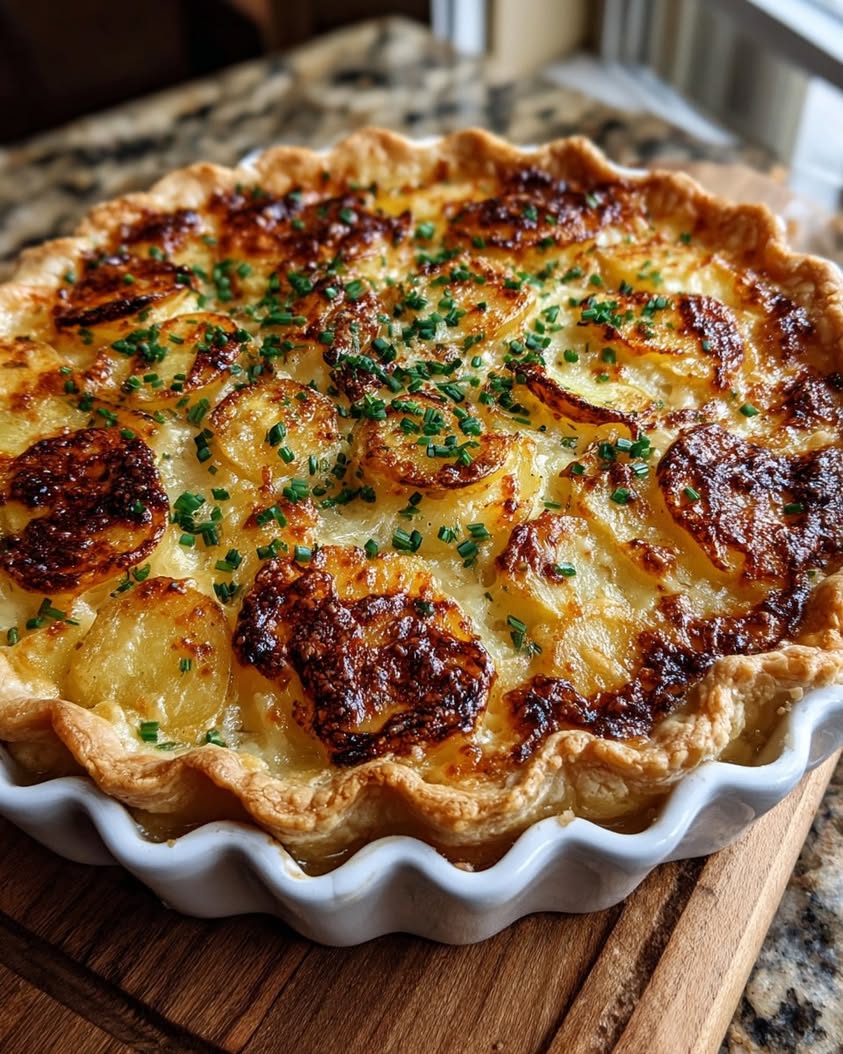
Creamy Cheesy Potato Onion Pie: The Ultimate Comfort Food Classic
Imagine a dish that combines the humble potato with sweet caramelized onions and a blanket of melted cheese, all baked into a golden, savory pie. This Creamy Cheesy Potato Onion Pie is exactly that dream come true. Moreover, it is the epitome of comfort food, offering a warm, satisfying meal that feels like a hug from the inside. The aroma alone, as it bakes, will draw everyone into the kitchen with anticipation.
This recipe transforms simple, affordable ingredients into something truly spectacular. Consequently, it is perfect for both busy weeknights and special weekend gatherings. The layers of flavor develop beautifully in the oven, creating a harmonious blend of creamy, savory, and slightly sweet notes. Ultimately, every bite delivers a perfect balance of soft potato, rich cheese, and the deep, umami sweetness of slow-cooked onions.
Furthermore, this Creamy Cheesy Potato Onion Pie is incredibly versatile. For instance, you can serve it as a stunning main dish for a vegetarian feast or as a hearty side alongside roasted meats. Its rustic, golden-brown top and bubbling cheese edges make for a beautiful presentation straight from the oven. Therefore, whether you are feeding your family or impressing guests, this pie is a guaranteed crowd-pleaser that celebrates the best of home cooking.
Quick Recipe Highlights
- Flavor Profile: This pie masterfully balances savory, creamy, and sweet elements. The sharp cheddar cheese provides a tangy depth, while the caramelized onions add a natural, mellow sweetness. Additionally, the garlic and seasoning create a well-rounded, comforting taste that is deeply satisfying.
- Texture: Expect a delightful contrast in every forkful. The potatoes become tender and almost melt in your mouth, while the cheese forms a gooey, stretchy layer. Meanwhile, the pie crust offers a flaky, buttery crunch that holds the rich filling together perfectly.
- Aroma: As it bakes, the kitchen fills with an irresistible scent. Specifically, the nutty fragrance of browning cheese blends with the sweet smell of caramelized onions and the earthy aroma of potatoes. This combination is the very essence of home-cooked comfort.
- Visual Appeal: The finished pie boasts a gorgeous, golden-brown crust with visible layers of potato and onion. Bubbles of melted cheese peek through the top, promising a rich and gooey interior. Served in slices, it reveals beautiful strata of white, gold, and orange.
- Skill Level Needed: This is a beginner-friendly recipe that requires basic kitchen skills. You need to be comfortable with slicing, sautéing, and assembling. However, there are no advanced techniques, making it an excellent project for cooks of all levels.
- Special Equipment: A good chef’s knife and cutting board are essential for prepping the vegetables. Additionally, a large skillet for caramelizing the onions and a standard 9-inch pie dish are required. A mandoline slicer can speed up potato prep but is not mandatory.
Recipe Overview
- Difficulty Level: We rate this recipe as “Easy” because it uses straightforward techniques. The most involved step is caramelizing the onions, which simply requires patience. Otherwise, the assembly is just layering ingredients, making it very approachable for novice cooks.
- Category: This dish beautifully straddles categories. It is substantial enough to be a vegetarian main course but also makes a fantastic side dish. Furthermore, it fits into brunch, lunch, and dinner menus with equal ease, showcasing its wonderful versatility.
- Cuisine: While not tied to one specific region, this pie draws inspiration from European peasant cooking and American comfort food traditions. The combination of potatoes, onions, and cheese is a global staple, celebrated for its simplicity and heartiness across many cultures.
- Cost: This is an incredibly budget-friendly meal. Potatoes and onions are among the most affordable produce items year-round. With cheese and a pie crust as the other primary components, you can create a stunning, feed-a-crowd dish for just a few dollars per serving.
- Season: This Creamy Cheesy Potato Onion Pie is truly a dish for all seasons. It provides warmth and comfort in fall and winter. Conversely, in spring and summer, it pairs wonderfully with fresh, light salads, making it a versatile year-round favorite.
- Occasion: It is perfect for casual family dinners, potlucks, and holiday gatherings alike. Its make-ahead potential also makes it ideal for busy weeknights. Simply put, any occasion that calls for delicious, satisfying food is the right occasion for this pie.
Why You’ll Love This Recipe
First and foremost, the taste and texture of this Creamy Cheesy Potato Onion Pie are utterly irresistible. Each layer contributes something special: the potatoes become infused with flavor and creamy softness, the onions transform into sweet, jammy ribbons, and the cheese binds it all together with its rich, tangy goodness. The buttery crust provides the perfect textural contrast, creating a eating experience that is both comforting and complex. You will find yourself going back for just one more bite, again and again, because the flavors are so perfectly balanced and deeply satisfying.
From a practical standpoint, the convenience of this recipe is a major win. While the onions do require time to caramelize properly, the process is mostly hands-off. Meanwhile, you can prep the other ingredients. The assembly is simple layering, meaning there is no fussy technique to master. Additionally, the entire pie can be prepared ahead of time and refrigerated before baking, making it a lifesaver for busy days or entertaining. You get an impressive, home-cooked meal without spending all day in the kitchen, which is a huge benefit for any home cook.
Nutritionally, this dish offers more than you might think. Potatoes are an excellent source of vitamin C, potassium, and fiber, especially if you leave the skins on. Onions are rich in antioxidants and prebiotics that support gut health. While cheese adds protein and calcium, using a sharp variety means you can use less without sacrificing flavor. When enjoyed as part of a balanced meal with a side of greens, this pie provides substantial energy and nutrients, proving that comfort food can also be nourishing.
The social and entertaining value of this Creamy Cheesy Potato Onion Pie cannot be overstated. It is a universally appealing dish that caters to vegetarians and meat-eaters alike. Its rustic, golden appearance makes it a beautiful centerpiece on any table. Serving it family-style encourages sharing and conversation. Whether it is a quiet dinner for two or a festive holiday spread, this pie has a way of making a meal feel special and communal, creating lasting memories around good food.
Finally, its cost-effectiveness and accessibility are key advantages. The ingredients are pantry staples available at any grocery store, regardless of the season. You do not need expensive or exotic items to create something spectacular. This makes it an ideal recipe for students, families on a budget, or anyone who wants to cook delicious food without breaking the bank. It demonstrates how a little creativity with basic ingredients can yield a truly magnificent and memorable meal.
Historical Background and Cultural Significance
The origin story of potato and onion pies is deeply rooted in peasant cooking across Europe, particularly in England, Ireland, and France. Potatoes and onions were cheap, readily available, and stored well through harsh winters, making them essential staples. Cooks would combine them with whatever dairy was on hand—cheese, cream, or butter—and encase them in a simple pastry crust to create a filling, economical meal. These pies were not fancy but were designed to sustain families and communities through hard work and cold weather. The concept traveled with immigrants, evolving into various regional dishes in America and beyond.
Culturally, this type of dish represents resourcefulness and comfort. It is a testament to making the most of humble ingredients. In many cultures, a pie symbolizes home, harvest, and hospitality. The act of enclosing ingredients in a crust was a practical way to stretch food, preserve it, and create a portable meal for workers. Today, dishes like this Creamy Cheesy Potato Onion Pie connect us to those culinary traditions, reminding us of the enduring power of simple, honest food made with care and shared with loved ones.
The evolution of the recipe is a story of adaptation. The basic formula of potatoes, onions, and fat has remained constant, but the additions have changed with time and location. The introduction of New World potatoes to Europe in the 16th century was a revolution. Later, as cheese became more commercially available, it became a common enrichment. The modern version, often dubbed a “pie” or “tart,” reflects contemporary tastes for richer ingredients like heavy cream and multiple cheese varieties, while still honoring the dish’s frugal beginnings.
Regional variations are fascinating. In France, a similar dish might be called a “Tartiflette” or “Pâté aux Pommes de Terre,” often featuring Reblochon cheese. In the UK, it is close to a “Cumberland Pie” or a potato-topped cottage pie variant. In the American South, you might find it with a biscuit crust. Some versions use sweet potatoes, others add bacon or herbs like thyme and rosemary. This global tapestry of variations highlights the universal appeal of combining starch, allium, and dairy into a baked, comforting masterpiece.
Ingredient Deep Dive
Potatoes: The potato’s journey from the Andes to global staple is a culinary epic. Nutritionally, they are packed with vitamin C, potassium, and vitamin B6, and provide sustained energy from complex carbohydrates. For this pie, choose starchy potatoes like Russets or Yukon Golds; their high starch content helps them soften and absorb flavors beautifully. Store them in a cool, dark, well-ventilated place—never in the refrigerator, as cold temperatures convert starch to sugar. If you need a substitute, sweet potatoes can offer a vibrant, vitamin-A-rich alternative, though the flavor profile will change.
Onions: Onions have been cultivated for over 5,000 years and were prized by ancient civilizations for both culinary and medicinal purposes. They are rich in quercetin, a powerful antioxidant, and contain prebiotic fibers that feed beneficial gut bacteria. For caramelizing, yellow onions are ideal due to their perfect balance of sweetness and pungency. Select firm onions with dry, papery skins. Store them in a cool, dry place away from potatoes, as they release gases that can cause each other to spoil faster. Shallots or leeks can be used for a milder, more delicate flavor.
Cheddar Cheese: Cheddar originated in the English village of Cheddar in the 12th century. It is an excellent source of calcium, protein, and vitamin A. A sharp or extra-sharp aged cheddar is recommended for this pie because its intense flavor means you can use less while still achieving a powerful cheesy taste. Look for cheese that is firm and not sweaty. Store wrapped tightly in parchment paper inside an airtight container in the refrigerator. For substitutions, Gruyère offers superb meltability and a nutty flavor, while a smoked Gouda would add a delicious twist.
Pie Crust: The pie crust provides essential structure and textural contrast. A good homemade or store-bought all-butter crust will yield the flakiest, most flavorful results. The fat in the crust creates layers that puff up during baking. For a gluten-free version, use a certified gluten-free pie crust mix or a crust made from almond flour. Always blind bake your crust for a few minutes before adding the wet filling; this crucial step prevents a soggy bottom and ensures a crisp, golden base that can support the rich layers of potato and onion.
Common Mistakes to Avoid
- Not Caramelizing the Onions Fully: Rushing this step is the biggest mistake. Onions need low, slow heat to break down their sugars and develop deep flavor. If they are merely translucent and not a deep golden-brown, your pie will lack its signature sweet, umami backbone. Patience here is non-negotiable for the best results.
- Using the Wrong Potato: Waxy potatoes like Red Bliss or New Potatoes will hold their shape too firmly and not become tender enough. They can also release excess water. Always opt for starchy or all-purpose potatoes like Russets or Yukon Golds, which will soften beautifully and help thicken the filling as they bake.
- Skipping the Pre-Bake (Blind Bake) for the Crust: Adding a wet filling to an unbaked crust is a recipe for disaster. The bottom will be soggy and undercooked. Always pre-bake your crust for about 10 minutes at a high temperature. This sets the structure and creates a barrier, ensuring a flaky, crisp base.
- Overloading the Pie with Filling: It is tempting to use all the potatoes, but overfilling can prevent even cooking. The top layers may burn before the center is tender. Furthermore, an overstuffed pie is difficult to slice neatly. Follow the layering instructions and trust that the volume is correct.
- Using Pre-Shredded Cheese: Pre-shredded cheese contains anti-caking agents like cellulose that prevent it from melting smoothly. It can result in a grainy texture. For the creamiest, most luxurious melt, always buy a block of cheese and shred it yourself just before using. The difference in quality is significant.
- Not Seasoning Between Layers: Seasoning only the top is insufficient. Potatoes need salt to bring out their flavor. Lightly season each layer of potatoes and onions as you build the pie. This ensures every bite is perfectly seasoned from the bottom to the top, not just on the surface.
- Cutting the Pie Immediately After Baking: Like any baked custard or cheese dish, this pie needs time to set. Cutting it straight from the oven will cause the filling to ooze out, and the slices will not hold their shape. Let it rest for at least 15-20 minutes to allow the cheese and starches to firm up.
- Ignoring the Top During Baking: If the top is browning too quickly but the potatoes are not yet tender, you must take action. Simply tent the pie loosely with aluminum foil. This will slow down browning while allowing the heat to continue penetrating to cook the potatoes through perfectly.
Essential Techniques
Caramelizing Onions: This technique is fundamental for building deep, sweet flavor. Slice your onions uniformly so they cook evenly. Use medium-low heat and a bit of fat—butter, oil, or a combination. Stir occasionally, but not constantly; they need time in contact with the pan to brown. The process takes 25-40 minutes. Do not rush it with high heat, as this will burn the sugars. They are done when they are a uniform deep golden-brown, soft, and jammy. This patience transforms a sharp allium into a sweet, complex foundation.
Blind Baking the Crust: Blind baking is pre-baking a pie crust before adding a wet filling. It prevents a soggy bottom. First, prick the crust all over with a fork (docking) to stop it from puffing up. Then, line it with parchment paper and fill with pie weights, dried beans, or rice. Bake at 400°F for about 10-12 minutes until the edges are set. Remove the weights and parchment, then bake for another 3-5 minutes to dry out the center. The crust should look matte and lightly colored, not fully browned. This creates a sturdy, flaky barrier.
Layering for Even Cooking: Proper layering ensures the potatoes cook through uniformly. Start with a thin layer of cheese on the hot, pre-baked crust—this helps create a seal. Then, add alternating, even layers of potatoes and onions, seasoning each lightly. Finish with the remaining cheese. Avoid packing the layers down tightly; allow some air space between slices. This structure lets steam and heat circulate, cooking the potatoes from all sides and melding the flavors together as the pie bakes.
Pro Tips for Perfect Creamy Cheesy Potato Onion Pie
Use a mandoline slicer for perfectly uniform potato slices. Consistent thickness is key to even cooking. If you do not have one, take your time with a sharp knife to get slices as even as possible, about 1/8-inch thick.
Season every single layer. Do not just salt the top. A light sprinkle of salt and pepper on each layer of potatoes and onions ensures the seasoning penetrates the entire pie, not just the surface.
Let your pie crust chill thoroughly before rolling and baking. A cold crust equals flaky layers. If using homemade dough, chill for at least an hour. If using store-bought, follow the package directions for pre-baking.
Shred your cheese from a block. The anti-caking powder on pre-shredded cheese can make your sauce grainy and prevent smooth melting. Freshly shredded cheese melts into a velvety, cohesive layer.
Test for doneness with a paring knife. The baking time can vary. To check, insert a thin knife into the center of the pie. It should slide through the potato layers with no resistance, indicating they are fully tender.
Allow the pie to rest before slicing. Let it sit for 15-20 minutes after baking. This allows the cheese to set slightly and the starches in the potatoes to firm up, giving you clean, beautiful slices that hold their shape.
For extra flavor, add a teaspoon of fresh thyme leaves or a pinch of smoked paprika between the layers. These herbs and spices complement the potatoes and onions without overpowering the classic comfort food profile.
If the top browns too quickly, tent it with foil. About halfway through baking, if the cheese is getting very dark, loosely place a sheet of aluminum foil over the pie. This will protect the top while the interior finishes cooking.
Variations and Adaptations
Regional Variations: Explore global twists on this classic. For a French touch, use Gruyère cheese and add a splash of white wine to the onions. An Italian version could include layers of prosciutto and fontina cheese. For a British flair, add cooked ground lamb between the layers and top with a layer of mashed potato instead of more cheese, creating a shepherd’s pie hybrid.
Seasonal Adaptations: In the fall, incorporate thin slices of sweet potato or butternut squash for a seasonal twist. During spring, add a layer of fresh asparagus tips or peas for color and a fresh flavor contrast. In summer, serve the pie at room temperature with a side of tomato salad for a lighter meal.
Dietary Modifications: For a gluten-free pie, use a certified gluten-free pie crust or a crust made from almond flour. To make it dairy-free, use a plant-based butter for the crust and a melty vegan cheese alternative. A vegan version would also substitute the cheese with a cashew cream or nutritional yeast-based sauce.
Flavor Variations: Infuse the cream with a clove of garlic and a sprig of rosemary for an herby note. Add a layer of sautéed mushrooms for an earthy, umami boost. For a spicy kick, mix a diced jalapeño into the caramelized onions or add a pinch of red pepper flakes between the potato layers.
Texture Modifications: For a richer, more custard-like filling, whisk two eggs into the heavy cream before pouring it over the layers. For a crispier top, mix panko breadcrumbs with a little melted butter and Parmesan cheese and sprinkle it over the final cheese layer before baking.
Presentation Alternatives: Instead of one large pie, make individual pot pies in ramekins for a charming personal serving. You can also prepare this as a galette by rolling the crust into a large circle, piling the filling in the center, and folding the edges over for a rustic, free-form tart.
Serving and Presentation Guide
Plating Techniques: Use a sharp, thin-bladed knife to cut clean slices. A pie server or a small, offset spatula is the best tool for lifting slices from the dish. For a restaurant-style presentation, place a slice slightly off-center on a warm plate. Wipe any drips from the plate edge for a clean look.
Garnishing Ideas: A simple sprinkle of fresh chopped chives or parsley adds a pop of color and fresh flavor. A few microgreens or a drizzle of high-quality olive oil or truffle oil just before serving elevates the dish. For a festive touch, a few edible flowers like nasturtiums make a stunning garnish.
Traditional Accompaniments: This hearty pie pairs beautifully with a simple, crisp green salad dressed with a vinaigrette to cut through the richness. It is also classic alongside roasted or steamed green vegetables like broccoli, green beans, or Brussels sprouts. For a full comfort food spread, serve with applesauce or a tangy chutney.
Modern Serving Suggestions: For brunch, serve a wedge with a poached egg on top and a side of arugula. For a casual dinner, pair it with a hearty soup like tomato or lentil. Slice it into smaller squares and serve as a substantial appetizer or part of a buffet at a party.
Temperature Considerations: This pie is best served warm, not piping hot. The resting time allows the flavors to settle and makes it easier to slice. Leftovers are also delicious at room temperature or even cold straight from the refrigerator, making it a versatile leftover option.
Portion Control Tips: A standard 9-inch pie typically yields 6 generous wedges as a main course or 8 smaller slices as a side dish. Consider your menu and guests’ appetites. If serving with multiple other rich dishes, opt for smaller portions. For a light meal with just a salad, a larger wedge is perfect.
Wine and Beverage Pairing
Wine Pairings: The rich, creamy, and savory notes of this pie call for wines with good acidity to cleanse the palate. A crisp, unoaked Chardonnay or a French Chablis works wonderfully. For red wine lovers, a light to medium-bodied Pinot Noir with its red fruit notes and low tannins complements without overwhelming. An off-dry Riesling can also be a fantastic match, as its slight sweetness plays off the caramelized onions beautifully.
Non-Alcoholic Alternatives: Sparkling water with a squeeze of lemon or lime provides a refreshing, palate-cleansing effervescence. For something more substantial, a tart cherry juice or a crisp apple cider (non-alcoholic) mirrors the sweet and savory elements of the dish. Iced herbal tea, like mint or lemon verbena, is another excellent, refreshing choice.
Coffee/Tea Pairings: After the meal, a medium-roast coffee with low acidity pairs nicely, as it will not clash with the rich flavors. For tea, consider a robust black tea like English Breakfast or an Earl Grey. The bergamot in Earl Grey can provide a lovely aromatic contrast to the earthy potatoes and cheese.
Temperature Considerations: White wines and sparkling beverages should be served well-chilled, around 45-50°F. Red wines like Pinot Noir are best served slightly cooler than room temperature, around 55°F. Non-alcoholic ciders and sparkling waters should also be served cold to provide the best contrast to the warm, rich pie.
Serving Suggestions: Always offer water on the table alongside any other beverage. When serving wine, pour modestly to allow guests to enjoy the pairing without filling their glass too quickly. For a casual gathering, setting out a pitcher of infused water or iced tea allows guests to help themselves throughout the meal.
Storage and Shelf Life
Storage Methods: Allow the pie to cool completely to room temperature before storing. Cover the baking dish tightly with plastic wrap or aluminum foil, or transfer individual slices to an airtight container. Proper storage is crucial to prevent the pie from drying out or absorbing odors from the refrigerator.
Temperature Requirements: This pie must be stored in the refrigerator at 40°F or below. Do not leave it at room temperature for more than two hours after cooking, as the dairy and potato content can promote bacterial growth. Always refrigerate leftovers promptly to ensure food safety.
Container Recommendations: For the whole pie, the original baking dish covered tightly is fine. For slices, stack them with a small piece of parchment paper between layers to prevent sticking, then place in a sealed container. Glass containers are ideal as they do not absorb odors and allow you to see the contents.
Signs of Spoilage: Discard the pie if you notice an off or sour smell, significant mold growth (often fuzzy green, white, or black spots), or a slimy texture on the surface. If the cheese develops an unusual sheen or the potatoes become discolored or excessively watery, it is best to err on the side of caution and throw it away.
Reheating Instructions: For best results, reheat slices in the oven. Preheat to 350°F, place the pie on a baking sheet, and cover loosely with foil. Heat for 15-20 minutes, or until warmed through. You can also use an air fryer at 325°F for 8-10 minutes. The microwave is quick but will soften the crust; use a medium power setting and heat in short bursts.
Freezing Guidelines: This pie freezes reasonably well. Cool completely, then wrap the whole pie or individual slices tightly in plastic wrap, followed by a layer of heavy-duty aluminum foil. Label with the date. Freeze for up to 2 months. Thaw overnight in the refrigerator before reheating using the oven method above. Note that the texture of the potatoes may become slightly grainier after freezing.
Make Ahead Strategies
Prep Timeline: You can prepare the entire pie up to 24 hours in advance. Caramelize the onions, slice the potatoes, and shred the cheese. Assemble the pie in the dish, cover tightly with plastic wrap, and refrigerate. When ready to bake, you may need to add 5-10 minutes to the baking time since you are starting from a cold state.
Storage Between Steps: If prepping components separately, store caramelized onions in an airtight container in the fridge for up to 3 days. Keep sliced potatoes submerged in cold water in the refrigerator to prevent browning; drain and pat very dry before using. Shredded cheese can be stored in a bag or container in the fridge.
Quality Impact Assessment: Making the pie a day ahead can actually improve the flavor, as it allows the ingredients to meld. The crust may soften slightly on the bottom but will still be delicious. The texture of the potatoes remains excellent. Avoid making it more than a day ahead, as the potatoes can start to discolor and release more water.
Assembly Tips: When assembling a day ahead, do not pour any cream or milk over the layers until just before baking. The liquid can make the crust soggy during storage. Instead, add the liquid component right before the pie goes into the preheated oven for the best texture.
Reheating Guidelines: A fully baked pie can be refrigerated and reheated. Cover with foil and warm in a 325°F oven for 20-25 minutes. For individual slices, the oven or air fryer method works best to restore crispness to the crust. The microwave is a last resort for speed.
Fresh Element Additions: If making ahead, add any fresh herbs as a garnish after baking and reheating. This preserves their vibrant color and flavor. A final sprinkle of flaky sea salt or a fresh grind of black pepper just before serving will also brighten up the flavors of a make-ahead pie.
Scaling Instructions
Halving the Recipe: To make a smaller pie, simply divide all ingredient quantities by two. Use a 7-inch pie dish or a small baking dish. The baking time will be slightly reduced; start checking for doneness around the 45-minute mark. The layering principle remains the same, just with fewer, thinner layers.
Doubling or Tripling: For a crowd, double or triple the ingredients. Do not try to bake one gigantic, deep-dish pie, as the center will not cook properly. Instead, divide the filling between two or three standard 9-inch pie dishes. You may need to bake them in succession if oven space is limited, or use multiple oven racks, rotating the dishes halfway through baking.
Equipment Adjustments: Scaling up requires ensuring you have enough baking dishes. For a double batch, you will need two pie dishes. A large skillet may also be needed for caramelizing the increased volume of onions, or you may need to do it in batches. Have enough mixing bowls and prep space ready.
Timing Modifications: When baking multiple pies, they may take slightly longer due to the increased mass in the oven. However, do not simply double the bake time. Check the pies at the original recommended time, then in 5-minute increments thereafter. Use the knife test in the center of each pie to check for doneness.
Storage Considerations: Scaling up often means more leftovers. Plan your storage containers in advance. Consider freezing a portion of the baked pies if you are making multiple for future meals. Label everything clearly with the contents and date to keep your freezer organized.
Nutritional Deep Dive
Macro Breakdown: A serving of this pie provides a balance of macronutrients. The potatoes and crust contribute complex carbohydrates for sustained energy. The cheese and any cream or butter provide protein and fats, which aid in satiety and help absorb fat-soluble vitamins from the other ingredients. It is a hearty, energy-dense dish ideal for a main meal.
Micronutrient Analysis: This dish is a good source of several key micronutrients. Potatoes offer vitamin C, potassium, and vitamin B6. Onions provide antioxidants like quercetin. Cheese contributes significant calcium and vitamin A. Using whole milk or cream adds vitamin D. Together, they create a nutrient profile that supports immune function, bone health, and energy metabolism.
Health Benefits: When enjoyed in moderation as part of a balanced diet, this pie offers comfort and nutrition. The fiber from potatoes (especially with skins) and onions supports digestive health. The calcium from cheese is crucial for bone strength. The dish’s satisfying nature can help prevent overeating by promoting feelings of fullness.
Dietary Considerations: This is a vegetarian dish but not inherently low-calorie or low-fat due to the cheese and crust. Those monitoring sodium should be mindful of the salt added during layering and the natural sodium in cheese. For specific dietary needs, refer to the adaptations section for gluten-free, dairy-free, or lower-carb options.
Portion Analysis: One-sixth of a 9-inch pie is a substantial portion as a main course. As a side dish, one-eighth of the pie is more appropriate. Pairing a main course portion with a large salad or steamed vegetables creates a more balanced plate, adding fiber, vitamins, and volume without excessive calories.
Weight Management Tips: To enjoy this dish while managing weight, focus on portion control. Serve yourself a single slice and fill the rest of your plate with non-starchy vegetables. You can also use lighter cheese varieties, reduce the amount of cheese slightly, or use a lower-fat milk instead of cream in the filling. Remember, it is about balance, not deprivation.
Dietary Adaptations
Gluten-Free: Use a certified gluten-free pie crust, either store-bought or homemade with a blend like rice flour and tapioca starch. Ensure all other packaged ingredients, like cheese, are labeled gluten-free, as some additives may contain gluten. The filling is naturally gluten-free, making this an easy adaptation.
Dairy-Free: Substitute the butter in the crust with a plant-based alternative like vegan butter or coconut oil. For the cheese, use a high-quality, melty vegan cheese shreds. For the creamy component, use an unsweetened, unflavored plant-based milk like oat or soy milk, and consider adding a tablespoon of nutritional yeast for a cheesy flavor.
Vegan: Follow the dairy-free guidelines for the crust and cheese. To replace the binding and creamy quality of dairy, create a sauce by blending soaked cashews with plant-based milk, nutritional yeast, lemon juice, and salt until smooth. Pour this over the layers before baking. The result will be rich, creamy, and satisfying.
Low-Carb/Keto: Replace the potato layers with thin slices of cauliflower or turnips. These lower-carb vegetables will soften but retain more texture. Use a keto-friendly pie crust made from almond flour and butter. Increase the cheese and fat content, using full-fat cream and cheese to meet macronutrient goals for a ketogenic diet.
Paleo: Omit the traditional grain-based crust. Instead, create a crust from almond flour, coconut flour, and ghee or coconut oil. For the filling, use sweet potatoes instead of white potatoes for a more paleo-approved starch, and ensure any dairy is grass-fed and full-fat, or use compliant dairy substitutes like coconut cream.
Low-FODMAP: Onions are high in FODMAPs. Replace them with the green tops of spring onions (scallions), which are low-FODMAP. Use a lactose-free cheese or a hard, aged cheese like cheddar, which is naturally very low in lactose. Ensure the cream used is lactose-free if you are sensitive.
Troubleshooting Guide
Soggy Bottom Crust: This is almost always due to skipping the blind-baking step.{“success”:true,”message”:”Recipe created successfully”,”post_id”:9069,”tasty_recipe_id”:9069,”shortcode”:”“}

I’m Billy, a classically trained culinary school graduate from The Culinary Institute of America with over 12 years in the restaurant industry and over 19 years of cooking experience.