
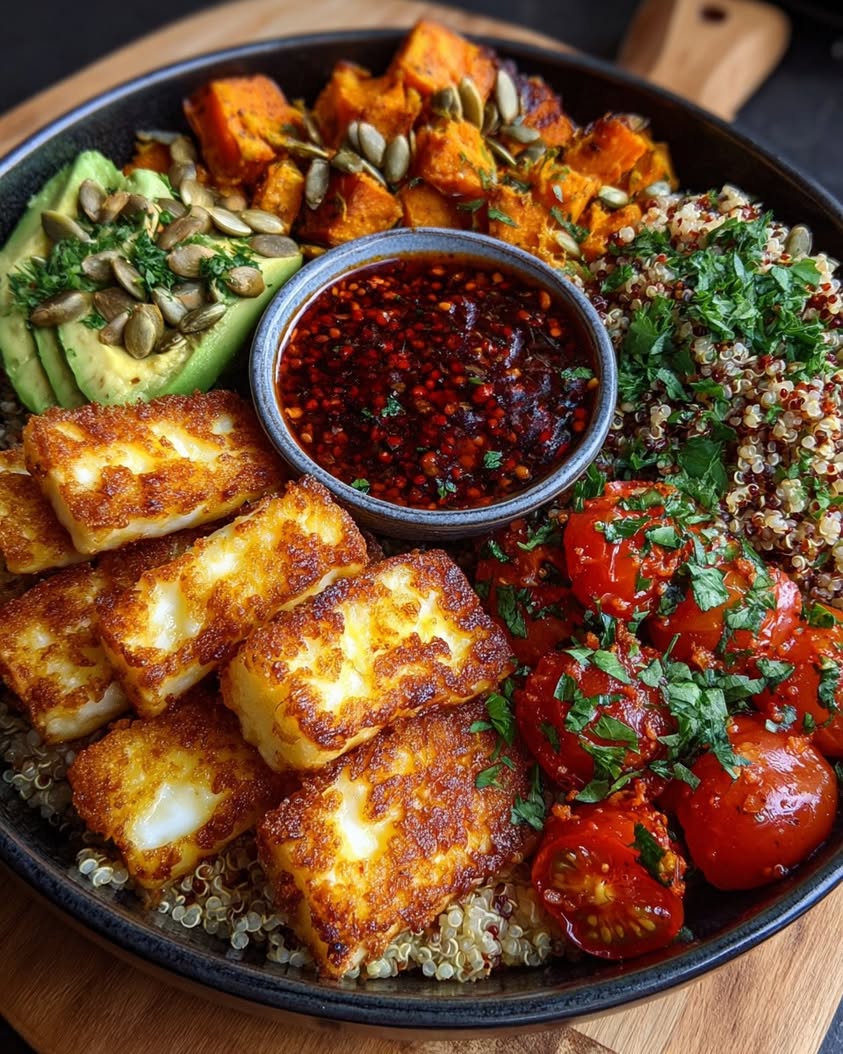
Halloumi & Quinoa Bowl with Harissa Vinaigrette: A Vibrant Power Bowl Bursting with Flavor
If you are searching for a meal that is both nourishing and deeply satisfying, look no further than this Halloumi & Quinoa Bowl with Harissa Vinaigrette. This recipe masterfully combines textures and flavors into one stunning, Instagram-worthy dish. Moreover, it delivers a perfect balance of hearty protein, wholesome grains, and fresh vegetables. Ultimately, you get a complete meal that feels indulgent yet is packed with nutritional goodness.
The star of this bowl is undoubtedly the halloumi cheese, a salty, firm cheese that transforms when cooked. When seared in a hot pan, it develops a gorgeous golden-brown crust while staying beautifully soft inside. Paired with fluffy quinoa and a rainbow of crisp vegetables, every bite offers a delightful contrast. The real magic, however, comes from the homemade harissa vinaigrette, a spicy, tangy, and aromatic dressing that ties all the components together brilliantly.
This Halloumi & Quinoa Bowl with Harissa Vinaigrette is more than just lunch; it is a customizable canvas for your favorite ingredients. Whether you need a quick weeknight dinner or an impressive dish for guests, this recipe adapts effortlessly. Furthermore, it is a fantastic way to explore Mediterranean and Middle Eastern flavors from the comfort of your own kitchen. Let us dive into how to create this vibrant, flavor-packed power bowl.
Quick Recipe Highlights
- Flavor Profile: This bowl delivers a complex symphony of tastes. You experience the salty, savory punch of pan-fried halloumi, the earthy nuttiness of quinoa, and the bright freshness of cucumber and tomato. Consequently, the spicy, smoky, and slightly sweet harissa vinaigrette elevates every element with its bold character.
- Texture: The texture contrast is absolutely key to this dish’s appeal. Expect a satisfying chew from the fluffy quinoa, a crispy exterior and soft interior from the halloumi, and a juicy crunch from the fresh vegetables. Additionally, the creamy avocado adds a luxurious, smooth mouthfeel that balances everything perfectly.
- Aroma: As you cook, your kitchen will fill with enticing scents. The halloumi sizzles with a salty, almost meaty aroma, while toasting the quinoa adds a warm, nutty note. Ultimately, the harissa vinaigrette brings forward the smoky fragrance of paprika and cumin, mingled with the bright acidity of lemon.
- Visual Appeal: This bowl is a feast for the eyes with its vibrant color palette. The golden-brown halloumi, white quinoa, red tomatoes, green cucumber, and creamy avocado create a stunning rainbow. Therefore, it is a dish you will be proud to serve and share.
- Skill Level Needed: This is an accessible recipe for cooks of all levels. The techniques are straightforward, involving basic cooking methods like boiling quinoa and pan-frying cheese. Essentially, if you can use a stove, you can absolutely master this Halloumi & Quinoa Bowl with Harissa Vinaigrette.
- Special Equipment: You only need standard kitchen tools. A medium saucepan with a lid cooks the quinoa perfectly. Meanwhile, a good non-stick or cast-iron skillet is ideal for achieving that perfect sear on the halloumi without sticking.
Recipe Overview
- Difficulty Level: We rate this recipe as “Easy” for several important reasons. First, the steps are simple and sequential, with no complicated techniques. Second, most components can be prepared simultaneously, making efficient use of your time. Finally, the room for error is minimal; even if your halloumi is less golden or your quinoa a bit softer, the final bowl will still be delicious and satisfying.
- Category: This dish brilliantly fits multiple meal categories. It is a substantial and balanced main course for lunch or dinner. Alternatively, you can easily scale it down for a hearty side dish or salad. Furthermore, it works wonderfully for meal prep, as the components hold up well in the refrigerator for several days.
- Cuisine: This bowl draws inspiration primarily from Eastern Mediterranean and Middle Eastern culinary traditions. Halloumi hails from Cyprus, quinoa from South America (though used here as a modern base), and harissa is a cornerstone of North African, especially Tunisian, cuisine. The combination creates a delicious, globally-inspired fusion meal that celebrates bold flavors.
- Cost: This is a moderately priced, restaurant-quality meal you can make at home. Halloumi is often the most expensive ingredient, but a little goes a long way. Quinoa, canned chickpeas, and fresh vegetables are budget-friendly staples. Overall, you can create two generous servings for a fraction of the cost of a similar bowl at a trendy cafe.
- Season: This Halloumi & Quinoa Bowl with Harissa Vinaigrette is truly a year-round champion. In summer, use the freshest ripe tomatoes and cucumbers from the garden or market. During winter, it brings a much-needed burst of color and spice to the table. The hearty elements make it satisfying in cooler months, while the fresh veggies keep it light for warmer weather.
- Occasion: This versatile bowl suits countless occasions. It is perfect for a fast and healthy weeknight family dinner. Simultaneously, its beautiful presentation makes it ideal for casual entertaining or a special lunch. You can also pack the components separately for a fantastic picnic or work lunch that will spark envy.
Why You’ll Love This Recipe
You will adore the taste and texture appeal of this Halloumi & Quinoa Bowl with Harissa Vinaigrette. Every forkful is a deliberate adventure, combining creamy, crunchy, salty, and spicy elements. The halloumi provides a deeply savory, almost meaty satisfaction that will surprise and delight vegetarians and meat-eaters alike. Meanwhile, the harissa vinaigrette is not just a dressing; it is the flavor engine of the dish, adding a warm, smoky heat that lingers pleasantly. This bowl proves that healthy food does not have to be bland or boring; it can be explosively flavorful and utterly crave-worthy.
The convenience and preparation benefits are another major win. This entire meal comes together in about 40 minutes, with much of that time being hands-off while the quinoa cooks. You can easily multitask by chopping vegetables and making the vinaigrette during that downtime. Furthermore, the recipe is incredibly forgiving and adaptable. Forgot the mint? Use parsley. No cherry tomatoes? Dice a regular one. This flexibility makes it a reliable go-to recipe you can make with what you have on hand, reducing food waste and stress.
Nutritional advantages are woven throughout this dish. Quinoa is a complete plant-based protein, packed with fiber and all nine essential amino acids. Halloumi provides a good dose of protein and calcium. Chickpeas add more fiber and plant protein, promoting digestive health and lasting fullness. The array of fresh vegetables delivers essential vitamins, minerals, and antioxidants. Together, they create a balanced meal that fuels your body, stabilizes energy levels, and supports overall well-being without any sense of deprivation.
The social and entertaining value of this bowl is significant. It is a visually stunning dish that looks like you spent far more time and effort than you actually did. Serving it family-style allows everyone to admire the colorful components before digging in. Additionally, you can easily double or triple the recipe to feed a crowd. It is a fantastic conversation starter, introducing friends to the wonders of halloumi or the magic of homemade harissa dressing, making you feel like a culinary host.
Finally, the cost-effectiveness and accessibility of this Halloumi & Quinoa Bowl with Harissa Vinaigrette make it a kitchen staple. As mentioned, it rivals any expensive restaurant grain bowl at a fraction of the price. Most ingredients are readily available in standard supermarkets. Investing in a jar of harissa paste opens up a world of other recipes, too. This dish demonstrates how to eat well, flavorfully, and nutritiously without straining your grocery budget, proving that delicious, global-inspired cooking is accessible to everyone.
Historical Background and Cultural Significance
The origin story of this dish is a modern tale of culinary fusion. Individually, its components have deep historical roots. Halloumi, the star, is a traditional Cypriot cheese dating back to the Byzantine era, prized for its high melting point, which allowed it to be preserved in brine and stored without refrigeration. Quinoa, though now a global superfood, was sacred to the Incas in the Andes, who called it the “mother of all grains.” Harissa, the fiery heart of the vinaigrette, originates from Tunisia, where it has been a fundamental condiment and flavor base for centuries, made with local spices and peppers.
The cultural importance of each element speaks to survival and ingenuity. Halloumi’s durability made it a crucial protein source for Mediterranean shepherds and villagers. Quinoa’s resilience in high altitudes sustained ancient civilizations. Harissa provided not just flavor but also a means to preserve chili peppers. Combining these ingredients in a single bowl is a celebration of this global food heritage. It represents how contemporary cooking respectfully borrows from ancient traditions to create something new and exciting for the modern table.
The evolution of the recipe follows the trend of the “power bowl” or “Buddha bowl,” a 21st-century phenomenon focused on balanced, Instagrammable meals. This format is ideal for showcasing high-quality, diverse ingredients in one compartmentalized dish. The Halloumi & Quinoa Bowl with Harissa Vinaigrette is a perfect example of this evolution, taking the ancient, functional foods of various cultures and repackaging them into a convenient, aesthetically pleasing, and nutritionally-complete modern meal. It is a dish that could only exist in our current globalized food culture.
Regional variations of this concept are endless. In Greece, you might find a similar bowl with feta instead of halloumi and a lemon-oregano dressing. A Lebanese version could feature fried halloumi (saganaki-style) with za’atar-spiced quinoa and a tahini sauce. In North Africa, the bowl might include couscous instead of quinoa, with even more harissa. This adaptability is its strength. You can take the framework of grain, protein, veg, and bold dressing and take it on a world tour from your kitchen, customizing it to reflect different regional pantries and preferences.
Ingredient Deep Dive
Let us start with halloumi, the signature cheese in this Halloumi & Quinoa Bowl with Harissa Vinaigrette. Traditionally from Cyprus, this semi-hard, brined cheese is made from a mixture of goat’s and sheep’s milk, though cow’s milk versions are common. Its superpower is that it does not melt easily; instead, it softens and develops a delectable golden crust when grilled or pan-fried. Nutritionally, it is a good source of protein and calcium. When selecting halloumi, look for it in the specialty cheese section. Store it in its brine in the refrigerator. If you cannot find it, a good substitute is paneer or extra-firm tofu for a dairy-free option, though the salty flavor will differ.
Quinoa is the nutritious foundation of this bowl. This ancient pseudo-grain was domesticated in the Andes over 7,000 years ago. It is technically a seed but cooked and eaten like a grain. Crucially, it is one of the few plant foods that is a complete protein, containing all nine essential amino acids. It is also high in fiber, magnesium, and iron. For the best flavor, always rinse quinoa thoroughly under cold water before cooking to remove its natural bitter coating, called saponin. Store uncooked quinoa in an airtight container in a cool, dark place. You can substitute it with couscous, bulgur wheat, or farro if desired.
The harissa vinaigrette is the flavor catalyst. Harissa paste is a North African chili paste made from roasted red peppers, spices like caraway and coriander, garlic, and olive oil. It brings a complex heat that is smoky, fruity, and aromatic rather than just painfully spicy. For this vinaigrette, we blend it with lemon juice, olive oil, and a touch of maple syrup to balance the acidity and heat. You can find harissa in tubes or jars in the international aisle. Store an opened tube in the fridge. If you need a substitute, mix tomato paste with smoked paprika, a pinch of cayenne, and cumin, though the flavor will be simpler.
The supporting vegetables – cucumber, cherry tomatoes, and avocado – provide freshness, crunch, and creaminess. Cucumbers add hydration and a cool contrast. Cherry tomatoes offer bursts of sweet acidity. Avocado contributes healthy monounsaturated fats and a rich texture. For the best results, use English or Persian cucumbers for fewer seeds, choose ripe but firm avocados, and pick the sweetest tomatoes you can find. The fresh mint is not just a garnish; its bright, cooling flavor cuts through the richness of the cheese and dressing, tying the bowl together. Always add fresh herbs just before serving for maximum impact.
Common Mistakes to Avoid
- Not Rinsing the Quinoa: Skipping the rinse leaves a bitter, soapy taste from the saponin coating. Always place quinoa in a fine-mesh strainer and rinse under cold water for a full minute, stirring with your hand, until the water runs clear.
- Overcooking the Halloumi: Cooking halloumi over too low heat makes it tough and rubbery instead of crispy outside and soft inside. Your pan must be very hot before adding the cheese, and you should cook it just until golden brown on each side, which only takes 1-2 minutes.
- Using Cold Halloumi: Adding cold, straight-from-the-fridge halloumi to a hot pan can cause it to steam and stick. Let the sliced cheese sit at room temperature for 10-15 minutes before cooking to ensure a better sear.
- Neglecting to Season the Quinoa: Cooking quinoa in plain water results in a bland base. Instead, cook it in vegetable broth or add a pinch of salt to the cooking water. This simple step builds flavor from the ground up.
- Making a Broken Vinaigrette: If you simply whisk the harissa paste with lemon juice and oil, it might not emulsify properly. The key is to whisk the harissa and lemon juice together first, then slowly drizzle in the oil while whisking constantly to create a smooth, cohesive dressing.
- Chopping Vegetables Too Far Ahead: Dicing cucumber and tomatoes hours in advance causes them to become watery and limp. For the best texture, chop your fresh vegetables just before assembling the bowls.
- Using Wilted or Old Herbs: Brown, wilted mint will taste bitter and look sad. Use only the freshest, brightest green mint leaves. If your mint is subpar, substitute with fresh parsley or cilantro, or simply omit it.
- Forgetting to Drain the Chickpeas: Canned chickpeas come packed in liquid. If you do not rinse and drain them thoroughly, that starchy liquid can water down your bowl and alter the texture of the other ingredients.
- Overcrowding the Pan with Halloumi: Placing too many slices in the pan at once lowers the temperature dramatically, causing the cheese to release moisture and steam instead of sear. Cook in batches if necessary to ensure each piece has space to brown properly.
- Serving the Bowl Immediately After Frying Halloumi: Halloumi is best when it has a minute to rest after cooking. This allows the internal heat to distribute evenly, ensuring it is perfectly soft inside. If you assemble the bowl right away, the residual heat can wilt the fresh vegetables underneath.
Essential Techniques
Perfectly Cooking Quinoa: The technique for fluffy quinoa is simple but essential. After rinsing, use a 2:1 ratio of liquid to quinoa. Bring it to a boil, then immediately reduce to the lowest simmer and cover tightly. Do not peek! Let it cook undisturbed for 15 minutes. Then, remove it from the heat and let it steam, still covered, for another 10 minutes. Finally, fluff it with a fork. This method ensures each grain is separate and tender, not mushy or wet. The common pitfall is lifting the lid during cooking, which releases precious steam.
Pan-Frying Halloumi to Perfection: This technique transforms the cheese. Start with a dry, non-stick or well-seasoned cast-iron skillet over medium-high heat. No oil is needed initially, as halloumi will release its own fats. Pat the cheese slices dry, then place them in the hot pan. Listen for the sizzle. Cook for 1-2 minutes until a deep golden crust forms, then flip. The visual cue for success is an even, caramelized color. If the cheese sticks, it means the pan was not hot enough. The goal is a crisp exterior with a soft, yielding interior, not a melted mess.
Emulsifying the Harissa Vinaigrette: An emulsified vinaigrette is smooth and cohesive, not separated. The technique involves slowly combining two liquids that do not want to mix (oil and acid). In a small bowl, whisk the harissa paste and lemon juice together thoroughly. Then, while whisking constantly, slowly drizzle in the extra virgin olive oil in a thin, steady stream. This slow incorporation allows the oil to break into tiny droplets suspended in the acid, creating a stable, creamy dressing. If you dump the oil in all at once, it will remain separate. A small jar with a lid is a great alternative: add all ingredients and shake vigorously.
Pro Tips for Perfect Halloumi & Quinoa Bowl with Harissa Vinaigrette
Toast Your Quinoa: For a deeper, nuttier flavor, toast the rinsed and drained quinoa in your dry saucepan for a few minutes over medium heat before adding the cooking liquid. You will smell a warm, toasted aroma, which adds another layer of complexity to your grain base.
Marinate the Chickpeas: While the quinoa cooks, toss your drained chickpeas with a spoonful of the prepared harissa vinaigrette. Let them sit and absorb the flavors. This turns them from a simple addition into a powerfully seasoned component of the bowl.
Slice Halloumi to the Right Thickness: Aim for slices about 1/2-inch thick. Thinner slices can overcook and become tough too quickly, while thicker slices might not heat through properly in the center before the outside burns.
Use the Halloumi Pan for Veggies: After removing the cooked halloumi, you can quickly sauté your cherry tomatoes in the same pan for 30-60 seconds. This blisters their skins slightly, concentrates their sweetness, and picks up any delicious browned bits of cheese left behind.
Massage Your Kale (If Using): If you add kale or another sturdy green, tear it into pieces and massage it with a tiny bit of olive oil and lemon juice for a minute before adding to the bowl. This breaks down the tough fibers, making it tender and more palatable.
Grate Garlic into the Vinaigrette: Instead of mincing, use a microplane to grate a small garlic clove directly into the harissa-lemon mixture. This creates a finer, almost paste-like garlic that disperses more evenly throughout the dressing, preventing harsh bites.
Warm Your Serving Bowls: For a truly restaurant-quality experience, place your empty serving bowls in the oven on its lowest setting for a few minutes before assembling. A warm bowl keeps the quinoa and halloumi at an ideal temperature longer.
Finish with Flaky Salt: Just before serving, sprinkle a pinch of flaky sea salt (like Maldon) over the entire bowl. The delicate crunch and burst of pure saltiness elevate every ingredient, especially the creamy avocado and halloumi.
Variations and Adaptations
Regional Variations: Travel the world from your bowl. For a Greek twist, swap halloumi for feta crumbles, use oregano in the quinoa, and make a lemon-oregano vinaigrette. For a Middle Eastern flair, add a spoonful of zhoug (a spicy cilantro sauce) or drizzle with tahini. A Mexican-inspired version could use cotija cheese, black beans, corn, and a chipotle-lime vinaigrette instead of harissa.
Seasonal Adaptations: Embrace what is fresh. In spring, add blanched asparagus tips and fresh peas. Summer is perfect for adding grilled zucchini or eggplant. For fall, incorporate roasted sweet potato cubes and pomegranate arils. In winter, use roasted Brussels sprout halves and swap the fresh tomatoes for slow-roasted cherry tomatoes.
Dietary Modifications: This bowl is easily adaptable. For a vegan Halloumi & Quinoa Bowl, replace the cheese with thick slices of marinated and pan-fried extra-firm tofu or tempeh. To make it gluten-free, ensure your harissa paste is certified GF (most are). For a lower-carb option, replace the quinoa with cauliflower rice or a bed of massaged kale.
Flavor Variations: Play with the seasoning profile. Add za’atar to the quinoa as it cooks. Mix sumac into the vinaigrette for a tangy, citrusy note. For a creamier dressing, blend the harissa vinaigrette with a tablespoon of Greek yogurt or tahini. Add a teaspoon of pomegranate molasses to the dressing for a sweet-tart dimension.
Texture Modifications: Love crunch? Add toasted pine nuts, slivered almonds, or pumpkin seeds. For extra creaminess, include a dollop of garlicky tzatziki or hummus on the side. If you prefer a warmer bowl, gently heat the quinoa and chickpeas before assembling and add the halloumi straight from the pan.
Presentation Alternatives: Instead of a deconstructed bowl, toss all the components (except the halloumi) in a large salad bowl with most of the dressing. Top with the halloumi and serve family-style. For individual portions, use meal-prep containers to keep components separate until ready to eat, ensuring the halloumi and avocado stay perfect.
Serving and Presentation Guide
Plating Techniques: Start with a wide, shallow bowl to showcase all the ingredients. Place the fluffy quinoa as your base, slightly off-center. Artfully arrange the other components in distinct sections or piles around the quinoa, rather than mixing everything together. This “composed” style highlights each ingredient’s color and texture, making the bowl visually stunning and allowing eaters to enjoy different combinations with each bite.
Garnishing Ideas: Garnishes are the final touch of flavor and beauty. Beyond fresh mint, consider a sprinkle of toasted sesame seeds, a dusting of smoked paprika or sumac, or a few edible flowers. A final drizzle of high-quality extra virgin olive oil around the rim of the bowl adds a professional sheen. For a salty punch, add a few cured olives on the side.
Traditional Accompaniments: In Cypriot or Greek cuisine, this bowl would be wonderfully accompanied by warm pita bread or flatbread for scooping. A side of creamy, garlicky tzatziki or a simple Greek salad would complement it perfectly. A bowl of mixed olives and pickled vegetables (like pepperoncini) also makes a fantastic, tangy side.
Modern Serving Suggestions: For a casual gathering, set up a “bowl bar” with separate containers of quinoa, cooked halloumi, all the chopped veggies, chickpeas, and the dressing. Let guests build their own custom creations. Serve with sparkling water infused with cucumber and lemon for a refreshing, non-alcoholic pairing.
Temperature Considerations: This bowl is best served with the quinoa at room temperature or slightly warm, the halloumi hot and fresh from the pan, and the vegetables crisp and cool. This temperature contrast is part of the eating experience. If you must make it ahead, keep components separate and assemble just before serving to maintain these distinct temperatures and textures.
Portion Control Tips: This recipe is designed as two generous main-course servings. To stretch it to three servings or create a lighter meal, increase the volume of vegetables (add more cucumber, tomatoes, or a handful of greens) and slightly reduce the amount of quinoa and halloumi per bowl. The high fiber and protein content will still keep you satisfied.
Wine and Beverage Pairing
Wine Pairings: The salty halloumi and spicy harissa vinaigrette call for wines with good acidity to cut through the richness. A crisp, dry Rosé from Provence is a fantastic all-around choice, offering red fruit flavors without heaviness. A Greek Assyrtiko, with its citrus and mineral notes, pairs beautifully with the Mediterranean elements. If you prefer red, opt for a light-bodied, low-tannin red like a Beaujolais or a Frappato, which will not clash with the spice.
Non-Alcoholic Alternatives: Sparkling water is always a winner, especially with a wedge of lemon or lime. For something more special, try a ginger beer; its spicy-sweet profile stands up to the harissa. A tart, unsweetened pomegranate juice or a cold-brewed hibiscus tea (agua de jamaica) provides a fruity, refreshing contrast that cleanses the palate between bites.
Coffee/Tea Pairings: This dish is not traditionally paired with coffee or tea as a main meal accompaniment. However, if serving for a brunch or lunch, a pot of Moroccan mint tea would be a culturally resonant and delightful choice. The sweet, minty tea complements the spices and provides a soothing finish. A light, citrusy herbal tea like lemon verbena would also work well after the meal.
Temperature Considerations: Serve white wines, rosés, and non-alcoholic sparklers well-chilled. Light reds should be served slightly cool, at cellar temperature (around 55°F). Iced beverages should be cold but not diluted; use large ice cubes or frozen fruit to keep them cool without watering them down too quickly as you eat.
Serving Suggestions: Always offer water alongside any other beverage. For a dinner party, you might start with a crisp aperitif like a glass of sparkling wine or a spritz, then move to the paired wine with the Halloumi & Quinoa Bowl itself. For a casual meal, simply choose one primary beverage that you and your guests will enjoy throughout.
Storage and Shelf Life
Storage Methods: Store all components separately in airtight containers in the refrigerator for the best results. Keep cooked quinoa in one container, chopped vegetables (except avocado) in another, and prepared harissa vinaigrette in a sealed jar. Store uncooked halloumi in its original brine or wrapped tightly. Assembled bowls, especially with avocado and dressing, will become soggy and are not recommended for storage.
Temperature Requirements: Everything except the halloumi should be refrigerated at or below 40°F (4°C). Halloumi can be kept refrigerated in its brine for weeks. The dressing can sit at room temperature for an hour or two while serving but must be refrigerated thereafter to maintain freshness and prevent spoilage.
Container Recommendations: Use glass containers with tight-sealing lids for quinoa and veggies to prevent odor absorption. A small mason jar is perfect for the vinaigrette. For halloumi, if the original packaging is open, transfer it to a container and cover it with fresh brine (a mix of water and salt) to keep it moist.
Signs of Spoilage: Discard any component that develops an off smell, visible mold, or significant discoloration. Quinoa may dry out but is generally safe if refrigerated within 2 hours of cooking. The vinaigrette may separate naturally; simply shake to recombine. If the oil smells rancid, discard it. Halloumi that becomes slimy or excessively sour should be thrown out.
Reheating Instructions: Reheat quinoa gently in the microwave with a splash of water, covered, to re-steam it. Halloumi is best reheated in a dry skillet over medium heat to re-crisp it; microwaving will make it rubbery. Vegetables and avocado should not be reheated; add them fresh when assembling your leftover components.
Freezing Guidelines: Freezing is not recommended for this dish. Cooked quinoa can be frozen for up to 2 months, but its texture becomes somewhat grainy upon thawing. Halloumi does not freeze well, as it can become crumbly. The fresh vegetables and vinaigrette will not survive freezing. This is a meal best enjoyed fresh or refrigerated for short-term leftovers.
Make Ahead Strategies
Prep Timeline: You can prep almost the entire Halloumi & Quinoa Bowl 1-2 days in advance. Day 1: Cook the quinoa, let it cool, and store it. Make the harissa vinaigrette and store it in a jar. Drain and rinse the chickpeas. Wash and dry the mint. Day of Serving: Chop the cucumber and tomatoes. Slice and pan-fry the halloumi. Slice the avocado. Assemble.
Storage Between Steps: Cool quinoa completely before sealing it in a container to prevent condensation, which makes it mushy. Store the dressing at room temperature if using within a few hours, otherwise refrigerate (it may solidify slightly; let it come to room temp and shake before using). Keep chickpeas drained in a sealed container. Store whole vegetables, not pre-chopped, to maintain freshness.
Quality Impact Assessment: Pre-cooked quinoa retains excellent quality for 3-4 days. The vinaigrette’s flavors often meld and improve overnight. The halloumi must be cooked fresh, as it loses its coveted texture when refrigerated after cooking. Avocado must be sliced at the last minute to prevent browning. Following this plan ensures 90% of the work is done without sacrificing the final dish’s quality.
Assembly Tips: When ready to eat, take your prepped components from the fridge. Let the quinoa and dressing sit out for 10-15 minutes to take the chill off. Cook the halloumi. In your bowl, layer the slightly cool quinoa, then add the cold veggies and chickpeas. Top with hot halloumi and fresh avocado. Drizzle with room-temperature dressing and garnish. This method preserves all desired textures and temperatures.
Reheating Guidelines: Only reheat the quinoa if you prefer it warm. Use the method described above. Do not attempt to reheat an assembled bowl. The strategy is to reheat individual components (quinoa, halloumi) separately and combine them with the cold elements fresh.
Fresh Element Additions: The “fresh elements” that must be added at the last minute are: avocado (slice and add immediately before serving to prevent browning), halloumi (cook just before serving), and fresh herbs (chop and sprinkle on top). Also, if you pre-chopped cucumber and tomato, they are best used within 12 hours for optimal crunch.
Scaling Instructions
Halving the Recipe: Halving this Halloumi & Quinoa Bowl is straightforward for a single serving. Use a small saucepan for the quinoa (1/4 cup dry quinoa + 1/2 cup liquid). You can still use a whole can of chickpeas; just save the rest for another use. Use half a block of halloumi and adjust vegetable quantities as desired. Whisk the vinaigrette in a small jar, using half the amounts, or make the full batch and save the rest for salads later in the week.
Doubling or Tripling: For a crowd, doubling or tripling works perfectly. Use a larger pot for the quinoa. Cook the halloumi in batches to avoid overcrowding the pan; you can keep cooked batches warm on a baking sheet in a 200°F oven. Increase vegetable quantities proportionally. Make the vinaigrette in a larger jar or blender. Consider setting up an assembly line for building bowls to streamline the process.
Equipment Adjustments: When scaling up, your standard skillet may not be large enough for multiple batches of halloumi. Use two skillets simultaneously, or use a large griddle pan. For quinoa, ensure your pot is large enough to hold the increased volume with room to prevent boiling over. A large mixing bowl is helpful for tossing vegetables together if you are not plating individually.
Timing Modifications: Cooking a larger batch of quinoa may take a minute or two longer to absorb all the liquid. The halloumi cooking time remains the same per batch, but the total active cooking time increases linearly with the number of batches. Factor this in so your first batch does not get cold. You can prep all vegetables during the extended quinoa cooking and halloumi-frying time.
Storage Considerations: Leftovers from a scaled-up recipe should be stored with the same separation principles. You will have more containers, so label them clearly. If you know you will have leftovers, consider assembling only the number of bowls needed immediately and storing the components separately for future meals, which will keep them fresher longer.
Nutritional Deep Dive
Macro Breakdown: One serving of this Halloumi & Quinoa Bowl with Harissa Vinaigrette provides a balanced macronutrient profile. The quinoa and chickpeas are excellent sources of complex carbohydrates and plant-based protein, offering sustained energy. The halloumi and avocado contribute healthy fats and additional protein, promoting satiety. The olive oil in the dressing provides heart-healthy monounsaturated fats. Overall, this bowl is designed to keep you full and energized for hours without a heavy, sluggish feeling.

I’m Billy, a classically trained culinary school graduate from The Culinary Institute of America with over 12 years in the restaurant industry and over 19 years of cooking experience.