
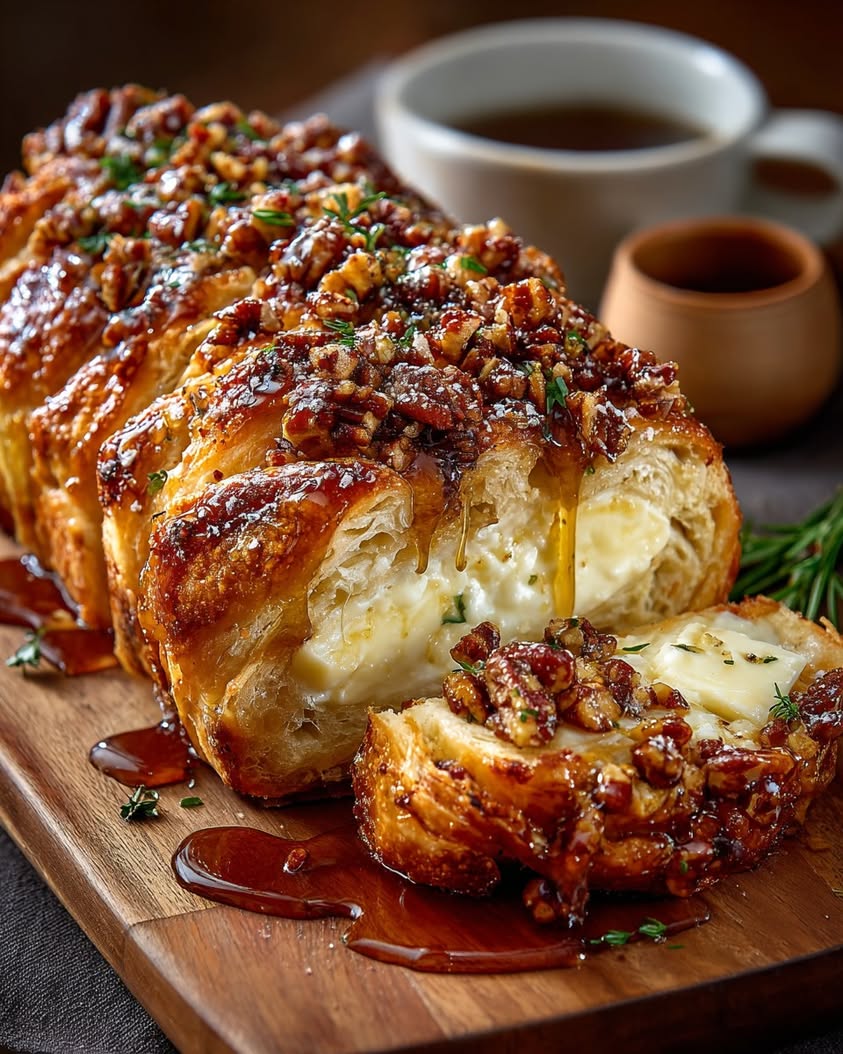
Pull-Apart Brie Croissant Bread with Toasted Pecans and Maple-Honey Glaze: The Ultimate Crowd-Pleasing Appetizer
Imagine pulling apart warm, buttery layers of croissant dough to reveal a river of melted brie cheese, all topped with a sweet and savory maple-honey glaze and crunchy toasted pecans. This Pull-Apart Brie Croissant Bread with Toasted Pecans and Maple-Honey Glaze is not just a recipe; it is a show-stopping centerpiece for any gathering. Moreover, it combines the irresistible flakiness of croissants with the luxurious creaminess of brie, creating a perfect bite every single time. Consequently, your guests will be mesmerized by its golden, pull-apart presentation and incredible aroma.
This dish masterfully balances sweet and savory flavors, making it an incredibly versatile choice. For instance, the rich, earthy brie pairs beautifully with the nutty crunch of pecans. Meanwhile, the warm maple-honey glaze adds a sticky sweetness that ties everything together. Ultimately, this Pull-Apart Brie Croissant Bread is deceptively simple to make, relying on clever use of store-bought dough for maximum impact with minimal effort. Therefore, it is the perfect solution when you need an impressive appetizer without spending hours in the kitchen.
Quick Recipe Highlights
- Flavor Profile: This Pull-Apart Brie Croissant Bread delivers a sophisticated balance of rich, creamy brie and sweet, sticky maple-honey glaze. The toasted pecans add a crucial nutty depth and textural contrast, preventing the dish from being one-dimensional. Every bite is a harmonious blend of savory cheese and warm, autumnal sweetness.
- Texture: Expect an incredible contrast of textures that makes this dish so addictive. The exterior croissant layers bake up crisp and golden, while the interior remains soft and pillowy. Simultaneously, the melted brie provides a gooey, luxurious center, and the toasted pecans offer a satisfying, crunchy finish that completes the experience.
- Aroma: As this brie croissant bread bakes, it will fill your kitchen with an unmistakably inviting fragrance. The scent of butter and baking pastry mingles with the nutty toastiness of pecans and the warm, caramel-like notes of maple and honey. This aroma alone is guaranteed to gather everyone around the table.
- Visual Appeal: The presentation is truly spectacular. The bread bakes into a gorgeous, golden-brown crown with the brie bubbling enticingly from the center. Finally, the glossy maple-honey glaze and rustic pecan pieces create a professional, restaurant-quality look that is perfect for photography and special occasions.
- Skill Level Needed: This is a beginner-friendly recipe designed for success. Importantly, it uses pre-made croissant dough, eliminating the need for any advanced baking skills. The technique involves simple assembly, making it an excellent project for novice cooks who want to create something stunning.
- Special Equipment: You need only basic kitchen tools. A sharp knife, a small bowl for mixing the glaze, and a standard baking sheet are essential. Parchment paper is highly recommended for easy cleanup and to prevent the sticky glaze from bonding to your pan.
Recipe Overview
- Difficulty Level: We classify this Pull-Apart Brie Croissant Bread as easy because it utilizes a brilliant shortcut: refrigerated croissant dough. This eliminates the most challenging part of pastry-making. The assembly process is straightforward and forgiving, meaning even first-time cooks can achieve a beautiful, delicious result without stress.
- Category: This dish shines brightest as a spectacular appetizer or party snack. Additionally, it can easily transition into a decadent brunch item served alongside fresh fruit and mimosas. Its shareable, communal nature makes it ideal for social eating, encouraging conversation and interaction.
- Cuisine: While not tied to one specific tradition, this recipe is a fantastic example of modern fusion cooking. It draws inspiration from French pastry techniques (croissants, brie) and incorporates classic North American flavors like maple and pecans. The result is a globally-inspired, crowd-pleasing creation.
- Cost: This is a moderately priced appetizer that delivers high perceived value. Using store-bought dough keeps costs down, while a wheel of brie and pecans are the primary investments. Considering it serves a crowd and replaces multiple other dishes, it offers excellent entertainment value.
- Season: This recipe feels particularly fitting for fall and winter holidays. The warm flavors of maple, honey, and toasted nuts evoke cozy, festive feelings. However, its appeal is truly year-round, making it a brilliant choice for summer gatherings, game days, or spring brunches alike.
- Occasion: This Pull-Apart Brie Croissant Bread is the ultimate party food. It is perfect for holiday gatherings, Thanksgiving appetizers, Christmas Eve snacks, game day spreads, bridal showers, or casual dinner parties. Essentially, any event where you want to impress your guests calls for this recipe.
Why You’ll Love This Recipe
You will adore this recipe first and foremost for its incredible taste and texture. The combination of flaky, buttery croissant layers with the oozing, mild brie is pure comfort food magic. Then, the sweet and salty maple-honey glaze seeps into the bread, creating caramelized pockets of flavor. Finally, the toasted pecans provide the essential crunchy contrast, ensuring every single bite is a complex and satisfying experience. This Pull-Apart Brie Croissant Bread is a guaranteed hit that appeals to almost every palate.
Furthermore, the convenience factor is a massive win. By starting with pre-made dough, you bypass hours of labor-intensive pastry work. The active preparation time is remarkably short, allowing you to focus on other party preparations or simply relax. Consequently, you can assemble this stunning centerpiece in minutes before popping it in the oven. The result is a hot, fresh, and impressive dish that makes you look like a culinary rockstar with minimal effort.
From a social perspective, this dish is engineered for sharing and interaction. The very nature of a pull-apart bread breaks the ice and encourages guests to dig in together. It becomes a focal point on your table, sparking conversation and creating a memorable, interactive dining experience. Unlike individual appetizers, this Brie Croissant Bread fosters a sense of community and celebration, making your gathering feel more special and engaged.
Regarding accessibility, the ingredients are readily available in any standard supermarket. You do not need to hunt for exotic items or special equipment. This makes the recipe highly approachable and easy to execute on short notice. Additionally, while it tastes luxurious, the cost per serving is reasonable, especially when you consider it often replaces two or three other appetizer dishes on your menu. It is a cost-effective way to elevate your entertaining.
Finally, the versatility of this recipe is a key reason to love it. While the classic version is perfection, it also serves as a fantastic template for creativity. You can easily adapt the flavors based on the season, your guests’ preferences, or what you have in your pantry. This adaptability ensures the Pull-Apart Brie Croissant Bread can become a reliable, go-to recipe in your entertaining repertoire for years to come.
Historical Background and Cultural Significance
The concept of pull-apart bread, also known as monkey bread, has deep roots in American home baking. Its origins are often traced to Hungarian immigrants, but it was in American kitchens where it truly evolved as a communal, shareable treat. Traditionally sweet and cinnamon-laced, the savory iteration is a more modern innovation. This Pull-Apart Brie Croissant Bread represents a gourmet twist on that homey tradition, elevating it with premium ingredients like brie and a sophisticated glaze for contemporary palates.
Culturally, bread and cheese are a universal pairing found across countless cuisines, from French raclette to Italian focaccia. This recipe taps into that timeless, comforting combination. The use of brie, a French cheese with a storied history dating back to the Middle Ages, adds a layer of rustic European elegance. Meanwhile, the incorporation of maple syrup and pecans grounds the dish firmly in North American culinary tradition, creating a beautiful fusion that feels both familiar and novel.
The evolution of this specific recipe is a testament to the modern food trend of “elevated convenience.” Home cooks and professional chefs alike are constantly seeking ways to create impressive dishes without excessive time investment. Using refrigerated croissant dough as the base is a brilliant solution that emerged from this desire. It allows anyone to achieve the delicate, layered texture of a viennoiserie without the technical hurdle of laminating dough, democratizing gourmet results.
Regional variations of this concept are endless. In the American South, you might find a version with pimento cheese and a pepper jelly glaze. On the West Coast, a version with goat cheese, figs, and honey could be popular. The basic formula—flaky dough, melty cheese, a sticky glaze, and a crunchy element—is a canvas for local flavors. This particular Maple Pecan Brie Croissant Pull-Apart Bread, with its warm, autumnal notes, has become a favorite for holiday entertaining across the country.
Ingredient Deep Dive
Refrigerated Croissant Dough: This is the ultimate time-saving hero of the recipe. Typically sold in cans or tubes, this pre-laminated dough contains layers of butter that create the signature flaky layers when baked. For best results, ensure the dough is cold when you work with it to keep the butter firm. If unavailable, you can substitute with refrigerated crescent roll dough or even frozen puff pastry sheets, though the texture will vary slightly. Always check the expiration date to ensure maximum rise and flakiness.
Brie Cheese: A soft-ripened cheese with a creamy interior and edible white rind, Brie is essential for its luxurious melt. Originating from the Île-de-France region, its mild, buttery flavor complements the sweet glaze without overpowering it. For this recipe, a full wheel that’s firm enough to slice is ideal. You can leave the rind on, as it becomes soft and edible when baked. For a stronger flavor, try a triple-creme brie. Importantly, let the brie sit at room temperature for 15-20 minutes before slicing for cleaner cuts.
Pecans: Native to North America, pecans provide a vital crunchy texture and rich, buttery flavor. Toasting them is a non-negotiable step, as it intensifies their nutty taste and improves crunch. Simply toast in a dry skillet over medium heat for 3-5 minutes until fragrant. For substitutions, walnuts are the closest match, while almonds would offer a different but still delicious crunch. Store pecans in the freezer to prevent their high oil content from turning rancid.
Maple Syrup: Use pure maple syrup for the best flavor, not pancake syrup. The former has a complex, caramel-like depth that artificial syrups lack. Maple syrup is rich in antioxidants like manganese and zinc. In a pinch, you could substitute with honey or agave nectar, but the distinct maple flavor will be lost. For the glaze, combining it with honey creates a perfect balance of flavors that isn’t too sweet.
Honey: Honey adds floral notes and helps create a thick, glossy glaze that sets slightly as it cools. Its natural sugars caramelize beautifully in the oven. Use a mild, clover honey for a neutral sweetness. For a more robust flavor, try a wildflower or orange blossom honey. Honey also has natural preservative qualities. If you’re out, you can use all maple syrup, but the glaze may be thinner and less sticky.
Common Mistakes to Avoid
- Using Dough That’s Too Warm: If the croissant dough becomes overly soft and sticky, it will be difficult to cut and assemble. Always work with cold dough straight from the refrigerator. Conversely, if your kitchen is very warm, chill the dough pieces for 10 minutes after cutting and before arranging them in the pan.
- Not Toasting the Pecans: Skipping the toasting step results in a bland, slightly soft nut that lacks the necessary flavor punch and crunch. Toasting unlocks the pecans’ oils and deepens their taste, which is essential for balancing the rich cheese and sweet glaze. This simple two-minute task makes a dramatic difference.
- Overbaking the Brie: Baking for too long can cause the brie to separate and become oily, rather than staying creamy and smooth. The cheese should be completely melted and bubbly, but not breaking apart. Since oven temperatures vary, start checking at the 20-minute mark and look for golden-brown pastry and visibly melted cheese.
- Pouring All the Glaze at Once: Adding the entire glaze before baking can cause it to pool at the bottom and burn, or make the bottom layers of dough soggy. The technique of adding half before and half after baking ensures perfect caramelization without sogginess and gives you a beautiful, glossy finish.
- Using a Dull Knife to Cut Brie: A dull knife will crush the soft brie wheel instead of slicing it cleanly. Use a sharp chef’s knife or a piece of unflavored dental floss to get neat rounds. Clean the knife with hot water between cuts if the cheese starts to stick.
- Not Lining the Baking Sheet: The maple-honey glaze is extremely sticky and will harden into cement-like residue on your bare baking sheet. Always use parchment paper or a silicone baking mat. This guarantees easy removal and protects your pan, making cleanup effortless.
- Cutting the Dough Pieces Too Large: If the dough triangles are too big, they won’t form a neat, pull-apart “flower” shape and may bake unevenly. Follow the package instructions for separating the dough, usually at the perforated triangles, for the ideal size.
- Serving Straight from the Oven: While you want it warm, pulling the bread apart immediately will result in burned mouths and cheese that runs everywhere. Let it rest for 5-7 minutes after adding the final glaze. This allows the cheese to set slightly and the bread to absorb the flavors.
Essential Techniques
Toasting Nuts: Toasting pecans is a fundamental technique for maximizing flavor. Spread the nuts in a single layer in a dry skillet over medium heat. Cook, shaking the pan frequently, for 3-5 minutes until they become fragrant and slightly darker. You will hear them sizzle lightly. The key is constant movement to prevent burning. Alternatively, you can toast them on a baking sheet in a 350°F oven for 8-10 minutes. Toasted nuts should smell nutty and feel crisp to the bite.
Creating a Pull-Apart Arrangement: The assembly technique is what gives this dish its signature look. After slicing the brie, you arrange the cold croissant dough triangles in a circle with points facing outward, overlapping slightly. Place a brie slice between every few pieces. This method ensures that when baked, each triangle becomes an individual, pullable piece with cheese in the center. The overlap is crucial; it allows the dough to rise and bake into a cohesive, yet separable, loaf.
Making a Simple Glaze: A perfectly balanced glaze should be thick enough to coat the back of a spoon but still pourable. Simply whisk together the maple syrup and honey. If it seems too thick, you can warm it gently for 5-10 seconds in the microwave. Applying it in two stages—before and after baking—is the pro technique. The first application caramelizes with the dough, while the second adds a shiny, sticky finish and reinforces the flavor.
Testing for Doneness: Since ovens vary, visual and tactile cues are more reliable than a timer alone. The Pull-Apart Brie Croissant Bread is done when the croissant dough is a deep, golden brown all over, and the brie in the center is completely melted and bubbling. If the pastry is browning too quickly but the cheese isn’t ready, tent the loaf loosely with aluminum foil for the remaining bake time.
Pro Tips for Perfect Pull-Apart Brie Croissant Bread
First, chill your baking sheet before assembling. A cold pan helps keep the butter in the croissant dough firm during assembly, which leads to flakier layers in the final bake. Simply place your parchment-lined sheet in the freezer for 5 minutes while you prep the other ingredients.
Second, use a pizza cutter or sharp kitchen shears to quickly and cleanly separate the croissant dough triangles. This is faster and neater than trying to pull them apart at the perforations, which can sometimes tear.
Third, for an extra flavor boost, brush the dough triangles very lightly with a mixture of melted butter and a pinch of salt before arranging them. This adds another layer of richness and helps the exterior become even more golden and crisp.
Fourth, if your brie is very ripe and soft, pop it in the freezer for 15-20 minutes before slicing. This firms it up just enough to get clean, round slices without it smearing everywhere.
Fifth, add a pinch of flaky sea salt over the glaze after the bread comes out of the oven. The salty crystals will contrast beautifully with the sweet glaze and rich cheese, elevating the entire flavor profile.
Sixth, for a more dramatic presentation, arrange a few whole, untoasted pecans on top before the final bake. They will toast in the oven and look beautiful, signaling the flavor within.
Seventh, if you love herbs, sprinkle a tiny amount of finely chopped fresh thyme or rosemary over the brie slices as you assemble. The herbal note cuts through the richness and adds a sophisticated touch.
Eighth, always let the bread rest before serving. A 5-7 minute wait allows the molten cheese to cool just enough to be luscious instead of lava-hot, and lets the glaze set slightly so it’s sticky, not runny.
Variations and Adaptations
Regional Variations: Adapt this recipe to reflect local tastes. For a Southern twist, use pimento cheese spread instead of brie and top with a pepper jelly glaze. In the Pacific Northwest, substitute smoked salmon and cream cheese for a savory brunch version. A Mediterranean adaptation could feature feta cheese, kalamata olives, and a rosemary-infused honey glaze.
Seasonal Adaptations: Make it festive for any season. In spring, use herbed goat cheese and a lemon-honey glaze with pistachios. For summer, try a version with fresh berries and a balsamic reduction drizzled over the brie after baking. During the holidays, incorporate a tablespoon of bourbon into the maple glaze and garnish with cranberries and rosemary sprigs.
Dietary Modifications: This recipe is highly adaptable. For a gluten-free version, use gluten-free crescent dough or puff pastry. To make it dairy-free, substitute the brie with a high-quality vegan creamy cheese alternative. For a nut-free option, replace the pecans with toasted pumpkin seeds (pepitas) or simply omit them for a delicious, crunchy-free version.
Flavor Variations: The flavor base is a perfect canvas. Add a layer of fig jam or apricot preserves under the brie slices before baking. Incorporate cooked, crumbled bacon or prosciutto into the layers for a salty, meaty element. For a sweet and spicy kick, add a pinch of red pepper flakes or a dash of cayenne to the maple-honey glaze.
Texture Modifications: Play with textures for a different experience. Add a layer of thinly sliced, crisp apples or pears between the dough and cheese for a fresh crunch. Incorporate a sprinkle of everything bagel seasoning over the glaze for a savory, crunchy top. Mix finely chopped pecans right into the glaze itself for a thicker, chunkier topping.
Presentation Alternatives: Change the shape for a different look. Instead of a free-form circle, assemble the dough and brie in a greased bundt pan for a stunning wreath shape that inverts onto a platter. For individual servings, use a muffin tin to create personal-sized pull-apart brie breads, perfect for place settings.
Serving and Presentation Guide
Plating this dish is part of its appeal. Transfer the entire baked loaf on the parchment paper directly to a large, rustic wooden board or a decorative platter. The parchment paper can be trimmed with scissors for a neater look. This casual presentation on a board feels inviting and encourages guests to gather around and help themselves. Provide a small, sharp knife for any stubborn cheese pulls, but the beauty is in the hands-on pulling apart.
Garnishing adds the final professional touch. After drizzling with the second half of the glaze, immediately sprinkle the toasted pecans so they adhere. Then, add a few fresh herb sprigs like rosemary or thyme for color and aroma. A light dusting of powdered sugar (for a sweeter take) or flaky sea salt (for savory) just before serving adds visual contrast and flavor punctuation.
Traditional accompaniments should complement, not compete. Serve with simple, crisp apple and pear slices, which cut through the richness. A small bowl of extra warmed maple-honey glaze for dipping is always welcome. For a savory balance, offer cornichons (tiny French pickles) or a small mound of mixed olives on the side. These tangy elements refresh the palate between bites.
Modern serving suggestions include turning it into a full experience. Place the board in the center of a table surrounded by small bowls of additional toppings like crispy prosciutto, more toasted nuts, or different fruit preserves. For brunch, serve it alongside a fresh green salad with a vinaigrette dressing to balance the meal. It also pairs wonderfully with a charcuterie board, acting as the warm, cheesy centerpiece.
Temperature is crucial. This Pull-Apart Brie Croissant Bread is best served warm, when the cheese is optimally gooey and the pastry is crisp. If it sits too long and cools, you can reheat individual portions in the microwave for 10-15 seconds. However, the ideal strategy is to time the bake so it comes out of the oven just as guests arrive or as you’re transitioning to the appetizer course.
Portion control is intuitive with this dish, as people naturally pull off one or two pieces at a time. For planning purposes, consider that one standard tube of croissant dough and an 8-ounce brie wheel comfortably serves 6 as an appetizer. If it’s the main feature of a brunch or light meal alongside other items, it could stretch to serve 8. Always err on the side of making more, as leftovers are rare and highly coveted.
Wine and Beverage Pairing
Wine pairings should complement the dish’s sweet, savory, and creamy elements. A sparkling wine like Champagne, Prosecco, or Cava is a flawless choice. The bubbles cut through the richness of the brie and cleanse the palate. Alternatively, a slightly sweet white wine such as a Riesling (Kabinett or Spätlese) or a Vouvray provides a beautiful counterpoint to the salty cheese and matches the honey-maple notes. For red wine lovers, choose a light-bodied, low-tannin option like a Pinot Noir or Beaujolais, which won’t overpower the delicate flavors.
Non-alcoholic alternatives are just as important. Sparkling apple cider mimics the celebratory feel of Champagne and pairs wonderfully with the autumnal flavors. A homemade honey-lemon ginger ale offers a refreshing, spicy contrast. For a cozy option, serve warm mulled cider or a chai tea latte; their spices echo the warmth of the glaze and toasted pecans perfectly.
Coffee and tea pairings work exceptionally well, especially for brunch. A medium-roast coffee with notes of caramel or nut will complement the glaze and pecans. Avoid overly bitter dark roasts. For tea, a black tea like Earl Grey (with its citrusy bergamot) cuts through the fat beautifully, or a rooibos tea with its natural sweetness and vanilla notes makes a harmonious match.
Temperature considerations apply to all beverages. Serve sparkling wines and ciders well-chilled. White wines should be served between 45-50°F. Red wines like Pinot Noir are best slightly cooler than room temperature, around 55°F. Non-alcoholic sparkling drinks should be icy cold, while warm beverages like cider or tea should be served piping hot to contrast the warm, but not scalding, bread.
Serving suggestions include offering a variety. Set up a small beverage station with a bottle of sparkling wine, a pitcher of sparkling cider, and a carafe of good coffee. This allows guests to choose their perfect pairing. Always provide plenty of water as well, as the rich, salty, and sweet flavors will make guests thirsty. Adding lemon or cucumber slices to the water makes it feel special.
Storage and Shelf Life
Storage methods for leftovers are straightforward but time-sensitive. Once completely cooled to room temperature, transfer any remaining Pull-Apart Brie Croissant Bread to an airtight container. You can store it at room temperature for up to 24 hours, but refrigeration is recommended for longer storage, up to 3 days. The glaze will solidify when chilled, and the pastry will soften, but it remains delicious.
Temperature requirements are important for food safety due to the dairy content. Do not leave the baked bread at room temperature for more than 2 hours total. If your kitchen is very warm, reduce this time to 1 hour. When refrigerating, ensure your fridge is at or below 40°F. Always use shallow containers to promote rapid, even cooling and prevent bacterial growth.
Container recommendations include airtight plastic or glass containers. You can also wrap individual portions tightly in aluminum foil and then place them in a zip-top bag. If the bread is still on its parchment paper, you can lift the whole thing into a large container. Avoid storing in a loose bowl covered with plastic wrap, as this can trap moisture and make the pastry soggy.
Signs of spoilage are usually clear. Discard the bread if you notice any off odors, such as sourness or ammonia (especially from the cheese). Visible mold, which may appear as fuzzy spots in white, green, or blue, is an absolute discard signal. If the pastry develops an unusually tough or slimy texture, it is best to err on the side of caution and not consume it.
Reheating instructions are key to restoring enjoyment. The microwave is quick but can make the pastry chewy. For best results, reheat in a preheated 350°F oven for 8-10 minutes, or in an air fryer at 325°F for 4-5 minutes, until warm throughout. This method helps re-crisp the exterior. If using a microwave, do so in 15-second bursts and place a cup of water in the microwave to help prevent toughness.
Freezing guidelines are effective for longer-term storage. Freeze individual portions on a baking sheet until solid, then transfer to a freezer-safe bag or container for up to 2 months. Thaw overnight in the refrigerator before reheating in the oven. Note that the texture of the pecans may soften slightly after freezing and thawing, and the glaze may become more granular, but the flavor will still be excellent.
Make Ahead Strategies
Prep timeline for maximum efficiency can stretch over two days. On Day 1, toast the pecans and make the maple-honey glaze. Store the pecans in an airtight container at room temperature and the glaze in a jar in the refrigerator. You can also slice the brie, place the rounds on parchment paper, cover, and refrigerate. On the day of serving, simply assemble the cold components with the cold dough and bake. This splits the work perfectly.
Storage between steps is simple with proper planning. Pre-toasted nuts will stay crunchy for up to 5 days in a sealed container. The glaze can be refrigerated for up to 2 weeks; just let it come to room temperature or warm it slightly to make it pourable again. Pre-sliced brie should be used within 24 hours and kept tightly wrapped in the fridge to prevent drying.
Quality impact assessment is positive for most make-ahead steps. Toasting nuts ahead actually improves flavor as it allows their oils to settle. The glaze’s flavors meld and deepen when made in advance. The only component that doesn’t benefit from advance prep is assembling the entire raw loaf, as the dough can over-proof and the glaze can make it soggy. Therefore, final assembly should be done just before baking.
Assembly tips for the day-of are to keep everything cold. Pull the dough, sliced brie, and glaze from the fridge. Work quickly to arrange the loaf on the parchment-lined pan. If you feel the dough getting too warm and sticky, pop the entire assembled-but-unbaked loaf into the freezer for 10 minutes before adding the first glaze and baking. This ensures maximum flakiness.
Reheating guidelines apply if you fully bake ahead. You can bake the loaf completely 1-2 hours before guests arrive. Let it cool, then tent loosely with foil. Reheat in a 300°F oven for 10-12 minutes until warmed through, then add the final glaze and pecans. This method works well, though the pastry will be slightly less crisp than serving immediately after the initial bake.
Fresh element additions are the final touch. Even if you prep everything else ahead, always add the final drizzle of glaze and the toasted pecans after the reheating step, just before serving. This ensures the nuts stay crunchy and the glaze looks glossy and fresh. Garnishing with herbs should also be a last-minute step to keep them vibrant and aromatic.
Scaling Instructions
Halving the recipe is simple for smaller gatherings. Use one tube of croissant dough (most contain 8 triangles), half a small brie wheel (about 4 oz), and halve all other ingredients. Arrange the 8 triangles in a smaller circle or in a loaf pan. Baking time may reduce by 5-7 minutes, so start checking for doneness early. This is perfect for a romantic appetizer or a small family treat.
Doubling or tripling for a crowd requires minor adjustments. Double all ingredients. Use two separate baking sheets to allow for proper air circulation; do not crowd the loaves on one sheet. You may need to bake them one at a time unless you have a convection oven. Stagger the baking so the second loaf goes in as the first comes out, ensuring both are served warm. Rotate the pans halfway through baking for even browning.
Equipment adjustments are necessary when scaling. For a double batch, ensure you have two large baking sheets and enough parchment paper. If tripling, consider using baking sheets of different sizes to fit in your oven together. You might also need a larger bowl for mixing a bigger batch of glaze. Having a second set of measuring tools streamlines the process.
Timing modifications are minimal but important. When baking multiple loaves at once in a conventional oven, add 3-5 minutes to the total bake time and rotate the pans top-to-bottom and front-to-back halfway through. The increased moisture in the oven from multiple dishes can affect browning. If baking sequentially, the second loaf may bake slightly faster in the preheated oven, so monitor it closely.
Storage considerations for large batches are key. It is unlikely you’ll have leftovers, but if you do, ensure you have enough airtight containers. Label them with the date. Consider freezing portions of a large batch immediately after cooling if you know you won’t consume it within a few days. This preserves quality better than refrigerating for an extended period.
Nutritional Deep Dive
Macro breakdown for a single serving is rich and satisfying. This dish provides a balance of carbohydrates from the croissant dough and glaze, high-quality fats from the brie, butter in the dough, and pecans, and a moderate amount of protein from the cheese and nuts. It is an energy-dense food, making it ideal as a shared appetizer where portion size is naturally controlled by the pull-apart format. The fats are primarily unsaturated from the nuts, with some saturated fat from the cheese and butter.
Micronutrient analysis reveals some beneficial elements. Pecans are an excellent source of manganese, copper, and thiamine, and provide zinc and magnesium. Brie cheese offers calcium, vitamin B12, and phosphorus. Maple syrup contains antioxidants like polyphenols and provides small amounts of minerals like manganese and zinc. While this is an indulgent dish, it does contribute more than just empty calories, offering nutritional value alongside its decadent taste.
Health benefits, when enjoyed in moderation as part of a balanced diet, can be noted. The monounsaturated fats in pecans are heart-healthy. The calcium in brie supports bone health. The antioxidants in maple syrup and pecans help combat oxidative stress. However, the high calorie, fat, and sugar content means it should be an occasional treat rather than a dietary staple, enjoyed mindfully for its sensory and social pleasures.
Dietary considerations are important for those with specific needs. This recipe contains gluten (dough), dairy (brie, butter), and tree nuts (pecans). It is not suitable for individuals with allergies or intolerances to these ingredients without modification. The high fat and sugar content may not align with certain medical dietary guidelines, such as those for diabetes or heart conditions, unless portions are very carefully controlled.
Portion analysis is intuitive with this format. One “piece” typically consists of one croissant triangle with some attached cheese and topping. This natural portioning helps prevent overconsumption compared to a dish served family-style without defined pieces. Being mindful of how many pieces you pull off your plate is the best strategy for enjoying this rich food as part of a balanced eating occasion.
Weight management tips include pairing a single serving of this indulgent bread with plenty of lean protein and fibrous vegetables in the rest of your meal. For example, enjoy one or two pieces alongside a large green salad with grilled chicken. This balances the meal and provides satiety. Also, savor each bite slowly to maximize enjoyment and recognize fullness cues, as the rich flavors are very satisfying.
Dietary Adaptations
Gluten-free: Successfully adapt this recipe by using a gluten-free crescent roll or puff pastry dough. Several brands offer good options in the{“success”:true,”message”:”Recipe created successfully”,”post_id”:9150,”tasty_recipe_id”:9150,”shortcode”:”“}

I’m Billy, a classically trained culinary school graduate from The Culinary Institute of America with over 12 years in the restaurant industry and over 19 years of cooking experience.