
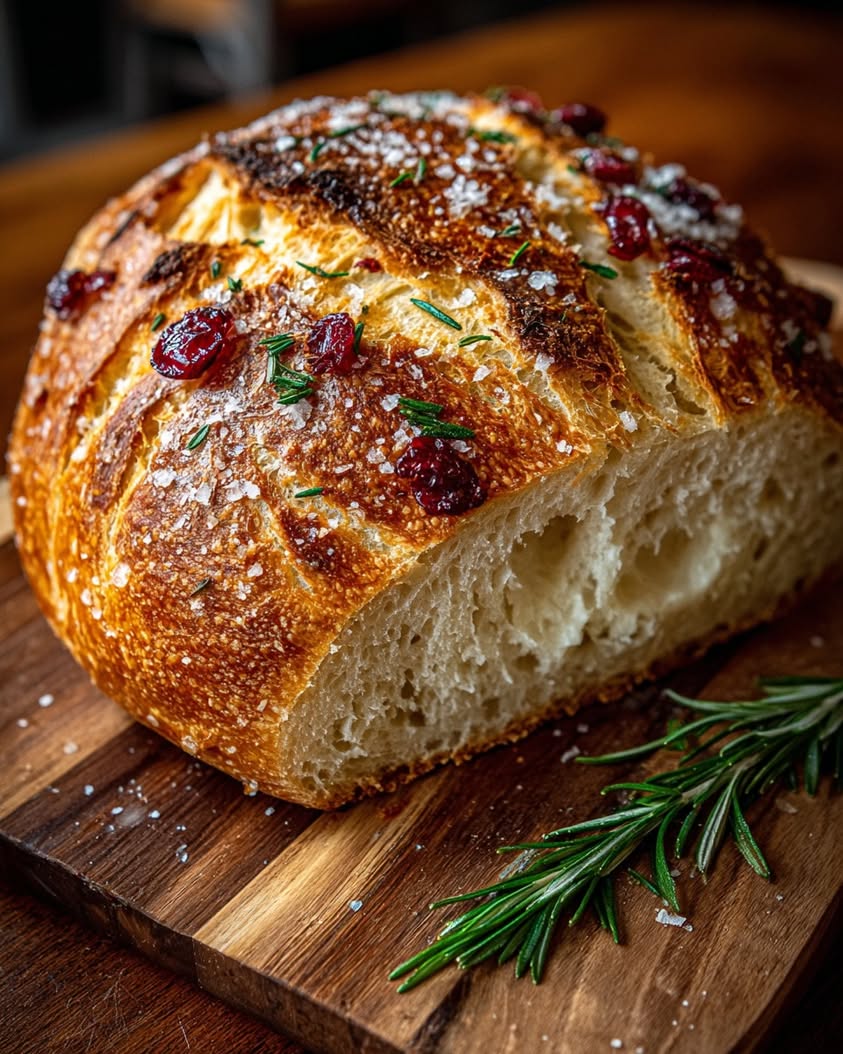
No-Knead Rosemary Cranberry Bread with Olive Oil & Sea Salt: Effortless Artisan Loaves at Home
Imagine pulling a stunning, crusty loaf of bread from your own oven, its aroma filling your kitchen with the scent of toasted rosemary and sweet fruit. This no-knead rosemary cranberry bread with olive oil and sea salt delivers that exact experience, yet it requires almost no hands-on effort. The magic of this recipe lies in its simplicity; time and a hot Dutch oven do all the hard work for you. Consequently, you get a professional-quality artisan loaf with a crisp, blistered crust and an open, airy crumb that rivals any bakery.
This particular combination of flavors is a true celebration of contrasts. Earthy, pine-like rosemary perfectly balances the bright, tart sweetness of dried cranberries. Meanwhile, a generous glug of fruity olive oil enriches the dough, ensuring a tender, moist interior. Finally, a flaky finish of crunchy sea salt on top elevates every single bite. This no-knead rosemary cranberry olive bread is not just food; it’s a centerpiece, a conversation starter, and a deeply satisfying homemade achievement.
Perfect for both novice bakers and seasoned bread makers, this recipe demystifies the art of bread baking. You simply mix a few ingredients, let time develop the flavor and structure, and bake. The result is a loaf that feels special enough for a holiday table yet simple enough for a weeknight soup supper. Ultimately, this no-knead bread recipe will become a cherished staple in your baking repertoire.
Quick Recipe Highlights
- Flavor Profile: This bread masterfully balances savory and sweet notes. The herbal, slightly peppery flavor of fresh rosemary contrasts beautifully with the tangy, chewy bursts of dried cranberry. Additionally, the rich fruitiness of good olive oil and the final pop of flaky sea salt create a complex, sophisticated taste that evolves with each bite.
- Texture: Expect a textbook-perfect artisan loaf texture. The crust bakes up shatteringly crisp and thin, giving way to a soft, chewy, and remarkably open interior crumb. The cranberries add delightful juicy pockets, while the olive oil ensures the crumb stays tender and moist for days, preventing it from becoming dry or crumbly.
- Aroma: As this no-knead rosemary cranberry bread bakes, it perfumes your entire home. First, you’ll smell the nutty, toasting wheat. Then, the warm, woody scent of rosemary emerges, followed by the sweet, caramelized notes of the fruit. The final aroma is unmistakably that of freshly baked, high-quality bread, a scent that promises comfort and deliciousness.
- Visual Appeal: This loaf is a showstopper. It bakes into a gorgeous, rustic round with a deeply golden, crackled crust. The cranberries peek through the surface like little jewels, and the fresh rosemary leaves and flakes of sea salt create a beautiful, artisanal finish. Slicing into it reveals a stunning network of holes and the vibrant red of the fruit scattered throughout.
- Skill Level Needed: This recipe is specifically designed for bakers of all levels, especially beginners. Since there is no kneading involved, it requires minimal technique. The most important skills are patience for the long rise and confidence to handle a very wet dough. If you can stir ingredients together and operate an oven, you can absolutely master this no-knead bread recipe.
- Special Equipment: The only special tool required is a heavy, lidded pot like a Dutch oven. This pot creates a steamy environment that mimics a professional baker’s oven, essential for achieving the crisp crust and open crumb. Otherwise, you just need a large mixing bowl, a wooden spoon or spatula, and parchment paper for easy transfer.
Recipe Overview
- Difficulty Level: We rate this no-knead rosemary cranberry bread as “Easy.” The process is almost entirely passive, involving just mixing and waiting. There’s no complicated shaping or precise kneading. The wet dough can feel unfamiliar to new bakers, but trusting the process is key. Following the simple steps reliably yields an impressive result, making it a fantastic confidence-builder.
- Category: This versatile loaf falls into several categories. Primarily, it is a yeast bread and an artisan bread. It also serves wonderfully as a side dish, a breakfast item (excellent toasted), or an appetizer when sliced and served with cheeses and olives. Furthermore, its festive flavors make it a holiday bread, perfect for Thanksgiving or Christmas gatherings.
- Cuisine: This recipe draws inspiration from Mediterranean and general European artisan baking traditions. The use of olive oil and rosemary is classically Mediterranean, while the cranberry addition nods to North American ingredients. The no-knead method itself is a modern adaptation of old-world, slow-fermentation techniques used for centuries to develop flavor in rustic breads.
- Cost: This homemade no-knead rosemary cranberry olive bread is incredibly cost-effective. A loaf from a specialty bakery could cost $8-$12. Making it at home requires only basic pantry staples like flour, yeast, and salt, plus a small amount of fresh rosemary and dried cranberries. In total, you can create this impressive loaf for a fraction of the price, often under $3 worth of ingredients.
- Season: While delicious year-round, this bread feels particularly seasonal. The rosemary and cranberry combination sings during the fall and winter holidays. However, it’s also wonderful in spring with fresh salads or in summer for picnics. Using seasonal herbs or substituting different dried fruits can easily adapt it for any time of year.
- Occasion: This loaf is perfect for any gathering that calls for something special. Serve it at holiday dinners, festive brunches, or wine and cheese parties. It also makes a thoughtful homemade gift when wrapped in a nice tea towel. For a simple family meal, it transforms an everyday soup or stew into a memorable event.
Why You’ll Love This No-Knead Rosemary Cranberry Olive Bread
First and foremost, the taste and texture are utterly irresistible. Each slice offers a symphony of flavors: the initial crunch of salty crust, the herbal whisper of rosemary, and the sweet-tart surprise of a cranberry. The crumb is simultaneously airy and substantial, perfect for soaking up olive oil or soup. This complex flavor profile feels gourmet, yet it comes from a straightforward list of ingredients. You will find yourself slicing just one more piece, captivated by the perfect balance in every bite.
Secondly, the convenience factor is a game-changer. Traditional bread baking can be intimidating, requiring precise kneading and careful monitoring. This no-knead bread recipe eliminates all that stress. You mix the dough in one bowl in about five minutes, then walk away for 12-18 hours. The long, slow fermentation does the work of developing gluten and flavor. Consequently, you get all the rewards of artisan baking with a schedule that fits into a busy life, making fresh bread an accessible daily luxury.
From a nutritional perspective, homemade bread like this no-knead rosemary cranberry bread puts you in control. You know exactly what goes in: unbleached flour, water, yeast, olive oil, and natural flavorings. There are no preservatives, dough conditioners, or excess sugar. The olive oil provides heart-healthy monounsaturated fats, and the cranberries add a touch of fiber and antioxidants. Choosing whole wheat flour for part of the blend can further boost the nutritional profile, creating a loaf that is as wholesome as it is delicious.
Furthermore, this bread possesses incredible social and entertaining value. Presenting a warm, homemade loaf to guests creates an instant sense of warmth and hospitality. The beautiful appearance and incredible aroma make people feel special and cared for. It encourages sharing and conversation, whether you’re tearing off chunks for a cheese board or serving neat slices with a holiday meal. Baking this bread becomes an act of generosity, and its impressive results will have everyone asking for the recipe.
Finally, the cost-effectiveness and accessibility are undeniable. As mentioned, the ingredients are inexpensive and readily available. You don’t need a stand mixer, bread machine, or any fancy tools—just a bowl and a pot. This accessibility demystifies bread baking, empowering anyone to create bakery-quality results in their own kitchen. The process is forgiving, the ingredients are simple, and the payoff is enormous. This no-knead rosemary cranberry olive bread proves that incredible food doesn’t require complex techniques or a large budget, just a little time and care.
Historical Background and Cultural Significance
The story of no-knead bread is a fascinating blend of ancient technique and modern rediscovery. For millennia, bakers relied on long, slow fermentation to leaven and flavor their breads, often using wild yeasts from the environment. Kneading was minimal or non-existent, as time itself developed the gluten network. This method was the standard in many peasant bread traditions across Europe. However, the industrial revolution and the desire for faster production led to the dominance of quick-rise, heavily kneaded breads. The no-knead method, therefore, is not an innovation but a return to these slower, more traditional ways of baking.
The cultural significance of bread itself is profound, often symbolizing life, community, and sustenance across countless cultures. A round, crusty loaf like this no-knead rosemary cranberry bread evokes images of European village bakeries and shared family tables. Adding rosemary, an herb steeped in symbolism for remembrance, friendship, and purification, and cranberries, a native North American fruit associated with harvest and celebration, creates a cross-cultural culinary dialogue. This loaf becomes a edible symbol of bringing old-world technique together with new-world ingredients.
The recipe’s evolution into the modern phenomenon it is today is largely credited to baker Jim Lahey of Sullivan Street Bakery in New York. In 2006, his method, popularized by Mark Bittman in The New York Times, revolutionized home baking. Lahey’s technique brilliantly simplified professional results for the home cook by using a very wet dough and a covered Dutch oven to trap steam. This innovation sparked a global home-baking renaissance, proving that incredible bread was accessible to everyone. Our recipe for no-knead rosemary cranberry olive bread is a direct descendant of this movement, adding flavorful twists to a classic formula.
Regional variations of this concept are endless, reflecting local tastes and ingredients. In Provence, you might find a no-knead bread studded with olives and herbes de Provence. In Tuscany, perhaps one with sun-dried tomatoes and basil. The addition of cranberries and rosemary gives this version a distinctly North American and festive character. Bakers around the world continue to adapt the core no-knead principle, creating an endless tapestry of rustic, flavorful loaves that connect us to both global traditions and our own creativity in the kitchen.
Ingredient Deep Dive
Bread Flour: Bread flour is the foundation of this no-knead rosemary cranberry bread, chosen for its high protein content (typically 12-14%). This protein, primarily glutenin and gliadin, forms a strong, elastic gluten network when hydrated. This network is essential for trapping the carbon dioxide gases produced by yeast, giving the bread its lofty rise and open, holey crumb. The long fermentation of a no-knead recipe develops this gluten slowly and gently. For best results, use unbleached bread flour. If you only have all-purpose flour, the bread will still be delicious but may have a slightly less chewy texture.
Fresh Rosemary: Rosemary is a woody, perennial herb native to the Mediterranean region. It has been used for centuries in cooking, medicine, and ceremony, symbolizing remembrance and fidelity. Its piney, slightly peppery flavor is potent, so a little goes a long way. Fresh rosemary is crucial for this recipe; dried rosemary becomes woody and sharp. The volatile oils in fresh rosemary infuse the dough with an aromatic depth that baking only intensifies. To prepare it, simply strip the leaves from the stem and chop them finely. You can also leave a few whole sprigs for decoration on top before baking.
Dried Cranberries: Dried cranberries add pockets of chewy sweetness and a vibrant color contrast. Originally native to North America, cranberries were used by Indigenous peoples for food, dye, and medicine. The dried version is convenient and shelf-stable. For this no-knead bread recipe, look for fruit-juice-sweetened or unsweetened dried cranberries to avoid an overly sweet loaf. You can also use other dried fruits like cherries, apricots, or raisins. If your cranberries are very dry, plumping them in warm water or orange juice for 10 minutes before adding to the dough can prevent them from drawing moisture from the bread during baking.
Extra Virgin Olive Oil: A quality extra virgin olive oil does more than just add flavor; it enriches the dough. The fat coats the flour proteins, tenderizing the crumb and giving it a lovely, moist texture that stays fresh longer. Olive oil has been a staple of Mediterranean life for thousands of years, pressed from the fruit of the olive tree. Its fruity, sometimes peppery notes complement the rosemary perfectly. Use the best you have for drizzling on top before baking; a more everyday olive oil is fine for mixing into the dough. The oil also helps the crust achieve a beautiful, deep golden color.
Sea Salt (Flaky): Salt is non-negotiable in bread baking. It controls yeast activity, strengthens gluten, and, most importantly, enhances flavor. Flaky sea salt, such as Maldon, is used as a finishing touch on this no-knead rosemary cranberry olive bread. Its delicate, crunchy flakes provide bursts of salinity that contrast wonderfully with the sweet fruit and rich dough. Inside the dough, fine sea salt or kosher salt is used to season the entire loaf. Never use iodized table salt, as it can impart a chemical flavor. The large, irregular crystals of flaky salt won’t dissolve entirely in the oven, leaving you with that perfect salty crunch on the crust.
Common Mistakes to Avoid
- Using Active Dry Yeast Without “Proofing” in Warm Water: This recipe uses instant yeast, which can be mixed directly with the dry ingredients. If you only have active dry yeast, you must dissolve it in the warm water first with a pinch of sugar and wait for it to foam. Failing to do this can result in a loaf that doesn’t rise properly, as the yeast granules may not activate.
- Measuring Flour Incorrectly: The most accurate way to measure flour is by weight with a kitchen scale. If using cups, spoon the flour lightly into the measuring cup and level it off with a knife. Scooping directly from the bag packs the flour down, leading to over-measurement. Too much flour creates a dry, dense dough that won’t develop the proper open crumb structure.
- Not Using a Wet Enough Dough: The dough for no-knead rosemary cranberry bread will be very shaggy and sticky—this is correct. Resist the urge to add more flour to make it easier to handle. A wet dough is essential for creating steam during baking, which yields the classic crisp, blistered crust and large, irregular holes in the crumb.
- Cut the First Rise Short: The long, slow fermentation (12-18 hours) is what develops the flavor and gluten. Rushing this step by placing the dough in a very warm spot to speed it up will result in a loaf that tastes bland and yeasty, lacking the complex, slightly tangy notes that make no-knead bread so special.
- Forgetting to Preheat the Dutch Oven: The pot must be screaming hot when the dough goes in. Placing the dough into a cold or even warm pot will not create the necessary burst of steam or “oven spring” (the final rapid rise). This leads to a flat, dense loaf with a pale, tough crust. Preheat the empty Dutch oven for a full 30 minutes.
- Using a Non-Heatproof Lid or Handle: Ensure your Dutch oven lid and any handles are rated for very high oven temperatures (at least 450°F/230°C). Plastic knobs will melt. If your lid has a plastic knob, remove it before preheating or replace it with a metal one. Safety is just as important as the recipe’s success.
- Opening the Lid Too Early During Baking: The first 30 minutes of baking with the lid on creates the steamy environment for the crust to form. Peeking during this time releases that precious steam and can cause the loaf to collapse or prevent a proper rise. Trust the process and wait until the timer goes off.
- Slicing the Bread While It’s Hot: It’s incredibly tempting to slice into your beautiful, fragrant no-knead rosemary cranberry olive bread right away. However, the interior is still setting as it cools. Slicing too soon releases steam, making the crumb gummy and causing it to compress. For perfect slices, let the loaf cool completely on a wire rack for at least 2 hours.
Essential Techniques
Autolyse (The Resting Period): While not a formal autolyse, the initial mixing and subsequent long rest serve a similar purpose. After combining the flour, water, and yeast, the dough rests. During this time, the flour fully hydrates, and enzymes begin breaking down starches into sugars. This process makes the dough easier to handle later and improves both flavor and texture. It’s a passive but critical step where the chemistry of baking begins, setting the stage for a superior loaf of no-knead bread.
Stretch and Fold (Optional but Beneficial): Some bakers incorporate a series of “stretch and folds” during the first few hours of the rise. To do this, wet your hand, grab one side of the dough from underneath, stretch it up, and fold it over the center. Repeat from all four sides. This gentle action helps organize the gluten network without traditional kneading, leading to a slightly taller, more structured loaf. It’s not mandatory for success, but it’s a great technique to experiment with once you’ve mastered the basic recipe.
Shaping a High-Hydration Dough: Handling the wet, risen dough can be tricky. The key is to use a light touch and plenty of flour. Generously flour your work surface and your hands. Use a bowl scraper or flexible spatula to gently tip the dough out. Instead of kneading, use floured hands to gently fold the edges of the dough into the center, creating surface tension on top. This tension helps the loaf hold its shape during the final proof and baking, giving you a round, boule-style loaf rather than a flat puddle.
Creating Steam in a Home Oven: Professional bakeries have steam-injected ovens for the perfect crust. A Dutch oven perfectly mimics this at home. The preheated cast iron holds intense heat, and the sealed lid traps the moisture evaporating from the dough’s surface. This steam keeps the crust soft and elastic during the initial oven spring, allowing the loaf to expand fully. Then, removing the lid lets the moisture escape, finishing the crust to a deep, crisp, and crackly finish. This technique is the single biggest secret to artisan-style bread at home.
Pro Tips for Perfect No-Knead Rosemary Cranberry Bread
First, for the most flavorful no-knead rosemary cranberry olive bread, let the dough ferment for the full 18 hours, especially in a cooler kitchen. The longer, slower rise develops more complex, slightly sour flavors.
Second, when adding the cranberries and rosemary during the initial mix, toss them in a tablespoon of the measured flour first. This light coating helps prevent them from sinking to the bottom of the loaf during the rise and bake.
Third, for an even more stunning presentation, score the top of the loaf with a sharp razor blade or lame just before baking. Make one deep, confident slash about ½-inch deep. This controls where the bread expands, creating a beautiful “ear” or burst along the cut.
Fourth, if your Dutch oven is not enameled cast iron, make sure it is very well seasoned. You can also place a piece of parchment paper under the dough before lowering it into the hot pot to prevent any potential sticking and make transfer easier.
Fifth, listen to your bread. When you think it’s done, tap the bottom of the loaf. It should sound hollow, like a drum. This is the most reliable indicator that the interior is fully baked through.
Sixth, to refresh day-old bread, sprinkle the crust lightly with water and reheat it in a 350°F (175°C) oven for 5-10 minutes. This will bring back the crisp exterior and warm, soft interior.
Seventh, experiment with different fats. While olive oil is classic, substituting melted butter or even browned butter can add a new, rich dimension to your no-knead bread recipe.
Eighth, keep a baking journal. Note the room temperature, rise time, and any adjustments you made. This helps you perfect the recipe for your specific environment and preferences over time.
Variations and Adaptations
Regional Variations: Travel the world from your kitchen by changing the mix-ins. For a Provençal twist, use chopped Kalamata olives and herbes de Provence instead of cranberries and rosemary. For an Italian flair, try sun-dried tomatoes and fresh basil. A Cheddar and jalapeño version makes a fantastic savory bread for chili. The basic no-knead dough is a blank canvas for global flavors.
Seasonal Adaptations: Make this bread a year-round staple by swapping ingredients with the seasons. In spring, use fresh chopped asparagus and lemon zest. Summer begs for chopped fresh herbs like dill and chives. Autumn is perfect for this classic rosemary-cranberry combo or with diced apples and walnuts. In winter, try a mix of dried figs, orange zest, and anise seed.
Dietary Modifications: For a whole-wheat version, substitute up to 50% of the bread flour with whole wheat flour. Note that it will absorb more water, so you may need to add an extra tablespoon or two. For a gluten-free adaptation, use a reliable gluten-free bread flour blend designed for yeast baking and add 1 teaspoon of xanthan gum if the blend doesn’t contain it. The texture will be different but still delicious.
Flavor Variations: Infuse the water for the dough with flavor. Steep a few sprigs of rosemary in the warm water before mixing, then remove them. Add a tablespoon of honey or maple syrup to the dough for a hint of sweetness that complements the cranberries. A teaspoon of orange or lemon zest added with the dry ingredients brightens the entire loaf.
Texture Modifications: For a chewier, more rustic texture, incorporate about ¼ cup of rolled oats or rye flour into the dough. For added crunch, mix in ⅓ cup of toasted walnuts, pecans, or pumpkin seeds. These additions provide contrasting textures and nutty flavors that pair wonderfully with the soft crumb and chewy fruit.
Presentation Alternatives: Instead of a round boule, you can bake this dough in a preheated loaf pan for a more traditional sandwich bread shape. For individual servings, divide the dough after the first rise into 6-8 pieces, shape into rough balls, and bake on a preheated baking stone or sheet pan for rustic rolls. You can also bake it in a preheated skillet for a flatter, focaccia-style bread.
Serving and Presentation Guide
Plating Techniques: Present your no-knead rosemary cranberry bread as the centerpiece it is. Place the whole, uncut loaf on a wooden cutting board or a simple ceramic platter. Provide a good bread knife alongside for guests to slice their own pieces, which adds to the interactive, communal feel of the meal. For a more formal setting, pre-slice the loaf and fan the slices out slightly on the board.
Garnishing Ideas: While the loaf is beautiful on its own, a few simple garnishes elevate it further. Just before serving, drizzle a little extra virgin olive oil over the cut surface and sprinkle with a few extra flakes of sea salt. Tuck a few fresh rosemary sprigs and whole cranberries around the base of the loaf on the board. A small bowl of high-quality olive oil for dipping, perhaps infused with crushed red pepper or balsamic vinegar, makes a perfect accompaniment.
Traditional Accompaniments: This bread pairs classically with soups and stews—think butternut squash soup, beef stew, or lentil soup. It is also exceptional with cheese. Serve it alongside a soft Brie or Camembert, a sharp aged Cheddar, or a creamy goat cheese. The sweet-tart cranberries and herbal rosemary complement a wide range of cheeses beautifully.
Modern Serving Suggestions: Use thick slices of day-old no-knead rosemary cranberry olive bread for next-level toast. Top with avocado, a fried egg, and a sprinkle of everything bagel seasoning. It also makes incredible paninis, especially with turkey, Brie, and a touch of cranberry sauce. For a sweet treat, toast a slice, spread with ricotta cheese, and drizzle with honey.
Temperature Considerations: This bread is most magical served warm, but not hot, as previously noted. If you need to serve it warm for a meal, bake it so it finishes cooling about 30 minutes before serving. You can then briefly re-warm the whole loaf in a 300°F (150°C) oven for 5 minutes to refresh the crust and soften the interior slightly.
Portion Control Tips: A standard 8-10 slice loaf is perfect for 4-6 people as a side. If serving as part of a large appetizer spread with other items, one loaf can serve 8-10. For a party, consider making two loaves—one for immediate serving and one to replenish the board, as this delicious bread disappears quickly.
Wine and Beverage Pairing
Wine Pairings: The savory-sweet profile of this no-knead rosemary cranberry bread opens up wonderful pairing options. A medium-bodied Pinot Noir, with its red fruit notes and earthy undertones, complements both the cranberries and rosemary beautifully. For white wine lovers, an off-dry Riesling or a Gewürztraminer mirrors the fruitiness and handles the herbal notes gracefully. A dry rosé, especially from Provence, is another excellent choice, bridging the gap between red and white with its crisp, berry-infused character.
Non-Alcoholic Alternatives: For a sophisticated non-alcoholic pairing, try a sparkling cranberry juice or a rosemary-infused lemonade. The bubbles and fruit echo the bread’s flavors, while the herbal lemonade directly complements the rosemary. A warm cup of spiced apple cider is also a cozy fall pairing, with the cinnamon and clove spices dancing alongside the bread’s own warmth.
Coffee/Tea Pairings: This bread is fantastic for breakfast or brunch. Pair it with a medium-roast coffee that has nutty or chocolatey notes; the bitterness balances the bread’s sweetness. For tea, a classic English Breakfast or Earl Grey provides a robust companion. An herbal tea, like a mint or lemon verbena, offers a lighter, refreshing contrast that cleanses the palate between bites.
Temperature Considerations: Serve red wines slightly below room temperature (around 60-65°F / 15-18°C) and white wines well chilled. For non-alcoholic sparkling drinks, serve them cold to provide a refreshing contrast to the warm, hearty bread. Warm beverages like coffee, tea, or cider should be served hot to create a comforting, cohesive experience.
Serving Suggestions: When hosting, consider offering a pairing flight. Place small glasses of a recommended red, a white, and a non-alcoholic sparkler next to the bread board. This allows guests to experiment and discover their own favorite combination, making the meal more interactive and engaging. Always provide water as well to cleanse the palate.
Storage and Shelf Life
Storage Methods: The best way to store no-knead rosemary cranberry bread is at room temperature. Once completely cool, place it in a paper bag or wrap it loosely in a clean kitchen towel. This allows the crust to remain crisp while the interior stays moist. Avoid plastic bags or airtight containers at room temperature, as they trap moisture and turn the crust soft and chewy quickly.
Temperature Requirements: Room temperature (around 68-72°F / 20-22°C) is ideal for short-term storage. Do not refrigerate bread. The refrigerator’s cold, dry environment accelerates staling by recrystallizing the starch molecules, making the bread go hard and dry much faster than it would at room temperature. The only exception is in very hot, humid climates where mold is a rapid concern.
Container Recommendations: For storing cut bread, place the cut side down directly on a wooden cutting board and cover the loaf loosely with the towel. You can also use a bread box if you have one. For longer storage, a reusable beeswax wrap is excellent, as it is breathable. If you must use a plastic bag, ensure the bread is completely cool first and leave the bag slightly open.
Signs of Spoilage: Homemade bread without preservatives typically stays fresh for 2-3 days. Signs it’s past its prime are a hard, dry texture or the presence of mold (fuzzy spots in blue, green, or white). If you see any mold, discard the entire loaf, as spores can spread through the bread even if not visible. A slight hardening is normal staling, not spoilage, and the bread is still safe to eat or refresh.
Reheating Instructions: To revive a whole loaf or slices, sprinkle the crust lightly with water and heat in a 350°F (175°C) oven for 5-10 minutes (less for slices). For a single slice, toasting is the best method. This reheating process re-gelatinizes the starches, temporarily reversing the staling process and bringing back a semblance of freshness and a crisp crust.
Freezing Guidelines: This bread freezes exceptionally well for long-term storage. Wrap the completely cooled loaf (or pre-sliced portions) tightly in plastic wrap, then again in aluminum foil or place in a heavy-duty freezer bag. Squeeze out all air. It will keep for up to 3 months. Thaw at room temperature in its wrapping to prevent condensation, then refresh in the oven as described above.
Make Ahead Strategies
Prep Timeline: The no-knead method is inherently a make-ahead recipe. The entire first rise of 12-18 hours is your prep window. For example, mix the dough at 8 PM, and it will be ready to shape and bake between 8 AM and 2 PM the next day. You can also extend the first rise by placing the covered bowl in the refrigerator for up to 24 hours for an even more developed, tangy flavor. This cold ferment slows yeast activity dramatically.
Storage Between Steps: After the initial mix, the bowl simply sits covered at room temperature. After shaping the loaf for its second rise, you can pause the process again. Place the shaped dough on its floured towel, cover, and refrigerate for up to 24 hours. When ready to bake, let it sit at room temperature for 30-60 minutes while the oven and Dutch oven preheat. This flexibility is perfect for timing dinner perfectly.
Quality Impact Assessment: The long, slow fermentation only improves the flavor and texture of no-knead rosemary cranberry bread. A refrigerated first rise (cold ferment) often yields the best-tasting loaf with a more complex, slightly sourdough-like character. The texture remains excellent. The only potential downside is if the dough over-ferments in a very warm environment, which can lead to a slack dough that doesn’t hold its shape well and tastes overly acidic.
Assembly Tips: For the easiest assembly, mix the dry ingredients (flour, salt, yeast, chopped rosemary) in your bowl the night before. In the morning, simply add the warm water and olive oil, stir to combine, then mix in the cranberries. This “dry mix ahead” strategy saves even more time and makes the process feel instantaneous when you’re ready to start the clock on fermentation.
Reheating Guidelines: Since the bread is best fresh, the ideal make-ahead strategy is to time the bake for shortly before serving. However, if you must bake it hours ahead, let it cool completely, then store as directed. Reheat the whole loaf in a preheated 350°F (175°C) oven for 10-15 minutes until warm throughout. This will restore much of its just-baked appeal.
Fresh Element Additions: If preparing the dough ahead for a long cold ferment, you can add the cranberries when you mix the dough initially. However, for a very long refrigerated rise, consider adding delicate fresh herbs like rosemary closer to the shaping stage to preserve their vibrant flavor and color. You can also press extra cranberries and rosemary sprigs into the top of the shaped loaf just before the final proof for a guaranteed beautiful presentation.
Scaling Instructions
Halving the Recipe: You can easily halve this no-knead bread recipe to make a smaller loaf. Precisely halve all ingredients: e.g., 1.5 cups + 2 tbsp bread flour, ¾ cup + 1 tbsp warm water, etc. The rise times will remain similar. Use a smaller (3-4 quart) Dutch oven if available, or the standard 5-7 quart will still work. The bake time may be reduced by 5-10 minutes; rely on the hollow sound when tapped to determine doneness.
Doubling or Tripling: Doubling is straightforward for ingredient amounts. However, do not try to{“success”:true,”message”:”Recipe created successfully”,”post_id”:9234,”tasty_recipe_id”:9234,”shortcode”:”“}

I’m Billy, a classically trained culinary school graduate from The Culinary Institute of America with over 12 years in the restaurant industry and over 19 years of cooking experience.