
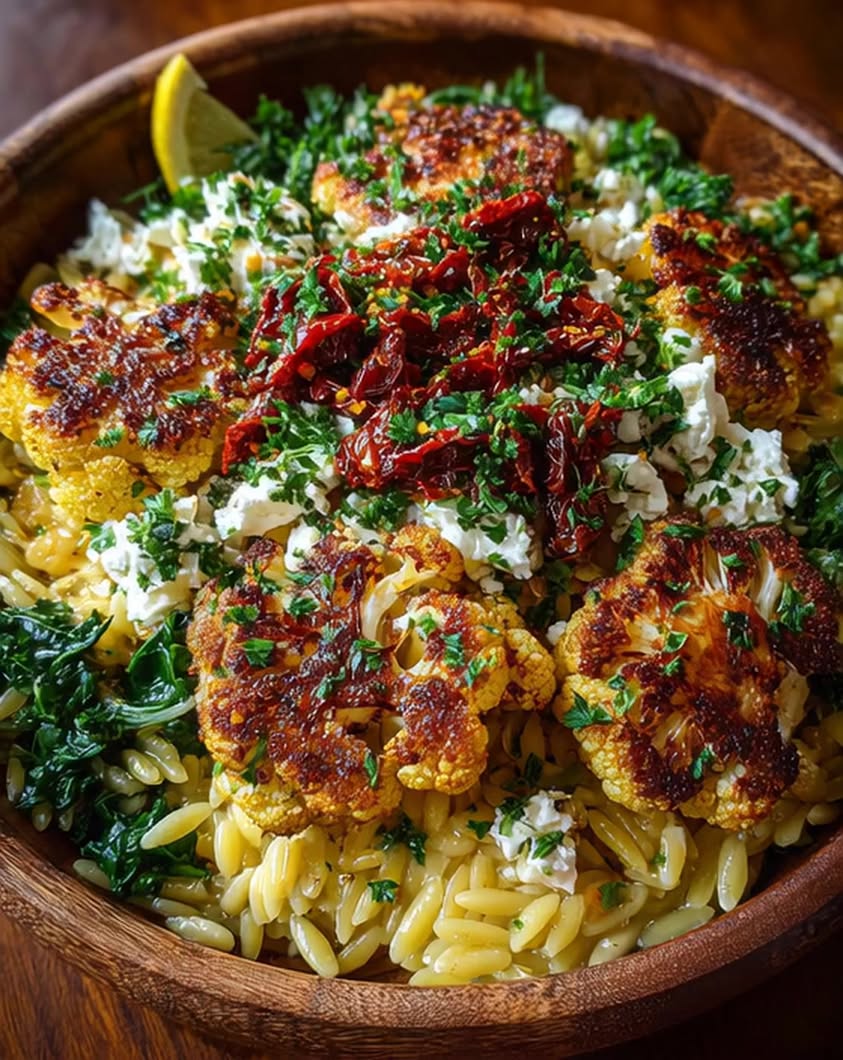
Roasted Cauliflower & Orzo Bowl with Honey-Lemon Feta: A Vibrant, Flavor-Packed Meal
Imagine a bowl that perfectly balances savory, sweet, and tangy flavors with a delightful mix of textures. This Roasted Cauliflower & Orzo Bowl with Honey-Lemon Feta is exactly that. It is a vibrant, satisfying meal that feels both comforting and excitingly fresh. The star of this dish is undoubtedly the honey-lemon feta, a simple yet transformative topping that elevates every single bite.
Furthermore, this recipe is a fantastic way to turn humble vegetables into a stunning centerpiece. Roasting cauliflower unlocks its natural sweetness and creates deliciously crispy edges. Meanwhile, the orzo provides a comforting, pasta-like base that soaks up all the wonderful flavors. Ultimately, this bowl is a celebration of simple ingredients combined in a clever, delicious way. It is perfect for a busy weeknight but special enough for a casual dinner with friends.
Additionally, the beauty of this Honey-Lemon Feta Orzo Bowl lies in its versatility. You can easily adapt it based on the season or what you have in your pantry. It is a complete meal packed with fiber, protein, and complex carbohydrates. Consequently, it will keep you feeling full and energized. Get ready to fall in love with this colorful, flavor-packed creation.
Quick Recipe Highlights
- Flavor Profile: This dish masterfully combines savory roasted cauliflower with a bright, tangy, and subtly sweet honey-lemon feta. Earthy herbs and a hint of garlic create a complex, well-rounded taste that is incredibly moreish.
- Texture: Enjoy a wonderful contrast between the tender, slightly chewy orzo, the crispy-edged roasted cauliflower florets, and the creamy, crumbly feta cheese. Each bite offers a satisfying mix that keeps your palate engaged.
- Aroma: As it cooks, your kitchen will fill with the warm, nutty scent of roasting cauliflower, mingled with the fresh, zesty fragrance of lemon and the earthy notes of thyme or oregano.
- Visual Appeal: The bowl is a feast for the eyes with golden-brown cauliflower, snowy white feta, vibrant green herbs, and the pale yellow hue of orzo. It is a rustic yet elegant presentation.
- Skill Level Needed: This is a beginner-friendly recipe. The techniques involve simple chopping, roasting, and boiling. If you can follow basic instructions, you can absolutely master this Honey-Lemon Feta Orzo Bowl.
- Special Equipment: You only need standard kitchen tools: a baking sheet, a medium pot, a mixing bowl, and a knife. A good chef’s knife for chopping the cauliflower is the most important tool.
Recipe Overview
- Difficulty Level: We rate this recipe as easy because it breaks down into very manageable steps. Roasting vegetables and boiling pasta are foundational skills. Moreover, the honey-lemon feta requires no cooking, just a quick mix. There is no complex timing or advanced techniques required for success.
- Category: This dish fits perfectly into the categories of vegetarian main dishes, hearty lunch bowls, and meal prep favorites. It is a substantial, stand-alone meal that doesn’t require a side.
- Cuisine: While not strictly traditional to one region, this bowl draws inspiration from Mediterranean and Middle Eastern flavors. The use of feta, lemon, olive oil, and oregano is classic to those culinary traditions, resulting in a modern fusion dish.
- Cost: This is a very budget-friendly meal. Cauliflower and orzo are inexpensive staples. Feta cheese and fresh lemons are the only slightly pricier items, but a little goes a long way. You can easily feed a family for less than the cost of takeout.
- Season: This recipe is excellent year-round but shines in the fall and winter when cauliflower is at its peak. The warm, roasted elements are comforting in cooler weather, while the lemon and herbs keep it feeling fresh.
- Occasion: It is ideal for a quick weeknight dinner, a healthy lunch prep option, or a simple but impressive dish for a casual potluck or gathering. It is versatile enough for any informal occasion.
Why You’ll Love This Recipe
First and foremost, the taste and texture are utterly captivating. The roasted cauliflower becomes deeply flavorful and slightly sweet, which contrasts beautifully with the salty, creamy feta. The honey-lemon marinade for the feta is a game-changer, adding a burst of brightness that ties the whole bowl together. Every component complements the others, creating a harmonious and addictive flavor profile that will have you going back for seconds.
From a convenience standpoint, this Honey-Lemon Feta Orzo Bowl is a dream. The hands-on prep time is minimal. You can chop the cauliflower and mix the feta while the oven preheats. Then, the roasting and boiling happen mostly unattended. This makes it an ideal choice for evenings when you want a wholesome, home-cooked meal without spending hours in the kitchen. Cleanup is also straightforward with just a few pots and pans.
Nutritionally, this bowl is a powerhouse. Cauliflower is loaded with vitamins C and K, fiber, and antioxidants. Orzo provides energizing carbohydrates. Feta offers protein and calcium. Using olive oil adds heart-healthy fats. Consequently, this meal supports overall health, aids digestion, and provides sustained energy. It is a balanced plate that nourishes your body without sacrificing an ounce of flavor.
For social and entertaining value, this dish is a winner. It is visually stunning when served in a large, shallow bowl for sharing. Guests will be impressed by the vibrant colors and sophisticated flavors. Since it is vegetarian, it caters to a wide range of dietary preferences. You can easily double the recipe to feed a crowd, and it holds up well if served warm or at room temperature.
Finally, its cost-effectiveness and accessibility are major benefits. The ingredients are easy to find at any standard grocery store. You likely have many of the pantry staples like olive oil, salt, and pepper already. It transforms affordable vegetables and grains into a restaurant-quality meal. This Honey-Lemon Feta Orzo Bowl proves that eating well does not have to be expensive or complicated.
Historical Background and Cultural Significance
The individual components of this bowl have rich and ancient histories. Cauliflower is believed to have originated in Asia Minor and was cultivated in the Mediterranean region for centuries. Ancient Romans and Greeks enjoyed early forms of it. Feta cheese, of course, is a cornerstone of Greek cuisine, protected by European law as a product with a designated origin. Its briny, tangy flavor has been a staple in the region for millennia.
Orzo, despite its rice-like shape, is a pasta. Pasta has a debated history, with some evidence pointing to ancient Etruscan civilizations and others to Chinese origins that spread via trade routes. The specific shape “orzo,” meaning “barley” in Italian, likely developed to mimic grains like barley or rice, offering a versatile texture that works beautifully in soups, salads, and pilafs. Combining pasta with roasted vegetables is a modern, global approach to home cooking.
The concept of a “grain bowl” or “Buddha bowl” is a relatively recent culinary trend, popularized in the last decade by the health and wellness movement. It emphasizes balanced, visually appealing meals in a single bowl. This Roasted Cauliflower & Orzo Bowl with Honey-Lemon Feta is a delicious example of this trend, marrying ancient ingredients with a contemporary, convenient presentation. It reflects a modern desire for meals that are nutritious, Instagram-worthy, and full of global flavor influences.
Regional variations of this idea abound. In Greece, you might find roasted vegetables served with a slab of feta and olives. In the Middle East, roasted cauliflower is often paired with tahini and herbs. This recipe takes inspiration from these traditions but creates something new. The honey-lemon feta is a creative twist that adds a sweet-and-sour element not traditionally found in savory Mediterranean dishes, showcasing how cuisines evolve and inspire each other.
Ingredient Deep Dive
Cauliflower: This versatile cruciferous vegetable is the star. Cultivated for over 2,000 years, it was considered a delicacy in the Ottoman Empire. Nutritionally, it’s a great source of vitamin C, vitamin K, folate, and fiber. It also contains beneficial antioxidants. When selecting, choose a head that is firm, heavy for its size, with tightly packed, creamy-white florets and bright green leaves. Avoid any with brown spots or a loose structure. Store it unwashed in a perforated plastic bag in the refrigerator’s crisper drawer for up to a week. For a variation, try using orange (cheddar) or purple cauliflower for a color pop.
Orzo: Orzo is a small, rice-shaped pasta made from semolina flour. It cooks quickly and has a delightful, slightly chewy texture that makes it perfect for salads and bowls. It provides carbohydrates for energy and contains some protein and iron. Look for it in the pasta aisle. You can substitute it with other small pasta like ditalini, or for a gluten-free version, use rice or a gluten-free pasta shape. Cook it al dente so it retains texture in the bowl.
Feta Cheese: Authentic Greek feta is made from at least 70% sheep’s milk, often blended with goat’s milk, and aged in brine. This process gives it its characteristic crumbly texture and tangy, salty flavor. It is a good source of calcium, protein, and probiotics. For the best flavor in this Honey-Lemon Feta Orzo Bowl, seek out a block of feta packed in brine rather than pre-crumbled. Store leftover feta submerged in its brine in the refrigerator. For a dairy-free version, use a firm, brined tofu or a vegan feta alternative.
Honey: Honey is one of the oldest known sweeteners, used by humans for thousands of years. In this recipe, it balances the lemon’s acidity and the feta’s saltiness. It also contains trace enzymes, minerals, and antioxidants. Use a mild, runny honey like clover or wildflower. For a vegan adaptation, pure maple syrup or agave nectar works perfectly. The key is to use just enough to create a subtle sweetness without making the dish cloying.
Lemon: Both the zest and juice are crucial. The zest contains potent aromatic oils, while the juice provides sharp acidity. Lemons are an excellent source of vitamin C. Always zest your lemon before juicing it. Choose lemons that are heavy for their size with smooth, bright yellow skin. Roll them on the counter before juicing to maximize yield. For a different citrus note, try using a Meyer lemon for sweeter, more floral flavor.
Common Mistakes to Avoid
- Crowding the Baking Sheet: If you dump all the cauliflower onto one pan, it will steam instead of roast. You need space for hot air to circulate. Always use a large enough sheet and spread the florets in a single layer. Consequently, this ensures crispy, caramelized edges.
- Underseasoning the Cauliflower: Cauliflower needs a generous amount of seasoning before roasting. Do not be shy with salt, pepper, and dried herbs. Toss it thoroughly with oil and spices to coat every piece. Otherwise, the final dish can taste bland.
- Overcooking the Orzo: Orzo cooks quickly and can turn mushy if left in the water too long. Cook it just until al dente, as it will continue to absorb moisture from the other ingredients in the bowl. Always set a timer and taste-test a minute before the package instructions suggest.
- Not Letting the Feta Marinate: The honey-lemon feta topping gains incredible flavor if you let it sit for even 10-15 minutes. Mixing it and using it immediately is fine, but allowing time for the flavors to meld makes a noticeable difference. Plan for this short marinating time.
- Using Pre-Crumbled Feta: Pre-crumbled feta is often drier and coated with anti-caking agents. For the creamiest texture and best flavor, always buy a block of feta in brine and crumble it yourself just before using.
- Skipping the Lemon Zest: The juice provides acidity, but the zest provides intense lemon fragrance without extra liquid. Using both gives the Honey-Lemon Feta Orzo Bowl a more complex, vibrant citrus profile. A microplane grater is the best tool for this job.
- Adding the Feta Too Early: If you mix the honey-lemon feta into the hot orzo and cauliflower, it will melt and lose its distinct creamy-crumbly texture. Always add it as a final topping just before serving to preserve its unique quality.
- Forgetting to Reserve Pasta Water: Before draining the orzo, scoop out about a half cup of the starchy cooking water. If your bowl seems a bit dry when combining everything, a splash of this water helps create a light, cohesive sauce that brings all the elements together.
Essential Techniques
Roasting Vegetables: Roasting is a dry-heat cooking method that caramelizes natural sugars, creating deep flavor and texture. For perfect cauliflower, ensure your oven is fully preheated to a high temperature (400-425°F is ideal). Toss the florets evenly in oil so they crisp, not burn. Spread them in a single layer with space between. The visual cue for success is golden-brown edges and tender stems when pierced with a fork.
Zesting Citrus: Zesting is the act of removing the colorful outer peel, avoiding the bitter white pith beneath. Use a fine microplane grater or the small holes of a box grater. Gently rub the lemon in one direction over the grater. Rotate the fruit to get all the zest. This technique captures the potent essential oils where the true lemon flavor lives, crucial for the honey-lemon feta.
Cooking Pasta Al Dente: “Al dente” means “to the tooth” in Italian. It describes pasta that is tender but still offers slight resistance when bitten. To achieve this, use a large pot of well-salted boiling water. Add the orzo and stir immediately to prevent sticking. Follow package times but start tasting a minute or two early. Properly cooked orzo will hold its shape and texture in the final bowl.
Emulsifying a Simple Dressing: While not a formal dressing here, the mixture of honey, lemon juice, and olive oil for the feta is a basic emulsion. Whisk them together vigorously before adding the feta. This helps the oil and acid combine temporarily, ensuring the feta is evenly coated with flavor. A small whisk or even a fork works perfectly for this task.
Pro Tips for Perfect Roasted Cauliflower & Orzo Bowl
First, cut your cauliflower florets into uniform sizes. This ensures they all cook at the same rate, so you don’t end up with some burnt pieces and some undercooked ones. Aim for bite-sized pieces, about 1 to 1.5 inches across.
Second, preheat your baking sheet in the oven. Place the empty sheet in the oven as it preheats. Carefully add the oiled cauliflower to the hot pan. This jump-starts the searing process, leading to even better caramelization and crispiness on the bottom of the florets.
Third, season in layers. Salt the cauliflower before roasting, and then have a little extra flaky sea salt on hand for finishing the bowl at the end. Layered seasoning builds a more complete flavor profile from the inside out.
Fourth, toast your dried herbs. If using dried oregano or thyme, add it to the olive oil for the cauliflower about 30 seconds before tossing. Warming the herbs in the oil helps release their aromatic oils, making their flavor more potent and integrated.
Fifth, let the roasted cauliflower rest. When it comes out of the oven, let it sit for 5 minutes on the pan. This allows the exterior to crisp up further and makes it easier to handle when assembling your Honey-Lemon Feta Orzo Bowl.
Sixth, fluff your orzo. After draining, return the orzo to the warm pot with a drizzle of olive oil and fluff it with a fork. This prevents it from clumping together as it cools slightly, ensuring every grain is separate and ready to absorb flavors.
Variations and Adaptations
For regional variations, take this bowl in different global directions. Add toasted pine nuts and raisins for a Sicilian twist. Incorporate za’atar spice blend and sumac on the cauliflower for a Levantine flavor. Stir in some pesto with the orzo for an Italian-inspired version. The basic structure is wonderfully adaptable to many spice palettes.
Seasonal adaptations are easy. In spring, add fresh peas and asparagus tips. For summer, mix in cherry tomatoes and fresh basil. In fall, roasted squash or sweet potato makes a great addition alongside the cauliflower. Winter calls for hearty greens like kale, massaged and added raw or quickly wilted.
Dietary modifications are straightforward. For a vegan Honey-Lemon Feta Orzo Bowl, use a vegan feta alternative and maple syrup instead of honey. To make it gluten-free, substitute the orzo with cooked quinoa, rice, or gluten-free pasta. For added protein, include chickpeas roasted with the cauliflower or top with grilled shrimp or chicken.
Flavor variations can keep this recipe exciting. Try using harissa paste in the olive oil for a spicy kick. Swap the lemon for orange and add a pinch of cinnamon for a warmer profile. Use goat cheese instead of feta for a tangier, creamier element. A drizzle of tahini or balsamic glaze at the end can add a new dimension.
Serving and Presentation Guide
Plating is key for visual appeal. Start with a base of warm orzo in wide, shallow bowls. Artfully arrange the roasted cauliflower on top, rather than just dumping it in. This showcases the beautiful caramelization. Then, sprinkle the honey-lemon feta generously over everything, letting some pieces rest on the cauliflower and some nestle into the orzo.
Garnishing adds freshness and color. A final shower of chopped fresh herbs like parsley, dill, or mint is essential. A sprinkle of red pepper flakes adds a pop of color and heat. A final drizzle of high-quality extra virgin olive oil or a squeeze of lemon juice just before serving makes the dish glisten.
Consider traditional accompaniments. A side of warm pita bread or crusty baguette is perfect for scooping up any last bits. A simple side salad of arugula with a lemon vinaigrette complements the bowl without competing. For a more substantial meal, serve with a bowl of Greek yogurt or tzatziki on the side.
Temperature considerations matter. This bowl is best served warm or at room temperature. If you prepare components ahead, let the cauliflower and orzo cool slightly before combining, especially if adding the feta. You do not want the residual heat to melt the cheese. It is a forgiving dish that holds well, making it excellent for buffets or packed lunches.
Wine and Beverage Pairing
Wine pairings should complement the dish’s bright acidity and savory notes. A crisp, dry white wine like Sauvignon Blanc or Pinot Grigio works beautifully. Their citrusy notes echo the lemon in the bowl. Alternatively, a light-bodied Greek Assyrtiko, with its mineral and lemon character, is a fantastic regional pairing. For rosé lovers, a dry Provençal rosé offers berry notes that contrast nicely with the salty feta.
Non-alcoholic alternatives are just as important. Sparkling water with a twist of lemon or lime keeps the palate refreshed. A homemade lemonade, perhaps infused with herbs like rosemary or thyme, mirrors the dish’s flavors. Iced herbal tea, such as mint or chamomile, provides a soothing, complementary beverage without caffeine.
For coffee or tea pairings, consider the meal’s end. After enjoying this Honey-Lemon Feta Orzo Bowl, a cup of herbal tea like lemon verbena or ginger would be a lovely, digestif. A light roast coffee with citrusy notes could also work if served after the meal has settled, but it is not a traditional pairing during eating.
Always serve white wines and sparkling waters well-chilled. This contrast between the cool beverage and the warm, savory bowl is incredibly satisfying. For non-alcoholic options, consider adding a few edible flowers or herb sprigs to the glass for a presentation that matches the beautiful bowl.
Storage and Shelf Life
Store components separately for best results. Keep the roasted cauliflower, plain cooked orzo, and honey-lemon feta in separate airtight containers in the refrigerator. The cauliflower and orzo will last for 3-4 days. The feta mixture is best used within 2 days. Combining everything in advance can lead to a soggy texture as the orzo absorbs moisture from the other ingredients.
Signs of spoilage are straightforward. Look for any off smells, especially a sour or unpleasant odor from the cauliflower or orzo. Visible mold, of course, means it should be discarded. If the feta develops an unusually slimy texture, it is time to toss it. When in doubt, throw it out.
Reheating instructions are simple. Gently reheat the cauliflower and orzo separately in the microwave or in a skillet over medium heat with a tiny splash of water or broth to prevent drying out. Always add the fresh honey-lemon feta and herbs after reheating. Do not microwave the feta topping, as it will melt and separate.
Freezing is not recommended for the complete assembled bowl. The texture of the cooked orzo and cauliflower becomes mushy and watery upon thawing. The dairy in the feta does not freeze well. This is a recipe best enjoyed fresh or refrigerated for a few days.
Make Ahead Strategies
You can prep almost every component ahead of time. Chop the cauliflower and store it in a container in the fridge 1-2 days in advance. Mix the dry spices for the cauliflower oil in a small bowl. Crumble the feta and store it separately. Zest and juice the lemon, keeping the juice airtight to preserve vitamin C.
For a complete next-day meal, roast the cauliflower and cook the orzo the night before. Let them cool completely, then store separately. The next day, bring them to room temperature or give them a brief warm-up in the microwave. Prepare the honey-lemon feta fresh and assemble. This maintains optimal textures.
Quality impact is minimal if you store components correctly. The cauliflower may lose a bit of its crisp edge but will retain flavor. The orzo might firm up; a splash of warm water or olive oil when reheating will loosen it. The key to freshness is always adding the herbs and final seasonings just before serving.
For a party, roast the cauliflower up to 2 hours ahead and keep it warm in a low oven. Cook the orzo and keep it in a bowl covered with a damp towel. Mix the feta topping. Assemble individual bowls or one large platter just as guests arrive for the best presentation and temperature.
Scaling Instructions
Halving the recipe is simple for one or two servings. Use a medium cauliflower head and simply reduce all other ingredients by half. A standard baking sheet will still work well with less cauliflower, promoting good roasting. Cooking times may be slightly shorter, so check for doneness a few minutes early.
Doubling or tripling for a crowd is easy. You will need to roast the cauliflower in batches or use multiple oven racks and rotate the sheets halfway through. Use a larger pot for the orzo, or cook it in two batches to ensure even cooking. For the honey-lemon feta, mix it in a large bowl, adjusting to taste, as you may need slightly less honey per cup of feta when scaling up.
Equipment adjustments are necessary when scaling. For large batches, ensure you have enough baking sheets and large mixing bowls. You may need to use two burners to boil enough water for the orzo if your largest pot is not big enough. Consider serving the dish in a large, beautiful serving platter instead of individual bowls for a family-style presentation.
Timing modifications are minimal. The cauliflower roasting time remains the same regardless of batch size if the pans are not overcrowded. The orzo will take the same time to boil, but bringing a larger volume of water to a boil may take longer initially. Factor this into your total prep time when cooking for many people.
Nutritional Deep Dive
This bowl offers a balanced macro breakdown. The orzo provides complex carbohydrates for sustained energy. The cauliflower and olive oil contribute healthy fats and fiber, which aid in satiety and digestion. The feta cheese is a good source of protein and fat. Together, they create a meal that stabilizes blood sugar and keeps you full for hours.
Micronutrient analysis reveals a wealth of vitamins and minerals. Cauliflower is rich in vitamin C, vitamin K, and choline. Feta provides calcium, phosphorus, and vitamin B12. Olive oil contains vitamin E and antioxidants. Lemon juice adds a boost of vitamin C. This combination supports immune function, bone health, and cellular repair.
The health benefits are significant. The high fiber content promotes gut health. Antioxidants from the vegetables help combat inflammation. The healthy fats support heart health and nutrient absorption. This Honey-Lemon Feta Orzo Bowl is a prime example of how delicious food can also be powerfully nourishing for your body.
For dietary considerations, one serving is vegetarian and can be adapted to be vegan or gluten-free as noted. It is not inherently low-carb due to the orzo, but the cauliflower base provides a lower-carb vegetable foundation. For portion control, this recipe makes four generous servings. Using a kitchen scale to divide the orzo evenly can help with consistent portioning.
Dietary Adaptations
For a gluten-free version, the simplest swap is to replace the orzo with an equal amount of cooked quinoa, rice, or certified gluten-free pasta. Many brands make gluten-free orzo-shaped pasta from corn or rice flour. Ensure all other ingredients, like dried herbs, are certified gluten-free to avoid cross-contamination.
To make this dairy-free and vegan, omit the feta. Instead, make a topping from crumbled extra-firm tofu or a store-bought vegan feta. For the honey-lemon mixture, use maple syrup or agave nectar instead of honey. The roasting process for the cauliflower remains exactly the same, resulting in a flavorful, plant-based bowl.
For a low-carb or keto adaptation, replace the orzo entirely. Use the roasted cauliflower as the main base and bulk it up with other low-carb vegetables like zucchini or broccoli. Increase the amount of feta and olive oil for fat. Be mindful of the honey; use just a tiny drop of a keto-friendly sweetener in the lemon mixture instead.
For a Paleo version, follow the low-carb guidelines but ensure all ingredients are whole-food based. Omit the orzo and grains. Use a block of feta if you include dairy on your Paleo plan, or use a nut-based “cheese” alternative. Focus on the roasted vegetables, healthy fats, and lean protein if you choose to add any.
Troubleshooting Guide
If your cauliflower is soggy, the oven temperature was likely too low or the pan was overcrowded. Next time, ensure your oven is fully preheated and use two baking sheets if needed. For now, you can spread the soggy cauliflower on a fresh sheet and broil it for a few minutes to crisp up the edges.
If the bowl tastes bland, it likely needs more salt or acid. Season in layers: salt the cauliflower before roasting, salt the orzo water, and finish with flaky salt. A squeeze of fresh lemon juice over the assembled bowl can brighten everything instantly. Also, taste your feta before adding it; if it is not very salty, you may need to adjust the overall seasoning.
If the orzo is gummy or stuck together, it was either overcooked or not stirred enough during boiling. Rinse it briefly with cool water to stop the cooking and separate the grains, then toss it with a bit of olive oil. For future batches, use plenty of water, stir immediately after adding the pasta, and cook al dente.
If the honey-lemon feta is too runny, you may have added too much lemon juice or honey. Drain off any excess liquid before sprinkling it over the bowl. To thicken it, you can add a little more crumbled feta. Remember, the goal is a moist, flavorful crumble, not a pourable sauce.
Recipe Success Stories
Community feedback on this Honey-Lemon Feta Orzo Bowl has been overwhelmingly positive. Many home cooks report it becoming a weekly staple in their homes. Parents love that it is a sneaky way to get kids to eat more vegetables, as the roasted cauliflower is sweet and the feta is fun to eat. The simplicity and big flavor payoff are consistently praised.
Variation successes are fun to hear about. One reader added spicy Italian sausage for their meat-loving family. Another used farro instead of orzo for a chewier whole grain. A creative cook made it with purple cauliflower and golden beets for a stunning holiday side dish. The recipe’s framework invites personalization.
Reader suggestions have improved the recipe over time. Several suggested toasting the orzo in a bit of olive oil before boiling for a nuttier flavor, which is a fantastic pro tip. Others recommended adding a handful of arugula to the bowl before the hot ingredients to wilt it slightly. These community-driven ideas make the recipe even more versatile.
For photography tips, natural light is your best friend. Shoot the bowl near a window. Garnish with extra herbs and a lemon wedge on the side. Use a shallow, textured bowl in a neutral color to let the food’s colors pop. A top-down angle or a slight 45-degree angle works beautifully to showcase all the layers of this vibrant dish.
Frequently Asked Questions
Can I use frozen cauliflower? Yes, but the results will be different. Frozen cauliflower has a higher water content. Thaw it completely and pat it very dry with paper towels before tossing with oil. Expect less crispy caramelization and a softer texture, but the flavor will still be good.
What can I use instead of orzo? Any small pasta works, like ditalini or small shells. For a grain, try couscous, quinoa, or farro. Adjust cooking times according to the package instructions for your chosen substitute to ensure the proper texture in your bowl.
Is this dish served hot or cold? It is best served warm or at room temperature. The components should not be piping hot when you add the feta, or it will melt. Let the roasted cauliflower and orzo cool for about 5-10 minutes before assembling for ideal texture.
Can I make this ahead for meal prep? Absolutely. Store the roasted cauliflower, plain orzo, and feta mixture in separate containers for up to 4 days. Assemble your bowl each day, reheating the cauliflower and orzo if desired, then adding the fresh feta and herbs.
How do I prevent the feta from dissolving? The key is to let the hot components cool slightly before adding the feta. Also, ensure your feta is a good quality block crumbled by hand, not pre-crumbled. Add it as the very last step right before serving.
My cauliflower isn’t browning. What’s wrong? Your oven may not be hot enough, or the florets are too crowded. Ensure the oven is fully preheated to at least 400°F and that the florets are in a single layer with space between them. Do not stir too frequently; let them sit to develop color.
Can I add protein to this bowl? Definitely. Chickpeas roasted with the cauliflower are an easy vegetarian addition. Grilled chicken, shrimp, or salmon pair beautifully. For a quick option, stir in a can of drained, rinsed white beans or lentils with the orzo.
Is the honey necessary? The honey balances the lemon’s acidity and the feta’s saltiness. However, you can omit it for a less sweet profile, or use maple syrup. Start with a small amount, taste, and adjust. The dish will still be flavorful without it.
What herbs work best? Dried oregano or thyme are classic with the cauliflower. For fresh herbs, parsley, dill, mint, or basil are all excellent choices. Use about a tablespoon of dried herbs for roasting and a quarter cup of chopped fresh herbs for garnish.
Can I use a different cheese? Yes, but the honey-lemon combination is designed for feta’s salty tang. Goat cheese would be a close substitute. For a milder flavor, try fresh mozzarella pearls or ricotta salata. Adjust the honey and lemon to taste if using a less salty cheese.
Additional Resources
For related recipes, explore other Mediterranean-inspired bowls. A Greek quinoa bowl with similar flavors, or a roasted vegetable and farro salad, would be great next tries. If you love the honey-lemon feta concept, try it on a watermelon and mint salad or as a topping for grilled eggplant.
Technique guides can elevate your cooking. Look up detailed tutorials on how to properly roast any vegetable, how to cook grains perfectly every time, or how to make simple salad dressings. Mastering these foundational skills will make recipes like this Honey-Lemon Feta Orzo Bowl even easier and more successful.
For ingredient information, consider learning more about the varieties of cauliflower or the different types of feta available. Understanding your ingredients helps you make better choices{“success”:true,”message”:”Recipe created successfully”,”post_id”:9241,”tasty_recipe_id”:9241,”shortcode”:”“}

I’m Billy, a classically trained culinary school graduate from The Culinary Institute of America with over 12 years in the restaurant industry and over 19 years of cooking experience.