
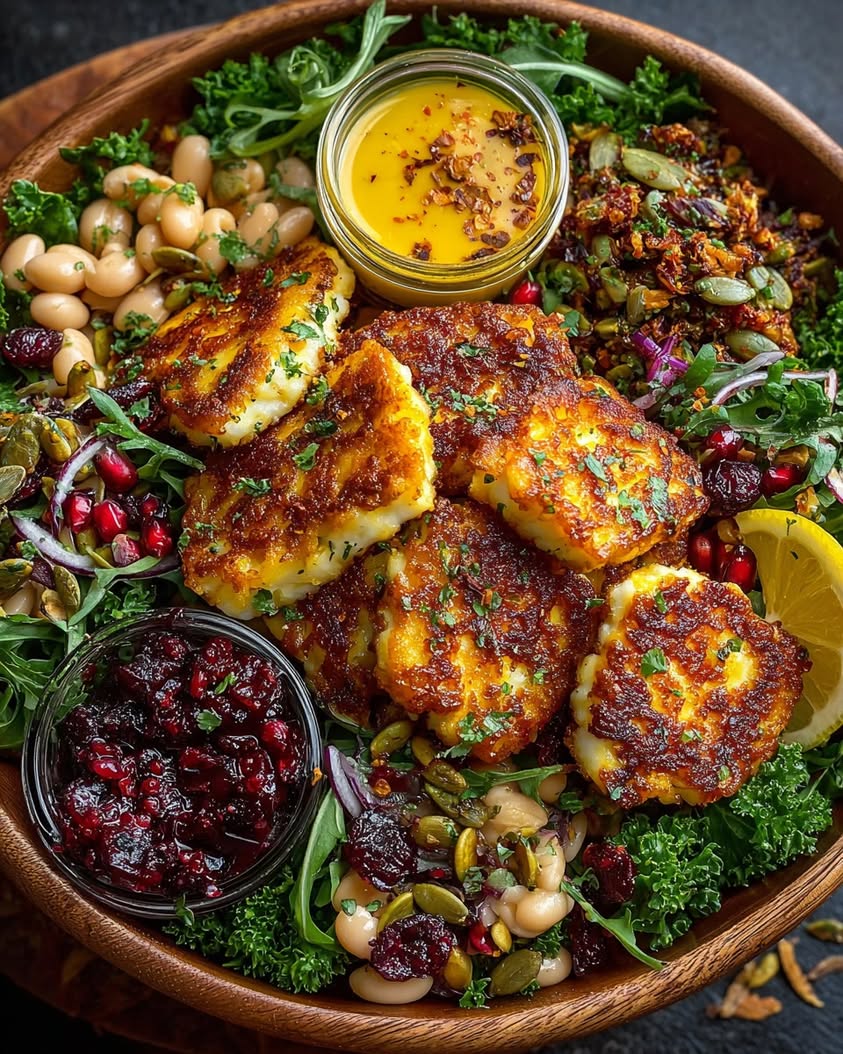
Halloumi & Cranberry Cannellini Beans Salad with Citrus Vinaigrette: A Vibrant Feast of Textures
Imagine a dish that sings with bright, zesty flavors while delivering a satisfying crunch and creamy finish. This Halloumi & Cranberry Cannellini Beans Salad with Citrus Vinaigrette is exactly that kind of culinary masterpiece. Furthermore, it transforms simple, wholesome ingredients into a stunning centerpiece for any table. The magic lies in the contrast between the salty, seared halloumi and the sweet-tart pop of dried cranberries. Ultimately, every forkful is a delightful adventure for your taste buds.
This recipe is a celebration of texture and balance. Creamy cannellini beans provide a hearty, protein-packed base, while crisp greens and fresh herbs add a necessary lightness. The homemade citrus vinaigrette ties everything together with a sunny, acidic punch that cuts through the richness of the cheese. Consequently, this salad feels both indulgent and refreshingly healthy. It is the perfect answer for anyone seeking a meal that is quick to prepare yet impressive enough for guests.
Moreover, the visual appeal of this Halloumi & Cranberry Cannellini Beans Salad is undeniable. Think of golden-brown cubes of cheese nestled among white beans, vibrant red cranberries, and deep green herbs. It is a feast for the eyes before you even take a bite. This dish proves that eating well does not mean sacrificing flavor or excitement. In fact, it is a testament to how a few quality ingredients can create something truly extraordinary.
Quick Recipe Highlights
- Flavor Profile: This salad masterfully balances salty, sweet, tangy, and fresh notes. The halloumi offers a savory, salty depth, while the cranberries contribute a concentrated sweetness. Simultaneously, the citrus vinaigrette adds a bright, tangy acidity that lifts the entire dish.
- Texture: You will experience a wonderful symphony of textures. Expect a satisfying squeak from the pan-fried halloumi, a creamy softness from the beans, and a pleasant chew from the cranberries. Additionally, the fresh herbs and greens provide a crucial crisp, refreshing crunch.
- Aroma: As the halloumi cooks, it releases a deliciously savory, almost nutty aroma. This is beautifully complemented by the fresh, grassy scent of chopped parsley and the zesty, invigorating smell of the citrus dressing. The combined scent is incredibly inviting.
- Visual Appeal: The color palette is naturally stunning. Golden-brown halloumi, snowy white beans, ruby-red cranberries, and emerald-green herbs create a plate that looks as good as it tastes. Presentation is effortless because the ingredients are inherently beautiful.
- Skill Level Needed: This is a beginner-friendly recipe. The techniques involve simple chopping, whisking a dressing, and pan-frying. No advanced culinary skills are required, making it an excellent choice for a weeknight dinner or a stress-free lunch.
- Special Equipment: You only need basic kitchen tools. A good non-stick skillet is key for frying the halloumi without sticking. Otherwise, a mixing bowl, a whisk, and a sharp knife are all you require to bring this dish together.
Recipe Overview
- Difficulty Level: We rate this recipe as easy for several reasons. Primarily, the steps are sequential and simple, involving no complex techniques. The halloumi is forgiving to cook, and the dressing is a straightforward emulsion. Consequently, even novice cooks can achieve fantastic results on their first try.
- Category: This dish is wonderfully versatile. It can serve as a substantial main course salad, a hearty side dish beside grilled meats, or a standout component on a buffet or potluck table. Its flexibility makes it a valuable addition to your recipe repertoire.
- Cuisine: While halloumi hails from Cyprus, this preparation is a modern, fusion-style creation. It borrows elements from Mediterranean cooking, like the use of beans and fresh herbs, and combines them with global pantry staples like dried cranberries for a contemporary, borderless flavor profile.
- Cost: This is a cost-effective meal, especially considering its nutritional payoff. Cannellini beans and dried cranberries are inexpensive pantry staples. Halloumi is the splurge item, but a little goes a long way. Overall, you can create a restaurant-quality dish for a fraction of the price.
- Season: This salad shines year-round but is particularly excellent in fall and winter. The hearty beans and warm halloumi provide comfort, while the citrus dressing brings a much-needed burst of sunshine during colder months. Conversely, it is also light enough for a spring or summer lunch.
- Occasion: It is perfect for casual weeknight dinners, elegant lunches with friends, or as a bring-along dish for picnics and potlucks. Its make-ahead potential and crowd-pleasing flavors make it a reliable choice for almost any gathering.
Why You’ll Love This Recipe
First and foremost, the taste and texture combination is utterly addictive. The salty, squeaky halloumi paired with the sweet chew of cranberries creates a flavor dynamic that keeps you coming back for more. Meanwhile, the creamy cannellini beans add a comforting, substantive element that makes the salad feel like a complete meal. Each component plays a specific role, resulting in a harmonious and satisfying dish that is far greater than the sum of its parts.
From a convenience standpoint, this Halloumi & Cranberry Cannellini Beans Salad is a lifesaver. It comes together in under 30 minutes, making it ideal for busy evenings. Furthermore, most of the components can be prepared ahead of time. You can whisk the dressing, rinse the beans, and even fry the halloumi in advance, then simply assemble when ready to eat. This streamlined process takes the stress out of mealtime.
Nutritionally, this salad packs a powerful punch. Cannellini beans are an excellent source of plant-based protein and fiber, promoting digestive health and sustained energy. Halloumi provides calcium and protein. Additionally, the olive oil in the dressing offers heart-healthy fats, and the fresh herbs are loaded with antioxidants. It is a meal that nourishes your body without compromising on indulgence.
For entertaining, this dish is a true superstar. Its vibrant appearance immediately impresses guests, and its unique combination of flavors sparks conversation. Moreover, it caters to various dietary preferences, being vegetarian and easily adaptable for gluten-free needs. Serving a show-stopping salad like this allows you to spend less time in the kitchen and more time enjoying your company.
Finally, this recipe is incredibly cost-effective and accessible. The ingredients are easy to find at any standard grocery store. You likely have many of the dressing components in your pantry already. By creating this restaurant-worthy salad at home, you save money while gaining complete control over the quality and freshness of your meal. It is a win-win situation for your palate and your wallet.
Historical Background and Cultural Significance
To understand this dish, we must start with halloumi. This unique cheese originated in Cyprus and has been a staple there for centuries. Traditionally made from a mixture of sheep’s and goat’s milk, its high melting point was a practical solution for preserving milk in a warm climate. Consequently, Cypriot families could fry or grill it without it losing shape, making it a versatile protein source. Its journey from a regional specialty to a global phenomenon is a recent and delicious story of culinary exchange.
Cannellini beans, on the other hand, have deep roots in Italian cuisine, particularly in Tuscany, where they are known as *fagioli bianchi*. They are the star of classic dishes like pasta e fagioli. Their creamy texture and ability to absorb flavors made them a peasant food staple that has earned gourmet status. Incorporating them into a salad with halloumi is a modern fusion, blending Mediterranean island traditions with mainland European pantry essentials.
The use of dried cranberries is a distinctly North American influence. Native Americans used cranberries for food and medicine long before European settlers arrived. However, the sweetened, dried version we use today became popular much later as a convenient snack and baking ingredient. Their addition to savory salads represents a contemporary culinary trend that values contrast—the sweet-and-salty profile is a key driver of modern flavor preferences.
Ultimately, this Halloumi & Cranberry Cannellini Beans Salad is a product of today’s global pantry. It does not belong to one culture but celebrates the best of many. It takes the practical, salty cheese from Cyprus, the hearty bean from Italy, and the sweet-tart fruit from America, uniting them with a universal citrus dressing. This evolution reflects how modern cooking freely borrows and blends traditions to create exciting new dishes that resonate across borders.
Ingredient Deep Dive
Halloumi: This semi-hard, brined cheese from Cyprus is the star. Its unique property is that it doesn’t melt easily; instead, it softens and develops a gorgeous golden crust when fried or grilled. Historically, it was a way to preserve milk. Nutritionally, it’s a good source of protein and calcium. When selecting halloumi, look for a firm block in brine. Store it in its brine in the refrigerator. For a dairy-free version, firm tofu pressed and marinated in a salty brine can mimic the texture, though not the exact flavor.
Cannellini Beans: Also known as white kidney beans, these are prized for their creamy texture and mild, nutty flavor. They are a cornerstone of Tuscan cuisine. Packed with protein, fiber, iron, and folate, they are a nutritional powerhouse. Always rinse canned beans thoroughly to remove excess sodium and the starchy liquid. Dried beans are more economical; soak overnight and simmer until tender. For a variation, try butter beans or great northern beans, which have a similar texture.
Dried Cranberries: These are made by dehydrating fresh cranberries, often with added sugar to balance their natural tartness. They provide antioxidants and a chewy texture. Look for fruit juice-sweetened varieties to reduce added sugar. For a different twist, try chopped dried apricots for a deeper sweetness or tart cherries for a more complex sour note. Store them in a cool, dark pantry to maintain their chewiness.
Citrus Vinaigrette: The dressing typically combines fresh lemon or orange juice with olive oil, Dijon mustard, and seasonings. Citrus has been used since ancient times to preserve food and add brightness. Freshly squeezed juice is crucial for the best flavor. Olive oil provides healthy monounsaturated fats. The mustard acts as an emulsifier, helping the oil and juice blend. For a different profile, substitute lime juice or a splash of white wine vinegar.
Common Mistakes to Avoid
- Overcrowding the Pan with Halloumi: If you add too much halloumi at once, the pan temperature drops, causing the cheese to steam instead of sear. Consequently, you get pale, rubbery cubes instead of crispy, golden ones. Cook in batches for the best results.
- Using a Cold Pan for Halloumi: Always preheat your skillet properly. Adding halloumi to a cold pan prevents immediate searing and can lead to sticking. Wait until the oil shimmers before adding the cheese for that perfect crust.
- Not Rinsing the Canned Beans: The liquid in canned beans is thick and starchy and often contains added sodium. Skipping the rinse will make your salad dressing gluey and overly salty. Always drain and rinse beans under cold water in a colander.
- Dressing the Salad Too Early: If you pour the vinaigrette over the entire salad long before serving, the greens will wilt, and the halloumi will lose its crispness. Instead, dress the bean mixture ahead, but add greens and halloumi just before serving.
- Over-Whisking the Vinaigrette: While emulsification is good, over-whisking can cause the oil to become bitter. Simply whisk until the ingredients are just combined and slightly thickened. A gentle shake in a jar works perfectly.
- Cutting the Halloumi Too Thin: Thin slices will dry out and become tough when fried. Aim for cubes or slices about 1/2-inch thick. This ensures a crispy exterior and a soft, yielding interior.
- Using Stale Dried Cranberries: Old, hard cranberries are unpleasant. If yours have lost their chew, you can plump them by soaking in warm water or orange juice for 10 minutes before draining and adding to the salad.
- Neglecting to Season the Dressing: The vinaigrette needs adequate salt and pepper to season the entire salad. Taste it before adding it to the beans. It should taste slightly bold on its own, as it will be diluted by the other ingredients.
Essential Techniques
Pan-Frying Halloumi: This technique is crucial for achieving the signature texture. The goal is a deep golden-brown crust with a soft interior. First, pat the halloumi dry to ensure it sears, not steams. Use a medium-high heat and a neutral oil with a high smoke point. Do not move the pieces for the first minute or two, allowing a crust to form. Then, flip once. The visual cue for success is an even, caramelized color on each side. The common pitfall is flipping too early, which tears the crust.
Emulsifying a Vinaigrette: An emulsion is a stable mixture of two liquids that don’t normally combine, like oil and vinegar. The key is to add the oil slowly while whisking vigorously. The Dijon mustard acts as an emulsifier, containing compounds that help bind the oil and acid. Start with your acid, mustard, and seasonings in a bowl. Then, drizzle in the oil in a thin, steady stream while constantly whisking. The mixture will thicken and become opaque. If it breaks, simply start with a fresh teaspoon of mustard and whisk the broken dressing into it.
Balancing Salad Components: A great salad has balance in every bite. This involves thoughtful distribution, not just dumping ingredients together. After mixing your beans and cranberries with some dressing, layer your greens on a platter. Then, spoon the bean mixture over, and finally, artfully arrange the warm halloumi on top. This method ensures that the delicate greens don’t get crushed and that the halloumi remains prominent and crisp.
Pro Tips for Perfect Halloumi & Cranberry Cannellini Beans Salad
First, take your halloumi out of the fridge about 15 minutes before cooking. Allowing it to come closer to room temperature helps it cook more evenly, preventing a cold center.
For an extra flavor boost, add a teaspoon of honey or maple syrup to your citrus vinaigrette. This tiny addition enhances the natural sweetness of the cranberries and balances the acidity beautifully.
Toast any nuts you add, like walnuts or almonds, in a dry pan before adding them to the salad. Toasting unlocks their oils and adds a deeper, nuttier crunch that complements the other textures.
If using fresh herbs like parsley or mint, chop them just before serving. This preserves their vibrant color and potent aroma, which can diminish if chopped too far in advance.
For the creamiest bean texture, if using canned, give them a final gentle pat dry with a paper towel after rinsing. This prevents excess water from diluting your flavorful dressing.
Serve the salad on a slightly warmed platter if you’re making it for guests. A warm base will keep the halloumi warmer for longer without wilting the greens underneath.
Variations and Adaptations
For regional variations, consider a Greek twist by adding Kalamata olives, cucumber, and tomato with a lemon-oregano vinaigrette. Alternatively, a Middle Eastern version could include pomegranate seeds, chopped mint, and a sprinkle of za’atar on the halloumi.
Seasonal adaptations are simple. In summer, add fresh corn kernels and cherry tomatoes. For autumn, incorporate roasted squash or sweet potato cubes. In winter, use hearty kale as your green, massaged with a bit of the dressing to soften it.
Dietary modifications are straightforward. For a vegan version, omit the halloumi and add marinated, baked tofu or crispy chickpeas. Ensure your dried cranberries are juice-sweetened. For a gluten-free meal, simply confirm all packaged ingredients are certified gluten-free, which halloumi and beans typically are.
Flavor variations can change the profile entirely. Swap the citrus vinaigrette for a balsamic glaze drizzle. Use feta cheese instead of halloumi for a crumbly texture. Substitute dried cherries or chopped dates for the cranberries to explore different sweet notes.
Serving and Presentation Guide
Plating is key for visual impact. Instead of mixing everything in a bowl, build the salad on a large, shallow platter. Start with a bed of your greens. Then, spoon the dressed bean and cranberry mixture over the center, allowing some greens to peek out at the edges. Finally, arrange the warm halloumi pieces artfully on top. This layered approach showcases every beautiful ingredient.
Garnishing adds the final touch. A final drizzle of extra virgin olive oil, a sprinkle of flaky sea salt, and a few cracks of black pepper elevate the dish. Fresh herb leaves, like whole parsley or mint, scattered over the top add color and freshness. For a festive touch, add edible flowers.
Consider traditional accompaniments. This salad pairs wonderfully with crusty bread to soak up the dressing. For a larger Mediterranean feast, serve it alongside grilled chicken, lamb kebabs, or a selection of dips like hummus and tzatziki.
Wine and Beverage Pairing
For wine pairings, look for bottles that complement the salad’s brightness and saltiness. A crisp, dry Rosé with its berry notes and acidity is a fantastic match. Alternatively, a Sauvignon Blanc with its citrusy, grassy profile will echo the vinaigrette. If you prefer red, a light, low-tannin Pinot Noir won’t overpower the dish.
Non-alcoholic alternatives can be just as sophisticated. A sparkling lemonade or a ginger beer provides a sweet and spicy contrast. Iced herbal tea, like mint or hibiscus, offers a refreshing, tannin-free option that cleanses the palate between bites of the rich halloumi.
Serving suggestions matter. Always serve white wines and rosés well-chilled. Non-alcoholic sparkling drinks should be ice-cold. The contrast between the cool beverage and the slightly warm salad elements is part of the enjoyable experience.
Storage and Shelf Life
Store components separately for best results. Keep the dressed bean and cranberry mixture in an airtight container in the refrigerator for up to 3 days. Store any unused halloumi (unfried) in its brine. Fried halloumi is best eaten immediately but can be refrigerated for a day; re-crisp in a hot pan.
Assembled salad with greens and halloumi does not store well, as everything will become soggy. Therefore, only assemble what you plan to eat immediately. Signs of spoilage include an off smell, slimy beans, or mold. The vinaigrette can be stored separately in the fridge for up to a week.
Make Ahead Strategies
You can prep almost everything in advance. The citrus vinaigrette can be made and refrigerated for up to 5 days. The cannellini beans can be rinsed and drained. The halloumi can be cubed. Even the herbs can be washed and dried. Store each component in its own container.
On the day of serving, simply fry the halloumi, give the dressing a good shake, and combine the beans and cranberries with a portion of the dressing. Then, assemble as directed. This strategy cuts active prep time to just 10 minutes, making it perfect for entertaining.
Scaling Instructions
Halving or doubling this recipe is straightforward. Simply adjust all ingredients proportionally. For halving, use a smaller skillet for the halloumi to maintain proper pan temperature. When doubling, fry the halloumi in multiple batches to avoid overcrowding; you can keep finished batches warm on a baking sheet in a low oven.
Timing remains largely the same, as frying the halloumi in batches is the main task. Storage considerations are similar; just ensure you have enough containers for the separate components if making a large quantity for a party.
Nutritional Deep Dive
This salad offers a balanced macronutrient profile. The cannellini beans and halloumi provide a substantial amount of plant-based and dairy-based protein, promoting satiety and muscle maintenance. The olive oil and cheese contribute healthy fats. The beans and greens are excellent sources of dietary fiber, which aids digestion.
Micronutrient analysis reveals a wealth of vitamins and minerals. You’ll get calcium from the halloumi, iron from the beans, and a variety of antioxidants from the cranberries, citrus, and fresh herbs. This combination supports bone health, energy levels, and overall cellular function.
Dietary Adaptations
For a gluten-free version, this recipe is naturally compliant, but always check labels on pre-packaged ingredients like Dijon mustard to ensure no gluten-containing additives are present.
For a vegan adaptation, replace the halloumi with extra-firm tofu. Press the tofu, cut it into cubes, and marinate it in a mixture of soy sauce, lemon juice, and nutritional yeast before pan-frying until crispy.
For a lower-carb option, reduce the amount of cannellini beans by half and increase the volume of non-starchy vegetables, such as adding more leafy greens, bell peppers, and zucchini ribbons.
Troubleshooting Guide
If your halloumi is sticking to the pan, the pan likely wasn’t hot enough, or it was overcrowded. Ensure your oil is shimmering before adding the cheese, and don’t move it for the first minute to let a crust form. A good non-stick pan is also very helpful.
If your salad tastes bland, the issue is often underseasoning. Remember to season the dressing adequately with salt and pepper. Additionally, a splash of acid (more lemon juice) or a pinch of sweetness (a bit of honey) can help balance and amplify all the flavors.
If the vinaigrette separates, it has “broken.” This is not a disaster. Simply place a fresh teaspoon of Dijon mustard in a clean bowl and slowly whisk the broken dressing into it. The mustard will re-emulsify the mixture.
Recipe Success Stories
Readers often share how this salad has become their go-to for potlucks, consistently receiving rave reviews. Many love the flexibility, adding ingredients like avocado or swapping in different nuts based on what they have on hand.
One common adaptation success is using air-fried halloumi for a less-oily result. Cooks report that air-frying at 400°F for 8-10 minutes yields a perfectly crispy exterior with minimal effort and cleanup.
Photography tips from the community emphasize natural light. Shooting this salad near a window highlights the gorgeous contrast between the golden halloumi, white beans, and red cranberries, making the image as appetizing as the dish itself.
Frequently Asked Questions
Can I use a different type of bean? Absolutely. Butter beans, great northern beans, or even chickpeas would work well. The key is to use a bean with a creamy texture that will hold its shape when mixed with the dressing.
My halloumi turned out rubbery. What did I do wrong? Rubbery halloumi is usually a result of overcooking or cooking at too low a temperature. Aim for a quick sear over medium-high heat to get a crisp crust while keeping the inside soft.
Can I make this salad completely ahead of time? It’s best to assemble just before serving. However, you can prep all components ahead. Store the dressed beans, chopped herbs, and vinaigrette separately, and fry the halloumi at the last minute.
Is halloumi healthy? Halloumi is high in protein and calcium but also in saturated fat and sodium. Enjoy it in moderation as part of a balanced meal, like in this salad where it’s paired with fiber-rich beans and vegetables.
What can I use instead of dried cranberries? Dried cherries, chopped apricots, raisins, or even pomegranate seeds (if in season) are excellent substitutes. Choose based on your preferred balance of tartness and sweetness.
Can I grill the halloumi instead of pan-frying? Yes, grilling is a fantastic method. Preheat your grill to medium-high and brush the halloumi slices with oil. Grill for 2-3 minutes per side until grill marks appear.
How do I know when the halloumi is done cooking? It should be golden brown on both sides and will have softened but still hold its shape. It will also easily release from the pan when a proper crust has formed.
Is this salad good for meal prep? Yes, with a caveat. Prep the bean mixture and dressing, and store them together. Keep the greens and halloumi separate. Assemble individual portions each day, adding the halloumi cold or briefly re-crisped in a pan.
Additional Resources
If you loved the textures in this Halloumi & Cranberry Cannellini Beans Salad, explore other recipes featuring pan-fried halloumi, like a Halloumi and Watermelon Salad or Halloumi Breakfast Tacos. Understanding how to work with this unique cheese opens up a world of quick, flavorful meals.
For mastering vinaigrettes, practice with different acids like different vinegars (sherry, red wine) and citrus. A well-made dressing is the secret to elevating any salad from simple to spectacular. Experiment with fresh herbs and spices to create your own signature blends.
Seasonal eating can inspire your variations. Visit your local farmer’s market and see what’s fresh. Incorporating seasonal produce ensures peak flavor and nutrition, making your cooking more vibrant and connected to the time of year.
{“success”:true,”message”:”Recipe created successfully”,”post_id”:9256,”tasty_recipe_id”:9256,”shortcode”:”“}

I’m Billy, a classically trained culinary school graduate from The Culinary Institute of America with over 12 years in the restaurant industry and over 19 years of cooking experience.