
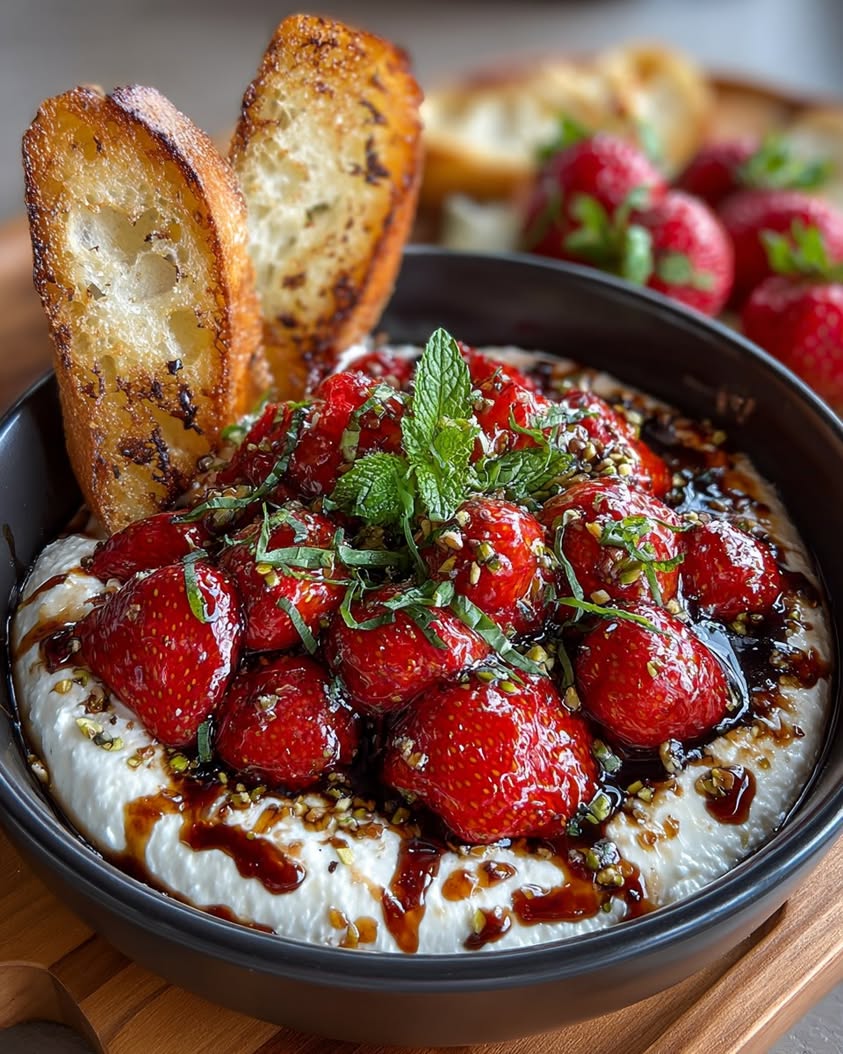
Whipped Feta with Roasted Strawberries & Balsamic: The Ultimate Sweet & Savory Appetizer
Imagine a dish that perfectly balances creamy, salty, sweet, and tangy notes in every single bite. That is exactly what you get with this stunning Whipped Feta with Roasted Strawberries & Balsamic. This appetizer is not just food; it is a conversation starter, a centerpiece for your table that promises to wow your guests from the very first glance. The process transforms simple ingredients into something truly magical, making it look like you spent hours in the kitchen when the reality is beautifully simple.
The magic of this Whipped Feta with Roasted Strawberries lies in the contrast. You start with rich, tangy feta cheese, whipped into a cloud-like spread that is impossibly smooth. Then, you top it with juicy strawberries roasted until they burst, their natural sugars caramelizing into a jammy perfection. A drizzle of syrupy balsamic glaze adds a final punch of acidity and sweetness. Served with crusty bread or crackers, this dish is an unforgettable experience for your taste buds.
Furthermore, this recipe is incredibly versatile. You can serve it as a chic appetizer at a dinner party, a luxurious snack for a cozy night in, or even as part of a beautiful brunch spread. The vibrant red of the strawberries against the white feta creates a visually stunning dish that is almost too pretty to eat. Ultimately, this Whipped Feta with Roasted Strawberries recipe is your secret weapon for effortless, impressive entertaining.
Quick Recipe Highlights
- Flavor Profile: This dish masterfully combines the salty, tangy punch of whipped feta with the deep, caramelized sweetness of roasted strawberries. The balsamic reduction adds a complex acidity that ties everything together, creating a harmonious balance that is both sophisticated and utterly craveable.
- Texture: Experience a delightful contrast between the luxuriously smooth, airy texture of the whipped feta and the soft, jammy consistency of the warm roasted strawberries. Each scoop onto a crisp crostini offers a perfect symphony of creamy, juicy, and crunchy elements.
- Aroma: As the strawberries roast, your kitchen will fill with a sweet, fruity fragrance underscored by the warm hint of thyme. The tangy scent of the feta and the rich, syrupy aroma of reducing balsamic vinegar complete this irresistible olfactory experience.
- Visual Appeal: The presentation is stunning. The bright white, fluffy bed of whipped feta provides a beautiful canvas for the glossy, deep red strawberries and the dark drizzle of balsamic glaze. Fresh thyme leaves add a final touch of green, making it a picture-perfect dish.
- Skill Level Needed: This is a beginner-friendly recipe that requires no advanced techniques. Essentially, if you can operate a food processor and a baking sheet, you can create this gourmet-level appetizer. It is perfect for building confidence in the kitchen.
- Special Equipment: You will need a food processor or high-powered blender to achieve the perfectly smooth texture for the whipped feta. Additionally, a baking sheet for roasting the strawberries and a small saucepan for reducing the balsamic are the only other key tools.
Recipe Overview
- Difficulty Level: We classify this Whipped Feta with Roasted Strawberries as an easy recipe. The steps are straightforward: chop, roast, blend, and assemble. There is no fussy timing or precise baking science involved. Consequently, even novice cooks can achieve spectacular results with minimal stress, making it a reliable go-to for any event.
- Category: This dish falls perfectly into the appetizer and snack category. It is ideal for sharing and grazing. Moreover, it can easily double as a luxurious cheese course or a unique addition to a brunch or picnic spread, showcasing its wonderful flexibility.
- Cuisine: While feta cheese hails from Greek cuisine and the combination of fruit with cheese is common in Mediterranean cooking, this specific recipe is a modern fusion creation. It takes inspiration from these traditions but presents them in a contemporary, visually-driven way that fits any table.
- Cost: This is a relatively affordable appetizer to make, especially when strawberries are in season. Feta cheese, olive oil, and balsamic vinegar are pantry staples for many. Therefore, you can create a dish that tastes and looks expensive without breaking the bank, which is a major win.
- Season: Peak strawberry season in late spring and early summer is the absolute best time to make this. However, thanks to the roasting process which intensifies flavor, you can successfully use good-quality strawberries year-round. For a winter variation, try using roasted grapes or figs.
- Occasion: This Whipped Feta with Roasted Strawberries is perfect for so many events. Think bridal showers, holiday parties, date nights at home, or casual gatherings with friends. Its elegant appearance makes it special, while its easy preparation keeps the host relaxed and engaged with guests.
Why You’ll Love This Recipe
First and foremost, the taste and texture appeal is off the charts. The whipped feta with roasted strawberries delivers a party in your mouth with every single bite. The initial salty creaminess of the feta gives way to the warm, sweet burst of strawberry, followed by the tangy finish of balsamic. This combination is unexpectedly addictive. You will find yourself and your guests going back for just one more scoop, until suddenly the bowl is empty. The contrast is simply that good.
Next, consider the sheer convenience and preparation benefits. This entire stunning dish comes together in about forty minutes with very little hands-on time. You can roast the strawberries and whip the feta simultaneously. Furthermore, many components can be prepared ahead of time. This means you can spend your energy on other parts of your meal or, better yet, enjoying your company instead of being stuck in the kitchen. It is the definition of a high-reward, low-effort recipe.
Additionally, there are some genuine nutritional advantages to this appetizer. Feta cheese is a good source of calcium and protein. Strawberries are packed with vitamin C, antioxidants, and fiber. When you choose whole-grain crackers or bread for serving, you add even more fiber and complex carbohydrates. Compared to many heavy, fried appetizers, this option feels light and satisfying without sacrificing an ounce of flavor. It is a choice you can feel good about.
From a social perspective, the entertaining value is immense. This Whipped Feta with Roasted Strawberries acts as a beautiful centerpiece that encourages sharing and conversation. It looks like it came from a fancy restaurant, instantly elevating the vibe of your gathering. People are always impressed by unique flavor pairings, and this dish provides exactly that. It shows thoughtfulness and care, making your guests feel special and well-hosted.
Finally, the cost-effectiveness and accessibility are major wins. You do not need any rare or expensive ingredients. The star components—feta, strawberries, balsamic vinegar—are readily available at any grocery store. For a relatively small investment, you create a dish that feels luxurious and abundant. This makes it perfect for feeding a crowd without straining your budget, proving that impressive entertaining does not have to be expensive.
Historical Background and Cultural Significance
The story of this dish begins with its individual components, each with a rich history. Feta cheese, the star, is one of the oldest cheeses in the world, with origins deeply rooted in Greece. Historically, the practice of preserving sheep and goat milk in brine dates back thousands of years. The very name “feta,” which means “slice” in Greek, was officially recognized in the 20th century and is now a Protected Designation of Origin (PDO) product. This ensures that only cheese made in specific regions of Greece using traditional methods can bear the name.
Meanwhile, pairing cheese with fruit is a tradition spanning countless cultures. The ancient Romans enjoyed cheese with figs and honey. In the Mediterranean and Middle East, combining salty cheese with sweet elements like dates or syrup is commonplace. The concept of “whipping” or blending feta into a spread is a more modern interpretation, likely born from the global popularity of dips like hummus and tzatziki. It takes a familiar, crumbly cheese and transforms it into something spreadable and luxurious.
The use of balsamic vinegar, specifically, adds another layer of cultural significance. Traditional Aceto Balsamico Tradizionale comes from Modena, Italy, and is aged for years, even decades, in wooden casks. It is treated more like a fine wine than a simple condiment. While most home cooks use a more affordable, commercially produced balsamic glaze, the principle remains: the sweet, complex acidity of reduced vinegar has long been used to enhance fruits, cheeses, and meats in Italian cuisine, bridging flavors beautifully.
Therefore, this recipe for Whipped Feta with Roasted Strawberries is a beautiful fusion of these ancient traditions. It marries the pastoral cheese-making heritage of Greece with the Italian art of vinegar reduction and the universal love of sweet and savory pairings. It represents how modern cooking often looks to the past for inspiration, then reinterprets those classics with contemporary techniques and presentation. It is a dish that honors history while feeling entirely fresh and new.
Ingredient Deep Dive
Let us start with the feta cheese. Authentic Greek feta is made from at least 70% sheep’s milk, often blended with goat’s milk, giving it a distinctive tangy and salty flavor with a creamy yet crumbly texture. Nutritionally, it is a good source of calcium, protein, and beneficial fats. When selecting feta, look for blocks packed in brine, as they stay moist and flavorful. For the creamiest whipped texture, let the feta come to room temperature before blending. If you need a substitute, a firm ricotta salata or a creamy goat cheese can work, though the flavor profile will shift.
Next, the strawberries. These beloved berries are not true berries botanically, but rather “aggregate accessory fruits.” They are renowned for their high vitamin C and antioxidant content, particularly ellagic acid. For roasting, you want ripe, fragrant strawberries, but they do not need to be perfect. In fact, roasting is a brilliant way to use berries that are slightly past their prime for eating fresh. Hull and halve them evenly so they roast at the same rate. Avoid frozen strawberries here, as they will release too much water.
Now, consider the balsamic vinegar. For a glaze, you can either reduce a good-quality balsamic vinegar with a little honey or sugar until syrupy, or purchase a ready-made balsamic glaze. The reduction process concentrates the vinegar’s natural sugars and acidity, creating a complex sweet-tart flavor that is less harsh than straight vinegar. A high-quality glaze will have a thicker, more luxurious consistency. If you do not have balsamic, a reduction of red wine vinegar with a touch of honey can provide a similar, though different, acidic-sweet note.
Finally, the supporting cast: olive oil, fresh thyme, and honey. Use a good extra-virgin olive oil for both roasting the strawberries and blending into the feta. Its fruity, peppery notes are integral to the Mediterranean flavor profile. Fresh thyme adds an earthy, aromatic quality that complements the sweetness of the fruit beautifully. Do not use dried thyme here; the fresh herb is essential. The honey, used in the strawberry roasting, enhances caramelization and adds floral sweetness. You can adjust the amount based on the natural sweetness of your berries.
Common Mistakes to Avoid
- Using Cold Feta: Trying to whip cold, hard feta straight from the fridge will result in a grainy, uneven texture. Always allow your feta to sit at room temperature for at least 30 minutes before blending. This softens the fats and allows for a perfectly smooth, cloud-like consistency.
- Overcrowding the Baking Sheet: When roasting the strawberries, give them space. If you pile them on top of each other, they will steam instead of roast. You want the edges to caramelize and the juices to concentrate. Use a large enough sheet and spread the berries in a single layer for the best results.
- Skipping the Balsamic Reduction: Simply drizzling plain balsamic vinegar over the finished dish will be too sharp and acidic. Taking the time to simmer it into a syrup concentrates the flavor and adds a necessary sweetness that balances the dish. This step is non-negotiable for flavor harmony.
- Over-processing the Feta: Once the feta is smooth and creamy, stop blending. Over-processing can sometimes cause the fats to separate or the mixture to become too loose. Pulse the food processor and check the texture frequently until it is spreadable but still holds its shape.
- Using Low-Quality Olive Oil: Since olive oil is a key flavor component in both the whip and the roast, a bland or rancid oil will let the whole dish down. Use a fresh, fruity extra-virgin olive oil that you enjoy the taste of on its own.
- Forgetting to Season the Strawberries: Even sweet roasted fruit needs seasoning. A tiny pinch of salt and black pepper with the strawberries before roasting heightens all their natural flavors and prevents the dish from being one-dimensionally sweet.
- Serving Straight from the Fridge: The beauty of this dish is in the temperature contrast. The whipped feta should be cool and the strawberries should be warm or at room temperature. Serving everything ice-cold mutes the flavors and ruins the luxurious texture of the feta.
- Choosing the Wrong Dipping Vehicle: Flimsy crackers will snap under the weight of the toppings. Opt for sturdy, toasted baguette slices (crostini), thick pita chips, or crisp flatbreads that can support a generous scoop without breaking.
Essential Techniques
Mastering the whip is your first essential technique. The goal is to transform crumbly feta into a silky, airy spread. Start with room-temperature feta and good olive oil. Process them in a food processor, scraping down the sides as needed. The key is patience; let the machine run for a full minute or two. You will see the texture change from coarse crumbs to a smooth, almost mousse-like consistency. If it seems too thick, add olive oil one teaspoon at a time. The visual cue for success is a completely homogeneous, pale, and fluffy mixture that holds soft peaks.
Next, perfecting the roast is crucial. Roasting strawberries intensifies their sweetness and creates a jammy texture. The technique involves tossing halved berries with oil, honey, and seasoning, then spreading them in a single layer on a parchment-lined sheet. Roast at a high heat (around 400°F) until the berries are soft, their juices have thickened, and the edges are just beginning to caramelize. The common pitfall is under-roasting, which leaves the berries watery. You want them to look collapsed and glossy, with a syrup forming in the pan.
Finally, reducing the balsamic glaze requires attention. In a small saucepan, simmer balsamic vinegar (and a touch of honey if using plain vinegar) over medium-low heat. Do not walk away, as it can go from syrupy to burnt quickly. Swirl the pan occasionally. It is done when it has reduced by about half and coats the back of a spoon. It will continue to thicken as it cools. The importance here is flavor concentration; reducing removes the harsh vinegar bite and leaves behind a complex, sweet-tart syrup that beautifully bridges the cheese and fruit.
Pro Tips for Perfect Whipped Feta with Roasted Strawberries
For an ultra-luxe texture, add a tablespoon of full-fat Greek yogurt or cream cheese to the feta while blending. This adds an extra layer of creaminess and helps stabilize the whip, making it even smoother.
Enhance the flavor of the strawberries by adding a strip of lemon zest or a vanilla bean pod to the sheet pan while they roast. These subtle aromatic notes will infuse the berries with incredible depth.
If your balsamic reduction becomes too thick as it cools, simply stir in a few drops of warm water to loosen it back to a drizzling consistency. This prevents it from becoming a sticky candy on your beautiful dish.
Toast your bread or crackers for serving. This not only prevents sogginess but also adds a necessary crunch and nutty flavor that contrasts the creamy feta and soft berries perfectly.
Garnish with more than just thyme. Try a sprinkle of crushed pistachios for crunch, a few flakes of sea salt (like Maldon) on top, or some fresh mint leaves for a bright, cooling element.
Make the components ahead but assemble just before serving. You can whip the feta and roast the strawberries a few hours in advance. Store separately, then let the strawberries come to room temp and spread the feta into your serving bowl right before your guests arrive.
Use the leftover strawberry-balsamic juices from the roasting pan. After roasting, you will have a delicious syrup in the pan. Drizzle every last bit of this over the assembled dish; it is packed with concentrated flavor.
Experiment with different acids. Instead of balsamic, try a pomegranate molasses drizzle for a fruitier tang, or a reduced red wine sauce for a deeper, wine-infused flavor profile.
Variations and Adaptations
For regional variations, look to other cheese and fruit pairings from around the world. A French-inspired version could use whipped goat cheese (chèvre) with roasted figs and a honey-thyme drizzle. A Middle Eastern twist might involve adding a sprinkle of za’atar to the whipped feta and using roasted dates or apricots instead of strawberries.
Seasonal adaptations are easy and encouraged. In fall, swap strawberries for roasted grapes, diced apples, or pears. Winter calls for roasted citrus segments or persimmons. Spring is perfect for roasted rhubarb or apricots. Each fruit brings its own unique sweetness and acidity to play with the salty feta.
For dietary modifications, a vegan version is very achievable. Use a high-quality vegan feta alternative (often made from tofu or almonds) and blend it with olive oil and a splash of lemon juice. Ensure your bread or crackers are vegan-friendly. The roasting process for the strawberries remains the same, using maple syrup instead of honey.
Flavor variations can come from infusing the olive oil or the whip itself. Gently warm your olive oil with rosemary, garlic, or chili flakes before blending it into the feta. You could also fold in finely chopped sun-dried tomatoes or Kalamata olives into the whipped feta for a savory, tapenade-like twist.
Texture modifications can cater to different preferences. If you prefer a chunkier, more rustic feel, only pulse the feta a few times instead of blending it smooth. For the strawberries, you can leave them whole if they are small, or chop them more finely for a compote-like topping that integrates more easily.
Presentation alternatives are endless. Instead of one large bowl, serve individual portions in small ramekins or on toasted bread rounds pre-assembled as canapés. You can also layer the components in a clear glass trifle dish for a stunning vertical presentation that shows off the beautiful colors.
Serving and Presentation Guide
Plating techniques start with your vessel. Choose a wide, shallow bowl or a beautiful rustic board. Spread the whipped feta in a thick, even layer, creating swoops and valleys with the back of a spoon to catch the toppings. This texture makes the dish look more abundant and inviting. Center your serving dish on the table for easy access from all sides.
Garnishing is the final touch of artistry. After spooning the warm roasted strawberries over the feta, drizzle the balsamic glaze in zig-zags or concentric circles. Then, scatter fresh thyme leaves, mint, or basil over the top. A final drizzle of your best olive oil and a light sprinkle of flaky sea salt adds shine and a flavor pop.
For traditional accompaniments, warm, crusty bread is non-negotiable. Slice a baguette on a bias, brush with olive oil, and toast until golden. Alternatively, offer a selection of sturdy crackers, grilled pita wedges, or even crisp endive leaves and cucumber rounds for a low-carb option. Provide a small spreading knife for ease.
Modern serving suggestions might include setting this out as part of a larger grazing board. Surround it with bowls of olives, marinated artichokes, cured meats, and nuts. You can also use it as a sophisticated topping for grilled chicken or fish, transforming it from an appetizer to a main course component.
Temperature considerations are key. The whipped feta should be cool and firm. The roasted strawberries should be warm or at room temperature to maximize their aromatic release. This contrast is part of the magic. Avoid serving either component piping hot or ice cold.
Portion control tips are simple: this recipe generously serves six as an appetizer. If serving as part of a larger spread with many other items, it could stretch to eight. A good rule of thumb is to plan for about 1/3 to 1/2 cup of the total spread per person when it’s a featured item.
Wine and Beverage Pairing
Wine pairings for this dish should complement its sweet, salty, and tangy profile. A sparkling wine like Prosecco or Cava is fantastic; the bubbles cut through the richness of the cheese and refresh the palate. A slightly sweet Riesling or Gewürztraminer mirrors the fruitiness of the strawberries and balances the saltiness. For red wine lovers, a light, fruity Pinot Noir with low tannins works beautifully without overpowering the delicate flavors.
Non-alcoholic alternatives can be just as thoughtful. A sparkling elderflower cordial with soda water offers floral notes that pair wonderfully with the strawberries. A tart cherry or pomegranate spritzer echoes the fruit and balsamic elements. Even a simple glass of chilled, high-quality sparkling water with a twist of lemon or lime cleanses the palate between bites perfectly.
While not a classic coffee or tea dish, certain pairings could work if serving this at brunch. A light roast coffee with bright acidity would complement the balsamic notes. For tea, a fruity herbal infusion like strawberry-rhubarb or a delicate white tea would not compete with the complex flavors of the Whipped Feta with Roasted Strawberries.
Temperature is crucial for beverages. Serve all drinks well-chilled. The coolness provides a refreshing contrast to the potentially warm strawberries and the rich cheese. Have plenty of ice on hand, especially for sparkling waters and non-alcoholic spritzers, to keep everything crisp and inviting.
Finally, serving suggestions matter. Offer a variety of beverages if possible to cater to different preferences. Clearly label non-alcoholic options. Present drinks in elegant glassware to match the sophisticated feel of the appetizer itself, completing the immersive and enjoyable dining experience.
Storage and Shelf Life
Storage methods require keeping the components separate for best results. Store the whipped feta in an airtight container in the refrigerator for up to 4 days. Place a piece of plastic wrap directly on the surface to prevent it from drying out. The roasted strawberries can be stored in their juices in a separate container in the fridge for 3-4 days.
Temperature requirements are straightforward: refrigeration is a must for both components due to the dairy and fresh fruit. Do not leave the assembled dish at room temperature for more than two hours. For serving, take only what you plan to consume immediately out of the fridge to maintain food safety and optimal texture.
Container recommendations include glass jars or containers with tight-fitting lids. For the strawberries, a container that holds their syrupy juices is ideal. Avoid storing the whipped feta in a container that is too large, as excess air space will cause it to oxidize and dry out more quickly.
Signs of spoilage are easy to spot. For the feta, look for any off smells (sour or ammonia-like), significant discoloration, or mold. The strawberries may develop a fermented smell or visible fuzzy mold. If in doubt, throw it out. The balsamic glaze, being a reduction of vinegar and sugar, has a very long shelf life when stored in a sealed container at room temperature.
Reheating instructions apply only to the strawberries. Gently warm them in a microwave or on the stovetop over low heat until just warmed through. Do not overheat, as they can become mushy. Never reheat the whipped feta, as it can separate and become greasy. Serve it cool.
Freezing is not recommended for this dish. The whipped feta will separate and become grainy upon thawing. The strawberries will lose their texture and become watery. This recipe is best enjoyed fresh or stored in the fridge for a few days.
Make Ahead Strategies
Your prep timeline can be stretched over two days. On Day 1, you can make the balsamic glaze and store it at room temperature. You can also wash, hull, and halve the strawberries, storing them in a container in the fridge. On the day of serving, up to 4 hours ahead, roast the strawberries and let them cool to room temp. Whip the feta and store it covered in the fridge. Then, simply assemble 30 minutes before your guests arrive.
Storage between steps is simple with proper planning. Keep all components in their own sealed containers. If the whipped feta tightens up in the fridge, let it sit at room temperature for 15 minutes and give it a quick stir before spreading. Let the roasted strawberries come fully to room temperature so they don’t chill the feta upon assembly.
The quality impact assessment is positive. Making elements ahead often improves flavors. The balsamic glaze’s flavor deepens. The whipped feta’s texture settles and becomes even creamier. The strawberries’ juices further meld with the honey and thyme. Essentially, a little rest time allows the flavors to marry beautifully.
Assembly tips for last-minute perfection: Spread the feta in your serving dish. Use a slotted spoon to transfer the strawberries onto the feta, allowing excess syrup to drain slightly (reserve it!). This prevents the feta from becoming too watery. Then, drizzle the reserved strawberry syrup and the balsamic glaze over the top for maximum flavor impact.
Reheating guidelines only apply to the strawberries if you made them hours ahead and they are cold. A brief 15-second zap in the microwave or a warm water bath for the container is enough to take the chill off. They should be pleasantly warm or room temperature, not hot.
Fresh element additions are your final flourish. Always add your fresh herb garnish (thyme, mint, basil) right before serving so they look vibrant and retain their aromatic oils. A last-minute drizzle of fresh olive oil and a sprinkle of salt also adds a burst of fresh flavor just as you present the dish.
Scaling Instructions
Halving the recipe is straightforward for a smaller gathering. Use 4 ounces of feta, 1/2 pound of strawberries, and halve all other ingredients. The roasting time may decrease slightly, so check the strawberries at the 15-minute mark. Use a smaller food processor bowl if you have one for whipping the smaller amount of feta more effectively.
Doubling or tripling for a crowd is easy, but requires attention to equipment. You may need to roast the strawberries in batches on multiple sheet pans to avoid steaming. For whipping the feta, you may need to do it in batches if your food processor is small. Combine the batches in a large bowl and whisk briefly to ensure consistency.
Equipment adjustments are key when scaling. For a double batch, ensure you have a large enough serving platter or consider using two separate bowls for better crowd access. Have multiple spreading knives ready. If tripling, a stand mixer with a paddle attachment can be more effective than a food processor for whipping large quantities of feta.
Timing modifications are minimal. The strawberry roasting time may increase by 5-10 minutes for a double batch if the pans are very full, as they will release more moisture. Keep an eye on them and roast until the juices are thickened, not just until the timer goes off.
Storage considerations remain the same: store components separately in the fridge. Scaling up means you’ll have more leftovers, but they will keep just as well. Clearly label containers with the date. Remember, the assembled dish should not sit out for extended periods, so only put out a portion of the total at a time for food safety.
Nutritional Deep Dive
A macro breakdown for a serving (approximately 1/6 of the recipe without bread) might include: moderate fat from the feta and olive oil, a good amount of protein from the cheese, and carbohydrates primarily from the strawberries and honey. It is not a low-calorie dish, but it is nutrient-dense. The fats are largely unsaturated from the olive oil, which is beneficial for heart health.
The micronutrient analysis is promising. Feta provides calcium, phosphorus, vitamin B12, and riboflavin. Strawberries are an excellent source of vitamin C, manganese, folate, and potassium. The thyme and olive oil contribute antioxidants and anti-inflammatory compounds. Together, they create a dish with more nutritional value than many typical appetizers.
Specific health benefits include bone support from the calcium in feta, improved immune function from the vitamin C in strawberries, and heart-healthy fats from the olive oil. The fiber in the strawberries and any whole-grain serving vehicle aids digestion. The combination of protein and fat also promotes satiety, helping to prevent overeating.
Dietary considerations are important to note. This dish is naturally gluten-free if served with gluten-free crackers. It is vegetarian. However, it is not suitable for a strict vegan, dairy-free, or paleo diet without significant modifications. Those on a low-sodium diet should be mindful, as feta is a salty cheese.
Portion analysis is your friend for enjoyment without overindulgence. A serving is about 1/3 to 1/2 cup of the spread itself. Pair it with plenty of vegetable crudités like bell pepper strips or cucumber rounds to increase volume and nutrients without adding many calories, balancing out the richer cheese component.
Weight management tips include being mindful of what you dip. Choosing vegetable sticks over bread or crackers significantly reduces the calorie and carb load of the snack. You can also use a lighter hand with the olive oil in the whip or increase the ratio of strawberries to feta for a fruit-forward, slightly lighter version.
Dietary Adaptations
For a gluten-free version, this recipe is naturally compliant as written. The critical step is ensuring your serving vehicle is gluten-free. Opt for certified gluten-free crackers, toasted gluten-free bread, or simply use vegetable crudités for dipping. Always check labels on pre-made balsamic glazes, as some may contain additives with gluten.
A dairy-free adaptation requires a quality vegan feta alternative. Brands made from almonds, tofu, or coconut oil are widely available. Blend it with olive oil and a splash of lemon juice or aquafaba (chickpea brine) to achieve a whipped consistency. The roasting process for the strawberries remains identical, using maple syrup instead of honey to keep it vegan.
To make this vegan, follow the dairy-free instructions above and also ensure your sweetener is plant-based (maple syrup or agave instead of honey). Check that your bread or crackers are vegan (no dairy, eggs, or honey). The dish will have a different but still delicious flavor profile with the tangy, salty notes from the vegan feta.
A low-carb or keto version focuses on modifications. Use a full-fat feta and increase the olive oil slightly for fat content. Reduce or omit the honey in the strawberry roasting; the berries will still caramelize from their own sugars. Serve the spread on keto-friendly crackers, sliced radishes, or endive leaves instead of bread to keep carbs in check.
For a Paleo adaptation, you face challenges with the dairy. Substitute the feta with a whipped version of a paleo-friendly “cheese” made from cashews or macadamia nuts, nutritional yeast, and lemon juice. Ensure your olive oil is high-quality and your sweetener is paleo-approved, like raw honey or pure maple syrup in moderation.
A Low-FODMAP version requires careful ingredient selection. Feta cheese is typically low-FODMAP in servings of 40g or less per sitting. Strawberries are low-FODMAP. Replace honey with maple syrup, which is low-FODMAP in tablespoon servings. Use garlic-infused oil (without actual garlic pieces) if you want that flavor, and omit regular garlic entirely. Serve with suitable low-FODMAP crackers.
Troubleshooting Guide
If your whipped feta is grainy, the feta was likely too cold or not processed long enough. Solution: Let it come to room temperature and process again, scraping down the sides. Add a teaspoon of very cold water or a dollop of yogurt while blending; this can sometimes help emulsify the fats and create a smoother texture.
If the flavor balance seems off—too salty, too sweet, or too tangy—you can adjust post-assembly. For excessive saltiness from the feta, add a bigger drizzle of honey or balsamic glaze to the finished dish to counter it. If it’s too sweet, a sprinkle of flaky sea salt and black pepper on top can bring back savory balance. A squeeze of fresh lemon juice can brighten a dish that tastes flat.
Temperature problems usually involve the feta being too hard or the strawberries being cold. If the feta is stiff, let it sit out briefly. If the strawberries are fridge-cold, warm them gently. The goal is a cool, spreadable cheese with a warm or room-temperature fruit topping. This contrast is part of the sensory appeal and corrects many texture issues.
Equipment challenges often involve not having a food processor. A high-powered blender can work, but you may need to scrape down the sides more frequently. In a pinch, you can mash room-temperature feta vigorously with a fork and then whisk in olive oil until as smooth as possible. It will be more rustic but still delicious.
For failed balsamic reduction that is too thin or too thick, don’t panic. If it’s too thin, simply return it to the heat and simmer longer. If it’s too thick and sticky, whisk in a teaspoon of warm water at a time until it reaches a drizzling{“success”:true,”message”:”Recipe created successfully”,”post_id”:9265,”tasty_recipe_id”:9265,”shortcode”:”“}

I’m Billy, a classically trained culinary school graduate from The Culinary Institute of America with over 12 years in the restaurant industry and over 19 years of cooking experience.