
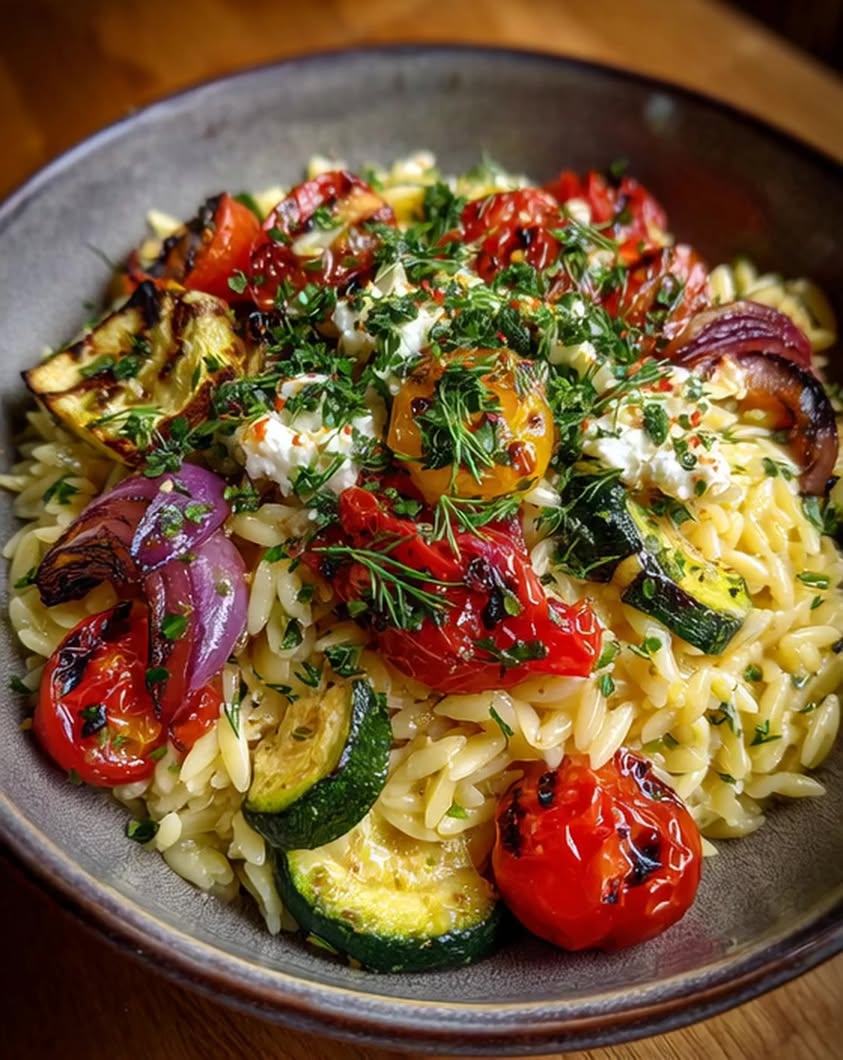
Orzo Bowl with Feta Roasted Veggies and Herbed Dressing: Your New Favorite Meal Prep Hero
Imagine a dish that perfectly balances creamy, tangy, and savory notes with a satisfying mix of textures. This Orzo Bowl with Feta Roasted Veggies and Herbed Dressing is exactly that. It is a vibrant, one-pan wonder that transforms simple ingredients into a spectacular meal. Consequently, it is perfect for busy weeknights, impressive enough for guests, and ideal for meal prep. The magic happens when sweet roasted vegetables mingle with salty feta and tender orzo, all brought together by a bright, herbaceous dressing.
This recipe celebrates the beauty of Mediterranean flavors. Each component plays a crucial role. For instance, roasting caramelizes the vegetables, deepening their natural sweetness. Meanwhile, the feta cheese becomes wonderfully soft and slightly golden. The orzo, a rice-shaped pasta, provides a comforting, pillowy base that soaks up all the delicious juices. Ultimately, the fresh herbed dressing ties everything together with a burst of lemon and herbs. This Orzo Bowl with Feta Roasted Veggies is not just food; it is a colorful, flavorful experience.
Furthermore, this dish is incredibly versatile. You can easily adapt it based on the season or what you have in your pantry. It is a complete meal in a bowl, packed with vegetables, whole grains, and protein from the cheese. Whether you are a seasoned cook or a beginner, this recipe delivers restaurant-quality results with minimal effort. Let us dive into why this Orzo Bowl with Feta Roasted Veggies should be your next kitchen project.
Quick Recipe Highlights
- Flavor Profile: This bowl delivers a harmonious blend of savory, tangy, and sweet notes. The roasted vegetables offer a deep, caramelized sweetness that contrasts beautifully with the salty, creamy feta cheese. Additionally, the lemon-herb dressing adds a necessary bright and acidic punch that lifts the entire dish.
- Texture: You will enjoy a wonderful contrast of textures in every bite. The roasted veggies are tender with slightly crispy edges, while the orzo pasta is soft and chewy. The crumbled feta provides little pockets of creamy saltiness, creating a truly satisfying mouthfeel.
- Aroma: As it cooks, your kitchen will fill with the irresistible scent of roasting garlic and onions, mingled with earthy herbs. The final drizzle of the fresh herbed dressing releases a final burst of citrus and parsley that makes the dish smell as good as it tastes.
- Visual Appeal: This bowl is a feast for the eyes with its vibrant colors. Think deep golden roasted peppers, orange sweet potatoes, and green zucchini, all tossed with white orzo and creamy feta. It is a colorful mosaic that looks stunning on any table.
- Skill Level Needed: This is a beginner-friendly recipe that requires basic kitchen skills like chopping, roasting, and boiling pasta. There is no fancy technique required, making it accessible for cooks of all levels. The process is straightforward and forgiving.
- Special Equipment: You only need standard kitchen tools: a large sheet pan for roasting, a pot for boiling the orzo, and a small bowl for whisking the dressing. A good chef’s knife for chopping vegetables is helpful but not specialized.
Recipe Overview
- Difficulty Level: We rate this recipe as “Easy” because it involves fundamental techniques most home cooks use regularly. The steps are sequential and simple: chop vegetables, roast them, cook pasta, and make a dressing. There is no complex timing or advanced culinary methods required for success.
- Category: This dish fits perfectly into several categories. It is a hearty vegetarian main course, a fantastic side dish for grilled meats, and an excellent packed lunch option. Moreover, it belongs to the popular “bowl food” trend, offering a complete and balanced meal in one vessel.
- Cuisine: The flavors are inspired by Mediterranean and Greek cuisine, known for their emphasis on fresh vegetables, olive oil, herbs, and cheese. The use of feta, lemon, oregano, and olive oil is classic to the region. This recipe modernizes those traditions in a convenient bowl format.
- Cost: This is a budget-friendly meal. Orzo and vegetables like bell peppers and zucchini are typically inexpensive, especially in season. Feta cheese is a cost-effective way to add protein and flavor. Overall, you can create four generous servings for a very reasonable price.
- Season: This Orzo Bowl with Feta Roasted Veggies shines in late summer and early fall when bell peppers, zucchini, and onions are at their peak. However, it is adaptable year-round using sturdy winter vegetables like sweet potatoes, carrots, and Brussels sprouts.
- Occasion: It is incredibly versatile for different occasions. Serve it as a simple family dinner, pack it for a picnic or potluck, or present it as part of a buffet for entertaining. It is equally suitable for a casual meal or a more dressed-up gathering.
Why You’ll Love This Recipe
First and foremost, the taste and texture are utterly irresistible. Each forkful delivers a complex symphony of flavors. The roasted vegetables become intensely sweet and tender, creating a perfect base. Then, the salty, tangy feta cheese cuts through that richness. Finally, the herbed dressing with lemon adds a necessary freshness that prevents the dish from feeling heavy. The combination of soft orzo, creamy cheese, and tender veggies is comfort food at its finest, yet it feels light and wholesome.
From a convenience standpoint, this recipe is a true weeknight hero. Much of the cooking is hands-off roasting time. You can chop the vegetables and whisk the dressing while the veggies are in the oven. Furthermore, everything comes together in about 45 minutes from start to finish. The cleanup is also minimal, especially if you use parchment paper on your sheet pan. This efficiency makes it an ideal choice after a long workday when you want something delicious without spending hours in the kitchen.
Nutritionally, this Orzo Bowl with Feta Roasted Veggies packs a powerful punch. It is loaded with vitamins and antioxidants from the colorful array of vegetables. The orzo provides carbohydrates for energy, while the feta offers protein and calcium. Using olive oil in the roasting and dressing adds heart-healthy monounsaturated fats. This balance makes the dish satisfying and nourishing. It is a meal that fuels your body without leaving you feeling sluggish.
For social and entertaining value, this bowl is a superstar. It is visually stunning, making it perfect for sharing on social media or impressing dinner guests. You can easily double or triple the recipe to feed a crowd. Since it is served at room temperature or warm, it does not require last-minute fussing. You can prepare components ahead of time and assemble just before serving. This makes you a relaxed host, which is always the goal.
Finally, its cost-effectiveness and accessibility are major wins. The ingredients are common and affordable, available at any standard grocery store. You likely have many of the pantry staples like olive oil, dried oregano, salt, and pepper already. This accessibility means you can whip up this gourmet-tasting meal without a special trip to the store. It proves that eating well does not have to be expensive or complicated.
Historical Background and Cultural Significance
The origins of this dish are rooted in the broader traditions of Mediterranean peasant cooking. For centuries, cooks in Greece, Italy, and the Middle East have combined grains, local vegetables, cheese, and olive oil to create hearty, sustainable meals. Orzo itself, though shaped like rice, is a pasta with origins in Italy. Its name means “barley” in Italian, referencing its size and shape. The technique of roasting vegetables to concentrate their flavor is ancient and universal, but it is particularly celebrated in Mediterranean cuisine where wood-fired ovens were common.
Culturally, the combination of feta cheese with vegetables and herbs is quintessentially Greek. Feta, a brined curd cheese made from sheep’s milk or a sheep-goat blend, has been produced in Greece for thousands of years and has Protected Designation of Origin status. Dishes like “briam” (roasted vegetables) and horiatiki salad showcase the Greek love for fresh produce with feta. This Orzo Bowl with Feta Roasted Veggies is a modern, deconstructed take on those classic flavor pairings, incorporating the convenient pasta element for heartiness.
The evolution of this recipe mirrors contemporary food trends. The “grain bowl” or “power bowl” concept has exploded in popularity over the last decade, driven by a desire for healthy, portable, and Instagram-worthy meals. This recipe smartly adapts timeless Mediterranean ingredients into that modern format. It takes the family-style roasted vegetable platter and transforms it into an individual, composed meal. This evolution speaks to how traditional cooking constantly reinvents itself to fit new lifestyles while preserving core flavors.
Regional variations of this concept are endless. In the Eastern Mediterranean, one might find a similar bowl with couscous instead of orzo and halloumi instead of feta. In Southern Italy, the herbs might shift to basil and marjoram, with the addition of sun-dried tomatoes. The beauty of the formula—grain + roasted veg + cheese + dressing—is its incredible adaptability. This particular version with orzo and feta sits comfortably between Italian and Greek influences, creating a delicious fusion that feels both familiar and new.
Ingredient Deep Dive
Orzo is the foundation of this bowl. Despite its rice-like appearance, orzo is a form of short-cut pasta made from semolina wheat. It originates from Italy and is incredibly versatile, used in soups, salads, and pilafs. When cooked properly, it should be tender but still have a slight bite. For this recipe, cooking it al dente is crucial so it does not become mushy when mixed with the other ingredients. You can find it in the pasta aisle of any supermarket. For a gluten-free version, look for orzo made from brown rice or corn flour.
Feta Cheese is the star flavoring agent. Authentic Greek feta is made from at least 70% sheep’s milk, which gives it a tangy, slightly salty, and creamy texture. The brine preservation method is centuries old. Nutritionally, feta is a good source of calcium, protein, and probiotics. For this dish, buy a block of feta in brine rather than pre-crumbled cheese. The block will be creamier and less dry. Roasting it alongside the veggies allows it to soften and brown slightly, intensifying its savory flavor. If you need a dairy-free option, a firm tofu marinated in lemon juice and salt can provide a similar salty, crumbly texture.
The Vegetable Medley typically includes bell peppers, zucchini, and red onion. Bell peppers, especially red and yellow, are sweet and high in Vitamin C. Zucchini adds a mild, tender-crisp element and plenty of water content. Red onion becomes wonderfully sweet and jammy when roasted. The key is to cut all vegetables into uniform, bite-sized pieces to ensure even cooking. Do not overcrowd the pan, as this will steam the veggies instead of roasting them. You can easily swap in other vegetables like eggplant, cherry tomatoes, asparagus, or sweet potato based on the season.
The Herbed Dressing is what makes the dish sing. Extra virgin olive oil forms the base, providing fruity, peppery notes. Fresh lemon juice adds essential acidity to balance the richness. Fresh parsley and dried oregano are classic Mediterranean herbs that offer brightness and earthiness. Garlic, either minced or grated, provides a pungent backbone. Whisking the dressing vigorously emulsifies it, helping it coat every ingredient evenly. Always use fresh lemon juice, not bottled, for the brightest flavor. You can also add a teaspoon of Dijon mustard to help with emulsification and add a subtle sharpness.
Common Mistakes to Avoid
- Overcrowding the Sheet Pan: This is the most common error. If the vegetables are piled on top of each other, they will steam instead of roast. You need space for hot air to circulate and create those delicious caramelized edges. Use two pans if necessary.
- Underseasoning the Vegetables: Vegetables need a generous amount of salt and pepper before roasting. Season them well on the pan, not just in the dressing. The salt helps draw out moisture and enhances their natural flavors during the cooking process.
- Cooking the Orzo to Mushiness: Orzo cooks quickly and can go from perfect to overcooked in a minute. Always cook it al dente according to package directions, then drain and rinse briefly with cool water to stop the cooking. It will absorb dressing and veggie juices later.
- Using Pre-Crumbled Feta: Pre-crumbled feta is often coated in anti-caking agents and can be dry and chalky. For the best texture and flavor, buy a block of feta in brine and crumble it yourself just before adding it to the bowl.
- Skipping the Fresh Herbs: Dried herbs are fine for the roasting oil, but the dressing really needs fresh parsley. Dried parsley has little flavor. The fresh herb provides a crucial pop of color and a bright, clean taste that dried cannot replicate.
- Adding Dressing Too Early: If you mix the dressing into the hot orzo and vegetables immediately, the herbs can wilt and the lemon flavor can dull. Let the components cool slightly before combining everything. This keeps the dressing flavors vibrant.
- Not Tasting for Final Seasoning: After combining all elements, you must taste and adjust. You will likely need another pinch of salt or a squeeze of lemon. The flavors need to meld, and the seasoning level can change once everything is mixed together.
- Using Low-Quality Olive Oil: Since olive oil is a primary flavor in both the roasting and the dressing, using a bland or old oil will result in a bland dish. Invest in a decent bottle of extra virgin olive oil for recipes where it is a featured ingredient.
Essential Techniques
Uniform Vegetable Chopping is critical for even roasting. When pieces are different sizes, smaller ones will burn before larger ones are tender. Aim for 1-inch chunks. Use a sharp chef’s knife for clean cuts and safety. This consistency ensures that every vegetable on the pan finishes cooking at the same time, giving you a perfect mix of tender, caramelized bites throughout your Orzo Bowl with Feta Roasted Veggies.
High-Heat Roasting is the technique that builds deep flavor. Preheat your oven to a high temperature, around 425°F. The blast of heat causes the natural sugars in the vegetables to caramelize, creating complex, sweet, and savory notes. Do not stir the vegetables too often; let them sit undisturbed for the first 15-20 minutes to develop a good sear. The visual cue for success is golden-brown edges and slightly shrunken, tender flesh.
Emulsifying the Dressing is a simple but important step. Slowly whisking the lemon juice into the olive oil, along with the minced garlic and herbs, creates a temporary suspension. This emulsion helps the dressing cling to the orzo and vegetables instead of pooling at the bottom of the bowl. For a more stable emulsion, start with the lemon juice and mustard in the bowl, then very slowly drizzle in the oil while whisking constantly. The dressing should look slightly thickened and unified.
Pro Tips for Perfect Orzo Bowl with Feta Roasted Veggies
Roast your vegetables on parchment paper or a silicone baking mat. This prevents sticking and makes cleanup an absolute breeze. You will not have to scrub a pan, and you can easily transfer all the roasted goodness directly into your mixing bowl.
Reserve a little pasta water. Before draining the orzo, scoop out about a quarter cup of the starchy cooking liquid. If your finished bowl seems a bit dry, you can add a splash of this water to loosen it up and help the dressing coat everything beautifully.
Let the roasted vegetables cool slightly before combining. Adding piping hot veggies to the orzo can make the pasta gummy. A brief 5-10 minute rest allows their intense heat to dissipate, preserving the perfect texture of each component.
Add half the feta before mixing and half on top for presentation. Mixing in some feta allows its creaminess to melt slightly and flavor the entire bowl. Saving the rest to sprinkle on top gives visual appeal and little bursts of salty flavor in each bite.
Toast your orzo before boiling for a nuttier flavor. In a dry skillet over medium heat, stir the uncooked orzo until it turns light golden brown. Then proceed to boil it as usual. This adds a wonderful depth of flavor to the pasta itself.
Use the zest of the lemon in the dressing. Before you juice the lemon, use a microplane to remove the bright yellow zest. Adding this zest to the dressing intensifies the citrus aroma and flavor without additional acidity.
Variations and Adaptations
For regional variations, consider a Middle Eastern twist by using sumac and mint in the dressing and swapping feta for crumbled halloumi. An Italian version could feature sun-dried tomatoes, basil, and mozzarella pearls. The basic formula welcomes global influences, allowing you to travel with your taste buds using simple ingredient swaps.
Seasonal adaptations keep this bowl exciting year-round. In spring, use asparagus, peas, and leeks. Summer is perfect for tomatoes, corn, and eggplant. Fall calls for squash, Brussels sprouts, and mushrooms. Winter welcomes hearty roots like carrots, parsnips, and beets. Adjust roasting times slightly for denser vegetables.
Dietary modifications are straightforward. For a vegan Orzo Bowl, omit the feta and use a vegan cheese alternative or a handful of toasted nuts for crunch and protein. To make it gluten-free, use certified gluten-free orzo made from rice or corn. For a higher-protein version, add a can of rinsed chickpeas to the sheet pan for the last 10 minutes of roasting.
Flavor variations can come from the dressing. Try a pesto dressing instead of the lemon-herb vinaigrette. A tahini-lemon sauce would create a creamy, nutty profile. For a spicy kick, add red pepper flakes to the roasting oil or a dash of harissa to the dressing. Experimenting with different acids like red wine vinegar or balsamic can also change the character of the dish.
Serving and Presentation Guide
Plating techniques matter for visual appeal. For a family-style meal, mound the orzo in a large, shallow serving bowl. Artfully arrange the roasted vegetables and feta on top, then drizzle the dressing over everything. For individual servings, start with a base of orzo in each bowl, then layer the veggies and cheese. Finally, spoon the dressing around the edges or in a zig-zag pattern for a professional touch.
Garnishing adds the final flourish. A sprinkle of fresh chopped parsley, dill, or basil is classic. For texture, add a handful of toasted pine nuts, walnuts, or pumpkin seeds. A final grind of black pepper or a light dusting of smoked paprika adds color and depth. A few whole herb leaves placed strategically look beautiful.
Consider traditional accompaniments. This bowl is a complete meal, but it pairs wonderfully with a simple green salad dressed with lemon vinaigrette. For a more substantial spread, serve it alongside grilled chicken, fish, or lamb chops. A side of warm pita bread or crusty baguette is perfect for scooping up any remaining dressing and veggies.
Wine and Beverage Pairing
Wine pairings should complement the dish’s Mediterranean flavors. A crisp, dry white wine like Sauvignon Blanc or Pinot Grigio works beautifully. Their high acidity mirrors the lemon in the dressing and cuts through the richness of the feta. A Greek Assyrtiko is a fantastic regional choice. For red wine lovers, a light-bodied, low-tannin red like a Beaujolais or Pinot Noir can be served slightly chilled.
Non-alcoholic alternatives are just as important. Sparkling water with a wedge of lemon or lime is refreshing and cleansing. For a more crafted option, try a minty iced herbal tea or a lemonade infused with fresh basil. These drinks enhance the herby, citrus notes in the bowl without competing with them.
Storage and Shelf Life
Store leftovers in an airtight container in the refrigerator for up to 4 days. The flavors often meld and improve on the second day. Keep in mind that the orzo will continue to absorb moisture, so the texture will become softer over time. For best results, store the dressing separately if possible and add it just before serving.
This dish does not freeze well due to the texture of the orzo and roasted vegetables, which can become mushy upon thawing. The feta also does not freeze gracefully. It is best enjoyed fresh or refrigerated for a few days. For reheating, a quick zap in the microwave is fine, but bringing it to room temperature is often preferable to preserve textures.
Make Ahead Strategies
You can prep all components 1-2 days in advance. Roast the vegetables and let them cool completely before storing them separately in the fridge. Cook the orzo, rinse it with cool water, toss it with a tiny bit of oil to prevent sticking, and refrigerate. Make the dressing and store it in a jar. When ready to serve, let the components come to room temperature, then combine. Add fresh herbs as a final garnish to revive the bright flavors.
Scaling Instructions
This recipe scales beautifully. To halve it, simply divide all ingredients by two and use a smaller sheet pan. Cooking times may be slightly shorter, so check for doneness a few minutes early. To double or triple for a crowd, use multiple sheet pans and rotate them in the oven halfway through cooking. You may need to cook the orzo in batches to avoid overcrowding the pot. When scaling up, mix everything in a very large bowl or even a clean pot to ensure even distribution of dressing.
Nutritional Deep Dive
This Orzo Bowl with Feta Roasted Veggies offers a balanced macronutrient profile. The orzo provides complex carbohydrates for sustained energy. The vegetables contribute fiber, vitamins A and C, and antioxidants. The olive oil and feta cheese supply healthy fats. Feta also adds protein and calcium. A single serving is satisfying and nutrient-dense, making it an excellent choice for a main meal. For those monitoring calories, you can slightly reduce the amount of olive oil or feta without sacrificing core flavor.
Dietary Adaptations
For a gluten-free version, substitute the wheat orzo with an equal amount of gluten-free orzo made from rice, corn, or quinoa flour. Ensure all other ingredients, like dressings or spices, are certified gluten-free. The roasting process and assembly remain exactly the same.
To make this dish vegan, replace the feta cheese with a vegan feta alternative or use marinated, baked tofu cubes. For the dressing, ensure you are using a vegan-friendly sweetener if any is added. The result is still a flavorful, plant-powered bowl packed with vegetables and hearty pasta.
For a lower-carb adaptation, replace the orzo with cauliflower rice. Simply pulse cauliflower florets in a food processor until rice-sized, then sauté it in a pan until tender. You can also use a higher-protein, lower-carb pasta made from lentils or chickpeas. The vegetable and feta components remain wonderfully low-carb on their own.
Troubleshooting Guide
If your vegetables are soggy, you likely overcrowded the pan or did not roast at a high enough temperature. Next time, spread them in a single layer and ensure your oven is fully preheated. If they are burning, your pieces may be too small, or your oven rack is too high. Cut vegetables uniformly and roast in the center of the oven.
If the final bowl tastes bland, it almost always needs more salt or acid. Season in layers: salt the vegetables before roasting, salt the orzo water, and season the dressing. After combining, taste and add more salt, pepper, or a fresh squeeze of lemon juice until the flavors pop.
If the orzo is gummy or stuck together, it was likely overcooked or not rinsed after draining. Cook to al dente and give it a quick rinse under cool water to remove excess starch. Tossing it with a teaspoon of olive oil before adding other ingredients can also help keep the grains separate.
Frequently Asked Questions
Can I use a different cheese? Absolutely. Goat cheese, halloumi, or even fresh mozzarella would be delicious. If using halloumi, slice and pan-fry it until golden before adding to the bowl.
Is orzo a grain or pasta? Orzo is a pasta, shaped to look like a large grain of rice. It is made from semolina wheat flour, just like spaghetti or penne.
Can I make this ahead for meal prep? Yes, it is an excellent meal prep option. Store components separately for up to 4 days and combine when ready to eat for the best texture.
What protein can I add? For added protein, mix in grilled chicken, shrimp, chickpeas, or white beans. You can also top it with a fried or poached egg.
My dressing is separating, is that okay? Yes, it is a simple vinaigrette and may separate. Just give it a good shake or whisk right before drizzling it over the bowl.
Can I roast frozen vegetables? It is not recommended. Frozen vegetables release too much water when roasting, leading to a steamed, soggy result. Always use fresh vegetables for this recipe.
How do I prevent the feta from melting completely? Add the feta in the last 5 minutes of roasting, or simply crumble it over the bowl after everything is mixed. The residual heat will soften it without making it disappear.
What is the best way to reheat leftovers? Gently reheat in the microwave in 30-second intervals, stirring in between. Alternatively, enjoy it cold or at room temperature like a pasta salad.
Can I use dried parsley instead of fresh? For the dressing, fresh parsley is highly recommended for flavor and color. Dried parsley lacks the necessary brightness. In a pinch, use another fresh herb like dill or chives.
What can I use instead of lemon juice? Red wine vinegar or white wine vinegar are good substitutes. Start with a smaller amount, as vinegar can be sharper than lemon juice, and adjust to taste.
Additional Resources
If you loved this Orzo Bowl with Feta Roasted Veggies, explore other Mediterranean-inspired bowl recipes on our site. We have a fantastic Greek Quinoa Bowl and a Lemon Herb Chicken Grain Bowl that follow a similar satisfying formula. For mastering the art of roasting vegetables, check out our guide “How to Roast Any Vegetable Perfectly,” which includes temperature charts and timing for dozens of veggies. To dive deeper into working with feta, our article “Beyond the Salad: 10 Creative Ways to Use Feta Cheese” offers more inspiration. Finally, for perfect pasta every time, our tutorial on cooking pasta al dente is a fundamental skill that will improve countless dishes.
{“success”:true,”message”:”Recipe created successfully”,”post_id”:9268,”tasty_recipe_id”:9268,”shortcode”:”“}

I’m Billy, a classically trained culinary school graduate from The Culinary Institute of America with over 12 years in the restaurant industry and over 19 years of cooking experience.