
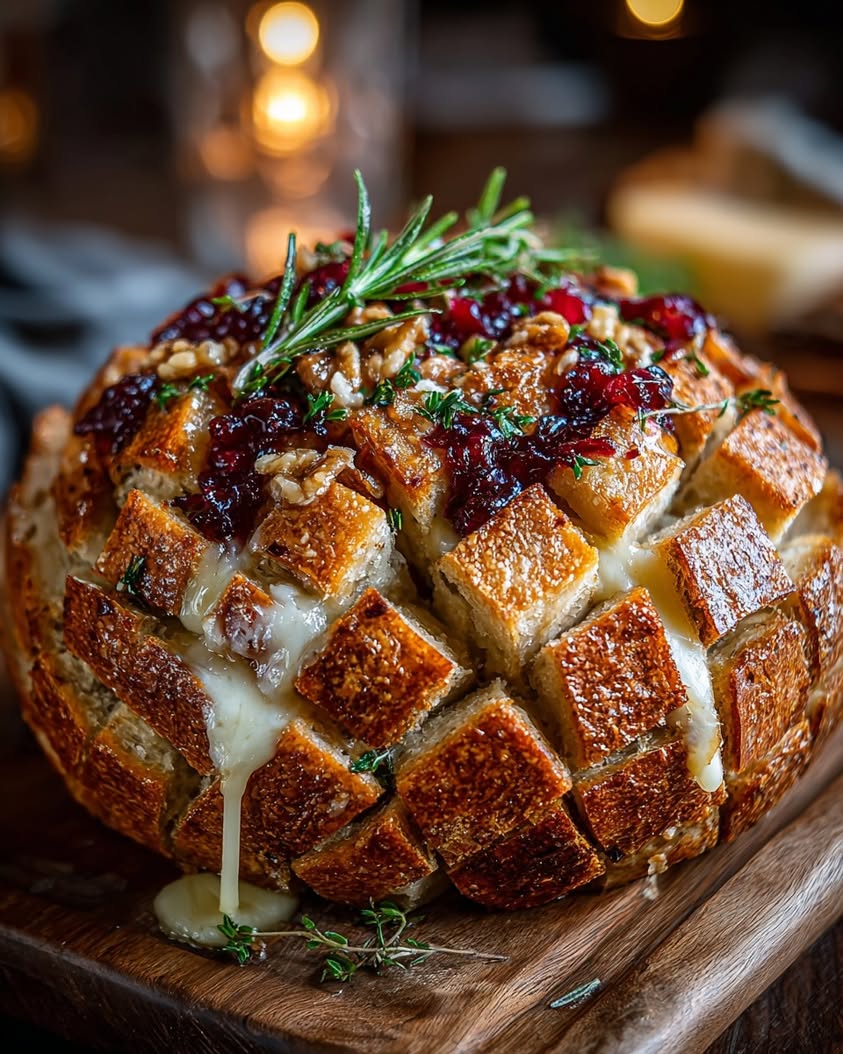
Cranberry Brie Honey Sourdough Pull-Apart Bread: The Ultimate Holiday Appetizer
Imagine the scene: a golden, crusty loaf of sourdough arrives at your holiday table, steam wafting from its warm interior. You pull it apart to reveal a cascade of melted, creamy Brie and sweet-tart cranberries, all glistening with a drizzle of honey. This Cranberry Brie Honey Sourdough Pull-Apart Bread is not just a recipe; it is an experience designed to be the star of any gathering. Moreover, it masterfully combines savory, sweet, and tangy flavors in every single bite. Consequently, it will disappear from your appetizer spread faster than you can say “more, please.”
This stunning dish is deceptively simple to make, requiring minimal hands-on effort for maximum visual and flavorful impact. Essentially, you transform a humble loaf of artisan sourdough into a vessel for gooey, decadent joy. The process involves scoring the bread, stuffing the crevices with rich cheese and fruit, and baking until everything is perfectly melted and bubbly. Ultimately, you create a shareable, interactive centerpiece that encourages conversation and connection. Therefore, if you are seeking a guaranteed crowd-pleaser that looks as impressive as it tastes, this Cranberry Brie Sourdough Pull-Apart Bread is your answer.
Quick Recipe Highlights
- Flavor Profile: This bread delivers a perfect harmony of flavors. The tangy sourdough base complements the rich, creamy Brie beautifully. Meanwhile, the sweet honey and tart cranberries cut through the richness, creating a balanced and sophisticated taste.
- Texture: You will enjoy a fantastic textural contrast. The crusty exterior of the sourdough gives way to a soft, chewy interior soaked with melted cheese. Additionally, the cranberries offer little bursts of juicy texture against the smooth, veloety Brie.
- Aroma: As it bakes, the kitchen fills with an irresistible fragrance. The earthy scent of baking bread mingles with the nutty aroma of melting cheese. Finally, the sweet notes of honey and the festive scent of cranberries complete the aromatic experience.
- Visual Appeal: This dish is a showstopper on any table. The cross-hatched pattern on the golden loaf reveals pockets of oozing white cheese and vibrant red cranberries. A final drizzle of honey adds a gorgeous, glossy finish that makes it look professionally crafted.
- Skill Level Needed: This recipe is perfect for cooks of all levels. It requires no special baking skills, just simple assembly. Basically, if you can use a knife and an oven, you can absolutely master this impressive appetizer.
- Special Equipment: You only need very basic kitchen tools. A sharp serrated knife is essential for scoring the bread without crushing it. Otherwise, a baking sheet lined with parchment paper is all you need for easy cleanup and perfect baking.
Recipe Overview
- Difficulty Level: We rate this recipe as easy because it involves assembly rather than complex cooking techniques. There is no dough to proof or tricky temperatures to monitor. Simply follow the straightforward steps of cutting, stuffing, and baking for a flawless result every single time.
- Category: This dish falls perfectly into the appetizer or snack category. It is ideal for parties, holiday gatherings, or even a luxurious game-day snack. Furthermore, it can easily serve as a decadent side dish alongside a warm bowl of soup or a fresh salad.
- Cuisine: While pull-apart breads have roots in various cultures, this version is a modern American fusion creation. It combines French-inspired cheese, a classic sourdough base, and sweet American condiments. The result is a contemporary party food that feels both familiar and excitingly new.
- Cost: This recipe is surprisingly cost-effective for its impressive payoff. A loaf of good sourdough, a wedge of Brie, and a handful of cranberries are the main investments. Compared to store-bought gourmet appetizers, making this Cranberry Brie Sourdough Pull-Apart Bread at home saves money while tasting far superior.
- Season: This recipe shines brightest during the fall and winter holidays. Cranberries are a quintessential seasonal ingredient, making it perfect for Thanksgiving, Christmas, and New Year’s Eve. However, its comforting warmth and shareable nature make it a welcome treat any time of year.
- Occasion: It is the ultimate party food for any festive occasion. Think holiday open houses, Friendsgiving dinners, romantic date nights in, or even a special family brunch. Its interactive, shareable nature makes it a catalyst for conversation and joy.
Why You’ll Love This Recipe
First and foremost, the taste and texture are utterly irresistible. Each pull-apart piece offers a perfect bite: the slight chew of sourdough, the luxurious melt of Brie, the pop of tart cranberry, and the silkiness of honey. This combination is sophisticated yet deeply comforting. Furthermore, the play of savory and sweet is expertly balanced, ensuring that no single flavor overpowers the others. Consequently, every guest will find something to love in this complex and delightful dish.
Next, consider the sheer convenience and preparation benefits. Unlike many show-stopping appetizers, this one requires minimal active kitchen time. You spend about 15 minutes prepping, then let the oven do the rest of the work. This means you can socialize with your guests instead of being stuck in the kitchen. Additionally, the ingredients are easy to find at any standard grocery store. Therefore, you can whip up this stunning centerpiece without any stressful last-minute shopping trips.
From a nutritional perspective, this Cranberry Brie Sourdough Pull-Apart Bread offers some surprising advantages. Sourdough bread, due to its fermentation process, can be easier to digest than regular bread for some people. Cranberries are packed with antioxidants and vitamin C. While Brie is rich in calcium and protein. Of course, this is an indulgent treat, but using quality ingredients means you are enjoying real food with recognizable components. So, you can feel good about serving it.
The social and entertaining value of this dish cannot be overstated. Food that is meant to be shared naturally brings people together. The very act of pulling apart the bread and serving each other creates a moment of connection and fun. It breaks the ice and becomes a talking point itself. Moreover, its warm, gooey nature is inherently comforting and festive, setting a joyful tone for the entire gathering. Ultimately, it transforms a simple meal into a memorable experience.
Finally, this recipe is wonderfully cost-effective and accessible. For the price of one fancy cheese board, you can create this hot, baked masterpiece that feeds a crowd. The recipe is also highly adaptable; you can use a bakery day-old sourdough loaf on sale or swap in different nuts and jams based on what you have. This flexibility makes it a reliable go-to recipe that fits any budget. Thus, you can impress your guests without straining your wallet.
Historical Background and Cultural Significance
The concept of stuffed or filled bread spans countless cultures and centuries. From Italian focaccia to Moroccan msemen, the idea of enhancing bread with flavorful ingredients is a global tradition. The specific “pull-apart” style, however, gained modern popularity in American home cooking during the mid-20th century. Often, these recipes used canned biscuits or rolls as a convenient base. The evolution towards using artisan sourdough reflects a broader culinary trend valuing quality, fermentation, and rustic presentation over processed shortcuts.
Brie cheese, with its origins in the French region of Île-de-France, brings a touch of European luxury to the dish. Historically a cheese of royalty, Brie’s creamy texture and mild flavor have made it a worldwide favorite for baking. Meanwhile, cranberries are one of North America’s few native fruits, long used by Indigenous peoples for food and medicine. Their incorporation into holiday cooking, especially in the form of sauce, is a deeply ingrained American tradition. This recipe, therefore, marries Old World dairy craftsmanship with a iconic New World fruit.
The practice of scoring bread before baking is ancient, often done for practical reasons like controlling where the bread splits as it expands in the oven. In this recipe, that practical technique is repurposed for aesthetic and functional delight. The cuts become pockets for the cheese and fruit, transforming a simple loaf into a vessel for surprise. This clever use of a baker’s technique for a party appetizer exemplifies the playful, innovative spirit of modern fusion cuisine.
Today, versions of cheese-stuffed pull-apart bread are staples on social media and food blogs, particularly during the holiday season. They represent a desire for food that is not only delicious but also visually engaging and shareable in our digital age. This Cranberry Brie Honey Sourdough Pull-Apart Bread is a direct descendant of that trend, utilizing high-quality ingredients to elevate a simple concept. It stands as a testament to how home cooks continually adapt and refine ideas from around the world to create new classics.
Ingredient Deep Dive
Artisan Sourdough Boule: A round, crusty sourdough loaf is the essential foundation. True sourdough is leavened naturally with a wild yeast starter, giving it a complex, tangy flavor and a chewy, open crumb. This structure is perfect for holding the fillings without becoming soggy. When selecting your loaf, choose one with a sturdy, thick crust that will hold its shape during baking. Avoid bread that is too soft or pre-sliced. If needed, a sturdy country bread or peasant loaf can substitute, though the characteristic tang of sourdough is highly recommended for balancing the rich cheese.
Brie Cheese: Brie is a soft-ripened cow’s milk cheese known for its edible, bloomy rind and creamy interior. As it heats, it melts into a luxurious, fluid consistency without separating. For baking, it is best to use a ripe Brie that yields slightly to pressure. You can leave the rind on—it is perfectly edible and helps contain the melt. If Brie is unavailable, Camembert is a nearly identical substitute. For a stronger flavor, try a triple-creme cheese. Avoid using cheese that is too cold; letting it sit out for 15-20 minutes before cubing makes the process easier.
Fresh Cranberries: These vibrant red berries provide crucial acidity and color. They are typically harvested in the fall and are a hallmark of holiday cooking. Fresh cranberries are firm, tart, and burst during baking, releasing their juices into the bread. Look for berries that are shiny, plump, and deep red in color. You can usually find them fresh in bags from October through December. For other times of year, frozen cranberries work perfectly; do not thaw them before using. Dried cranberries can be used in a pinch, but they will not provide the same juicy burst.
Honey: Honey acts as the sweet glue that brings all the elements together. Its floral notes complement the tang of the cranberries and the funk of the cheese. Use a good-quality, runny honey for easy drizzling. For deeper flavor, try a wildflower or orange blossom honey. The honey caramelizes slightly in the oven, creating a beautiful glaze. If you prefer, pure maple syrup can be used as a substitute, offering a different, earthy sweetness. Agave nectar is another vegan-friendly alternative.
Butter & Herbs: Unsalted butter mixed with fresh thyme or rosemary is brushed over the loaf before baking. This step is not just for flavor; it helps the crust achieve a deeper, golden-brown color and adds an aromatic, savory note. The butter also helps the seasonings adhere to the bread. Using unsalted butter allows you to control the overall saltiness of the dish. If using dried herbs, use about one-third the amount of fresh. For a different twist, try infused olive oil with garlic or herbs de Provence.
Common Mistakes to Avoid
- Cutting All the Way Through the Bread: This is the most critical error. You must score the bread deeply but not slice through the bottom crust. The base needs to remain intact to hold all the fillings. Otherwise, cheese and butter will leak out onto your baking sheet, creating a mess and potentially burning.
- Using Cold, Hard Brie: Attempting to cube refrigerator-cold Brie is frustrating and can tear the cheese. Always let the Brie sit at room temperature for 15-20 minutes before cutting. This allows it to soften slightly, making it easier to slice neatly and stuff into the bread.
- Overstuffing the Cuts: While it is tempting to pack every crevice full, overstuffing can prevent the heat from circulating properly. Consequently, the cheese in the very center may not melt fully. Aim for a moderate amount in each cut, trusting that the cheese will spread as it melts.
- Neglecting the Butter Brush: Skipping the butter and herb mixture means missing out on flavor and color. The butter helps the crust crisp up beautifully and carries the herbal aroma into every nook. Do not just drizzle it; use a pastry brush to get it into the cuts.
- Underbaking: Pulling the bread out too early results in unmelted cheese and a soggy interior. Bake until the cheese is visibly bubbly and the bread’s top is a deep golden brown. The visual cues are essential; the melted cheese and crisp crust are your best indicators of doneness.
- Serving Immediately Without Resting: The molten cheese and cranberries are extremely hot straight from the oven. Letting the bread rest for 5-10 minutes allows the fillings to set slightly, making it easier and safer to pull apart. This brief wait also lets the flavors meld together perfectly.
- Using a Flimsy Bread: A loaf of soft sandwich bread or a baguette with a thin crust will not hold up to the stuffing and will become mushy. Always opt for a hearty, crusty artisan sourdough boule with a robust structure designed to contain the fillings.
- Forgetting the Parchment Paper: Baking directly on a sheet pan risks sticky cheese drips welding your beautiful bread to the metal. Lining the pan with parchment paper guarantees easy release and effortless cleanup, saving you from a frustrating scrubbing session later.
Essential Techniques
Scoring the Bread: This technique involves making deep, controlled cuts into the loaf without severing the base. Use a sharp serrated knife in a sawing motion to create a cross-hatch or grid pattern. The purpose is to create pockets for the fillings while keeping the structural integrity of the loaf intact. A common pitfall is pressing down too hard, which can crush the bread. Instead, let the sawing action of the serrated knife do the work. Visual success is a loaf that opens up like a blooming flower when pulled, with clearly defined sections.
Cubing Brie: Properly cubing soft cheese prevents a sticky mess. Start with a slightly warmed wheel. Use a sharp knife to slice off the top rind if desired, though it is not necessary. Then, slice the cheese into planks, then into sticks, and finally into cubes. If the cheese sticks to your knife, dip the blade in hot water and wipe it dry between cuts. This technique ensures clean, manageable pieces that are easy to stuff into the bread. The goal is uniform, bite-sized cubes that will melt evenly throughout the loaf.
Butter Basting: Melting butter with herbs and carefully brushing it over and into the scored bread is a flavor-layering step. Melt the butter gently to avoid browning it. Then, use a silicone pastry brush to generously apply the mixture, making sure to get it down into the cuts. This technique seasons the bread from the inside out and promotes an even, golden bake. The visual cue for success is a glossy, fragrant loaf before it even goes into the oven. The butter will bubble and brown during baking, creating an irresistible aroma and crust.
Pro Tips for Perfect Cranberry Brie Honey Sourdough Pull-Apart Bread
First, warm your knife for cleaner cuts. Briefly run your serrated knife under hot water and dry it before scoring the bread. This helps the blade glide through the crust smoothly without tearing the delicate interior crumb.
Second, add a savory crunch. Sprinkle a handful of chopped walnuts or pecans into the cuts along with the cheese and cranberries. The nuts toast in the oven, adding a wonderful textural contrast and nutty flavor that complements the other ingredients beautifully.
Third, prevent a soggy bottom. If your sourdough has a very soft bottom crust, consider placing it directly on the oven rack for the last 5 minutes of baking. This extra direct heat will crisp up the base, ensuring every piece has the perfect texture.
Fourth, infuse your honey. For an extra flavor dimension, gently warm the honey with a sprig of rosemary or thyme before drizzling. This allows the herbal notes to infuse into the honey, creating a more complex and aromatic finishing touch.
Fifth, check for doneness with a skewer. If you are unsure if the center is hot enough, carefully insert a wooden skewer into the middle of the loaf for a few seconds. It should come out very warm to the touch, indicating the heat has penetrated to the core.
Sixth, prepare components ahead. You can cube the Brie and mix the butter and herbs a few hours in advance. Store them separately in the refrigerator, then bring to room temperature before assembling. This makes last-minute prep a breeze when guests arrive.
Variations and Adaptations
Regional Variations: Embrace local flavors by swapping ingredients. In the South, use pimento cheese and diced jalapeños for a spicy kick. For a Mediterranean twist, substitute Brie with feta or goat cheese, use Kalamata olives instead of cranberries, and drizzle with olive oil and oregano. A French-inspired version might use Gruyère and caramelized onions with a touch of Dijon mustard in the butter.
Seasonal Adaptations: This recipe adapts wonderfully to the calendar. In spring, use asparagus tips and fresh goat cheese with lemon zest. For summer, try fresh basil, mozzarella pearls, and sun-dried tomatoes. Autumn welcomes figs, Gouda, and a sprinkle of chopped sage. The cranberry version remains the quintessential winter holiday classic.
Dietary Modifications: For a gluten-free option, use a sturdy, round gluten-free artisan bread loaf. Vegan adaptations can utilize a vegan brie-style cheese and vegan butter, with maple syrup instead of honey. For a dairy-free version, omit the butter brush and use a high-quality olive oil, and stuff with dairy-free cheese and olives or artichokes.
Flavor Variations: The base formula is a canvas for creativity. Try apple slices and sharp cheddar with a maple glaze. For a savory profile, use cooked sausage, sautéed mushrooms, and fontina cheese. A sweet breakfast version could feature cream cheese, blueberries, and a cinnamon-sugar butter brush.
Texture Modifications: Add different textures for interest. Incorporate crispy, cooked bacon bits. Sprinkle everything bagel seasoning over the buttered top before baking for a savory crunch. Mix in a tablespoon of cornmeal or semolina into your butter herb mix for a slight grit and toastier crust.
Presentation Alternatives: Instead of one large loaf, use individual sourdough rolls or a baguette for personal servings. For a more formal plated presentation, bake the bread, then carefully pull apart the sections and arrange them artfully on a board garnished with extra herbs, nuts, and a small bowl of extra honey for dipping.
Serving and Presentation Guide
Plating Techniques: Serve your Cranberry Brie Honey Sourdough Pull-Apart Bread directly on a wooden cutting board or a large, rustic ceramic platter. This enhances its homemade, artisanal appeal. Place the board in the center of the table where guests can easily reach it. Provide a small bowl on the side with extra honey and a spoon, allowing people to add more sweetness if desired.
Garnishing Ideas: Fresh garnishes add color and freshness. Scatter a few extra fresh cranberries and thyme sprigs around the base of the loaf. A light dusting of flaky sea salt, such as Maldon, over the top just before serving enhances all the flavors. A final, delicate drizzle of honey in a zigzag pattern makes it look professionally finished.
Traditional Accompaniments: This rich bread pairs beautifully with lighter, acidic foods to balance the palate. Serve it with a simple arugula salad dressed with lemon vinaigrette. A bowl of tomato soup or butternut squash soup for dipping is a classic and comforting combination. For a cheeseboard extension, add slices of prosciutto and pear.
Modern Serving Suggestions: For a cocktail party, tear the bread apart in the kitchen and arrange the pieces on a platter, each speared with a decorative cocktail pick. Alternatively, set up a DIY station with the whole loaf, small plates, and an array of additional toppings like chopped nuts, fresh herbs, and different flavored honeys.
Temperature Considerations: This dish is best served warm, when the cheese is at its peak gooeyness. If it cools down, simply reheat individual portions in a toaster oven or the main oven at 350°F for 5-7 minutes. Avoid the microwave, as it can make the bread tough and the cheese greasy.
Portion Control Tips: A standard boule typically yields 12-16 pull-apart pieces, perfect for 6 people as a substantial appetizer. If serving as part of a larger spread with many other items, one loaf can comfortably serve 8-10 people. Remember, it is rich, so people will likely take one or two pieces initially.
Wine and Beverage Pairing
Wine Pairings: The sweet, tart, and creamy elements of this bread call for wines with good acidity and some sweetness. A sparkling wine like Prosecco or Champagne cuts through the richness beautifully. A slightly off-dry Riesling or Gewürztraminer mirrors the honey and complements the cranberry tartness. For red wine lovers, a light, fruity Pinot Noir or Beaujolais works well without overpowering the dish.
Non-Alcoholic Alternatives: Sparkling apple cider is a fantastic festive pairing, offering bubbles and apple notes that work with all the flavors. A tart cranberry spritzer (cranberry juice mixed with club soda and a lime wedge) echoes the main ingredient. For a warmer option, a honey-sweetened herbal tea, like chamomile or ginger, is wonderfully comforting.
Coffee/Tea Pairings: For a brunch or afternoon gathering, beverages like coffee and tea are excellent. A medium-roast coffee with low acidity complements the bready, cheesy notes. A black tea like Earl Grey, with its bergamot citrus notes, pairs elegantly. A chai tea latte, with its warm spices, creates a cozy, wintery combination.
Temperature Considerations: Serve your chosen beverage at its ideal temperature to contrast or complement the warm bread. Chilled sparkling wines and ciders provide a refreshing contrast. Room temperature red wines allow their fruit flavors to shine alongside the warm cheese. Hot coffee or tea offers a cozy parallel to the warm, baked dish.
Serving Suggestions: Offer a variety of beverages to cater to all guests. Set up a small station with a bottle of sparkling wine, a pitcher of non-alcoholic spritzer, and a carafe of coffee. Use clear glassware to showcase the colors of the drinks, and label them if necessary for easy identification.
Storage and Shelf Life
Storage Methods: Once cooled completely, store any leftover Cranberry Brie Sourdough Pull-Apart Bread in an airtight container. You can also wrap it tightly in aluminum foil. Do not store it while still warm, as condensation will make the bread soggy. For best results, separate large chunks rather than squashing the whole loaf into a container.
Temperature Requirements: Refrigerate leftovers promptly. The dairy content of the Brie requires refrigeration to prevent spoilage. The bread will keep in the refrigerator for up to 2-3 days. You can store it at room temperature for only a few hours due to the perishable cheese filling.
Container Recommendations: A large glass container with a snap lid is ideal, as it won’t absorb odors and allows you to see the contents. Alternatively, a sturdy storage bag designed for bread can work if you are careful not to crush the pieces. Avoid plastic wrap directly on the bread, as it can stick to the cheese.
Signs of Spoilage: Discard the bread if you notice any off smells, such as sourness beyond the normal tang of sourdough. Visible mold, especially on the cheese or bread, is an immediate sign it must be thrown away. If the texture becomes unpleasantly slimy or excessively hard, it is past its prime.
Reheating Instructions: To restore the gooey texture, reheat in a preheated 350°F oven for 10-12 minutes, wrapped loosely in foil. For single servings, a toaster oven works perfectly. You can also use an air fryer at 320°F for 5-7 minutes. Avoid the microwave, which will make the bread rubbery and the cheese oily.
Freezing Guidelines: This bread is best enjoyed fresh. Freezing is not highly recommended, as the texture of the baked bread and cheese can become mealy and separate upon thawing. If you must freeze, wrap individual portions tightly in plastic wrap and then foil, and consume within 1 month. Thaw in the refrigerator overnight before reheating in the oven.
Make Ahead Strategies
Prep Timeline: You can prepare almost all components 24 hours in advance. Cube the Brie, mix the butter and herbs, and measure the cranberries. Store each component in separate airtight containers in the refrigerator. The bread itself can be scored a few hours ahead, but it is best to stuff and bake it just before serving for optimal texture.
Storage Between Steps: Keep the cubed Brie in the fridge in a sealed container; the cold prevents it from becoming too sticky. Store the herb butter in a small dish covered with plastic wrap. The cranberries can stay in their original bag or in a bowl. This organized “mise en place” makes assembly incredibly fast when you are ready to bake.
Quality Impact Assessment: Prepping the cheese and butter has no negative impact on quality. In fact, letting the herb flavors infuse into the butter overnight can enhance the overall taste. The key is to bring the Brie to room temperature for 15 minutes before stuffing to ensure even melting. The bread should not be stuffed ahead, as it will become soggy.
Assembly Tips: When ready to serve, simply take your prepped ingredients out, stuff the scored loaf, brush with the herb butter, and bake. This reduces active prep time to under 5 minutes. Have your baking sheet lined and oven preheated so the transition from counter to oven is seamless.
Reheating Guidelines: If you must bake it completely ahead, let it cool, then store as directed. Reheat the entire loaf, wrapped in foil, in a 325°F oven for 15-20 minutes until warmed through. Then, unwrap and broil for 1-2 minutes to re-crisp the top. Drizzle with fresh honey after reheating for the best flavor and presentation.
Fresh Element Additions: Always add the final drizzle of honey after reheating, not before storage. This ensures the honey’s flavor is bright and its texture is glossy. You can also add fresh herb garnishes after reheating to maintain their vibrant color and aroma, which can wilt if baked twice.
Scaling Instructions
Halving the Recipe: To make a smaller version, use a mini sourdough boule or a half loaf. Halve all other ingredient quantities proportionally. Baking time will be slightly reduced, so start checking for doneness at around 18-20 minutes. This is perfect for a romantic dinner for two or a small family.
Doubling or Tripling: For a large crowd, you can easily bake multiple loaves. Use multiple baking sheets, ensuring there is at least 2 inches of space between loaves for proper air circulation. You may need to rotate the sheets halfway through baking for even browning. Consider staggering the baking times if oven space is limited.
Equipment Adjustments: When scaling up, ensure you have enough large baking sheets. If baking multiple loaves on one very large sheet, space them well apart. You may also need a larger pastry brush or to make extra herb butter in a bigger bowl for efficient brushing.
Timing Modifications: A single loaf bakes in about 25 minutes. When baking multiple loaves on the same rack, add 3-5 minutes to the total time and rely on visual cues (bubbly cheese, golden crust) rather than the timer alone. If baking on different racks, switch their positions halfway through.
Storage Considerations: Scaling up means more potential leftovers. Plan your storage containers in advance. It is often better to store leftover loaves whole rather than pulled apart to retain moisture. Label containers with the date if you are making several batches for different events.
Nutritional Deep Dive
Macro Breakdown: A serving of this Cranberry Brie Sourdough Pull-Apart Bread provides a balance of carbohydrates, fat, and protein. The sourdough contributes complex carbs and some fiber. The Brie is the primary source of fat and protein, along with saturated fat. The honey adds simple sugars. Cranberries contribute minimal sugars but valuable micronutrients. This makes it an energy-dense food, ideal for an appetizer or part of a celebratory meal.
Micronutrient Analysis: This dish offers several key micronutrients. Brie provides calcium for bone health and vitamin B12. Cranberries are an excellent source of vitamin C and manganese, along with unique antioxidants like proanthocyanidins. Using whole grain sourdough would increase the fiber, B-vitamin, and mineral content. The herbs, like thyme, contain various phytonutrients with anti-inflammatory properties.
Health Benefits: When enjoyed in moderation, the components offer benefits. The fermentation in sourdough may aid digestion for some. The antioxidants in cranberries support urinary tract and heart health. The calcium in cheese is crucial for bone strength. The dish’s combination of protein, fat, and fiber can promote satiety, potentially helping to prevent overeating later.
Dietary Considerations: This is not suitable for those with dairy allergies or lactose intolerance unless adapted. It contains gluten from the wheat bread. It is also relatively high in sodium (from cheese and bread) and saturated fat. Individuals on low-sodium, low-cholesterol, or low-fat diets should be mindful of portion size.
Portion Analysis: One serving (approximately two pull-apart sections) is a satisfying portion that allows you to enjoy the rich flavors without excessive intake. Pairing it with a large, leafy green salad or vegetable crudités can create a more balanced nutritional profile for your overall meal.
Weight Management Tips: To enjoy this as part of a weight-conscious plan, focus on mindful eating. Savor one piece slowly. Balance your day by including lighter, vegetable-forward meals. You can also adapt the recipe by using less cheese, opting for a whole-grain sourdough, and increasing the proportion of cranberries for more volume and fiber with fewer calories.
Dietary Adaptations
Gluten-Free: Use a certified gluten-free artisan round loaf. Many bakeries and stores now carry excellent gluten-free sourdough-style boules. Ensure all other ingredients, like pre-shredded cheese, are certified gluten-free, as cross-contamination can occur. The method remains exactly the same.
Dairy-Free: Substitute the Brie with a high-quality vegan melty cheese block, such as those made from cashews or coconut oil. Use vegan butter or olive oil for the herb brush. Check that the bread does not contain dairy (some brioche-style loaves might). The cranberries and honey (or maple syrup) are naturally dairy-free.
Vegan: Follow the dairy-free adaptations and replace the honey with agave nectar, maple syrup, or vegan honey alternative. Ensure the bread is vegan (no honey, milk, or eggs). Stuff with vegan cheese, cranberries, and perhaps some caramelized onions or mushrooms for umami depth.
Low-Carb/Keto: This is a challenging adaptation due to the bread. The closest alternative is to use a pre-made or homemade “fathead” dough or a keto-friendly bread loaf. Fill with Brie, low-sugar cranberries (sweetened with a keto-approved sweetener), and brush with herb-infused butter. Drizzle with a sugar-free honey substitute.
Paleo: Omit the dairy and grains. Use a paleo-friendly “bread” made from almond or coconut flour, though the texture will differ. Stuff with a dairy-free cheese alternative or simply use a mixture of chopped nuts, compliant fruit like figs, and herbs. Brush with ghee or coconut oil.
Low-FODMAP: Sourdough bread made with a long fermentation can be low in FODMAPs in limited servings. Use a true, long-fermented sourdough. Replace Brie with a hard, aged cheese like cheddar, which is lower in lactose. Use a small number of cranberries (monash-approved in small amounts) and maple syrup instead of honey.
{“success”:true,”message”:”Recipe created successfully”,”post_id”:9274,”tasty_recipe_id”:9274,”shortcode”:”“}

I’m Billy, a classically trained culinary school graduate from The Culinary Institute of America with over 12 years in the restaurant industry and over 19 years of cooking experience.