
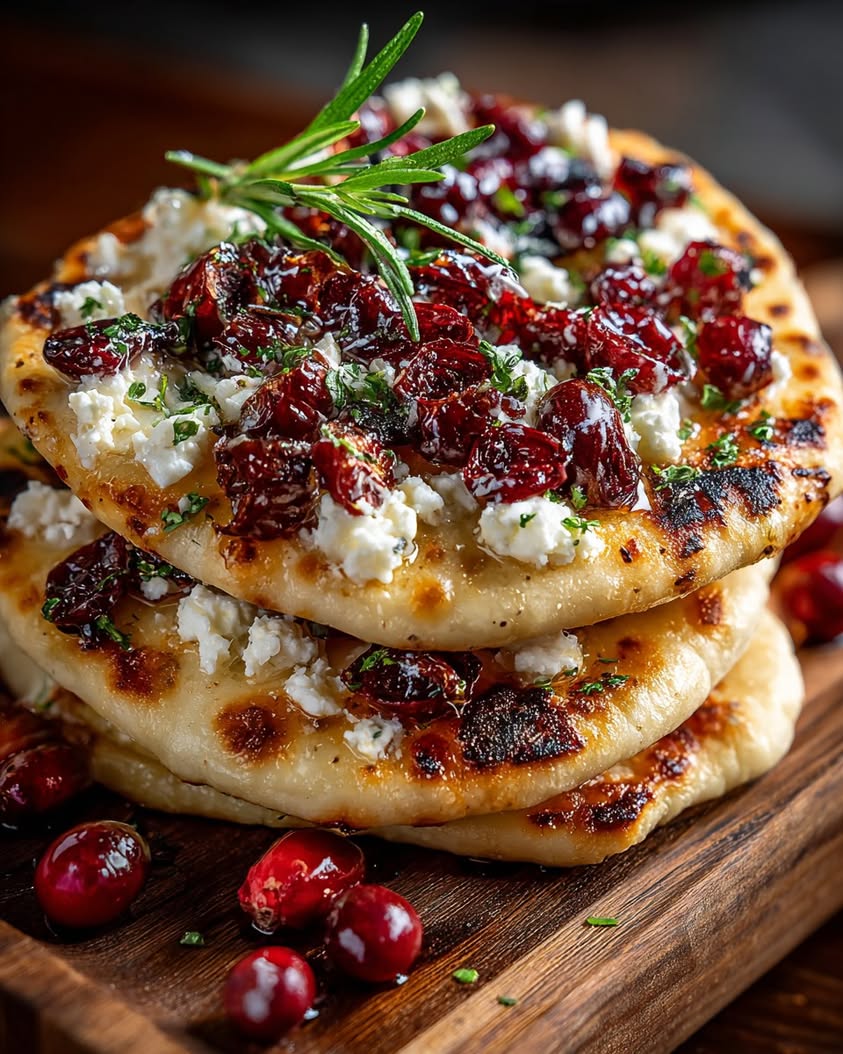
Roasted Cranberry Cinnamon Goat Cheese Flatbread: A Festive Appetizer Masterpiece
Imagine the perfect holiday appetizer that combines sweet, savory, and tangy flavors in every single bite. This Roasted Cranberry Cinnamon Goat Cheese Flatbread is exactly that. It transforms simple ingredients into a stunning centerpiece for your table. Moreover, it delivers a sophisticated flavor profile that will impress your guests without demanding hours in the kitchen. The combination of warm, roasted cranberries with creamy goat cheese and a hint of cinnamon on a crispy flatbread is simply irresistible.
This recipe is a celebration of seasonal ingredients. For instance, fresh cranberries burst with tartness when roasted, creating a vibrant, jammy topping. Meanwhile, the creamy goat cheese provides a tangy balance that mellows the fruit’s sharpness. A drizzle of honey and a sprinkle of cinnamon weave everything together with warm, aromatic sweetness. Consequently, this dish feels both rustic and elegant, making it perfect for everything from a casual family gathering to a formal holiday party. Ultimately, it’s a versatile showstopper that everyone will love.
Furthermore, this Roasted Cranberry Cinnamon Goat Cheese Flatbread is incredibly easy to customize. You can use store-bought flatbread for ultimate convenience or opt for homemade naan for a softer base. Additionally, you can add toasted pecans for crunch or fresh herbs like thyme for an earthy note. The process is straightforward, involving roasting the cranberries, assembling the flatbread, and baking until golden. Therefore, even novice cooks can achieve restaurant-quality results with minimal effort and maximum flavor impact.
Quick Recipe Highlights
- Flavor Profile: This flatbread masterfully balances sweet and savory notes. The tart cranberries roast into a jammy consistency, perfectly complementing the tangy, creamy goat cheese. Finally, a warm hint of cinnamon and a drizzle of honey tie all the flavors together harmoniously.
- Texture: You get a wonderful contrast of textures in every bite. The flatbread base bakes up delightfully crispy, while the roasted cranberries are soft and bursting. Meanwhile, the crumbled goat cheese offers a creamy, slightly crumbly mouthfeel that is utterly satisfying.
- Aroma: As this flatbread bakes, your kitchen will fill with an incredible fragrance. The scent of roasting cranberries mingles with warm cinnamon and the toasty notes of baking bread. Consequently, it creates an inviting, festive atmosphere that promises a delicious meal.
- Visual Appeal: This dish is a feast for the eyes with its stunning color palette. The deep ruby red of the cranberries pops against the white goat cheese and golden-brown flatbread. Garnished with green herbs, it looks as beautiful as it tastes, making it perfect for holiday tables.
- Skill Level Needed: This is an accessible recipe for cooks of all levels. It requires basic skills like mixing, spreading, and baking. Therefore, even a beginner can confidently create this impressive appetizer without specialized culinary training.
- Special Equipment: You only need standard kitchen tools. A baking sheet, a small mixing bowl, and a spoon are the primary necessities. A pastry brush can help with oiling the flatbread, but it is not essential for success.
Recipe Overview
- Difficulty Level: We rate this recipe as easy because it involves simple, sequential steps without complex techniques. You simply roast the cranberries, assemble the components on the flatbread, and bake. There is no yeast to proof or dough to knead, making it a very approachable project for any home cook.
- Category: This dish falls perfectly into the appetizer or snack category. It is ideal for serving at parties, holiday gatherings, or as a fancy weekend treat. Additionally, you could easily pair it with a simple salad to transform it into a light lunch or dinner.
- Cuisine: While flatbread is a global staple, this recipe has a modern American fusion feel. It takes inspiration from Mediterranean meze platters but uses distinctly North American cranberries. The combination of goat cheese, honey, and cinnamon creates a flavor profile that is both comforting and sophisticated.
- Cost: This is a very cost-effective appetizer, especially when cranberries are in season. The main expenses are the goat cheese and fresh cranberries, while ingredients like olive oil, honey, and cinnamon are pantry staples. Overall, you can create an impressive dish for a fraction of the cost of store-bought hors d’oeuvres.
- Season: This recipe shines brightest during the fall and winter months. Cranberries are at their peak freshness from October through December. Furthermore, the warm spices and hearty presentation make it ideal for holiday celebrations and cozy nights in.
- Occasion: It is incredibly versatile for many events. Serve it as a festive starter for Thanksgiving or Christmas dinner. Alternatively, it makes a beautiful addition to a game-day spread or a girls’ night in. It is always a crowd-pleaser.
Why You’ll Love This Recipe
First and foremost, the taste and texture of this Roasted Cranberry Cinnamon Goat Cheese Flatbread are absolutely divine. Each component plays a crucial role. The crispy flatbread provides a sturdy, flavorful base. Meanwhile, the roasted cranberries become sweet, tart, and jammy, creating little pockets of intense flavor. The creamy, tangy goat cheese cuts through the sweetness perfectly. Finally, the aromatic cinnamon and honey drizzle add the final layer of warmth and sweetness that makes every bite complex and utterly delicious. It is a symphony of flavors in one easy-to-eat package.
Secondly, the convenience and preparation benefits are significant. You can have this stunning appetizer ready from start to finish in about thirty-five minutes. The active hands-on time is minimal, allowing you to focus on other dishes or enjoy time with your guests. Moreover, you can prepare the cranberry mixture slightly ahead of time. Then, simply assemble and bake when you are ready to serve. This makes it an incredibly stress-free option for entertaining, ensuring you have a hot, impressive dish without last-minute kitchen chaos.
From a nutritional perspective, this flatbread offers some great advantages. Cranberries are packed with antioxidants and vitamin C, supporting immune health. Goat cheese is often easier to digest than cow’s milk cheese for some people and provides protein and calcium. Using whole-grain flatbread adds fiber, making the dish more satisfying. While it is a treat, it is made with real, whole-food ingredients without any processed additives. Therefore, you can feel good about serving it to your family and friends.
Furthermore, the social and entertaining value of this dish is incredibly high. Its beautiful presentation instantly elevates any table setting. It encourages sharing and conversation as guests gather around to slice a piece. It is a fantastic conversation starter, and people always ask for the recipe. Because it is so visually appealing and uniquely flavorful, it makes you look like a culinary rockstar with very little effort. It is the kind of dish that becomes a requested tradition for years to come.
Finally, it is cost-effective and accessible. You do not need any rare or expensive ingredients. Most components are available at any standard grocery store. Compared to ordering catering or buying pre-made appetizer platters, making this Roasted Cranberry Cinnamon Goat Cheese Flatbread at home saves a considerable amount of money. You can easily double or triple the recipe to feed a crowd without breaking the bank. It proves that impressive, gourmet-tasting food can be both simple and affordable.
Historical Background and Cultural Significance
The story of flatbread is as old as civilization itself, dating back thousands of years across countless cultures. Essentially, flatbreads were one of the earliest forms of leavened or unleavened bread, cooked on hot stones or in communal ovens. They served as edible plates, utensils, and sustenance. Our modern interpretation, like this Roasted Cranberry Cinnamon Goat Cheese Flatbread, builds on this ancient tradition. It takes the simple, universal concept of baked dough with toppings and elevates it with contemporary, seasonal ingredients. This connects us to a shared human history of gathering and breaking bread.
Cranberries hold deep cultural significance in North America, particularly for Native American tribes and early European settlers. Indigenous peoples used them for food, dye, and medicine long before the first Thanksgiving. They introduced cranberries to pilgrims, who incorporated them into survival diets. The tart berry became a symbol of harvest and sustenance. Incorporating them into a modern flatbread recipe honors this history. It transforms a traditional native ingredient into a new, celebratory form, bridging past and present on a crispy canvas.
The evolution of the recipe for flatbread toppings reflects global trade and culinary fusion. Goat cheese has its roots in Mediterranean and Middle Eastern cultures, where goats were commonly herded. Honey has been prized globally as a natural sweetener for millennia. Cinnamon traveled along ancient spice routes from Asia. Combining these globally-sourced ingredients with a New World berry on a universal bread base is a testament to modern, fusion cuisine. It shows how food traditions migrate, merge, and create something entirely new and delightful.
Regional variations of topped flatbread are endless, from Italian pizza to Turkish lahmacun to Indian naan toppings. This Roasted Cranberry Cinnamon Goat Cheese Flatbread finds its niche in modern American holiday cooking. It draws inspiration from the sweet-and-savory fruit and cheese boards popular at parties. Consequently, it condenses that experience into a single, warm, shareable dish. It is a recipe born from convenience, flavor exploration, and the desire for beautiful, seasonal food that celebrates specific times of the year, particularly the winter holidays.
Ingredient Deep Dive
Fresh Cranberries: These vibrant red berries are native to North America and have a history intertwined with the continent’s first peoples and settlers. They are packed with vitamin C, fiber, and unique antioxidants called proanthocyanidins, which are famous for supporting urinary tract health. When selecting cranberries, look for firm, plump berries with a deep red color; avoid any that are shriveled or brown. Store them in a sealed bag in the refrigerator for up to a month, or freeze them for year-round use. If fresh are unavailable, you can use frozen cranberries without thawing; just add a couple minutes to the roasting time. Dried cranberries are not a direct substitute as they will not create the same jammy texture.
Goat Cheese (Chèvre): This creamy, tangy cheese has been produced for thousands of years, particularly in regions of France and the Mediterranean. It is made from goat’s milk, which contains different proteins than cow’s milk, making it easier to digest for some people with sensitivities. Nutritionally, it provides protein, calcium, and healthy fats. For this recipe, choose a plain, soft goat cheese log that crumbles easily. Avoid pre-crumbled varieties, as they are often coated to prevent sticking and won’t melt as nicely. Store goat cheese in its original wrapper in the coldest part of your refrigerator. For a dairy-free version, a thick, tangy vegan cream cheese or a crumbled firm tofu marinated in lemon juice can work, though the flavor profile will change.
Flatbread: The base of our dish, flatbread, is a culinary staple across the globe. For this recipe, you want a flatbread that will crisp up nicely in the oven without becoming too hard. Store-bought naan, pita bread, or pre-made pizza crusts are excellent, convenient choices. Look for options without strong flavors that might compete with the toppings. If you prefer homemade, a simple dough of flour, water, yeast, and olive oil rolled thinly will yield fantastic results. The flatbread acts as the edible plate, providing carbohydrates for energy and fiber, especially if you choose a whole-grain version. Its neutral canvas allows the bold flavors of the toppings to truly shine.
Cinnamon & Honey: This dynamic duo is one of the oldest sweetening combinations in the world. Cinnamon, derived from the bark of trees native to Sri Lanka, was once so valuable it was considered a gift fit for kings. It adds warm, woody notes and has anti-inflammatory properties. Honey, produced by bees from flower nectar, is a natural sweetener with trace enzymes and antioxidants. For the best flavor, use pure ground cinnamon and a good-quality, runny honey like clover or wildflower. The honey’s sweetness balances the cranberry’s tartness, while the cinnamon adds a festive, aromatic depth that makes this dish smell like the holidays. Together, they transform the simple ingredients into a cohesive, sophisticated flavor experience.
Common Mistakes to Avoid
- Overcrowding the Baking Sheet: Do not place the flatbreads too close together on the baking sheet. Hot air needs to circulate around them to ensure the bottoms get crispy. If they are touching or overlapping, they will steam instead of bake, resulting in a soggy texture.
- Using Wet Cranberries: Always rinse and thoroughly pat dry your fresh cranberries before roasting. Excess water will create steam in the oven, preventing the berries from properly caramelizing and becoming jammy. They may instead become mushy and leak too much liquid onto the flatbread.
- Spreading Goat Cheese Too Thickly: While goat cheese is delicious, a very thick layer will not heat through properly and can make the flatbread soggy in the center. Use a light hand when crumbling; you want distinct pockets of cheese, not a solid blanket.
- Skipping the Olive Oil Brush on the Flatbread: Lightly brushing the flatbread with olive oil before adding toppings is a crucial step. This creates a barrier that helps prevent sogginess from the juicy cranberries. It also helps the edges crisp up beautifully and adds flavor.
- Neglecting to Preheat the Oven: Always preheat your oven fully before baking. Putting the flatbread into a cooler oven will cause it to bake unevenly. The bottom may not crisp, and the toppings will cook too slowly, potentially making everything dry or tough.
- Overloading with Toppings: More is not always better. Stick to the recommended quantities. If you overload the flatbread, the weight can prevent it from crisping, and the flavors can become muddled. You want a balanced ratio of bread to topping in every bite.
- Forgetting to Let it Cool Slightly: Cutting into the flatbread immediately after pulling it from the oven can cause the molten-hot cheese and cranberry jam to run off. Let it rest on the cutting board for 3-5 minutes. This allows the toppings to set slightly, making for cleaner slices.
- Using a Dull Knife to Slice: A dull knife will drag through the flatbread and crush the crispy crust. Use a sharp chef’s knife or pizza cutter for clean, easy cuts. This preserves the texture and makes for a more professional presentation.
Essential Techniques
Roasting the Cranberries: This technique is fundamental to the recipe’s success. Roasting concentrates the cranberries’ natural sugars, transforming their sharp tartness into a complex, sweet-tart jammy consistency. To master it, toss the dry berries with oil and sugar, then spread them in a single layer on a parchment-lined sheet. Roast at a high heat (400°F) until they pop and release their juices. The common pitfall is under-roasting, which leaves them too firm and sour. Look for visual cues: the berries will visibly pop, the skins will wrinkle, and the released juices will thicken slightly and bubble around them. This process creates the foundational flavor layer of your flatbread.
Assembling for Optimal Bake: Proper assembly ensures every component cooks perfectly. First, always brush the flatbread with oil to create a moisture barrier. Next, scatter the roasted cranberries evenly, ensuring some of their sticky juices get on the bread. Then, crumble the goat cheese in small pieces, distributing it so most bites get both cheese and berry. A common mistake is piling all ingredients in the center, leaving bare, vulnerable edges that can burn. Aim for even coverage from edge to edge, leaving just a tiny border. This technique guarantees a balanced flavor and texture in every single slice.
Baking to Crispy Perfection: The final bake melds the flavors and achieves the ideal texture. Use the middle rack of a fully preheated oven for even heat distribution. The goal is to warm the toppings thoroughly while crisping the flatbread base. A key pitfall is opening the oven door frequently, which causes temperature drops. Rely on the visual cue: the flatbread edges will turn a deep golden brown, and the goat cheese will soften and may get slightly golden at the peaks. The bottom should sound hollow when tapped. This technique transforms the separate components into a unified, hot, crispy, and cohesive dish.
Pro Tips for Perfect Roasted Cranberry Cinnamon Goat Cheese Flatbread
Boost Flavor with Citrus Zest: Add the zest of one orange to the cranberries before roasting. The citrus oils will brighten the entire dish and complement the berries’ tartness beautifully.
Prevent Soggy Bottoms: For an extra-crispy crust, place the naked, oil-brushed flatbread in the oven for 3-4 minutes before adding toppings. This pre-bakes the base, creating a sturdier barrier against the juicy cranberries.
Infuse Your Oil: Warm the olive oil with the cinnamon (and a sprig of rosemary, if desired) for a few minutes before brushing it on the flatbread. This infuses the oil with flavor from the very first bite.
Garnish with Texture: After baking, sprinkle the flatbread with chopped toasted pecans or walnuts. The crunch provides a wonderful contrast to the creamy cheese and soft cranberries.
Control Sweetness: Taste your roasted cranberries before assembling. If they are still very tart, you can drizzle a little extra honey directly over them before adding the cheese.
Use a Pizza Stone or Steel: For a professional, blistered crust, bake the assembled flatbread directly on a preheated pizza stone or baking steel. This conducts intense heat to the bottom for ultimate crispiness.
Fresh Herbs are Key: Always use fresh thyme or rosemary for garnish, not dried. The fresh herbs add a pop of color and a fragrant, earthy note that dried herbs cannot replicate.
Slice with the Right Tool: A pizza wheel or rotary cutter is the best tool for slicing flatbread. It glides through the toppings without dragging them off the base, ensuring neat, clean pieces.
Variations and Adaptations
Regional Variations: You can easily adapt this flatbread to reflect different culinary traditions. For a Mediterranean twist, substitute the goat cheese with crumbled feta, use olives instead of cranberries, and garnish with oregano. For a French-inspired version, use Brie cheese and top with caramelized onions and fresh thyme after baking. An Italian variation might feature a thin layer of fig jam as the base, topped with prosciutto and gorgonzola after baking. These adaptations show the incredible versatility of the flatbread format while keeping the preparation method consistent.
Seasonal Adaptations: While perfect for fall and winter, this recipe can be modified for any season. In spring, use roasted asparagus tips and fresh peas with lemon zest and ricotta. For summer, top with sliced peaches, fresh mozzarella, and a balsamic glaze. In autumn, roasted butternut squash or apples make a fantastic substitute for cranberries. The core technique remains the same—roast your seasonal vegetable or fruit, then assemble and bake. This ensures you can enjoy a version of this delicious flatbread all year round.
Dietary Modifications: This dish is wonderfully adaptable for various dietary needs. For a gluten-free version, use a certified gluten-free flatbread or cauliflower crust. To make it vegan, replace the goat cheese with a thick, tangy vegan cream cheese or cashew cheese, and use maple syrup instead of honey. For a nut-free version, simply omit any nut garnishes and ensure your flatbread doesn’t contain nut flours. These simple swaps allow almost everyone to enjoy this flavorful appetizer without compromising on taste or texture.
Flavor Variations: Experiment with different cheese and spice combinations. Try herbed goat cheese for an extra flavor boost. Swap cinnamon for a pinch of cardamom or allspice for a different warm note. Add a layer of whole-grain mustard under the cheese for a sharp kick. Incorporate caramelized onions or roasted garlic cloves for a deeper savory element. A sprinkle of chili flakes before baking adds a welcome touch of heat. The basic recipe is a template; feel free to get creative with flavors you love.
Serving and Presentation Guide
Plating Techniques: For a rustic, family-style presentation, place the whole baked flatbread on a large wooden cutting board or a slate serving platter. Place a sharp knife or pizza cutter alongside for guests to serve themselves. For individual servings, slice the flatbread into portions in the kitchen and arrange them slightly overlapping on a long rectangular platter. This method controls portion size and makes it easier for guests to grab a piece without fuss. Always ensure your serving surface is heat-safe, as the flatbread is best served warm.
Garnishing Ideas: Garnishes add the final touch of freshness, color, and flavor. After baking, immediately sprinkle with fresh thyme leaves, rosemary needles, or microgreens. A final light drizzle of high-quality honey or balsamic glaze in a zigzag pattern looks beautiful. For crunch and visual appeal, scatter pomegranate arils or chopped toasted nuts over the top. A light dusting of flaky sea salt, such as Maldon, enhances all the other flavors. Remember, garnishes should complement, not overwhelm; a little goes a long way.
Traditional Accompaniments: This flatbread is substantial enough to stand alone as an appetizer. However, it pairs wonderfully with other dishes for a fuller spread. Serve it alongside a simple green salad with a citrus vinaigrette to cut through the richness. A bowl of marinated olives, a selection of cured meats, or a whipped feta dip would complement it perfectly on a holiday grazing board. For a beverage, offer sparkling water, a crisp white wine, or a festive cocktail.
Wine and Beverage Pairing
Wine Pairings: The sweet, tart, and savory notes of this flatbread call for versatile wines. A slightly off-dry Riesling or Gewürztraminer is a superb match; their hint of sweetness mirrors the honey and roasted fruit, while their acidity cuts through the creamy cheese. For a red option, choose a light-bodied, low-tannin wine like Pinot Noir or Beaujolais. These wines have enough fruitiness to complement the cranberries without overpowering the dish. A dry rosé, with its berry notes and crisp finish, is another excellent year-round choice that bridges the flavor gap beautifully.
Non-Alcoholic Alternatives: Many delicious non-alcoholic options pair wonderfully. Sparkling apple cider offers effervescence and autumnal flavor that echoes the dish. A tart cranberry spritzer (cranberry juice mixed with soda water and a lime wedge) continues the berry theme. For a warmer option, a cinnamon-spiced herbal tea or a honey-sweetened ginger tea complements the warm spices on the flatbread. These beverages ensure all guests, regardless of preference, have a perfect pairing to enhance their dining experience.
Storage and Shelf Life
Storage Methods: This flatbread is best enjoyed immediately after baking. However, if you have leftovers, let them cool completely to room temperature. Then, wrap individual slices or the whole flatbread tightly in plastic wrap or aluminum foil. Alternatively, place slices in a single layer in an airtight container. Store in the refrigerator for up to 2 days. Do not store it at room temperature, as the moist toppings can cause the bread to become soggy and spoil quickly.
Reheating Instructions: To recapture the crispy texture, avoid the microwave. Instead, reheat slices in a preheated 350°F oven or toaster oven for 5-10 minutes until warmed through and crisp. You can also use an air fryer at 350°F for 3-4 minutes. This method will re-melt the cheese and re-crisp the bread far better than a microwave, which will make it rubbery and soft. The roasted cranberries will retain their flavor beautifully through the reheating process.
Freezing Guidelines: Freezing is not highly recommended for the fully assembled and baked flatbread, as the texture of the bread and toppings can suffer. If you must freeze, do so before baking. Assemble the flatbread on a parchment-lined sheet, then freeze it solid. Once frozen, wrap it tightly in plastic and foil. Bake directly from frozen, adding a few extra minutes to the cooking time. The results will be acceptable, though fresh is always superior for this particular recipe.
Make Ahead Strategies
Prep Timeline: You can break this recipe into stages to streamline party day. Up to two days ahead, roast the cranberries and store them in an airtight container in the refrigerator. On the day of serving, let them come to room temperature for easier spreading. You can also pre-crumble the goat cheese and store it covered in the fridge. Have your flatbreads ready, honey measured, and herbs chopped. Then, assembly before your guests arrive takes just 5 minutes, and baking takes 10-12. This strategy makes hosting effortless.
Storage Between Steps: Keep prepped components separate until the final assembly. Store the cooled roasted cranberries in their juices in the fridge; the flavors will actually deepen. Keep the crumbled cheese in a separate container. Do not assemble the flatbread more than an hour before baking, as the moisture from the cranberries will begin to soak into the bread, preventing a crispy result. This compartmentalized approach preserves the quality and texture of each element.
Fresh Element Additions: Any fresh garnishes, like herbs or nuts, should always be added after baking. Prepare them ahead of time—chop the herbs, toast and chop the nuts—and keep them ready in small bowls. This allows you to garnish the hot flatbread the moment it comes out of the oven for the brightest flavor and most appealing presentation. Adding these elements fresh ensures their texture and color remain vibrant.
Scaling Instructions
Halving the Recipe: Halving this recipe is straightforward for a smaller gathering. Simply divide all ingredient quantities by two. Use one standard-sized flatbread. The roasting time for the smaller batch of cranberries may be slightly less, so watch them closely after the 10-minute mark. The baking time for the single flatbread will remain roughly the same. This is a perfect solution for a romantic appetizer or a small family snack.
Doubling or Tripling: To feed a crowd, multiply the ingredients accordingly. You will need to roast the cranberries in batches or on multiple baking sheets to avoid steaming. When assembling, work in an assembly-line fashion. You may need to bake the flatbreads in batches, using multiple oven racks. Rotate the baking sheets halfway through baking for even cooking. Keep the first batches warm in a 200°F oven while the others bake. This scaling is very manageable and makes the recipe ideal for large parties.
Nutritional Deep Dive
Macro Breakdown: A serving of this flatbread provides a balance of macronutrients. The carbohydrates come primarily from the flatbread and the natural sugars in the cranberries and honey, offering quick energy. The goat cheese contributes protein and fat, which help with satiety and slow the absorption of sugars. The olive oil adds heart-healthy monounsaturated fats. While it is an appetizer and not a low-calorie meal, the ingredients are nutrient-dense. Choosing a whole-grain flatbread increases the fiber content significantly, making it more filling and beneficial for digestive health.
Micronutrient Analysis: This dish delivers several key vitamins and minerals. Cranberries are an excellent source of Vitamin C and manganese. Goat cheese provides calcium, phosphorus, and Vitamin B2 (riboflavin). Olive oil contains Vitamin E, an antioxidant. Using herbs like thyme adds small amounts of Vitamin K and iron. While not a primary source of all daily nutrients, it contributes valuable micronutrients that support immune function, bone health, and antioxidant defenses, especially when compared to more processed snack options.
Dietary Adaptations
Gluten-Free: To make this recipe gluten-free, the only change needed is the flatbread base. Choose a high-quality gluten-free flatbread, naan, or pizza crust from the store. Alternatively, make your own using a blend of gluten-free flours. Ensure all other ingredients, like spices, are certified gluten-free to avoid cross-contamination. The assembly and baking process remains identical, resulting in a delicious appetizer that everyone can enjoy.
Dairy-Free/Vegan: Creating a vegan version is simple with modern substitutes. Replace the goat cheese with a vegan cream cheese or a crumbled, firm tofu that has been marinated in lemon juice, nutritional yeast, and salt. Use maple syrup or agave nectar instead of honey. Check that your flatbread does not contain dairy or honey. The roasted cranberries are naturally vegan. These swaps yield a plant-based flatbread that still boasts the iconic sweet, tangy, and savory flavor profile.
Low-Carb/Keto: For a keto-friendly version, replace the flatbread with a low-carb alternative like a fathead dough base (made with almond flour and mozzarella) or a large portobello mushroom cap. Use a sugar substitute like erythritol or monk fruit to roast the cranberries, though note that cranberries are higher in carbs than other berries, so use them sparingly. The goat cheese, olive oil, and spices are already keto-approved. This adaptation allows those on strict low-carb diets to partake in the festive flavors.
Troubleshooting Guide
Soggy Flatbread Bottom: If your flatbread turns out soggy, the primary culprit is excess moisture. Next time, ensure cranberries are patted very dry before roasting. Brush the flatbread generously with oil to create a barrier. Consider the pre-bake technique for the naked, oiled flatbread. Also, avoid overloading with toppings. If assembling ahead, do it at the last minute. Finally, bake on the middle rack and ensure your oven is fully preheated to promote immediate crisping.
Burnt Edges Before Toppings are Warm: This happens when the oven temperature is too high or the flatbread is too thin at the edges. Lower your oven temperature by 25 degrees Fahrenheit and bake for a few minutes longer. You can also create a “crust shield” by folding strips of aluminum foil over the edges for the last few minutes of baking. Using a thicker flatbread, like naan, can also prevent this issue.
Cranberries Too Tart or Too Sweet: Tartness depends on the berry batch and roasting time. If too tart after roasting, drizzle with a bit more honey before adding cheese. If too sweet, a sprinkle of flaky sea salt after baking can balance it beautifully. Taste your roasted cranberries before assembling to adjust the seasoning. Remember, the tangy goat cheese is meant to balance the sweetness, so trust the combination.
Frequently Asked Questions
Q: Can I use dried cranberries instead of fresh?
A: We do not recommend it for this specific recipe. Dried cranberries will not create the jammy, juicy texture that roasted fresh cranberries provide. They are also much sweeter and often contain added sugar. The magic of this dish comes from the burst of the fresh berries roasting in their own juices. If you must substitute, rehydrate dried cranberries in hot water or orange juice first, then drain and roast briefly.
Q: What can I use instead of goat cheese?
A: Several cheeses work well. Cream cheese (softened) can be dotted across the flatbread. Brie (rind removed) offers a similar creamy texture. For a sharper tang, try crumbled feta or blue cheese. For a milder flavor, fresh mozzarella pearls or ricotta are good options. The key is to choose a cheese that will soften but not completely liquefy, providing a creamy contrast to the cranberries.
Q: Can I make this recipe ahead of time?
A: You can prepare the components ahead, but we recommend assembling and baking just before serving. Roast the cranberries up to 2 days in advance and store them in the fridge. Crumble the cheese and have your flatbread ready. Then, assemble and bake when needed. A fully baked flatbread can be reheated, but the texture is best fresh from the oven.
Q: How do I get my flatbread extra crispy?
A: For maximum crispiness, employ a few tricks. First, pre-bake the oiled flatbread for 3-4 minutes before adding toppings. Second, bake on a preheated pizza stone or baking steel. Third, ensure your oven is fully preheated and use the middle rack. Finally, avoid overloading with wet toppings. These steps will guarantee a delightfully crispy, cracker-like crust.
Q: Is this served as an appetizer or a main dish?
A> It is primarily designed as a shareable appetizer or snack for 4 people. However, you can easily turn it into a light main course for 2 by serving it alongside a substantial salad, like an arugula salad with walnuts and a lemon vinaigrette. It is perfect for a casual lunch or a light dinner when paired with other dishes.
Q: My cranberries didn’t pop in the oven. What went wrong?
A> This usually means your oven temperature was too low, or the berries were overcrowded on the pan. Ensure your oven{“success”:true,”message”:”Recipe created successfully”,”post_id”:9319,”tasty_recipe_id”:9319,”shortcode”:”“}

I’m Billy, a classically trained culinary school graduate from The Culinary Institute of America with over 12 years in the restaurant industry and over 19 years of cooking experience.