
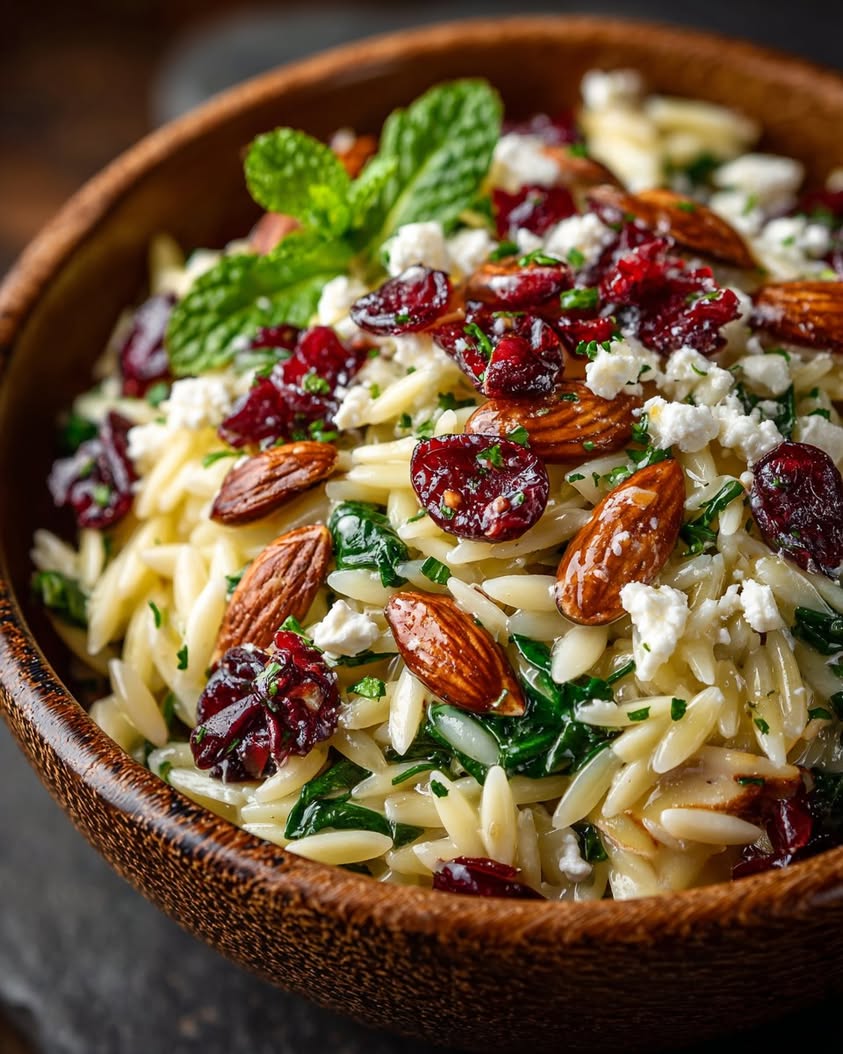
Feta and Cranberry Orzo with Lemon Vinaigrette: A Vibrant Mediterranean Feast
Imagine a dish that bursts with sunshine on your plate. This Feta and Cranberry Orzo with Lemon Vinaigrette is exactly that. It combines creamy, tangy feta cheese with sweet, chewy dried cranberries, all tossed with tender orzo pasta. The entire salad gets a bright wake-up call from a zesty lemon vinaigrette. Consequently, every bite delivers a perfect harmony of savory, sweet, and tart flavors.
This recipe is more than just a side dish. It is a versatile star that can anchor a light lunch or complement a hearty dinner. The beauty of this Feta Cranberry Orzo Lemon Vinaigrette lies in its simplicity and speed. You can have a stunning, restaurant-quality meal on the table in under thirty minutes. Moreover, it travels beautifully, making it the ultimate potluck or picnic champion.
Ultimately, this dish celebrates fresh, vibrant ingredients. The lemon vinaigrette acts as the culinary glue, weaving the salty feta and sweet cranberries into the comforting base of orzo. It is a foolproof recipe that promises to become a regular in your weekly rotation. Additionally, it is a fantastic way to introduce exciting textures and flavors to your family table.
Quick Recipe Highlights
- Flavor Profile: This dish masterfully balances tangy, salty, and sweet notes. The sharp, briny flavor of feta cheese contrasts beautifully with the natural sweetness of dried cranberries. Meanwhile, the fresh lemon vinaigrette adds a necessary acidic punch that ties everything together.
- Texture: You will enjoy a delightful mix of textures in every forkful. The orzo pasta provides a soft, rice-like bite. Simultaneously, the feta offers creamy crumbles, and the cranberries contribute a pleasant, chewy resistance. Toasted pine nuts, if added, introduce a wonderful crunchy element.
- Aroma: The aroma is instantly inviting and fresh. First, the bright, citrusy scent of lemon zest and juice hits your senses. Then, subtle herbal notes from fresh parsley or mint mingle with the savory smell of good olive oil and pasta.
- Visual Appeal: This salad is a feast for the eyes with its vibrant color palette. The white feta and pale yellow orzo create a beautiful canvas. Subsequently, the ruby-red cranberries and green herbs provide stunning pops of color that make the dish look irresistible.
- Skill Level Needed: This is a beginner-friendly recipe requiring only basic kitchen skills. You need to know how to boil pasta and whisk a simple dressing. Therefore, even novice cooks can achieve spectacular results with minimal effort.
- Special Equipment: No special tools are required. Essentially, you just need a medium pot for cooking the orzo, a mixing bowl, and a whisk. A microplane for zesting the lemon is helpful but not mandatory.
Recipe Overview
- Difficulty Level: We rate this recipe as “Easy” because it involves straightforward techniques. The steps are simple: cook pasta, whisk dressing, and combine. There is no intricate knife work or complex cooking methods. Consequently, it is accessible for cooks of all experience levels.
- Category: This dish fits wonderfully into multiple meal categories. It shines as a satisfying vegetarian main course for lunch. Alternatively, it serves as a spectacular side dish for grilled chicken, fish, or lamb. It also belongs in the category of fantastic make-ahead salads for gatherings.
- Cuisine: The recipe draws strong inspiration from Mediterranean and Greek culinary traditions. The use of feta cheese, olive oil, and lemon is classic to that region. However, the inclusion of sweet cranberries adds a modern, fusion twist that broadens its appeal.
- Cost: This is a very cost-effective dish to prepare. Orzo and dried cranberries are pantry staples that are inexpensive. Feta cheese and fresh lemons are the primary fresh costs. Overall, you can feed four people generously for a very reasonable price.
- Season: While delicious year-round, this salad feels particularly fitting for fall and winter. The cranberries evoke holiday flavors and pair well with seasonal meals. Conversely, its bright, fresh profile also makes it perfect for spring and summer picnics.
- Occasion: This recipe is incredibly versatile for different events. It is elegant enough for a holiday dinner table yet simple enough for a casual weeknight meal. Furthermore, it is a guaranteed hit at potlucks, baby showers, and outdoor barbecues.
Why You’ll Love This Recipe
First and foremost, the taste and texture appeal is immediate and profound. Each component of this Feta Cranberry Orzo Lemon Vinaigrette plays a specific role. The creamy, salty feta melts slightly into the warm orzo. Meanwhile, the cranberries offer little bursts of fruity sweetness that cut through the richness. The lemon vinaigrette ensures the dish never feels heavy, instead leaving your palate feeling refreshed and clean. It is a symphony of contrasting flavors that somehow achieves perfect harmony.
Next, consider the sheer convenience and preparation benefits. This entire meal comes together in one pot and one bowl, minimizing cleanup. The active cooking time is remarkably short, with most of the effort going into simple assembly. You can easily prepare the components ahead of time and mix them just before serving. Therefore, it is the ultimate solution for busy weeknights or last-minute entertaining when you need something impressive fast.
From a nutritional standpoint, this dish offers several advantages. Orzo provides energizing carbohydrates, while feta cheese delivers protein and calcium. Dried cranberries, particularly unsweetened varieties, contribute antioxidants and fiber. The olive oil in the vinaigrette is a source of heart-healthy monounsaturated fats. When you add fresh herbs, you incorporate extra vitamins and phytonutrients. Altogether, it is a balanced meal that satisfies both your taste buds and your body’s needs.
The social and entertaining value of this recipe cannot be overstated. It is a crowd-pleaser that appeals to a wide range of palates, including picky eaters. The presentation is colorful and inviting, making it a centerpiece on any buffet table. Because it is served at room temperature, there is no stress about keeping it hot. You can make a large batch without worrying about it wilting or losing quality over several hours.
Finally, the cost-effectiveness and accessibility of the ingredients make this a practical staple. You can find every component at any standard grocery store without hunting for exotic items. The recipe is also highly adaptable; you can swap in different nuts, cheeses, or dried fruits based on what you have on hand. This flexibility means you can create a delicious meal without a special shopping trip, saving both time and money.
Historical Background and Cultural Significance
The origin story of this dish is a beautiful example of modern culinary fusion. Orzo pasta, whose name means “barley” in Italian due to its shape, has roots in Mediterranean cuisine. Feta cheese, protected by EU law, has been produced in Greece for centuries using specific methods. The combination of pasta and cheese is classic, but the addition of sweet cranberries is a distinctly New World influence. This recipe represents how global ingredient availability inspires new, beloved dishes.
Understanding the cultural importance of the key ingredients deepens appreciation for the salad. In Greece, feta is not just a cheese; it is a cultural icon present in countless traditional dishes like Greek salad and spanakopita. Olive oil and lemon form the foundational “ladolemono” sauce in Greek cooking, used on everything from grilled meats to vegetables. Using these elements in a pasta salad respects their heritage while applying them in a fresh, contemporary context.
The evolution of the recipe likely follows the path of many modern salads. As dried cranberries gained popularity for their tart-sweet flavor and health benefits, creative cooks began incorporating them into savory dishes. The logical pairing with salty feta created an instant classic. The use of orzo, a pasta that behaves like a grain, made it a hearty yet light base. This evolution shows how home cooks and chefs alike continuously refine and improve upon simple concepts.
Regional variations of this concept are endless, demonstrating its adaptability. In the Middle East, a similar salad might use bulgur wheat instead of orzo and pomegranate seeds instead of cranberries. A French-inspired version could feature goat cheese and dried cherries. Some American variations add grilled chicken or shrimp to make it a more substantial entrée. This global journey highlights the recipe’s core strength: a brilliant flavor template that welcomes interpretation.
Ingredient Deep Dive
Orzo is a rice-shaped pasta that serves as the foundation of this salad. Historically, it falls under the “pastina” category of small Italian pastas often used in soups. Nutritionally, it provides complex carbohydrates for energy and is typically enriched with B vitamins like folate. When selecting orzo, look for a brand made from durum wheat semolina for the best texture and flavor. You can store dry orzo in your pantry for over a year. For a whole-grain boost, you can find whole wheat orzo, though it will have a denser, nuttier flavor.
Feta cheese is the salty, tangy star of the dish. Culturally, authentic Greek feta is made from at least 70% sheep’s milk, often blended with goat’s milk, giving it a distinctive crumbly texture and sharp taste. It is a good source of calcium, protein, and beneficial probiotics. When shopping, seek out feta sold in brine blocks rather than pre-crumbled containers for superior flavor and moisture. Store leftover feta submerged in its brine in the refrigerator. For substitutions, consider other brined cheeses like ricotta salata or a firm goat cheese.
Dried cranberries add essential sweetness and chewy texture. Unlike fresh cranberries, which are intensely tart, dried cranberries are typically sweetened, making them palatable for salads. They offer antioxidants like proanthocyanidins, which support urinary tract health. For a healthier option, choose juice-sweetened or unsweetened dried cranberries. You can store them in a cool, dark pantry for several months. If you need a substitute, try dried cherries, chopped dried apricots, or even raisins, though each will slightly alter the flavor profile.
The lemon vinaigrette is the unifying element that brings everything to life. Fresh lemon juice provides vitamin C and bright acidity that balances the fat from the cheese and oil. Always use freshly squeezed lemon juice rather than bottled for the best, brightest flavor. The zest contains potent aromatic oils that intensify the citrus essence. Extra virgin olive oil is the best choice for its fruity, peppery notes that complement the other ingredients. Store homemade vinaigrette in the refrigerator for up to a week, letting it come to room temperature and re-whisking before use.
Common Mistakes to Avoid
- Overcooking the Orzo: This is the most common error. Orzo cooks quickly and can turn mushy if left in boiling water too long. Always taste it a minute before the package instructions suggest. You want it al dente, with a slight bite, as it will soften further when dressed.
- Using Pre-Crumbled Feta: Pre-crumbled feta is often coated in anti-caking agents that make it dry and less flavorful. For the best texture and taste, always buy a block of feta in brine and crumble it yourself just before adding it to the salad.
- Neglecting to Season the Pasta Water: The orzo water should be as salty as the sea. This is your primary chance to season the pasta itself. Underseasoned water leads to a bland final dish, no matter how flavorful your vinaigrette is.
- Adding the Dressing to Hot Pasta: Pouring the lemon vinaigrette onto piping hot orzo can cause the oil to separate and the lemon flavor to cook off, becoming bitter. Let the orzo cool for at least 10-15 minutes after draining and rinsing before combining.
- Skipping the Lemon Zest: The zest holds the most potent lemon oil and fragrance. Using only the juice provides acidity but misses the deep, aromatic citrus essence that makes the vinaigrette truly special. Always zest your lemon before juicing it.
- Not Toasting the Nuts: If you add pine nuts or walnuts, toasting them is non-negotiable. This simple step unlocks their oils and intensifies their flavor, adding a crucial layer of nutty depth that raw nuts simply cannot provide.
- Using Stale Dried Herbs: Fresh herbs like parsley, dill, or mint are essential for their vibrant color and flavor. Dried herbs will taste dusty and out of place in this fresh, bright salad. If you must substitute, use only a tiny fraction of the amount.
- Forgetting to Adjust Seasoning at the End: After combining all ingredients, taste and adjust. You will likely need an extra pinch of salt, a crack of black pepper, or a final squeeze of lemon juice to make all the flavors pop perfectly.
Essential Techniques
Cooking orzo perfectly requires attention. Unlike long pasta, orzo can easily clump together or stick to the pot bottom. Therefore, use plenty of well-salted boiling water and stir it frequently during the first two minutes of cooking. The goal is al dente, which means “to the tooth” in Italian. To test, spoon out a piece and bite it; it should be tender but offer a slight resistance in the center. Immediately drain it in a colander and rinse briefly with cool water to stop the cooking process and remove excess starch.
Creating an emulsified vinaigrette is key for a cohesive dressing. An emulsion is a stable mixture of two liquids that normally don’t mix, like oil and vinegar. To achieve this, start by whisking your acid (lemon juice) with mustard, salt, and pepper until dissolved. Then, add your olive oil in a very slow, steady stream while whisking vigorously. This gradual incorporation allows the oil to break into tiny droplets suspended in the lemon juice. The result is a creamy, unified dressing that coats ingredients evenly instead of separating and pooling.
Properly crumbling feta preserves its texture. Using your hands is often best for achieving nice, irregular chunks. Alternatively, you can use a fork to break off pieces from the block. Avoid using a knife to dice it into perfect cubes, as this can make it too uniform and less interesting in the salad. The goal is to have a variety of sizes, from small bits that melt into the orzo to larger crumbles that provide distinct salty bursts.
Pro Tips for Perfect Feta and Cranberry Orzo with Lemon Vinaigrette
Rinse the cooked orzo under cold water. This stops the cooking instantly, prevents clumping, and cools the pasta so it won’t melt the feta or wilt the herbs when mixed. However, ensure you drain it very well; excess water will dilute your flavorful vinaigrette.
Toast your nuts in a dry skillet over medium-low heat. Watch them constantly and shake the pan often, as they can burn in seconds. You will know they are done when they become fragrant and take on a light golden color.
Let the finished salad rest before serving. Allowing it to sit for 20-30 minutes at room temperature lets the flavors marry and deepen. The orzo will absorb some of the dressing, becoming even more flavorful.
Add fresh herbs at the very end. This preserves their bright color and delicate flavor. If you mix them in while the orzo is too warm, they can turn dark and lose their vibrancy.
Use a microplane grater for the lemon zest. It creates fine, fluffy zest without the bitter white pith. You will get more aromatic oil and a better distribution of flavor throughout the salad.
If making ahead, reserve a little vinaigrette. Dress the salad with most of the vinaigrette, but save a tablespoon or two. Right before serving, give it a fresh drizzle to revive the flavors and add a glossy finish.
Variations and Adaptations
For regional variations, consider a Greek-inspired version by adding Kalamata olives, diced cucumber, and cherry tomatoes. A Middle Eastern twist could include toasted pistachios, chopped mint, and a pinch of sumac in the dressing. An American fall variation might incorporate roasted butternut squash cubes and toasted pecans for a seasonal holiday side.
Seasonal adaptations keep this recipe exciting all year. In spring, add fresh peas and chopped asparagus tips. For summer, mix in grilled corn kernels and fresh basil. In autumn, roasted sweet potato or diced apple works beautifully. During winter, hearty additions like roasted Brussels sprouts or kale can make it more substantial.
Dietary modifications are straightforward. For a vegan Feta Cranberry Orzo Lemon Vinaigrette, use a plant-based feta alternative and ensure your dried cranberries are sweetened with juice, not honey. A gluten-free version simply requires using certified gluten-free orzo or substituting with quinoa or rice. To reduce fat, use less olive oil in the dressing and increase the lemon juice or add a splash of vegetable broth.
Flavor variations can personalize the dish. Add a teaspoon of honey or maple syrup to the vinaigrette for extra sweetness. Incorporate a minced garlic clove or a pinch of red pepper flakes for heat. Fresh herbs like dill, tarragon, or chives can completely change the aromatic profile. A tablespoon of capers or chopped sun-dried tomatoes will add a briny, umami depth.
Serving and Presentation Guide
Plating techniques elevate this humble salad. For individual servings, use a round mold or a small bowl to pack the orzo neatly, then invert it onto a plate for a elegant restaurant-style presentation. Alternatively, serve it family-style in a wide, shallow bowl or on a large platter to showcase its colors. Garnish with a final sprinkle of fresh herbs, a few whole cranberries, and an extra crumble of feta on top for visual appeal.
Consider traditional and modern accompaniments. As a main course, serve it with a simple green salad and crusty bread for dipping in any leftover vinaigrette. As a side, it pairs wonderfully with simply grilled proteins like lemon-herb chicken, salmon, or lamb chops. For a vegetarian feast, accompany it with roasted vegetables like eggplant and zucchini.
Temperature considerations are important. This salad is best served at room temperature. If made ahead and refrigerated, take it out at least 30 minutes before serving to allow the olive oil in the dressing to liquefy and the flavors to wake up. Never serve it ice-cold, as it will taste muted and the texture will be too firm.
Wine and Beverage Pairing
Wine pairings should complement the salad’s bright acidity and salty-sweet profile. A crisp, dry white wine like Sauvignon Blanc or Pinot Grigio mirrors the lemon’s zestiness and cuts through the richness of the feta. A Greek Assyrtiko, with its mineral notes and sharp acidity, is a fantastic regional pairing. For rosé lovers, a dry Provençal rosé offers berry notes that harmonize with the cranberries without overpowering the dish.
Non-alcoholic alternatives can be just as thoughtful. Sparkling water with a squeeze of lemon or lime keeps the palate refreshed. Iced herbal tea, such as mint or lemon verbena, complements the herbal notes in the salad. A tart cherry or pomegranate juice spritzer (mixed with soda water) echoes the fruity elements of the cranberries beautifully.
Storage and Shelf Life
Store leftovers in an airtight container in the refrigerator for up to 3 days. The orzo will continue to absorb the dressing, so it may become drier over time. To refresh, stir in a teaspoon of olive oil or a small splash of lemon juice before serving. The flavors often meld and improve on the second day. Do not freeze this salad, as the texture of the orzo and feta will become unpleasantly grainy and watery upon thawing.
Identify signs of spoilage by smell and sight. If the salad develops an off odor, a slimy texture on the pasta, or visible mold (especially on the feta or herbs), discard it immediately. Always use clean utensils to scoop out servings to prevent cross-contamination and extend its shelf life.
Make Ahead Strategies
You can fully prepare this salad 4-6 hours in advance with excellent results. Cook and rinse the orzo, then let it cool completely. Prepare the lemon vinaigrette and store it separately in a jar. Crumble the feta and prepare any add-ins like toasted nuts. Combine everything except the fresh herbs about an hour before serving. Add the delicate fresh herbs and final seasoning adjustments right before you present the dish. This timeline ensures maximum flavor without sacrificing texture.
Scaling Instructions
This recipe scales up or down linearly with ease. To halve it, simply divide all ingredient quantities by two. The cook time for the orzo will remain roughly the same, but you can use a smaller pot. To double or triple for a crowd, use a larger pot to ensure the orzo has enough room to boil freely without sticking together. You may need to cook the orzo in batches to avoid overcrowding. When making a large batch, mix the dressing in a separate large bowl before adding the orzo to ensure even distribution.
Nutritional Deep Dive
This Feta Cranberry Orzo Lemon Vinaigrette offers a balanced macronutrient profile. The orzo provides complex carbohydrates for sustained energy. Feta cheese contributes protein and fat, promoting satiety. Olive oil offers heart-healthy monounsaturated fats. Dried cranberries add simple sugars and fiber. A typical serving provides a good mix, making it a satisfying standalone meal. For those monitoring intake, using less oil and cheese or increasing the vegetable content are easy adjustments.
Micronutrient analysis reveals several benefits. Feta is rich in calcium for bone health and B vitamins for energy metabolism. Lemon juice provides vitamin C, which supports immunity and helps absorb iron from plant-based foods. Olive oil contains vitamin E, an antioxidant. Herbs like parsley contribute vitamin K. Together, these nutrients support overall wellness, making the dish as nourishing as it is delicious.
Dietary Adaptations
For a gluten-free version, substitute the orzo with an equal amount of cooked quinoa, rice, or certified gluten-free pasta. Ensure all other ingredients, like dried cranberries, are certified gluten-free. For a dairy-free or vegan adaptation, replace feta with a firm, salty tofu crumble marinated in lemon juice and salt, or use a commercial vegan feta alternative. Nutritional yeast can add a cheesy flavor.
For a lower-carb or keto-friendly version, replace the orzo with riced cauliflower. Sauté the cauliflower rice until tender-crisp, let it cool, and proceed with the recipe. Be mindful that dried cranberries are high in sugar, so either omit them or use a very small amount of sugar-free dried berries. Increase the fat content with extra olive oil and cheese to maintain satiety.
Troubleshooting Guide
If your salad tastes bland, the issue is likely underseasoning. Remember to salt the pasta water generously. Then, always taste and adjust the seasoning at the end with more salt, pepper, or lemon juice. The flavors need a strong foundation to support the sweet and salty elements. Another trick is to add a pinch of a flavor enhancer like a vegetable bouillon powder to the dressing.
If the texture is mushy, the orzo was overcooked. Unfortunately, you cannot reverse this. Next time, set a timer and taste frequently. For the current batch, you can try chilling it thoroughly; sometimes, cold pasta salads firm up. Alternatively, repurpose it as a filling for stuffed vegetables or mix it with breadcrumbs and bake it as a casserole topping.
If the dressing separates and looks oily, it was not properly emulsified or was added to hot pasta. For future reference, whisk the dressing vigorously as you slowly add the oil. For the current salad, try whisking it again in a separate bowl and re-drizzling it over the salad, tossing quickly. Adding a tiny bit of Dijon mustard can help re-bind the emulsion.
Recipe Success Stories
Community feedback on this Feta Cranberry Orzo Lemon Vinaigrette has been overwhelmingly positive. Many readers report it becoming their go-to dish for potlucks, where it consistently earns recipe requests. One home cook shared how she added rotisserie chicken to make it a complete dinner, and her family now requests it weekly. Another found that substituting farro for orzo added a delightful nutty chew that her guests loved.
Adaptation stories highlight its versatility. A reader following a Mediterranean diet used whole wheat orzo and added chickpeas for extra protein and fiber. A parent successfully “hid” finely chopped spinach in the salad for a veggie boost their kids didn’t notice. These stories demonstrate how a solid recipe framework invites personalization and can suit almost any dietary need or preference.
Frequently Asked Questions
Can I use a different type of pasta? Absolutely. While orzo is ideal for its rice-like shape, you can use other small pastas like ditalini, small shells, or even couscous. Adjust the cooking time according to the package directions for your chosen pasta.
Is it okay to use bottled lemon juice? For the best flavor, fresh lemon juice is highly recommended. Bottled juice often has preservatives and a flat, sometimes bitter taste that can negatively impact the bright, fresh profile of the vinaigrette.
Can I make this salad ahead of time? Yes, you can assemble it 4-6 hours ahead. For best results, add the fresh herbs and a final drizzle of dressing just before serving to maintain their color and vibrancy.
What can I use instead of pine nuts? Toasted slivered almonds, chopped walnuts, pecans, or even sunflower seeds make excellent, cost-effective substitutes. The key is to toast them for maximum flavor.
How do I prevent the feta from dissolving into the salad? Ensure the orzo is completely cool before adding the feta. Also, crumble it into larger pieces and fold it in gently at the end, rather than stirring vigorously.
Is this salad served cold or warm? It is best served at room temperature. This allows the flavors to be most pronounced and the texture of the olive oil to be perfect—not congealed from the fridge or too oily from heat.
Can I add protein to make it a main dish? Certainly. Grilled chicken breast, shrimp, chickpeas, or canned tuna are all fantastic additions that turn this side into a hearty, balanced entrée.
My salad is dry after refrigeration. How do I fix it? The orzo continues to absorb the dressing. Simply stir in a little extra olive oil, a squeeze of fresh lemon juice, or even a tablespoon of water or broth to loosen it up before serving.
Can I freeze leftovers? We do not recommend freezing this salad. The texture of the orzo and feta will become very mushy and unappealing upon thawing. It is best enjoyed fresh or refrigerated for a few days.
What herbs work best? Flat-leaf parsley, fresh dill, and mint are classic choices. Basil, chives, or tarragon can also work beautifully depending on your flavor preferences and what you’re serving it with.
Additional Resources
If you loved this Feta Cranberry Orzo Lemon Vinaigrette, explore other Mediterranean-inspired pasta salads. A Greek Orzo Salad with tomatoes, cucumbers, and olives offers a more traditional profile. A Lemon Herb Orzo with grilled vegetables is another vibrant, healthy option. For a deeper dive into vinaigrettes, learn about the classic ratio of three parts oil to one part acid and how to customize it with different vinegars, mustards, and sweeteners.
For ingredient information, research the different types of feta (Greek vs. Bulgarian vs. French) to understand their flavor nuances. Learning about the health benefits of extra virgin olive oil can inspire you to use it in more dressings and dishes. Finally, for equipment, a good quality microplane grater and a sturdy whisk are invaluable tools for making this and countless other recipes a joy to prepare.
{“success”:true,”message”:”Recipe created successfully”,”post_id”:9340,”tasty_recipe_id”:9340,”shortcode”:”“}

I’m Billy, a classically trained culinary school graduate from The Culinary Institute of America with over 12 years in the restaurant industry and over 19 years of cooking experience.